Sorority Babes in the Slimeball Bowl-O-Rama (1988) [31 Days of Gore]

Full Moon promoted the hell out of the recent Blu-Ray release of Sorority Babes in the Slimeball Bowl-O-Rama. I don’t blame them. This is a cinematic relic which deserves to be preserved on the very best formats. You know, for historic purposes… and because of boobies. I hate to fault such an admirable sleaze flick, but it takes forever to introduce the villain: an imp who’s been trapped in a bowling trophy like a genie in a lamp.

Once the imp’s out, you’ll wish he had stayed there because the terrible puppet soaks up valuable screen time, which would have been better spent on boobies. Not that I mean to insinuate there’s a disappointing lack thereof; this movie probably would have been deemed too weird and racy for late night premium movie channels. In fact, this film’s director later made Beach Babes from Beyond, which is hands down the raciest movie I have ever seen on Skinamax.

But there is a disappointing lack of blood and gore in Sorority Babes. And for a movie that’s billed as a horror-comedy, the horror and the comedy are pretty damn weak, too. At least two of the kills involve shoving someone’s head into something off screen; one of the babes is ripped in two without spilling a single drop of blood; and somewhere along the way, the imp cartoonishly transforms another babe into the spitting image of the Bride of Frankenstein.

It all begins when a trio of nerds and a pair of freshmen girls are trapped in a bowling alley as part of a college prank. There they meet a tough-as-nails biker babe who’s ripping off the cash registers and arcade machines. Unfortunately for them, they accidentally release the imp, who offers to grant each of them a wish. As we’ve learned in countless Leprechaun and Wishmaster movies, you really must be careful what you wish for.

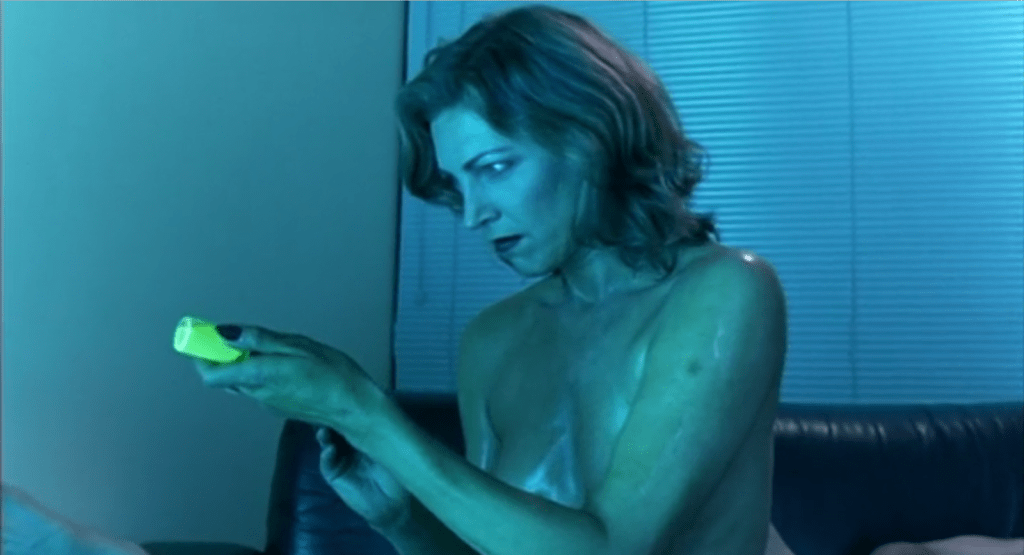
The nicest thing I can say about Sorority Babes in the Slimeball Bowl-O-Rama is it has some of the finest T&A ever committed to celluloid. Porky’s and Meatballs have nothing on this one, because those films didn’t star Linnea Quigley, Robin Stille, Brinke Stevens, and Michelle Bauer. I’m not being hyperbolic here: these are four of the best scream queens who ever lived. And although the film is reluctant to show any violence, I’m reminded of the words immortalized in Revenge of the Nerds: “We’ve got bush!”

I’ve mentioned three Animal House ripoffs because Sorority Babes aspires to be one. For reference, director David DeCoteau got his start with Roger Corman and later made some of the hardest softcore porn flicks ever produced. Later in his career, he defied convention by making the men the eye candy in his films. As one critic put it, “Although at first glance it’s not clear exactly who these films are aimed at—gay men? teenage girls? desperate housewives?—what is clear is that DeCoteau, who is actually a pretty talented filmmaker, knows exactly what he’s doing.”

Sorority Babes is what it is. I prefer it to Porky’s and Meatballs. Hell, I probably even prefer it to Revenge of the Nerds. Then again, I adore these actresses, so maybe I’m not the most objective person to review this film.

The Basket Case trilogy [31 Days of Gore]

Basket Case (1982)

Like a horror version of Midnight Cowboy, wide-eyed Duane Bradley arrives in the Big Apple with a wicker basket, curiously padlocked. He checks into the first hotel he sees, the kind of place populated by degenerates and whores. When he’s told his room will be twenty dollars, he reaches into his pocket, produces a giant roll of cash, and thumbs through it before finding such a small denomination. The resident drunk perks up, dollar signs gleaming in his eyes.

Later, Duane gets hammered at a bar and opens up to a hooker with a heart of gold: when he was a child, his hideously deformed Siamese twin, Belial, was separated from his body against his will. (When questioned about the ethics of such an operation, one of the surgeons said, “I’m not even sure that thing is human.”) Following the surgery, Belial was placed in a garbage bag and tossed out. After Duane rescued his brother, they murdered their father for separating them.

Today, the duo is systematically revenge-killing the doctors responsible for their unwanted operation. Despite Duane’s naivety, the plan goes off without a hitch… until he falls for one of the doctor’s receptionists. Enraged with jealousy, Belial trashes their room and goes on a murderous rampage. Things only get bloodier from there. And at this point I’m wondering who names their children Duane and Belial.

Basket Case is among the first three horror moves I ever remember seeing (Creepshow and The Stuff are the other two). I’m surprised how well this sub-million dollar movie from the early 80s holds up. The make-up effects are more hit than miss and the stop-motion miniatures (whenever Belial hops out of his basket and goes for a stroll) are charming and, dare I say it, kind of cute. Amazingly, there’s not much fat to be found anywhere in the movie, the camerawork isn’t lazy, and we’re treated to one money shot after another with perfectly paced swiftness.

Director Frank Hennenlotter, whose filmmaking record is five for five, is perhaps the most potent exploitation director who ever lived. Do not read the rest of this post until you see this movie.

Basket Case 2 (1990)

Henenlotter picks up exactly where he left off: Duane and Belial have taken a nasty tumble from the fire escape of their New York City apartment, which had apparently left them dead. (Didn’t that guy at the end of the first movie check Duane’s pulse and shake his head with finality?) Well, it turns out they’re not dead. News crews show up to the scene, uncovering the Bradley Brothers’ murderous secrets for the world to see.

Meanwhile, Granny Ruth (Annie Ross) and her granddaughter Susan are watching the media fiasco on their living room TV. For reasons we’ll discover later, they decide to hop into their conspicuous van and make their way to the hospital where the boys are being kept under police surveillance. Unfortunately, Belial just woke up on the wrong side of his hospital bed and he’s killing everyone who gets in his way. He even takes psychic possession of his brother to assist his efforts to escape, despite the pair being on the outs.

When they make it to the parking lot, Granny Ruth and Susan swoop in to usher them into their van. It turns out Ruth owns a halfway house which harbors freaks just like Duane and Belial. Once there, Ruth separates the brothers, to minimize their fighting, and introduces Belial to a very special lady who lives in the attic… special in almost the same way Belial is. It’s just about one of the cutest things you’ll ever see.

Henenlotter, who’s obviously a fan of 1932’s Freaks, makes the conventionally attractive the villains while Granny Ruth’s commune of monsters naturally become the heroes of his story. There are wonderful creature effects and I love how each freak’s appearance is a character in and of itself. The only problem is Duane, who anchored the first film, plays second fiddle to the expanded cast. Actor Kevin Van Hentenryck is such a likable screen presence (and a much improved actor this time around) that I can only wish we got more of him. This time his character is alternatively cunning and stupid, depending on what the plot requires, and he doesn’t shine until the last ten minutes of the film, which are twice as exciting as what preceded it.

One thing I loved about the original Basket Case—because Jaws theory isn’t always right—is we get a glimpse of the monster relatively early on. This time we see him a little too soon, a little too often and, worst of all, a little too close up. Belial’s creature effects are technically better than they were in the original (sometimes there’s an actual human beneath that tumorous mass of latex), but the first film’s charm has begun to thin. My favorite thing about Belial in the first movie was his crazed scream. This time it’s simply not the same scream… and it would have been hilarious to hear the original scream whenever Belial makes love.

I love this movie, but it’s probably my least favorite of the bunch. Nothing in this one tickles me half as much as when an unhinged Belial trashed the hotel room in the first movie.

Basket Case 3: The Progeny (1991)

The third in a franchise has typically gone past the point of diminishing returns. Unlike most directors, who typically abandon the horror franchises which made them famous for “real” movies, Henenlotter sticks it out until the bitter end. (He’s talked about making a Basket Case 4. The odds of that happening are probably somewhere between Bubba Nosferatu and House of Re-Animator.) Right out of the gate, Basket Case 3 is better than its predecessor even though it starts with an extended flashback; repackaging the best part from Basket Case 2, Henenlotter sets the bar so high he has no choice but to aim for the stars.

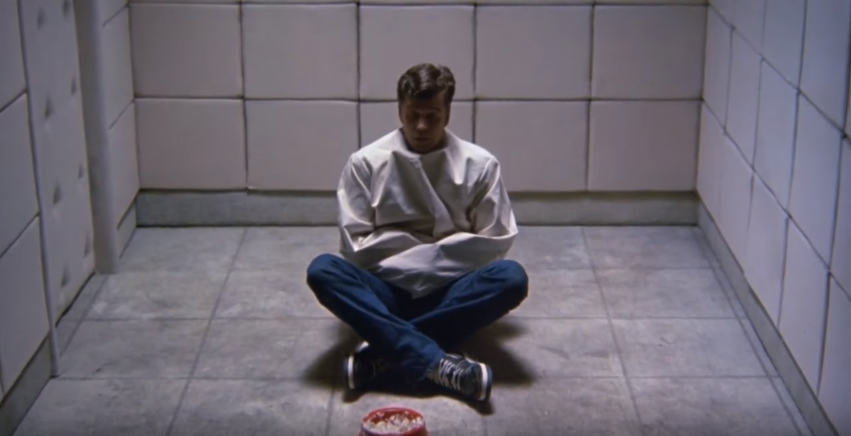
Fast forward a bit and Granny Ruth has been keeping Duane in a padded cell ever since that glorious ending. It turns out Belial and his love interest, Eve, are expecting a child. In response to this glorious news, Granny Ruth giddily packs her merry band of freaks into a school bus so they can all make the trek to her ex-husband’s house, the doctor who will deliver Belial’s baby. Since she can’t very well leave Duane in custody, Ruth begrudgingly drags him along for the ride, refusing to remove his straight jacket.

Duane insists he’s no longer crazy, but we all know better. Either way, Belial refuses to even acknowledge him. Belial is a family man now. He can’t have his crazy brother dragging him down anymore. Once they hit the road, Granny Ruth leads her freaks in an amazing sing-along of Personality. I’m going stop talking about the plot here so I don’t ruin the surprises, which only get more outrageous as the film goes on. I don’t know why Henenlotter shifted focus from Duane to Belial and ultimately to Granny Ruth over the course of the three films, but Annie Ross’s endearing character gets fleshed out a lot more in this one.

As usual, the film that started it all is the best, but the Basket Case trilogy is a remarkable franchise, drawing its strength from actor continuity and consistently creative gags. If Henenlotter ever does make a fourth one, I can only hope he returns his focus to Duane. I just love seeing that guy in movies.

Body Melt (1993) [31 Days of Gore]

Last year I featured Street Trash. This year I’m featuring the similarly gross Body Melt. Maybe “melt movies” will become a tradition on 31 Days of Gore. The movie’s satirical look at our obsession with dietary supplements is more topical than ever. I’ve seen far too many otherwise intelligent people who trade hard scientific data for celebrity advice and too-good-to-be-true promises. Maddeningly, the problem seems to be growing increasingly worse despite the fact we have better access to education than ever before.

What I’m saying is it’s time for melt movies to make a comeback. Today they could take on the anti-vaxxers, the helpless self-help trolls, and the ridiculous “get motivated” crowd, to name a few. There’s so much humor to be mined from the kind of “concerned” (paranoid) people who are constantly on the lookout for short cuts and disastrously short-lived bursts of feeling actualized. In our quest to never feel bad, we’re letting corporations and social media define what bad is so we always feel it.

Body Melt opens with a sexy commercial for Vimuville, a pill company which promises its customers a better lifestyle. What the product will actually accomplish is vaguely worded, but hey, who wouldn’t want to feel better? An employee for the company plans to blow the whistle, at which point the product’s spokesperson injects him with a lethal dose of their latest concoction. It turns out it’s not the dosage that’s the problem, it’s the stuff itself, and the company has already been feeding it to a test group at the end of a quiet cul-de-sac in Melbourne, Australia. 

These unknowing participants, by the way, are screwed. From Wikipedia’s plot summary:

The pills are consumed by the residents, and produce liquefying flesh, elongated tongues, exploding stomachs, exploding penises, imploding heads, monstrous births, tentacles growing out of the face, living mucus, sentient placentas, and other gruesome mutations.

I was under the impression the whistle blower was the main character. Literally minutes later, he melts down in spectacular fashion before fatally smashing headfirst through the windshield of his car. To say Body Melt is protagonistically challenged (yeah, I’m still trying to coin that phrase) is an understatement. Street Trash was like that, too, but this one is a lot more focused even though its mind is all over the place. It seems there are a lot of non sequiturs for the first 90% of the movie, but it’s mostly wrapped up nicely by the time we get to the splatterific ending.

Body Melt is a fine cult film. You should know by now if it’s your cup of tea or not. Just don’t leak on me, man. 

Slaughterhouse (1987) [31 Days of Gore]

Slaughterhouse begins promising enough. Right off the bat, you get stupid teens doing stupid teen things in the middle of nowhere. A couple of the kids split off to go get themselves killed in the woods. You don’t see much, but it is, after all, only the introductory killin’. It’s enough to make the audience believe (or hope) each money shot will top the last. The cold opening smash-cuts to its credits, which overlay actual footage from a real-life slaughterhouse. This disgusting scene is scored to silly music. It’s at this point you think the movie could very well be a decent dark comedy.

So the killer of the film is Buddy, a giant of a man who doesn’t bother wearing a proper mask until the end of the movie. He’s the dimwitted son of Lester Bacon, an old farmer whose house is being foreclosed. Lester isn’t just aware of Buddy’s killing spree, he encourages it.

The teenagers in the film have nothing to offer other than the promise of deaths. They’re under no threat until the end, when their pointless subplot finally crosses paths with Buddy. In the meantime, Buddy kills the town deputy, dons his uniform, and goes for a joyride in the film’s funnest scene. If only the rest of the movie were so good.

Other than the teen stuff, Slaughterhouse isn’t a maddeningly slow movie. There’s decent acting, dialogue, and an oddly effective pace. You hold out hope the opening set the bar low in order to top itself. It never really does, at least in no spectacular fashion. Yet it’s still kind of likable for reasons that escape me. I guess I just like the concept of Buddy.

I will complain that the final kill shows even less than the first kill did. What a cheat.

Midnight Movies: The Toxic Avenger II & III

I originally saw the original The Toxic Avenger on USA Up All Night! when I was something like eight or nine years old. On my many repeat viewings of the worn VHS I recorded myself, I would laugh gleefully when, upon committing vehicular homicide, one of the evil punks announces he has to go to bed early “because I’ve gotta go to church.” Years later, at the beginning of Toxic Avenger Part IV, Stan Lee’s voiceover recounts the events of the first film before going on to say, “Then… two rotten sequels were made. Sorry about that!”

Curiously, I’ve watched the “rotten sequels” more than I saw the fourth movie. I actually prefer Toxie’s makeup and his John Candy-like demeanor in the two middle entries. The biggest problem with the back-to-back II & III is they were intended to be one film until director Lloyd Kaufman, realizing he had shot too much footage, had the idea to split the one movie into two. The problem is Kaufman overestimated just how much usable footage he had.

Following the events of the first film, Melvin the mop boy, aka Toxie, has successfully cleaned Tromaville of crime and pollution. He lives with his blind girlfriend Claire (even Kaufman has admitted he doesn’t know why they changed the character’s name from Sarah) and finds himself without purpose. So he sets off to Japan in search of his long lost father, only to find the man sets off his Spidey-Sense (uh, I mean “Tromatons”) because he is, in fact, an evil drug lord. Meanwhile, in Toxie’s absence, an evil corporation moves into Tromaville.

The good stuff is present, albeit smothered in the padding. Part II opens with a hilariously stupid fight before the promising pace trips on the overuse of voiceovers and the extended interlude in Japan. A lot of the footage that’s used in Toxic Avenger II is actually recycled in Toxic Avenger III, sometimes with replaced dialogue, sometimes unaltered, but always at the expense of fun. In other words, there’s a great Troma movie between the two pictures and if a skilled fan editor hasn’t made a singular supercut yet, I’d be very surprised.

When I was younger, I preferred Part II because I somehow liked the stuff in Japan. Now that I’m older, it’s clear the third film, The Last Temptation of Toxie, is the superior picture. The opening was obviously shot after Kaufman decided to split the film into two. The fight may not be as long and complex as the one which opened the previous movie, but its brevity helps solidify the pace and believe me: this movie can use all the help it can get.

Toxie’s relationship with Claire takes an unexpectedly cute turn. Toxie literally sells his soul to the devil to pay for the operation to restore her eyesight (and to get his mother a microwave oven). He does this knowing full well that once she can see, she may be repulsed by his hideously deformed nature. That’s our little Melvin—a selfless darling—and we can only hope the inevitable Hollywood remake will absorb the more subtle ingredients of the franchise rather than focusing solely on the exploitation stuff.

Nothing in these two films is half as wild (or gleefully politically incorrect) as the punks who squash a little boy’s head before beating an elderly woman to death. Nor is the dialogue ever quite as poetic as the thug who exclaims, “I’ve always wanted to cornhole me a blind bitch!” Unless you’re a completionist, or a die hard Troma fan, it’s probably acceptable to skip all the sequels. But there is some of that old magic here. It’s only in short bursts, few and far between.

Keanu (2016)

Movie nerds can spot fellow movie nerds from across the room. Key and Peele don’t just parody specific movies (see: their Gremlins 2 sketch), but sometimes entire types of movies (see: their funhouse villain sketch). Any comedy team who casts character-actors like Clint Howard, while paying rapt attention to lighting and cinematography, is speaking my language. I’m sure Keanu is only one of many worthwhile films that will result from this partnership.

Rell (Jordan Peele) has just been dumped by his girlfriend. When we first see him, he’s moping beside a bong and a couple of posters for New Jack City and Heat. His best friend Clarence (Keegan-Michael Key) is a suburbanite who drives around in a mini-van while listening to George Michael on repeat. Clarence is on his way to cheer Rell up, but it turns out he doesn’t need to anymore. Rell has adopted a stray kitten he calls Keanu and all is well in the world.

What Rell and Clarence don’t know is Keanu has just escaped a shootout at a Mexican cartel operation. The two super-assassins responsible for the shootout are also played by Key and Peele in heavy makeup and wigs. The bad guys also want the kitten, but when a local gang tries to trash the house of a dumb drug dealer (Will Forte), they accidentally target Rell’s house next door. The leader of the gang, played by Method Man, takes a liking to the kitty, too. So when Rell and Clarence go to get Keanu back, the gang mistakes them for the aforementioned assassins and… well, this certainly sounds like a routine comedy, doesn’t it?

And it is a routine comedy, but not the low-effort kind. This is the kind of movie Richard Pryor and Gene Wilder could have starred in thirty years ago: a simple vehicle for complex talent. Each time the movie starts to lose its footing on the slippery slope of situation comedy, they completely save it with their antics. There’s an unlikely and somewhat contrived scene in which the boys must perform a wall-flip in order to prove they’re the assassins. In most comedies, the flip itself would be the joke. The joke here is Clarence’s face when he somehow nails it. It’s not about what happens, but how it happens.

So do you like Key and Peele’s TV show? If you do, you’ll like Keanu. It’s pretty rare for sketch performers to make the leap to the silver screen so well. Most comedians probably just see it as a promotion, but Key and Peele have been grooming themselves for film for years. Yeah, it’s absurd to believe a street gang could ever mistake these two for legendary assassin, but I’m willing to suspend my disbelief for gags as good as these.

The Nice Guys (2016)

Look, kids. This is what summer blockbusters used to look like. I like Captain America movies as much as the next guy, but this is the film I was most hyped to see this year. If you’re wondering how Shane Black’s latest buddy action film stacks up to his previous underrated classic, Kiss Kiss, Bang Bang, I’ll save you the suspense: it’s probably even better.

The Nice Guys was supposed to open later this year, but Warner Bros. moved it forward to give its original date to Central Intelligence, which appears to be another soulless comedy for Dwayne Johnson and Kevin Hart. Now The Nice Guys is opening against Neighbors 2 and The Angry Birds Movie, further proof that studio executives have no fucking clue what they’re doing. In promos, you can tell producer Joel Silver and the cast of the film are understandably bitter about the idiotic scheduling.

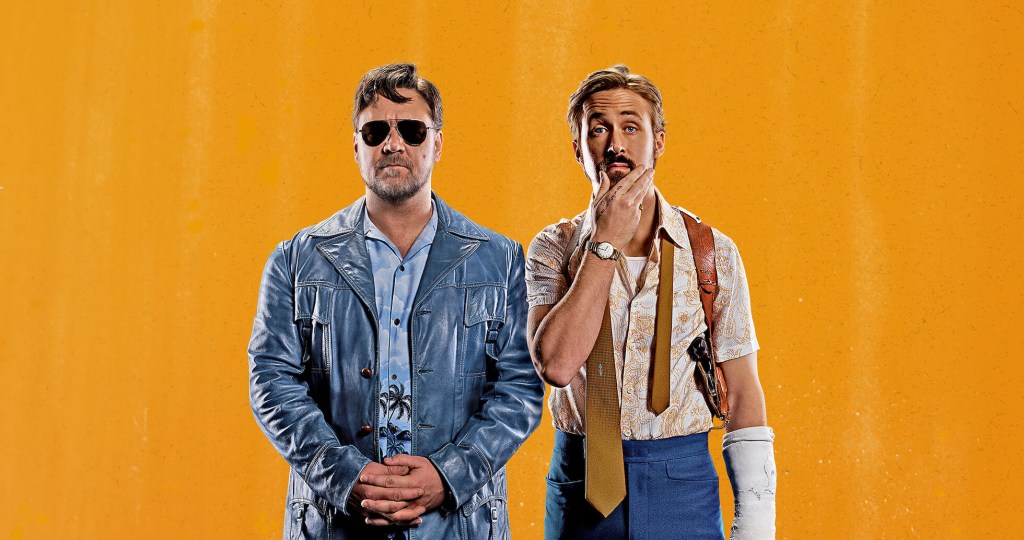
Ryan Gosling plays Holland March, a shitty private detective who has rare bouts of intuition. Like Saul Goodman, his client list consists of confused elderly people. Russell Crowe plays Jackson Healy, a guy who beats people up for money and he’s just been hired to kick Holland’s ass. Soon they’ll discover they have overlapping cases, at which point they team up and scour 1970s Los Angeles for leads. Holland’s impressionable young daughter, who’s at least a little smarter than her dad, tags along for the ride. She’s not incidental to the plot, either.

My favorite supporting characters are Keith David and Beau Knapp’s henchmen. These nuts would have stolen the show if not for the perfectly cast leads. David is just one of those guys I love seeing in movies and his presence here makes it all the more legitimate as a throwback film. Knapp, who I’m not entirely familiar with, plays a presumably coked-up idiot who has a hilariously evil laugh.

Gosling and Crowe make a brilliant team. I really miss the mid-budget action-comedy. This is exactly what going to the movie theater was like when I was kid.

Midnight Movie: Law Enforcement Guide to Satanic Cults [VHS]

Senseless moral panics will never go away, but the 80s and early 90s did ’em best, as proven by today’s featured video. The introduction has the sweater-clad host inviting us to “pay attention and notice the reverse of everything that is normal becoming abnormal.” What does that even mean? Word salads like that sound suspiciously like the kind of nonsense you’d hear an actual cultist say.

It’s not long until the video brings in a fake expert who visits a neighborhood park. There he conveniently stumbles upon the remnants of a Satanic ritual. It’s immediately clear the only orgy that actually took place there was the orgy of evidence manufactured by the unscrupulous filmmakers. “Oh, look. There’s a pentacle right there, mere feet from where we set up our cameras. Let’s go have a look.”

As expected, the video manages to link Satanism to decorative candles, video games, modern music, homosexuality, pornography, and everything else “concerned parents” wanted to condemn at the time. Then there’s the excessively detailed list of signs that indicate your child may be the victim of a Satanic cult. This list is indistinguishable from a list of “signs your kid might be abused, period,” but the filmmakers seem convinced only Satanists are capable of such crimes.

While the Guide to Satanic Cults is chock-full of hilarious (but potentially dangerous) misinformation, the middle section drags. When the “expert’s” segment ends, I’d suggest fast-forwarding to the aforementioned “bikini girl” scene, which is obviously the repressed host’s excuse to touch a nearly naked model. I don’t know how she didn’t crack up laughing when he removed the fitted sheet from her body. And I imagine the editors had to use a pretty advanced noise gate to cover up all his heavy breathing.

Dude Bro Party Massacre III is the new standard for YouTube-to-feature success

Following Robert Rodriguez’s Planet Terror there was a rash of low budget movies which had been digitally aged to look like overplayed film prints. Efforts like Hobo with a Shotgun and Father’s Day succeeded—kind of—but the charm of authentic older movies was rarely present. Worse, the effort to disguise digital cameras in film grain and scratches was almost always more distracting than convincing. Dude Bro Party Massacre 3, which sounds like it’s going to skewer its inspirations more than it ultimately does, is cut from the same cloth. Instead of settling for the rarely passable “film-look,” it layers a VHS “modified to fit your television set” visual style on top of its fake film artifacts. The heavy-handed effect is convincing enough that you’ll wonder if they ran the final cut through a dual-VCR a dozen times.

The movie opens with a fictional note: the film was banned in several countries including the United States. The filmmakers ask us to believe the copy we’re watching was taped from its only broadcast on public access television. This deceit allows the filmmakers, members of the Five Second Films comedy troupe, to squeeze in short films during the hastily edited commercial breaks under the guise of retro TV ads. Although the snippets are only five seconds a piece, they’re some of the funniest gags in the movie, provided you remember what late night commercials looked like back then (think: the advertisements which aired during USA’s Up All Night).

Dude Bro Party Massacre 3 uses its opening sequence to establish the story so far. We learn that in the first film, a woman “who never learned how to open doors” was trapped in a sorority house which was set ablaze during a college prank gone wrong. Horribly disfigured, she exacted revenge on her victims one by one, only to predictably meet her demise by the end of the picture. In the sequel, her daughter took up the mantle and continued the killing spree until she, too, was dispatched as these movies require. The third film, which genuinely feels like the third in an actual movie series, opens with the sole survivor from the last picture getting himself killed five minutes in. Now there’s a new killer and she’s going to pick off the latest group of expendable frat boys who decide to party at a cabin in the woods.

Having recently reviewed Space Cop, I was skeptical about 5 Second Films’ ability to produce a feature-length title. Many of Red Letter Media’s problems with the format seemed to be a matter of length even though they’re known for some of the longest popular videos on YouTube. So how could a comedy troupe known for five-second sketches make the jump to feature-length? Pretty well, it turns out.

The gore gags, although transparently and purposely cheap, are every bit as creative and distasteful as the stuff in Lloyd Kaufman’s Poultrygeist. The background music sounds as if it may be fan-submitted, garage-quality tracks. Because it’s only ninety minutes long, it doesn’t overstay its welcome. Yes, Dude Bro Party Massacre III is a pretty good movie even though I’m still not entirely on board with young filmmakers making fun of slasher films as an excuse to make one themselves.

I’ve been disappointed that the only standard I really had to compare these fan-funded projects to was the Angry Video Game Nerd movie, not only because it wasn’t very good. Well, here’s the new standard as far as I’m concerned. These regular joes made a movie and so can you… provided you have a humongous subscriber base on YouTube to help fill out a $200,000 Kickstarter campaign. Nonetheless, the end result is a gross-out spectacle that didn’t need studio approval to get made. Very fun stuff.

(Cameos include Larry King, veteran pornstar Nina Hartley, Andrew W.K., Patton Oswalt and a few familiar faces from YouTube.)

Western Wednesday: Butch Cassidy and the Sundance Kid (1969)

I used to know this movie like the back of my hand. Unfortunately—and here’s a good case for never watching a movie more than twice in a single decade—I saw it so many times I eventually grew bored of it. That was right around the time I discovered The Wild Bunch, which made this film seem a little too sleek in comparison. Fast forward to my thirties and I’ve forgotten just enough of it to enjoy it again, but not quite love it.

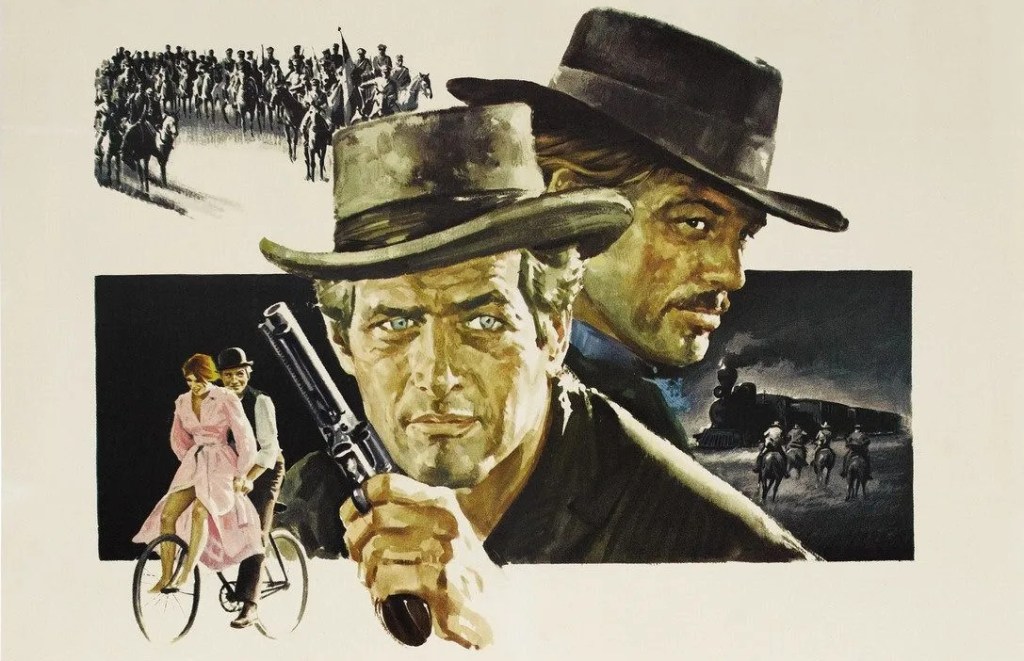
Like many westerns, Butch Cassidy and the Sundance Kid is set in a time when the gunslinger is becoming obsolete. In The Wild Bunch, the main characters knew it the moment they laid eyes on their first car. In this film, Butch (Paul Newman) and Sundance (Robert Redford) should have known it from the moment they acquired their first bike. After botching a train robbery, the duo realize the rules of the west have changed, but they didn’t get the memo.

Knowing there’s no way they’ll be able to survive if they continue their outlaw ways, Butch and Sundance find themselves at a crossroads. They reluctantly discuss their options around a table owned by Sundance’s patient love interest (Katharine Ross), who probably would have been Butch’s love interest if he’d been the one to meet her first. Butch, who’s always the know-it-all of the duo, suggests they should pack up and head for greener pastures in Bolivia. When they arrive, they find their destination is little more than abandoned farmland and dust.

There’s a reason William Goldman’s screenplay is analyzed to death in screenwriting classes. The story, which indulges in and pokes fun at the idea of myths and legends, has a lean simplicity to it. The banter is a not-very-distant ancestor to the kind of humorous dialogue that appears in Hollywood blockbusters as recent as The Force Awakens. The plot quickly establishes the main characters, the female lead, and the gang, whose leadership is hanging by a thread. It won’t be long until Butch and Sundance are on the run, chased down by an all-star team of man-hunters whose faces we never see.

The first half of the film deserves its classic status and then some. Unfortunately, the best scenes dry up in the second half. Everyone loves the long sequence of chase scenes in which they’re desperately trying to throw the unseen antagonists off their trail, crossing desert, rock, and water to do it. They occasionally pause to watch their pursuers from afar with an even mixture of dread and awe. “Who are those guys?” they ask repeatedly. Nothing else really compares until, of course, that iconic freeze frame at the end.

Despite its bottom-heaviness, Butch Cassidy and the Sundance Kid is a hugely entertaining popcorn flick. That’s pretty much all I feel like saying about it at this point in my life, which is part of the reason I like movies so much—sometimes they change as much as I do. Maybe I’ll love it again the next time I see it, but I don’t plan on watching it again for a very long time.