Prometheus (2012)

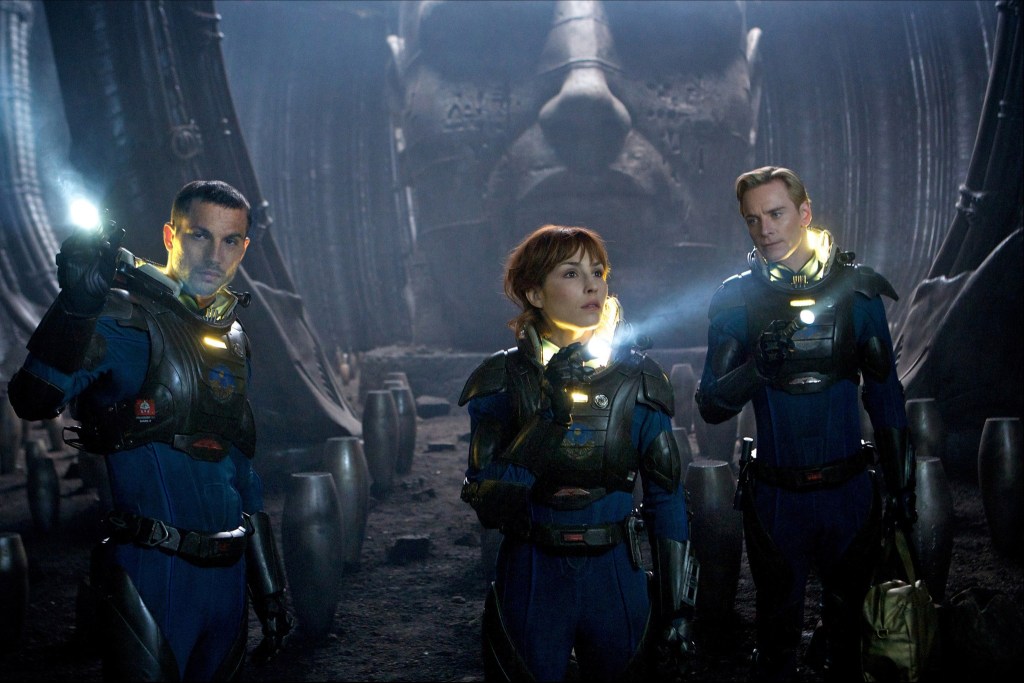
The year is 2089. Scientists have just uncovered caveman drawings which somehow depict a far-away star system. Fast forward a few years later and the scientists are on a ship to the star system, aiming to touch down on a planet remarkably like Earth. Fans of the franchise can probably already guess that the Weyland Corporation is footing the bill.

Ridley Scott’s Prometheus reminds me of The History Channel’s Ancient Aliens. Like that show, there are huge leaps of logic. 2001: A Space Odyssey was great because it found a way to balance Arthur C. Clarke’s rigorous science with Kubrick’s interest in mysticism. Prometheus, on the other hand, dumps the science entirely while crapping out unbelievable woo which doesn’t just aim to explain the origin of the aliens, but humanity itself. I just find it embarrassing that one of the most beloved science fiction franchises is now entwined with the idiotic pseudoscience made popular by Chariots of the Gods.

Scott plays well with the canon established since his original film, but Prometheus isn’t sure whether it wants to be a horror film, like the quiet original, or an action movie like James Cameron’s bombastic sequel. The result is a constant tug-of-war between the two styles, which makes for an unusual pace. If you’re expecting a tonal prequel to Alien or Aliens, you’re going to be disappointed, if not a little discombobulated. Having said that, it’s probably the most inspired effort since 1986, though with stinkers like Alien 3 and Resurrection, is that really saying much?

Charlize Theron has never seemed more robotic. (Perhaps she’s an android? If so, what the hell does that add?) In behind-the-scenes footage, producers claimed the writers fleshed out her character when they learned she was playing the part. If this is true, I can’t imagine how one-dimensional the character must have been in the first place.

Guy Pierce, playing the founder of Weyland Corporation, appears in old-age makeup that looks so phony you don’t accept him as a character, but an unnecessary special effect. There’s no need to have young men playing old men unless you see the character young and old in the same movie—even then, it’s almost always more effective when you just get two actors to… you know, act.

Meanwhile, the trailer gives away more than it should have, much more than I’m giving away here. If I say anymore about what I’m referring to, I’ll be spoiling it myself. But if you’ve seen the trailer and you have a decent memory, you’ll probably be able to put two and two together long before you were supposed to figure it out. 

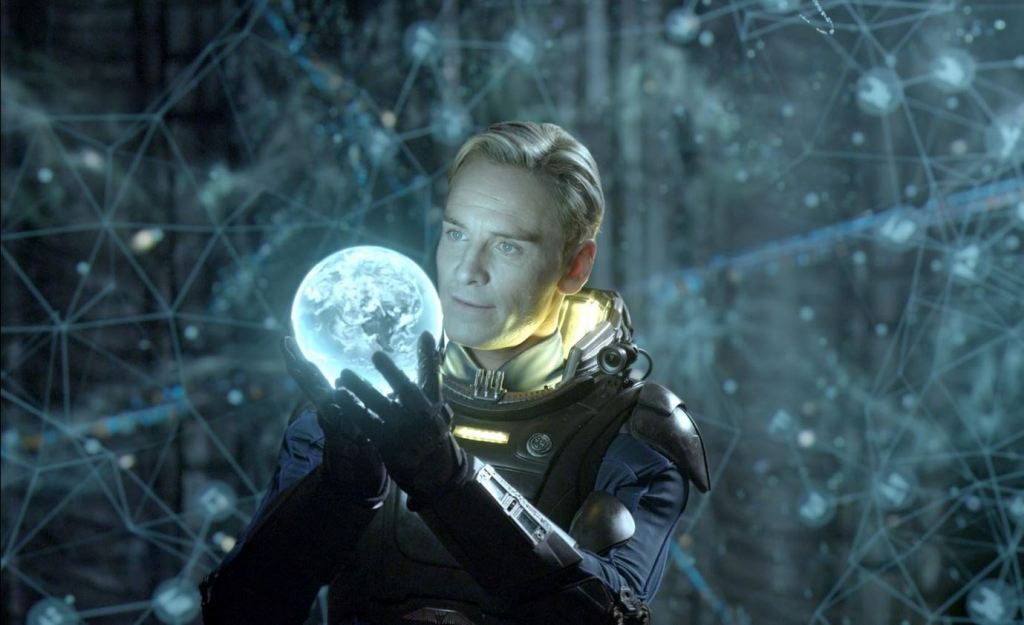
I do want to point out that Michael Fassbender as David the android is probably the most intriguing character of the entire seventeen-man crew, but most of that comes down to the mystery surrounding him. Does he have human emotions? If not, why does he act the way he does? Why does he idolize Peter O’Toole? Is he merely programmed to behave as if he idolizes O’Toole? The oddest thing about David is the fact he seems to be more advanced than Ian Holm’s depiction of Ash in the original film, which is set nearly a hundred years after this one.

At any rate, there’s quite a bit good in Prometheus, too, but I don’t want to spoil the fun. It’s not good enough to be a classic, but it’s good enough to go see it in theaters.

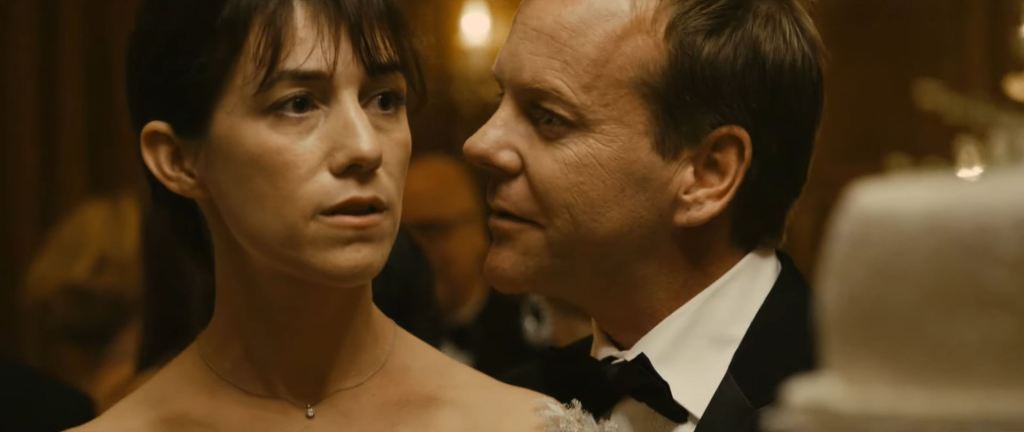
Melancholia (2011)

By the end of Melacholia, the world will be destroyed. That’s no spoiler—it’s shown first thing so the audience won’t hold out for an unlikely Hollywood ending. Although the classical music and imagery begs comparison to 2001: A Space Odyssey, to call this science fiction is both an insult to Lars Von Trier’s intentions and to science fiction itself. The idea that such a rogue planet exists is a “serious” subject of countless conspiracy theories; frankly, the concept is too preposterous to take seriously.

Indeed, there was a Father Sarducci joke in which the comedian asserts there is a planet on the other side of the sun. There, everything is just as it is on Earth… only the inhabitants eat their corn on the cob vertically. In Melancholia, the vertical corncob planet is on a collision course with Earth. There’s no last ditch effort to save humanity. Nothing can stop it.

The most impressive shots are in the overture, before the title card is ever shown. Von Trier plays with the same high speed cameras he employed in Anti-Christ, giving us a taste of the themes and motifs to come. Then the film abruptly switches to hand-held photography as it focuses on Justine (Kirsten Dunst), a hyper-depressed individual who is struggling to deal with a dysfunctional family on the day of her wedding. It’s hard to believe nearly everyone in her family can be, as one character puts it, “stark-raving mad,” but Von Trier always exaggerates to show us how people like Justine (and himself) actually feel.

Despite her many blessings, including a wedding that may have cost as much as a Bugatti, Justine cannot be happy through little fault of her own. John, her brother-in-law (Kiefer Sutherland), comes to her and threatens, “You better be goddamn happy.” Justine’s sister Claire (Charlotte Gainsbough) initially comes off as a snotty bitch, but we soon intuit just how far Justine has pushed her. Claire loves her sister, warts and all. She’s a lot more stable and caring from her own point-of-view scenes than she is from Justine’s. When it’s clear the planet’s days are numbered, the roles swap: Claire becomes a mess while Justine stabilizes.

It’s hard to review a film like this. It’s not a crowd pleaser, it’s a deeply challenging and exhausting piece of cinema with real and unlovable characters. Yet I see parts of myself in Justine and I can relate to those around her. There’s a brutal but refreshing honesty which is more interesting to watch than a ragtag group of unlikely heroes flying around in spaceships to save the world. You’re either going to love it or hate it. Frankly, I’m far more offended by mediocre movies than polarizing ones. I can confidently say I will see it again someday, but I’m not in any rush to do so… as with Anti-Christ, I need time to recover.

5 reasons to get excited for Prometheus

1. Noomi Rapace

    Rapace is unreasonably attractive, in a non-Hollywood way, and she’s among the least obvious leads for a summer blockbuster. My favorite part of the trailer is when someone tells her, “You’re smiling.” She is smiling, giddily, presumably over a scientific discovery. That’s what I want to see: characters who react like humans, not stone cold action heroes. It’s so strange that so many actors are incapable of emoting awe, especially in otherwise fantastical movies.

    2. Charlize Theron

      Theron said Ridley Scott is her dream director. Word on the street is the role was a two-dimensional character, which the writers punched up when Theron came on board. You’d expect the company stooge (I’m guessing it’s this film’s equivalent of the Paul Reiser part in Aliens) to be a boring stereotype, but it sounds like some thought has been given to her. Besides, there are reports that Theron does push-ups in the nude in one scene… need I say more?

      3. Ridley Scott

        When I was growing up, absolutely secure in my belief that 2001: A Space Odyssey was the greatest science fiction film of all time, I was collecting every new version of Blade Runner that released over the years, from VHS to DVD, from theatrical cuts to supposed director’s cuts. Little did I know how much the film was growing on me. By the time The Final Cut came out, it became one of my favorite science fiction films. It’s a good sign that Scott would return to the franchise he pioneered in the first place.

        4. The R-Rating

          We all expected this to be a PG-13 cash grab, because that’s what Hollywood does these days (even Die Hard 4 was rated PG-13). No, the R-rating isn’t an automatic indication of quality, but on the other hand, whenever a sequel to an R-rated film is rated PG-13, we can be certain that wasn’t an artistic decision. Usually it’s just the studio chasing a demographic that wouldn’t know a good movie if punched in the face by one.

          5. Alien films were really beginning to suck

            Imagine if the Alien Vs. Predator films had closed out the franchise. They were rated PG-13, sported generic directors, and the studio took the chicken-shit stance of refusing to screen it for critics. And whereas the ol’ metamorphis of an alien (facehugger > chestburster > xenomorph) was highly creative at the time, the novelty wears off when it’s literally older than I am. Frankly, it’s nigh time the Alien franchise got a shot in the arm.

            Nightfall by Isaac Asimov

            If the stars should appear one night in a thousand years, how would men believe and adore, and preserve for many generations the remembrance of the city of God!

            —Ralph Waldo Emerson

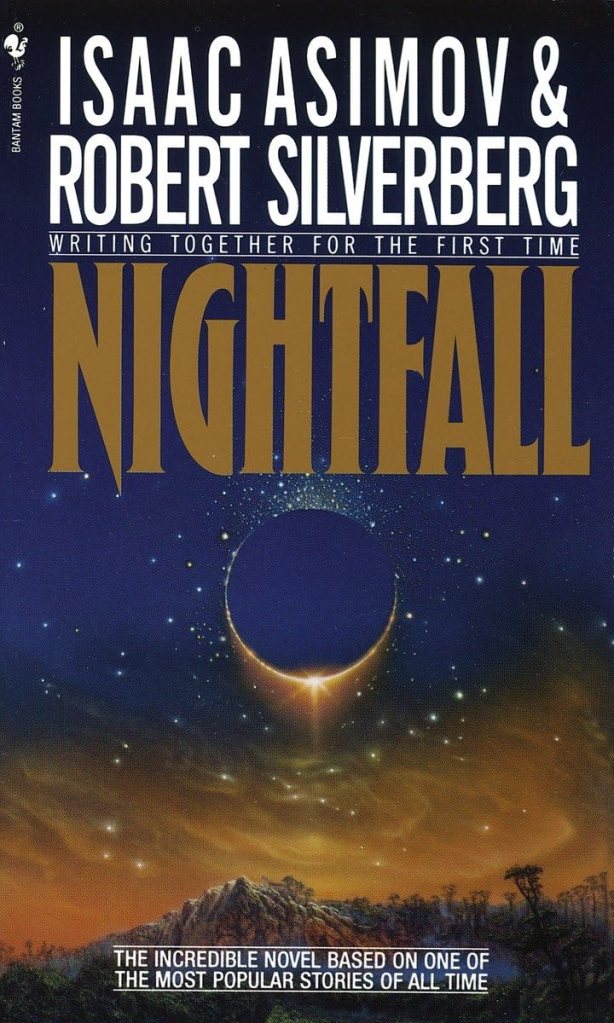
            In 1941, Astounding Science Fiction editor John W. Campbell suggested Isaac Asimov should write a short story inspired by the quote above. What if humanity had never seen the stars? In both the famous short story (anthologized over fifty times in various collections) and the lesser known novel, Nightfall proposes the idea that the night sky could drive one literally insane.

            The short story takes place on a planet orbiting six suns. At any given time, the six suns light every inch of the world’s surface. A group of scientists make a terrifying discovery: once every two thousand years, a celestial event plunges the planet into darkness. Much like the “psychohistorians” in Asimov’s Foundation, the scientists in Nightfall know their civilization is quickly coming to an end because the inhabitants of the planet are not prepared to see the heavens.

            The story is unsettling. It doesn’t play on the fear itself, but the fragile nature of sanity when faced with the unknown. The last line of the story is chilling.

            You could say the novel version, co-written with Robert Silverberg in the 1990s, dilutes that final line by telling us what happens next. That isn’t to say it’s not worth your time; Asimov and Silverberg mange to conjure unforgettable images of mass hysteria, including the widespread conflagration that naturally results from this brand of madness. When darkness reveals the stars, the people of the story burn everything they can get their hands on in an effort to make it light again.

            The novel begins years before the events outlined in the short story. We get to know many of the characters: a psychologist who is treating patients who have been exposed to darkness, an archaeologist who discovers several civilizations in the past have burned to the ground with remarkable regularity, and the astronomer who realizes nightfall is coming.

            The titular event takes place about midway through the book, more or less exactly as it happened in the short story. The last third of the book is about the aftermath, in which most of the world’s survivors are irreversibly insane. At one point, one of the main characters observes a group of men desperately trying to uproot a tree with their bare hands. That’s an image that sticks.

            The original title of this post was Nightfall VS Nightfall, but it wasn’t fair to compare the two. They are separate entities written at different times in Asimov’s life. The novel will likely never be considered a classic if only because it retreads familiar territory. I highly recommend reading the short story first, then trying out the novel years after you’ve ruminated over the original ending.

            The Best of John W. Campbell (1976)

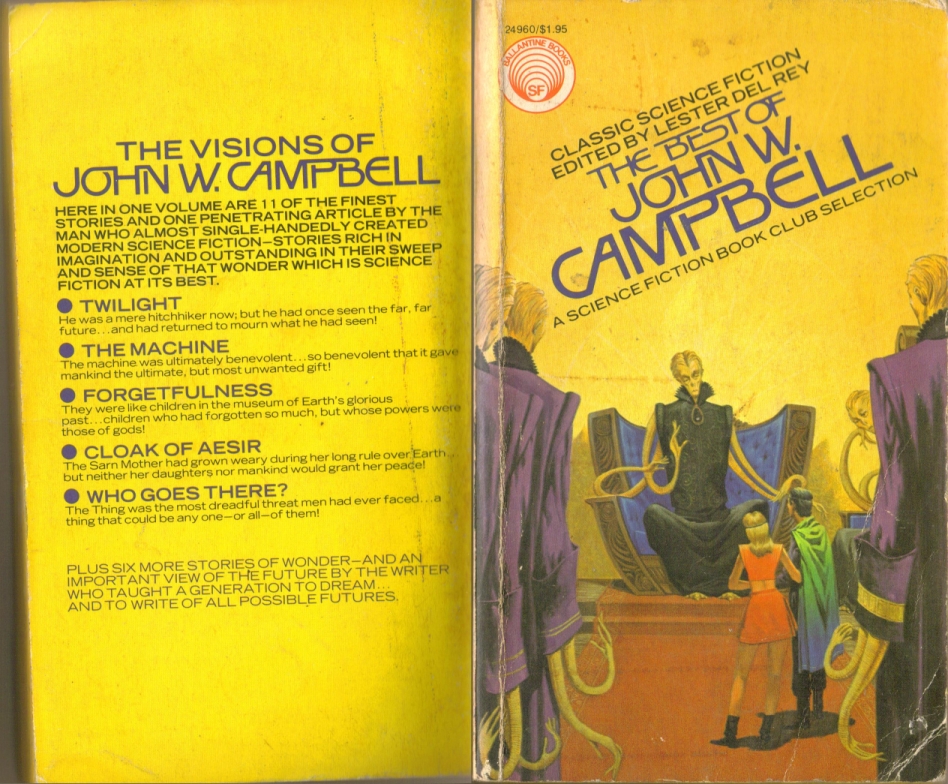
            cover art H. R. Van Dongen

            This collection, which I purchased from a used book store for a whopping dollar, contains Twilight, the short story originally published under the pseudonym Don A. Stuart. Editor Lester del Rey states in the intro that Campbell originally wrote pulpy stories under his real name. He then briefly developed the pseudonym Don A. Stuart to write stories of a more serious nature. The first story in this collection, The Last Evolution, isn’t of much interest as it’s one of his more pulpy efforts, but the other stories, starting with Twilight and (almost) concluding with Who Goes There? (the inspiration for The Thing From Another Planet and John Carpenter’s The Thing) provides a nice cross-section of his contributions to the genre.

            In his memoirs I, Asimov, the good doctor talks favorably of Campbell for the most part, but later expresses dismay over the man’s decision to buy into L. Ron Hubbard’s Dianetics, the original book of Scientology. Many of the writers who had been loyal to Campbell, then the editor of Analog Science Fiction and Fact (formerly Astounding), turned their backs on him. In his introduction to this collection, Lester del Rey only briefly mentions Campbell’s foray into pseudoscience, stating, “His eternal quest for undiscovered fields of knowledge led him into what I considered cultist beliefs, and I fought against those both privately and publicly.”

            Although I was previously aware of his role in spreading Scientology, it wasn’t until after I read these stories that I learned Campbell was a racist, writing articles in support of segregation; writers such as Samuel R. Delaney and Harlan Ellison publicly spoke out against him. I did not feel, at the time of reading these stories, that any of that baggage made its way to the page, but it’s clear that when such a man writes about alien threats, it is often with the subtext of, “I think you know who I’m really talking about.”

            So I wouldn’t recommend this collection to anyone who’s only interested in good yarns and cares little about the history of golden age science fiction. Having said that, I also find the personal views of Heinlein to be detestable (though he was not, as far as I know, a racist) and still thoroughly enjoy much of his fiction.

            Maniac Mansion Deluxe

            Maniac Mansion was a game that fascinated me as a child. It seemed cool, but despite all its hamster-microwaving glory, there was a problem: controlling it on an NES controller was a pain in the ass. The game was obviously developed with a mouse in mind, but what good is that knowledge after you already rented the damn thing at the video store?

            Fast forward more than twenty years later (yes, it really has been that long) and a German fan created a remake that works like a dream, even on 64-bit operating systems. There’s a fine line to walk when remaking a classic: do you update the graphics for a younger audience at the risk of alienating those old enough to have played the original? Or do you give in to nostalgia and release your game looking dated? Thankfully, the remaker opted for a combination of the two with exceptionally improved music.

            As usual, I start the game forgetting the first person who enters the kitchen is going to get locked in the dungeon. That person, in my case, is Dave. So I’m roaming the house with the two chicks when I come across the talking tentacle. The tentacle doesn’t attack, it just stands there like an impassable slob. In order to progress, you have to give him food.

            Obviously the Tentacle Chow should be the perfect food, but the tentacle complains that he’s still hungry after you feed him that. So then through a process of trial and error you’ve got to fetch the wax fruit from the room with the unfinished painting. Yes, tentacles think wax fruit is delicious. Then the lazy bastard still refuses to budge unless you get him something to drink. Pepsi? Nope. Soda makes him burp.

            Like most adventure games of the era, it’s a maddening exercise in convoluted logic, but hey, even when you cheat it with a guide, it’s more fun than the newest Duke Nukem game.

            2025 update: the originally posted link stopped working. The original game is officially available on Steam.

            Does Your Computer Play Beethoven?

            Here’s one straight from Microsoft’s official support files: If your computer is playing “classical music,” seemingly at random, you’ve got a problem.

            From Microsoft’s official support page:

            During normal operation or in Safe mode, your computer may play “Fur Elise” or “It’s a Small, Small World” seemingly at random. This is an indication sent to the PC speaker from the computer’s BIOS that the CPU fan is failing or has failed, or that the power supply voltages have drifted out of tolerance. This is a design feature of a detection circuit and system BIOSes developed by Award/Unicore from 1997 on.

            Freejack

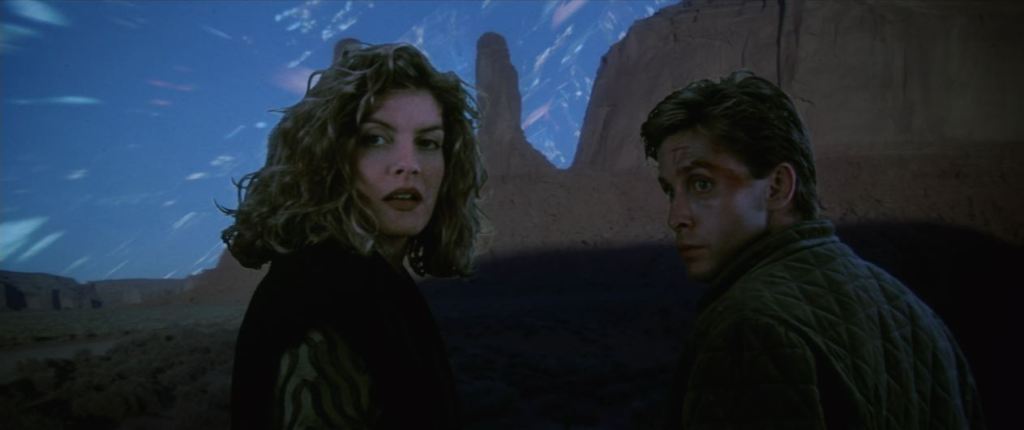
            Emilio Estevez is a race car driver in the year 1991. He’s married to Rene Russo who has a killer set of legs. An early shot frames those legs against a messy bed. I distinctly remember this shot piquing my interest when I first saw it on Pay-Per-View as a 10 year old boy. Unfortunately, when the camera panned up, I was dismayed to discover it was not Russo at all, but the considerably boyish and oddly hairless Estevez, wearing a pair of whitey tidies.

            One of the reasons I love B-movies is they’re often in a hurry to get to the good stuff. It’s not long before Emilio is racing his pink race car around the track while the music lets us know something bad is about to happen. Here’s what happens next in a dazzling (if not confusing) matter of seconds:

            1. A closeup reveals a race car’s front tire has just rubbed Emilio’s back tire. Just before the camera cuts away, we see the tail end of Emilio’s car lift from the track.

            2. An awkwardly inserted shot, one of pure cheese, zooms in on Russo wearing a dumb hat as she screams.

            3. The camera cuts back to Emilio’s car, which is now sailing through the air (somehow) before it collides with an overpass and explodes in slow motion.

            4. Emilio, sans car, falls on an operating table. The medical team waiting for him are dressed in silver hazmat suits, which A) lets us know this is the future and B) kind of makes them look like giant baked potatoes. One of the baked potatoes calls for “the lobotomy gun.”

            5. Transient rebels (every 90s cyberpunk movie has ’em) attack the convoy… wait, did I forget to mention the operating table was housed inside a moving vehicle?

            6. Mick Jagger acts… kind of.

            7. The rebels’ missile launchers rock the vehicle Emilio’s in. He seizes the opportunity to swat away the lobotomy gun, which fires green lightning. One of the nurses screams, “We’ve got a freejack!”

            8. Emilio escapes from the vehicle, which is somehow on its side now.

            9. Mick Jagger instructs his henchmen to, and I quote, “Get the meat.”

            10. Emilio, despite being the only person wearing a 90s jumpsuit, manages to evade the police of the future until he’s caught by a phone booth of all things. He’s a little slow, but eventually realizes he’s in the far-flung year of 2009, which is so far in the future, I frankly have a hard time imagining it.

            The reason they set the bulk of the movie a few measly years later is so Emilio’s character can rekindle the flame with his wife, Russo, who’s barely aged a day. That’s all fine and dandy, but there’s talk of the “Ten Year Recession,” which means the movie was already dated eight years after it came out. Not that anyone involved with this turkey thought anyone but lame bloggers would be talking about it in the future.

            So no, I won’t make fun of the dated stuff. What I will make fun of is the casting. The obvious mistake is Mick Jagger. I hoped he would be funny bad, but he’s just bad. And the problem with Emilio is he already looks eighteen years younger than Russo. I’m not saying Rene Russo looks old. I’m saying Emilio Estevez looks like the kind of guy who still gets carded at bars. (“Don’t you know who I am! Haven’t you seen Young Guns?“)

            I have a lot of issues with this movie. One is the absurd lack of characters of color. One black man lives in Emilio’s old house, which is now a slum, another is Russo’s chauffeur, and the third is a bum. Movies about the future should have a good reason for only having white people in it and Freejack has no excuse.

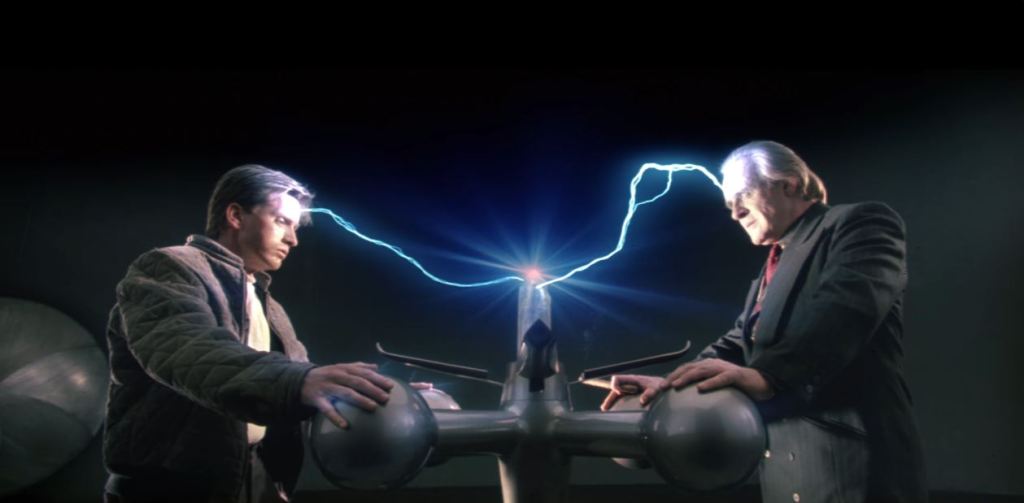
            Anthony Hopkins is the bad guy, by the way, stumbling into the picture exactly as the Emperor was introduced in The Empire Strikes Back, hooded cloak and all. So we’ve got Hopkins and Russo, two great actors neutralized by Mick Jagger’s ability to ham up absolutely anything.

            The most watchable part comes towards the end. There’s a fun sequence taking place inside the mind of Anthony Hopkins, though it’s nothing really new to the genre. Unfortunately, I’d been struggling to stay awake for so much of the movie, I finally fell asleep at that point and missed most of the good stuff. When I woke up, Mick Jagger had somehow turned into a good guy.

            My biggest complaint is the lackluster romance between Emilio and Russo. When they’re reunited in 2009, Russo promptly turns him in to the authorities. When they’re reunited a second time, Emilio is inexplicably cruel. I don’t even remember if they ever kiss. The most they do is hold hands and speak to each other in whispers. What a dud.

            Note: I haven’t read the Robert Sheckley novel Freejack was based on, but I admire Sheckley and I’m sure the book was better than this.