
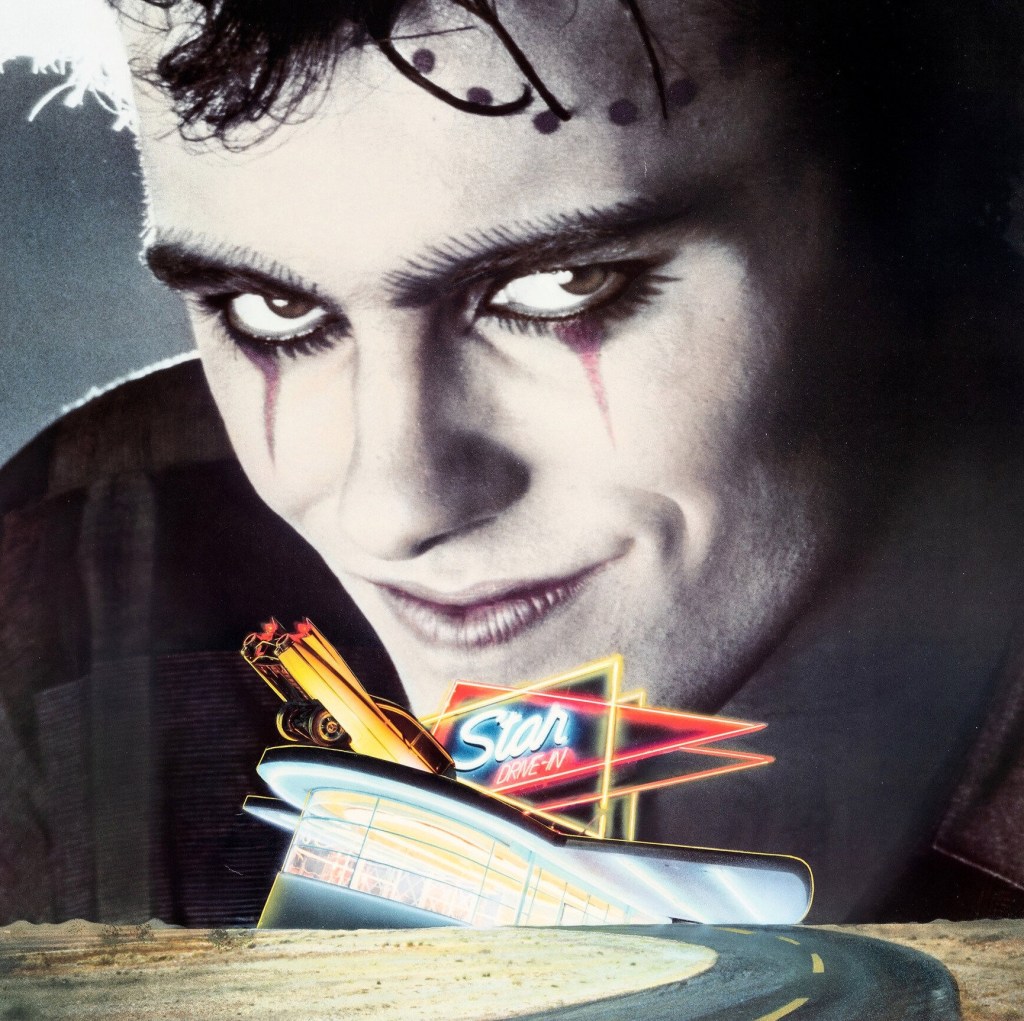
Dead End Drive-In (1986)

This one’s a curiosity. Why does the title lead you to believe it’s a horror movie when it’s more like Mad Max Lite? How have I never seen it before? Why don’t people talk about it these days? Why did they hyphenate “Drive-In” but not “Dead End?” I mean, I guess that’s correct, but it just looks weird?

Dead End Drive-In is not a post-apocalyptic flick. More like “mid-apocalypse.” A series of story cards open the film, foretelling believable events that will lead to the dystopian setting we’re about to see: a deadly riot, a nuclear accident, a genocide in Capetown, an economic crisis that ultimately leads to “the government” invoking emergency powers (The local government? The Australian government? The world government?). This film takes place in the future, but it’s the very near future, like mid- to late-90s. The filmmakers either thought this film would be completely forgotten in a few years or they truly believed that civilization was ending. I suspect it was the latter.

Tow truck drivers and lawless scavengers known as cowboys are at war in the streets, vying to be the first to reach the latest automobile accident. When the cowboys show up, brandishing shurikens and nunchucks, the corrupt police wipe their hands and leave the scene. The news crews get there before the ambulances, shoving bright lights and microphones in the dying people’s faces. Everything that isn’t bolted down in the world has already been scrapped. Everything that is bolted down is constantly being dismantled by hoodlums with grinders.

The main character, Crabs, takes his best girl to the drive-in movies in his older brother’s ’56 Chevy. The drive-in is located at the end of a three-kilometer road, which appears to be elevated over a large body of water. Now, as someone who has gone to the drive-in for as long as I can remember, I can tell you the first red flag that our teenage protagonists missed: the place is packed, but there wasn’t a long line to get in. While Crabs and his girl get frisky, someone steals the wheels off his Chevy. By the time he gets dressed, he discovers the thieves are a couple of policemen who are loading his wheels into the back of a paddy wagon. Rather than confront the cops themselves, Crabs and his girl go to the ticket booth to lodge a complaint. The manager isn’t particularly surprised by the news. When they ask to use his phone, he tells them they can’t. That’s against the rules.

The teens return to the car and camp through the night. When they wake up the next morning, they realize all the cars in the drive-in are in various levels of disrepair, likely disabled by the same policemen who disabled Crabs’s Chevy. The drive-in, as it turns out, is a concentration camp for the type of youths the government deems undesirable. It’s one of many drive-ins operating as such. Few of the teens who are trapped there want to leave. They get fed everyday. They get to watch bitchin’ movies every night. They get to live, rent-free, in graffiti-covered cars while throwing a never-ending party with all the drugs, booze, and sex they want, provided by the government. Eventually the government ships immigrants in, causing the drive-in’s denizens to devolve into white supremacy.

Whereas there were dozens of Mad Max and Road Warrior knock-offs in roughly the same era, most were routine carbon copies. Dead End Drive-In, also an Aussie production, takes only a kernel from George Miller’s franchise before running headlong into its own territory. You could even think of it as Mad Max adjacent, showing what might have taken place beyond the death roads. There aren’t a whole lot of car chases. There’s surprisingly little violence. There’s just a straight-laced teenager who’s surrounded by a commune of drug-abusing punks who alternatively want to beat him and get him to join them. It’s a lot of fun watching him plan his escape.

I’ve said this before in my review of Blood Rage: I can’t possibly remain impartial when a movie is set in a drive-in theater. Having said that, I don’t think you have to love the drive-in as much as I do to find enjoyment in this picture. It’s a solid film with a simple plot and a likeable hero. It’s got a nice wind-up to some decent action at the end. It’s not as thrilling as Mad Max or as irreverent as, say, Repo Man, but then again, what is?

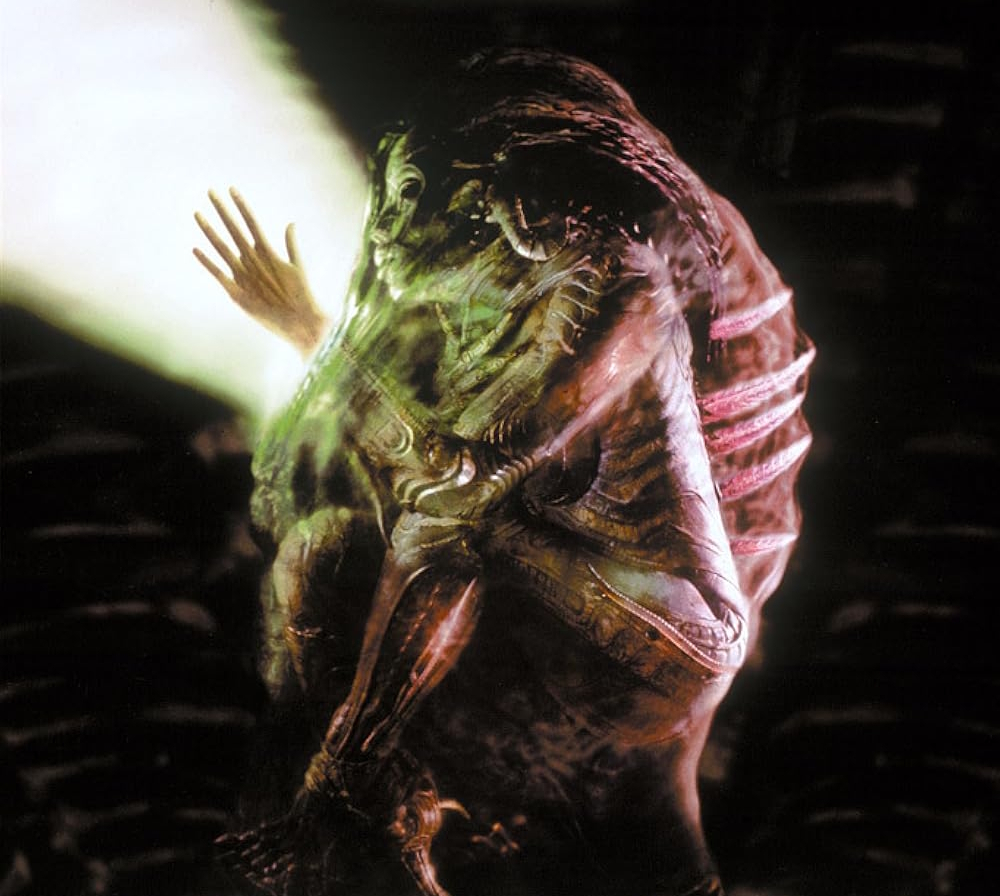
Species II (1998)

The premise for Species II is inspired: an astronaut has been exposed to the same alien DNA that resulted in Sil’s creation in the first film. In order to hunt him down, the government commissions the use of a Sil clone named Eve. That simple little synopsis… doesn’t it just fill your head with exciting possibilities? They even bring back Michael Madsen and Marg Helgenberger in addition to Natasha Henstridge, reprising the role (kinda) that made her famous. I mention this because I had it in my head that this was a straight-to-video sequel, but in reality it was a late 90s theatrical release and I’m surprised I don’t remember seeing trailers for it or anything of the sort.

Despite sporting roughly the same budget as the first film, the opening shot of a Martian orbiter warns us that Species II is going to look a little cheaper. Not a lot cheaper, but noticeably so. In the first film, most of the boring backstory was only hinted at, allowing Sil’s introduction to take place mere minutes before she escaped, kicking off an entertaining pace. No such luck this time around. The unconvincing trip to Mars takes ten minutes to get out of the way. The introduction of Eve, the G-men antagonists, the infected astronaut’s plan—it all takes another twenty minutes to slog through. It’s not until the thirty-minute mark when Madsen, ostensibly the hero of the film, finally wanders into the picture. So why isn’t Eve the hero, á la Terminator 2? The decision to downgrade Henstridge’s role to a supporting character is baffling as she was far and away the best part of the first movie.

In the prolonged first act, we learn that Madsen and Helgenberger have split up while he chased private security work and she took over Fitch’s position as the lead scientist on the government’s alien experiments. That throwaway line in the first film, in which Helgenberger posited that Sil developed psychopathy from being raised in an all-male laboratory environment, has now been taken literally: all lab personnel who interact with Sil’s clone are women. Never mind the fact Eve is still a prisoner in this scenario, enduring cruel experiments that would make literally anyone a psychopath. The film’s biggest sin is that Eve is trapped in the lab for three-quarters of the runtime with nothing interesting to do until her safeguards are predictably deactivated. What a waste.

This time the villain is the extremely wooden astronaut who’s hoeing his way across the city, creating human-alien hybrids with every attractive woman he comes across (no pun intended). The human inside him is horrified by what happens to the female hosts so he blows his head off with a shotgun in a CGI shot that’s as ambitious as it is cartoonishly phony. When the alien DNA reassembles his head (complete with the same haircut and stubble growth), the human inside the character is officially gone. The first film succeeded because of Henstridge’s powerful screen presence as a villain. What we needed for this sequel was a T-1000. What we get isn’t even interesting enough to grace the pages of a K-mart circular. (Incidentally, the actor’s Wikipedia page lists an arrest for indecent exposure to children.)

They had all the elements of a great sequel here, but trip right out of the gate. The best films like this start as close to the end as possible, as evidenced by the original picture. And whereas the first film had a dynamite cast, this film casts a visibly bored James Cromwell, playing the astronaut’s senator father. That’s so it can waste the audience’s time explaining the astronaut’s political aspirations and strict PR training… but for what purpose? What the hell does that have to do with any of this shit? And the G-men are just here because movies like this always have G-men. They ultimately do nothing, flying away on a helicopter as soon as the climax begins.

Another reason Alien and the original Species succeeded is because, more often than not, males were the victims of the vaguely psychosexual violence, which tapped into fears men rarely had to think about before (rape, forced procreation, etc.). More than one woman in this film is subjected to horrifically accelerated labor which results in her abdomen exploding like the foil on a pan of Jiffy Pop. In another scene Eve is choked out by a phallic tentacle (no, I’m not reading too much into this: it’s literally supposed to be an alien penis), which feels less like harmless movie violence and more like it’s betraying some deep-seated shit the filmmakers had going on at the time. To be clear, I’m not offended by the content (see: the rest of the sleaze I feature on this blog). I’m offended because it’s missing the entire point of the original film.

Species (1995)

Ben Kingsley’s Fitch, the lead scientist on a top secret experiment, watches from a secure overlook as his lab workers pump cyanide into the containment chamber of a perfectly normal looking girl named Sil, played by a teenage Michelle Williams. Scared, Sil pleads with the scientist who merely mouths the words, “I’m sorry.” When the chamber fills with the deadly gas, she taps into superhuman strength and punches her way out of the lab’s heavy security.

As she attempts to disappear and blend into society, Fitch assembles a ragtag team of specialists to track her down: a freelance hit man (Michael Madsen), a pair of believable scientists (Alfred Molina and Marg Helgenberger), and an empathic government agent (Forest Whitaker) who’s probably my favorite character even though the script doesn’t do enough with his unexplained powers. Wouldn’t it have been great if the plot contrived for the empath and the monster to share a scene? As is, his supernatural abilities are mostly limited to assuring the audience that Sil is scared, which at times makes the hunt feel crueler than fun.

After killing a handsy hobo, the lab-grown girl steals a handful of cash, eats a million calories worth of junk food, and hibernates in a cocoon, metamorphosing into Natasha Henstridge in her very first role. Meanwhile, Fitch brings his team up to speed: some time ago SETI detected an alien signal which delivered an extraterrestrial DNA sequence along with the instructions for combining it with a human embryo. The result was Sil who is now hiding out in LA as she scours the city for an appropriate mate, which will ultimately lead to the end of humanity itself. “We decided to make it female so she would be more docile and controllable,” Fitch explains, to which Madsen responds, “Well, I guess you guys don’t get out much.”

At one point Helgenberger speculates that the aliens sent the DNA sequence as a form of pest control after determining humans would become a nuisance one day. In another scene, she posits that Sil’s psychopathy may be the result of being raised in a sterile environment without a mother figure. These scenes are few and far between, but touch upon slightly bigger ideas than you would expect from a science-action movie. Notably, Species released the year before Independence Day, which features a lot more technical mumbo jumbo even though it features a considerably dumber invasion plot.

Which isn’t to say Species doesn’t experience the frequent lapse of judgment. Early on, the team decides to create another Sil, minus the human DNA, “to see what we’re actually dealing with.” In reality, it’s a flimsy excuse for two of the characters to get trapped in a room with a hideous monster, which sports the worst practical effects in the entire movie. Later, Sil successfully throws the team off her trail, but then sets her sights on Madsen as her baby’s daddy, a plot point that’s forgotten immediately after it serves its purpose. What’s most disappointing is the kill scenes pale to Alien’s, and although Sil’s alien form is satisfyingly unique, the filmmakers give her a xenomorph tongue for penetrating human skulls.

This is my first viewing in thirty years. If you’re anything like me, Species is bigger and better looking than you remember. Out of literally hundreds of Alien knock-offs, it may be the best as it mostly limits itself to emulating the best parts instead of the easily reproducible stuff that B-movie filmmakers had been running into the ground for more than a decade. They even brought H.R. Giger in to add some truly perplexing images, such as a skull-faced nightmare train and extendable nipple-snakes. Even when the plot predictably devolves into flamethrowers and confined mechanical spaces, it’s still a cut above the rest of the clones, if only because it wraps up quickly thereafter. 

Where it really punches above its weight is in the unusually likable cast, which balances the prerequisite technobabble with genuinely fun banter. Sure, you can talk yourself out of liking it if you just prod at the hokier elements (Sil’s motivation to mate, her alternating stupidity and brilliance, the fact that she uses a Jedi mind trick in precisely one scene and never again). Alternatively, I’d recommend accepting it for what it is: a better-than-average science fiction flick that gave the world Natasha Henstridge, who commands the screen as well as her seasoned costars.