Final Destination 6: Destination Finaler

The Final Destination franchise is the rare example of a horror formula done right. In the first act, the hero has a premonition of a freak accident that will kill a large group of people. Armed with this knowledge, the character can avoid (but not always stop) the tragedy, saving loved ones in the process. Unfortunately, it won’t be long until Death returns to finish off those who were “supposed to die,” usually in a predictable order.

I find the concept irresistible. If we can have hundreds of movies about vampires, zombies, and superheroes, why can’t Final Destination be a genre? The films still have a lot more steam in ’em than Freddy or Jason had by their sixth installments.

Final Destination Bloodlines is a lot more creative than its generic title would suggest. The film begins in 1968 at the grand opening of Skyview Tower, a preposterously tall restaurant that resembles Seattle’s Space Needle on growth serum. There’s a single elevator and a narrow set of hard-to-find stairs (nobody knows they exist until an employee points them out) which leads me to believe fire marshals must not exist in the Final Destination universe. A young woman named Iris foresees that the glass dance floor will crack as the restaurant nears capacity, which will kick off a hilarious chain of events that has victims being roasted alive, crushed by pianos, and impaled left and right.

This is thrilling stuff. It usually is, but the humor’s been turned up a skosh. The producers wisely stop just short of jumping the shark entirely, but manage to give the audience more of what they want. Consider how “Raindrops Keep Falling on My Head” plays from a tinny radio as the diners come falling out of the sky on the valet attendants. I really believe the first stories our prehistoric ancestors ever told was probably “Things That Can Kill You” and the Final Destination films tap into that primal excitement in a darkly funny way.

Fast forward to modern times and we learn that the premonition has in fact become a recurring nightmare for Iris’s college-age granddaughter, Stefani, whose grades are beginning to slip because of her intrusive visions. In an attempt to banish the thoughts and get her life back on track, Stefani travels homeward to meet Grandma Iris, who convinces her their entire family is cursed; Death will come for them in order of oldest to youngest.

You’ve seen this before. You already know that everybody who escaped Death the first time will gather with varying levels of skepticism while the hero struggles to convince them of the danger they’re in. Because they’re dealing with a faceless enemy which can’t explain its motivations (the franchise’s biggest strength), there will be some wild assumptions and leaps of logic that rarely prove right for the characters. In order to get scant insight into their predicament, they’ll have to speak to someone who actually knows what’s going on.

That knowledgeable character is usually the mysterious undertaker played by Tony Todd, who this time around gets a brief origin story. I rolled my eyes at the news that this installment would flesh the character out. Thankfully, his backstory is handled about as well as it could have been. But the rest of his scene? Not so much. I’m sure a lot of fans will appreciate Todd’s real-life send-off, but the way he verbalizes the previously unspoken moral of the Final Destination films comes off so hackneyed that I kinda expected him to turn to the camera and say, “And that’s the final destination.” Wink.

That doesn’t matter. I’m nitpicking a great movie. In a post last year, I said Final Destination may be my favorite horror franchise of all time. That’s still true. I’m looking forward to future installments (so long as soulless studio execs don’t go down the dreaded “reimagining” route). If the filmmakers keep it simple and only innovate just a little in each installment, this franchise could go on forever as far as I’m concerned.

See it with a crowd.

What’s Magma? My Love-Hate for Disaster Flicks

The year is 1997. I’m fourteen years old and I’m about to watch Volcano, a disaster movie in which the titular rupture forms in Los Angeles like a geographic zit. I’ve been dying to see it ever since I saw it advertised on E!’s Coming Attractions, which is where ancient people used to watch movie trailers. The previous summer had seen a monumental leap in special FX technology with the likes of Independence Day, Twister, and Mission: Impossible. This summer, moviegoers expect nothing short of awe. What they get instead is some of the worst CGI in history: Air Force One, Spawn, and yes, Volcano.

The first notable offense in Volcano comes early on: Tommy Lee Jones squints at Anne Heche and asks, “Magma? What’s that?” I couldn’t believe my ears: Magma! Did this moron just ask what magma is? I get that he’s supposed to be a salt-of-the-earth type (That’s a stretch for Tommy Lee Jones, huh?), but come on. How can you root for a character this stupid?

Shortly thereafter, the head of the transportation authority, who previously ignored warnings to shut down underground transit, sacrificially redeems himself by leaping into lava so that he can throw an unconscious subway worker to safety. The moment his shoes make contact with the lava, he sinks like a rock in water. In reality, lava is as thick as the sap that oozes out of this idiotic picture. I have managed to block all other memories of this film (other than a Rodney King joke at the end, which I’m sure has aged well) thanks in part to South Park’s classic spoof. Volcano was, by far, the worst movie I’ve ever seen in theaters.

In an oft seen example of films twinning, the trailer for Dante’s Peak was shown before Volcano. Disaster movies often come in twos; I distinctively remember the trailer for Chain Reaction, in which Keanu Reeves outruns a city-flattening explosion on a Moped, being tacked onto the beginning of Independence Day, a film in which many characters outrun several city-flattening explosions in a variety of vehicles. Don’t ask me how I remember this thirty years later, ask why screenwriters think explosions are so slow. I digress.

Having been burned by Volcano, pun intended, I didn’t bother watching Dante’s Peak until it showed up on Starz some time later. I’m grateful because it’s only a slightly better movie. Pierce Brosnan plays Scientist Guy who tests the acidity of the water leaking into his family’s boat by touching it with his bare fingers—in case the fact the water was smoking wasn’t enough of a warning. In yet another contrived show of sacrificial heroism, Grandma hops out of a boat and tugs it through the lake of acid after it renders their oars and motor useless.

Why are disaster movies and gooey melodrama inexplicably intertwined? Consider the ol’ “You’re too low! Pull up!” cliche in Independence Day. Then there’s the fact aliens can exterminate billions of humans, buildings, and vehicles at the push of a button, but a dog can leap into a maintenance closet and emerge without so much as a singed hair (people cheered in the theater I was at). Disaster movies insist on huge ensemble casts, but the universe must be awfully small if the same guy who drags an unconscious alien into Area 51 to meet the curiously apolitical president is married to the stripper who coincidentally saved the First Lady’s life halfway across the country.

I remember an introduction to the paperback edition of Speaker for the Dead in which Orson Scott Card laments the fact that so many stories don’t focus on families. Disaster movies, by contrast, are all about family. And guess what: families are boring in popcorn flicks. When you pay money to see the San Andreas Fault ripping apart like Velcro, the last thing you give a shit about is The Rock repairing his relationship with his wife and daughter. Huge casts are fine in movies that have the bandwidth to deal with such dynamics, but when you spread your cast so thin and force them to run away from crumbling infrastructure, they have too little time to grow. If there are too many characters to care about, you care about none of them.

Consider Armageddon, which concocts a romance between Ben Affleck and Liv Tyler, then pits Bruce Willis against them because “macho man wants better for his girl.” This B-plot has potential, sure, but when it’s fighting for screen-time with the sheer epicness of an end-of-the-world A-plot, both get watered down. The cinematic twin to Armageddon is Deep Impact which, among its myriad cast members and apocalyptic excitement, begs us to care about a blossoming romance between teenagers who have no bearing on the story’s conclusion. Incidentally, Téa Leoni’s performance in this turd is the biggest disaster of all… imagine announcing to the world that the end is coming with no expression whatsoever.

I’m sorry, is the end of the fucking world not dramatic enough? Must they keep cramming unearned feel-good moments into the pictures where famous landmarks go boom? How many times can we stomach seeing a lead character search for their offspring in the aftermath of Extremely Bad Thing? How many heroic sacrifices until we’ve finally had enough?

There’s potential for organic drama in a movie about characters facing the end of all humanity. Some films have touched upon this to varying degrees, but I wouldn’t necessarily call them disaster films. Melancholia is an honest examination of depression at the literal end of the world, both pre-existing and inflicted. Wisely, it focuses on a manageable group of characters and how they’re affected by the film’s crisis—not boring pedestrian drama. Though you might not like its characters very much, you do care about them… funny how that works in good writing. Unfortunately, if you’re looking for action, you’re not going to get it from this one, and it’s about as fun to rewatch as toe surgery.

Then you have Threads and The Day After (not to be confused with the especially idiotic The Day After Tomorrow), twin made-for-TV movies about mutually assured destruction by way of thermonuclear war. Both feature ensemble casts, proving that even this disaster trope can be manageable, but both films largely focus on the problem at hand instead of inconsequential relationship dynamics. In The Day After, the moment John Lithgow looks at the sky and sees American ICBMs on their way to Russia, he correctly surmises it means one of two things: the Russians will launch a counter-attack or this is the counter-attack. The moment is chilling, but again: not much action to be found in either of these films.

As for viral disaster flicks, 1995’s Outbreak is another movie I regret seeing in theaters (Siskel gave it a thumbs-up, which is exactly when I realized my tastes tend to align more with Ebert’s). The only fun I got out of that piece of shit was my prankster mother coughing out loud to freak the other moviegoers out. On the flip side, Contagion is a movie that does scratch that itch I have for good drama in disaster movies. One: it’s a stroke of genius to kill off a star like Gywneth Paltrow in the opening act so you know this is serious business; two: I think Matt Damon’s understated reaction to learning she died is perhaps one of the boldest acting decisions he’s ever made. His wife’s death isn’t tangential to the plot. It’s happening because of the plot.

The O.G. disaster flicks—Airport, Earthquake, The Towering Inferno, and The Poseidon Adventure— illustrate the biggest problem with the genre: the formula hasn’t changed in fifty years. The only thing that ever changes is the disaster itself and even that’s up for repeats. And when was the last time you saw an original disaster? Ron Howard’s once-planned film adaptation of Neal Stephenson’s Seveneves could have been a shot in the arm, but I see two problems with that ambitious production: the novel is too big to faithfully adapt and, frankly, it’s too smart for financiers to take a chance on. I personally don’t think American audiences are too stupid to understand complex disasters (unless you’re talking about the real-life disaster of climate change), but Hollywood execs disagree.

Why else would they have their characters explain fucking magma to us?

8 1/2: The Film About Itself

I was torn about which movie I should watch first on my new TV. It’s kind of a big deal. Whenever we got a new TV or made a change to the surround sound, the go-to in the house I was raised in was True Lies, but there hasn’t been a definitive way to view that film since it released on DVD. So I wanted the momentous movie to be something I’ve seen several times, for comparison purposes, and something that would demonstrate the inky blacks and high contrasts possible on OLED display technology. (Who am I kidding? I didn’t even know what the “O” in OLED stood for.) I deliberated over this decision for what felt like hours, halfheartedly testing big budget Hollywood flicks here and there, before going all in on 8 1/2.

A sixty year old black and white movie may not seem like the perfect test drive for a new TV, but I marveled over every pore in Marcello Mastroianni’s face, scrutinized every wrinkle around his haunting eyes, and distinguished every armpit hair on the beautiful Italian women who surround him. Considering I first saw 8 1/2 on a badly worn VHS, then a handful of times on plain ol’ DVD (which I believe was $40 at the time), to say the Criterion Collection’s latest restoration is an upgrade is an understatement.

8 1/2 is Federico Fellini’s semi-autobiographical tale which, by his own count, is his eighth and a half movie. The film depicts a director who’s torn about what his next picture is about, so much so that he frequently dodges his eager collaborators’ inquiries. Constantly hounded by his wife, her protective friends, his mistress, his producer, a brutally honest film critic, and a chain-smoking entourage of jackals, Mastrioanni portrays Guido as a filmmaker who glides along the edge of stress-induced madness, avoiding his problems whenever possible. (At one point he’s literally dragged to a press junket like a tantrum-throwing child.) The meta aspects emerge as he’s told he’s too young and inexperienced to make a film about childhood memories, which is ultimately the very thing Fellini himself is doing.

The film opens with a famous dream sequence in which Guido levitates over gridlocked traffic and takes flight through the clouds. Moments later he frantically tries to untie the rope he discovers fastened to his ankle, but it’s too late: the man flying him like a kite laughs as he jerks the semi-fictional movie director back down to earth. The “real” Guido awakens from the dream-turned-nightmare with a start. Florescent lights flicker to life as Ride of the Valkyries plays and, for the first time, we see Guido’s face framed in a mirror, his weathered eyes suggesting he’s weighed down by far more than your average forty-something.

Guido is a man who copes with the pressures of the real world—poorly—by escaping into childhood memories and self-serving fantasies. His last picture was a rousing success and everyone’s dying to know what’s next, but even Guido’s not sure. He just knows a lot of people are counting on him and he’s the reason an enormously expensive film set has been constructed on the beach. Guido has postponed production, ostensibly to relax at a spa where all the other guests move in lockstep with the music. There the line between fantasy and reality is blurred yet again as he’s served mineral water by his ideal starlet, Claudia Cardinale, who haunts his thoughts like a ghost.

You can never be 100% sure what is real and what is fantasy, if Fellini even cares to make distinction. It sounds like a muddled mess. It’s not.

Terry Gilliam on Fellini’s 8 1/2

In one flashback/dream/fantasy which perhaps represents Fellini’s own sexual awakening, a twelve year old Guido and a handful of his delinquent friends visit Saraghina, a large woman who lives on the beach and dances seductively for anyone who’ll watch. The boys rally for her to emerge from the remnants of an abandoned building, which she does like a vampire raised from the dead. Later, Guido imagines all the important women from his life (including Saraghina, a showgirl, his wife, his mistress, and a woman he merely saw in passing once) living in a harem where they feed, bathe, and pamper him. There they live only to serve until they reach the age of forty, at which point they must ascend to the attic, never to be seen again. However, even this juvenile fantasy devolves into a nightmare as the imaginary women revolt against his misogynistic ways. The fact that even Guido’s fantasies become self-critical represents another facet of his conflicted character; consider how much he hates the film critic and simultaneously values his suggestions. Still, Guido fantasizes about the critic hanging himself in a theater.

But talking about plot and meaning completely misses the point of a Fellini film—those elements don’t even become clear on the first or second watch. It’s like praising the the set design in a porno… why? What really drew me to his movies (and, I imagine, literally every other fan in existence) was the eye candy. The poetry of his camera movements and precise blocking is unrivaled. Every scene contains more richness than most filmmakers muster in an entire film. The camera frequently pans to performers who seem to be standing in place, waiting for their cue, but it’s always intentional as if Fellini wants us to believe that their actions are only significant if we are watching. Many have tried to ape his style and end up looking dreadfully pretentious.

Martin Scorsese on Fellini’s 8 1/2

I could watch Fellini films every week of my life—and damn nearly did for a significant chunk of my twenties. 8 1/2 is my favorite of the director’s films, precisely because the eye candy is laid on so thick. Some people enjoy rich fudge. I’m one of ’em. Even if it’s not your cup of tea, you gotta admit: Marcello Mastrioanni sure looks cool in sunglasses.

Final Destination may be my favorite Horror Franchise of All Time

As absurd as it is to believe that humans could intuit some sort of grand design, such premises are irresistible in movies, where even stinkers like Nicolas Cage’s Next can be engaging. The Final Destination series has two great premises: A) What if you could cheat Death? and B) What if by cheating Death you merely bought scant time alongside a hefty penalty? In the original Final Destination, Devon Sawa’s Alex is treated to a premonition of his impending demise, which allows him to save himself and a handful of his doomed acquaintances… initially anyway.

You would have a hard time naming many mainstream films that deal with ideas as unsettling as predeterminism—and that’s before you begin to ponder what, exactly, Death is and whether or not there’s an equal and opposite force that wanted Alex and company to live. Perhaps his premonition was merely a supernatural glitch—a bug in the cosmic code. Wisely, the series has yet to ruin its emergent questions with answers, although reports say the next installment will flesh out Tony Todd’s undertaker character, presumably because Hollywood screenwriters are allergic to mystique.

Great premises can only take you so far, but the series exhibits fine execution as well. Whenever Death’s preferred design fails, it devises Rube Goldberg levels of wildly entertaining events to correct its mistakes. The fourth film in the series, idiotically named The Final Destination, is the worst of the bunch with its SyFy levels of production value, but even it features a white supremacist getting dragged down the street by his own vehicle while somehow setting himself on fire in the process. If that’s the worst you have to offer, you’ve got yourself a solid franchise. Incidentally, my favorite Final Destination is the most recent entry despite some rather stupid character decisions, which is notable because there’s no other franchise in horror movie history that manged to save the best for last.

The formula is so novel, it holds up the weight of five films with ease. In the opening reel, our hero must find him or herself dying in a horrible accident that kills dozens if not hundreds of innocent bystanders. Moments later, the hero will wake up to find it was a bonafide premonition of the future, a future which can be changed. Unfortunately, it won’t be long before the large cast of expendable characters learn that Death will come back for them with a vengeance. What’s interesting about the formula is the filmmakers keep tweaking it with new rules that don’t conflict with the old ones.

In the first film, the principal characters learn that Death comes back for them in the order they were originally supposed to die, picking them off one by one like an invisible slasher. The second film reveals that Death, if unable to carry out its hit list forward, will work backwards (this one is the least logical Destination film because its heroine has multiple premonitions for no other reason than it’s convenient to the messy plot, but overall it may very well be the most entertaining). The third outing seems to suggest Death has at least enough consciousness to taunt its victims with photographic clues of their demises. The fourth expands the mythology in no discernible way at all, which is probably for the best considering it’s the least imaginative entry. And the fifth movie introduces the most radical expansion to the rules to date: Death will give you a pass if you willingly take someone else’s life. This leads to a boringly routine climax (a Final Destination movie really didn’t need a shootout scene), but also the most satisfying twist ending ever put to film.

Yeah, I said it. Eat your heart out, Shyamalan.

There’s a lot of silly stuff in these movies, most of it intended, which compliments the heavier implications. Nothing is more thrilling than cheating Death. Unfortunately, Death always wins in the end, it just so rarely does in the movies.

Eli Roth’s Thanksgiving

Let this sink in: it’s been sixteen whole years since Grindhouse premiered in theaters. You got two movies for the price of one: Robert Rodriguez’s Planet Terror and Quentin Tarantino’s Death Proof, garnished with four fake trailers directed by Rodriguez, Edgar Wright, Rob Zombie, and Eli Roth. After the experiment mildly failed at the box office (it released on Easter weekend of all dates), the movies were regrettably split into individual entities for DVD and VOD. The fake trailers were relegated to the special features section and low resolution YouTube videos.

One of those fake trailers absolutely blew the roof off with laughter: Eli Roth’s Thanksgiving, which was the horror director’s 2-minute ode to pre-Scream slasher flicks. The audience reaction probably could have tipped the Richter scale in the theater I saw it in. Nothing is more cathartic than a group of strangers laughing at things you ought not laugh at in polite society—and here was a mainstream movie doing it. And now, almost twenty years later, Eli Roth expands the two minutes into approximately ninety.

The movie opens on Thanksgiving day, 2022, as a Plymouth electronics store is about to open its doors for an early Black Friday sale. The rabid shoppers are gathered at the front doors, foaming at the mouths, when a misunderstanding sparks a riot that devolves into Final Destination levels of violent mishaps. Throats get slashed, heads get scalped, and people punch each other’s faces in over the limited supply of discounted waffle irons. Exactly one year later, a killer wearing a John Carver mask begins picking off the shoppers and security personnel responsible for the carnage. It’s up to a group of high school seniors to figure out who the killer is.

The killer’s identity doesn’t really matter and the reveal at the end is not particularly shocking. Eli Roth knows this and the audience should intuit this, too. I don’t think anyone was expecting a clever whodunnit when they purchased their tickets. What you should be expecting instead is an old fashioned slasher that just happens to be made in modern times—not to be confused with a “modern slasher,” which in this day and age is typically about as joyless as… well, getting cooked in an oven alive.

I couldn’t help but think of four other movies while watching this one: Pieces, Blood Rage, Deranged, and William Lustig’s Maniac (which I’m surprised to find I’ve never featured on this blog because it’s a doozy). If any or all of those are your cup of tea, then so is Thanksgiving. Otherwise, avoid it all costs because it’s really not intended for polite society. I must say that Eli Roth feels about 5 to 10% tamer in his depiction of gore as he remakes the fake trailer moments with varying levels of success.

Here’s what I’m thankful for this holiday season: Thanksgiving isn’t Cocaine Bear, which mocked the bygone era of exploitation films instead of embracing the genre. This one’s an honest-to-god slasher flick whose performers play it as straight as Leslie Nielsen did in his best comedies. There’s no winking at the camera and no indication the filmmakers think they’re above this kind of material.

The only characteristic Roth doesn’t nail: the acting isn’t bad at all, actually, and I wish the film stock looked more messed up like its Grindhouse counterpart. Other than that, it’s a fine antidote to the usual holiday offerings.

They (Still) Live

As I can’t imagine anyone reaching this blog without having already seen They Live before, I play fast and loose with spoilers.

I recently saw They Live as part of a 35th anniversary screening put on by Fathom Events. Oddly enough, it’s not the first time I’ve seen it on a big screen in the 21st century—the last time was at a double feature in a friend’s backyard, projected onto an inflatable screen and paired with Roddy Piper’s vastly inferior (but somewhat entertaining) Hell Comes to Frogtown. As real life political corruption and Joe Schmoe stupidity in the United States reaches hilariously depressing extremes, They Live hits harder than ever before. It could be my generation’s Dr. Strangelove or: How I Stopped Worrying About Inequality and Learned to Idolize the Wealthy.

I rank John Carpenter movies as follows: The Thing is his best, Escape from New York is stylistically his coolest, and They Live would be his most entertaining if not for the stupendously wild Big Trouble in Little China. Part of the reason They Live is so fun is “Rowdy” Roddy Piper, whose theatrical wrestling background translates into an endearing screen presence that’s simultaneously relatable and larger than life. When he initially discovers aliens have infiltrated and control every level of government, he chuckles in defeat. “It figures it’d be something like this.”

This pessimism comes shortly after he delivers a “I believe in America” speech that would seem contradictory to his character if you don’t detect the indifference in his tone. His only pal, a laid-off steel worker played by Keith David, openly berates the idea of the American dream—he hasn’t seen his family in months because he has to go wherever the scant opportunity to work takes him. The character points out that when the steel companies were in trouble, the workers pulled through for them, but when the workers were in trouble, the executives gave themselves bonuses. “The Golden Rule,” he says, “is he who has the gold makes the rules.” David is easily the most skilled and believable actor in the entire production, at times delivering reams of dialog while Piper mostly plays the silent type.

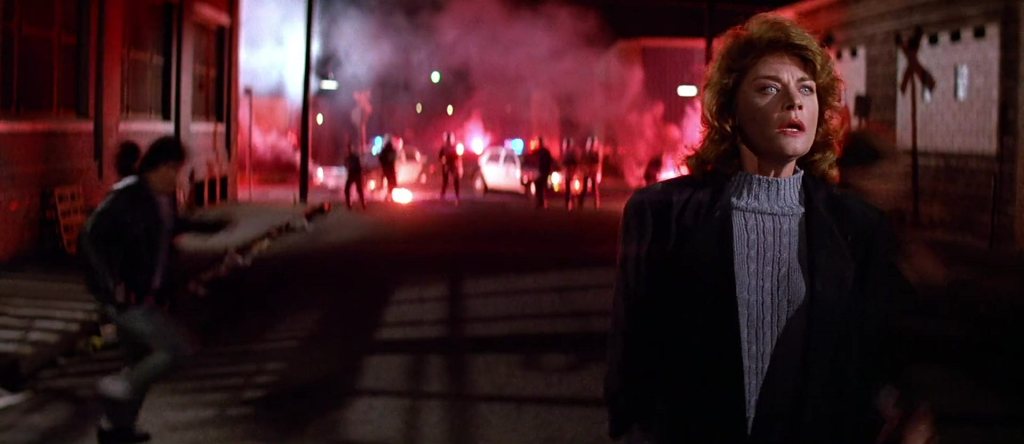
Midway through the movie, when you would normally expect a boringly routine love interest to be introduced, Carpenter instead pairs his hero with Meg Foster. Foster plays an oddly detached woman who immediately knocks his ass out of a tall window in an attempt to kill him. Later, she shows up to apologize in what appears to be a meet-cute moment. Here’s a detail I’ve never noticed before now: during their reunion, one of the background characters is instructing members of the resistance to attempt to befriend and gain the trust of their enemies as a means of infiltration… which is exactly what Foster is doing to Piper. It reminds me of that part in The Sixth Sense when the boy is explaining that some dead people don’t even realize they’re dead while the camera lingers on Bruce Willis’s face. Another detail my girlfriend pointed out: Meg Foster is the one who led the police to the resistance’s hideout in the first place.

I believe the famous five-minute fight in the alleyway still holds the cinematic record for the longest of its kind. I’ve always thought of it as a welcome indulgence of little import, but this time I reconsidered Carpenter’s intentions. Consider how many lower class men and women are in David’s shoes, helplessly preoccupied with their own struggles to make an honest living in a system they know is rigged. People like that know that hard work isn’t all it takes and yet they work hard anyway so as not to lose any ground. Getting them to release their tenuous grip on the status quo that shuns them would very well require a knockdown, drag-out fight of the caliber exhibited here.

Salient details that are easy to miss: not all the cops in Carpenter’s dystopia are aliens in disguise, but they all serve the elite. And not all of the elite are aliens, either, as greedy humans work with the aliens despite knowing that the endgame will result in a planet that’s uninhabitable for their own species. One of the downtrodden drifters (Buck Flower) from the beginning of the movie finds himself sipping champagne by the end, rubbing elbows with the economic overlords who just ordered the police force to bulldoze his homeless encampment. “We all sell out everyday,” he reasons. “Might as well be on the winning team.”

I haven’t even mentioned the iconic sunglasses. Created by scientists in the resistance, the special sunglasses let the wearers see the world in literal black and white. It turns out every form of mass media and all consumer goods are hypnotizing people to continue consuming, reproducing, and not questioning authority. The satire is sharp, but the metaphors are blunt. You can feel Carpenter’s rage against the inevitably destructive corporate machine oozing out of every pore of the screen.

I see a lot of old genre flicks screened for modern audiences. I love watching these movies with a group of strangers, but a lot of the time they laugh at the movie rather than with it. Curiously, They Live is one of the only times I’ve seen a modern audience laugh strictly at all the right parts. That’s some unusual staying power there.

Screenshots sourced from Movie-screencaps.com.

Summer Movies 2023

I’ll keep this list updated as I see more of the season’s movies… and there are a few placeholders in here so I can remember to watch all this stuff.

Air

Air is the riches to riches story of a little known shoe company called Nike. Despite the fact I have zero love for mega-brands, I thoroughly enjoyed the breezy nature of this flick. (Curiously, I’ve never watched a televised ballgame in its entirely, but I’m quite smitten on ESPN’s 30 for 30.) Matt Damon and Jason Bateman are two of the most likable actors in the business and they play off each other naturally. A good movie to watch on a rainy day.

Guardians of the Galaxy 3

Placeholder… it’s taking me a while to get around to this one because I was told you have to see the The Guardians of the Galaxy Holiday Special first (you don’t), which I found to be mind-numbingly awful and not just because I hate Christmas movies (I do). I’m no longer a big fan of Chris Pratt fan, either, and I’ve found his character unlikable since Infinity War.

Fast X

This one is admirable in many ways (rich cinematography, beautiful looking people) and embarrassing in a lot of others (forced humor, Vin Diesel). When it’s not being corny, and the CGI cars aren’t flying around like toys, I can kinda see the franchise’s appeal. Jason Momoa is almost great as the villain, but he goes one notch too far. Fast is so phony looking, I can’t be sure any of its actors have ever driven a car in real life, much less stepped foot off a sound stage. Did not finish, but I’m amused that whenever the stakes are high, there’s always time to burn rubber instead of, you know, accelerating efficiently.

The Flash

I don’t care for DCU films. Against all odds, I think I liked this one. The CGI is possibly the worst special effects I’ve ever seen in a mega budget movie, but they’re so consistently terrible that I kind of grew used to it? I detest nostalgia bait (and box office returns suggest most moviegoers feel the same way), but I actually liked seeing Michael Keaton in the bat suit again, even though the stuntwork makes him look far more agile than he did when he was half his age. I was also pleasantly surprised by this iteration of Supergirl, but I feel that the marketing team blew their load by spoiling her appearance in the trailers. Like, did they really think Keaton’s Batman wasn’t enough of a draw? At any rate, The Flash isn’t a great movie (far from it, in fact) and it isn’t a smart movie, but it is a fun one.

Asteroid City

Placeholder… Every time I see a Wes Anderson trailer, I think, “Oh, I already know what this is.” So it feels like a chore getting started on a Wes Anderson movie, but most of the time he exceeds my expectations. We’ll see.

Indiana Jones and the Dial of Destiny

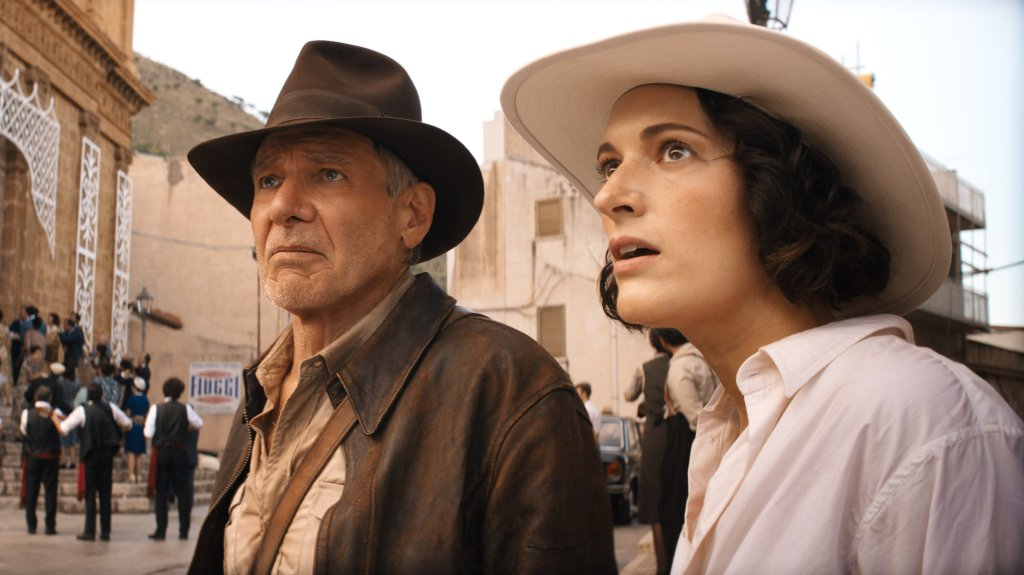
Here’s yet another movie churned out of Disney’s artless acquisition of Lucasfilm, but—to no one’s surprise—it’s only the second worst film in Indiana Jones franchise. The disappointment comes early on when a CGI Indy runs across a train top in a sequence that looks only marginally better than the vine scene in Crystal Skull. At the end of the day, this movie would have served Jones’s legacy better by not existing at all, but once you’re past that hump, there is a pleasantly amusing movie here, which includes an absurdly stupid but fun finale. Also: Mads Mikkelsen is one of the most versatile actors, like, ever.

Mission: Impossible Dead Reckoning Part 1

This is my second favorite action movie of the year (#1 is John Wick 4, which was the first movie that ever exhausted me in a positive way). I’m tempted to name Dead Reckoning my favorite Mission: Impossible movie, but AI-related plots are already feeling a little old hat and there weren’t enough high-tech gadgets or farfetched break-ins for my liking. Sure, they use plenty of masks and Tom Cruise parachutes onto a runaway train, but I miss the clever use of building hacking seen in previous entries. (Remember when they used an eye-scanner and a projector to break into the Kremlin? Huh-huh, that was cool.)

Talk to Me

This is the freshest urban legend vibe since It Follows and The Babadook. So many horror movies forget to be fun, which is only excusable when they’re really good. Talk to Me is fun and good, and its energetic pace thrilled the hell out of me. The kids in this Australian flick are endearing little pricks, which is evidenced by a wild montage of teens doing what teens do best: meddling with evil entities while laughing like a bunch of jackasses. There isn’t a tired scare-attempt in the entire movie, which isn’t something you can say about 99% of demonic possession flicks. The inevitable sequel will suck so embrace this one.

Barbie

Okay, this one has Pee-Wee’s Playhouse energy. My biggest problem with movies like this is they tend to establish a great fantasy world and then quickly move the characters to the boring “real world” (Last Action Hero is the worst offender of this trope). Thankfully, Barbie knows better and spends most of its runtime in a fantasy setting. This is the first movie of its kind that focuses more on its star power than the IP and it sure is refreshing. Overall, a very amusing movie and the humor is on point.

Oppenheimer

See my full thoughts here. Probably the best movie of the summer.

Oppenhype

If you’re lucky enough to see a 70mm screening of Oppenheimer, I envy you. You won’t have to sit through twenty minutes of mostly bad trailers because the movie itself is already pushing the limits of the IMAX film size. Pictures of the 11-mile long reel look as if its been jury-rigged to fit existing projectors. Unfortunately, it would have taken my group longer to drive to the nearest 70mm screening of Oppenheimer than it takes to actually watch it, so we settled for the digital IMAX projection even though there is a local theater projecting it on 35mm film.

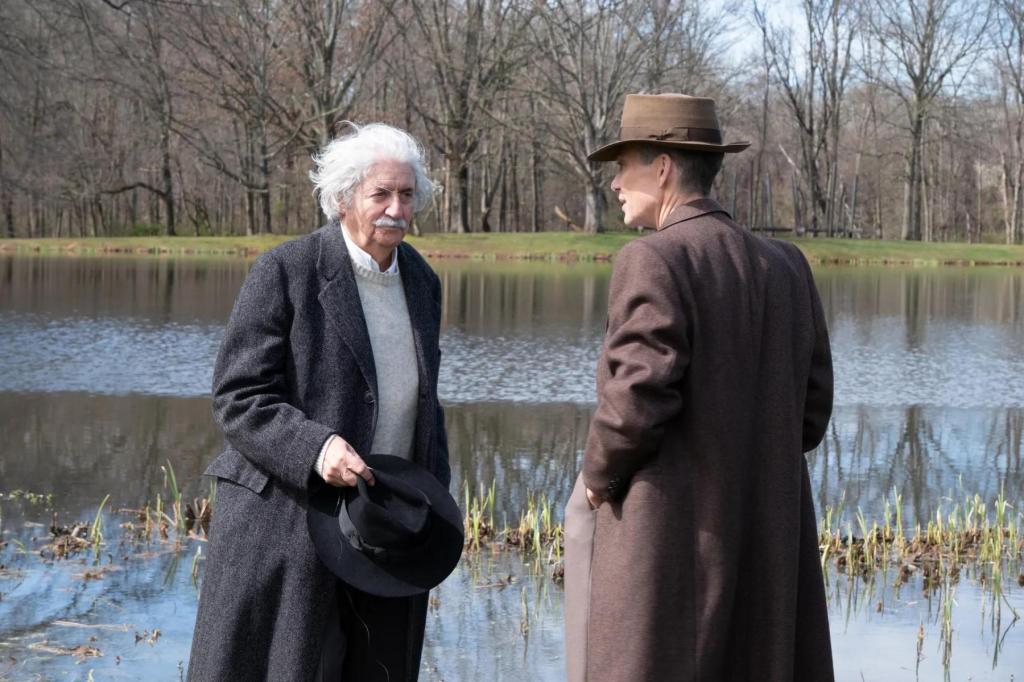
I’m glad we chose to see it big. I love big movies with big aspect ratios. Oppenheimer is certainly big, but it’s also bold. Director Christopher Nolan famously avoids CGI whenever possible, but the limitations of shooting this way are sometimes obvious in his previous films. Dunkirk features thousands of soldiers when there should be hundreds of thousands. The climactic shootout at the end of Tenet seemed more like a paintball match than a spectacle. What you get here is a three-hour picture that promises a big detonation and only shows it to you in glimpses reminiscent of what it must have been like to see it in person, carefully peeking out from behind cover miles way.

That’s not a complaint, it’s an admirable choice. There’s not a shred of war footage in the entire movie. The only violence we see is the violence in Oppenheimer’s head.

Was the real Oppenheimer capable of such empathy? Early on, we get our first indication that the character is going to be a challenging person to like when he injects cyanide into a professor’s apple over a classroom disagreement. Later, he’s disturbed by what he did and races back to the classroom to retrieve the poisoned apple moments before it unleashes unintended collateral damage. The historical accuracy of the scene is debatable, but I think it’s a peculiar coincidence that Alan Turing, another neurodivergent mastermind of the Allied victory in World War II, chose to kill himself with a cyanide-laced apple.

The film is so quickly paced (and dazzlingly scored) that even the audience with its benefit of hindsight is caught up in the scientists’ enthusiasm to build the mother of all weapons. By the time we remember the terrible implications, it’s too late, and the film abruptly cuts to Oppenheimer watching helplessly as two ominous crates ship out of Los Alamos. Soon after, Oppenheimer meets President Truman in person. Of the two men in this scene, one is portrayed as a tortured man who has a deep understanding of the very branch of science that eluded Einstein’s genius. The other is portrayed by Gary Oldman as a rankled sort with a high school education and the newfound power to cause unimaginable destruction. At the end of the scene, Truman ends up calling Oppenheimer a pussy when he doesn’t share his enthusiasm for the lives lost.

Famous actors with bit roles wander in and out of the movie at every other scene: Casey Affleck, Raimi Malek, Olivia Thirlby, James Remar, Tony Goldwyn, Matthew Modine to name only a few of these supporting-supporting actors. Josh Hartnett proves to be a surprisingly complex and capable actor. Macon Blair, the Jeremy Saulnier favorite who’s reportedly directing the Hollywood remake of The Toxic Avenger, levels up in this movie in a most impressive way as well. I’ve held Florence Pugh at arms length for some time now, but now I’m eager to reexamine her previous roles with a different eye. Saying the star power in this one is huge is an understatement.

Cillian Murphy deserves to be nominated for this movie, but my gut feeling is the Academy will overlook him as well as Emily Blunt. Robert Downey Jr. is just as deserving and I think he’ll probably win. I hope so. He’s never been better.

Another Round is a drunken masterpiece

I am a simple man. If I see Mads Mikkelsen is in a movie, I watch it.

In the Danish comedy-drama Another Round, a group of bored high school teachers discuss a Norwegian psychiatrist’s belief that 0.05% is the optimal blood content for confidence and creativity. The teacher who floats the idea isn’t half serious, but Mikkelsen’s character, Martin, decides to give it a go. With his newfound liquid courage, previously unruly students are suddenly engaged by his history lessons. His back and body feel better. Faculty members who barely noticed him before begin greeting him in the hallway.

His three compatriots learn of his success and decide they want in, but insist on masking the guilt of day-drinking with the facade of a research paper. This is officially a science experiment now. As is such, they’ll need rules and equipment. No drinking after 8. No drinking on weekends. They will smuggle breathalyzers into their classrooms alongside pint-sized bottles of booze. You get the sense that even as they type up their research paper, they all know good and well it’ll never be published. These guys just like drinking.

Indeed, the rules of their experiment are so flexible, it isn’t long until they decide that while 0.05% may be a good starting point, each person must have a unique alcohol need. So they experiment with varying levels of consumption. One teacher even tries huffing alcohol fumes so that the booze isn’t detectable on his breath. Another has to feign shock when a custodian discovers a hidden cache of booze on school grounds. All the slight changes to the rules culminate in a drink invented by jazz musicians in New Orleans, which is designed to look like a watered down cocktail, but is perhaps the most alcoholic beverage on the planet that won’t outright kill ya.

Like cancer, alcoholism is a subject that turns most films into gooey melodrama. Another Round is too honest for that. The movie frequently feels like it’s careening toward predictable heartache, yet veers hard into unfamiliar, often funny territory instead. It’s a movie that realizes that many of us know actual alcoholics in real life, and though we may wish they wouldn’t drink so much, we can still laugh with them and enjoy their company. I very much enjoyed the company of these characters.

Sideways is my favorite drinking movie. Another Round is damn near as good as that one. Hell, I wouldn’t be entirely surprised if I grew to like it even more with time.

Check out my comic strip website, Gruelgo! These days I post a lot more frequently there than here!

That other Terminator 3 movie

The trailer for Terminator: Dark Fate proudly proclaims James Cameron has returned to the franchise as producer, suggesting we’re getting the real sequel to Terminator 2. While I appreciate the effort to correct course (because it worked so well for Superman Returns and Neill Blomkamp’s failed Alien sequel), there’s already a reliable indicator that a third Terminator film is probably going to suck. It’s called Terminator 3: Rise of the Machines.

The teaser trailer which was released for T3 over sixteen years ago looked promising. That’s because it didn’t include any footage from the film. Nick Stahl is so miscast as John Connor that the brief flashforward of him leading the future resistance is embarrassingly unconvincing. Later it’s revealed Sarah died of leukemia, which is code for “Linda Hamilton hated the script.” Coffins and cars are bulletproof, the comic relief is eye-rolling, and the father-son dynamic between Schwarzenegger and Furlong has been entirely abandoned. Admittedly, these are all complaints that (probably) won’t crossover to the new film, but there are a couple of problems which seem inherent to any continuation of the saga.

The main reason the previous film was such a strong sequel is the original left the story wide open. T2 had a great what-if? premise: What would happen if someone discovered the future artifacts left in and around the machine press at the end of the first film? It’s unfortunate the characters of T2 arguably prevented any possibility of Skynet by destroying the very objects which led to its creation in the first place (depending on which understanding of the timeline you subscribe to). T3 ignores this inconvenience with a single line about how the robot uprising was merely postponed. I have big problems with an inevitable Skynet. Determinism isn’t a good look on a series which taught us, “There is no fate but what we make for ourselves.” 

The other reason T2 succeeded is its villain. We had never seen anything like Robert Patrick’s T-1000 before. In terms of ingenuity and performance, we never saw anything like it again. The villain in T3, on the other hand, is about as inspired as any decision made in a roomful of studio execs. How could anyone, including James Cameron himself, produce an antagonist even remotely as novel as the T-1000, particularly in a series that ended so definitively back in 1992?

I’m not trying to review a movie I haven’t even seen yet. I’ll probably go see it just because I have always been a sucker for Terminator media and it doesn’t matter what I think of the promotional material. But in the words of Guns N’ Roses: Where do we go now? After seeing Terminator 2 for the first time, I spent many years wondering exactly that.