Madman (1982) [31 Days of Gore]

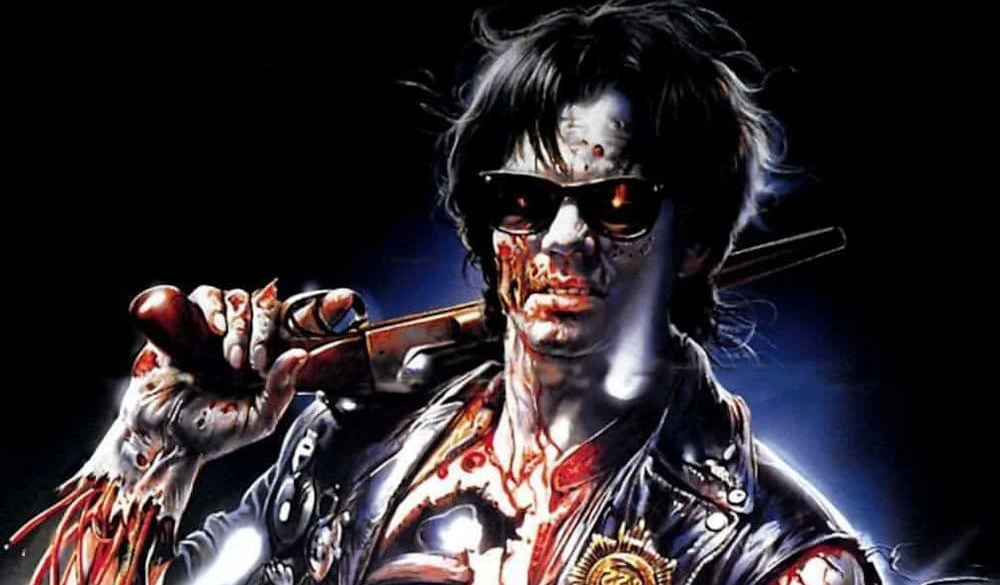
Madman with a campfire story, which serves as the backstory for the ax-wielding maniac. The group of campers consists of teens and small children. The children’s plot armor will prove extraordinary, but shouldn’t they be the easiest victims to dispatch? The teens are all played by adult actors who will become predictably easy pickin’s for the titular madman. The audience will have to endure one plodding POV shot after another, the pickup truck will fail to start when the characters need it the most, and people will amble about the woods to fill the targeted runtime.

The star of Madman is Gaylen Ross, who was also the star of George Romero’s Dawn of the Dead, my favorite horror film of all time. She’s more than adequate in the role, which isn’t particularly demanding, but appears uncomfortable in a sex scene and it doesn’t feel like acting. As soon as the awkward scene is over, her lover wanders the woods to get himself killed. Naturally, another character goes looking for him and also gets himself killed—off screen because Madman just isn’t a very remarkable slasher flick, notable only because it was among the first.

Later, a chick pokes her head into a tent where a couple are getting freaky. It would have been great if the killer chose that moment to decapitate her, so that her head would tumble into the tent with her horny friends. In another scene, the killer is hot on the trail of a young woman who takes an excruciatingly long time to empty the contents of a refrigerator so she can hide in it. The killer is so close when she does this, he’s literally in the same shot… worst attempt to hide ever. “Hey, just pretend you didn’t see me go inside, okay?”

The expected tropes, clichés—whatever you prefer to call them—are all here. Madman hits its notes with such soulless precision it’s artless and robotic. As a carbon copy, it’s perfect. As a movie, it’s fucking terrible. Ross appeared in Creepshow the same year and never acted again. I don’t know why she quit acting, but I’m going to go ahead and blame Madman. The film is so joyless, I feel like I want to quit watching movies.

It turns out there’s a documentary about Madman. Early on, those involved admit the production was only a stepping stone to the art film they actually wanted to make. Perhaps that’s why it feels so lazy. How a documentary got made about this forgettable film, I’ll never know.

Near Dark (1987) [31 Days of Gore]

Director Kathryn Bigelow (Point Break, Strange Days) was married to James Cameron around the time she made Near Dark, which is probably why three of his preferred actors appear here: Bill Paxton, Lance Henriksen, and Jenette Goldstein. At one point the main character walks past a theater which is playing Aliens. Semi-trucks, another Cameron staple, features prominently in the plot. Though that filmmaker’s fingerprints are all over this alternatively grimy and sexy vampire picture, it’s undeniably a Kathryn Bigelow film.

Caleb (Adrian Pasdar) is a southern boy who gives an attractive hitchhiker a ride. Her name is Mae (Jenny Wright) and the chemistry between her and Caleb is immediately apparent. Their necking quickly turns into an accidental bite on Caleb’s neck, which changes him into a vampire. This thrusts him into Mae’s world, which involves drifting from one town to another in order to procure fresh blood. Caleb’s worried father, played by Tim Thomerson (Trancers), scours the countryside for his missing son.

It turns out Mae belongs to an odd band of outlaw vampires who have some pretty clever (and pretty gruesome) methods of acquiring blood. Homer looks like a young boy, but Jesse (Henriksen) calls him “old man,” suggesting the eternal child is in fact the elder of the group. Then there’s Goldstein’s Diamondback, who’s kind of the irresponsible mother of the group, and Paxton’s Severen is the weirdest of the bunch. At one point Caleb asks Jesse how old he is. The response: “I fought for the south.” Following a perfectly calculated beat, he adds with a smile, “We lost.”

Due to Caleb’s reluctance to kill humans, he tries hard to win the acceptance of his vampire comrades. They keep giving him opportunities to prove himself. He keeps letting them down. Cowboys, it seems, just aren’t cut out to be vampires.

Near Dark is no more a horror movie than it is a western, providing the themes and violence we expect from both. The title doesn’t just describe the tone, but the cinematography as well. (You’re going to have a very bad time if you’re trying to watch this one in a bright room.) My favorite thing about Near Dark is how cool it is. There’s a punk rock energy about it and a downright contempt for convention. It’s one of my very favorite vampire flicks.

Stephen King’s Desperation (2006) [31 Days of Gore]

“You have the right to remain silent,” the big cop said in his robot’s voice. “If you do not choose to remain silent, anything you say may be used against you in a court of law. You have the right to an attorney. I’m going to kill you. If you cannot afford an attorney, one will be provided for you. Do you understand your rights as I have explained them to you?”

It’s been almost twenty years since I read Desperation and its parallel-universe “sequel,” The Regulators, yet I remember a lot about them. Why ABC didn’t make the obvious decision—simultaneously producing two television adaptations with the same cast—is beyond me. According to Wikipedia, the network practically sabotaged the movie by airing it at the same time as American Idol.

I try to look past the limitations of a medium, I really do, but made-for-TV movies are so quickly produced you’d have to be blind not to see flaws. What ends up on the screen often feels like a first rehearsal. Desperation is no exception. At one point you can plainly see the squib jacket on an actor’s back after his character’s shot in rapid succession. I can forgive the camera operators for not noticing it and I’ll assume the editors were under similar time constraints. What really hurts is that shot could have been easily trimmed to hide the flub.

What Desperation gets right is the casting of Ron Perlman and Tom Skerrit. Although Perlman looks nothing like the villain I imagined (wasn’t he, like, way bigger in the book?), he organically slips the “Tak!” catchphrase into his dialog with uncanny timing. Meanwhile, Skerrit looks exactly what I imagined Marinville would look like, which makes him the least distracting fixture of the cast. The best acting is when Perlman and Skerrit share screen time.

The film is chilling at times, but that has more to do with King’s involvement than anything else. There’s just something inherently scary about a psychotic cop framing unsuspecting travelers on a desert road. The helplessness comes through despite Standards’ best efforts to censor the hell out of it.

I’m a big fan of the director and I obviously admire the writer (King also wrote the teleplay), but I don’t have much more to say about this one. The end result is so mediocre, there’s no point dwelling on it.

Sorority Babes in the Slimeball Bowl-O-Rama (1988) [31 Days of Gore]

Full Moon promoted the hell out of the recent Blu-Ray release of Sorority Babes in the Slimeball Bowl-O-Rama. I don’t blame them. This is a cinematic relic which deserves to be preserved on the very best formats. You know, for historic purposes… and because of boobies. I hate to fault such an admirable sleaze flick, but it takes forever to introduce the villain: an imp who’s been trapped in a bowling trophy like a genie in a lamp.

Once the imp’s out, you’ll wish he had stayed there because the terrible puppet soaks up valuable screen time, which would have been better spent on boobies. Not that I mean to insinuate there’s a disappointing lack thereof; this movie probably would have been deemed too weird and racy for late night premium movie channels. In fact, this film’s director later made Beach Babes from Beyond, which is hands down the raciest movie I have ever seen on Skinamax.

But there is a disappointing lack of blood and gore in Sorority Babes. And for a movie that’s billed as a horror-comedy, the horror and the comedy are pretty damn weak, too. At least two of the kills involve shoving someone’s head into something off screen; one of the babes is ripped in two without spilling a single drop of blood; and somewhere along the way, the imp cartoonishly transforms another babe into the spitting image of the Bride of Frankenstein.

It all begins when a trio of nerds and a pair of freshmen girls are trapped in a bowling alley as part of a college prank. There they meet a tough-as-nails biker babe who’s ripping off the cash registers and arcade machines. Unfortunately for them, they accidentally release the imp, who offers to grant each of them a wish. As we’ve learned in countless Leprechaun and Wishmaster movies, you really must be careful what you wish for.

The nicest thing I can say about Sorority Babes in the Slimeball Bowl-O-Rama is it has some of the finest T&A ever committed to celluloid. Porky’s and Meatballs have nothing on this one, because those films didn’t star Linnea Quigley, Robin Stille, Brinke Stevens, and Michelle Bauer. I’m not being hyperbolic here: these are four of the best scream queens who ever lived. And although the film is reluctant to show any violence, I’m reminded of the words immortalized in Revenge of the Nerds: “We’ve got bush!”

I’ve mentioned three Animal House ripoffs because Sorority Babes aspires to be one. For reference, director David DeCoteau got his start with Roger Corman and later made some of the hardest softcore porn flicks ever produced. Later in his career, he defied convention by making the men the eye candy in his films. As one critic put it, “Although at first glance it’s not clear exactly who these films are aimed at—gay men? teenage girls? desperate housewives?—what is clear is that DeCoteau, who is actually a pretty talented filmmaker, knows exactly what he’s doing.”

Sorority Babes is what it is. I prefer it to Porky’s and Meatballs. Hell, I probably even prefer it to Revenge of the Nerds. Then again, I adore these actresses, so maybe I’m not the most objective person to review this film.

The Wishmaster franchise (1997-2002) [31 Days of Gore]

Wishmaster (1997)

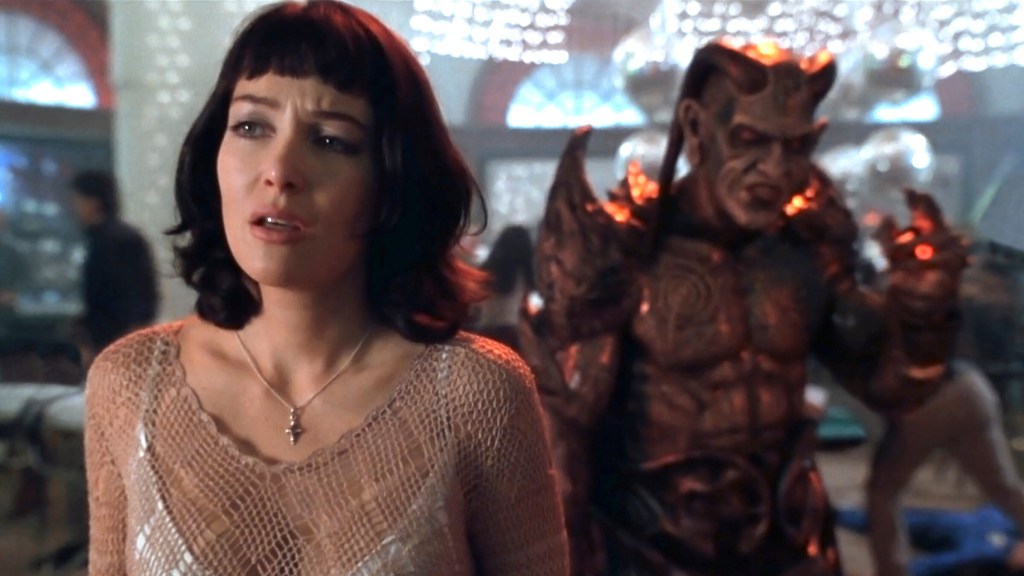
In a medieval Persian palace, a wizard watches in terror as the people around him are tortured by all manner of supernatural machinations. Men are turned to stone, women are turned into human-plant hybrids, skeletons rip out of their own bodies and attack the first person they see. It’s the kind of pandemonium usually only reserved for a horror film’s climax. The wizard makes his way to the throne room where he discovers the demonic djinn responsible for the horrors is trying to coax the emperor into making a third and final wish. If successful, the djinn will be able to subjugate the entire world. Luckily, the wizard is able to capture the djinn in a magic gemstone, which is then hidden in a statue.

Eight hundred years later, an art dealer (Robert Englund) and his assistant (Ted Raimi) are watching as dock workers unload the recently rediscovered statue from a boat. As luck would have it, the crane malfunctions, dropping the crate on the assistant’s head. As workers scramble to dig through the debris, a forklift operator finds the gemstone, steals it, and hawks it at a pawn shop. The pawn shop operator takes the gem to appraiser Alexandra Amberson (Tammy Lauren) who accidentally frees the djinn.

It’s the same setup as before: the person who freed the djinn must make three wishes before he can rule the world. In the meantime, the djinn will roam the city, stealing faces and fulfilling humans’ wishes in predictably dishonest ways. While this certainly allows for some great movie deaths, most of the kills between the spectacular bookend scenes are kinda lame. When the djinn is purchasing some new threads, the store clerk wishes her beauty will last forever, at which point the djinn turns her into a mannequin. One man wishes for a million dollars, at which point the film humorously cuts to a sweet little old lady filling out her son’s name as her beneficiary before she promptly boards an exploding airplane.

I passed on the movie in theaters because, instead of hyping the gore, the trailers mostly advertised the bloodless CGI effects. That CGI, by the way, was not at all ready for prime time. I caught the movie about a year later when it premiered on premium movie channels and I was immediately won over by its early assurances that this was a movie by horror fans for horror fans. Robert Englund has a substantial supporting role while cameos include Buck Flower, Reggie Bannister, Joseph Pilato, Tony Todd, Kane Hodder, and Angus Scrimm as the voiceover narrator. I also like Andrew Divoff in the role of the djinn, but I’ll speak more on his performance in my review of the sequel.

KNB EFX Group, who provides the top-notch practical effects for Wishmaster, were born to make movies like this; in fact, the “K” in “KNB” is the film’s director. I remember reading a Fangoria interview with KNB’s three founders (Robert Kurtzman, Greg Nicotero, and Howard Berger) in which they say they were intimidated when they turned the page of Tarantino’s From Dusk Till Dawn script and read, “All hell breaks loose.” They certainly rose to the challenge. Only a year later, they make all hell break loose yet again for Wishmaster’s opening and closing scenes. Although their fantastic physical creations clash with the film’s overuse of early CGI, KNB’s work alone is worth the price of admission.

Wishmaster 2: Evil Never Dies (1999)

I avoided Wishmaster 2 for over a decade because everyone said it was awful. Even fanboys of the original said it sucked. In fact, the film currently holds a 0% on Rotten Tomatoes. The director himself admitted he hasn’t seen it since he made it. These facts do not bode well for the franchise, especially when I’m only at the second entry of the four.

The opening credits, which lost Craven’s seal of approval this time around, make it immediately clear Wishmaster 2 isn’t going to have any horror icons making cameos like the original did. Tommy “Tiny” Lister, Robert LaSardo, and Bokeem Woodbine from Fargo’s second season make substantial appearances, but beyond those three actors there’s rarely a moment of recognition. Fortunately, Andrew Divoff returns as the evil Djinn. His performance isn’t something I can gloss over—it’s the entire reason the picture works for me.

Sometimes good acting and compelling acting aren’t one in the same. Even though I wouldn’t call Divoff a good actor here (he’s been good in movies which didn’t have the word “Wishmaster” in the title), there’s something interesting about him—something playfully sadistic. You can almost hear the director saying, “Okay Andrew, be menacing here,” before Divoff puts on a mischievous face which looks like he secretly farted. Whether or not this bizarre facet of his performance is intentional, it works. He’s a fucking demon so why shouldn’t his expressions be completely alien to humans? I imagine it’s something Crispin Glover would have done in a similar role.

We’re going to see a lot of the Djinn this time around. If you disliked that Hellraiser: Bloodline made Pinhead a little too pedestrian, you’re probably going to hate Wishmaster 2 because the Djinn is no longer content with lurking about the shadows, cloaked in mystery. But if you want to see Ernest Goes to Jail starring an evil genie as opposed to a clumsy idiot, you’re going to get your money’s worth.

In the first film, “Be careful what you wish for” was the tagline as the Djinn had twisted interpretations of his victim’s wishes. This time we quickly learn that the rules regarding the Djinn’s powers are much murkier than previous suspected. When a police officer tells him to “freeze,” the Djinn encases him in a block of ice. This interpretation would have been acceptable if the character had said “I wish I was cool” or something along those lines, but whatever. More often than not, the setups to these ridiculous payoffs are poorly worded from the get-go.

I do have to say my favorite wish fulfillment in the entire saga is when LaSardo’s character wishes his lawyer would “go fuck himself.” The anticipation of that moment is supremely satisfying. Whether or not the payoff is any good is debatable. I won’t ruin it for you. There’s also a scene in which the Djinn is having a dull conversation, which is unexpectedly interrupted when the heroine pops out of nowhere and shoots at him. It’s one of the most awkward and hilarious things I’ve ever seen.

I know what you’re thinking: it sounds like I may have enjoyed this movie. Well, I hope this doesn’t ruin my street cred’, but I did. I’m sure you can say this of any film, but perhaps I was simply in the right frame of mind. Even though the practical effects don’t hold a candle to the original, and it’s severely lacking in the gore department, it’s an oddly satisfying picture. So yeah, if there’s ever a Kickstarter for Wishmaster vs. Leprechaun or Wishmaster in Space, I’d fund that shit in a heartbeat.

Wishmaster 3: Beyond the Gates of Hell (2001)

First off, there are no ‘Gates of Hell’ and nobody goes beyond them. Knowing nothing more than the erroneous title, I was expecting someone to, like, end up in the Djinn’s domain or something. I guess they already did that in the previous installment and it appears the series took yet another budget cut. Secondly, I wasn’t aware Wishmaster 3 didn’t have Andrew Divoff in it. I probably would’ve skipped this one had I known that beforehand.

The previous film opened with a shootout. It wasn’t spectacular by any means, but it was entertaining enough. Wishmaster 3 opens with a drawn-out introduction to some of the tamest college co-eds I’ve ever seen. If these kids were any more wholesome, they’d be organizing church events. And I’ve got a hunch the casting director chose the talent from the pages of a hairstyle book at Supercuts. Although the series’ acting was never its strong suit, it gets worse. Much worse. These kids aren’t even fit for a Stridex commercial.

At the end of Hellraiser III: Hell on Earth, the heroine hid Pinhead’s puzzle box deep in freshly poured concrete. As temporary as that solution turned out to be, the heroine of Wishmaster 2 must have done an even lousier job of hiding the Djinn’s summoning stone. (Or perhaps it’s supposed to be a different jewel and a different Djinn altogether, which could neatly explain Divoff’s absence.) Without explanation, the jewel ends up in the hands of a college professor so bland I couldn’t wait to see him die.

When the demon finally gets around to killing the professor off with the dumbest wish fulfillment to date, I was happy I wouldn’t have to endure the actor’s stupid face anymore. Unfortunately, the Djinn decides to wear the character’s skin as his own, a creative decision which makes it clear the filmmakers weren’t even trying to make a likable movie. Imagine Simon Pegg without any interesting characteristics whatsoever and you’ve got a good idea of what the villain looks like this time around.

Wishmaster 3 kills fewer victims per hour than the previous films did per scene. You keep hearing about this big party on campus and expect the Djinn to crash it for the movie’s climax, à la Nightmare on Elm Street 2. But he never does and viewers end up watching the end credits with the bluest balls in history. The one moment that almost redeems this mess is the hilariously anti-climactic resolution, which reminds me of a gag from Austin Powers: The Spy Who Shagged Me.

At this point, I’m so militantly anti-Wishmaster, I have no desire to watch the fourth film in the series. But hey, in for a penny, in for my soul, right?

Wishmaster 4: The Prophecy Fulfilled (2002)

I figured it was a safe bet the prophecy would go unfulfilled in this one. I was partially right. The heroine of this film actually makes three wishes—which is further than the Djinn has ever gotten before. Unfortunately for us, her third wish is a paradox due to the bullshit rules of the Djinn’s magic (read: lame excuses to stretch this film to feature length). We quickly learn the foretold apocalypse will be postponed once again.

I don’t know what I was expecting. If the prophecy ever does get fulfilled, it’ll bring the kind of fire and brimstone that straight-to-video producers simply can’t afford. We’ve also got the same director we got last time, Chris Angel (no, not the Mindfucker guy… at least I don’t think it is), whose climax in the previous film proved he’s not the go-to guy for an exciting ending… or an exciting anything, really. I will say this about the director: although Wishmaster 4 is more or less the same movie as Wishmaster 3, it’s a helluva lot better. Don’t get me wrong: it’s still not very good.

The new heroine is the girlfriend of a man who lost movement of his legs in a motorcycle accident. Three years later, the lawyer working with the couple surprises them with a gift: an artifact which contains the Djinn’s summoning jewel. The Djinn, played by the same guy who played him the last time around, is up to the same ol’ tricks: he uses the lawyer’s form to worm his way into the main characters’ lives. There are plenty of opportunities to be clever here, but the filmmakers have other plans.

It’s twenty minutes until we see the first victim meet his demise. The special effects for the first kill are way more convincing (and gruesome) than anything in the previous entry… and nothing after the first kill hits the same high watermark. I’m happy to say there are a lot more unintentionally hilarious moments (an unexpected decapitation is one, a stupidly gentle car crash is another, but just wait until you see the camera linger on the phoniest sword in movie history). The increased cheese factor makes this one much more watchable than its predecessor; it’s so cheap, they couldn’t even afford more than one vehicle for the big car chase.

I think the biggest missed opportunity will be apparent to anyone: a bartender casually remarks he would give his soul “just to be a pimple on her ass” in regards to an attractive stripper. Naturally, the Djinn grants him this wish, but we never actually see it. Remember the human meatball in Nightmare on Elm Street 4? Wouldn’t it have been great if they had showed they wisher’s face sprout on the woman’s ass? Even better, I would have loved to see her go twirling down the pole, intercut with reaction shots of the pimple drawing to the stage before POP! goes the bartender.

What we have here is a director whose intentions are admirable: you can tell by the amount of drama he shoehorned into it that he tried to make a more mature horror movie. The problem is parts three and four were filmed back-to-back while he was trying to make Titanic on a soap opera budget. We ultimately got two films for the price of one and it really shows. This one was a lot easier to get through than the last, but I can’t recommend either of them to anyone but masochists.

Brainscan (1994) [31 Days of Gore]

When I was a kid, I was stoked to see Brainscan. Not only was it hyped to the moon and back, even Entertainment Tonight was pushing it as some kind of historic cross between horror and modern technology. I wasn’t disappointed, either. The teenage characters were addicted to gore flicks (Who’s that remind you of?), the sets were dressed with piles of Fangoria, and there was just enough violence to keep its intended audience—me—entertained.

Terminator 2’s Edward Furlong plays Michael, the kind of outsider who would be the cops’ first suspect if his school ever got shot up. Moodiness aside, I really identified with Michael; I still want to live in his hyper-nineties, pseudo-cyberpunk bedroom, playing CD-ROMs all day while using a voice-activated interface that puts Siri to shame. Why would a teenager need his own refrigerator, especially when his mother’s dead and his father’s never home? Because fuck the rest of the house, that’s why. That attic bedroom is the tits and I would live in it forever.

Although Michael used to love horror, he’s grown blasé on the genre. He turns cynical whenever video game companies market their “terrifying experiences” and he talks about his favorite movies with all the enthusiasm of someone going through a divorce. By the time he gets his hands on a copy of the video game Brainscan, he rolls his eyes like the angsty little punk he is. The game ends up blowing his mind (never mind the seizure it caused) and he raves about it to his metalhead friend (his only friend) on the way to school the next day.

In a plot twist no one didn’t see coming, Brainscan’s depictions of murder seem so real because they are real. Michael finds out he unwittingly killed a man during a trance and spends the rest of the movie covering up the crime. Each cover-up requires an additional cover-up and so on and so forth. I’m afraid I’m making this sound cleverer than it is, but it’s not not clever, either. Just average clever, I’d say.

That’s when the Trickster enters the picture, played by T. Ryder Smith. If you don’t recognize the name, that’s okay. The film’s marketing department wanted you to believe this guy was a big deal. The impish psycho is a cross between Freddy Krueger and a bad MTV veejay. Smith, who was previously a stage actor, doesn’t necessarily suck in the role, but he feels miscast. No amount of guitar riffs and scenery-chewing antics will convince you this guy’s comfortable in the role of a bad ass, nor will you believe he’s actually eating raw chicken as advertised in the aforementioned Entertainment Tonight promo.

The film’s really punching above its weight when it folds in Frank Langella as a surprisingly likable detective. Whereas all the other adults are either missing in action or portrayed as clueless squares (Parents just don’t understand, right, fellow kids?), Langella gives maximum effort and it shows. Other portions of the movie are surprisingly mature, too, which is why I give it a cautious recommendation.

Whenever Brainscan gets odd, you just have to remind yourself: “Because the nineties.” The oddest thing about Brainscan is probably the subplot. The filmmakers go for a Judy Blume approach to teenage sexuality, which comes off as creepy by today’s standards. See, Michael secretly video tapes his high school crush whenever she gets undressed in her bedroom window. At first you think the film means to damn his voyeuristic proclivities as a despicable character flaw, but later the filmmakers make it clear it’s supposed to be romantic. I guess if you’re as vapid as these teens are, it would be kind of romantic, but that’s missing the point.

Despite the film’s many misses, it gets a lot of points for effort. Yes, they were being just a little too derivative of Nightmare on Elm Street sequels and yes, there are so many holes in the plot they begin to form clover shapes. Yet where so many other “serious” horror flicks miss the mark, Brainscan is only a near miss. I really enjoyed it at times and managed to keep my snickering to a minimum. It could very well be the fulcrum point between eighties slasher flicks and the nineties abundance of Scream knock-offs. That alone is interesting for historical purposes.

Bad Biology (2008) [31 Days of Gore]

Director Frank Henenlotter insists he makes exploitation films, not horror. The line is blurry in Basket Case and Brain Damage, but Frankenhooker made the distinction a little bit clearer. With his fifth and final film, Bad Biology, Henenlotter goes all the way. The paradox of Bad Biology is A) you should see it without knowing anything about it and B) you really ought to know what you’re getting yourself into. It’s easily the most offensive movie I’ve featured all month. For most viewers, the offending material will probably be the rampant psychosexuality and violence toward mutant babies.

The main character, Jennifer, is a sex addict with an abnormal vagina. Not only is she helplessly compelled to sleep with strangers every night, she murders them before giving birth to a baby merely two hours after its conception. In a concurrent subplot, there’s a guy nicknamed Batz on account of him being bat-shit insane. His penis was accidentally severed at birth; although the doctors were able to reattach it, it never worked right. In an effort to rejuvenate his beloved member, he began experimenting with steroids and other drugs. Now his penis has developed a drug deficiency and a mind of its own.

You remember the phallic rocket gag in the Austin Powers movies? There’s a scene like that near the end of Bad Biology. It’s much funnier because it doesn’t require cheap cameos to sell it (only cheap effects). Just when you think the sequence is over, it starts all over again, and the sheer stupidity of it makes you snicker. A lot of R-rated Hollywood comedies certainly try to be as outlandish as Bad Biology in a safe, MPAA-approved way, but Henenlotter pulls off the real deal effortlessly.

Henenlotter’s done this shot from baskets, zippers, and now: the holiest of holies

Obviously Jennifer and Batz are made for each other, but they don’t meet until the second half of the movie. That may sound like the movie plods, but it doesn’t. It’s actually one of the best contemporary exploitation films I’ve ever seen. It’s also one of the shittiest-looking. No, it’s not quite as shitty-looking as yesterday’s Video Violence, but movies like that get a pass because a bonafide film shouldn’t look as bad as Bad Biology does.

Despite the gore and the bizarre subject matter, it’s a cute little picture. Now it’s time for Basket Case 4, Frank. We all want to see it, buddy.

Video Violence (1987) [31 Days of Gore]

A New Yorker opens a video store in a small town. One day a homemade snuff film finds its way into the overnight return box. Naturally, the cops don’t believe his “crazy story” because the movie would be over as soon as they do their job. Or maybe they’re in on it… maybe. (I’m not just being flippant here. It really is kind of hard to tell.)

I began snickering almost as soon as Video Violence began. In the opening scene, a couple of sports store clerks wait for an unsuspecting shopper to go to the dressing room before bursting in and beating her to death with a baseball bat. That isn’t the funny part. What’s funny is these aren’t actors, just people the director probably talked into being in his little horror movie. I imagine the writing process was like this: “Hey, I know a guy who owns a sporting goods store, so let’s set a scene there!”

In 1985, United Home Video gave us Blood Cult, which was billed as the first straight-to-video horror movie. Whether or not that claim is true is debatable, but I cherish the VHS copy I found in the clearance bin because it was shot in and around my hometown. (United’s follow-up, The Ripper, has scenes shot about two or three blocks from my current address.) Video Violence references Blood Cult twice and there’s something oddly pointed about it.

According to Wikipedia, Video Violence is an angry response to the cheap horror films which were infiltrating the relatively new video market. The director, who worked in a video store himself, claims he was disheartened by the fact so many people were into these sick types of movies. So what did he do as a response? He created one of the sickest of the bunch. At least one section is as uncomfortably brutal as the scene in A Clockwork Orange, complete with the instigators using scissors to reveal the victim’s nipples.

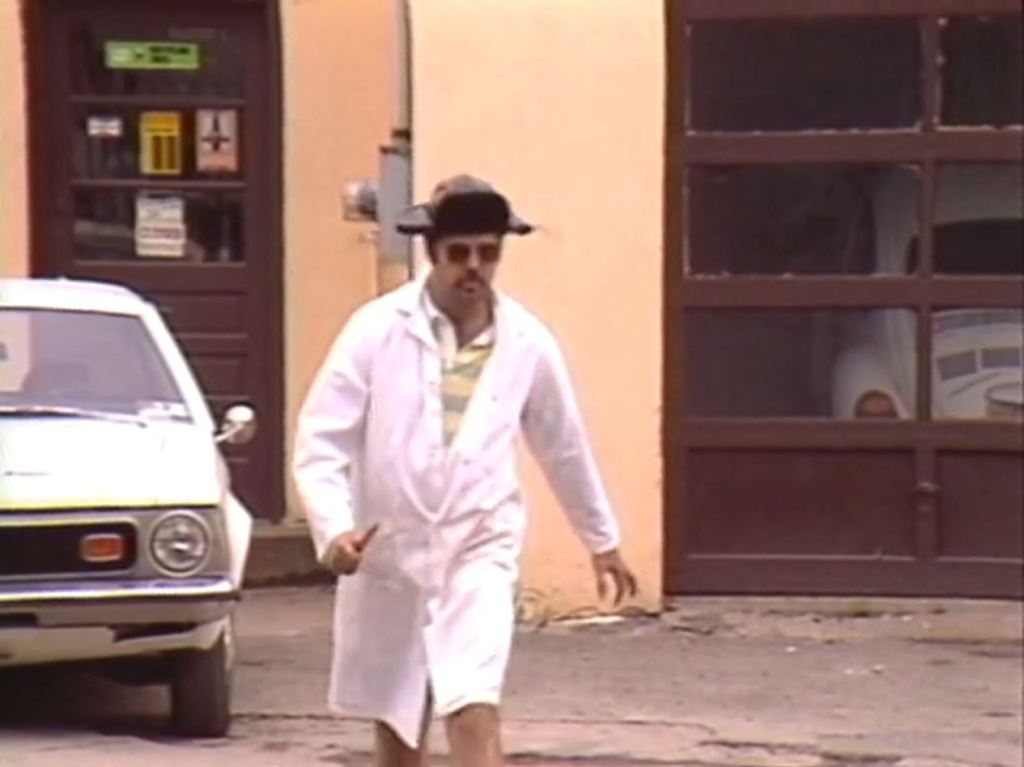
So it’s remarkable that out of Blood Cult, The Ripper, and Redneck Zombies, Video Violence is the most watchable. The other movies were boring more often than not, but even though it’s longer, Video Violence has that certain undefinable trait found in Neil Breen films and Tommy Wiseau’s The Room. The actors probably have no business being in a movie, but what they lack in talent they make up with charm. Imagine driving through a small town and seeing this guy on the sidewalk:

I always loved the idea of everyday people picking up a camera and making a movie. Youtube has kind of ruined the novelty of ultra-low budget filmmaking, but back then it was great to think an impromptu horror movie was the talk of a small town in a Waiting for Guffman kind of way. Video Violence drags a little towards the end, but atones for its slip-up soon enough.

Angel Heart (1987) [31 Days of Gore]

Why does black magic, devil-worshiping, and detective noir go together so well? There are few genre mashups I like more than hard-boiled horror. This one reminds me of Jacob’s Ladder, The Ninth Gate, and Lord of Illusions, all three of which draw me back for repeat viewings. If those aren’t your cup of tea, neither is Angel Heart.

Mickey Rourke plays Harry Angel, a morally ambiguous private detective in 1950s New York. He’s just been hired by Louis (Robert De Niro) to track down a missing person by the name of Johnny Favorite. Louis’s motivation is vague at best, but he’s offering Angel five thousand bucks to do it. So even when some of Angel’s leads turn up dead, he needs the money too bad to quit.

Here’s something I’ve been thinking about this a lot lately: What’s the difference between a trope and a cliché, anyway? The simple answer: we like tropes. They’re the elemental building blocks—or perhaps the shorthand—of mood. Like Jacob’s Ladder, Angel Heart is a master of mood, but more than anything it’s a master of imagery. Watch it a second time and those nightmarish images will make a little more sense. Somehow, though, the film becomes even more unsettling with coherence.

Angel Heart is darkly funny at times, too. When his investigation leads him to New Orleans, Angel falls under the scrutiny of a couple of homicide detectives who’re trying to finger him for the murder of a musician who choked to death on his own severed genitalia. Later, they harass Angel for the murder of a woman who, they claim, “Died under similar circumstances.” Angel squints at them before asking, “She choke on her dick, too?”

If the movie breaks down anywhere, it’s in the end when Angel starts piecing together the puzzle. I’m sure it was new territory at the time of its release, but nowadays it’s so old hat you might figure it out by the end of the first reel. Doesn’t matter. Angel Heart is one of the best horror films ever made.

Witchboard 2: The Devil’s Doorway (1993) [31 Days of Gore]

Cinemax was kind to me in the 90s. I recorded Witchboard 2 on the same VHS as 976-Evil 2 and Amityville 6, the latter of which taught me that if you take the cable of a guitar amp and plug it into an attacker’s mouth, you can make them explode (but only after turning the volume knob up). I’ve just seen Witchboard 2 again, thanks to r/badmovies’ latest movie marathon. I suspect I’ve now seen the movie more than anyone else, including the people who made it.

Sure, it’s marginally fun with the right crowd (attendees developed a drinking game with rules such as “drink every time you see mom jeans”), but this marks the first time I’ve fallen asleep during this year’s 31 Days of Gore. I was out for about twenty minutes and somehow didn’t miss a thing.

The leading female, who we’ll call Dullsville, moves into an apartment and decides she’s going to be a hotshot painter. Her landlady (Laraine Newman from SNL) is crazy and believes it’s still 1969 for no other reason than the filmmakers thought it would be funny. (Nothing in this movie is intentionally funny and it’s painful whenever it tries.) Dullsville’s love interest is a snarky photographer who helps her investigate the strange happenings that occur after the previous tenant’s Ouija board is found in a closet. Then nothing interesting whatsoever happens for a gruelingly long time.

Here’s a movie that attempts to make use of the camera techniques Sam Raimi pioneered in Evil Dead films, but the shots are used nonsensically. The camera pushes through a moving car, down a chimney, and sometimes flies all over the damn place, but there’s rarely a reason for it. It’s as if the filmmakers are mimicking things they’ve seen in better movies, but didn’t understand why they were effective.

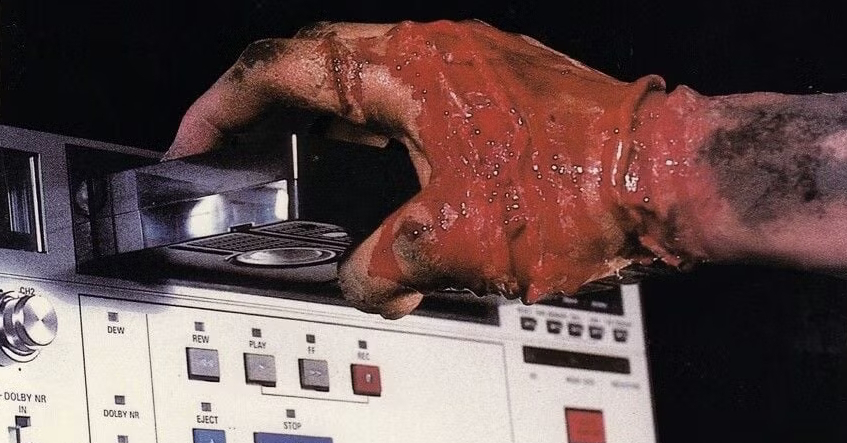
Calling the characters one-dimensional would be an insult to doodles. As for redeeming qualities? There are none. The most exciting thing in the movie was given away by the box art (see above). It turns out that was a dream anyway. How lame.