
Ah, Scanners. You may look high and low for a bigger fan of this flick, but you may not find one. It’s not just the candy bar scenes that draw me into David Cronenberg’s first masterpiece of many. It’s the quiet moments in between. Few genre filmmakers were great at these stretches of relative silence (John Carpenter and George Romero come to mind). I would argue almost no one actively making films like this are even allowed to try today. How could they when the most common note from studio execs is now “Keep repeating the plot because most viewers are staring at their phones”?
Scanners, with its liminal spaces and flatly shot subjects, is clearly made in a bygone era, reveling in the fact it isn’t a Hollywood movie rather than trying to mimic one. Its machined plot feels influenced by The Terminator, though it predates that film by three years, and it’s photographed like a utilitarian art flick. There are moments of goofiness—wonderful goofiness—and Cronenberg embraces that stuff rather than acting like he’s above it. Look, it’s a story about people who control other people with their minds. There’s simply no way for a movie to look cool when its performers are emoting such things. Can you imagine how fucking dull this would be if it brought out the leather coats and slow motion?
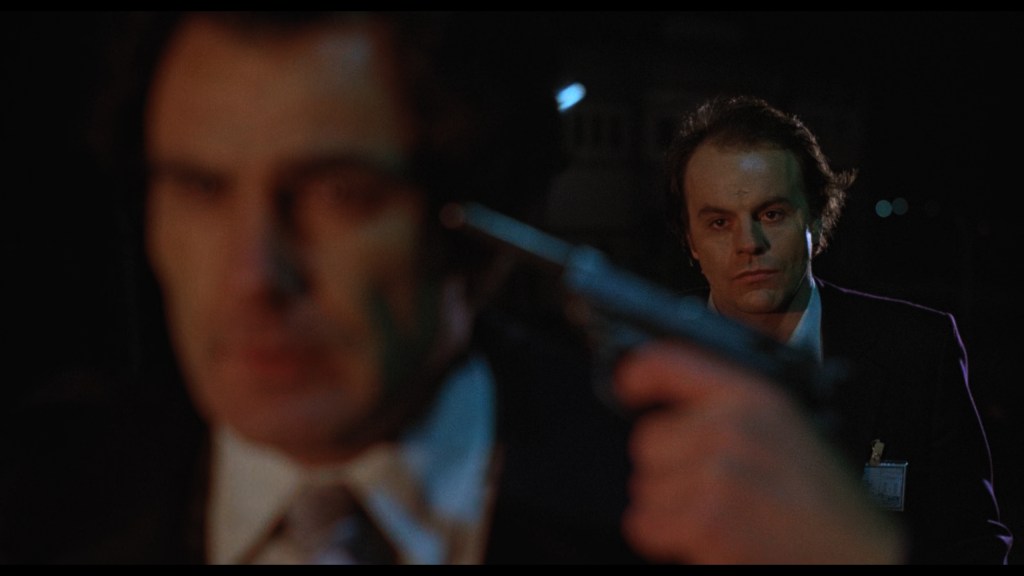
For the opener, a young transient by the name of Cameron Vale is captured by ConSec, a private security company, after psychically attacking a terrible woman in a shopping mall’s food court. The suits inject Vale with a tranquilizer that subdue his powers and calm the voices in his head, which are the unfiltered thoughts of everyone around him. In the next scene, upper level personnel gather to watch a demonstration in ConSec’s headquarters. There a man reveals himself to be a scanner: one of 237 known people on the planet who possess psychic and telekinetic abilities. When he attempts to demonstrate his ability on a volunteer (Michael Ironside), it turns out the volunteer is a much more powerful scanner known as Darryl Revok. Revok, which is a fantastic name for a fantastic villain, overpowers ConSec’s scanner and makes his head explode.
This is by far the greatest head explosion in movie history, which is why the film automatically scores full points on the Gore Meter. When I was a kid, I read that the scene had been accomplished not with professional pyrotechnics, but by concealing an actual shotgun in the dummy’s torso. (Naturally, I asked my parents if I could have a shotgun because I, too, wanted to shoot a scene like that on the home camcorder. For some reason they declined my request.) Due to the obvious safety concerns, I would be extremely surprised if any film ever features a more gnarly and meaty head explosion in the future. It may be impossible to reproduce the effect with standard Hollywood pyrotechnics, which the sequels seemingly prove.
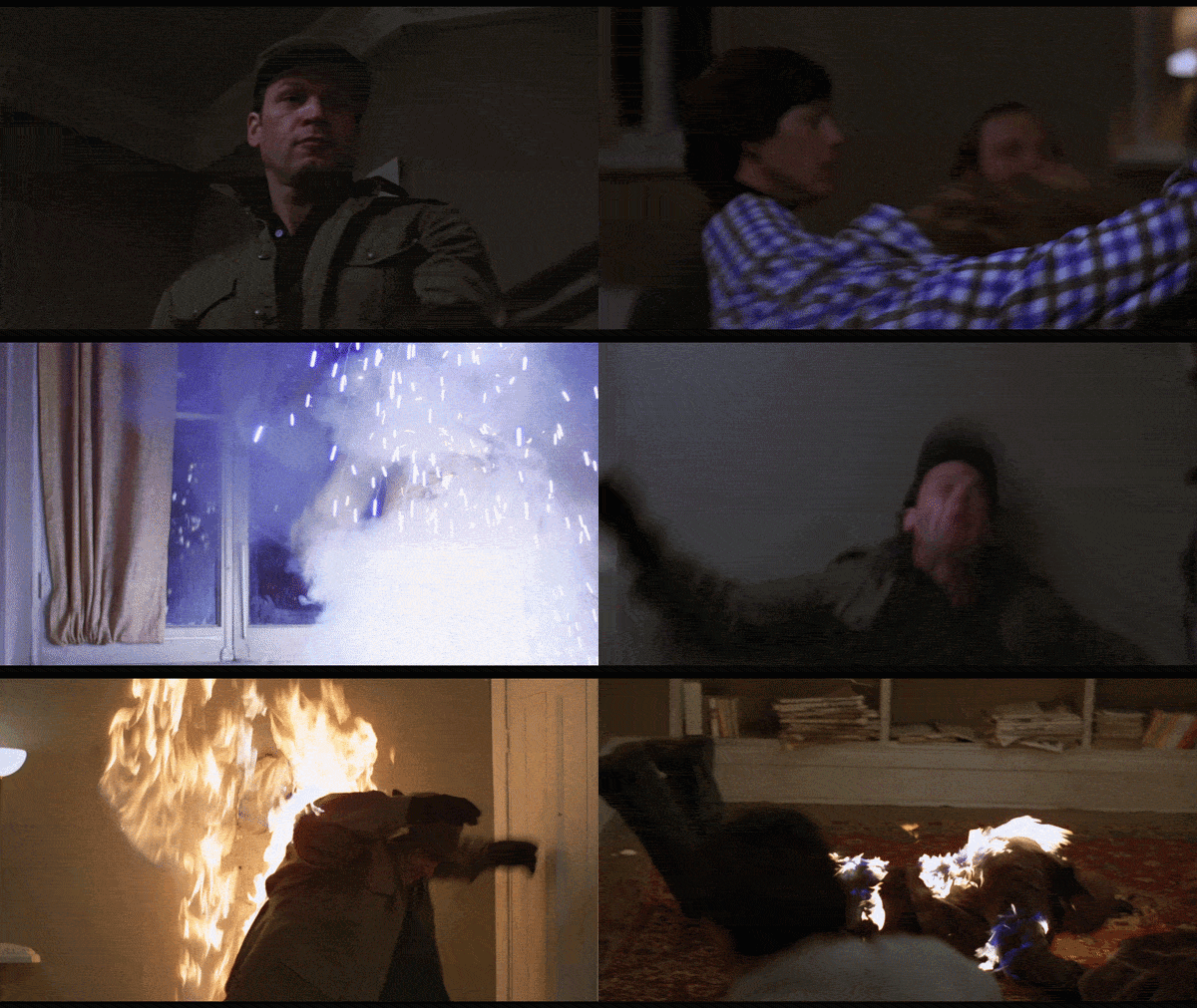
ConSec executives gather in a boardroom the next morning to discuss the implications of their security breach. When one of the board members suggests ending scanner research altogether, Dr. Paul Ruth (Patrick McGoohan) reminds them that they are in a cold war with Revok’s secret army of scanners whether they like it or not. Their only hope is to train a powerful scanner of their own, which they have recently acquired with their capture of Cameron Vale. Wisely, Cronenberg gives McGoohan, a classically trained character actor, the bulk of the film’s more outlandish exposition, which is at its most unbelievable when he explains that Vale can scan a computer as well as he can humans. The premise may have seemed plausible in 1981, but now, when literally everyone knows a computer does not have a nervous system analogous to humans, the explanation is the goofiest part of the entire picture.
What’s most interesting about the film is that Cronenberg chooses to depict his scanners as humans rather than superheroes. Most of the scanners had troubled childhoods. Almost none of them fit into society unless they learn to manipulate others at their will. Revok himself attempted to drill a hole in his own brain in an effort to quiet the relentless thoughts filling his head. Ironside lends a gravitas to the character that makes you believe he could genuinely become obsessed with a new world order, elevating what would have been a routine plot device into a solid character trait. So while its plot may sound like that of a generic genre film, it’s a very satisfying hybrid of wild fantasy and realism.
Scanners was a perfect primer for a memorable horror franchise. Indeed, it spawned four sequels, two of which I may have seen more than the original. That’s not to say they were any good, just that in the days before streaming movies, you kinda had to just live with whatever you taped off of Cinemax. I plan to feature a Scanners film each Friday this month so don’t miss out. At any rate, this is one of my favorite films of all time and it has never looked better on home video than it does right now.