

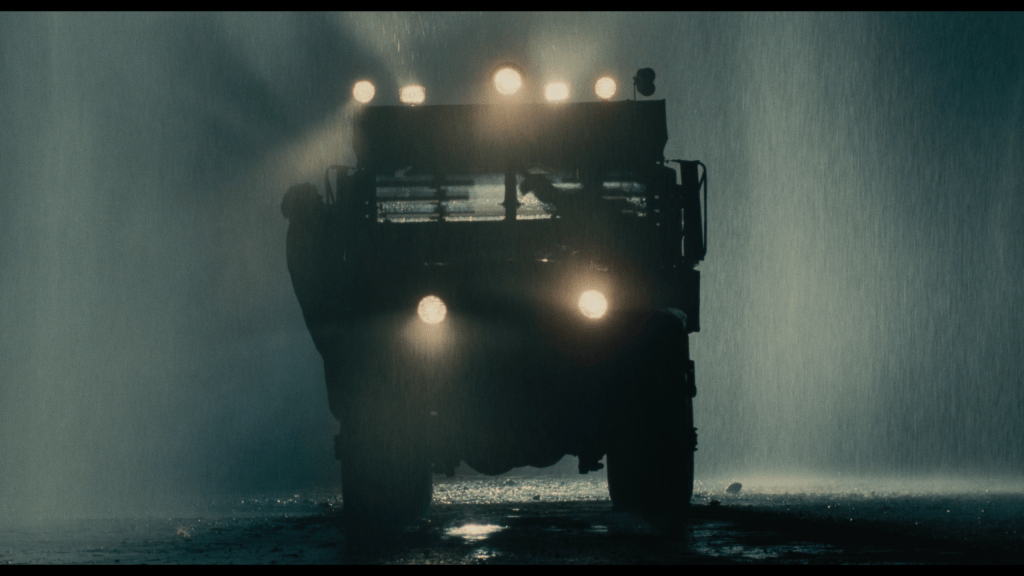
This post marks the beginning of a new series in which I feature select films scored with electronic music.
One of my favorite videos on YouTube is a conversation between Tobe Hooper and William Friedkin, the latter of whom directed the topic of today’s post: Sorcerer. It never even occurred to me that the two directors might share overlapping orbits, much less hold great respect for one another, as Friedkin enjoyed mainstream acclaim while Hooper happily worked in underappreciated genres. In the video, Hooper is characteristically soft-spoken and reserved. Meanwhile, Friedkin commands the audience with gusto, scooting to the edge of his seat to sing Hooper’s praises. Though their temperaments sit on opposite ends of the spectrum, it occurred to me what the two men had in common: they had been daring filmmakers with the same reckless energy of Kubrick and Herzog.
So I upgraded my standard Blu-Ray copy of Sorcerer to The Criterion Collection’s 4K UHD, looking (perhaps reaching) for any similarities I could find between it and The Texas Chainsaw Massacre. Both films were grueling shoots that broke their actors (Roy Scheider said the notoriously troubled Jaws was “a picnic” compared to Sorcerer). Both films contain thick layers of cynicism and anti-Hollywood endings. Neither film reassures its audience. Neither film seems to think that survival is all it’s cracked up to be, yet survival is the only motivating factor their characters have. Above all other comparisons, both films are mean, though not consciously mean like a force of evil. They’re mean in the way a starving hyena might snatch a newborn from a crib.
The antagonistic forces at play aren’t necessarily a chainsaw-wielding maniac or highly explosive trucks. The thesis of Sorcerer, as succinctly as I can put it, is “shit happens.” Everybody on the planet must intuit this hard truth on some level of consciousness, but I suspect few think about it honestly. Does it haunt you to think that you could get a clean bill of health one day only to suffer a deadly aneurysm the next? Do you ever drive alongside a tanker with a big FLAMMABLE sticker, wondering if you’d even see it coming if it suddenly blew up? Of course you’ve had such thoughts, but do you ever invite them to stay before moving on to the next distraction?
Sorcerer opens with four seemingly disconnected scenes which introduce the main players: a Mexican assassin, a Palestinian bomber, a Parisian fraud, and an Irish gangster (Scheider). The four criminals, who are strangers to one another for the first hour of the film, have assumed new identities and left behind their families and homes. They eventually meet in a South American village which houses many such fugitives. There the denizens must work for peanuts while greasing the palms of corrupt policemen. What’s particularly interesting to me about comparing this film to The Texas Chainsaw Massacre is that Hooper’s film was about dreadful things happening to innocent people, while Sorcerer goes out of its way to establish its characters as anything but.
When a nearby oil rig explodes, the foreman realizes the fire must be put out with dynamite. The only dynamite he has access to has been improperly stored in a rotting shed two hundred miles away. The slightest bump could set the entire thing off as it’s bleeding nitroglycerin. (Indeed, I have heard stories of cave explorers setting off forgotten TNT with the vibrations from their footsteps.) What the company needs are four men who are willing to transport the highly volatile stockpile over terrain that would be dangerous regardless of their current explosiveness. The men will be given two of the company’s lousiest trucks because, realistically, at least one if not both of the trucks will explode. The fact that human lives are on the line doesn’t matter to the company because it’s burning profits each day the oil fire rages on. The survivors, if there are any, will be able to split 40,000 pesos as they see fit.
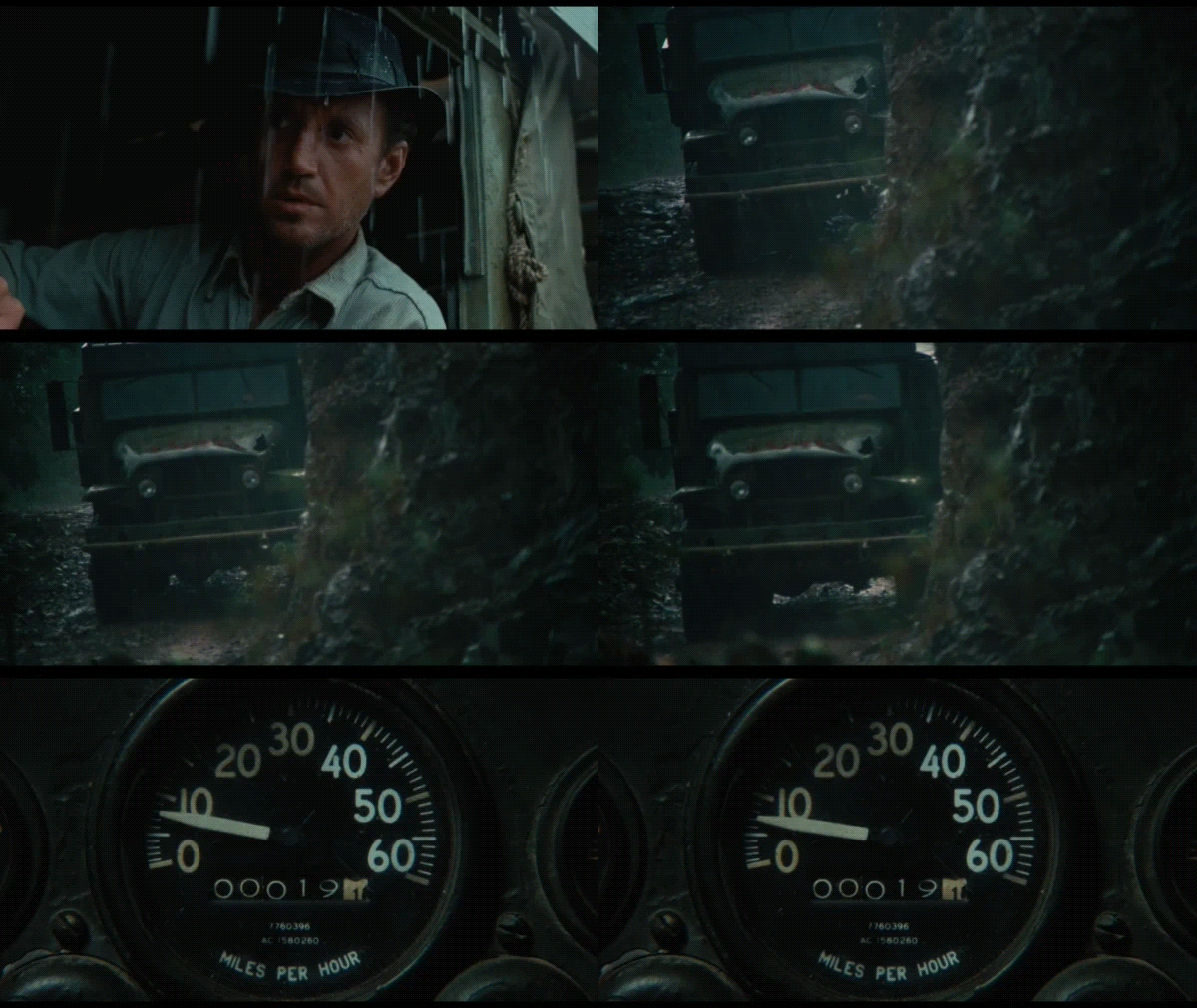
Morally speaking, some of the main characters’ crimes are worse than others. That doesn’t matter in this film because it doesn’t see the world in terms of crime and punishment. Sorcerer incessantly reminds you that bad things can happen to any kind of person and there’s rarely a reason for it. What you get is a cinematic panic attack that lasts roughly an hour, from the moment the men set out on their grueling journey to its unpredictable conclusion. I believe that William Friedkin’s The Exorcist and The French Connection are two of the greatest films ever made. Sorcerer is better than both. It’s a beautifully ugly film which confronts the very ideas that movies were designed to make us forget.
So a movie like this demands a unique score. Friedkin turned to Tangerine Dream after seeing them perform live in their home country of Germany. (The director later claimed he would have had them score The Exorcist had he been familiar with their music at the time.) Following Wendy Carlos’s A Clockwork Orange score by six years, Sorcerer predates both John Carpenter’s Halloween and Vangelis’s Chariots of Fire, boldly making electronica the sound of the film’s jungle. Founding member Edgar Froese called the film “the most uncomplicated work we did for Hollywood” despite the fact the group would go on to make more than fifty contributions to visual media. Friedkin requested no changes to the music they turned in, editing his film to their score rather than having them score the movie.
Of the twelve tracks available on the MCA album, few if any of the group’s creations are reprised; one track is listed as “Betrayal (Sorcerer Theme)”, though you won’t hear the so-called theme reiterated anywhere else in the 44-minute runtime. Still, the entire soundtrack functions as a recognizably cohesive unit, juxtaposing machine-like sequencers with breathing pads and constantly dynamic modulation. Parts of the previously unheard sounds seem specifically designed to induce anxiety, reminiscent of Brad Fiedel’s deceptively simple sequencer work on The Terminator seven year later. At no point does the music swell reassuringly, keeping with the themes of Friedkin’s disquieting material.
As they did with Michael Mann’s early filmography, Tangerine Dream lends Sorcerer one of its most identifying characteristics. And because of Friedkin’s decision to edit to the music, the film literally would not exist in its current form without the group’s involvement. There are movies and soundtracks which I adore. Then there’s Sorcerer, towering high above nearly everything else.

