Out of the Dark (1995) [31 Days of Gore]

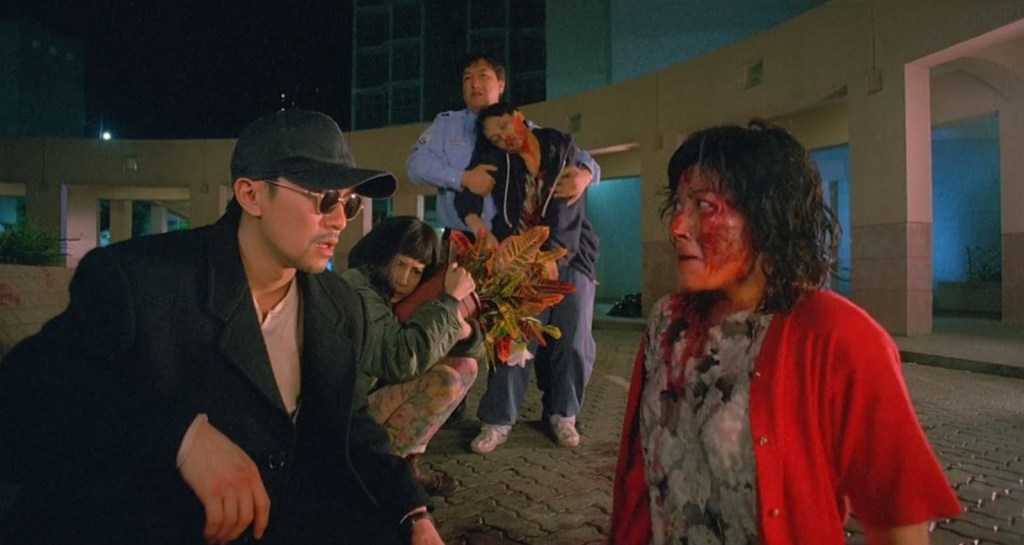
The goofy security staff (think: Police Academy) at a haunted high-rise are terrorized by strange happenings. The only man who can help is an eccentric ghost hunter (Stephen Chow) who lives in a mental institution by day and breaks out to fight evil every night. If you’re looking for character development, motivation, or anything else that would only get in the way of high-octane entertainment, you’ve come to the wrong place. What you’ll get here is dark humor and slapstick violence, served with a generous helping of insanity.

Out of the Dark is all about style over substance. Its furious editing and camerawork homages everyone from Martin Scorsese to John Woo. It’s apparent, too, that the filmmakers had just seen Pulp Fiction and The Professional. I started the movie an hour after I should have been in bed and found myself unable to turn it off. It’s the kind of movie that hooks you so immediately that attempting to hold it at arm’s length will only exhaust you. Just relax and let it happen to you.

Early on, one of the security officers scoops a dying man up into his arms with the intention of racing him to the hospital. But when a slasher shows up the officer instinctively uses the victim’s body as a shield against the repeated knife attacks. Keep in mind, this is all shot like a Three Stooges bit and it’s no less funny. Later, when the hero of the film bursts onto the scene to save the day, he accidentally shoots the victim.

I’ve always been a fan of Stephen Chow, often loving parts of his films, but rarely embracing them as a whole. Here’s one I endorse wholeheartedly… as long as you like politically incorrect horror-comedies with the physics of a Chuck Jones cartoon. (At one point, a refrigerator falls on a man’s head; he survives with little more than a headache.) It’s a wonderfully unpredictable film.

HP Lovecraft’s Necronomicon: Book of the Dead (1994) [31 Days of Gore]

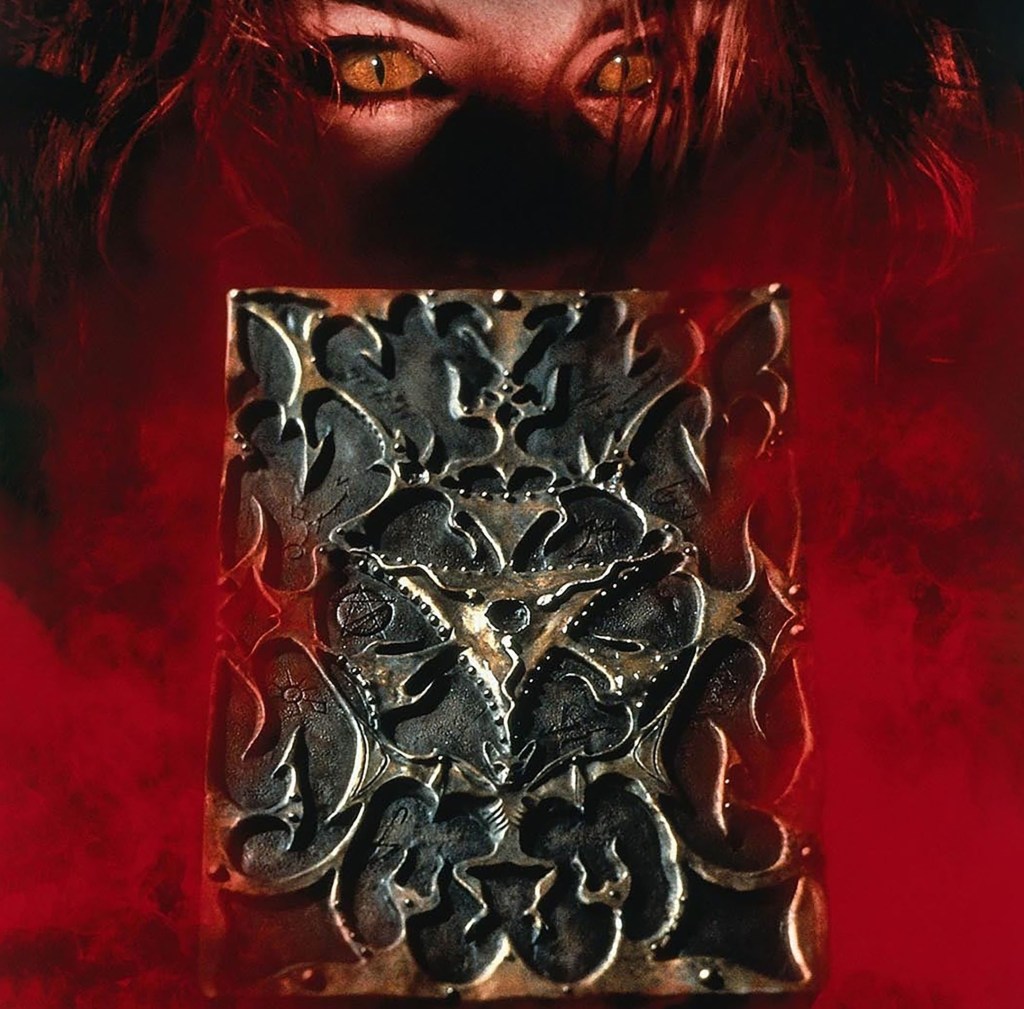
H.P. Lovecraft (Jeffrey Combs in heavy makeup) sneaks into a crypt beneath a library, Indiana Jones style. There he finds The Necronomicon, the book of the dead. The design of the grimoire is intricate, ancient-looking, and creepy—just as it should be. The other props and special effects are a cut above most horror films, too; there’s a lot of miniatures, reverse photography, and even some shots filmed upside down so that blood and goo appear to rise from the floor magically. This story is the container for the other short films in the anthology, which are directed by Christophe Gans, Shusuke Kaneko, and Brian Yuzna.

I’m an absolute sucker for movies like this. I love dangerous books and the characters who’re obsessed with them. As much as I should dislike this movie—and it gives me plenty of reasons—this is at least my third viewing since its limited release in 1993. It isn’t a great movie, but it’s highly watchable… two-thirds of it, anyway.

The first tale is The Drowned. This is the best story in the movie. Bruce Payne plays a grieving widower who has just inherited a cliffside hotel. He discovers his benefactor uncle (Richard Lynch) left a suicide note, which recounts how he acquired the Necronomicon from a mysterious fish-man and used it to resurrect his dead family with tendril-laden results. Payne resurrects his own dead wife, failing to heed his uncle’s warnings. Despite a stupidly rushed ending, The Drowned manages to create one of the most Lovecraftian moods ever put on film. 

Let me suggest fast-forwarding through The Cold, the uninspired second tale of the movie. David Warner is so understandably bored, you can almost hear him wondering how his costars got into movies at all. This is low-effort filmmaking at its worst. The less said about it the better. 

The third tale, Whispers, is alternatively boring and insane. You would expect Brian Yuzna to produce the best story of the bunch, and while he certainly supplies the most notable creature effects, the main character is a monotonously loud policewoman who—get this—has a melodramatic discussion about motherhood in the middle of a car chase. She pursues her suspect into a cavernous lair beneath an abandoned warehouse. There she encounters creatures who crave bone marrow, which sounds metal as fuck, but the action is needlessly interrupted by a pointless dream scene. The segment’s message is about as hammy as the church propaganda in a hell house.

Overall, Necronomicon’s biggest sin is its inattention to detail. Lovecraft is supposedly reading these stories sometime in the 1920s, yet each of the short films are set in contemporary times. Sometimes you think the costumes are reflecting olden times, then suddenly you see a modern car drive by in the background. I’m sure there’s a magical explanation for this, but it’s still wonky and distracting. Nonetheless, this is one of those movies I love even though my brain tells me “no.”

31

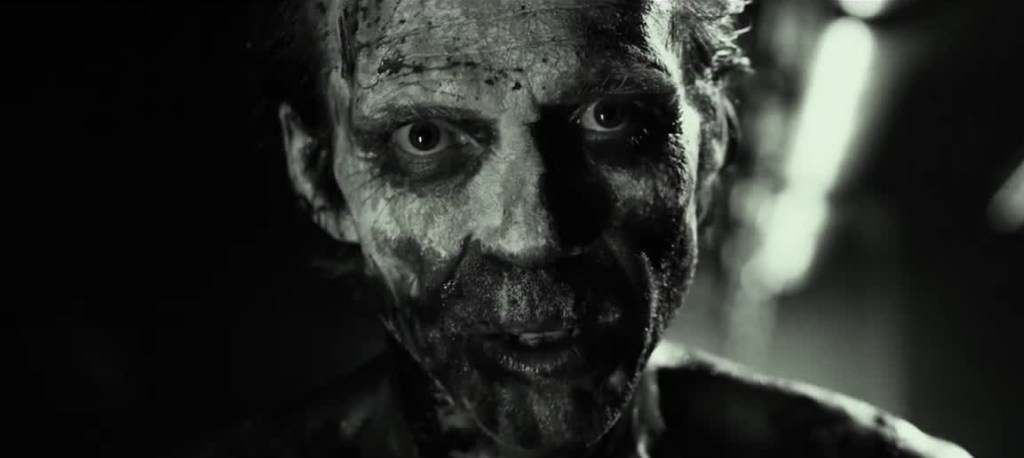
31 is like a horror version of The Running Man, masterminded by Malcom McDowell and Judy Geeson. A group of hypersexual carnies, including Sheri Moon Zombie and a remarkably fit Meg Foster (two years shy of 70, by the way), are taken hostage and forced to play the twisted game. Remember the video game Manhunt? It’s like that. Director Rob Zombie concocts one great villain after another, but unlike more memorable Most Dangerous Game movies, has absolutely nothing to say. (I’d be fine with that if it were at least entertaining.)

The most frustrating thing about Zombie is he’s almost there. He’s uncompromising, unapologetic, doesn’t pull punches, and makes old fashioned horror without a lick of unnecessary CGI. Best of all, he populates his films with veteran B-movie performers who may otherwise be pushing autographs for a hundred bucks a pop at horror conventions. Unfortunately, his characters are too dumb to fulfill the all-important role of becoming a surrogate for the viewer. You need characters you can relate to so you can wonder: “What would I do in this situation?”

If Zombie put one-tenth of the effort into his good guys as he puts into villains like Doomhead (Richard Brake, who’s legitimately fantastic), we’d have a great film. This is why The Devil’s Rejects is still his most watchable project to date: everybody in that movie is a villain, which is what Zombie excels at. If he’d put Doomhead in the lead and made him go against even badder guys, I would’ve been thrilled.

Unfortunately, that’s a different film and this one looks as if it were edited with a cross-cut paper shredder. Editing is supposed to establish things like geography, a sense of time, flow, and most of all coherency. 31 accomplishes little of that. At one point, the group is split up by a trap door, but for most of the scene I thought they were all on the same side. In another scene, the characters watch one of their own die and somehow discover his body in the very next room.

I’m always pulling for Zombie to make a great movie because I think he’s got it in him. He keeps proving me wrong. The joke’s on me, though, because I paid ten bucks to see the damn thing. I haven’t been more disappointed all year.

Over the Top

My partner and I were channel surfing. When I passed Over the Top, she asked me to go back. Reluctantly, I did. I was in the mood for literally anything else, but whenever I’m dead set against watching something, Starla goes all in. I tried to explain it’s an embarrassingly sappy film about arm wrestling. This only enticed her.

Several minutes in, she asked, “Wait, are you sure this is about arm wrestling?” The movie takes forever to warm up, but once it does: whoa boy. You’re going to need a serrated blade to cut this cheese, maybe even an electric carver. Sylvester Stallone plays Lincoln Hawk, a truck driver who just reunited with the son he walked out on a decade earlier. See, the mother is dying. Although her wealthy father (Robert Loggia) is gunning for custody, she wants the boy to be with his deadbeat father. Long story short: complex emotional conflicts will be resolved with arm wrestling. As God intended.

Hawk, with his muscular physique and rust bucket of a truck, is portrayed as an everyman whose home contains one-arm exercise equipment. Loggia’s character, who may be perfectly justified in his assessment of Hawk, is portrayed as the villain. Loggia represents The Man who despises his son-in-law because no college-educated sophisticates could possibly understand arm wrastlin’ and truck drivin’. It’s always bizarre and highly entertaining to view American culture through the eyes of Israeli director Menahem Golan, co-founder of The Cannon Film Group, whose unpretentious productions greatly shaped the pop culture of my formative years. Here he cranks his unique patriotism up to eleven… or perhaps “jumps the shark” is more accurate.

Nonetheless, Over the Top is a fun ride through the cheesiest depths of the 1980s. This remarkable artifact even films its climax during a real life arm wrestling tournament. I know what you’re thinking: “Arm wrestling tournaments really exist?” Well, sort of. This one was created specifically for the film, and two guys actually got their arms broken. One of the gruesome incidents ends up in the obligatory sports movie montage.

In typical Cannon fashion, Over the Top is vapid but impossible to turn off. It’s interesting how Golan spins sport-movie clichés to make them fit arm wrestling instead of ball games. In case you’re wondering about the curiously apt title, Over the Top refers to a special move Stallone’s character has incorporated into his matches. I suspect the physics have no basis in reality, but this movie isn’t directed by a man who lived in reality, so who cares?

Don’t Breathe (2016)

There’s a scene in Don’t Breathe that people are going to talk about for a long time. It’s a rabbit-in-the-stew kind of moment. Think along the lines of what Kathy Bates did in Misery… or maybe the “hair gel” scene in There’s Something About Mary is a more apt comparison. Either way, I haven’t seen such a memorable WTF moment since Bone Tomahawk. I guarantee the scene is fueling Don’t Breathe’s runaway word-of-mouth.

On the way out the theater doors, I overheard just as many people praising the scene as lambasting it. But at least the audience was electrified. Most of the movies I’ve seen this year evoked little more than a shrug as attendees quietly collected their belongings and shuffled outside to remember where they parked. Don’t Breathe knows the secret to making a story stick: you can try to please everyone, but nobody falls in love with movies that play it safe.

Have you ever seen The People Under the Stairs? Don’t Breathe reminds me of that one. A trio of good-for-nothing burglars break into a house, knowing full well the Gulf War veteran who lives there (Stephen Lang) is blind. They expect the guy to be a pushover, but once he shuts off the electric to his fortified home, they come to realize the odds are in his favor. You’ll probably be rooting for him until you discover… well, let’s not get ahead of ourselves.

Although I wasn’t the biggest fan of Fede Alvarez’s Evil Dead remake, I was interested to see what the guy made next. Now he tries his hand at an original horror movie which doesn’t comprise on scares. Unlike his previous film, this one is quiet—so quiet you can hear a pin drop in the theater. You’ll notice the people around you holding their breath, tensing for the next jump-scare, which are few and far between. It’s just a straightforward (and gross) horror film that works.

My biggest complaint is the Rottweiler in the film. That dog is one of the shittiest actors I’ve seen in years.

Doctor Mordrid (1992) [Midnight Movie]

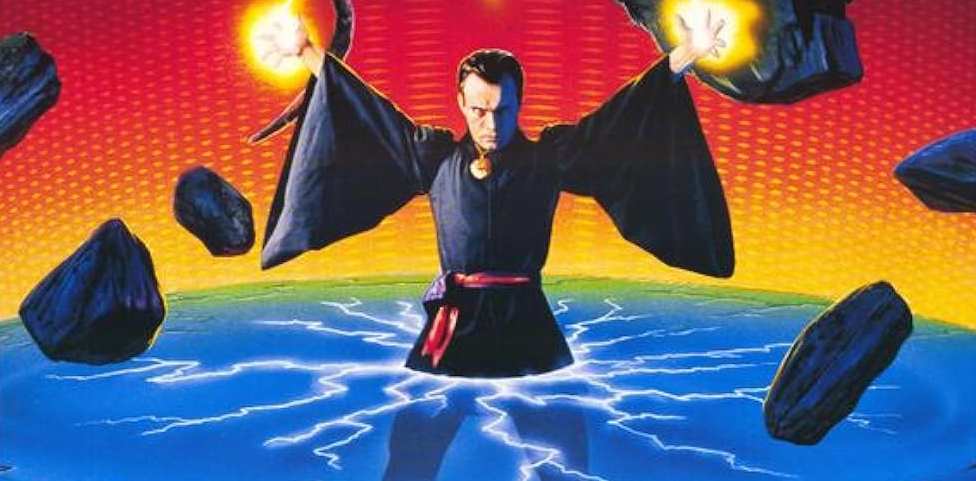
Doctor Mordrid entered production as an official Doctor Strange film until directors Albert and Charles Band let their option expire. That didn’t stop them from making the movie anyway (I wouldn’t expect any less from Full Moon Pictures). The character names have been changed. The filmmakers are legally obliged to inform you that absolutely no part of their movie takes place in the Sanctum Sanctorum. This is a film about an alchemist—not a wizard, not a magician, and certainly not a sorcerer. Any similarity to Marvel characters, living or dead, is purely coincidental.

The “alchemist’s” name is Anton Mordrid (Jeffrey “The Re-Animator” Combs) and he’s in charge of protecting the film’s MacGuffin: the Philosopher’s Stone. He and his brother Kabal (Brian “Cobra” Thompson) were taught all manner of wizardry—er, I mean alchemy—when they were children. Kabal is breakin’ bad now that he’s all grown up and he plans to unleash demons from hell… or something. I didn’t really follow that part, but if he succeeds, Earth is all kinds of fucked. He leaves a rash of murders in his wake, which begs the attention of Samantha Hunt (Yvette Nipar), the policewoman who just happens to live in Mordrid’s apartment building.

What develops between Mordrid and Samantha is one of the mildest romances in movie history. You won’t even know they’re attracted to each other until the last scene in the movie—and even then you won’t know for sure. What Mordrid suggests to her, out of the clear blue, is the equivalent of popping the question to a neighbor you occasionally see when you go for a walk. I love Combs to death, but his chemistry with actress Nipar is nonexistent. Considering they appear quite at ease with one another in this behind-the-scenes video, I’m not sure how the ball was dropped, but I suspect it had something to do with Full Moon’s speedy production schedule.

Look, Full Moon made tons of movies. They’ve managed to produce more memorable features than you would expect from a fledgling studio, so you can’t be surprised whenever they make a dud like this one. The directors, at that point in their careers, were such experienced filmmakers you can’t even laugh at the movie in a so-bad-it’s-good way. Technically, it’s a well-made film, it just happens to stink. Even if you go into it seeking the “so bad it’s good” factor, you’re bound to be disappointed.

Midnight Movie: Starship Troopers (1997)

“If I tell the world that a right-wing, fascist way of doing things doesn’t work, no one will listen to me. So I’m going to make a perfect fascist world: everyone is beautiful, everything is shiny, everything has big guns and fancy ships, but it’s only good for killing fucking bugs!” — Paul Verhoeven

At first glance, the cast looked like it belonged in a television drama for teenagers. The jingoistic satire didn’t translate well to newspaper ads and 30-second TV spots. The goofy marketing made it look like a straight-to-video movie had somehow wormed its way into a theatrical release. And yet, I still went to see Starship Troopers on opening night, shuffling into the theater with the lowest of expectations. There were maybe six other people there including, I think, a local film critic who occasionally shone a penlight on his notes and impatiently touched the illumination dial on his wristwatch.

In Paul Verhoeven’s Robocop, the narrative is frequently interrupted by satirical advertisements and news segments, as if the film has commercial breaks baked right into it. Likewise, Starship Troopers opens with over-the-top war propaganda, simultaneously establishing its irreverent attitude and the premise: in the future, humans really hate bugs: the arachnid alien combatants who’ve thrown a wrench in humanity’s plan to colonize every nook and cranny of the galaxy. In fact, humans hate bugs so much that young men and women everywhere can’t wait to give up everything and fight the bastards.

Enter Johnny Rico (Casper Van Dien) and his dimwitted high school friends. Amusingly, the first act plays like a futuristic teenybopper drama before jerking the rug out from under the heroes’ feet. Rico has a hot girlfriend (Denise Richards), a hunky rival (Patrick Muldoon), a dangerously flirty gal pal named Dizzy (Dina Meyer), and an ultra-nerdy best friend played by Neil Patrick Harris, whose appearance in an R-rated romp was mildly scandalous at the time (Verhoeven had employed similar stunt casting with Elizabeth Berkley in his trash-masterpiece Showgirls, two years prior).

Rico’s girlfriend is sent to the space navy, his brainy best friend gets absorbed by the military’s science sector, and Rico ends up in the most elite squad of ground troops in existence. His drill sergeant is played by Clancy Brown, who always takes genre projects seriously and the same can be said of Michael Ironside (Total Recall’s Richter), who plays the lieutenant of Rico’s group. There Rico makes new friends for the first time in his adult life, including Jake Busey, whose maniacal appearance instantly washes away the Dawson’s Creek vibe from the earlier portion of the picture.

Just when Rico’s finally begins to gel with his new life, who of all people will suddenly transfer to his squad? Dizzy, the hot little baddie who’s been pursuing Rico since high school. Here’s something I really love about Starship Troopers: in practically every movie in which the leading character is pursued by two love interests, he or she inevitably ends up with the sickeningly wholesome, less attractive option. Not my boy Rico. Soon after his boring girlfriend dumps him via a video call, Rico hooks up with the considerably more exciting Dizzy.

The score by Basil Poledouris is as rousing as anything he’s ever done while the early CGI is somehow much more convincing than most digital effects today. As for the action, it’s exciting, well-paced, and comically bloody as per Verhoeven’s style. If you held a gun to my head and asked me to choose my favorite film of Robocop, Total Recall, and Starship Troopers, I literally couldn’t do it.

I had friends in high school who were even bigger science fiction readers than I. Two of them were dead-set against the idea of a Hollywood adaptation of Robert Heinlein’s source material. There are still critics who assert Verhoeven “ruined the book” by choosing to parody its values (though a lot fewer of them exist today as the general consensus of the film only seems to improve with time). Yes, Isaac Asimov wrote in his memoirs that Heinlein grew more conservative and militaristic with age. Though this is certainly true, Heinlein has suggested he was merely exploring such a society as a possibility, not necessarily promoting it.

Then you have modern SF writers like John Stalzi, who are about as liberal and anti-war as they come, writing military fiction in nearly the same vein as Heinlein. Long before the Sad Puppies (an extreme right-wing group of close-minded assholes who attempted to manipulate the Hugo Awards) I used to enjoy reading science fiction from a wide swath of political and philosophical backgrounds. To like Heinlein’s version and Verhoeven’s isn’t contradictory, but exemplary of what I loved about the brainy genre in the first place. In fact, Joe Halderman’s The Forever War, itself a direct counter-argument to Heinlein’s novel, is among my favorite SF novels of all time.

Though I wish the movie version had gotten the jet packs that Heinlein imagined in the novel, I’m going with Verhoeven’s version all the way.
The Disaster Artist [Book Review]

Here are a few facts about vanity filmmaker Tommy Wiseau:

  1. He shot The Room on film and video using side-by-side cameras. Why? No one knows.
  2. He built the infamous rooftop set in a parking lot despite having access to at least two real-life rooftops.
  3. He built an alley set in a building which had a perfectly usable alley outside.
  4. He’s mysteriously rich.
  5. Whenever questioned about his bizarre creative decisions, he often replies, “No Mickey Mouse bullshit.”
  6. He maintained a billboard of his face on Highland Avenue for five years at five grand a month.

When it was clear Hollywood wasn’t going to give him the role of a lifetime, Tommy Wiseau decided to take matters into his own hands. He wrote, directed, and produced The Room, which is today considered one of the greatest bad movies of all time. This thing has such a cult following that James Franco purchased the movie rights to The Disaster Artist, which will feature Franco himself as Wiseau, Dave Franco, Seth Rogen, Hannibal Buress, Kate Upton, Zac Efron, Alison Brie, Sharon Stone, and Bryan Cranston.

The Disaster Artist is a 2013 book by working actor Greg Sestero, The Room’s co-star. In the book, Sestero details the unlikely friendship he forged with Wiseau who was at least twenty years his senior (Wiseau’s exact age is unknown). It quickly becomes apparent the reclusive filmmaker is a deeply guarded person despite his dreams of megastar fame. Whenever he does open up about his past, the contradictory stories are unlikely at best. To this day people are still trying to piece together the clues about his origins. He’s like the Jack the Ripper of independent cinema, a guy who stormed out of obscurity and plunked down a ridiculous amount of cash to make himself a star.

Not only did The Room cost six million dollars to make, but Wiseau maintains homes in both San Francisco and Los Angeles, the latter of which he hadn’t visited in so long he couldn’t remember the code to the alarm system (1234, as it turns out). The story is mostly about Sestero—because there’s so much we’ll never know about Wiseau—and his own quest as a Hollywood hopeful. It’s at an acting class where he first meets Wiseau, who is last picked when the students are instructed to pair up. Sestero, at the time, thinks Wiseau’s madness is charming. Despite the protests of friends and family, who suspect Wiseau is either mafioso or possibly the Zodiac Killer, Sestero agrees to move out to LA with his new buddy.

When Wiseau meets Sestero’s concerned mother for the first time, as the men are headed out to LA, she warns Wiseau not to hurt her son. Sestero writes:

I put my hands over my eyes. The worst thing Tommy could do in response to this request, I thought, would be to chuckle creepily. 

“I would not,” Tommy said, chuckling creepily.

The Disaster Artist is so funny at times my laughter woke my partner up even though she was in a separate room. Most readers will probably come to this book seeking the same answers I did, hoping for a shred of insight into Wiseau’s bizarre mind. Yet by the end of the book you won’t know much more about why Tommy Wiseau made the movie he did. If the book had shed light on these matters, The Room, and Wiseau himself, may have lost their allure.

I’m thrilled the story behind the scenes is as curious as the movie itself. There are a lot more questions than answers, which makes it all the more fun. The best answer you’re going to get? “No Mickey Mouse bullshit.” Ha ha ha, what a story, Greg.

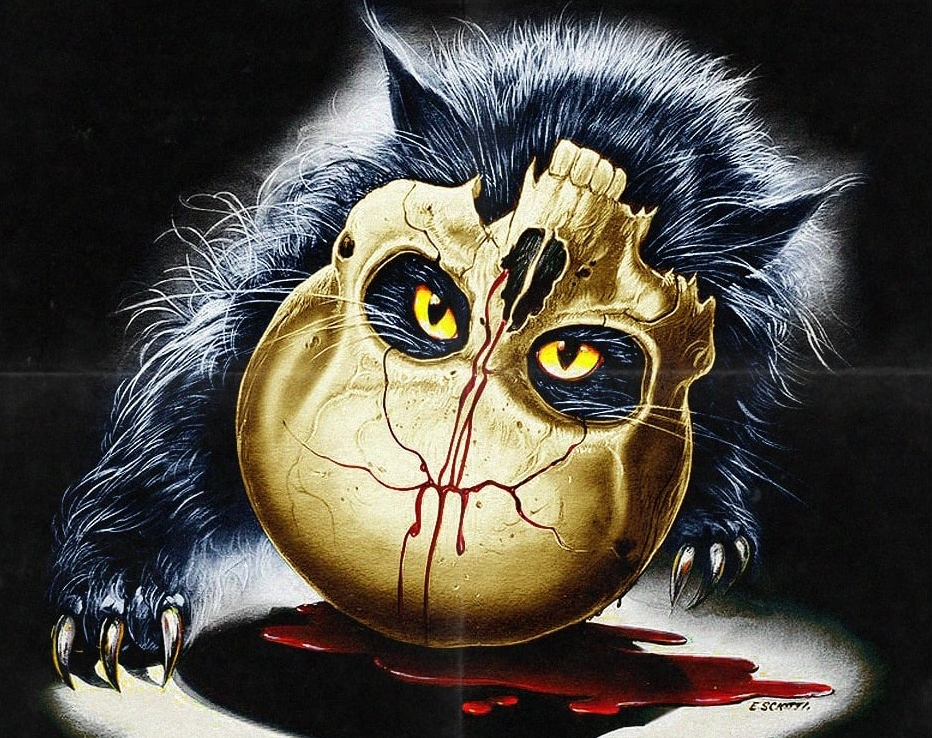
Midnight Movie: A Cat in the Brain (1990)

“A lot of Italian genre directors are animal lovers. Mario Bava loved cats, Riccardo Freda loves horses, and Dario Argento loves himself.” — Lucio Fulci

Fade in: An aerial shot of a man, sitting at his desk, writing frantically. We hear him muttering like a lunatic. His scribbling pen can barely keep up with the ideas boiling out of him: “A throat torn out by a maddened cat… burned alive… buried alive… tortured… scalded…!” Meanwhile, the camera pushes in close to his head and the perspective enters his skull. There’s a cat in there, which munches on his brain like a vulture on roadkill.

Cut to: A cold body lying on a medical table. A section of the rump is missing. The body is then ripped apart by a chainsaw as the camera lingers.

Cut to: A man frying meat in a pan. He sits down in front of a television screen and cuts into his meal with a knife and fork. On the television, an actress seductively informs the viewer, “I love you so much I could eat you.” The man raises his fork and proclaims, “Just what I’m about to do!”

Lucio Fulci’s A Cat in the Brain (aka Nightmare Concerto) is gleeful insanity. This is Fulci’s version of 8 1/2, but instead of casting a movie star surrogate, Fulci casts himself in the lead role. Like many of Fulci’s movies, the camerawork and acting are dreamlike, but this time used to comedic effect. Meta-horror is often lame, especially when there are movies inside the movie (this time it’s stock footage from Fulci’s own films), but this one isn’t. It took me a while to get the joke—all of fifteen minutes. This isn’t Fulci ripping off Fellini; it’s Fulci making fun of Fellini as well as filmmaking in general. Being a horror director must be one of the strangest jobs in the world, which is especially apparent (and hilarious) when Fulci’s fictional shrink reviews some of his actual films.

Here are some of the things you’ll see in A Cat in the Brain: a Nazi using a woman’s vagina as a billiards pocket, a hilariously psychopathic psychiatrist, and a literal cat inside a man’s head. Fulci is one of the unlikeliest likable protagonists.

Green Room (2016)

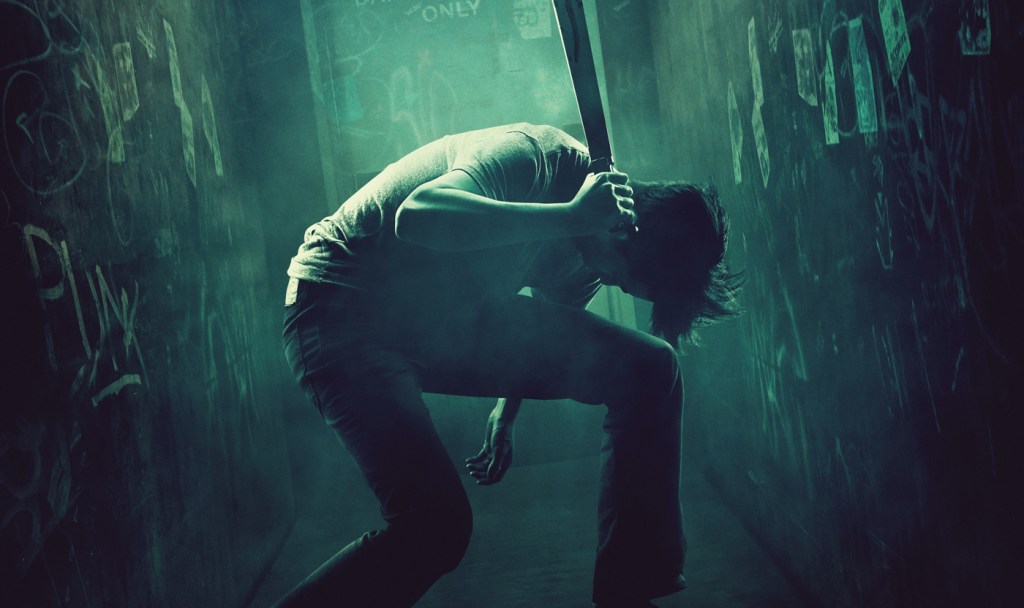
You could argue Green Room is more thriller than horror, but bones are broken, throats are torn out, and faces are mauled. The camera rarely cuts away as the imagery shocks and awes. There’s no supernatural element—not that that’s a requisite for horror—but the skinheads here are effectively monsters because they’re depicted not as cannon fodder, but three-dimensional humans. The things that happen in Green Room are, to put it mildly, horrific. And if I were to make a list of the best movies of the twenty-first century, I’d rank it extremely high.

A wandering punk band is hard up for cash. They reluctantly end up taking a gig at a rundown neo-Nazi joint in the middle of nowhere. In true punk fashion, the band decides to rile up the crowd with a cover of “Nazi Punks Fuck Off.” That goes over about as well as you might expect. Fortunately, the rest of their set is played hard enough to win the skinheads over by the end. After the show, the band heads back to the green room and accidentally discover the venue’s operators are covering up the murder of a young woman.

While the skinheads scramble to come up with a plan, the band is locked in the green room with a psychopath. He subtly mentions his revolver only holds five cartridges, “because they’re so fucking big that’s all that can fit in the cylinder.” Meanwhile, the neo-Nazis outside the room call Darcy Banker, their leader and the owner of the property. Banker is played by Patrick Stewart, whose performance is neither too cold or too hot. He’s not a man who relishes his villainy. His only motivation is to get the witnesses off his property as quickly as possible so he can murder them elsewhere.

The simple plan complicates quickly. Banker, who’s always failing to keep the situation from escalating, comes up with one idea after another to flush the band members out of the green room. He approaches the problem matter-of-factly, as if coordinating the extermination of rodents. To him, it’s just another problem in the life of a businessman, albeit an amoral one. Another interesting choice is the skinheads aren’t caricatures; when Banker loses his cool and humiliates one of his men, he promptly apologizes for his transgression. His henchmen aren’t expendable in his mind, they’re family.

There’s no fantasy violence here. There are no characters who do unbelievably heroic or villainous things. The good guys are gonna take a licking. Some of the bad guys are gonna take a licking, too. We all hate movies in which stupidly written characters do stupid things, but here’s a rare example in which smartly written characters do stupid things. After all, they’re young, immature, and panicking in a realistic way.