

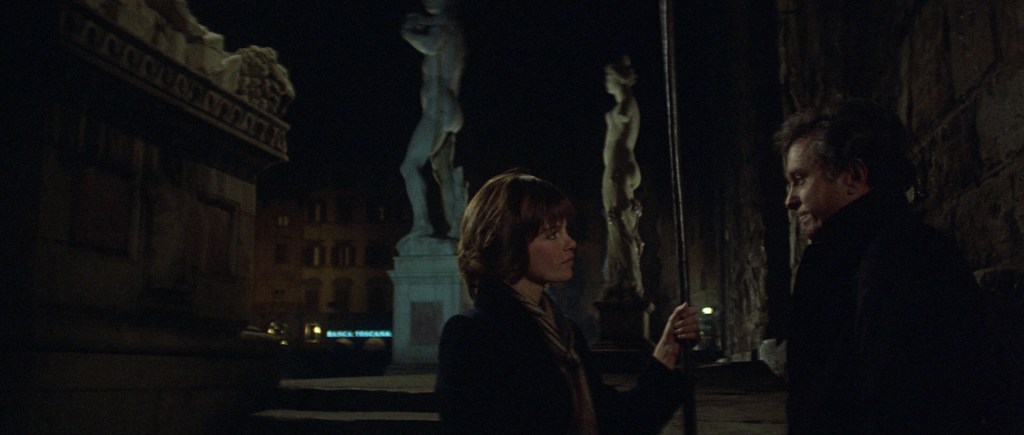
Brian De Palma’s Obsession is a film which rides the line between A- and B-movie territory, giving it a healthy mix of artistry and thrills. Though I found its climactic reveal to be a little more shocking than the director’s Dressed to Kill, 95% of the film feels old-fashioned as De Palma maintains a more pronounced slow burn with little in the way of action. If you go into it blind, as you absolutely should (seriously, just read the rest of this after you watch it), you’ll be trying to figure out who, exactly, holds the titular obsession while the mystery alone keeps you engaged.
The most obvious suspect is the protagonist, Michael Courtland, a New Orleans real estate developer played by Cliff Robertson. The film opens in 1959 when Courtland’s wife and daughter are kidnapped and held for a $500,000 ransom. The police convince Courtland to deliver a satchel with a radio transmitter and fake cash to the drop-off location so that they can track it to the bad guys’ hideout. Unfortunately, when the kidnappers realize they’ve been swindled, a car chase ensues and Courtland’s family is killed. (I’m omitting certain details here so as not to spoil all the shocking developments.)
Sixteen years later, Courtland has not remarried. He travels to Italy with his business partner, played wonderfully by John Lithgow, who puts on a heavy New Orleans accent… I am so terrible with accents I usually don’t even notice them in the first place so don’t ask me to rate its accuracy. While visiting an old church, he spots a young Italian woman who looks exactly like his deceased wife. Naturally, both wife and doppelganger are played by Geneviève Bujold. Just as you begin to wonder if the widower is simply going insane, his business partner sees her and confirms it: the woman, named Sandra Portinari, is the spitting image of his wife. Courtland extends his stay in the country as he courts her, ultimately convincing her to return to America with him to get married.
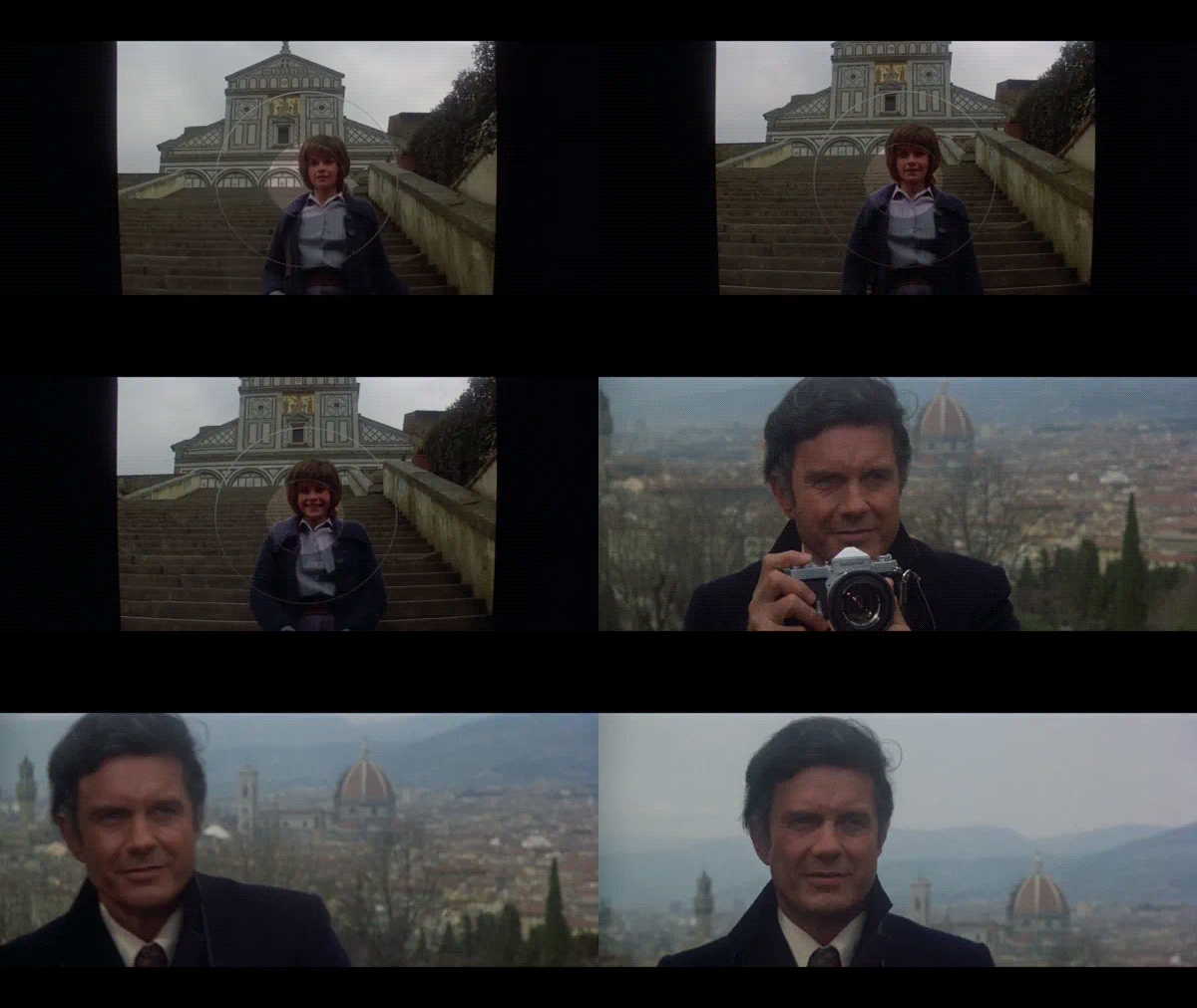
This doesn’t sit well with Courtland’s friends and associates because they suspect he’s only falling for the woman because of his unresolved survivor guilt. Worse, Sandra somehow doesn’t think his obsession with her is creepy in the least. Instead, she plays along with the fantasy, going so far as to learn how to walk and talk like his wife, eventually digging through the dead woman’s personal belongings to better get into the role. Courtland doesn’t see Sandra as a woman with whom he can start anew. He sees her as an opportunity to pick up where he left off.
It’s all careening toward a shocking, if somewhat convoluted twist (it takes several minutes to explain everything), but the conclusion suggests there will be a lot more story after the credits roll. What happens next is for the audience to stew over, which helps the film leave a lasting impression. Robertson is great in the movie, but his job is considerably easier than Bujold’s because all his motivations are laid bare from the get-go. Bujold is saddled with the responsibility of playing substantially different roles while convincing us that Sandra is naive enough to fall for a man several decades her senior. She manages to pull it off.
It certainly feels like a De Palma film, loaded with split-diopter shots, themes of duality, and a blatant helping of Hitchcock. I could probably name dozens of thrillers I liked more than Obsession, but it’s a solid film and de Palma’s first major hit. Still, you get the feeling that the original premise was a little more shocking. Columbia demanded changes that cannot be spoken of here without spoiling why they did it. That movie was likely a little more fucked up than the one we got.

