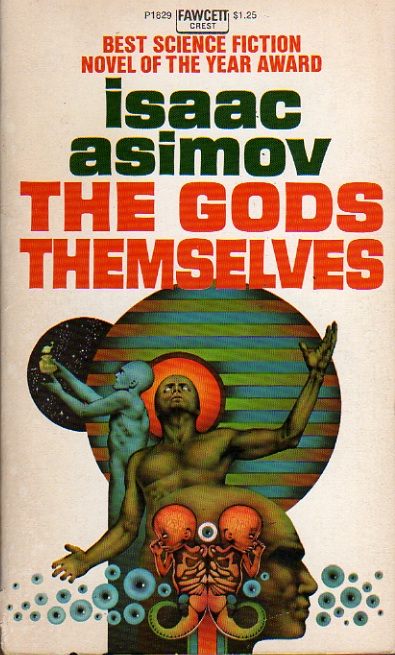
The Gods Themselves by Isaac Asimov

In Isaac Asimov’s The Gods Themselves, which curiously begins with Chapter 6, chemist Frederick Hallam has discovered plutonium-186… sitting on a desk in his laboratory. It turns out that aliens from a parallel universe have discovered that plutonium is a powerful source of energy whereas tungsten steel is a powerful energy source in theirs. What the human characters set up with the aliens (“para-men”) is a free energy trade: they get our tungsten, we get their plutonium. Although there is the distinct possibility that pumping resources back and forth will lead to disaster, humanity is too addicted to care. Who’d want to give up free energy?

Isaac Asimov, like many golden age science fiction writers, is known for relying on a utilitarian narrative to convey grand ideas, but here he steps out of his comfort zone and creates something unusually literary. In his memoirs, he refers to it as “writing above my head.” For the first time he writes something which belongs to the new wave science fiction of the 60s and 70s. New wave was experimental, risque, and anything but golden age.

Following Chapter 6: Chapter 1, more of Chapter 6, Chapter 2, and so on. When Chapter 6 finally concludes, you understand why Asimov arranged the novel this way. Just when you get comfortable with the human characters—poof!—Asimov shifts gears and focuses entirely on the gods themselves: the so-called para-men who occupy roughly one third of the novel’s attention. This is the best part.

The abstract para-men are not your run-of-the-mill aliens. They come in two categories: the hard ones and the soft ones. The soft ones are divided into three sexes: parental, emotional, and rational, and mating requires no fewer than all three. The good doctor does something he’s never done before: he writes about sex, though their sex is vastly different than ours. (Asimov himself complains about his sometimes laughable characterizations of sexuality in the aforementioned memoirs.)

Despite Asimov’s departure from his usual style, you never forget he’s the man who masterminded it. He’s far too modest when it comes to the quality of his writing, but with The Gods Themselves he shouldn’t be. Asimov is a great science fiction writer. He has said this is his best novel. I can see why.

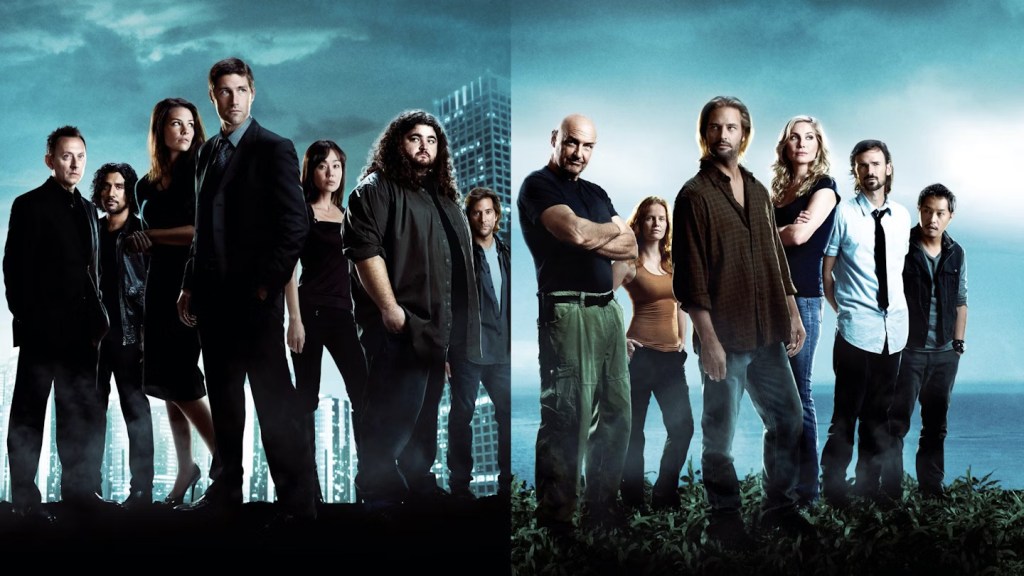
LOST: The Final Season

LOST has lost its allure. This Sunday, the series finale comes out. Although I initially loved this season—they led us into an alternate universe without dumbing it down for mainstream television—what initially drew me to the show were its questions, not answers. The answers, if you ask me, ruin it because they’re just not that good.

If you’re hoarding episodes of LOST, spoilers ahead. 

It was okay, in previous seasons, to answer something every once and a while. Consider the way they suggested (but didn’t tell) how and why the polar bears got to the island when the main cast were taken hostage by the others. I was fine with that, but these days nothing is so casually suggested. Now everything is flat out explained, usually by Locke or a ghost, if not a jarring flashback, and I think, “Okay, that was certainly anti-climactic.” I don’t hate the final season, it doesn’t hold a candle to what came before it.

Season 5’s cliffhanger was brilliant, as was season 6’s opener. We all knew you couldn’t have LOST without an island, but the show opens and… we’re on the plane again. What? The plan worked? The plan worked! Not only that, the island is underwater! Holy shit! How cool is that! Then, with no explanation… Jack wakes up on the island. And no, that other universe was no dream. It was the best mind-fuck LOST had pulled yet.

Then the answers—spoken, rarely shown—came trudging along with almost predictable frequency. Every great once and a while, they toss me a bone, but it just isn’t enough to sustain my appetite. Maybe I would have liked the series better if it had been canceled after Season 5. I like things that get me involved. LOST’s sixth season is considerably less hands-on.

WarGames

The human personnel in a missile silo are faced with the task of maintaining a launch station. They never thought they would actually get the order to launch. To them it’s just a routine job: monitoring the blinking lights while they make idle chitchat. What human could possibly accept what it means to actually push The Button? When men are ordered to fire, unaware that it’s an attack drill, they fail to do so. This convinces the brass at NORAD to take humans out of the equation all together. A super computer, they reason, would have all the capabilities of a human, with none of the pesky conscience.

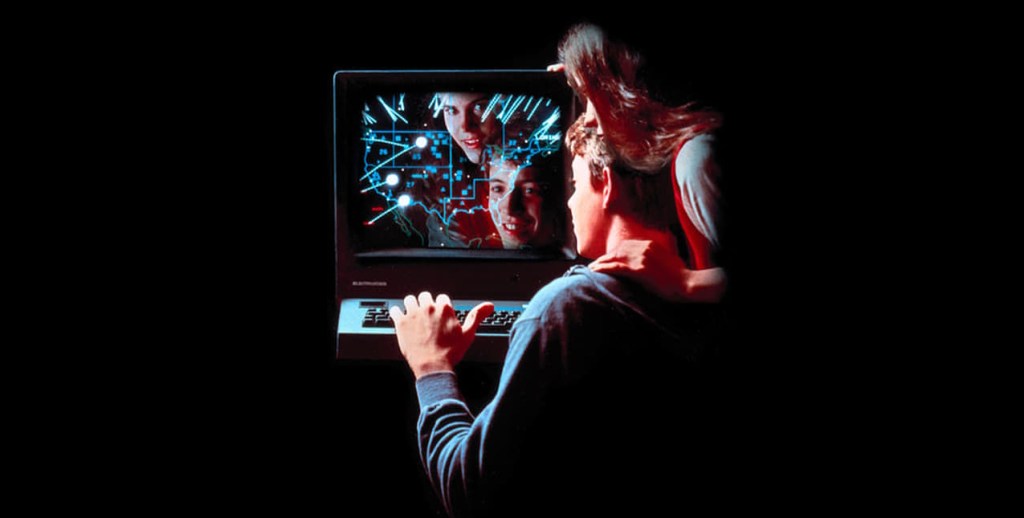
Following the suspenseful opening is a conventional introduction to our protagonist. Seventeen year old David Lightman (Mathew Broderick) is a high school kid who spends too much time in his bedroom, messing about with his modem-enabled Imsai 8080 computer. His girlfriend’s character is never really fleshed out, but that doesn’t matter because she seems like a real girl and her interest in David never came off phony.

One day David is leafing through a magazine when he discovers an advertisement for a mysteriously marketed video game that won’t be revealed until Christmas. David refuses to wait. He commands his computer to dial every phone number within the game studio’s area code so that he can create a list of every modem in the area. When David accidentally connects to the super computer at NORAD, he thinks he found the studio he’s looking for and launches a game called Global Thermonuclear War. The super computer is more than willing to play, as it’s an artificial intelligence that plays war games 24/7, constantly learning, constantly improving. Unfortunately, David soon learns that he may have inadvertently started the ball rolling towards World War III.

WarGames occasionally insults the intelligence (micro-cassette recorders can be hacked to open keypad-protected doors), but it’s fun and cleverly so. If anything, it really captured the attitude of real life hackers who, though often vilified by the media, are the people who gave us affordable computers and created the internet in the first place. There are some things I didn’t like about the movie, notably the stereotypical computer specialists who help David crack NORAD’s backdoor password, but the climax of the film is unlike any I’ve ever seen. It hit me hard and it stuck with me.

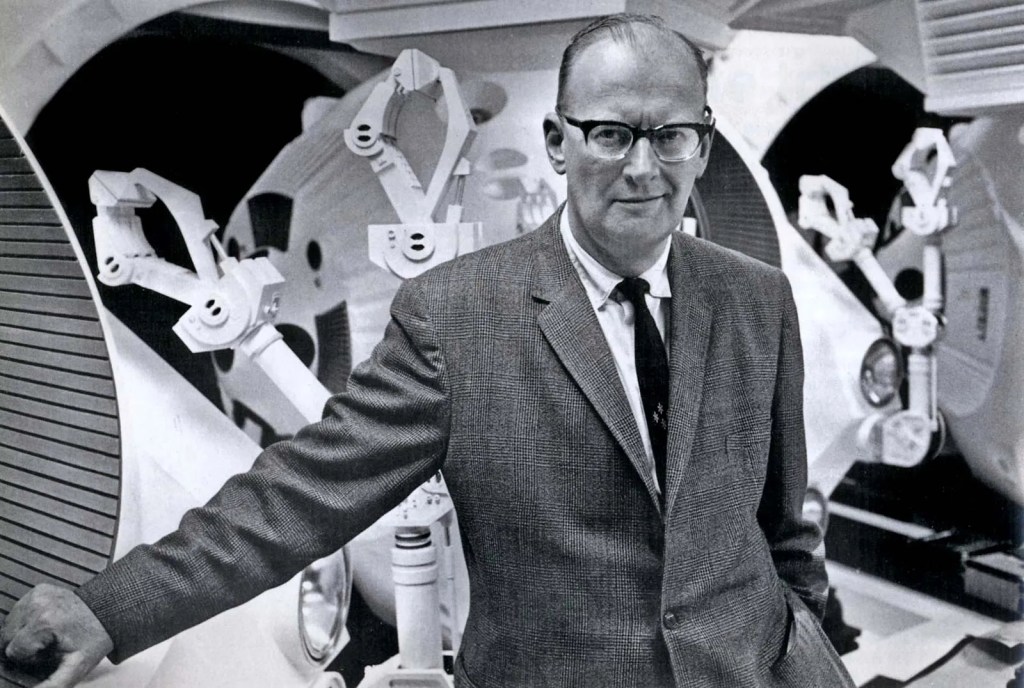
I Learned Science from Arthur C. Clarke

Two years ago today, the last living member of science fiction’s “Big Three” died. It was Arthur C. Clarke, whose prose was never what anyone else would call masterful, but it was sufficient. That wasn’t the point. He was an ideas man and his imagination was both awe-inspiring and troubling, grounded and mystical.

Clarke often had science on his side—real science—which is why I believe that science fiction is important. Consider how many real-life scientists say they were initially inspired by books, TV shows, etc. The inventor of the cell phone was inspired by the communicators on Star Trek, Paul Krugman became the world’s most famous economist after reading Asimov’s Foundation, and Robert Goddard, the inventor of the world’s first liquid-fueled rocket, cited The War of the Worlds as his inspiration.

Rendezvous with Rama

Rendezvous with Rama, which won both the Hugo and the Nebula, was equal parts haunting and mysterious. It’s primarily an adventure story told without the prerequisite heroes and damsels in distress (the main character isn’t just married, he’s got two wives which is, uh, apparently a thing space travelers like to do in the future), yet it’s every bit as entertaining as, say, Jack Vance’s Planet of Adventure. Science is often the cause of the characters’ dilemma, such as when they realize the weather inside the alien spacecraft will turn dangerous as it approaches the sun, but in Clarke’s world, science is usually the solution to the problems as well.

Clarke’s seminal work begins: “Sooner or later, it was bound to happen.”

On September 11th, 2077, a meteorite strikes Earth and kills six hundred thousand people. This plot point is foreshadowed by Clarke’s narration of real-life events: in June of 1908, he writes:

Moscow escaped destruction by three hours and four thousand kilometers—a margin invisibly small by the standards of the universe. On February 12, 1947, another Russian city had a still narrower escape, when the second great meteorite of the twentieth century detonated less than four hundred kilometers from Vladivostok, with an explosion rivaling that of the newly invented uranium bomb.

And about the fictional meteorite of 2077:

Somewhere above Austria it began to disintegrate, producing a series of concussions so violent that more than a million people had their hearing permanently damaged. They were the lucky ones.

The incident spurs the creation of SPACEGUARD, a program to ward against such catastrophic collisions. Fifty years later, SPACEGUARD discovers what scientists will soon call Rama: an enormous cylindrical spacecraft which has mysteriously entered the solar system and will soon leave. This gives humans a small window to study the alien craft. I was instantly hooked and spent a very long night inhaling the novel beneath my covers with a flashlight.

Rendezvous introduced me to conceptual physics. Rama, constantly spinning about its axis, generates the illusion of gravity for its occupants via centripetal force. Inside, separating the two halves of the cylindrical craft is an ocean in the form of an equatorial band. Perhaps I struggled with this imagery at first: a giant band of water that “sticks” to the inside of the cylinder’s continuous wall. When the characters ride a boat in the middle of this ocean, they can look up and see more of the ocean ahead and above them.

Sure, this type of setup has been a staple of science fiction many times before and since, but it was likely my first brush with the concept. In an interesting subplot somewhere in the middle of the book, the explorers want to get a look at the device at the far end of the craft, which they assume is some sort of a space drive. You see spaceships in movies that don’t have any visible means of propulsion all the time, but in an Arthur C. Clarke story, this is particularly curious because it violates Netwon’s third law of motion.

2001: A Space Odyssey

Some time after inhaling the entire Rama series (only the first one is essential), I found the book version of 2001, which was more or less written concurrently with the film’s production. It expanded on the Dawn of Man stuff seen in the opening of the film, which was perhaps the first time I considered human evolution and our prehistoric ancestors. The novel also expands on how Hal 9000 tries to kill the main character, which in some ways is scarier than the movie. The sequence as designed by Clarke was probably too expensive for Kubrick’s budget.

The Early Stuff

Some of Clarke’s earlier works may seem lackluster compared to mainstream classics like 2001 and Rama, but the science is still fairly hard and the stories are charming if nothing else. Some of the things he dwells on is now common knowledge for SF fans (we don’t need to be frequently reminded “There’s no up or down in space”), but I think it’s interesting to note he was writing this stuff before humans ever went to space.

An excerpt from Islands in the Sky, a novel aimed at teenagers in which the narrator wins a trip to space:

There were also, I’d discovered, some interesting tricks and practical jokes that could be played in space. One of the best involved nothing more complicated than an ordinary match.

What happens is the other astronauts play a prank on the boy: they tell him the way you make sure you have a fresh supply of oxygen is the same way miners do it back on Earth: you light a match. (Never mind why astronauts have matches on board.) If the match goes out, “well, you go out too, as quickly as you can!”

One of the astronauts demonstrates by lighting a match which promptly extinguishes itself, much to the boy’s dismay.

It’s funny how the mind works, for up to that moment I’d been breathing comfortably, yet now I seemed to be suffocating.

The narrator panics before he realizes that, in the absence of gravity, smoke has nowhere to go and suffocates the flame.

Childhood’s End

Childhood’s End is possibly the most loved of Clarke’s earlier novels. At one point in the story, the characters successfully use a device that’s essentially a spirit board, which is disappointing to those who love Clarke’s hard science. Beyond the detailed explanations of time dilation at relativistic speeds (possibly the first time I was introduced to that concept), the only thing about Childhood’s End that really sticks out in my mind is the introduction included in my edition (1990, Pan Books LTD.). There, Clarke admits that he was impressed by evidence for the paranormal when he wrote Childhood’s End, which would not hold true later in his life.

When Childhood’s End first appeared, many readers were baffled by a statement after the title page to the effect that “The opinions expressed in this book are not those of the author.”

This was not entirely facetious; I had just published The Exploration of Space, and painted an optimistic picture of our future expansion into the Universe. Now I had written a book which said, “The stars are not for Man,” and I did not want anyone to think I had suddenly recanted.

Today, I would like to change the target of that disclaimer to cover 99 percent of the “paranormal” (it can’t all be nonsense) and 100 percent of UFO “encounters.”

At any rate, I just thought I’d use this anniversary of Clarke’s death to geek out about him.

Perfect Dark: A Personal History

The Original

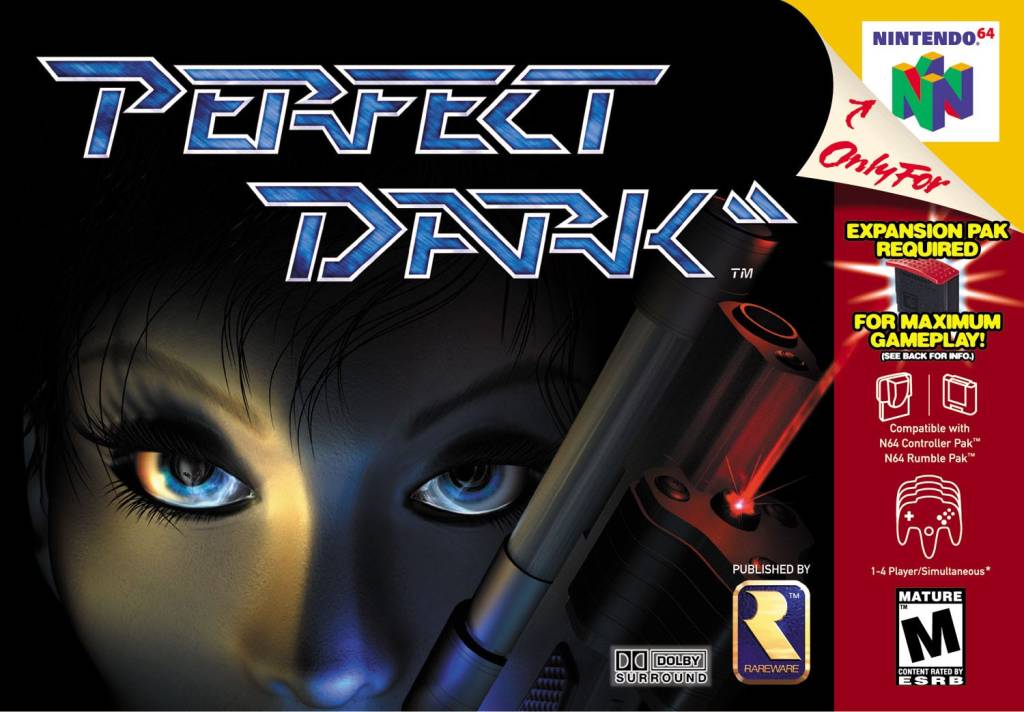
Perfect Dark came out for the Nintendo 64 in May of 2000. The $70 price tag was a bit steep for a high school student, but I’d heard good things: a friend insisted the violence was as realistic as anything in Saving Private Ryan. Violence of any kind was rare for a Nintendo game back then. That alone was worth the price of admission (for an immature seventeen year old).

It wasn’t until I got home from the store that I noticed the warning label on the front of the box:

This worried me a little, but how bad could a N64 game be without an Expansion Pak, which I hadn’t even heard of before then? DOOM 64 was awesome on the same console. If Perfect Dark without an Expansion Pak was half as good as DOOM 64, then that was $70 well spent, right? Unfortunately, without the Expansion Pak, the N64 could only run a stripped down version of the Combat Simulator (the multiplayer mode), minus bot AI and all levels but one. Worse, the game was rendered in a reduced viewport, surrounded by a rather annoying black border.

I was reluctant to buy the Expansion Pak as I was still reeling from the short-lived 32X add-on for the Sega Genesis. But without the $30 Expansion Pak, Perfect Dark was worthless. So, having spent my last dollar on the game, I borrowed money from my parents and bit the bullet. When all was said and done, I was a teenage plumber who had a hundred bucks invested in this nonsense, which, back then, felt more like five hundred dollars.

The Expansion Pak, of course, was worth the money. The other two games that required the add-on (Donkey Kong 64 and Majora’s Mask) were N64 essentials as well. In the years since, people have critiqued Perfect Dark for its frame rate issues, but that just wasn’t something teenagers cared about back then. Okay, so maybe the game wasn’t as realistic as Saving Private Ryan, but for 2000’s standards, everything in and about the game was like nothing we’d ever seen before (and yes, I did play my fair share of Goldeneye, too… those who prefer it to Perfect Dark almost certainly did not play enough Perfect Dark). The Combat Simulator offered any combination of local versus and/or co-op you wanted (something games are sadly neglecting these days) and I’ve never seen more customization options in my life… and still haven’t, short of modding a game yourself.

So in 2001, a friend and I were logging countless hours, neglecting our high school responsibilities, and becoming so undeniably nerdy that we videotaped our matches (on 8-hour VHS cassettes) so that we could review and improve our tactics. The game was inexhaustible. If you ever got bored, you simply dreamed up and implemented a new custom scenario. Or you could spend your time knocking out one of the thirty challenges, which were brutally difficult but necessary for unlocking everything in the Combat Simulator (I think we managed to beat twenty-eight, if memory serves me correctly). During one marathon gaming session that lasted all day and half the night, a blood vessel burst in my eyeball.

Perfect Dark was taking over my life. My health was suffering. So was my social life. I couldn’t wait for the sequel.

Perfect Dark 2

We kept hearing rumors. Nintendo came out with their next console, the Gamecube, and I bought one because I was certain Perfect Dark 2 would be announced for the console “any day now.” It never was. My friend and I were deeply disappointed to learn that Microsoft bought Rare, the company that made and published Perfect Dark, and it would likely be on the XBOX instead. (Concept art from the Gamecube days supposedly still exists, but I’ve had little luck finding it as it’s usually mislabeled XBOX art.)

I was heartbroken. Almost every shooter I tried on the Gamecube only reminded me that 99% of games would never reach the perfection of Perfect Dark. I broke down and bought an XBOX around the middle of its life cycle, praying that Halo and the many racing games would hold me over until Perfect Dark 2 released. Then I wanted to shoot myself when it was announced that the next installment would be a launch title on Microsoft’s next console, the XBOX 360.

Naturally, I went out and bought one of those, too.

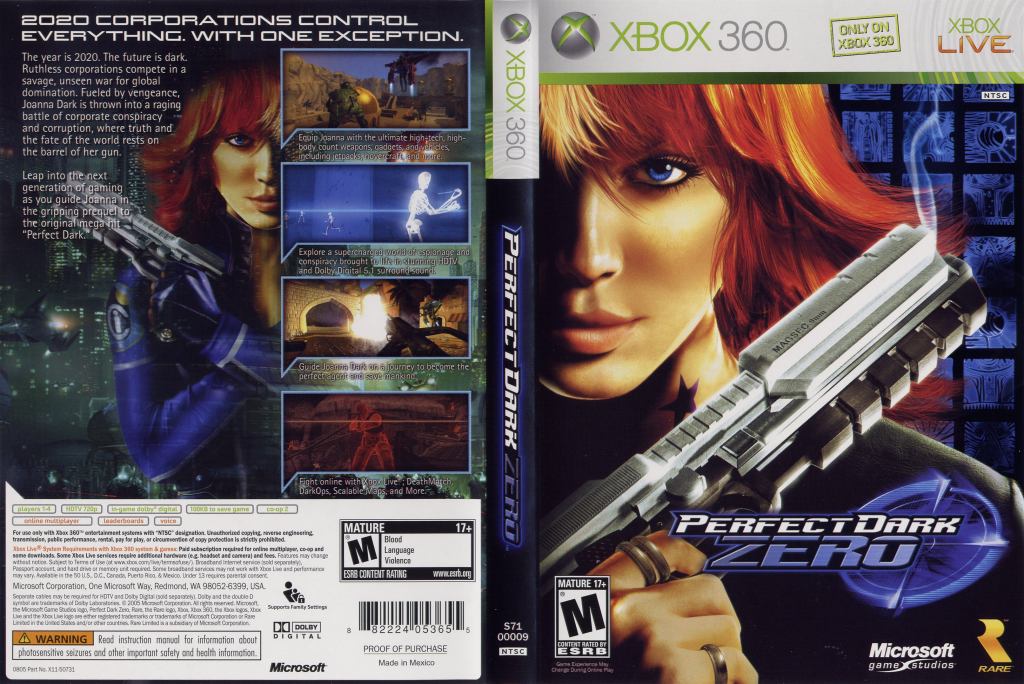
Perfect Dark Zero

The next game, as it turned out, was not a sequel. It was a prequel and most of the developers were gone by then. What the new team came up with wasn’t a terrible game, but it was nowhere near Perfect… it wasn’t even as good as the N64’s Goldeneye. At the time, I thought it was a disappointing imitation having very little in common with the original. Sure, you assumed the same character, got to do a lot of the same things in a similar manner, but the multiplayer was geared for online play rather than local. Meanwhile, the plethora of customization options were reduced tremendously. Yet again, fans of the source material—many of whom preferred gaming on their couches—were screwed.

It was clear: Perfect Dark as I knew it was dead.

Perfect Dark Redeux

So how do you please fans of the source material? Re-release Perfect Dark in HD on a next-gen console with the original multiplayer intact. Last summer it was announced that Rare was going to do just that for the XBOX 360. The game is currently slated for a Q1 release this year and although I would like to say I’m not getting my hopes up, I’m an idiot. I’m looking forward to wasting my time on a great game again.

Masters of Science Fiction: The Discarded

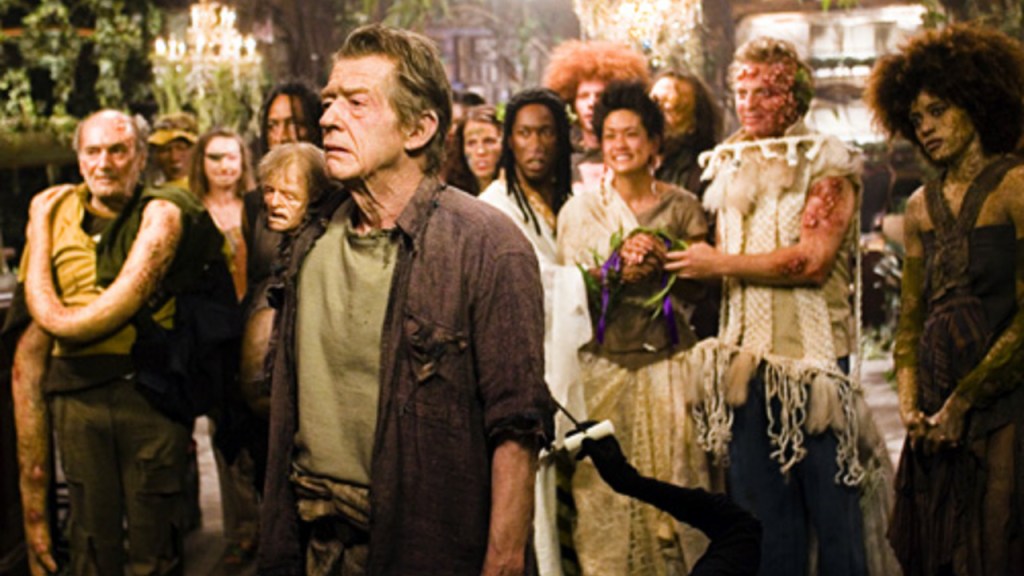
The Discarded, based on the short story by Harlan Ellison, is narrated by Stephen Hawking—yes, the famous professor with the electronic voice. It stars John Hurt, whose character has two heads, and Brian Dennehy, who has a gigantic arm. You may be reminded of a running gag in Mother, in which Albert Brooks plays a fledgling science fiction author who wrote novels of questionable value: “Did you like the character with the big hand?” he’d ask readers.

The discards are a colony of mutants who were quarantined on a space station. Life sucks so bad that many kill themselves in inhumane ways. One day, a ship from Earth makes an unscheduled rendezvous. The visitor, an ambassador from Earth, tells them that after they were discarded, the virus responsible for the mutations evolved following a period of dormancy. Earth’s only hope for a cure lies in the enzymes manufactured by those who were originally infected.

Like one of the stronger episodes of Star Trek: The Next Generation, the quandary is an ethical one, which is why it should come as no surprise that the episode’s director is Jonathon “Riker” Frakes, working with a teleplay written by Josh Olson and Harlan Ellison himself. The climax won’t involve laser weapons or dramatic space battles. It will involve small group politics, blind faith, and diplomacy. Dennehy’s street smart leader of the colony is steeled in his resolve not to trust Earth even though everyone else has turned against him. The audience is given no more information than what we see on the screen. We literally don’t know who’s right.

Some may snicker seeing these actors adorned with heavy prosthetics on a science fictional set, but Hurt and Dennehy take their jobs seriously. This is great acting, period, but for TV it’s phenomenal acting. A lot of seasoned actors would have written this material off as nothing more than a paycheck. Hurt and Dennehy, and in no small part the cast of supporting characters, treat it as if it’s Shakespeare. It’s remarkable how endearing this crew of misfits become in such a short span of time.

The whole production reminds me of the 90s revival of The Outer Limits and it’s brought to you by genre fanatic Mick Garris, the same mind behind Showtime’s Masters of Horror. This is made by fans of science fiction and it shows. One of my favorite hours of TV ever produced.

Romance Novels… In Space?

Granted, I don’t know much, but I didn’t know science fiction/romance novels were popular. Okay, I didn’t even know they existed. Maybe I’m living under a rock.

Who is the market here? I’m not saying women are incapable of enjoying science fiction, but do the women who enjoy reading soft porn… enjoy stories set in space? Is it actually men who are reading these things?

A couple of these covers look like your average, unromantic SF story.

2025 update: This post originally linked to an io9 article. Almost all links to classic Gizmodo articles are broken these days. You can read more about the restoration of this blog here. Long story short: I’m cleaning up broken formatting and removing dead links.