31 Days of Gore: The Slayer (1982)

It’s October. Time to talk horror. This year I’m reviewing a different horror movie each day of the month.

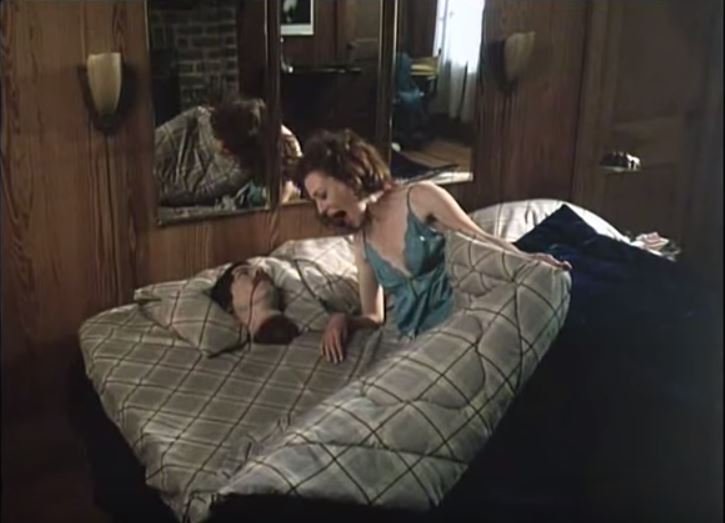
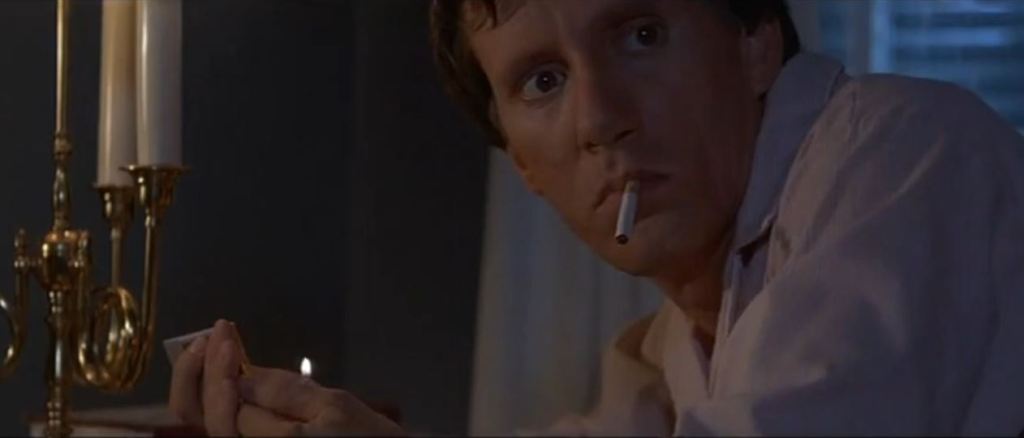
The Slayer opens with a series of disjointed images involving a redheaded woman who’s being attacked by… something. Whatever it is, we can tell it’s pretty gnarly and the film (at least the uncut version) isn’t going to shy away from the good stuff. The only problem? Scenes containing the good stuff are few and far between.

It turns out that scene was just a dream, which immediately reminds us of A Nightmare on Elm Street, an observation which will beg even more comparisons by the time you get to the cheat of an ending. Just don’t call it a ripoff because Wes Craven’s franchise was still two years away, believe it or not. I wish I could say The Slayer is ahead of its time in that regard, but that would be more praise than it deserves.

The entire premise: four people take a vacation on an island, but they’re not alone. We’re not talking a human slasher, but someone (or something) supernatural like Freddy Krueger. Even so, this killer is not above using low-tech methods such as bashing a victim’s head in with an oar. Like most movies of its kind, it’s painfully slow to get started, but early on there’s a delicious slice of cheese: upon arriving via chartered plane, one character gazes out the window at the island and remarks, “It’s surrounded by water.” And if there’s anything the filmmakers want to make abundantly clear, it’s this: “There’s no phone service on the island!”

Following a disappointingly tame sex scene, the redhead’s lover wanders into a dark, creepy basement alone. (I’m expecting to see a lot of creepy basements and cellars this month so let’s call it a trope rather than a cliché.) When you only have a handful of characters to kill in your scrappy little horror movie, you’ve got to concoct ways of splitting them up and killing them one by one so you don’t blow your load too soon. Rinse and repeat until you’re left with a final girl and we can all go home.

While The Slayer is little more than a standard horror movie of its time, it’s a fairly solid one and worth a watch. It’s suffering from many of the same problems films of this type almost always have, chief among them its plodding pace. But maybe it subconsciously planted the seed in Wes Craven’s head which would later become A Nightmare on Elm Street… but probably not.

Come back at midnight Central Time for the next movie.

31 Days of Gore: The Hatchet series

It’s October. Time to talk horror. This year I’m reviewing a different horror movie each day of the month. Today I’m reviewing three for the price of one... who loves ya, baby?

Hatchet (2006)

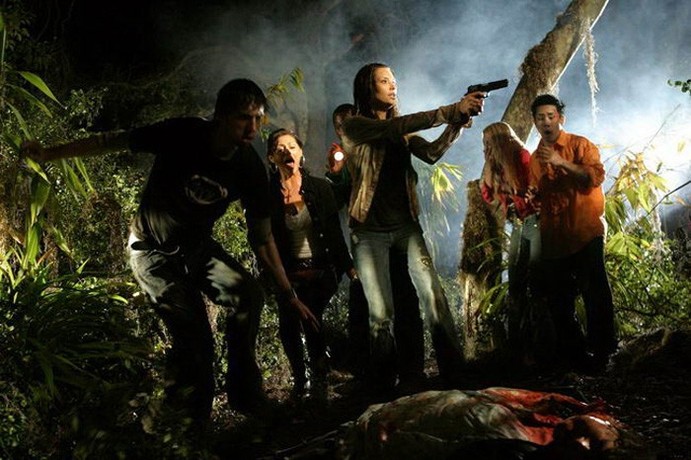
Harry Knowles proclaimed the killer in Hatchet would be “the next icon of horror.” It’s safe to say Harry jumped the gun just a little. Perhaps Victor Crowley is more memorable than the average villain, but he certainly doesn’t hold a candle to Freddy or Jason. Nonetheless, Hatchet is better than some of the Freddy and Jason sequels.

Hatchet opens with Robert Englund (Freddy Krueger) playing a hillbilly who’s hunting gators in a New Orleans swamp. Instead of letting Englund and Kane Hodder (Crowley) share screen time, Englund’s character is killed off screen, which is frustrating. Tony Todd (Candyman) makes a cameo later on and you can practically read his thoughts: “Why the hell am I in a talking scene? Couldn’t they at least give me somebody to kill?” 

That’s my biggest beef: there’s certainly cool stuff in Hatchet, but most of the time it reaches for greatness and stumbles over its juvenile sensibilities. I’ll give it a pass for not putting Englund and Todd to better use—the filmmakers probably didn’t have the money to use the established actors for any more than a day of shooting. 

Here’s where the filmmakers don’t get a pass: the movie looks goddamn terrible. Even though it’s shot on film, the copy I watched looked more like Thankskilling than the grainy B-movies the director wishes to emulate. The woods and swamps are lit so brightly it’s hilarious when one of the characters suggests a flashlight. The opening scenes, set during Mardi Gras, look as technically competent as the cinematography on a Girls Gone Wild DVD.

And although I adore horror-comedies, the jokes in Hatchet are simply bad. The only type of humor I hate more than characters being inexplicably clumsy is forcing characters to say ridiculous things just for the sake of comedic relief. “Hey, it’s like that time you caught crabs!” “What’s 911’s area code in the south?” When one character tells another to blow her dad, the response is, “I will as soon as you’re finished!” Ooo, burn.

This really hurts because there are decent comedians involved. Joel Murray (a godsend in God Bless America) and Richard Riehle (the guy who invented the “Jump To Conclusions” mat in Office Space) have bigger roles than you would expect in a slasher flick, but instead of elevating the material, they’re bogged down in the mire of forced jokes. Outside of the over-the-top kills, I laughed maybe once. The scene responsible involved a close-up of a very attractive woman scratching her crotch in a very unladylike manner.

On the other hand, the sound effects are great and the splatter is pitch perfect. I’m only disappointed there’s so little of it. We get a decent kill right out of the gate, but the movie drags on and on until the next one. In case you’re the type to fast forward through the boring parts, I checked: the movie doesn’t pick up again until the 49-minute mark. But man, I’ve never seen a belt sander used like that before.

It’s worth noting I was frequently reminded of the movie that more or less built Miramax: The Burning. Like that film (and some spoilers for both movies follow), I eventually felt sorry for the bad guy. Hatchet’s origin story also involves an accident with fire; the directors of both films concoct far-fetched ways of setting their antagonists ablaze in the climax. I’m mostly desensitized to this kind of stuff, but setting a burn victim on fire just seems needlessly cruel.

So yeah, Hatchet is a must-see for gore aficionados. Everyone else should skip it. Spoilers below.

Hatchet 2 (2010)

I love it when a sequel picks up exactly where the original left off. Like Back to the Future 2 and Waxwork 2, Hatchet 2 not only provides a seamless continuance, it replaces its lead female with a different actress entirely. This time Marybeth is played by Danielle Harris (The Last Boy Scout, Halloween 4). Harris is not the best screamer in the world, but she exudes all the other qualities we expect from a final girl, which is rare these days.

When we last saw Marybeth, she’d been caught in the killer’s grip, presumably doomed. Within seconds of Hatchet 2’s opening, she gouges one of his eyes out, affording her a chance to swim away. One pathetic jump-scare later, she’s rescued by the piss-drinker from the first film. Already the film looks better than the original and although the lame jokes are still present, there aren’t as many of them. There are some okay jokes, too. I’m guessing the director stopped smoking so much pot before he made this one.

The piss-drinker tells Marybeth not to call the cops (because that’s certainly logical) and sends her on her way to Reverend Zombie (Tony Todd) who also tells her not to call the cops (convenient). Instead, he assembles a ragtag crew of hunters in a scene which involves a Lloyd Kaufman cameo and expands on Crowley’s origin story. Although this sequel takes even longer getting to the good stuff, it’s not as boring and the payoff is sweet.

So when asked why he wants to bring so many hunters along, Tony Todd’s character replies, “Safety in numbers.” And yet, within minutes of arriving at the swamp, Todd tells everyone to split up. Yeah, it’s one of those movies, but the obligatory sex scene which results from this bad decision had me dying with laughter. It’s like something out of Eli Roth’s fake Thanksgiving trailer and, uh, the sound effects are… well, brilliant. This sex scene also provides one of the few dialogue jokes that work in the entire movie.

To say Hatchet 2 is an improvement is like saying a cold is better to get than the flu. It’s easily twice as capable as its predecessor. That says more about how disappointing the first one was, but any old school horror junkie should see it. Todd and Harris, by the way, have strong chemistry and screen presence.

Spoilers for Hatchet 3 follow…

Hatchet 3 (2013)

I wish I could say Hatchet 3 is three times as good as the first, but I’m not a liar. It’s not as good as the previous entry, but I can’t say I would have been disappointed had I gone to a theater to see it. Gone are the really lame jokes (for the most part) and we finally see cops enter the mix, which means they had a bigger budget. Although cops were strangely absent from the first two features, this time there are way too many of them to retain the 80s throwback vibe. 

Again, the filmmakers pick up exactly where they left off. Shell-shocked from the events of the last two films, Marybeth scalps Crowley’s dead body and wanders, in a daze, into the local police station. After a firehose-shower scene which bares surprisingly little skin, she’s thrown into a cell where she tells the sheriff (Gremlins star Zach Galligan) her story and where to find the twenty or thirty bodies from the previous films. 

Although Hatchet 2 was enhanced by the fact it had a kick-ass heroine, this one seems determined to keep its most interesting character locked up. Spoiler: her handcuffs don’t even come off until the end of the film. Better than being sidelined entirely, but still.

I expected to see Galligan and Harris share more screen time. I was disappointed they go their separate ways early on, thereon appearing to be in entirely different films. The stuff with Galligan is what horror fans wanted to see. The stuff with Harris is meandering bullshit with too much yapping. Why is it that so many genre films pretend they don’t want to be taken seriously, then go and throw in ungodly amounts of by-the-numbers exposition into them? When will these movies finally realize they don’t need to be “normal?” There’s just so much padding here—stuff we’ve seen in a hundred times.

As for Galligan’s half of the film, there are a lot more kills and a lot less nudity (practically none at all), but the saddest adjustment to the formula is it just doesn’t pack the punch that part 2 did. I was legitimately excited when I saw Tony Todd’s character go mano a mano with Crowley, but there’s nothing as exciting in this one. Sure, I loved what Crowley did with a defibrillator, but if the filmmakers really think a belt sander can produce that many sparks, they need their heads examined. (Although I admit: the sparks looked pretty damn cool). 

Hatchet 3 is a prime example of quantity over quality. The gore gags, as always, are top notch, but Crowley is growing fatigued. He’s less likely to take his time. More likely to just rip off your head.

Zach Galligan is probably the reason Waxwork 3 was never made. He said, at the time, he didn’t want to get typecast in horror movies. Now that he’s taking every single horror movie they toss his way, I really wish he had made that movie instead of this one. Rather, I wish he had made that and this because I like to see the guy in anything.

Hatchet 3 is not a terrible movie for gore junkies. I’d be mildly interested in a fourth entry, but let’s face it, it’s probably only downhill from here.

Come back at midnight Central Time for the next movie.
31 Days of Gore is (nearly) here! Meet the Gore Meter!

For the entire month of October, I’m putting political correctness and good taste where it belongs: in the garbage can. Decent people get eleven mind-numbing months out of the year and, considering this “trunk-or-treat” nonsense creeping into America, I’m worried about the sanctity of the ghoulish holiday.

So this month’s film marathon, in which I feature a different horror movie everyday, is a tribute to all the great things horror films have to offer: hilariously wooden acting, red-dyed Karo syrup, demons, monsters, decapitations, castrations, and tons of gratuitous nudity. Oh my.

The Gore Meter

Each film will be assigned 1-4 on the “gore meter,” which is no indication of the quality of the movie itself. The rating is less affected by the amount of gore in the film than other factors. It’s based more on the satisfaction, the quality, and the pacing of the gore effects. Like anything else, it’s highly subjective, but for easy benchmarks, let’s compare some of my favorite horror films of all time:

Rosemary’s Baby (1968)
It’s Alive (1974)
Halloween (1978)
Dawn of the Dead (1978)

That just about brings you up to speed. It starts at midnight, Central Time. See ya there, boils and ghouls.

Quitters, Inc.

I smoked my last cigarette nearly ten days ago. Supposedly, I’ve regained the sense of smell I would have had if I never started smoking. I fucking believe it. Being able to smell like a normal human is already terrible.

I keep catching whiffs of things I wouldn’t have noticed before I quit. Napoleon (our chihuahua) suddenly smells like old sweat and dirt. I can sporadically detect the scent of beer even though I haven’t had any drinks in the house in weeks. Suddenly I hate the smell of laundry detergent, so much so I’m having trouble sleeping on pillows which are now obnoxiously fragrant.

Last time I tried quitting I couldn’t focus on anything and cried for the first time in my adult life. This time, my symptoms of withdrawal aren’t bad enough to distract me from going about my day. Even so, I don’t feel like updating this blog right now (I’d rather punch it in its goddamned face to be perfectly honest), but I’m still doing 31 Days of Gore, an October-long film marathon in which I review 31 horror movies in a row. (More on that soon.)

I’m worried my blog posts might seem a bit more angry in the future. If that’s the case, just remember that’s probably the nicotine junkie talking, not me. Probably.

In other news, I was browsing OOP (eBay lingo for “out-of-print”) movies the other day and stumbled upon a VHS copy of Sonny Boy, an early 90s exploitation film which features David Carradine in drag. I remembered reading about it in a Fangoria about a million years ago and was tickled to death to rediscover it. I’ve always wanted to see it (at least during the period of time in which I remembered it) and, thankfully, I won the auction.

$8 to see a forgotten masterpiece like this? Hell yeah.

10/3/2016 Update: Sonny Boy is now available on Blu-Ray from Shout Factory and I’m still an ex-smoker. No noticeable weight gain and my tolerance for spicy foods as well as my newfound love for dark chocolate have gone through the roof.

Fantastic Four (2015) is 4gettable

I’m conflicted about writing this review for Fantastic Four. I have little more to say than what most viewers have already said. I kinda feel bad about making fun of it at all because this movie’s just not all there in the head, man. Eyewitnesses to the disastrous production suggest the sophomore movie director was suffering from a massive breakdown. There were reports some of the cast and crew were showing up to the set on drugs and alcohol, but I wonder if anybody was sober.

Even knowing the film’s storied production history doesn’t explain its choices. You don’t see the Fantastic Four get their powers until an hour in. They barely use the powers until the anti-climactic battle with the film’s villain, who is dispatched as quickly as he’s introduced. Among the strangest creative decisions is the Thing (Jamie Bell) doesn’t wear any pants. If I had to guess, I’d say it’s because the CGI department wasn’t good enough to animate cloth.

Fantastic Four is the kind of movie in which a high school genius, Reed Richards (Miles Teller), builds a functioning teleporter and somehow gets disqualified from the science fair. Immediately after, Richards is approached by government scientists, one of whom is Susan Storm (Kate Mara). The scientists reveal they’re also experimenting with teleportation, but they can’t bring their test subjects back the way Richards can.

Naturally, Richards is given a job on the project, but we learn the obligatory g-men in movies like this are clueless about the real world applications for what would be the most amazing invention in human history. If anyone actually invented teleportation technology, the real governments of the world would drool all over it. The screenwriters, however, seem hellbent on throwing illogical adversities at their characters because a 2-day screenwriting course told them to “include lots of conflict.”

Soon after Richards is recruited, the film introduces Victor von Doom, whose dumb speeches are about as poignant as Jaden Smith’s tweets. Previous screen versions of Doctor Doom got a lot more right than this one. Trank’s version would have us believe the villain is a genius even though he seems more like a tech bro whose parents still pay for his World of Warcraft subscription.

There’s no good reason for Doom to even be in this movie, just a sloppy excuse. What’s worse is he and Richards are both madly in love with Sue (yawn), which creates a love triangle nobody wanted. This plot thread leads absolutely nowhere as Doom later tries to crush Sue to death… and if that’s not true love, I don’t know what is. Come to think of it, hardly anything they set up has any payoff or resolution.

Other comic book adaptations would have given us at least one action sequence early on. This one doesn’t unless you count a one-minute car chase involving Johnny Storm (Michael B. Jordan) about twenty minutes in. It’s a bold move which might have paid off in a better movie that actually cared about its characters. This movie doesn’t. For example, Ben Grimm appears early on to help Richards construct his science fair experiment, but exits the stage until it’s time for him to transform into the Thing.

Nearly an hour into the movie, the four male characters get drunk and take an unauthorized trip through the teleporter. You’ll be happy something is finally happening, and there’s some decent body horror involved, but what’s insulting is no one thinks to take Sue along, whose contributions to the project were supposedly crucial. I actually found the alternate dimension scenes to be enjoyable, but this stuff should have happened ten minutes in, not halfway through. Just when the movie nearly hooked me, it jumps one year into the future.

Kids won’t like this movie because it takes so long to get to the good stuff. Adults won’t like it unless they’ve never seen a movie before. Part of what drew me to Jack Kirby’s source material was the fact that, with the exception of Johnny, the Fantastic Four were seasoned adults who at least tried to make scientifically rational decisions. With actors as young as these, it reeks of studio interference. To this day, Roger Corman’s infamously cheap production is the most genuine Fantastic Four of all. At the very least it gave us age-appropriate actors and didn’t completely rewrite the mythology to be dark and cynical.

Fantastic Four is the second most represented title in my childhood comic book collection. Obviously I love the comics, but I’m beginning to suspect their powers (particularly Richards’) are just too goofy for live action. I would not be the least bit surprised if the inevitable reboot is just as floppy. Of all the weird decisions this movie makes, I can’t believe they actually include sequel bait at the end of this one. That’s hilariously optimistic.

Creep: What the hell is he doing here?

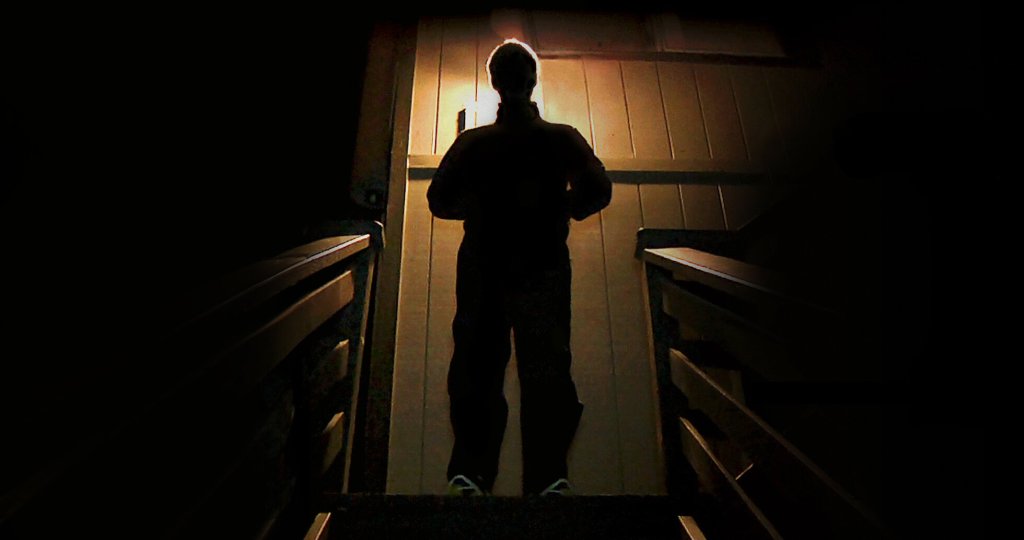
I’ve said I dislike found footage movies, but it’s because they usually suck for reasons having little to do with the way they’re shot. Creep, despite a run-of-the-mill trailer, doesn’t suck. It’s a simple movie, which involves a secluded house, a sympathetic protagonist, and a creep of epic proportions. There’s also an ax and a werewolf mask at play, insisting immediately that we probably won’t get a happy ending.

I’m not very familiar with Mark Duplass, who plays the titular creep, but great character actors are good at embracing the qualities which separate them from genetically-blessed movie stars. Duplass looks so much like a real-life creep he was born to play this role. It’s a lot of fun watching him enjoy a character who’s anything but glamorous.

The setup? Aaron (director Patrick Brice) is an out-of-work videographer who answers a Craigslist ad placed by Josef, the creep. Josef says doctors have given him only three months to live so he wants to shoot a video diary about his daily life. That way, his unborn son (yet to be conceived) can see what he was like. Josef confesses he was inspired by the schlocky melodrama My Life, which starred Michael Keaton and Nicole Kidman. If that isn’t particularly amusing to you, Creep probably isn’t up your alley. 

Aaron’s job is to follow Josef and record him going about his daily routine, but nobody else on the planet has a routine as bizarre as Josef’s. The first thing Josef wants to do is have Aaron shoot footage of him taking a bath. Reluctantly, Aaron agrees. Whereas many horror films make their characters too stupid to get themselves out of harm’s way (because otherwise the movie would be over then), Aaron’s cast from a different mold. Aaron doesn’t lack self-preservation just because it’s convenient to the plot, but because he’s a habitual people-pleaser. Josef, on the other hand, is a psychopath who loves to prey on people like Aaron, constantly testing limits for his own amusement.

We all know people who are too polite to say no to overbearing strangers with sob stories. Aaron is the kind of person who would loan deadbeats money knowing full well it isn’t actually going towards rent. Because of this, Aaron will make you scream at the screen—not because he’s stupid (though you could make that argument), but because he’s buying into Josef’s manipulative personality. For people like Aaron, being used is the path to avoiding confrontation… that and he kind of needs the money.

Josef’s antics eventually escalate to the point even Aaron has had enough. To say anymore would give away what happens next. The movie’s biggest strength, other than its diabolical simplicity and unusually strong performances, is the fact you never quite know what kind of movie it is, where it’s going, or how Josef and Aaron’s relationship is going to develop. If you’re expecting a slasher film, you’ll probably be disappointed. If you loathe slasher films, you’ll probably be disappointed, too.

I did not completely buy the ending and there’s a weak epilogue which attempts to put a lampshade on the climactic absurdity. It’s as if they only realized how unbelievable the conclusion was after they shot it, and instead of reshooting the scene, they decided to offer a weak explanation as to why it went down the way it did. That doesn’t really matter because movies like this rarely have good endings, anyway. Creep brings the goods just the same.

You get the feeling Brice and Duplass are two friends who had the idea for Creep over drinks one night and decided to shoot it with little more than a vague outline. There’s an unpredictable energy to it that’s exciting. It’s made all the more impressive when you take into consideration that a movie born of such simplistic elements has no right to be as enjoyable as this is. If there’s any justice, both of these filmmakers will swiftly move up the Hollywood ladder.

The Incredible Shrinking Ant-Man

Whenever someone makes fun of Superman’s red briefs, I roll my eyes. Are his red undies pointless? Maybe from a utilitarian point of view, but there’s a good reason they’re there: to provide contrast to the suit and to keep it from appearing boring. Visually, it’s perfect. Superman without his exterior underwear seems even more childlike to me, like a grown man wearing a pajama onesie. If everything must have a function, then why not ditch the cape while you’re at it? The trademark curl? Hell, why not just change his fucking name while you’re at it?

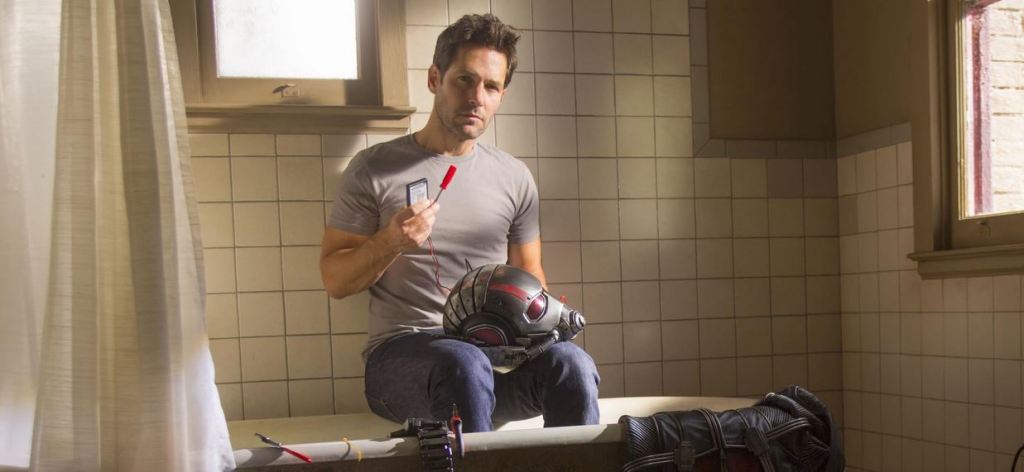
Ant-Man embraces the fact that its source material is an old comic book. Hank Pym (Michael Douglas) is the original Ant-Man who hangs up the shrink-suit early in the picture. In present times he discovers his villainous protégé, Darren Cross (Corey Stoll), has stolen his research and plans to sell it to shady individuals. This all sounds awfully standard on paper, but it’s tweaked just enough to function perfectly fine in a comic book movie.

Soon we meet Scott Lang (Paul Rudd), a former cat burglar who’s trying to go straight so he can be a good father. Yeah, we’ve seen that a million times before, so it’s best that the movie doesn’t dwell on it. The problem Lang is he’s supposed to be a kick-ass cat burglar, but he and his crew are depicted as bumbling idiots for comedic relief. It’s just kind of hard to believe Pym, a brilliant scientist, would pass the torch to somebody who gets captured by police so frequently.

If Ant-Man hadn’t been included in a double-feature at the drive-in, I would have skipped it. You can’t blame me, though, since we all assumed Disney was backtracking from the standard set by Guardians of the Galaxy after it had been announced Edgar Wright was removed from the director’s seat. There’s no doubt in my mind Wright would have made a (much) better movie, but his stamp of creativity is still here. The final product offers something much more imaginative than routine Marvel movies.

I don’t think there’s enough here to sustain the inevitable sequels, but I’m happy to report the initial outing is not a normal movie. Normal movies don’t have the audacity to make battlefields out of briefcases. Normal movies destroy entire cities, Ant-Man is content with destroying train sets. That kind of ingenuity is so good it hurts and it’s no doubt remnants from Wright’s time on the project.

The Death of "Superman Lives"

Two of my favorite subjects are terrible movies and movies which were never made. I always assumed we dodged a bullet when Tim Burton’s Superman Lives fell through, but I’m not so sure anymore. After watching the Kickstarted documentary The Death of “Superman Lives”: What Happened? I think Tim Burton’s Superman would have beaten Snyder’s fist-over-fist. At any rate, we can all agree it would have been better than Wild Wild West, which is the mega-flop Warner Bros. pivoted to after killing Burton’s passion project.

I know it’s popular today to hate comics of the 90s (I still like old school Spawn), but DC’s Death of Superman would have made an interesting movie, even if it did embody what was wrong with the era. I read Kevin Smith’s leaked script back in the AOL days: some of Smith’s dialogue was goofy and verbose (and never would have survived a rewrite), but it was an exciting read if you imagined Christopher Reeve in the part. According to the documentary, that’s exactly what Smith was going for when he wrote it.

Since the movie was never made, The Death of “Superman Lives” uncovers a treasure trove of concept art, including some of Burton’s own drawings. The sheer variety of aliens they designed for Brainiac’s ship suggests we missed out on something special. Interestingly, the budget was initially estimated at $300 million. Comparatively, Waterworld cost $175 million and was the most expensive movie up until that point. Naturally, the studio ordered many cuts to the script.

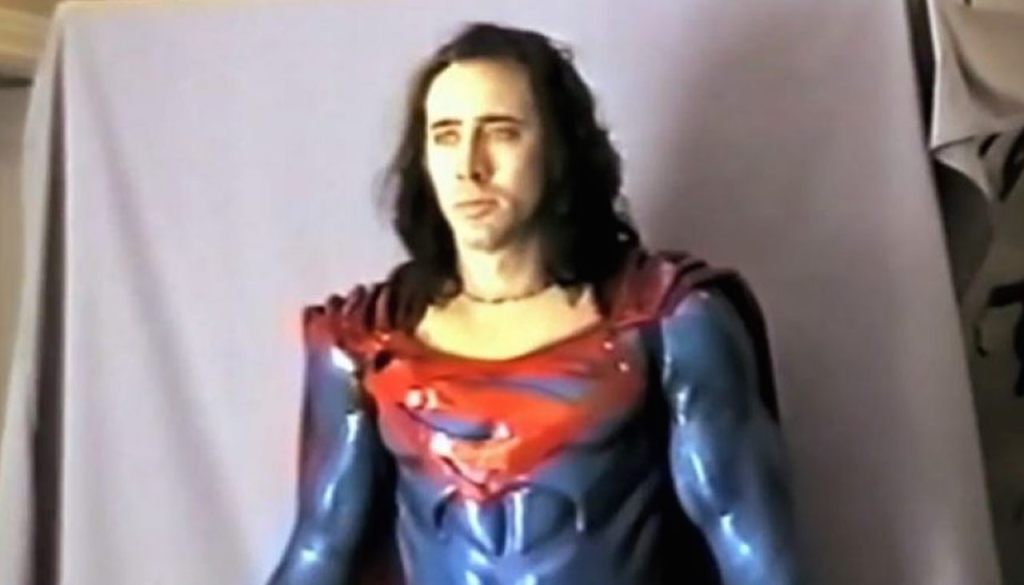
When you see some of the more fantastical designs for Superman’s look, you can be forgiven for wondering what the hell the production was thinking. The documentary makes it clear Burton’s crew wasn’t taking liberties with Superman’s traditional look, but experimenting with suits he’d wear later in the movie, including a regeneration suit following his resurrection. Burton confesses it’s the reason he’s a lot more careful today about letting pre-production material get out: artists need time to experiment behind closed doors.

While I wouldn’t say it’s a great documentary, it does what great documentaries do: it changes my opinion. I now think Tim Burton’s Superman Lives may have been a fine picture.

13 Sins to fortune

Elliot (Mark Webber) is a thirty-two year old loser who doesn’t even have the guts to tell his boss to go to hell when he’s fired over bogus reasons. He’s got a mentally handicapped brother, a pregnant fiancé, and a rancorous father who was driving the car that killed Elliot’s mother. You’ll probably roll your eyes at these obvious setups, believing you know exactly how the movie will employ them. You’ll be at least a little bit wrong. Early on, the movie is a master at misdirection. Later on, it’s a little easier to predict.

Elliot gets a phone call from a stranger. Kill the fly in his car, the stranger says, and a thousand dollars will be sent to his account. Elliot humors the tinny voice and, sure enough, the money is instantly deposited. The second challenge is to swallow the fly, which is worth even more money. I won’t spoil what the rest of the thirteen challenges are, but the cops are already after Elliot by the fourth one.

Even as the challenges ramp up in illegality, Elliot begins to come out of his shell. Whereas he used to be a timid man, he enjoys making waves. After smooth-talking his way out of a run-in with the cops, led by Ron Perlman, we see Elliot smile uncharacteristically. The audience smiles, too. We feel like we’re with him every step of the way, rooting for him as the challenges get progressively weirder, including one that’s ripped right out of Weekend at Bernie’s.

This isn’t to say the execution is flawless. I merely tolerate the flatly shot digital cinematography, but it seems to be the unfortunate new trend for low budget genre flicks as streaming services gain popularity. I can’t imagine any movie that’s shot so blandly ever reaching classic status, but here we are. The new “film” makers are lighting their movies as plainly as possible so they have a neutral image to color correct in post. The result is movies that will never be as bold or likable as the ones that traditionally commit to their looks on the day of shooting. I imagine that as the digital recording formats improve (the problem isn’t the format, per se, it’s the methods), this era will stick out like a sore thumb.

The movie wants to say something about human nature and greed, but the message bounces all over the place; perhaps it wants to say too much for its hour and a half running time. The tone seems to fluctuate throughout, peaking when it’s humorously dark and bottoming out whenever Elliot shows serious humanity. The ending artificially wraps up the escalating complications with a neat little bow. Overall, it’s a decent roller coaster ride that ends anticlimactically. Oh well, it was fun while it lasted.

It followed me home, can I keep it? (It Follows)

A nineteen year old woman has consensual sex with a charming young man in his car. Immediately after, his mood changes and he informs her he just infected her with a sexually-transmitted curse. Before leaving, he gives her some tips: Stay out of buildings that don’t have multiple exits (“It’s slow, but It’s not stupid”) and pass It to someone else as soon as possible because It always goes after the latest person to be infected first.

There is so much bullshit in which the average film would have gladly spun its tires: The “parents don’t understand” angle. The “cops think you’re lying” angle. The “my friends are concerned I’m going crazy” angle. We’ve seen that stuff a million times and It Follows spares us the usual routines.

It knows when to show the monster. It knows when to leave it to hide It. It’s one of the rare films which understands both methods can be effective. The titular It stalks real American streets, pursuing the heroine across eerily familiar scenery. It’s such an honest portrait of what passes as the American dream that you can’t help but believe this is a real thing that is happening. I will refrain from describing It’s appearance and let you find out for yourself, but I will say it’s done without the use of CGI.

I’ve long had a fascination with how poorly teens are portrayed in movies. Whereas many screenwriters are in their early twenties, I’m not sure why they’re so disconnected from youth. Thankfully, the teens in It Follows behave and talk like real teenagers. Not only are they actually played by real teenagers, writer/director David Robert Mitchell knows how to write them, vulnerabilities and all. Remember that name as he has a promising future ahead of him.

Movies like this tend to fall apart by the third act, but the climax was the most satisfying part of the entire movie for me. The teenagers’ plan is exactly the kind of plan teenagers would come up with. And whereas so many other horror movies invent bogus reasons for not bringing in the cops, the threat is such an enigma the characters couldn’t even explain It to the cops. They really are on their own here.

The electronic soundtrack by Disasterpiece is something else I want to highlight. What a bombastic theme. It’ll be stuck in my head for decades.