Split (2017) [Midnight Movie]

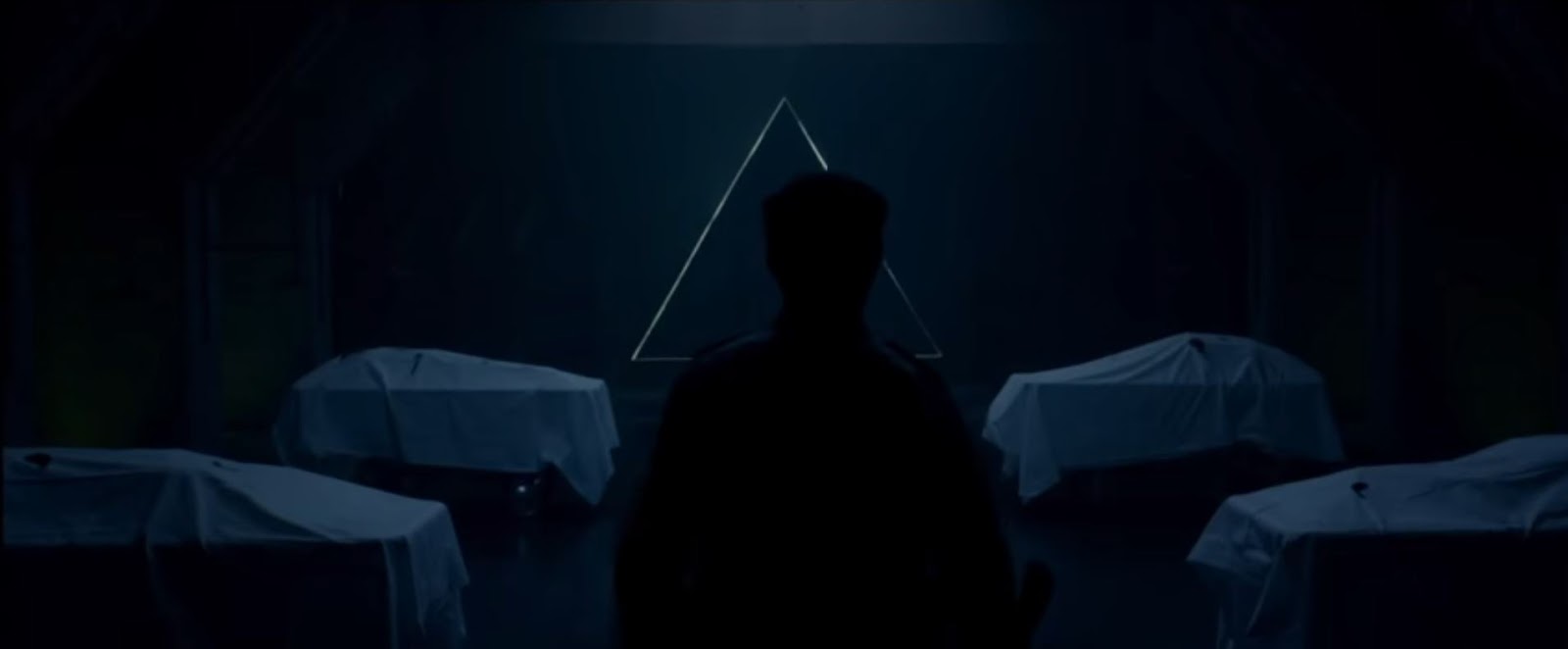
Three teenagers are kidnapped by a man with split personalities. That’s it. That’s all you need to know. Either you want to see that or you don’t.

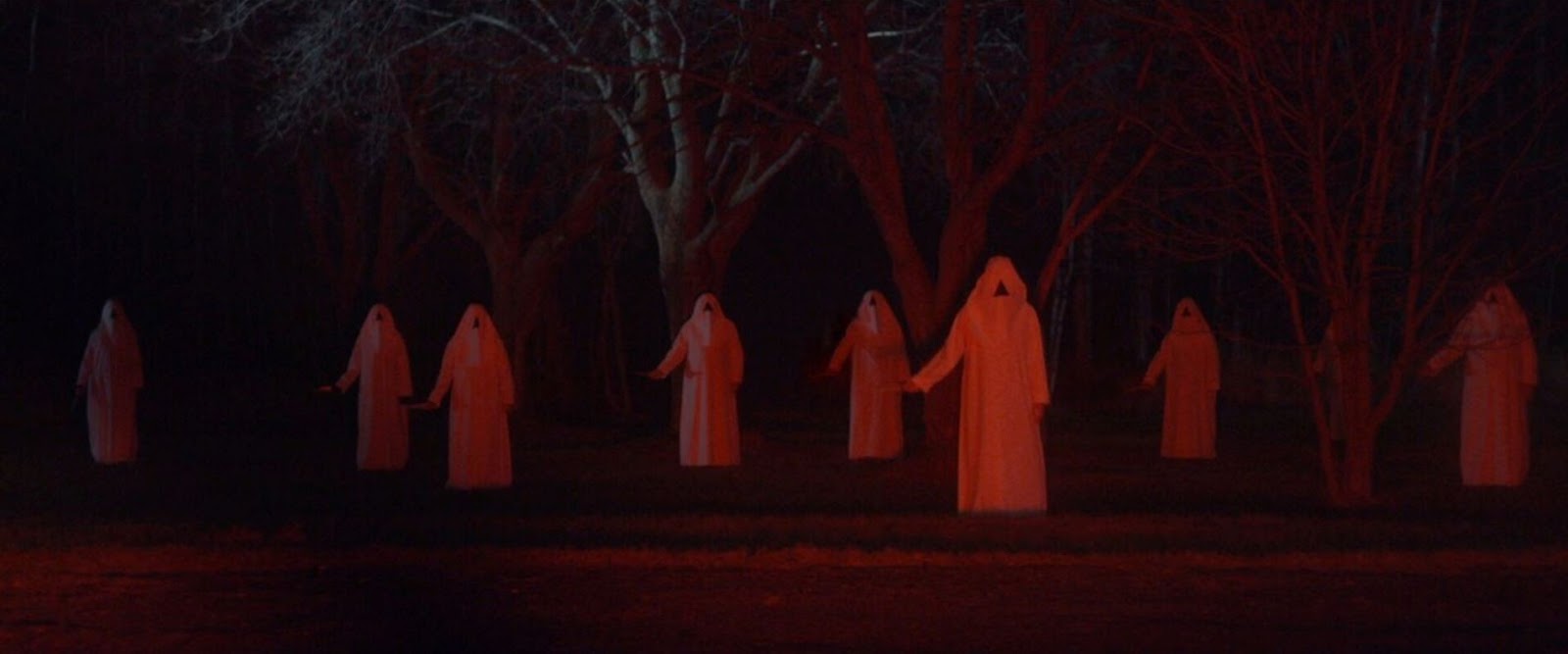
It turns out I didn’t. I feel like I might enjoy Split more if I ever see it again, a few years down the road, but right now I just don’t take to PG-13 horror movies, even ones as technically impressive as this. Sure, I can think of a few exceptions, but horror shouldn’t be this safe and wholesome. (Don’t get me wrong… there’s definitely a subplot that’s going to disturb a lot of people.) 

It’s a shame, too, because I really thought M. Night Shyamalan might be gravitating to the dark side after pulling off that disgusting stunt in The Visit. (If you’ve seen it, you know exactly which scene I’m talking about. If you haven’t seen it, watch it while you’re waiting for a delivery or when you’re folding the laundry or something… it’s okay at best.)

Horror should be like getting into a car with a stranger who turns out to be a madman. Yet Shyamalan is proving to be more like that goofy uncle who pulls the “uh-oh, the headlights went out!” gag on a dark but relatively safe stretch of country road. There’s a madman in Split, who’s exactly like the madmen in countless horror movies, only this madman’s portrayed by a capable actor who really doesn’t go as far overboard as a B-movie star would.
Give me a Shatner or a Jeffrey Combs. Give me a Joe Spinell or a John Lithgow. When I pay to see madmen, I want them to bounce off the fuckin’ walls. And don’t tell me, “But this is realistic!” We departed reality way back when that second trailer dropped. (That trailer, by the way, was the sole reason I decided against seeing Split in theaters.)
When I take issue with the rating, my problem isn’t that the movie’s not filled with wall-to-wall violence and profanity. My problem is that the rating assures us everything’s going to be okay. We’ll see some disturbing stuff for sure, but we won’t lose any sleep over it. 
Technically speaking, it’s a good movie, but it just didn’t work for me. Half the time I couldn’t believe it was made by the same guy who made Unbreakable, one of my favorite movies of the 2000s. The rest of the time, I realized I’d rather be watching Green Room again, which was a lot less predictable and anything but comforting. 

Guillermo del Toro on Fulci’s Zombie

I haven’t seen Zombie in years, yet the “shark versus zombie” scene is still one of the most memorable things I’ve ever seen on film. I always thought del Toro was a cool guy, but this video just made him seem a helluva lot cooler. I have the movie on Anchor Bay’s widescreen VHS (I think it was one of the last new tapes I bought), but this is one I’d love to get on Blu-Ray.

So I think Split is available to rent now. I’m probably going to post my thoughts on it this Friday.

* * *

The Black Pyramid pinball machine is mostly operational and it has been since Saturday morning. I bought a ton of stuff for it, but only needed around four dollars of resistors and diodes to get it playable. I did some flipper work and changed out the playfield rubbers, but haven’t gotten around to replacing bulbs yet. The rest is routine maintenance (I already did these ground modifications on the solenoid driver board) while keeping an eye out for leads on replacement pieces. Hopefully I’ll be getting back to my Pac-Man restoration soon, but I really hate painting and woodwork, which makes the pinball project a pretty satisfactory change of pace.

Last weekend my friend and I did around four hours of driving to get to Oklahoma City and back. The arcade there was a lot more impressive than I expected. I finally got to play a real-life version of Whoa Nellie, which I knew I would like, but it’s somehow one of my favorite pins ever. The biggest surprise was Jersey Jack’s Wizard of Oz. I had absolutely no desire to play it, but it turns out the game’s a blast (Stern’s AC/DC was like that for me, too). I was initially turned off by the theme. Not that I have a problem with Wizard of Oz, but I didn’t expect it to lend itself so well to pinball. 

Silent Rage (1982) [Midnight Movie]

Since I featured two new movies in a row, I’m happy to get back to older movies this week. Forgive any typos because I almost forgot to do the Midnight Movie this week. (I’m preparing to go on a trip to Cactus Jack’s tomorrow and I’ve been repairing my first pinball game ever since I got off work today.)

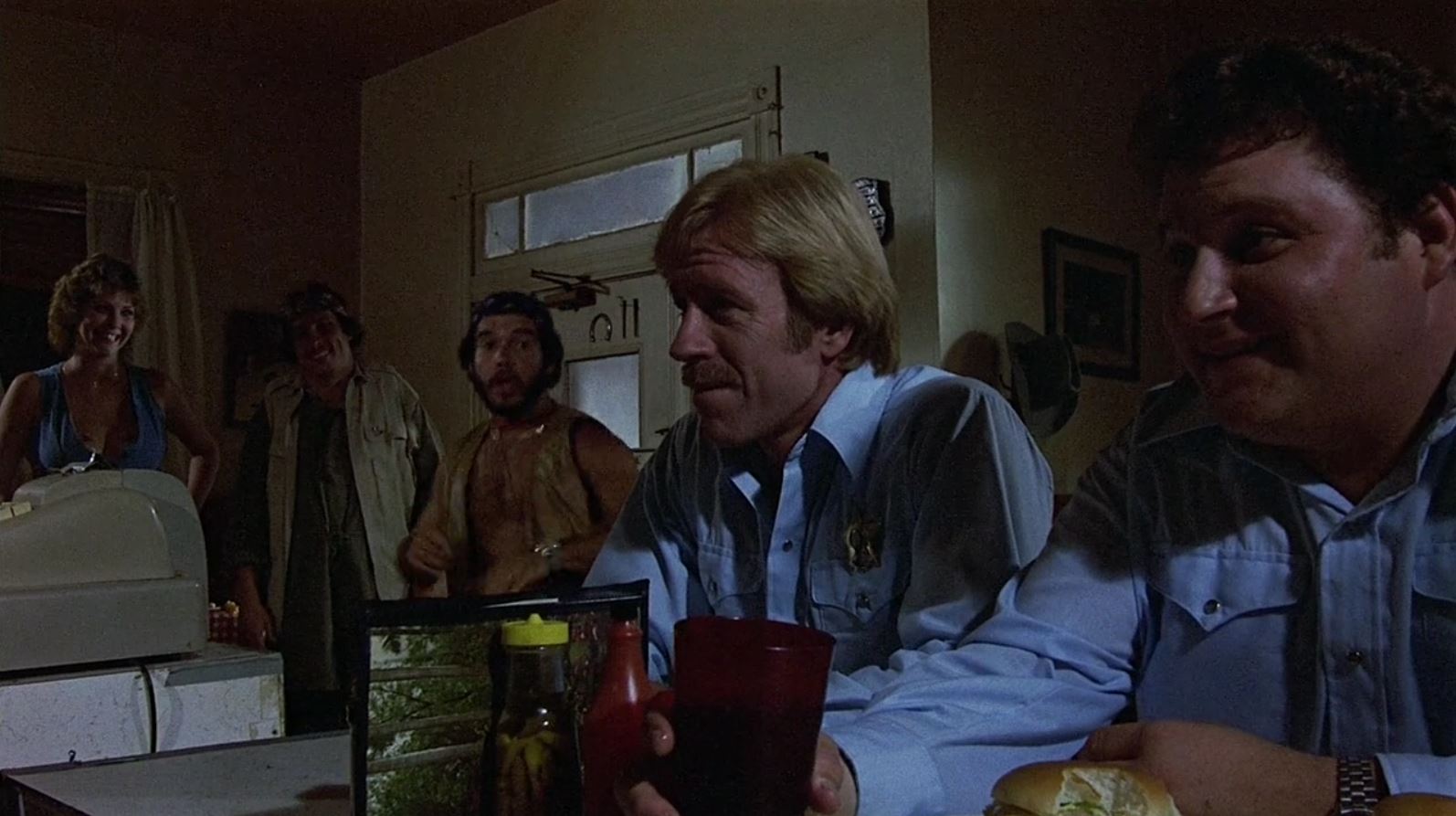
As far as I know, Silent Rage is the only 80s slasher movie which stars Chuck Norris. It’s not a great slasher movie, but it’s a pretty good Chuck Norris movie. In a nutshell, a mad science experiment goes wrong, which makes a serial killer impervious to bullets. That’s right: guns can’t stop him, but you know what can? Chuck Norris’s fists.

The movie opens with an impressive long-take of the killer’s residence. The camera follows him from the moment he wakes up to the second he picks up an ax and murders his housemates. There’s some surprisingly complicated choreography going on here and it involves several performers, three of which are children who manage to hit their marks as well as the adults. In fact, the entire movie looks better than your typical slasher movie, though not as gory as a lot of the other stuff that came out around the same time.
After the murdering spree, Chuck Norris and his police partner Stephen Furst (yes, Flounder from Animal House) arrive on the scene. Flounder acts like a complete dope while Norris, brave as ever, knowingly enters the home of the crazed killer without so much as removing his pistol from its holster. When Norris fails to placate the man, the other police blast him to kingdom come. The serial killer is then taken to the hospital under the care of Ron Silver, who’s probably the best actor in the movie. There, mad scientists spout a bunch of technobabble, talk about revolutionizing medicine, and inject their experimental healing serum into the bad guy’s bloodstream.
You can see where this is going, yes? Like most slasher movies, there’s a kill or two in the beginning of the movie, but we don’t see the killer in action again until the movie’s halfway through. Unlike most slasher movies, it doesn’t bore the ever-lovin’ shit out of you in the meantime. This stuff isn’t high art—nor is it trying to be—and it’s about as cheesy as it can get. But you know what? At least it ain’t boring. Even when Flounder’s jokes fall spectacularly flat, you smile at how genuine it all is.
So it turns out Ron Silver’s sister (Toni Kalem) is Chuck’s old flame from six years prior. They rekindle their relationship (this is where the cheese comes into play) and decide to run off to Chuck’s cabin in the mountains. The killer has other plans: targeting Kalem’s family.
At first it’s hard to put your finger on what makes this admittedly dumb movie work, but then there’s a scene in which Flounder expresses doubts about his ability to handle stressful situations. Whereas the star of other tough guy movies would have treated him like an absolute baby, Chuck comforts the character, assuring him he’s gonna do just fine. You’d expect the “rookie gets killed immediately” cliche, but the movie doesn’t go there, either. 
Chuck isn’t a particularly great actor and his fight moves aren’t all that legendary. I can see why some people have trouble understanding the appeal. Sometimes even I have trouble understanding why I like his movies so much. Silent Rage is a good reminder. It’s just a fun little movie.

Ghost Story (1981) [Midnight Movie]

In 1979 Peter Straub published Ghost Story, a novel heavily inspired by Stephen King’s Salem’s Lot, but a helluva lot better. It’s the kind of story which sinks its claws into you immediately. In the beginning, a man is driving across the country with a little girl. At night, when they go to sleep, he ties her up so she can’t escape… or hurt him. Ultimately, he believes he has to kill the little girl, but he fears he doesn’t have it in him.

The story is one of many told in the novel, in which a group of old timers call themselves The Chowder Society and sit around a fireplace, sipping brandy while telling each other spooky tales. The tales don’t have to be true, but they aren’t always made up, either. Their wives and acquaintances think they’re crazy old fools—they think they’re crazy old fools because they have no idea how they come up with this stuff. Yet they carry on regularly, almost obsessively, even when people in their small town begin to drop dead. The meetings always begin with a question: “What’s the worst thing you’ve ever done?” To which the designated storyteller always replies, “I won’t tell you that, but I’ll tell you the worst thing that ever happened to me….”

That’s such a great line, but I don’t remember hearing it anywhere in the movie. There’s a lot from the source material that’s abandoned, which isn’t unusual for an adaptation. What is unusual is the movie could have included a lot more of the original story if it didn’t become so fixated with its flashbacks. The flashbacks seem to take even longer in the movie than they did in the book. Meanwhile, I don’t think newcomers are going to truly understand what, exactly, The Chowder Society is all about—the movie almost portrays them as if they really are crazy old fools. Worse, most of the great stories Straub had his characters tell in the novel are boiled down into one, which is straight up lifted from Edgar Allen Poe.

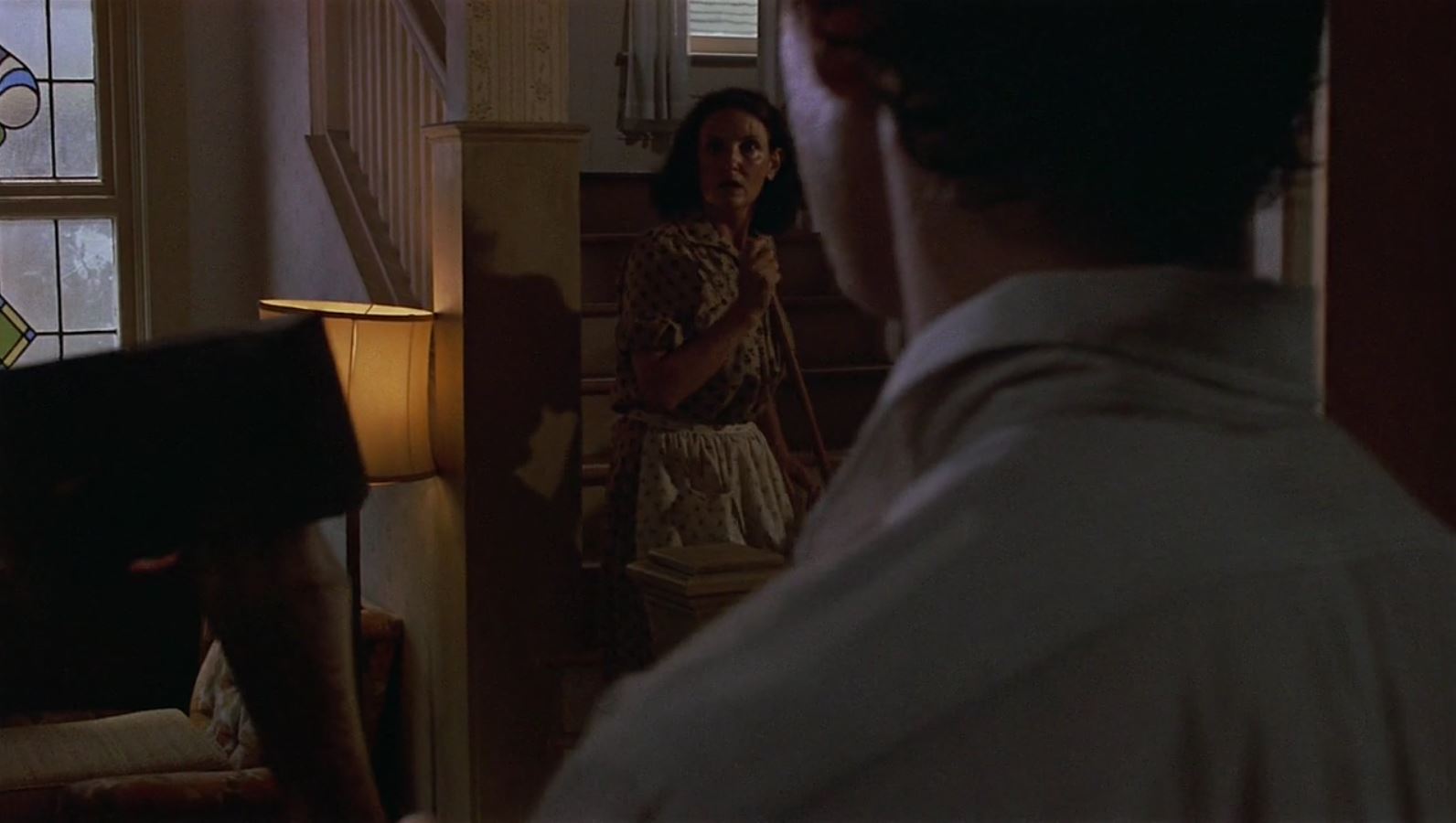
In the movie version: David Wanderley, son of The Chowder Society’s Edward Wanderley, sees a ghost which scares him enough he falls through the window of his high-rise apartment. David’s twin brother, Don, returns to his hometown for the funeral, which is where he gets mixed in with his father’s old friends. He buys his way into the secretive group with a story of his own: the ghost who seduced and murdered his brother had previously seduced him with ill intent as well. The next few bits of the plot aren’t necessarily spoilers for the movie, but they are for the novel. I won’t tell you that, but I will tell you the worst thing that happened to me: I nodded off about midway through the movie. (To be fair, I was slightly hungover.)

You would expect (and probably want) a movie based on Ghost Story to fill its cast out with the likes of Vincent Price and Peter Cushing, but the filmmakers defy expectations and cast Fred Astaire, John Houseman, Douglas Fairbanks Jr., and Melvyn Douglas in the lead roles. Alice Krige is really the only person cast to type here, playing the seductive ghost who agonizes the film’s male characters, young and old alike. She manages to stand out, too, pretty much embodying the character I envisioned in the book.

Technically it’s a pretty good movie, but I think people who haven’t read the book are going to feel a little lost while those who have read it will feel slighted. I liked it, but didn’t love it. The problem with adaptations, especially the ones which change so much of the source material, is my memory blurs the details between the two. Years down the road, I’d much rather read the book again than watch the movie.

The Conjuring 2 (2016) [Midnight Movie]

You’ve got to be a gifted filmmaker to make me care about a couple of characters based on the paranormal investigators known as The Warrens. Were they delusional or professional scumbags? Or both? I’m going with both.

In case you haven’t noticed yet, I’m a card-carrying skeptic, through and through. Before I saw The Conjuring I would have gladly forgotten The Warrens existed at all. In a piece of fantasy, however, the characters are fascinating. Years ago, as mentioned in the first film, Vera Farmiga’s Lorraine Warren had a premonition so terrifying, she refused to tell her husband (Patrick Wilson’s Ed Warren) what she saw in it. I would have preferred it if The Conjuring 2 kept her vision a mystery, but this time around they spill the beans. Their reason for doing so, however, induces a feeling of dread which helps drive this sequel.

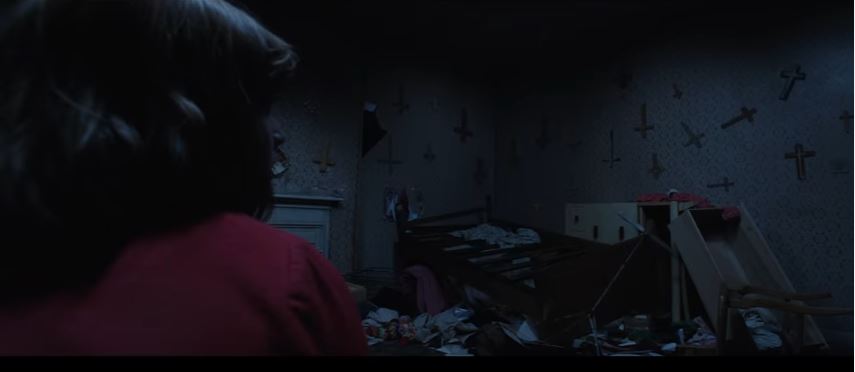
The Warrens have been called in to investigate the strange happenings at a London home occupied by a single mother (Frances O’Connor) and her three children. There’s an entity in the house who calls himself Bill. Bill likes to rip sheets from the beds and tug on the children’s ankles. When the mother tries to intervene, he graduates to biting, which leaves behind nasty sets of teeth marks on their skin.

Bill’s not the only presence at play here. The kids own a creepy old zoetrope. The spindly figure it depicts sometimes vanishes from the toy altogether, only to reappear creeping around the house in a mixture of CGI and stop-motion effects. It’s the best visual of the entire movie. Hell, it’s probably the best visual in any horror movie in years. Meanwhile the kids sing a nursery rhyme about this character, calling him the crooked man. (This is apparently a real-life nursery rhyme.)

Finally, there’s the demonic nun who seems unrelated to the London house, but frequently torments Lorraine. The demon is, disappointingly, a shoe-in for Marilyn Manson, which may be a case of director James Wan showing his age. And if this sounds like the movie is getting a little too overloaded with villains, I would have to agree. They should have kept the crooked man and dumped the Marilyn Manson lookalike altogether.

Still, The Conjuring 2 is the rare horror sequel which feels like a worthwhile continuation. It mixes in just enough new stuff to dazzle us while keeping enough of the old ingredients we liked so much the first time around. I do think it’s pretty dishonest to portray skeptical characters as stupid assholes, but hey, whatever—it’s Wan’s movie, not mine. Elsewhere, the characters are expertly written and the leads become even more interesting than they were in the first movie. Maybe the horror isn’t quite as good as it was in part one, but you’d need a very precise measuring tool to know for sure.

When The Conjuring 3 comes out I’ll be the first in line.