


My Own Guide To ANY Election
If the stars should appear one night in a thousand years, how would men believe and adore, and preserve for many generations the remembrance of the city of God!
—Ralph Waldo Emerson
In 1941, Astounding Science Fiction editor John W. Campbell suggested Isaac Asimov should write a short story inspired by the quote above. What if humanity had never seen the stars? In both the famous short story (anthologized over fifty times in various collections) and the lesser known novel, Nightfall proposes the idea that the night sky could drive one literally insane.
The short story takes place on a planet orbiting six suns. At any given time, the six suns light every inch of the world’s surface. A group of scientists make a terrifying discovery: once every two thousand years, a celestial event plunges the planet into darkness. Much like the “psychohistorians” in Asimov’s Foundation, the scientists in Nightfall know their civilization is quickly coming to an end because the inhabitants of the planet are not prepared to see the heavens.
The story is unsettling. It doesn’t play on the fear itself, but the fragile nature of sanity when faced with the unknown. The last line of the story is chilling.
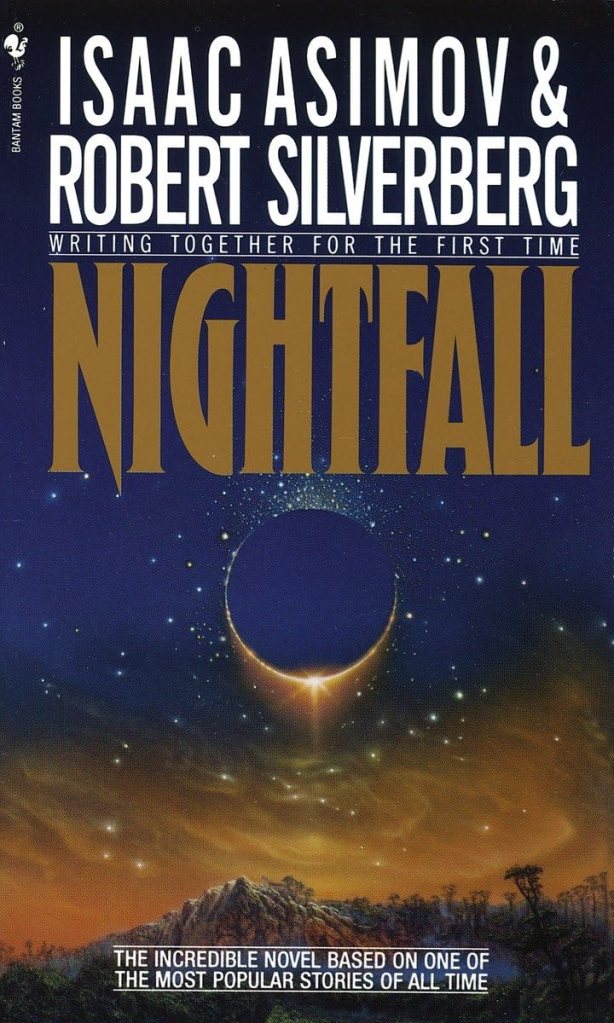
You could say the novel version, co-written with Robert Silverberg in the 1990s, dilutes that final line by telling us what happens next. That isn’t to say it’s not worth your time; Asimov and Silverberg mange to conjure unforgettable images of mass hysteria, including the widespread conflagration that naturally results from this brand of madness. When darkness reveals the stars, the people of the story burn everything they can get their hands on in an effort to make it light again.
The novel begins years before the events outlined in the short story. We get to know many of the characters: a psychologist who is treating patients who have been exposed to darkness, an archaeologist who discovers several civilizations in the past have burned to the ground with remarkable regularity, and the astronomer who realizes nightfall is coming.
The titular event takes place about midway through the book, more or less exactly as it happened in the short story. The last third of the book is about the aftermath, in which most of the world’s survivors are irreversibly insane. At one point, one of the main characters observes a group of men desperately trying to uproot a tree with their bare hands. That’s an image that sticks.
The original title of this post was Nightfall VS Nightfall, but it wasn’t fair to compare the two. They are separate entities written at different times in Asimov’s life. The novel will likely never be considered a classic if only because it retreads familiar territory. I highly recommend reading the short story first, then trying out the novel years after you’ve ruminated over the original ending.
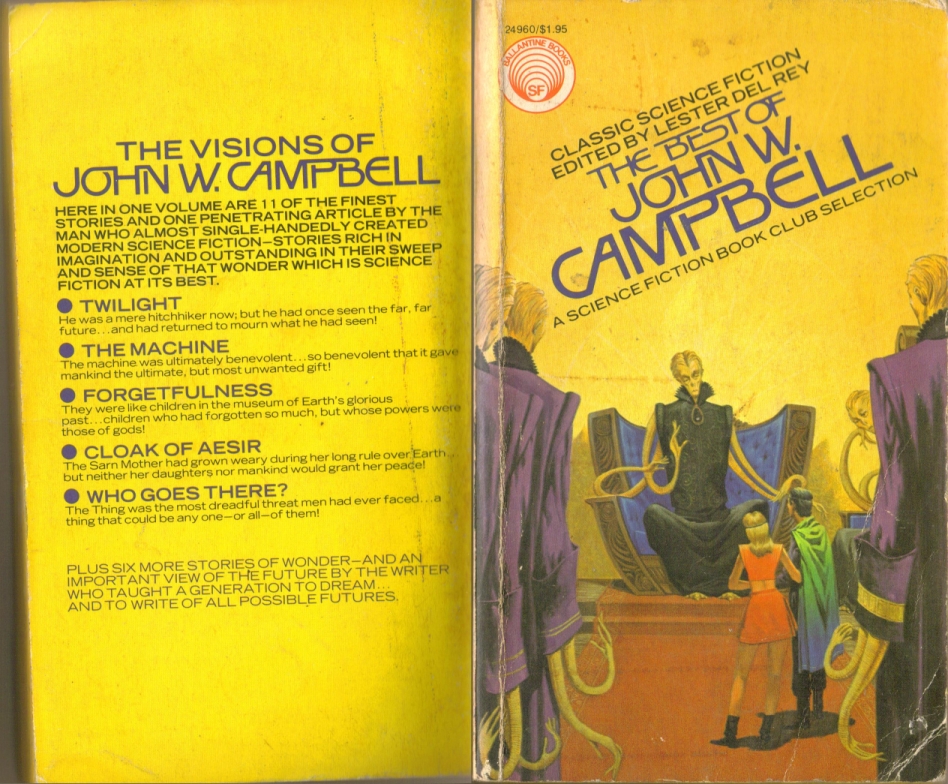
This collection, which I purchased from a used book store for a whopping dollar, contains Twilight, the short story originally published under the pseudonym Don A. Stuart. Editor Lester del Rey states in the intro that Campbell originally wrote pulpy stories under his real name. He then briefly developed the pseudonym Don A. Stuart to write stories of a more serious nature. The first story in this collection, The Last Evolution, isn’t of much interest as it’s one of his more pulpy efforts, but the other stories, starting with Twilight and (almost) concluding with Who Goes There? (the inspiration for The Thing From Another Planet and John Carpenter’s The Thing) provides a nice cross-section of his contributions to the genre.
In his memoirs I, Asimov, the good doctor talks favorably of Campbell for the most part, but later expresses dismay over the man’s decision to buy into L. Ron Hubbard’s Dianetics, the original book of Scientology. Many of the writers who had been loyal to Campbell, then the editor of Analog Science Fiction and Fact (formerly Astounding), turned their backs on him. In his introduction to this collection, Lester del Rey only briefly mentions Campbell’s foray into pseudoscience, stating, “His eternal quest for undiscovered fields of knowledge led him into what I considered cultist beliefs, and I fought against those both privately and publicly.”
Although I was previously aware of his role in spreading Scientology, it wasn’t until after I read these stories that I learned Campbell was a racist, writing articles in support of segregation; writers such as Samuel R. Delaney and Harlan Ellison publicly spoke out against him. I did not feel, at the time of reading these stories, that any of that baggage made its way to the page, but it’s clear that when such a man writes about alien threats, it is often with the subtext of, “I think you know who I’m really talking about.”
So I wouldn’t recommend this collection to anyone who’s only interested in good yarns and cares little about the history of golden age science fiction. Having said that, I also find the personal views of Heinlein to be detestable (though he was not, as far as I know, a racist) and still thoroughly enjoy much of his fiction.

Maniac Mansion was a game that fascinated me as a child. It seemed cool, but despite all its hamster-microwaving glory, there was a problem: controlling it on an NES controller was a pain in the ass. The game was obviously developed with a mouse in mind, but what good is that knowledge after you already rented the damn thing at the video store?
Fast forward more than twenty years later (yes, it really has been that long) and a German fan created a remake that works like a dream, even on 64-bit operating systems. There’s a fine line to walk when remaking a classic: do you update the graphics for a younger audience at the risk of alienating those old enough to have played the original? Or do you give in to nostalgia and release your game looking dated? Thankfully, the remaker opted for a combination of the two with exceptionally improved music.
As usual, I start the game forgetting the first person who enters the kitchen is going to get locked in the dungeon. That person, in my case, is Dave. So I’m roaming the house with the two chicks when I come across the talking tentacle. The tentacle doesn’t attack, it just stands there like an impassable slob. In order to progress, you have to give him food.
Obviously the Tentacle Chow should be the perfect food, but the tentacle complains that he’s still hungry after you feed him that. So then through a process of trial and error you’ve got to fetch the wax fruit from the room with the unfinished painting. Yes, tentacles think wax fruit is delicious. Then the lazy bastard still refuses to budge unless you get him something to drink. Pepsi? Nope. Soda makes him burp.
Like most adventure games of the era, it’s a maddening exercise in convoluted logic, but hey, even when you cheat it with a guide, it’s more fun than the newest Duke Nukem game.
2025 update: the originally posted link stopped working. The original game is officially available on Steam.
Here’s one straight from Microsoft’s official support files: If your computer is playing “classical music,” seemingly at random, you’ve got a problem.
From Microsoft’s official support page:
During normal operation or in Safe mode, your computer may play “Fur Elise” or “It’s a Small, Small World” seemingly at random. This is an indication sent to the PC speaker from the computer’s BIOS that the CPU fan is failing or has failed, or that the power supply voltages have drifted out of tolerance. This is a design feature of a detection circuit and system BIOSes developed by Award/Unicore from 1997 on.

I can’t decide whether this is tacky or cool. On one hand it’s a tramp stamp, which can be mistaken for a smear of shit from afar. On the other hand, it’s a Mystery Science Theater 3000 tattoo, which makes it marginally better than those that commemorate dead loved ones. Tough call….
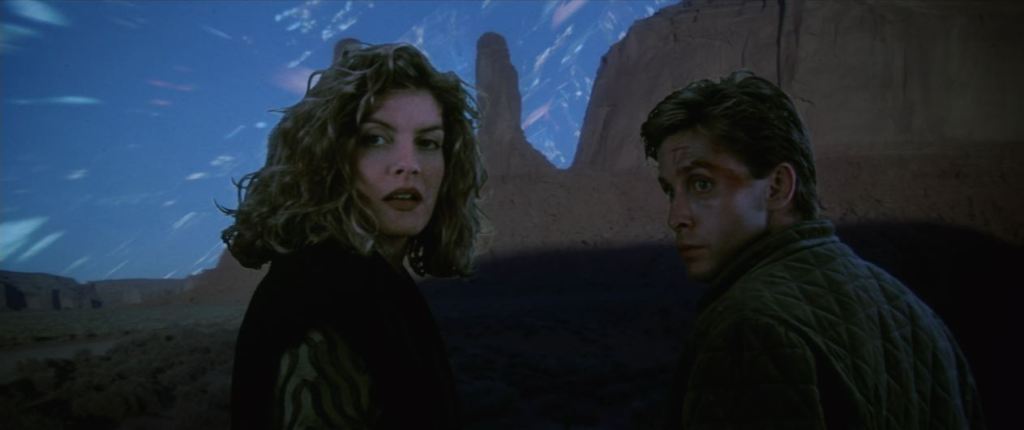
Emilio Estevez is a race car driver in the year 1991. He’s married to Rene Russo who has a killer set of legs. An early shot frames those legs against a messy bed. I distinctly remember this shot piquing my interest when I first saw it on Pay-Per-View as a 10 year old boy. Unfortunately, when the camera panned up, I was dismayed to discover it was not Russo at all, but the considerably boyish and oddly hairless Estevez, wearing a pair of whitey tidies.
One of the reasons I love B-movies is they’re often in a hurry to get to the good stuff. It’s not long before Emilio is racing his pink race car around the track while the music lets us know something bad is about to happen. Here’s what happens next in a dazzling (if not confusing) matter of seconds:
1. A closeup reveals a race car’s front tire has just rubbed Emilio’s back tire. Just before the camera cuts away, we see the tail end of Emilio’s car lift from the track.
2. An awkwardly inserted shot, one of pure cheese, zooms in on Russo wearing a dumb hat as she screams.
3. The camera cuts back to Emilio’s car, which is now sailing through the air (somehow) before it collides with an overpass and explodes in slow motion.
4. Emilio, sans car, falls on an operating table. The medical team waiting for him are dressed in silver hazmat suits, which A) lets us know this is the future and B) kind of makes them look like giant baked potatoes. One of the baked potatoes calls for “the lobotomy gun.”
5. Transient rebels (every 90s cyberpunk movie has ’em) attack the convoy… wait, did I forget to mention the operating table was housed inside a moving vehicle?
6. Mick Jagger acts… kind of.
7. The rebels’ missile launchers rock the vehicle Emilio’s in. He seizes the opportunity to swat away the lobotomy gun, which fires green lightning. One of the nurses screams, “We’ve got a freejack!”
8. Emilio escapes from the vehicle, which is somehow on its side now.
9. Mick Jagger instructs his henchmen to, and I quote, “Get the meat.”
10. Emilio, despite being the only person wearing a 90s jumpsuit, manages to evade the police of the future until he’s caught by a phone booth of all things. He’s a little slow, but eventually realizes he’s in the far-flung year of 2009, which is so far in the future, I frankly have a hard time imagining it.
The reason they set the bulk of the movie a few measly years later is so Emilio’s character can rekindle the flame with his wife, Russo, who’s barely aged a day. That’s all fine and dandy, but there’s talk of the “Ten Year Recession,” which means the movie was already dated eight years after it came out. Not that anyone involved with this turkey thought anyone but lame bloggers would be talking about it in the future.
So no, I won’t make fun of the dated stuff. What I will make fun of is the casting. The obvious mistake is Mick Jagger. I hoped he would be funny bad, but he’s just bad. And the problem with Emilio is he already looks eighteen years younger than Russo. I’m not saying Rene Russo looks old. I’m saying Emilio Estevez looks like the kind of guy who still gets carded at bars. (“Don’t you know who I am! Haven’t you seen Young Guns?“)
I have a lot of issues with this movie. One is the absurd lack of characters of color. One black man lives in Emilio’s old house, which is now a slum, another is Russo’s chauffeur, and the third is a bum. Movies about the future should have a good reason for only having white people in it and Freejack has no excuse.
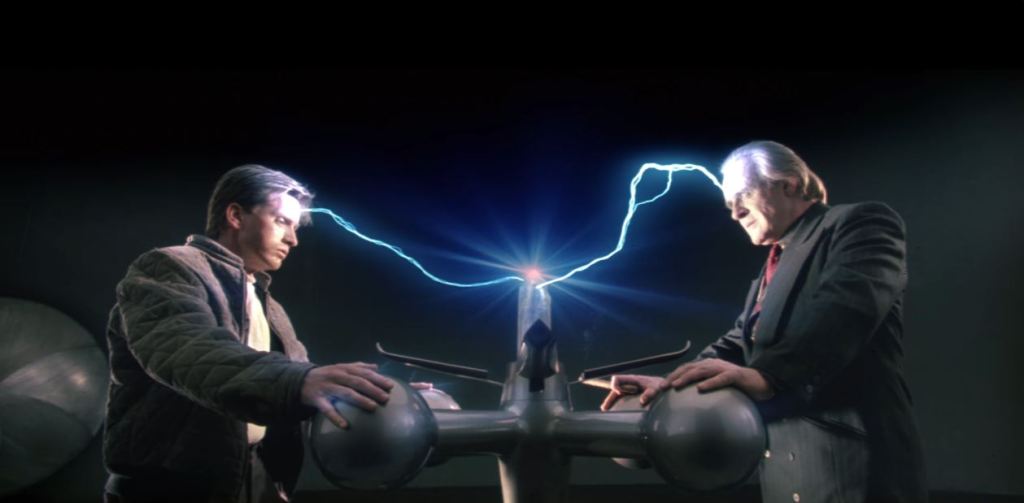
Anthony Hopkins is the bad guy, by the way, stumbling into the picture exactly as the Emperor was introduced in The Empire Strikes Back, hooded cloak and all. So we’ve got Hopkins and Russo, two great actors neutralized by Mick Jagger’s ability to ham up absolutely anything.
The most watchable part comes towards the end. There’s a fun sequence taking place inside the mind of Anthony Hopkins, though it’s nothing really new to the genre. Unfortunately, I’d been struggling to stay awake for so much of the movie, I finally fell asleep at that point and missed most of the good stuff. When I woke up, Mick Jagger had somehow turned into a good guy.
My biggest complaint is the lackluster romance between Emilio and Russo. When they’re reunited in 2009, Russo promptly turns him in to the authorities. When they’re reunited a second time, Emilio is inexplicably cruel. I don’t even remember if they ever kiss. The most they do is hold hands and speak to each other in whispers. What a dud.
Note: I haven’t read the Robert Sheckley novel Freejack was based on, but I admire Sheckley and I’m sure the book was better than this.
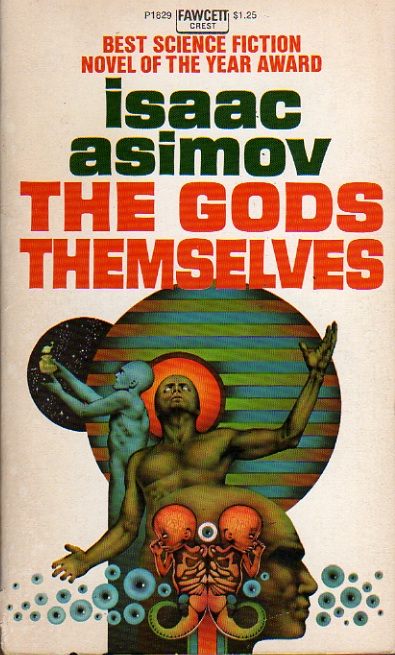
In Isaac Asimov’s The Gods Themselves, which curiously begins with Chapter 6, chemist Frederick Hallam has discovered plutonium-186… sitting on a desk in his laboratory. It turns out that aliens from a parallel universe have discovered that plutonium is a powerful source of energy whereas tungsten steel is a powerful energy source in theirs. What the human characters set up with the aliens (“para-men”) is a free energy trade: they get our tungsten, we get their plutonium. Although there is the distinct possibility that pumping resources back and forth will lead to disaster, humanity is too addicted to care. Who’d want to give up free energy?
Isaac Asimov, like many golden age science fiction writers, is known for relying on a utilitarian narrative to convey grand ideas, but here he steps out of his comfort zone and creates something unusually literary. In his memoirs, he refers to it as “writing above my head.” For the first time he writes something which belongs to the new wave science fiction of the 60s and 70s. New wave was experimental, risque, and anything but golden age.
Following Chapter 6: Chapter 1, more of Chapter 6, Chapter 2, and so on. When Chapter 6 finally concludes, you understand why Asimov arranged the novel this way. Just when you get comfortable with the human characters—poof!—Asimov shifts gears and focuses entirely on the gods themselves: the so-called para-men who occupy roughly one third of the novel’s attention. This is the best part.
The abstract para-men are not your run-of-the-mill aliens. They come in two categories: the hard ones and the soft ones. The soft ones are divided into three sexes: parental, emotional, and rational, and mating requires no fewer than all three. The good doctor does something he’s never done before: he writes about sex, though their sex is vastly different than ours. (Asimov himself complains about his sometimes laughable characterizations of sexuality in the aforementioned memoirs.)
Despite Asimov’s departure from his usual style, you never forget he’s the man who masterminded it. He’s far too modest when it comes to the quality of his writing, but with The Gods Themselves he shouldn’t be. Asimov is a great science fiction writer. He has said this is his best novel. I can see why.
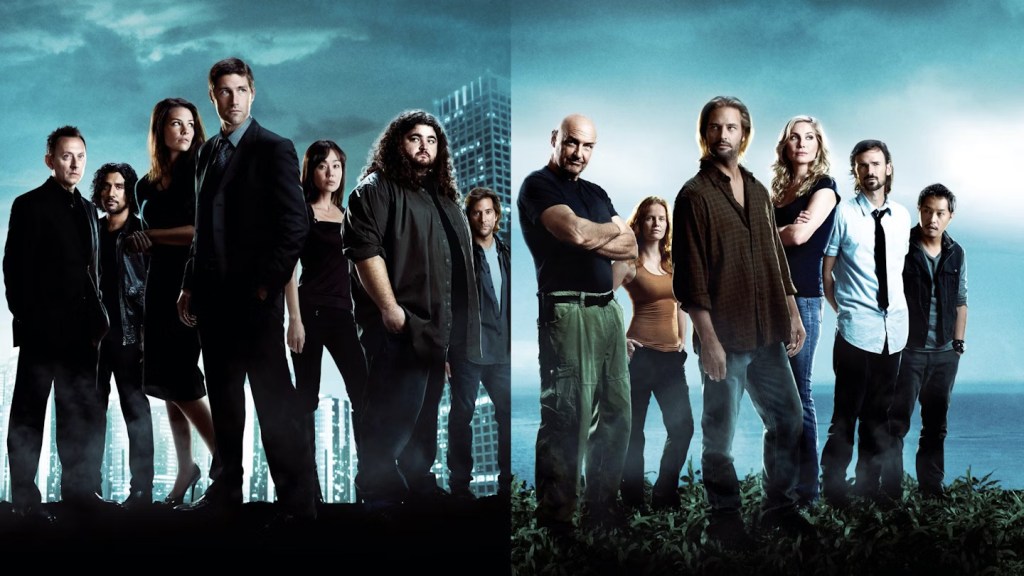
LOST has lost its allure. This Sunday, the series finale comes out. Although I initially loved this season—they led us into an alternate universe without dumbing it down for mainstream television—what initially drew me to the show were its questions, not answers. The answers, if you ask me, ruin it because they’re just not that good.
If you’re hoarding episodes of LOST, spoilers ahead.
It was okay, in previous seasons, to answer something every once and a while. Consider the way they suggested (but didn’t tell) how and why the polar bears got to the island when the main cast were taken hostage by the others. I was fine with that, but these days nothing is so casually suggested. Now everything is flat out explained, usually by Locke or a ghost, if not a jarring flashback, and I think, “Okay, that was certainly anti-climactic.” I don’t hate the final season, it doesn’t hold a candle to what came before it.
Season 5’s cliffhanger was brilliant, as was season 6’s opener. We all knew you couldn’t have LOST without an island, but the show opens and… we’re on the plane again. What? The plan worked? The plan worked! Not only that, the island is underwater! Holy shit! How cool is that! Then, with no explanation… Jack wakes up on the island. And no, that other universe was no dream. It was the best mind-fuck LOST had pulled yet.
Then the answers—spoken, rarely shown—came trudging along with almost predictable frequency. Every great once and a while, they toss me a bone, but it just isn’t enough to sustain my appetite. Maybe I would have liked the series better if it had been canceled after Season 5. I like things that get me involved. LOST’s sixth season is considerably less hands-on.
The human personnel in a missile silo are faced with the task of maintaining a launch station. They never thought they would actually get the order to launch. To them it’s just a routine job: monitoring the blinking lights while they make idle chitchat. What human could possibly accept what it means to actually push The Button? When men are ordered to fire, unaware that it’s an attack drill, they fail to do so. This convinces the brass at NORAD to take humans out of the equation all together. A super computer, they reason, would have all the capabilities of a human, with none of the pesky conscience.
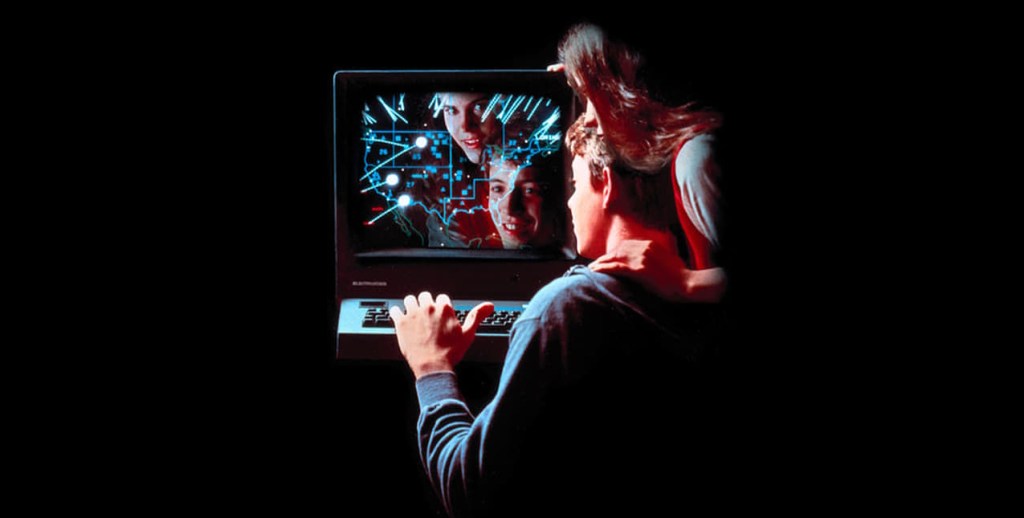
Following the suspenseful opening is a conventional introduction to our protagonist. Seventeen year old David Lightman (Mathew Broderick) is a high school kid who spends too much time in his bedroom, messing about with his modem-enabled Imsai 8080 computer. His girlfriend’s character is never really fleshed out, but that doesn’t matter because she seems like a real girl and her interest in David never came off phony.
One day David is leafing through a magazine when he discovers an advertisement for a mysteriously marketed video game that won’t be revealed until Christmas. David refuses to wait. He commands his computer to dial every phone number within the game studio’s area code so that he can create a list of every modem in the area. When David accidentally connects to the super computer at NORAD, he thinks he found the studio he’s looking for and launches a game called Global Thermonuclear War. The super computer is more than willing to play, as it’s an artificial intelligence that plays war games 24/7, constantly learning, constantly improving. Unfortunately, David soon learns that he may have inadvertently started the ball rolling towards World War III.
WarGames occasionally insults the intelligence (micro-cassette recorders can be hacked to open keypad-protected doors), but it’s fun and cleverly so. If anything, it really captured the attitude of real life hackers who, though often vilified by the media, are the people who gave us affordable computers and created the internet in the first place. There are some things I didn’t like about the movie, notably the stereotypical computer specialists who help David crack NORAD’s backdoor password, but the climax of the film is unlike any I’ve ever seen. It hit me hard and it stuck with me.
 The Goug' Blog