

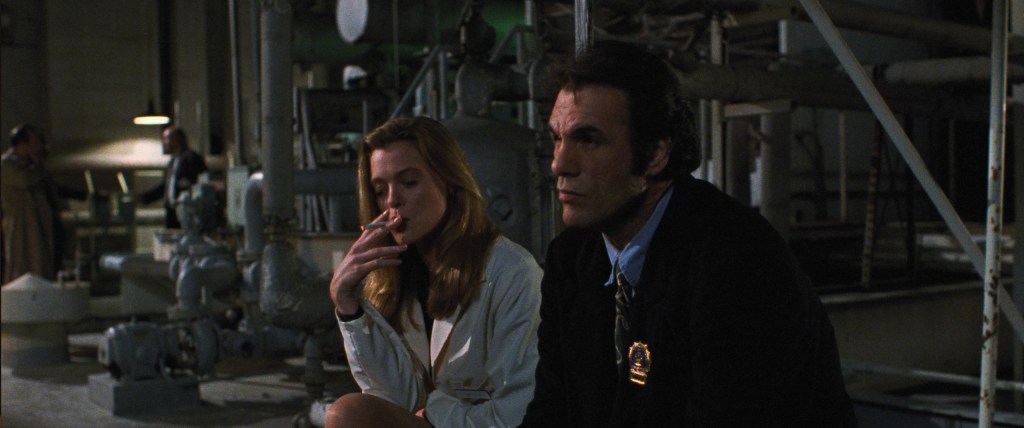
“The third one was terrible. They rewrote my script and fired Bill Lustig and they made a miserable mess out of it.”
—writer Larry Cohen
“I hate the movie… I can’t stand it. It’s torture for me to watch it.”
—director William Lustig
Unlike the first two films, I’ve never seen Maniac Cop 3 until now. I’m pretty sure I taped it on HBO one night, but I never got around to actually watching it. For one, there was almost no buzz around the picture (even Fangoria hid their article on it deep in the back of an issue). Another sign the movie isn’t up to snuff: it’s “directed by Alan Smithee,” the code name directors used to take whenever they wanted their actual names removed from the final product. (I always thought this was a shitty thing to do. Performers can’t remove their names from the picture, why should directors? Then again, when a movie bombs, it’s usually the director who takes the blame.)
Like many of the films with the Alan Smithee moniker, Maniac Cop 3 isn’t as bad as you would expect. Think about it: You have to work your ass off on a movie, good or bad, so it takes a special kind of perfectionist to want to distance themself, effectively leaving a gap in their production resume. One of the more famous examples is when Tony Kaye wanted to use the name on American History X, a film which earned many accolades including a Best Actor nomination for Edward Norton. So “Alan Smithee” isn’t always the sign of a bad movie, but it is always a sign of a disgruntled director.
In a 2019 interview that you should read in its entirety, William Lustig reveals the source of his frustrations.
Larry [Cohen] wrote a script with a black detective who was investigating a series of murders in a hospital in Harlem, New York. Later he gets involved in voodoo, which was part of his background. It was a different movie. The important part of the movie was that the detective was black and had a history, going back to his childhood, of voodoo. The sales agent who was financing the film was not able to close a deal with Japan, which was a very important part of the financing. They were putting up 800.000 dollars. A lot of money. And he was having trouble closing it. We had already started pre-production. I had flown to New York, found locations there. We were casting, I had found the actors for it. Everything. It was like we were on a train that was going forward, but the financing still hadn’t closed. To make a long story short: it turned out the Japanese did not feel comfortable with us having a black lead in the movie. I guess it’s a cultural thing. They asked: why can’t we have Robert Davi? I said: the script wouldn’t make any sense with Robert Davi. Anyway, in order to get the movie going forward, and to close the financing, – I mean, we were already building sets! It was ridiculous! – we had to cast Robert Davi who was available. Suddenly, we had a script that didn’t make any sense. So we started cutting the scenes out of the script that didn’t make any sense.
And you know what? Yeah, the movie doesn’t make sense, but at least we can finally know why. For one, I’m not entirely sure what the motivation was for the voodoo priest to resurrect Maniac Cop in the first place. (That role, by the way, is played by blacksploitation star Julius Harris, who would play a voodoo priest again in Shrunken Heads, another 31 Days of Gore feature.) Nor was it immediately clear what Maniac Cop’s motivation was until he uncharacteristically feels up a comatose patient, revealing that he has the hots for her.
Maybe I’m getting ahead of myself. At the end of the first film, the conflict resolves when Robert Davi’s Lieutenant McKinney clears Maniac Cop’s name, allowing his tortured soul to rest. It was a more satisfying conclusion than the original film, which begged us to believe that the clearly unstoppable cop could be stopped after all. This time around, when Maniac Cop is resurrected through the power of voodoo, he tracks down the man responsible for the ritual with the intention of killing him, but the priest assures him he can only resurrect souls who allow it. At which point Maniac Cop is momentarily placated, realizing there is work to be done.
That work comes in the form of Officer Katie Sullivan, a rambunctious cop who McKinney sees as a younger sister. Katie is shot during a hostage situation at a pharmacy, leaving her brain dead. The two stringers who arrive on the scene secretly edit their video footage to make it look as if Katie shot the hostage unprovoked. Naturally, this is exactly the kind of setup that makes Maniac Cop’s blood boil, who systematically gets his revenge.
Yes, Maniac Cop 3 is a downgrade in terms of pacing and story, but once again Lustig’s casting knocks it out of the park. Scenes between McKinney and Katie, and later between McKinney and Caitlin Dulany’s character (the physician watching over Katie) are just as believable as the surprisingly grounded interactions in the previous films. The cast also includes solid performances from Jackie Earle Haley, Paul Gleason, and Robert Forster, the latter of whom gets one of Maniac Cop’s more creative kills. It takes some time getting there, but ultimately it’s revealed that Maniac Cop wants the voodoo priest to bring Katie back as his maniac bride.
I dislike that this film reinstates Maniac Cop as a mindless killer after his redemption arc, but one surprisingly quiet moment shared between Maniac Cop and McKinney seems to suggest the original concept for this film would have been a lot more thoughtful. I still feel like this film is better than it has any right to be, considering its production difficulties. If anything it proves just how strong the filmmaking duo of Cohen and Lustig is by showing their misses can be just as good as an average horror movie.
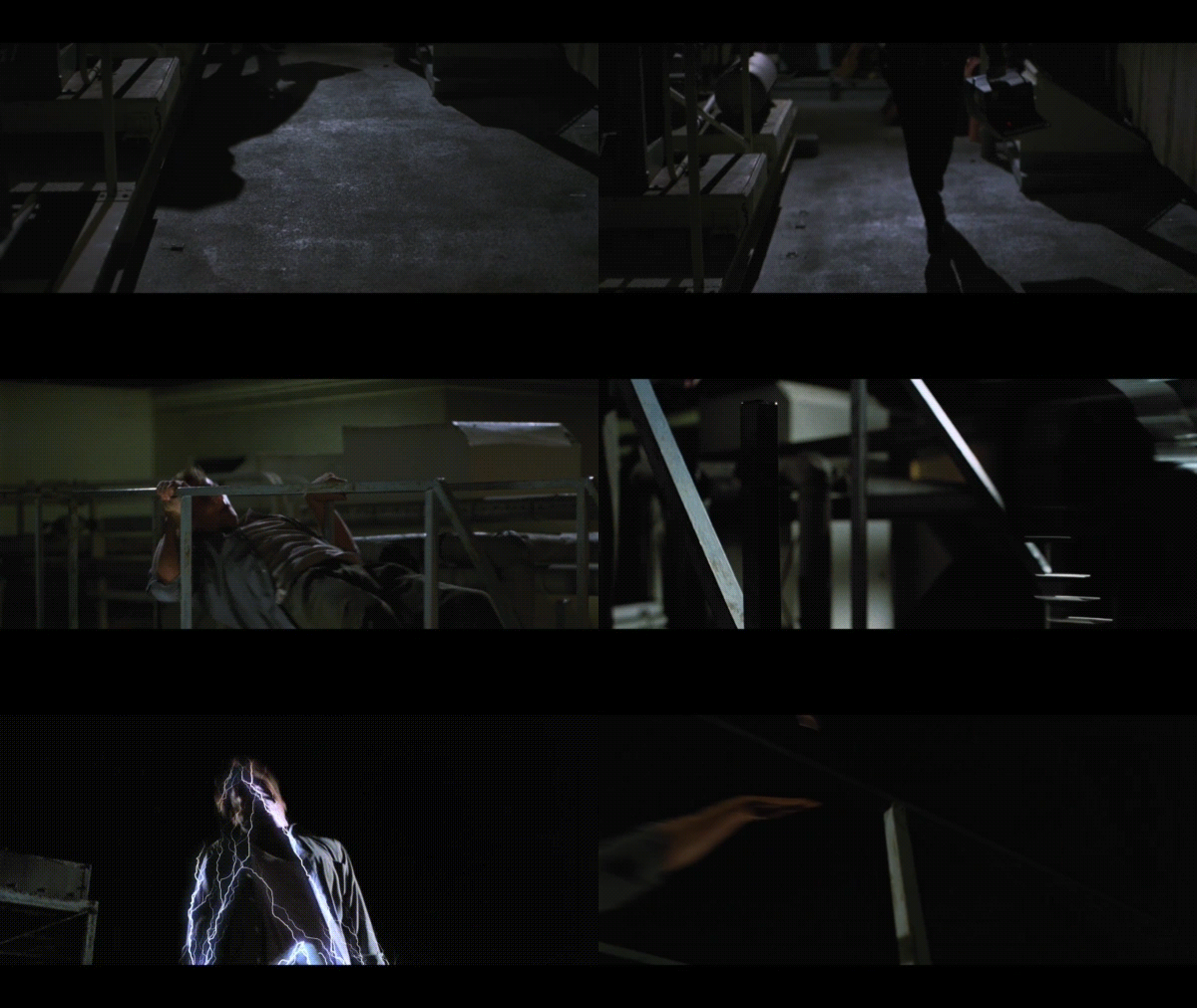
And whereas most horror movies utterly bore me with their final acts, Maniac Cop 3 once again saves the best for last. Hell, it may even contain my favorite action scene of all three. It’s much like the previous film’s fiery conclusion, only this time they combine it with some truly special stuntwork that you literally won’t see in any other film. It’s a shame the original screenplay wasn’t produced because I have a feeling it would have been just as good as the first two. Look closely enough and you’ll catch glimpses of the old magic throughout.


