
One thing that has always bothered me about Norman Bates’s mythology: Where’d the wig come from? It’d be easy for a criminally insane person to black out and dress up in his mother’s clothes (after all they’re just hanging there in the closet), but the wig is a different matter. In some sort of fugue state, he’d have to get in a car, drive to the nearest general store, and order the damn thing with at least a week of lead time. Psycho IV, which is mostly an origin story, answers that question as well as several more I didn’t have.
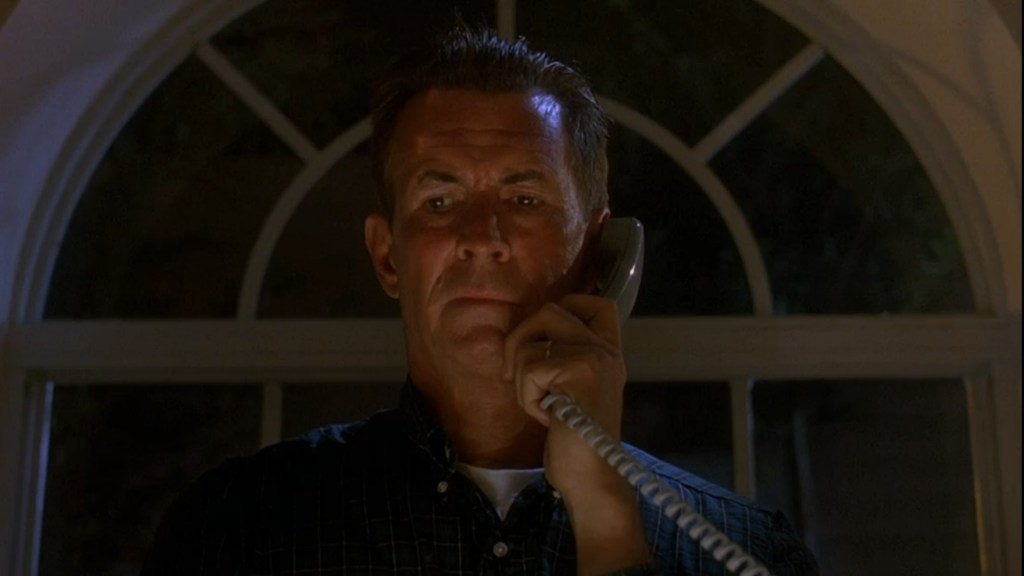
Making this film a partial prequel is the franchise’s biggest misstep. I don’t want to see anyone but Anthony Perkins playing Norman Bates, but here we must endure him in flashback form, portrayed by a little boy and a teenager at key points of his life story. The present day segment featuring Perkins goes like this: CCH Palmer, Warren Frost, and John Landis are producing a live radio program about matricide. One of their callers, who refers to himself as Ed, knows a bit about the subject because he’s a poorly disguised Norman Bates. Norman is inexplicably on parole after getting busted for the multiple corpses found at the end of the previous film. So yes, this film asks us to believe that the state let the repeat offender go after only a handful of years—maybe fewer as he’s obviously had enough time to move into a brand new house and get married.
Whatever. It’s always a pleasure to see Perkins in the role, reduced as it may be. He’s never willing to phone it in and he’s always pushing the established boundaries so Norman rarely feels stagnate. As he recounts his earliest memories to the radio program, we see the pertinent ones reenacted out of order. We learn just how close Norman was to his mother, which takes the story in places only hinted at before. This is all stuff that actually strengthens the mythology rather than detracting from it, but it was a mythology that was strong enough to begin with. We were all already on Norman’s side from the very first film. There was no reason to paint him in an even more sympathetic light.
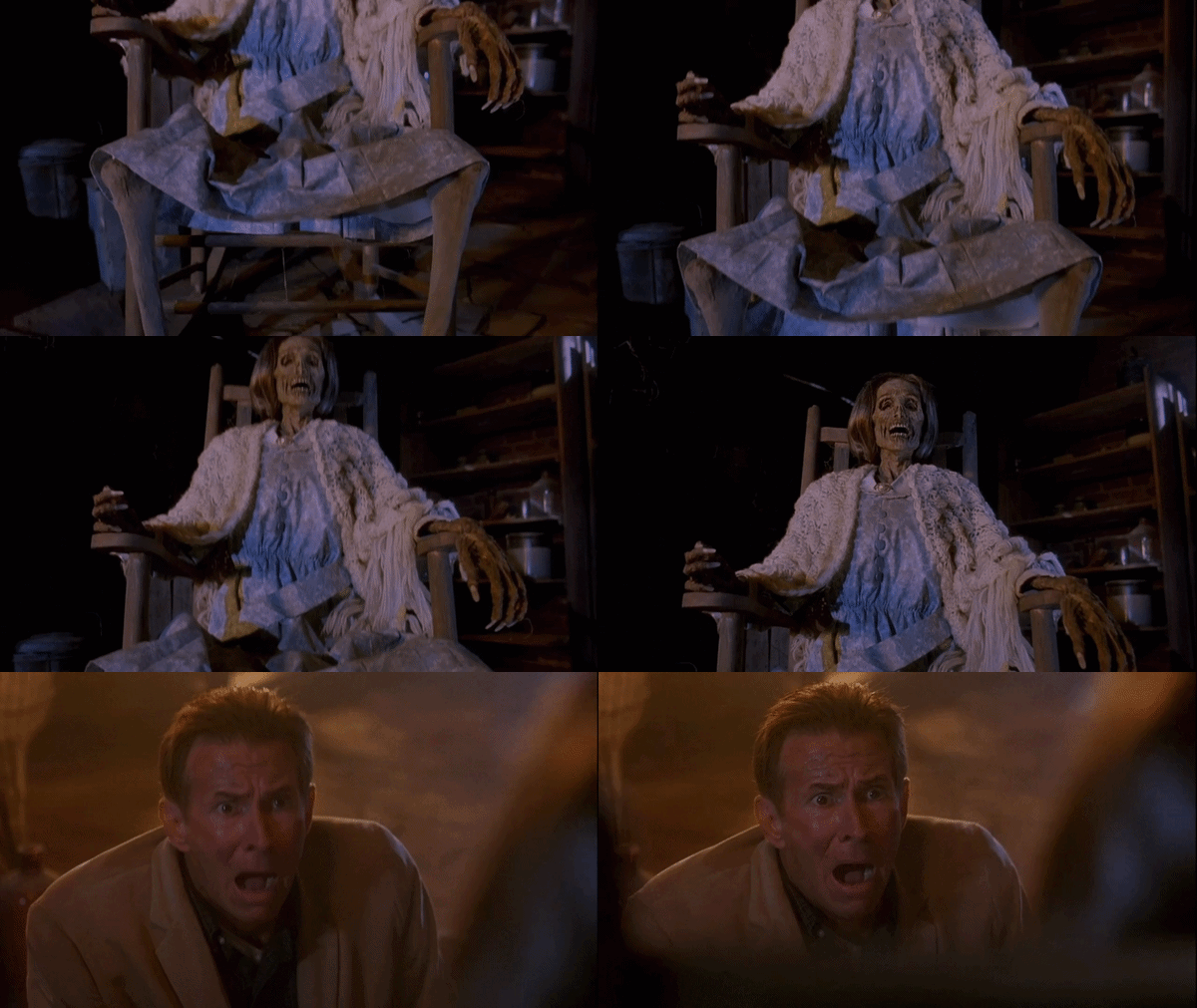
I’m only disappointed because this type of storytelling leaves little room for the precious exploitation elements. You simply can’t generate suspense when your audience knows a character can’t die in his own flashback. Once you accept it for what it is, you’ll find surprisingly well written scenes. It’s also nice to see the Bates Motel and the hilltop house in better times, both painted yellow, while the younger actors portraying Norman do a much better job than Vince Vaughn did in Gus Van Sant’s remake for dummies. One other improvement over parts 2 & 3: the return of Bernard Herrmann’s iconic theme from the first film.
While I would have rather seen Norman escape the institution and continue his killing spree, the more mature approach works better than you would expect. I see why Perkins agreed to come back: the fourth installment leaves the logical ending he gave us in the third film intact while providing the opportunity for a deeper dive into the character… which is unfortunately a lot more interesting for an actor than the audience. So why not make a movie about a different killer and leave Norman’s memory untarnished? Because A) that’s not how the movie business works, kid, and B) this is interesting stuff because it’s about Norman Bates, building on decades of character growth. I don’t think you can accuse Perkins of doing any of these films just for the paycheck. All four are worthwhile, this one less than others. Together they’re among the best horror franchises ever made.
I eventually grew to like the flashbacks, but whereas Norman had become uncharacteristically mean in the previous film, here he becomes downright ugly for his final kill. I’m sorry, folks, but that’s not the Norman I know and love. Get out of here with this bullshit.


