Slaughterhouse (1987) [31 Days of Gore]

Slaughterhouse begins promising enough. Right off the bat, you get stupid teens doing stupid teen things in the middle of nowhere. A couple of the kids split off to go get themselves killed in the woods. You don’t see much, but it is, after all, only the introductory killin’. It’s enough to make the audience believe (or hope) each money shot will top the last. The cold opening smash-cuts to its credits, which overlay actual footage from a real-life slaughterhouse. This disgusting scene is scored to silly music. It’s at this point you think the movie could very well be a decent dark comedy.

So the killer of the film is Buddy, a giant of a man who doesn’t bother wearing a proper mask until the end of the movie. He’s the dimwitted son of Lester Bacon, an old farmer whose house is being foreclosed. Lester isn’t just aware of Buddy’s killing spree, he encourages it.

The teenagers in the film have nothing to offer other than the promise of deaths. They’re under no threat until the end, when their pointless subplot finally crosses paths with Buddy. In the meantime, Buddy kills the town deputy, dons his uniform, and goes for a joyride in the film’s funnest scene. If only the rest of the movie were so good.

Other than the teen stuff, Slaughterhouse isn’t a maddeningly slow movie. There’s decent acting, dialogue, and an oddly effective pace. You hold out hope the opening set the bar low in order to top itself. It never really does, at least in no spectacular fashion. Yet it’s still kind of likable for reasons that escape me. I guess I just like the concept of Buddy.

I will complain that the final kill shows even less than the first kill did. What a cheat.
Castle Freak (1995) [31 Days of Gore]

Last year’s 31 Days of Gore renewed my interest in Full Moon movies. This one stars B-movie icons Jeffrey Combs and Barbara Crampton, who also appeared together in The Re-Animator and From Beyond. I was barely a teenager the first time I saw Castle Freak and thought it was the weakest of Stuart Gordon’s Lovecraft trilogy. This time I realize it’s not so much worse, just different as it abandons the psycho-humor of those movies and becomes an effectively serious exploitation film.

Combs, Crampton, and their blind daughter inherit a castle. How did they inherit a castle? Doesn’t matter. What matters is there’s a mutilated freak living in a tiny dungeon beneath it. Near the end of the movie, Combs will have a House, M.D. moment in which he pieces together scant clues into the freak’s backstory. Until then, we never really know why the titular monster is living in the bowels of the 150-room castle, but the reveal is a doozy.

In the meantime we’ll learn the daughter wasn’t always blind and there used to be a son in the family. It turns out Combs is an alcoholic who was drinking and driving the kids around a rainy road one evening. The ensuing wreck killed his son and blinded his daughter. Needless to say, Combs’s accident put a strain on his marriage (ya think?). Desperately, he hopes moving into the castle will rekindle things, but Crampton’s character is rightly having none of it. Meanwhile, the castle freak lurks in the shadows, developing a crush on the blind girl.

Crampton said in a recent interview that she and Stuart Gordon found a new appreciation for the film the last time they screened it for an audience. I have, too. The creature effects are perfect from beginning to end while Combs and Crampton give great performances. Okay, so the cops are borderline dumb and the parents take a little too long to believe their daughter when she asserts they’re not alone in the gigantic castle. Other than that, this is a mature film with serious horror.

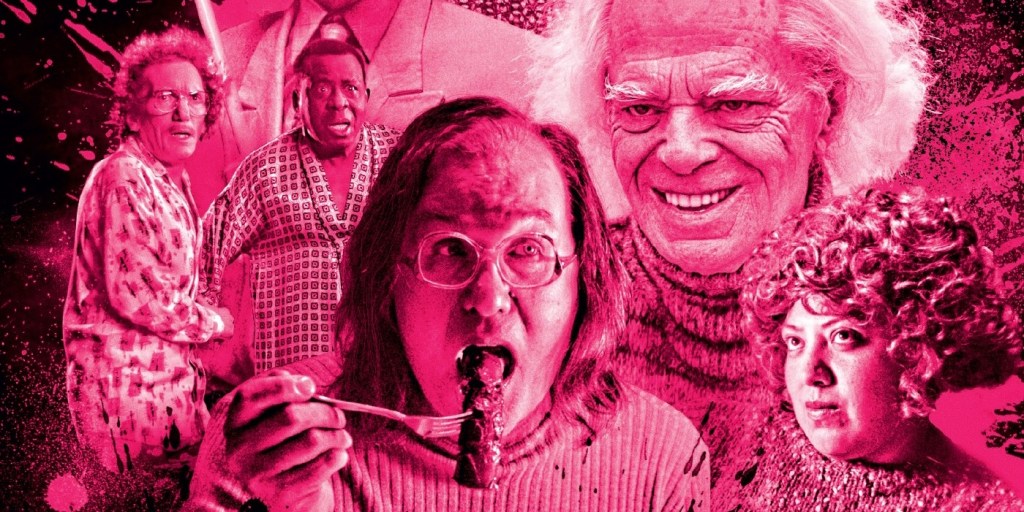
The Greasy Strangler (2016) [31 Days of Gore]

Is The Greasy Strangler a horror movie? Not really, but I’m still going to feature it for 31 Days of Gore. It’s worth noting it was produced by Elijah Wood, who’s bullish on horror. He’s gone so far as to appear in a remake of Maniac, which I’ve yet to see (and probably never will), but any actor who’s a supporter of the genre is cool in my book.

Brayden and his father, Big Ronnie, live together in a rundown home and work as horrible tour guides. Ronnie, who was a disco king before he knocked up Brayden’s mother, points out locations around town, dubiously telling tourists that’s where a famous band came up with an idea for a song. When one of his customers insists the brochure advertised free drinks, Ronnie becomes irate. Later, he’ll slather himself in grease, strangle the tourist until his eyes pop out, then walk through a car wash to clean up.

Brayden’s not the smartest guy in the world. He knows the serial killer known as the Greasy Strangler is murdering people in and around his neighborhood. He knows his father has an unusual love for greasy foods. Try as he might, Brayden just can’t put two and two together. When Brayden meets his first ever girlfriend (Elizabeth De Razzo), Big Ronnie moves in on her and threatens to evict Brayden if he objects.

Every aspect of The Greasy Strangler is crafted to annoy. The acting is intentionally bad. The dialogue is abrasive (“Bullshit artist!”). Quiet scenes are sandwiched in between blaring electronic music while the fearless actors appear nude more than they wear clothes. The editing is so offbeat that a lingering shot can rub you the wrong way, like a sneeze that won’t come out. This is a movie for people who enjoy crunching ice, savoring the way it drives a loved one up the wall.

My favorite thing about The Greasy Strangler was the reaction to the trailer in the YouTube comments: equal parts bewilderment and outrage. If you’re a John Waters fan, you’ll love it (I am and I did). Otherwise, avoid it at all costs. It’s rather like watching a big screen adaptation of a 4chan greentext.

My favorite scene involves a detective by the name of Jody. I won’t give it away because it’s a what-the-fuck moment that stands out in a movie full of what-the-fuckery. Shortly before the end, the movie tops itself by what-the-fucking in the grandest way possible. You get the feeling the writers were trying their hardest to top each other. I really don’t think they gave a shit if anybody else in the world got it.

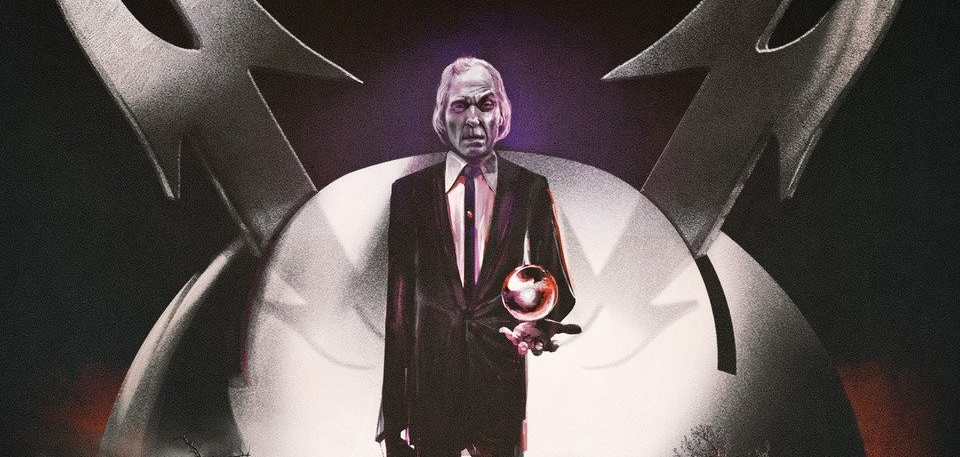
Phantasm V: Ravager (2016) [31 Days of Gore]

Yesterday I posted a terrible review of Phantasm IV. Usually when I hate a movie that bad, I refrain from posting about it at all, especially when all the people involved are so cool. It’s not that I don’t think artists should be above criticism (hell no), I just feel there are too many blogs which poke fun at B-movies and not enough that celebrate them. Had I known how much I would dislike Phantasm IV, I never would have watched it, much less committed myself to reviewing the entire series. 

Phantasm V is far better than Phantasm IV, but that isn’t saying much. To be sure, it’s nowhere near as good as anything in the original trilogy. The movie’s biggest mistake is it doesn’t simply ignore the revelations of the fourth film. The Tall Man’s insulting origin as a human being is still canon, which means I can no longer give a shit about the Tall Man. It’s sad that this is Angus Scrimm’s final performance.

There are some saving graces. This one is immediately more entertaining than its predecessor. When we first see Reggie, he’s stumbling through the desert in his war-torn ice cream uniform, lugging around his trademark four-barrel shotgun. His hair has been darkened in an attempt to sustain continuity, but at one point you can actually see the dye coming off on his collar.

One moment Reggie is battling the forces of evil, then he finds himself in a rest home where he’s assured his fantastical story about the Tall Man is the result of early onset dementia. I was praying the movie wouldn’t abandon the new direction (After all, the Tall Man said in the previous film: “Ice cream man, it’s all in his head.”), as it would allow the series to retcon all the shit I dislike. No such luck, however.

In the last movie we got unnecessary time travel. This time we get parallel universes. Fine, I don’t care at this point. I appreciate the direction the filmmakers were going, but it just wasn’t my cup of tea. Along the way, you’ll see a familiar faces, joyless CGI, bad cinematography, and obvious Airsoft weaponry posing as the real thing. Ravager scares up some of the old fun, but it’s just not worth acknowledging Oblivion was canon.

R.I.P. Phantasm. May you never get rebooted.

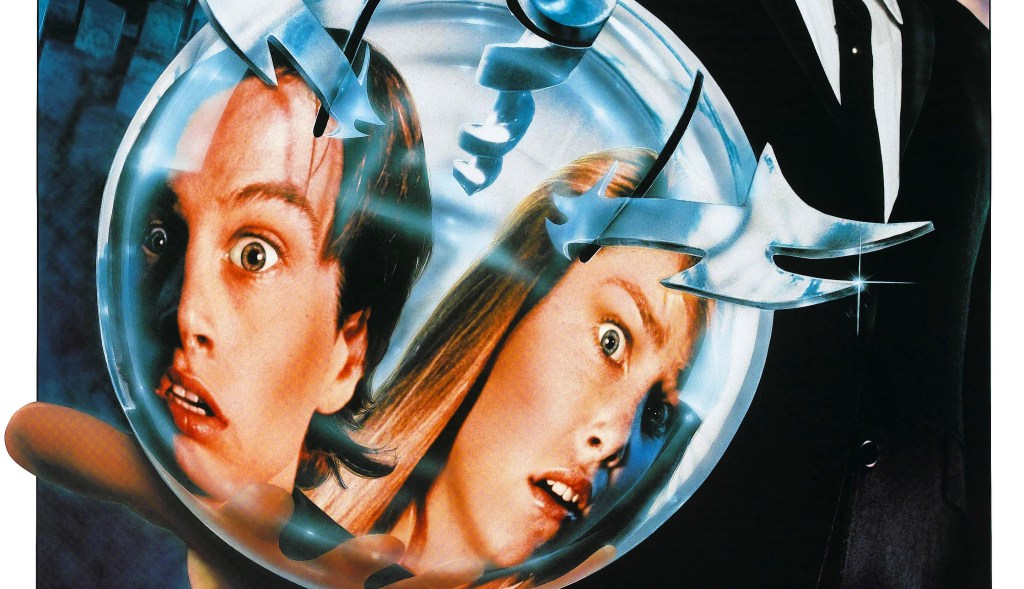
Phantasm IV: Oblivion (1998) [31 Days of Gore]

This is my first viewing of Phantasm IV. I wish I had listened to my original instinct to avoid it. Yesterday, I praised Phantasm III for preserving the mythology established in the first film. Phantasm IV undoes it all. This is easlily the worst movie I’ve ever featured on 31 Days of Gore. The fact that it garnered a review score comparable to the previous film on IMDB indicates a die hard and delusional fan base. 

Where to begin? The first ten minutes are flashbacks. Flashbacks to the previous films, flashbacks to unused footage for the first film, freshly shot flashbacks which completely and utterly stamp out every ounce of greatness the series had. Once you think the movie’s done flashbacking, it flashbacks some more. It’s as if Don Coscarelli woke up one day and thought, Hey, I know how to ruin the series! I’ll add time travel to it!

There’s a scene in which Mike is pursued by the Tall Man through an old looking town. When Mike asks where he’s at, Spirit Jody replies he should worry more about when rather than where, suggesting it’s a long time ago. Considering there’s a sign which plainly says Staples in the background, I’m guessing it’d have to be sometime after ’86 unless it’s literally a generic staples store. I mention this scene without context because there is none. Coscarelli, who I admire tremendously, constructs the flimsiest excuses to unload footage which rightly belonged on the cutting room floor. And he shoots new footage which isn’t coherent enough to string all the old crap together.

I know the series hasn’t exhibited the best continuity, but to suddenly make the Tall Man a human after it was made abundantly clear, time and time again, that he wasn’t, is the dumbest retcon I’ve seen in a movie in years. The conclusion to the previous film’s cliffhanger is handled so sloppily, you’ll wonder if Coscarelli actually wanted to make another Phantasm movie at all. Hellraiser IV hurts less than this piece of shit does.

I’ll be featuring the fifth film at midnight, Central Time, but if it’s anything like this one, I won’t have anything kind to say.

Phantasm III: Lord of the Dead (1994) [31 Days of Gore]

Once again, the opening picks up exactly where the previous film left off, concluding the cliffhanger which had Mike and Liz trapped in a runaway hearse. Reggie, who was clearly dying the last time we saw him, reveals it was little more than a scratch. Sure, whatever. The other two characters don’t get off so easy as the Tall Man decapitates Liz and kidnaps Mike. It’s a little strange that Mike doesn’t mourn Liz’s death at all, but at least the movie hits the ground running, eschewing all the routine emotional stuff that movies like this suck at anyway.

What the movie doesn’t eschew, unfortunately, are some disappointingly routine horror tropes. While searching for Mike in a ghost town, Reggie is taken hostage by three expendable characters who’re scavenging abandoned storefronts and cars. It all feels like a pointless detour until we’re finally introduced to Tim, a kid who’s been playing Home Alone ever since the Tall Man killed everyone else in his town.

Tim is supposed to remind us of Mike in the first film, I guess, but he doesn’t because he’s a ruthless killer. At one point he slices a bad guy’s throat with a razor-lined Frisbee, which is suspiciously similar to a death scene in Hard Ticket to Hawaii. Later, the duo will end up in yet another ghost town where they’ll pick up a nunchaku-packing wanderer by the name of Rocky. I appreciate the exploitation value Tim and Rocky bring to the series, but their one-liners are generic and their motivation is murky.

The best part of Phantasm III is returning director Don Coscarelli manages to preserve the mystery surrounding the Tall Man while simultaneously expanding the mythos. We learn a little more about the spheres’ origin and what’s inside them. We see the Tall Man sitting in a throne, surrounded by candles in a mausoleum, which squares nicely with the series’ fantasy aspirations as it makes him look like the evil wizard of a fairy tale.

What I could have used a little less of was the cheese of bringing Jody back as a spirit guide. Now that the actor who originally played Mike is back, what we get is a sappy reunion picture. At any rate, it shows Coscarelli was probably thinking more about his fans than the mainstream audience he seemed to be gunning for in the previous film. I can’t fault him for that, but I still liked the last two movies a little more than this one, even if the special effects here are better for the most part. As far as second sequels go, Phantasm III is among the best.

This time around, Reggie peaks as the lovable buffoon. There’s a bit more humor and, while it doesn’t detract from the horror, it clashes terribly with the cheesy mentioned above. I’ll say this about Reggie: for a middle-aged ice cream man who’s on his third house and his second Barracuda, he must have some amazing insurance. Once again, he doesn’t waste any time throwing himself into the dating world after the death of a loved one.

So what does the Tall Man want from Mike, anyway? Three films in and I haven’t figured it out yet. Maybe they’ll finally explain it in Phantasm IV: Oblivion, which I’ll feature tonight at midnight, Central Time.

Phantasm II (1988) [31 Days of Gore]

Reggie Bannister is kind of the Robert Duvall of horror. In the first Phantasm, his character (also named Reggie) was relegated to the role of the goofy sidekick. This time he’s practically the star, getting even more screen time than the main character. You’ll see Reggie’s name oft mentioned on horror forums too. There’s just something about his unassuming persona that clicks.

Yesterday I said Phantasm II was my favorite in the series, though most of the heavy lifting was done in the previous film, which had enough world-building to spare for a sequel. But Phantasm II has the distinctly 80s horror look which really takes me back. This is the first time I’ve seen it on anything other than VHS. The film looks stunning.

The sequel picks up exactly where the previous one left off, concocting an unlikely conclusion to the cliffhanger, which has Reggie blowing up his own house to save Mike’s life. The film skips forward several years to show Mike (played by James Le Gros now) is all grown up. Reggie picks him up from the mental institution, but on his way home his house explodes (again), thereby motivating Reggie to help Mike murder the Tall Man.

So Mike’s been having visions about the Tall Man for years. Somehow, he’s been psychically linked to a blonde by the name of Liz (Paula Irvine) who shares his visions. I’m not sure how this happened, but the pair fell in love long before ever meeting. Reggie, fresh from the funeral of his wife and kids, also finds love in the form of a banging brunette they meet on the side of the road. I love Reggie to death, but this woman is way out of his league—not to mention his age bracket, so it’s disappointing none of the leads are even suspicious of her.

Once the climax begins, it’s a fine spectacle. The movie is much better paced than the original and it doesn’t blow its wad until it’s good and ready. Phantasm II makes a little more sense than its predecessor, too, and looks better to boot, but perhaps it’s not quite the milestone I remembered it being. Neither is it a pointless sequel. The first one was packed to the brim with ideas and this one feathers out the edges.

Phantasm (1979) [31 Days of Gore]

I’ll be featuring a Phantasm movie each day leading up to my review of Phantasm RaVager.

Mike and Jody, 13 and 24 respectively, are a couple of boys just trying to get by after the death of their parents. Following the funeral of a mutual friend, which only compounds their grief, Mike witnesses the freakishly tall caretaker (Angus Scrimm) lift the casket with one arm and effortlessly toss it into the back of his hearse with inhuman strength. To explain what the Tall Man is up to would ruin the best part of the mythology, but I will say it’s ambitious for a $300,000 movie.

Mike visits the local fortune teller who not only makes him do the Gom Jabbar test from Dune, she actually says, “Fear is the killer.” (Later, a scene is set in a bar called Dune’s, suggesting the references to Frank Herbert’s novel are more homage than rip-off.) The fortune teller can make things magically appear out of thin air, but Mike is curiously unaffected by this. The prediction the fortune teller makes isn’t just wrong, it feels like a setup for a payoff the filmmakers abandoned by the time they got around to making the end of the movie.

There’s a lot of improvisational filmmaking, which somehow adds to the charm more than it detracts, even as the logic steadily drains out of the story. Reggie Bannister’s character, Reggie, is killed once off screen and once again on screen, but both times he comes merrily strolling back into the picture (fake-killing him in the sequels becomes a bit of a tradition). The first time he cheats death, he tells the main characters he totally rescued some characters off screen, but they’re safe now so don’t worry about them anymore; in reality, the actors were probably no longer available and director Don Coscarelli needed a throwaway line to explain their sudden absence.

Despite the constant attempts at jump-scares, Phantasm is likely too tame and pleasantly paced for many viewers, but it’s rarely boring. Angus Scrimm’s performance, though brief, is right on the edge of over-acting, which is actually perfect for a movie like this. The minimalist yet skillful cinematography evokes Kubrickian framing, which compliments the simplistic score. I’ve always admired Phantasm, but I think I like it a little more with age. It’s much better than it has any right to be.

Phantasm 2 was my favorite of the series. We’ll see how it holds up tomorrow.

The Mist (2007) [31 Days of Gore]

The Mist is about a group of shoppers who get trapped inside a supermarket when a strange mist settles on the town. A local zealot interprets the event as the end times and quickly rallies a group of brain-dead followers to do her misguided deeds of faith, which will eventually turn sacrificial in nature. The film’s hero, played by the always likable Thomas Jane, just wants to keep the dangerously frightened shoppers placated until he finds a way to get his son home.

This is all material that I should and typically do like. Monsters? Check. Religious folk acting like fools? Love it. But when you have Stephen King and Frank Darabont providing the brains behind your movie, the result should be a little better than this. Case in point: a group of expendable characters are determined to get themselves killed by the monsters lurking around the warehouse in the back. Granted, the characters don’t know the mist has monsters in it (yet), but they also don’t know the mist isn’t harmful to humans. When Jane asks them why they’re being so dense, the small group (led by genre veteran William Sadler) makes all kinds of flimsy excuses for acting like idiots.

MINOR SPOILERS BELOW

As for the famous ending… it was certainly a shocker, but I’m wondering whether or not the movie earned it. I’ve complained about happy endings in horror movies for years—if the survivors are smiling by the time the credits roll (see: The Visit), you’ve probably done a lousy job of putting them through hell. To be sure, my favorite final shot is probably The Texas Chainsaw Massacre, in which the blood-drenched heroine is screaming crazily in the back of a truck. It’s clear she’ll never be right again and the film’s made more powerful because of it.

The Mist certainly doesn’t take the easy way out, but somehow it felt like an afterthought to me. King has stated he preferred Darabont’s ending, but it seemed like an oddly cruel thing to do to the smarter characters. I’ll never forget it, sure, but wouldn’t it have been more meaningful if there was a reason behind it, other than, “Ha, bet you never saw this coming!”? On the other hand, I’m willing to admit I might be missing the meaning altogether: that Jane’s character ultimately succumbed to the same fear that had the dumber characters acting like morons.

Look, considering how many people seem to love the film, I’m well aware I’m being harder on The Mist than most movies… but considering its pedigree, shouldn’t I be? This is my second viewing and I just can’t understand why it doesn’t appeal to me like it did for most. Just one of those things, I suppose, and I have the sneaking suspicion I’ll give it a third shot sometime in the future.

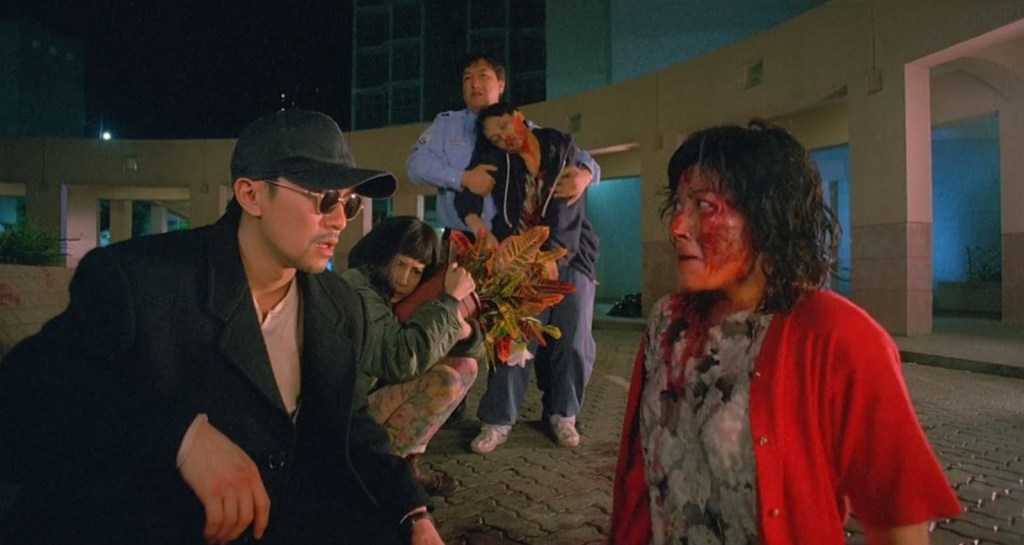
Out of the Dark (1995) [31 Days of Gore]

The goofy security staff (think: Police Academy) at a haunted high-rise are terrorized by strange happenings. The only man who can help is an eccentric ghost hunter (Stephen Chow) who lives in a mental institution by day and breaks out to fight evil every night. If you’re looking for character development, motivation, or anything else that would only get in the way of high-octane entertainment, you’ve come to the wrong place. What you’ll get here is dark humor and slapstick violence, served with a generous helping of insanity.

Out of the Dark is all about style over substance. Its furious editing and camerawork homages everyone from Martin Scorsese to John Woo. It’s apparent, too, that the filmmakers had just seen Pulp Fiction and The Professional. I started the movie an hour after I should have been in bed and found myself unable to turn it off. It’s the kind of movie that hooks you so immediately that attempting to hold it at arm’s length will only exhaust you. Just relax and let it happen to you.

Early on, one of the security officers scoops a dying man up into his arms with the intention of racing him to the hospital. But when a slasher shows up the officer instinctively uses the victim’s body as a shield against the repeated knife attacks. Keep in mind, this is all shot like a Three Stooges bit and it’s no less funny. Later, when the hero of the film bursts onto the scene to save the day, he accidentally shoots the victim.

I’ve always been a fan of Stephen Chow, often loving parts of his films, but rarely embracing them as a whole. Here’s one I endorse wholeheartedly… as long as you like politically incorrect horror-comedies with the physics of a Chuck Jones cartoon. (At one point, a refrigerator falls on a man’s head; he survives with little more than a headache.) It’s a wonderfully unpredictable film.