The Video Dead (1987) | 31 Days of Gore

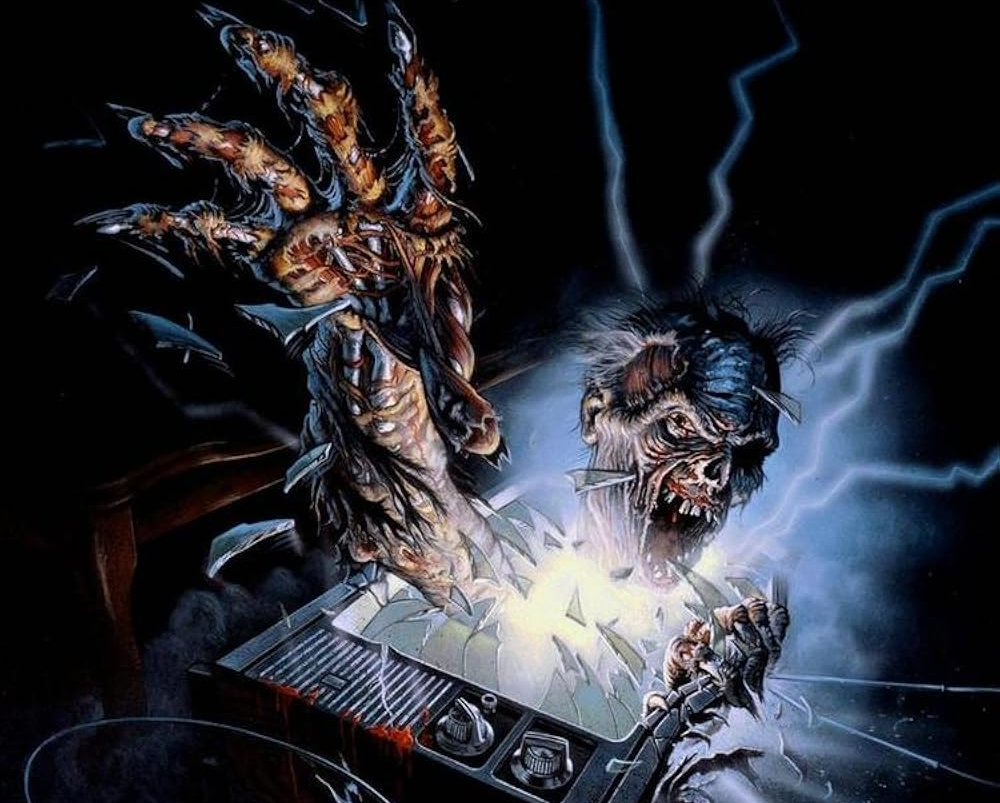
The Video Dead is an amusing horror-comedy with better-than-average special effects and lower-than-average acting, though incidentals like that don’t matter when your movie is as charming as this. In it, a couple of latchkey kids move into their new house, days ahead of their parents who are currently living abroad. The boy gets the hots for the neighborhood blonde while the sister doesn’t do much of anything until the final act of the movie, at which point it’s suddenly revealed she’s our main character.

What the kids don’t know is there’s an evil television in the attic that’s capable of summoning the zombies from a generic horror movie. A Texas rancher arrives on their doorstep one day, having tracked the television set to their location. It turns out he’s the previous owner of the TV, which conjured the zombies that killed his wife. He warns the boy that he should place the television in the basement with the reflective side of a mirror strapped against its screen. Isn’t that a fun bit of world-building?

The DIY special effects are the biggest reason to watch this movie. What they lack in budget they make up for in design: every one of the zombies is distinct from the others. Taking a cue from the rambunctiousness of Gremlins, the zombies playfully enter their victims’ houses to try on wigs, glasses, hats, etc. Whenever one has her head sawn off, she picks it up and carries on without missing a beat. Another zombie has a clothes iron permanently lodged in his skull. This is the same rule cartoonists employ in their character designs: make sure the silhouettes are instantly recognizable and the audience will never confuse them with one another.

Also fun is the Texan’s expository dialogue, which conveys the mythological rules of the video dead: they don’t like mirrors, they only attack those who show fear, and burial doesn’t keep them down. Instead, one must dismember the Video Dead and leave the remains where they lie, letting nature reclaim them over time. Otherwise, they’ll just keep getting right back up and attacking over and over again. And instead of fortifying their home with garlic and crucifixes, the characters hang shards of mirror they can find on the front door.

The Video Dead has a “have camera, make movie” attitude. While it’s only slightly more than satisfactory, nothing in it is egregious or particularly insulting. It’s a pleasant watch for cult movie aficionados. I love that it exists. I’ll watch it again someday.
Piranha (1978) | 31 Days of Gore

Long before Joe Dante directed Gremlins and the vastly superior Gremlins 2 (fight me), he made Piranha for Roger Corman’s New World Pictures. Corman was hesitant to make a Jaws rip-off, as that movie was so good, but had no qualms about making a Jaws 2 rip-off, as that movie was so bad. Universal Studios considered suing Corman, but legend has it that Steven Spielberg himself intervened, having seen and loved an advance showing of the film; he would later hire Dante to direct a segment of The Twilight Zone movie and Gremlins.

In Piranha, a school of genetically modified piranhas are making their way down an unspecified North American river, eating everyone who’s unfortunate enough to be swimming in the their path. As luck would have it, the bloodthirsty fishies are on a direct course to a summer camp downstream, which just so happens to be holding swim-team tryouts that day. When even Friday the 13th films are reluctant to harm children, you can typically roll your eyes whenever most filmmakers employ children-in-peril scenes to build suspense… but this is a Roger Corman production, by god, and the legendary film producer is well aware that his fans would feel cheated if at least a few children didn’t die.

A spunky young private investigator (Heather Menzies), an alcoholic living off grid (Bradford Dillman), and the mad scientist responsible for the mutant fish (Kevin McCarthy) must race downstream to warn the camp counselors before the piranhas reach them. Unfortunately, the military arrests the heroes as part of a cover-up operation. I’m not going to dwell on why the military’s involved because the movie doesn’t care that much, either. Dante is only concerned with giving the audience exactly what it wants to see: girls in bikinis, bloody violence, and a stupendously fun climax that goes above and beyond what’s required of it.

It’s an acquired taste, to be sure, but few B-movies have embodied Roger Corman’s unique blend of subtle humor and self-awareness. He and the many filmmakers who got their start with him made these films for the love of the craft… so long as it the pursuit of art didn’t get in the way of a profit. I would describe Piranha as one of the quintessential Corman productions, right up there with Death Race 2000.

Dick Miller is fantastic as always and I’m always thrilled to see cult icon Barbara Steele in literally anything, but Kevin McCarthy’s mad scientist is chewing the scenery with the same gusto as Jack Palance in his later flicks. The novelty has worn off for the modern day imitators—the cocaine bears, the meta anacondas, the hybrid animal-disasters with loads of horrible CGI and too much winking at the camera. The B-movie used to be a sacred thing, the only place you could get cheap thrills and fucked-up laughs, but there used to be an art to it. I can think of few examples better or more authentic than Piranha.

Mind Ripper (1995) | 31 Days of Gore

Mind Ripper supposedly began as a sequel to The Hills Have Eyes II. Wes Craven, who produced this film (co-written by his son), apparently had a last minute change of heart, removing all references to those other films. I’m going to guess it was because he didn’t want to smear the reputation of his duology once he saw how poorly this project was shaping up.

A group of research scientists, led by Lance Henriksen’s character, discover a John Doe in the desert outside their secret facility, left badly injured from a failed suicide attempt. It just so happens the scientists are developing a regenerative tissue serum that is the man’s only shot at survival. After wrestling with the moral implications for all of sixteen seconds, the scientists inject the serum into their unwitting test subject. Sometime in the following months, Henriksen grows a conscience and quits his job to spend more time with his kids: a young Giovanni Ribisi and a daughter whose boyfriend is constantly trying to screw her, even when her dad’s in the room.

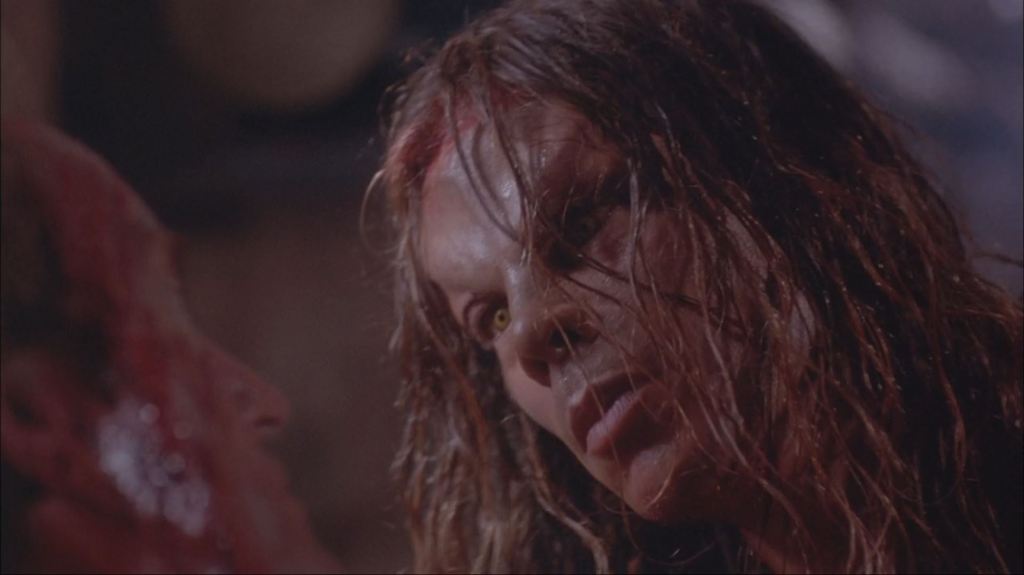
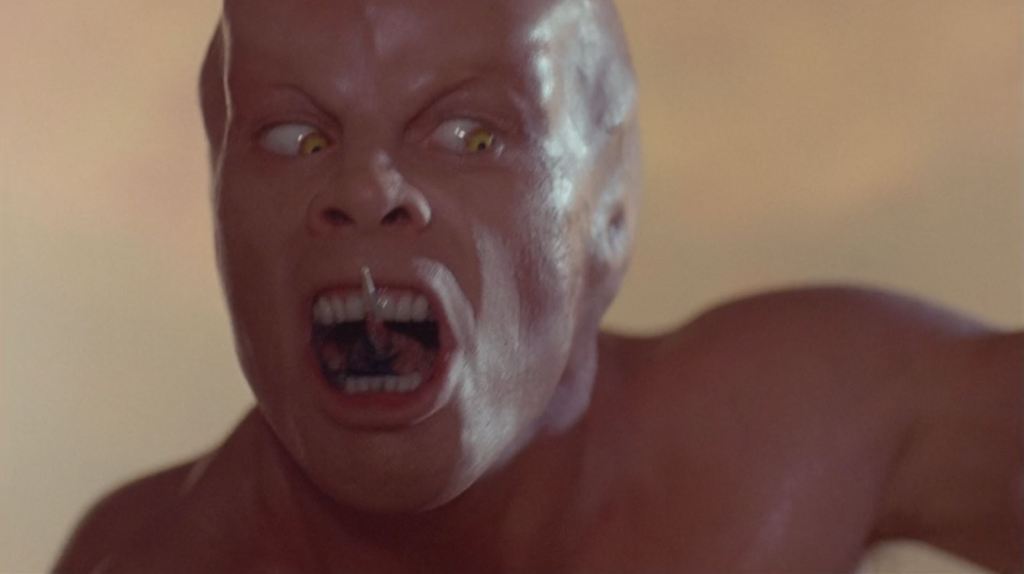
As expected, the John Doe breaks free of his confines and hides in the shadows of the ventilation shafts, picking off the scientists one by one. We’ve all seen this monster-in-a-facility movie a hundred times before (this my second one this month!), only this time the monster is played by a rather human-looking young man, nicknamed THOR (trans-human something-or-‘nother), until the filmmakers finally slap a pair of yellow eye contacts on him. THOR is played by Dan Bloom, a long-haired fella who has a number of credits playing the hunky bimbo on shows like Married with Children, Baywatch, and HBO’s Dream On.

THOR’s ineffectiveness as a movie monster is not a failure of the actor. In fact, Bloom brings a surprising amount of physicality to the role, lending the film its best scenes. Late in the movie, he’ll undergo a tame metamorphosis in which his ears and hair fall off while a sufficiently gross tentacle occasionally emerges from his mouth to suck his victim’s brains out of their skulls. The gore scenes are few and far between, but they are up to snuff whenever the camera doesn’t cut away prematurely.

The biggest groaner: THOR catches our heroes, kills all but one, then awakens from a nap. It turns out it was all just a dream, deep in the third-quarter of the game—much too late for such a play. It’s the first time during this year’s 31 Days of Gore that I call shenanigans. Yellow flag on the field. 25 yards to the away team.

Mind Ripper is one of the more competent Alien rip-offs, but that’s not saying much. It’s too long, too bland, and stiffly acted. There’s nary a reason to watch it, even for horror junkies. I confess a certain nostalgia for this era of cheap brain candy, but even I was unmoved for much of it. I was on the fence on giving it a passing grade for the gore, but unfortunately there just isn’t enough to justify it. I don’t hate it, but I don’t like it very much, either.

The Rule of Jenny Pen (2024) | 31 Days of Gore

Geoffrey Rush is Stefan Mortensen, a proudly independent judge who suddenly ends up in an assisted living facility after suffering a stroke. The staff encourage the curmudgeon to make friends with the other residents, but he insists he’ll only be there long enough to recover the ability to walk. He thinks of himself as too good for the situation as a way to distance himself from his new reality. Even as others extend an olive branch, he quickly pushes it away.

Enter John Litghow’s character, Dave Crealy, who terrifies the other residents into submission. Despite his advanced age, Dave is a dimwitted bully, forcing his way into the community dance to step on toes and collide with the other residents to ruin their fun. With a clear understanding of the facility’s bureaucracy, he wears the guise of senility so that he can get away with his psychopathic antics. Lithgow has been relishing villain roles for more than forty years and he’s at his nastiest here. It’s as if his mean-spirited character from Cliffhanger entered assisted care.

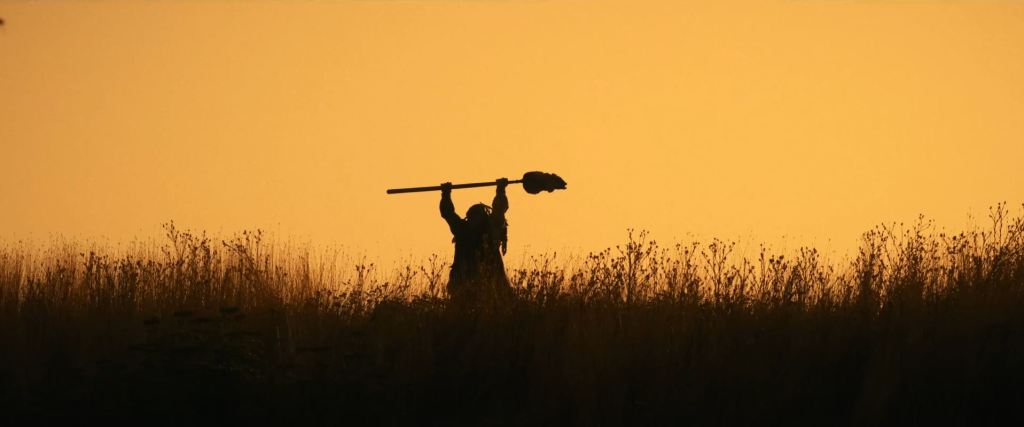
A permanent fixture of Dave’s wardrobe is his hand puppet, which he named Jenny Pen for reasons unexplained. Whenever he’s feeling especially cruel, he flips the puppet upside down and forces his elderly victims to “lick Jenny’s ass,” or in other words: his wrist. What’s especially effective about Dave’s puppet is the fact it has no eyes; as light shines through the rubber skull, it makes the void beyond Jenny Pen’s eye sockets turn an unsettling shade of pink. Dave and his puppet’s antics are cruel, darkly funny, and terrifying at the same time.

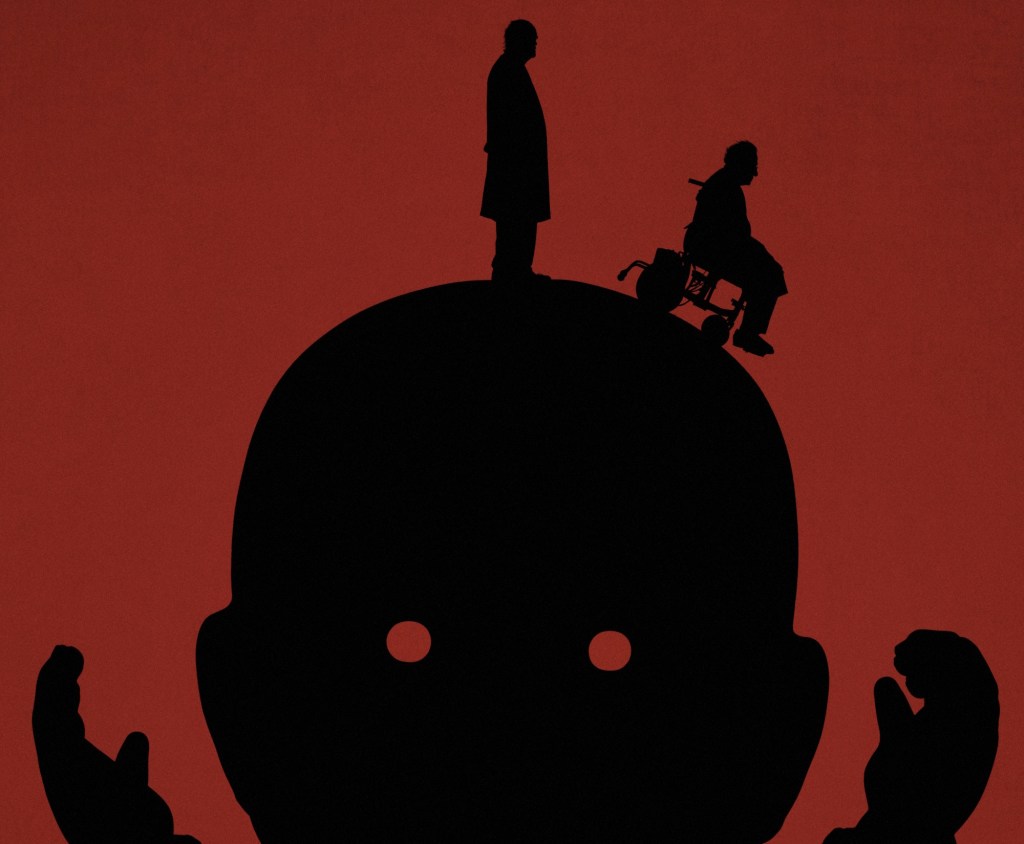
It’s not long before Dave targets the cantankerous judge as he’s the only one of the residents whose will hasn’t been broken. Dave enjoys free range of the coop as no one else will corroborate the judge’s stories in fear of what Jenny Pen will do in retaliation. Worse, the staff believe the judge is suffering from night terrors and possible dementia as his condition worsens; whereas lesser horror movies often go for the “no one believes the main character” angle in the face of logic, this movie goes to lengths to prove Dave is cunning enough to get away with his antics. What unravels is a cat-and-mouse game in which the mouse is confined to a wheelchair.

It’s rare to have performers as great as Rush and Lithgow slumming it up in a genre movie. This isn’t elevated horror and it doesn’t have anything Important to say… in other words, its greatest strength is pure storytelling (which in my opinion is how you make a movie on hard mode). Years ago, I wrote that the reason Child’s Play is such an effective film is because there are few scenarios as unsettling as a mother unknowingly tucking her child in with a serial killer every night. That’s exactly the kind of diabolical writing on display in The Rule of Jenny Pen.

Dead Space (1991) | 31 Days of Gore

Dead Space (no relation to the awesome video game of the same name) is a movie for those of you who thought Forbidden World was too exciting. It’s a routine Alien knock-off that at times aspires to be The Thing, but in the words of Butt-Head, “These effects aren’t very special, huh-huh.” There are numerous reaction shots of the actors watching the monster scurry across the room, but it feels like the second unit forgot to shoot all the pickup-shots of the monster itself. The monster constantly evolves throughout the mercifully short runtime, but the metamorphoses typically take place off camera.

The film opens as Commander Krieger and his robot sidekick pal around the galaxy, battling space pirates. The exterior shots of the opening battle are lifted directly from Roger Corman’s Battle Beyond the Stars, so incompetently edited that I initially thought the hero’s ship exploded at one point. Badly needing repairs, Krieger and his robot buddy head to the nearest planet. Thus ends the most exciting scene of the movie.

The scientists who reside on the planet are led by a thirty-five year old Bryan Cranston, who refuses to pull the plug on the dangerous lifeform they’ve created. Mere seconds after showing the pint-sized creature to Krieger, the creature escapes and kills one of the scientists. Wisely, the scientists band together until it’s time to split into pairs for casual sex. The monster attacks again and we’re treated to plodding shots of the heroes looking for the monster and fleeting shots of the monster itself.

Briefly, the monster breaks free from the confines of the cheap set. Krieger and his faithful robot companion hunt it across the alien landscape, which looks suspiciously like Vasquez Rocks disguised with a blue filter and fog machines. At one point, Krieger falls forty feet from a cliffside and lands on the rocks below. Regardless, he’s up and attem after a minute of masculine grunting.

The film’s most grating habit is the half-baked technobabble. The screenwriter clearly has little knowledge of infectious diseases, but insists on having the scientists talk about virology at length. They call the creature itself a virus, long after it has evolved past the point of requiring a microscope to be seen. And if you’re wondering what the scientists were up to in the first place, their plan was to create a virus to counter another virus ravaging the galaxy, which is clearly supposed to be Space AIDS. I’m not sure their science checks out.

If, like me, you thought the novelty of seeing a young Bryan Cranston in a cheesy B-movie sounds fun, you’ll be massively disappointed. Dead Space is far too bland to be “so bad it’s good.” It’s dull and run-of-the-mill in every way. I’ve had paper cuts more enjoyable than this movie.

Dolls (1987) | 31 Days of Gore

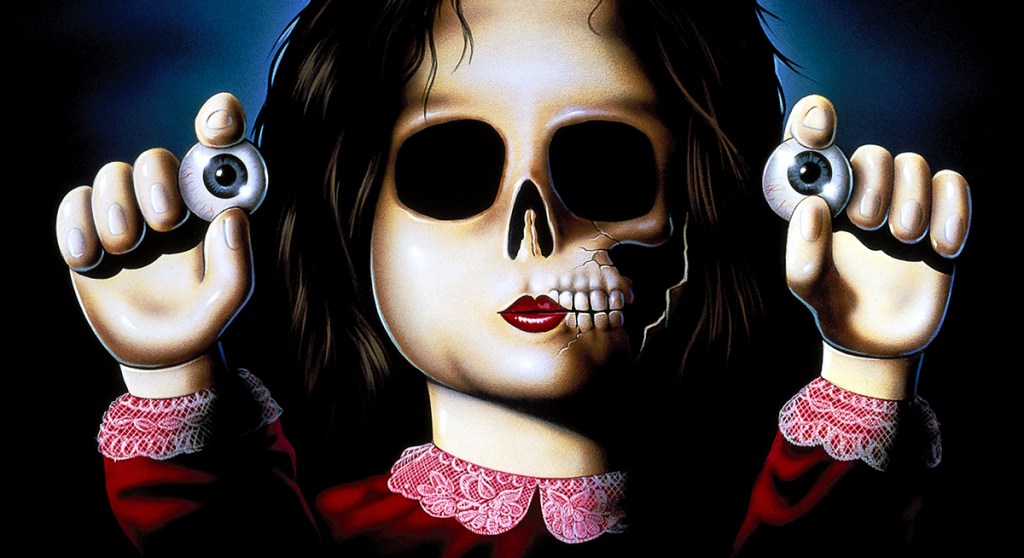
My favorite thing about killer dolls is the amount of effort they have to put into killing you, what with their tiny weapons and all. The mental image conjured by Richard Matheson’s 1969 short story Prey, in which a relentless doll tries to stab the heroine’s feet through the crack beneath her bathroom door, has stuck with me for life. You will find no shortage of forum posts proclaiming that “the scariest doll of all time” as it was later adapted in one-third of the Karen Black anthology film, Trilogy of Terror.

Look, toys that kill are irresistible. I don’t think there’s a kid in the world who didn’t wonder if the silhouettes of their toys were watching them after bedtime. The only thing that unnerved me more was spending the night at a friend’s house who had that Bo Jackson poster, the eyes of which seemed to be looking at you no matter where you were in the room.

In Stuart Gordon’s Dolls, a family of three end up stranded by a thunderstorm that leaves their car stuck in mud. The little girl’s name is Judy and she’ll be our main character. Her father’s a mentally abusive alcoholic and her step-mother (played by Gordon’s wife, Carolyn Purdy-Gordon) is a cartoonishly evil bitch. When they finally decide to abandon the car, the step-mother takes Judy’s teddy bear and flings it into the shadows of the woods, just to see the girl’s distraught expression.

The family then seeks cover at a nearby mansion, which resembles a spooky castle. The elderly owners (Guy Rolfe, of Puppet Master fame, and Don’t Look Now’s Hilary Mason) are hospitable to the unwitting guests who—surprise-surprise—were expected all along. Three more hapless visitors wander into the house that night: a couple of punk rock chicks and Ralph, the naive schlub who was dumb enough to pick them up on the side of the road. The homeowners invite all six of the visitors to stay the night while they weather the storm.

As the punks scheme to rip off the old couple’s valuables, the estate’s patriarch takes a liking to Judy and the childlike Ralph as they’re the only ones who don’t roll their eyes at his love for toys. See, Guy Rolfe’s character is a doll maker and, although it isn’t officially revealed until the end, it’s not really a spoiler to reveal his wife is a witch. Together, the two of them craft animated dolls that defend their home from the ne’er-do-wells who (for reasons unexplained) are attracted to it like magnets.

Par for the course, the killer dolls mostly operate in the shadows until the second half of the film, at which point dozens of the suckers will come to life through David Allen’s smooth stop-motion effects, reminiscent of those on display in Gordon’s Robot Jox and the early Puppet Master films. I’m not sure what proprietary magic Allen employs in his animations, but I suspect there are dissolve cuts between frames like an early implementation of interpolation… or something? Beats me, but it’s pretty distinctive.

Dolls is a pleasantly paced horror movie along the lines of Tourist Trap and Motel Hell. There’s a gentle upward curve to the awesomeness at the end and there are plenty of characters you can’t wait to see die along the way. While it’s not quite as enjoyable as Stuart Gordon’s Re-Animator or From Beyond, I don’t think you have to be a competitionist to find joy in this flick.

The Howling (1981) | 31 Days of Gore

It’s the tenth anniversary of 31 Days of Gore, in which I feature one horror movie each day for the month of Halloween.

I’m in love with the way director Joe Dante opens The Howling: in the fast paced world of a television news station. Behind-the-scenes personnel are rushing around as the on-air talent get into makeup. Meanwhile, Karen White (Dee Wallace) is nervously walking down the scuzzy, neon-lit streets of Los Angeles’s grindhouse district, wired with a radio that’s transmitting her voice to the police. We have no idea what’s going on at first, but it’s instantly engaging as Dante drip-feeds the information to the audience.

We eventually learn that Karen has agreed to take part in a sting operation to catch a serial killer (an exceptionally effective Richard Picardo) who has become infatuated with her. The killer instructs her to meet him in the back of an adult video store containing a private movie booth. Once there, the killer forces her to watch a snuff film of his own making before the cops manage to shoot him dead. Karen is so traumatized by the event, her therapist suggests she should vacation at the countryside resort where he treats patients in a group setting.

While Karen finds trouble connecting with her husband intimately (whenever he tries to kiss her, she flashbacks to a close-up of the killer’s flickering tongue), her newsroom buddies discover the killer’s body has gone missing from the morgue. Their investigation leads the reporters to an occult bookstore run by Dick Miller who, as far as I’m aware, has never not appeared in a Joe Dante film. Miller tells the reporters they may be dealing with a werewolf and suggests they buy a box of silver bullets. When they ask him if he really believes in that kind of stuff, he replies, “What am I, an idiot? I’m makin’ a buck here!”

I don’t want to spoil who’s a werewolf and who’s not, but I will say the reveal is amusingly macabre. There’s a huge cast of character actors including Christopher Stone (who Dee Wallace married in real life), Kevin McCarthy, John Carradine, and Slim Pickens. Dante also packs the film with uncredited cameos by his buddies: Roger Corman, Forrest J. Ackerman, John Sayles (this film’s writer), and Mick Garris were the ones I recognized. I’m sure I missed others.

While I think the showdown between Karen and the killer should have been a bigger deal (and a little less routine), the finale does not disappoint. We also see what has to be the longest werewolf transformation ever captured on film, the effects of which are provided by Rob Bottin, who would later go on to work on The Thing. Rick Baker is also credited for the effects, though he jumped ship (with Dante’s blessing) to work on John Landis’s An American Werewolf in London, which is overall the inferior werewolf film in my book.

By my count, there are two similarities between this picture and Romero’s Dawn of the Dead: both films open in a news station and both films feature unusually strong character work in their middle sections. In this film, John Carradine’s character watches two young lovers on the beach with a sense of longing and regret that’s expressed entirely without words. It’s a moment that’s extremely rare in these types of movies, elevating it to one of my favorites.

The Toxic Avenger (2025)

Winston Gooze (Peter Dinklage), the janitor at a corrupt drug manufacturer, has just been given six months to live. That night, the single parent gets drunk and roams the streets as he wrestles with the fear of leaving his stepson (Jacob Tremblay) alone. How he ends up in a tutu is less believable than how his counterpart, Melvin Junko, ended up in a tutu in Lloyd Kaufman’s original film of the same name. (This time around, the Toxic Avenger’s origin story isn’t part of a cruel prank, so one wonders: Why didn’t he just take the tutu off before leaving the house?) Ultimately, Winston decides to rob his employers and finds himself in the factory’s toxic runoff, which hideously deforms him, but gives him superhuman strength.

The large cast of villains (I especially like the henchman who never misses an opportunity to do a flip) are led by the corporation’s evil CEO, played by Kevin Bacon, who surprisingly understands the kind of movie he’s making, but at no point tries to hams it up as Hollywood actors tend to do in these kind of films. His runt of a little brother is played by Elijah Wood, who seems to genuinely enjoy appearing in oddball genre affairs ever since securing his massive fortune in The Lord of the Rings trilogy. Meanwhile Peter Dinklage perfects the right amount of grounded acting and comedic timing.

As a lifelong fan of the original, I went into The Toxic Avenger fully expecting it to suck as reboots of cult classics almost always do. I was surprised to find the most competently paced of the five films and, overall, I’d place it second only to the 1984 original… and if you were to rate it higher, I wouldn’t feel the need to fight you. Recently, there’s been much hullabaloo about The Naked Gun reboot potentially resurrecting the spoof film. Here’s literally the same type of cathartic laughter.

The trailers don’t convey how solid the movie is; Lloyd Kaufman’s films flew in the face of Hollywood conventions while the reboot prefers to satirize and indulge in them equally. In some ways it feels like a throwback to the superhero film of the 90s, before they became monotonously noisy and bloated with clap-bait for nerds. I know the competition is extremely incompetent, but director Macon Blair has crafted one of the least insulting reboots I’ve ever seen. This is as good as a mainstream Troma movie can possibly be.

My only complaint is they didn’t kill the cat. What’s a Troma movie without a handful of “that’s so wrong” deaths played for shameless entertainment? In the original you had old ladies beaten to death and children’s skulls crushed by moving cars. You could say this one pulls its punches in that respect, but that doesn’t feel like its intention. It’s just doing its own thing, in its own way, and it does it especially well.

31 Days of Gore: The Unnecessary Reboot! (10th Anniversary)

I haven’t done 31 Days of Gore in years, but I’d be remiss if I didn’t do it again for the 10th anniversary. In search of the best gore flicks, I’ll feature one horror movie a day, every day, from October 1st to Halloween. In order to recapture the thrill of being a pre-internet kid with an unrestricted membership to a mom & pop video store, I’ll be choosing movies based solely on their covers. I have no clue which movies I’ll feature yet, but there are a few traditions during this pointless exercise in endurance:

  1. A shot-on-VHS flick
  2. A melt movie
  3. An anthology film (usually several).
  4. Italo-horror (my favorite).
  5. Slasher films (often combined with Italo-horror).
  6. Empire/Full Moon movies

Returning this year is The Gore Meter, which assigns each movie a rating between 1 and 4 based on the satisfaction level of the gore effects, as determined by yours truly. The ratings are rarely indicative of the movie’s overall quality as there have been plenty of movies I loved that ranked low on the meter. I know, it’s a strange (stupid) rating system, but the gore angle was the only thing that made this feature feel worthwhile as there are already several content creators doing 31-day movie challenges for the month of October (I imagine more than ever now).

In other news, I finally got a stupid Letterboxd. The reason I’ve avoided that site for so long is because Goodreads was like crack to me until I finally kicked the habit and deleted it (and promptly started a new account before deleting that one, too). At any rate, follow me on Letterboxd and I’ll follow your dorky ass back.

So mark your colanders, spaghetti-heads. 31 Days of Gore returns in thirty-one days and I already regret committing to this!

1759323600

  days

  hours  minutes  seconds

until

31 Days of Gore

Frankie Freako (2024)

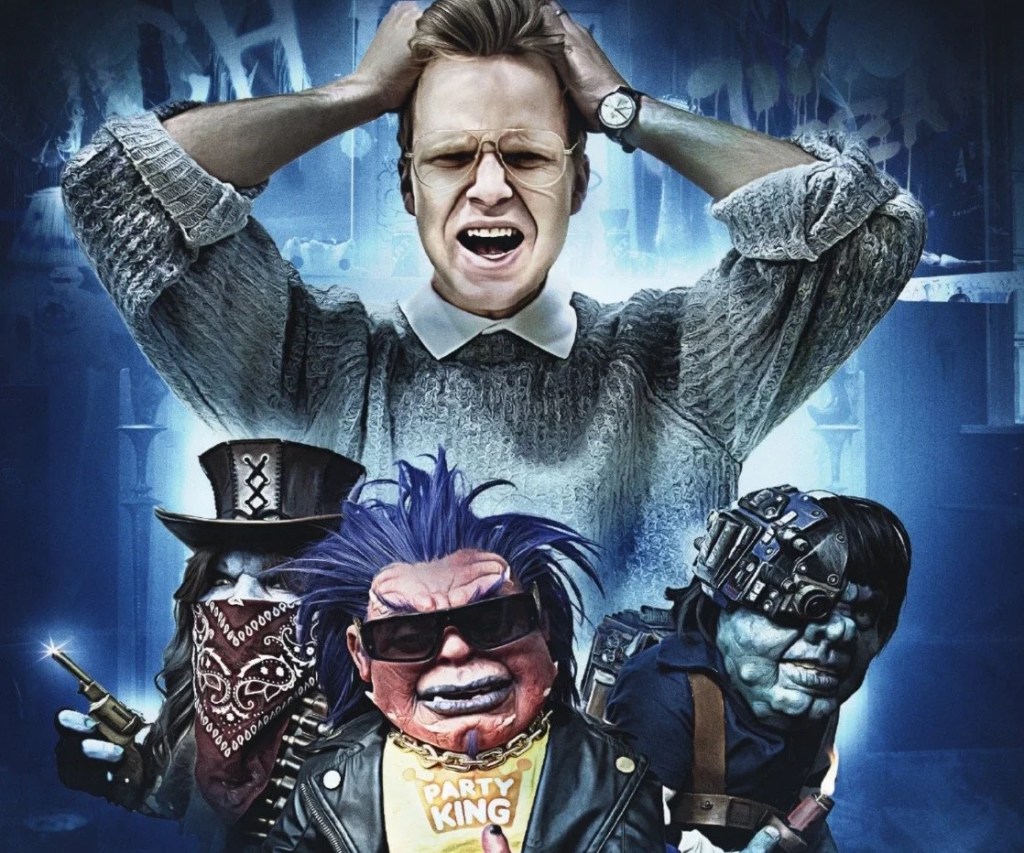
When Conor’s wife gets dolled up in lingerie for date night, she tells him she was thinking that maybe they could do a little more than hold hands for a change. “What more is there?” Conor asks incredulously. There are many movies (most of them) in which I simply wouldn’t accept a joke as lame as that, but it’s less about the joke and more about the way it’s told. In his previous film, Psycho Goreman, director Steven Kostanski included a scene that had me laugh uncontrollably for several minutes straight; it involved a telepathic connection taking place, without warning, in a bathroom.

In an even earlier picture of his, Manborg, Kostanski crafted an entire feature held together by a few hundred bucks, duct tape, and a load of guerrilla creativity. That movie relied heavily (and charmingly) on the kind of CGI that wouldn’t convince a toddler, but boy was it fun. The bigger his budgets get, the less he relies on CGI and the more he employs the kind of practical effects that tickle me to pieces. In Frankie Freako, I’m thrilled to report the creature effects are obvious puppets.

Conor, frustrated by the fact that even his boss thinks he’s a hopeless square, decides to call a party hotline as advertised on TV. Perhaps it’s more of a Canadian thing, but I ate, slept, and breathed late night television in the states and I absolutely do not remember any such advertisements for party lines that didn’t promise scantily clad women would call you, but I digress. Upon waking up the following morning, Conor discovers he blacked out while partying hard the night before. His trashed home is now inhabited by three prankster creatures of the Ghoulies variety who refuse to leave until Conor learns to lighten up permanently.

It’s not long before the evil corporation that subjugated Frankie Freako’s entire planet catches wind of the creatures’ whereabouts and kidnaps them along with Conor. The bad guys are voiced by the Red Letter Media regulars, which was particularly surprising as I clocked Rich Evans’ voice in Psycho Goreman immediately, but in this one, I had no idea he had such a large role (the main villain, in fact) until the credits rolled. At any rate, Conor must let his freak(o) flag fly in order to get back to earth and rekindle his relationship with his wife. All the while, Kostanski has fun with the kind of absurd plot conventions that were only routine in the coked-up 80s.

As of this writing, the movie is available on Shudder.