Evil Dead 2013: Dead by Yawn

“It’s a few hours until dawn.”

“We’re not going to be alive to see it.”

When the credits rolled, many applauded. Teenagers were so engaged, I didn’t see a single phone screen light up. As I made my way out the doors, I overheard a much older woman tell a friend, “I didn’t care much for the gore, but I just loved the supernatural elements.” I don’t know if that says more about the movie or the changing times, but we’ve come a long ways since the original Evil Dead ended up on the infamous Video Nasties list. I felt somewhat baffled as I made my way out to the car. One thing kept repeating in my head: That’s it?

Look, I’m probably in the wrong here as this movie is doing gangbusters. Intellectually, I know Evil Dead 2013 isn’t a bad movie. It may be exemplary for the kind of horror we’ve been getting lately. The trailers played before the film can attest to the fact: Hollywood horror is in a dull, joyless rut at the moment. I always loved Evil Dead films (when I was a kid I went as Ash for Halloween two years in a row) so it’s disappointing to report I never felt moved—even as everyone around me reacted to the jump-scares. I think I would have enjoyed it much more if it weren’t an Evil Dead movie.

This time, most of the five characters who end up at the infamous cabin in the woods are cardboard cutouts. The main character, Mia (Jane Levy), is a heroin addict who’s trying to kick the habit through seclusion. As expected, an ancient tome is found, incantations are spoken, and an evil is unleashed via flying photography. Despite the great special effects (they promised no CGI, but I feel that’s not entirely true) I just don’t care when a character cuts her tongue in two or when someone dismembers a friend.

Chekhov’s Gun states: If a gun is shown in the first act, it must be fired by the end of the third. Here it’s a nailgun, an electric carving knife, and a cellar step that’s going to break exactly when we expect it to. I’m not giving anything away. You’ll see it coming from a mile away, too.

I feel like I just left a funeral. Bruce Campbell recently announced they’re making Army of Darkness 2, but I’ve heard that one so many times I won’t hold my breath. Their tentative plans to make an Evil Dead 2 in this universe and combine the subsequent sequel with Army of Darkness 3 (yes, part 3) isn’t clever, it’s confusing. And let’s face it: it’s not gonna happen, either.

I gotta admit, though: Mia picked a hell of a day to quit heroin.
The Frighteners is a mildly likable mess

I like rules in science fiction. Any kid knows Dracula shouldn’t walk around in the daytime without slathering on a gallon of SPF 100. When Isaac Asimov invented The Three Laws of Robotics, it didn’t restrict his work, but created a rich and believable universe for his stories. You don’t feed a mogwai after midnight, you never cross the streams, and you should always be careful what you wish for.

The problem with ghosts is they have no rules. Silver bullets don’t work. You can’t hammer a stake into their hearts. They don’t have a brain to destroy. In the 1999 remake of The Haunting, ghosts could do anything or nothing at all, depending on what was convenient to the plot. Some of the same problems are present in The Frighteners, in which ghosts fall through walls when they try to lean on them, but they can walk around on floors and ride in cars.

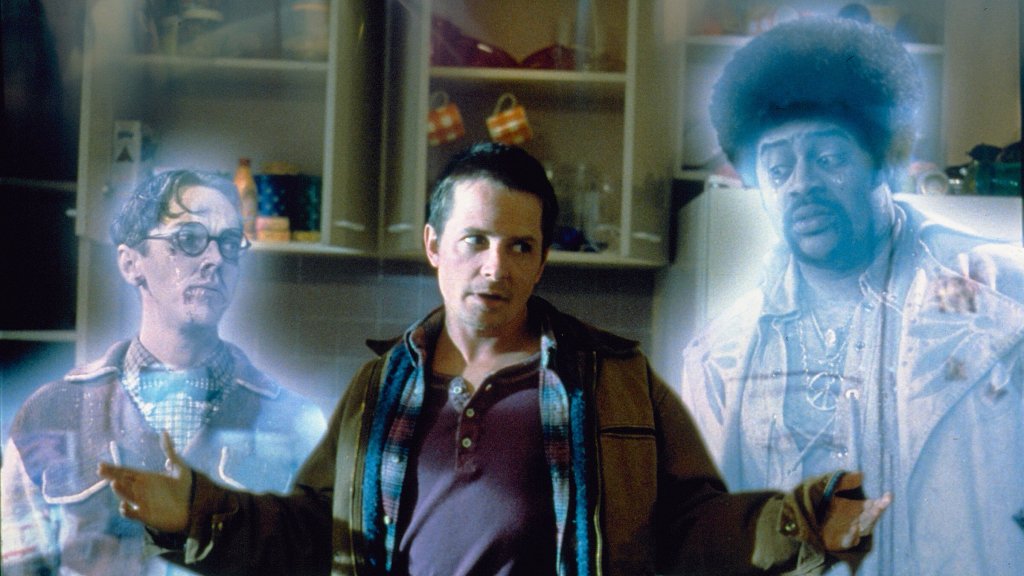
Michael J. Fox plays Frank, a former architect who got into a car crash which killed his wife. Somehow the near death experience gave him the ability to see ghosts. Now considered a crackpot in his community, his only friends are ghosts who haunt houses so that Frank can make a buck as a conman exorcist. One day Frank notices a spectral “37” written on the forehead of a man who later turns up dead; it turns out something otherworldly is killing people and only Frank can see who’s next.

I disliked The Frighteners when I originally saw it, probably because I was an edgy teenager who cherished director Peter Jackson’s ultra-gory Bad Taste and Dead-Alive. I decided to give it a second chance today. Though my opinion has definitely softened, it still doesn’t hold a candle to those aforementioned films. During my most recent viewing, I was even invested until the tiresome climax, which seems to drag on for far too long.

Touted as a horror-comedy, the humor feels like an afterthought. Someone with money on the line probably thought it was too dark and hired a script doctor to “make it funnier.” As a comedy it doesn’t work for me. Having an elderly ghost screw a mummy is a dumb joke, far beneath the talent who made Heavenly Creatures. It’s especially confusing that Frank’s maniacal driving is a running gag, when his driving his what killed his wife in the first place.

I’m a big fan of Jeffery Combs, but here he channels Jim Carrey just a little too much as he rips off Major Toht from Raiders of the Lost Ark. In that movie, there’s a wonderful gag in which you think Toht’s about to torture Marion with a mysterious device that turns out to be nothing more than a collapsible coat hanger. In this movie, Combs reaches into his jacket and, instead of the expected gun, he draws an inflatable donut. Hilarious.

So no, The Frighteners doesn’t work as a comedy. It barely works as a horror film, but it looks amazing. If you’re not watching it on a modern display, you’re missing out. The best shots are contained in the opening reel, but there are breathtaking views peppered throughout. Then there are the special effects, which must have been a logistical nightmare for the filmmakers, but they pay off in a big way. Wikipedia says:

The visual effects were created by Jackson’s Weta Digital, which had only been in existence for three years. This, plus the fact that The Frighteners required more digital effects shots than almost any movie made up until that time, resulted in the eighteen-month period for effects work by Weta Digital being largely stressed.

Also worth noting is Trini Alvarado, who doesn’t have a whole lot to do as the leading lady, but she does it exceptionally well. She’s simply one of those people you like to watch. And Michaeal J. Fox has always been underrated for the subtle physicality he brings to any role; that this is his last major performance elevates the picture to “must-see” status. As for Jake Busey… well, what the hell can one say about Jake Busey? He’s another one of those actors who command attention. While I didn’t buy his character in the slightest, it was interesting to see him paired with a brunette Dee Wallace.

The sum is much greater than its parts and it really is worth a watch despite my numerous issues with it. Pay attention to the opening shot, which floats through a window in a very familiar manner. What does that shot remind you of? If you had HBO in the nineties, you’ll probably place it in an instant. I’m guessing it’s no mistake the first credit is Robert Zemeckis Presents.

Dreamcatcher: The Cleopatra of horror movies

Dreamcatcher is fascinating—I’ll give it that. It deserves some sort of praise, considering how uniquely awful it is. It’s clearly a passion project. No one phones it in and no expense is spared (the movie cost $68 million). When you take the director of The Big Chill, the writer of Butch Cassidy and the Sundance Kid, and adapt the most popular novelist of the twentieth century, you don’t expect a spectacular failure, but here we are.

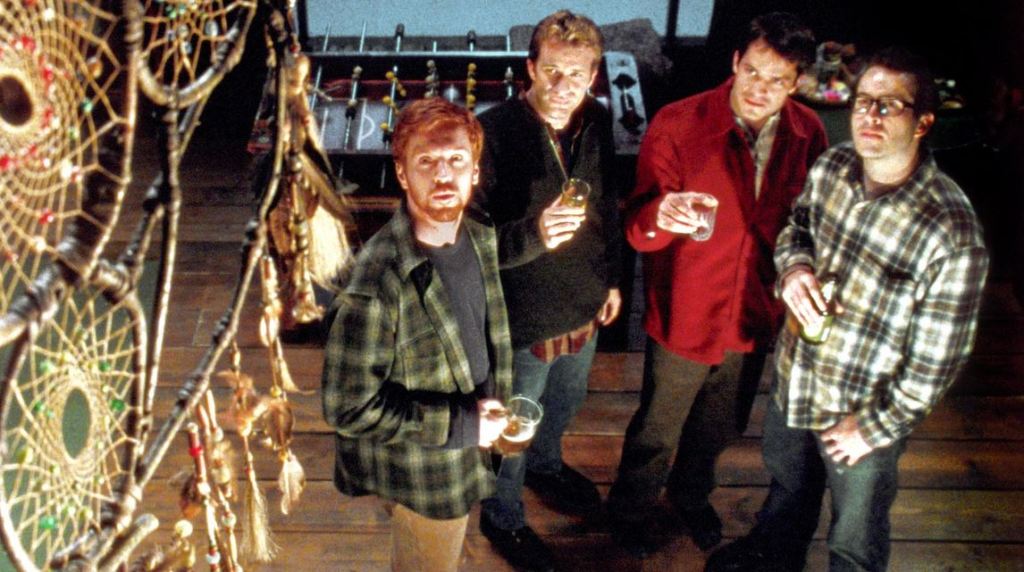
Four friends with psychic abilities have gathered for their annual vacation in a secluded cabin. What they don’t know is an alien spacecraft has crash landed nearby. When they come to the aid of a seriously ill man who they find wandering the woods, it’s revealed he’s the host of an alien parasite. Remember the chestburster from Alien? It’s like that, only this one is a, um… assburster. Meanwhile, a secret branch of the military, which apparently deal with these crash landings all the time, are willing to massacre civilians to keep the aliens contained. And if this all sounds a little scatterbrained, let me assure you that it is very scatterbrained.

I finished reading Stephen King’s source material the same day I re-watched the movie. While book fans usually complain about the stuff an adaptation left out, I’m boggled by what they left in. Consider the fact the novel takes around 20 hours to read. A screenwriter should think carefully about how to adapt such a thing to a two-hour format, but William Goldman’s solution involves reducing entire chapters to very brief scenes as if he’d rather water the novel down than alter it.

Director Lawrence Kasdan has admitted the film damaged his career. Directing must be a pretty stressful job as it only takes a single hiccup to jeopardize your future in the business. On top of that, you have to deal with the lame bloggers who rip your hard work apart (ahem). But these things need to be discussed—that’s just integral to the creative arts: the risk of negative criticism. People can’t truly appreciate the high wire act unless there’s a risk of the performer falling.

I’m glad they made Dreamcatcher. I don’t hate it and I’ll probably watch it again someday. It’s actually very entertaining, often for the wrong reasons, and I’ll be the first to admit there’s magic to be found, sprinkled throughout (as with big dumb disaster movies, the early scenes in which the characters have no clue what’s going on are the most compelling). Where else can you see what is essentially a big budget splatter film with aliens and body horror and shades of Stand By Me? I have nothing but praise for the crazy sons of bitches who made it.

One scene that sums up how stupid the movie is takes place in a bathroom. I don’t care how much you set it up—and the movie certainly tries—I will never believe (much less like) a character who gets himself killed so that he can pick up a toothpick from the bathroom floor and stick it in his mouth. Or how ’bout the part when a character is skiing very slowly and falls for no apparent reason? Or when Morgan Freeman’s character, Colonel Curtis, sincerely tells Tom Sizemore, “Okay, you just drove over the Curtis line!” My favorite moment is when one character telepathically answers a pistol like a phone.

A Good Day To Die Hard is a great day to walk out of the theater

How can the same shit happen to the same guy five times?

When I saw Live Free or Die Hard (that’s part four for those of you keeping track at home), I had little hope for it. By the time the first action sequence rolled around, I perked up. It actually felt like a Die Hard movie despite the PG-13 rating and downgraded sidekick. Overall, I managed to enjoy it more than part two, which was always my least favorite of the series… until now.

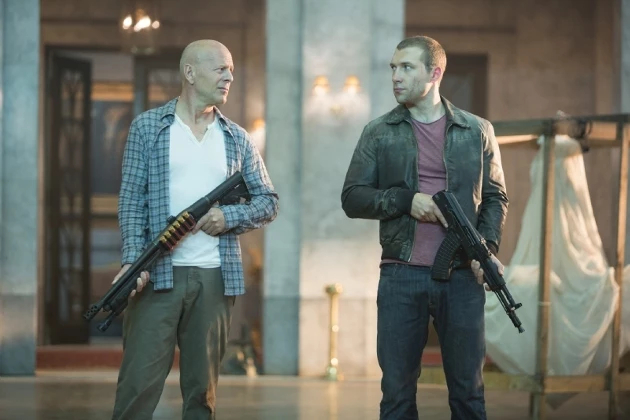
John McClane finds out his estranged son Jack has been arrested in Russia. So, on a New York cop’s salary, he books the first plane to Moscow and takes a couple weeks off work (maybe he smuggled some of that gold from Die Hard with a Vengeance after all?). His daughter (Mary Elizabeth Winstead) drives him to the airport and asks him not to blow anything up while he’s away. McClane does his squint-eyed thing, flies to Russia, and meets a cab driver who would have made a better sidekick than Jack.

McClane is in Russia for five minutes before things explode and a car chase ensues. The car chase is the best action sequence you’re gonna get from this installment. Cars flip and bounce around like Hot Wheels. An armored truck defies the laws of gravity. McClane manages to total two vehicles he’s in and walks away after grunting a bit. I confess I felt a glimmer of hope, but that hope was short lived.

The rest of the action sequences are routine shootouts. McClane and his son Jack do an awful lot of shooting while standing completely still. The bad guys are such bad shots, I was reminded of the Rambo parodies in UHF and Hot Shots Part Deux. I’d like to know why helicopters only fire through windows. The bullets are the size of human fists—do the pilots really think a wall is going to stop them? “Get down!” doesn’t apply when dealing with 40mm cannons.

The biggest problem is Bruce Willis seems to have forgotten we don’t watch Die Hard movies to see Bruce Willis. The main draw of a Die Hard picture is seeing John everyman McClane, the charm of which was forever lost the moment he got into a fist fight with a military jet at the end of the previous film. This just isn’t the same guy who snuck around in ventilation ducts and wrote “Now I have a machine gun HO HO HO” on a dead terrorist’s sweater.

There’s an excruciating yet obligatory subplot in which John and Jack attempt to reconnect despite being the same person. My vocabulary’s usually larger than this, but this is just bad. Whereas the other films were engaging between action sequences, this one stops dead. As for the actor portraying Jack: if they think they can reboot the series with this guy, they’re crazy. This isn’t a Die Hard movie. It’s a generic Bruce Willis action vehicle.

Russia’s meteor event reminded me to finish Deep Impact

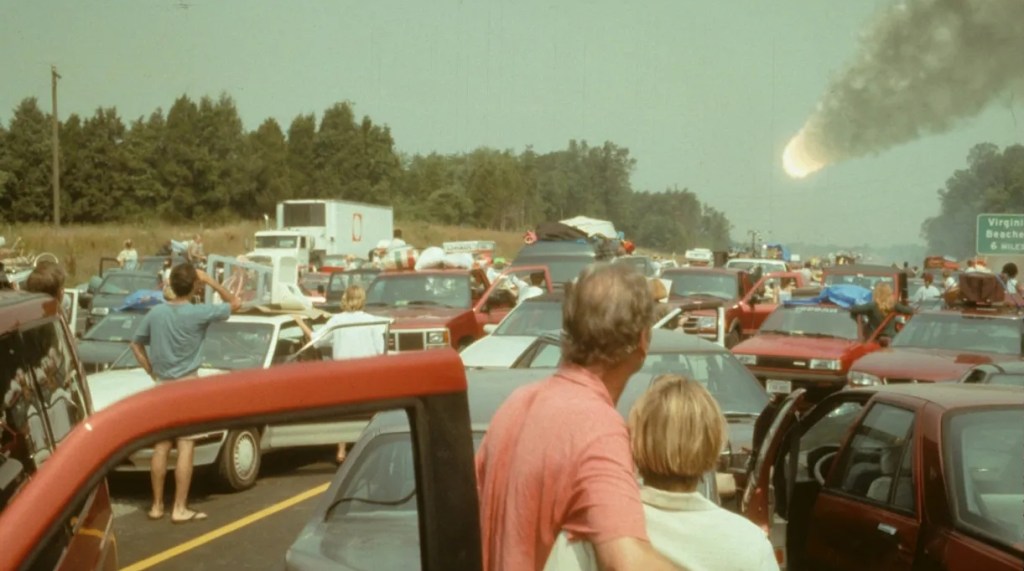
The Chelyabinsk meteor tickled me to pieces. Whereas the news had been mirroring dystopic fiction all too often lately, it was a relief to see it mirror doomsday fiction for a change. The event reminded me I had somehow never finished Deep Impact, which I had only seen portions of whenever I was channel surfing. Frankly, the film appeared to be a bore, but where else am I going to find sweet space rock action?

In the interest of transparency: I generally dislike Hollywood disaster movies. The Towering Inferno, Armageddon, The Day After Tomorrow, Earthquake, Twister, The Core, Volcano, Dante’s Peak—all of these productions feel as disastrous as the literal disasters they depict. All you need to make a disaster movie is a weak understanding of natural occurrences, a bunch of technobabble, a handful of crumbling landmarks, and gooey melodrama liberally garnished with hundreds of extras racing down city streets. Other than the visual effects, the genre has not improved at all in nearly fifty years.

In the beginning of Deep Impact, a young boy (Elijah Wood) spots a new object in the sky with a store-bought telescope. Even though the scene reeks of dishonesty, it’s kinda accurate in the sense amateur astronomers still make important contributions to this day. His astronomy club submits the finding to a full-fledged observatory where a stereotypical movie scientist keys the coordinates into his computer and realizes the object is barreling towards our planet. That alone would be exciting, but somehow it leads to a cliff-side car wreck that has the scientist’s vehicle exploding in a Hollywood fireball—in midair no less.

A year later, an investigative reporter played by Téa Leoni thinks she’s gotten the scoop on the Secretary of the Treasury’s mistress, a woman she says is named Ellie. She soon finds out that she misheard “E.L.E.,” which stands for “extinction level event.” Yes, I know the government can be pretty incompetent at times, but that’s like using the code name “U.F.O.” to cover up flying saucers. The President (Morgan Freeman) personally asks the reporter to sit on the scoop until he can announce the news himself. In typical Leoni fashion, she merely shrugs and says, “Okay.”

Two days later, The President reveals to the world that a comet is on a collision course with Earth. He freezes national wages and product prices to prevent profiteering and panic. Then he reveals the plan: scientists are already working on a manned mission that will attempt to destroy the comet with nuclear weaponry. The senior astronaut on the mission, played by Robert Duvall, was the last person to step foot on the moon. The younger astronauts resent him, which is the dumbest thing in the entire movie. I’ll give you a shiny nickel if you can name one person who had the wherewithal to complete astronaut training who doesn’t idolize any of the dozen men who walked on the moon; in Deep Impact, astronauts have the emotional intelligence of high school jocks.

As the ship makes its way to rendezvous with the comet, Leoni’s unbelievable reporter is promoted to an even more unbelievable news anchor. I know some news personalities are known for being a little stiff, but Leoni’s performance could make robots wince. It’s a shame the Earth drama is so hackneyed because the space stuff is excellent. Yes, there’s sound where there should be none and much of the suspense was ruined by the marketing, which clearly spoiled that the mission fails and the comet indeed strikes the planet, but if the space bits had been the entire movie, it could have been a great one.

Predictability aside, the second half is much better than the first. Lesser films show civilization devolving into mass hysteria when faced with possible extinction. Though it’s refreshing that Deep Impact bucks the trend, its characters can still hail a cab within seconds of raising a hand. I’d say maybe society is doing a little too well, all things considered.

Later on, the reporter’s mother says she feels relieved she won’t survive the impact. She even quit smoking and donated some of her more valuable belongings to the government’s effort to preserve antiquities. This was the sole scene which unexpectedly moved me. A lot of armchair philosophers love to talk about how shitty humanity is, but if we were all that bad, we never would have civilized in the first place. This is exactly the stuff I wish more disaster movies had.

Deep Impact is a bit like a newborn calf. There’s a lot of wobbling in the beginning, but eventually it learns to walk… sort of. It’s one of the better disaster movies, but that’s not saying much. If, like me, you found a strong interest in what happened in Russia recently, you should give it a shot.

Old Man’s War is the new man’s military SF

I did two things on my seventy-fifth birthday. I visited my wife’s grave. Then I joined the army.

John Perry is an old man from future Ohio who joins the army for a second shot at life. In Old Man’s War, which seems to be equal parts fan fiction and satire of Robert A. Heinlein’s military fiction, members of the armed forces receive benefits unavailable to everyday citizens. If you join the army on your seventy-fifth birthday, you receive the luxury of a new body. Then you’re shuffled off to boot camp on a remote planet where you’re about to discover that the disgusting, evil-looking aliens are actually your allies. (It’s the peaceful looking deer aliens who you’ve gotta watch out for.)

Remember Kick the Can? It was the episode of The Twilight Zone (remade by Steven Spielberg as a segment of the movie version) in which a group of elderly people learn how to be young again. That’s what Old Man’s War reminds me of. It’s as if a large group of seventy-five year olds relive their first day of school on an intergalactic scale. For a long, opening section of the book, it’s whimsical fantasy. In the second section it turns dark, but manages to retain a lot of its charm.

It’s worth noting that Scalzi originally self-published Old Man’s War on his blog, where it became so popular that Tor picked it up. In only a few years, Scalzi went from being a self-published author to the head of the Science Fiction & Fantasy Writers of America. Oh, and Paramount optioned Old Man’s War into a movie. Sure, options are a dime a dozen, but I imagine this movie will actually get made if Ender’s Game performs well.

Our Hausu, in the middle of our street

Yesterday I was asked, “What’s the most absurd horror movie you’ve ever seen?” I was surprised how quickly the answer came to me. It was obviously Hausu.

Sure, there’s bound to be more absurd movies that I’ve either forgotten or haven’t seen. But when someone asks questions like that, the person isn’t asking for shitty recommendations. Hausu is as close as you can get to full blown insanity without sacrificing a cohesive and enjoyable experience. It’s fast, it’s funny, and it’s ridiculously out of its mind.

Hausu is among the best times I’ve ever had watching a movie. To this day, I still don’t know exactly what it’s about. To avoid confusing this masterpiece with the numerous other movies called House, I will refer to it as Hausu. Yes, I just called Hausu a masterpiece. It should appeal to anyone with a pulse.

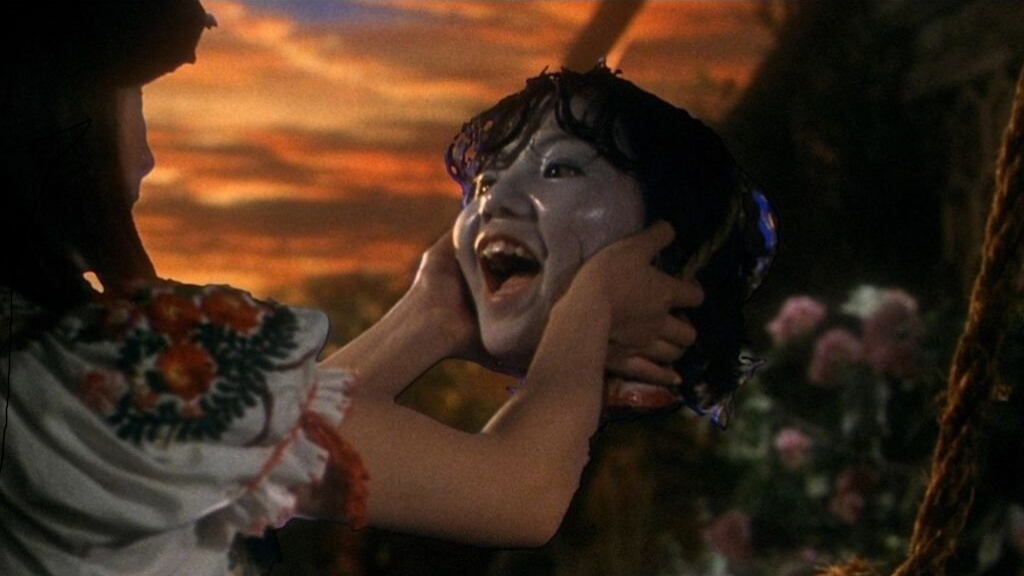
I’d typically mention something about the plot by now. What’s the point? There’s a house. It’s haunted. There’s a cat. It’s crazy. Heads will fly. Literally.

‘Nuff said.

Nightbreed: The Cabal Cut

I haven’t seen Nightbreed in at least a decade, but I saw it a lot and I remember that sometimes I liked it, sometimes I didn’t. If there’s anything my multiple viewings had in common, it was this: the movie is confusing. Said one of my friends, “I love that movie, but it really doesn’t make any sense!”

There’s a reason the theatrical cut doesn’t make a lick of sense: the studio panicked when the film performed poorly for test audiences. The execs ordered several weeks of re-shoots and attempted to turn a monster movie into a slasher film (slashers were more commercial at the time) and predictably failed. Instead of releasing the film around Halloween of ’89, the studio moved it to February of the next year because nothing says “Valentine’s Day” like monster/slasher mayhem. Needless to say, the movie bombed.

I remember hearing rumors about missing footage some time ago. I didn’t think much of it—these things usually just get your hopes up. According to an excellent article in the latest issue of Rue Morgue, however, the footage hasn’t just been found, there’s a new cut of the film. That’s the good news… the bad news is this long lost footage was found on VHS dubs of the master. The current state of The Cabal Cut (Cabal being the name of Barker’s original novella) is a patchwork of VHS scenes and DVD footage. Despite the alternating quality, the screenings of the project are reportedly doing well.

Apparently the studio is taking notice. These kind of movies typically perform much better years after they find their cult following. According to Clive Barker and the other guys involved with The Cabal Cut, Morgan Creek Productions gave them permission to screen the film as a way to gauge interest. So one day there could very well be an official version of The Cabal Cut, but I won’t hold my breath.

Spoiler: John Dies at the End

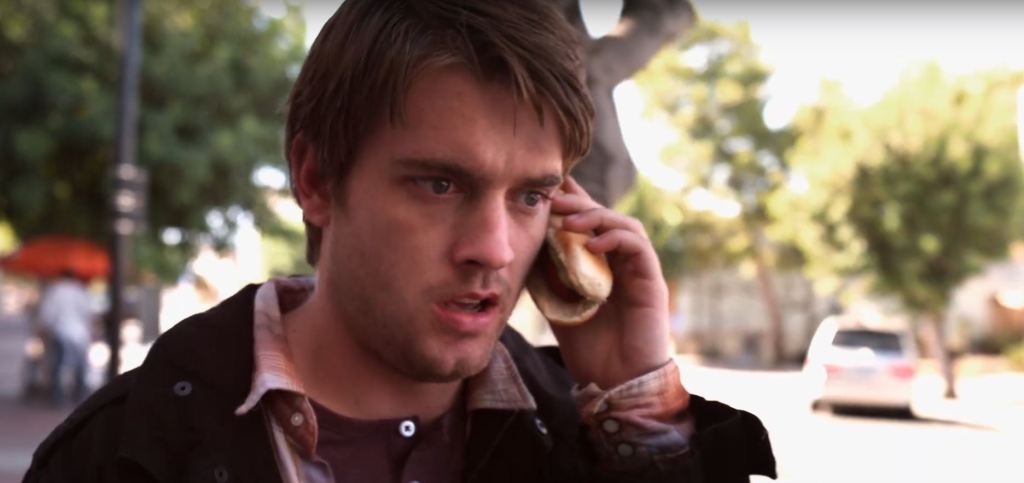
Hello? Yes, this is hot dog.

John Dies at the End is now available on VOD about a month before it releases in theaters. Pointing out the flaws in a movie like this is like refusing to go to bed with Marilyn Monroe because she has a mole. All genre classics are flawed, from Escape to New York to Evil Dead 2. Given enough time, these movies’ flaws become so endearing that drunken frat boys excitedly point the flaws out at movie parties. I suspect John Dies at the End may have launched itself on a similar trajectory, though David Wong’s serialized novel-thing somehow has better comedic timing. Questionable CGI aside, this movie’s a fine crowd-pleaser.

Don Coscarelli was the director who broke into the movies when he made the ultra-low budget Phantasm, a horror film about a demonic undertaker whose bidding was done by inter-dimensional dwarfs and sentient spheres. For me, it’s not a very rewatchable movie, but I have a soft spot for its first sequel. Coscarelli also made Bubba Ho-Tep, which supposes the real Elvis Presley (Bruce Campbell) ended up in a nursing home through an unlikely series of events (it was an impersonator who died). Teaming up with Ossie Davis, playing an elderly black man who thinks he’s JFK, Elvis must go toe-to-toe with a mummy who’s eating the souls of the nursing home’s residents.

As he did with that film, Coscarelli once again adapts a bizarre story written by a little-known cult writer. John Dies at the End is somehow even harder to summarize than Bubba Ho-Tep—and apparently harder to film as significant sections of the source material are omitted. It’s about a couple of slackers who are addicted to a drug called Soy Sauce that makes them see things from another dimension. There’s an alien subplot, too, all of which unfolds in a confusing order of events, true to the source material. The movie also features Paul Giamatti, Clancy Brown, and Doug Jones, who you may not recognize without the monster makeup he wore in Hellboy and Pan’s Labyrinth.

Just watch the trailer. If that appeals to you, then watch the movie. I have to go now. My hot dog is ringing.