Eli Roth’s Thanksgiving

Let this sink in: it’s been sixteen whole years since Grindhouse premiered in theaters. You got two movies for the price of one: Robert Rodriguez’s Planet Terror and Quentin Tarantino’s Death Proof, garnished with four fake trailers directed by Rodriguez, Edgar Wright, Rob Zombie, and Eli Roth. After the experiment mildly failed at the box office (it released on Easter weekend of all dates), the movies were regrettably split into individual entities for DVD and VOD. The fake trailers were relegated to the special features section and low resolution YouTube videos.

One of those fake trailers absolutely blew the roof off with laughter: Eli Roth’s Thanksgiving, which was the horror director’s 2-minute ode to pre-Scream slasher flicks. The audience reaction probably could have tipped the Richter scale in the theater I saw it in. Nothing is more cathartic than a group of strangers laughing at things you ought not laugh at in polite society—and here was a mainstream movie doing it. And now, almost twenty years later, Eli Roth expands the two minutes into approximately ninety.

The movie opens on Thanksgiving day, 2022, as a Plymouth electronics store is about to open its doors for an early Black Friday sale. The rabid shoppers are gathered at the front doors, foaming at the mouths, when a misunderstanding sparks a riot that devolves into Final Destination levels of violent mishaps. Throats get slashed, heads get scalped, and people punch each other’s faces in over the limited supply of discounted waffle irons. Exactly one year later, a killer wearing a John Carver mask begins picking off the shoppers and security personnel responsible for the carnage. It’s up to a group of high school seniors to figure out who the killer is.

The killer’s identity doesn’t really matter and the reveal at the end is not particularly shocking. Eli Roth knows this and the audience should intuit this, too. I don’t think anyone was expecting a clever whodunnit when they purchased their tickets. What you should be expecting instead is an old fashioned slasher that just happens to be made in modern times—not to be confused with a “modern slasher,” which in this day and age is typically about as joyless as… well, getting cooked in an oven alive.

I couldn’t help but think of four other movies while watching this one: Pieces, Blood Rage, Deranged, and William Lustig’s Maniac (which I’m surprised to find I’ve never featured on this blog because it’s a doozy). If any or all of those are your cup of tea, then so is Thanksgiving. Otherwise, avoid it all costs because it’s really not intended for polite society. I must say that Eli Roth feels about 5 to 10% tamer in his depiction of gore as he remakes the fake trailer moments with varying levels of success.

Here’s what I’m thankful for this holiday season: Thanksgiving isn’t Cocaine Bear, which mocked the bygone era of exploitation films instead of embracing the genre. This one’s an honest-to-god slasher flick whose performers play it as straight as Leslie Nielsen did in his best comedies. There’s no winking at the camera and no indication the filmmakers think they’re above this kind of material.

The only characteristic Roth doesn’t nail: the acting isn’t bad at all, actually, and I wish the film stock looked more messed up like its Grindhouse counterpart. Other than that, it’s a fine antidote to the usual holiday offerings.

They (Still) Live

As I can’t imagine anyone reaching this blog without having already seen They Live before, I play fast and loose with spoilers.

I recently saw They Live as part of a 35th anniversary screening put on by Fathom Events. Oddly enough, it’s not the first time I’ve seen it on a big screen in the 21st century—the last time was at a double feature in a friend’s backyard, projected onto an inflatable screen and paired with Roddy Piper’s vastly inferior (but somewhat entertaining) Hell Comes to Frogtown. As real life political corruption and Joe Schmoe stupidity in the United States reaches hilariously depressing extremes, They Live hits harder than ever before. It could be my generation’s Dr. Strangelove or: How I Stopped Worrying About Inequality and Learned to Idolize the Wealthy.

I rank John Carpenter movies as follows: The Thing is his best, Escape from New York is stylistically his coolest, and They Live would be his most entertaining if not for the stupendously wild Big Trouble in Little China. Part of the reason They Live is so fun is “Rowdy” Roddy Piper, whose theatrical wrestling background translates into an endearing screen presence that’s simultaneously relatable and larger than life. When he initially discovers aliens have infiltrated and control every level of government, he chuckles in defeat. “It figures it’d be something like this.”

This pessimism comes shortly after he delivers a “I believe in America” speech that would seem contradictory to his character if you don’t detect the indifference in his tone. His only pal, a laid-off steel worker played by Keith David, openly berates the idea of the American dream—he hasn’t seen his family in months because he has to go wherever the scant opportunity to work takes him. The character points out that when the steel companies were in trouble, the workers pulled through for them, but when the workers were in trouble, the executives gave themselves bonuses. “The Golden Rule,” he says, “is he who has the gold makes the rules.” David is easily the most skilled and believable actor in the entire production, at times delivering reams of dialog while Piper mostly plays the silent type.

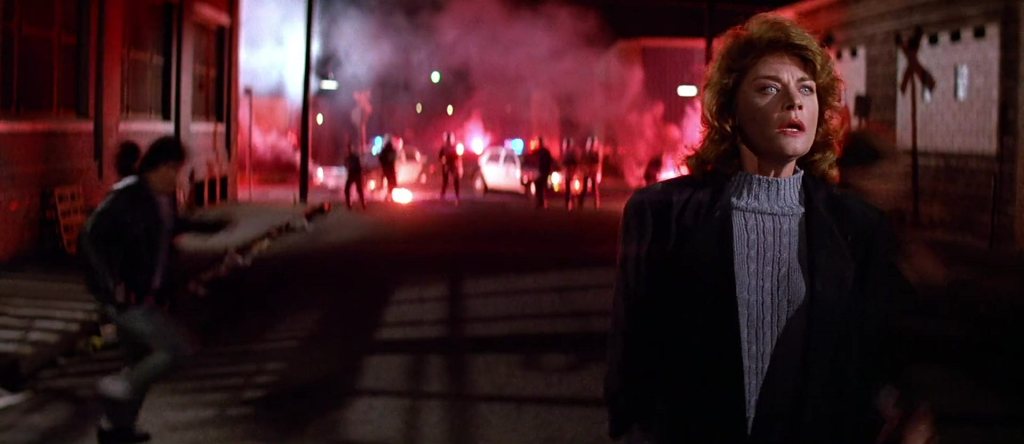
Midway through the movie, when you would normally expect a boringly routine love interest to be introduced, Carpenter instead pairs his hero with Meg Foster. Foster plays an oddly detached woman who immediately knocks his ass out of a tall window in an attempt to kill him. Later, she shows up to apologize in what appears to be a meet-cute moment. Here’s a detail I’ve never noticed before now: during their reunion, one of the background characters is instructing members of the resistance to attempt to befriend and gain the trust of their enemies as a means of infiltration… which is exactly what Foster is doing to Piper. It reminds me of that part in The Sixth Sense when the boy is explaining that some dead people don’t even realize they’re dead while the camera lingers on Bruce Willis’s face. Another detail my girlfriend pointed out: Meg Foster is the one who led the police to the resistance’s hideout in the first place.

I believe the famous five-minute fight in the alleyway still holds the cinematic record for the longest of its kind. I’ve always thought of it as a welcome indulgence of little import, but this time I reconsidered Carpenter’s intentions. Consider how many lower class men and women are in David’s shoes, helplessly preoccupied with their own struggles to make an honest living in a system they know is rigged. People like that know that hard work isn’t all it takes and yet they work hard anyway so as not to lose any ground. Getting them to release their tenuous grip on the status quo that shuns them would very well require a knockdown, drag-out fight of the caliber exhibited here.

Salient details that are easy to miss: not all the cops in Carpenter’s dystopia are aliens in disguise, but they all serve the elite. And not all of the elite are aliens, either, as greedy humans work with the aliens despite knowing that the endgame will result in a planet that’s uninhabitable for their own species. One of the downtrodden drifters (Buck Flower) from the beginning of the movie finds himself sipping champagne by the end, rubbing elbows with the economic overlords who just ordered the police force to bulldoze his homeless encampment. “We all sell out everyday,” he reasons. “Might as well be on the winning team.”

I haven’t even mentioned the iconic sunglasses. Created by scientists in the resistance, the special sunglasses let the wearers see the world in literal black and white. It turns out every form of mass media and all consumer goods are hypnotizing people to continue consuming, reproducing, and not questioning authority. The satire is sharp, but the metaphors are blunt. You can feel Carpenter’s rage against the inevitably destructive corporate machine oozing out of every pore of the screen.

I see a lot of old genre flicks screened for modern audiences. I love watching these movies with a group of strangers, but a lot of the time they laugh at the movie rather than with it. Curiously, They Live is one of the only times I’ve seen a modern audience laugh strictly at all the right parts. That’s some unusual staying power there.

Screenshots sourced from Movie-screencaps.com.

Summer Movies 2023

I’ll keep this list updated as I see more of the season’s movies… and there are a few placeholders in here so I can remember to watch all this stuff.

Air

Air is the riches to riches story of a little known shoe company called Nike. Despite the fact I have zero love for mega-brands, I thoroughly enjoyed the breezy nature of this flick. (Curiously, I’ve never watched a televised ballgame in its entirely, but I’m quite smitten on ESPN’s 30 for 30.) Matt Damon and Jason Bateman are two of the most likable actors in the business and they play off each other naturally. A good movie to watch on a rainy day.

Guardians of the Galaxy 3

Placeholder… it’s taking me a while to get around to this one because I was told you have to see the The Guardians of the Galaxy Holiday Special first (you don’t), which I found to be mind-numbingly awful and not just because I hate Christmas movies (I do). I’m no longer a big fan of Chris Pratt fan, either, and I’ve found his character unlikable since Infinity War.

Fast X

This one is admirable in many ways (rich cinematography, beautiful looking people) and embarrassing in a lot of others (forced humor, Vin Diesel). When it’s not being corny, and the CGI cars aren’t flying around like toys, I can kinda see the franchise’s appeal. Jason Momoa is almost great as the villain, but he goes one notch too far. Fast is so phony looking, I can’t be sure any of its actors have ever driven a car in real life, much less stepped foot off a sound stage. Did not finish, but I’m amused that whenever the stakes are high, there’s always time to burn rubber instead of, you know, accelerating efficiently.

The Flash

I don’t care for DCU films. Against all odds, I think I liked this one. The CGI is possibly the worst special effects I’ve ever seen in a mega budget movie, but they’re so consistently terrible that I kind of grew used to it? I detest nostalgia bait (and box office returns suggest most moviegoers feel the same way), but I actually liked seeing Michael Keaton in the bat suit again, even though the stuntwork makes him look far more agile than he did when he was half his age. I was also pleasantly surprised by this iteration of Supergirl, but I feel that the marketing team blew their load by spoiling her appearance in the trailers. Like, did they really think Keaton’s Batman wasn’t enough of a draw? At any rate, The Flash isn’t a great movie (far from it, in fact) and it isn’t a smart movie, but it is a fun one.

Asteroid City

Placeholder… Every time I see a Wes Anderson trailer, I think, “Oh, I already know what this is.” So it feels like a chore getting started on a Wes Anderson movie, but most of the time he exceeds my expectations. We’ll see.

Indiana Jones and the Dial of Destiny

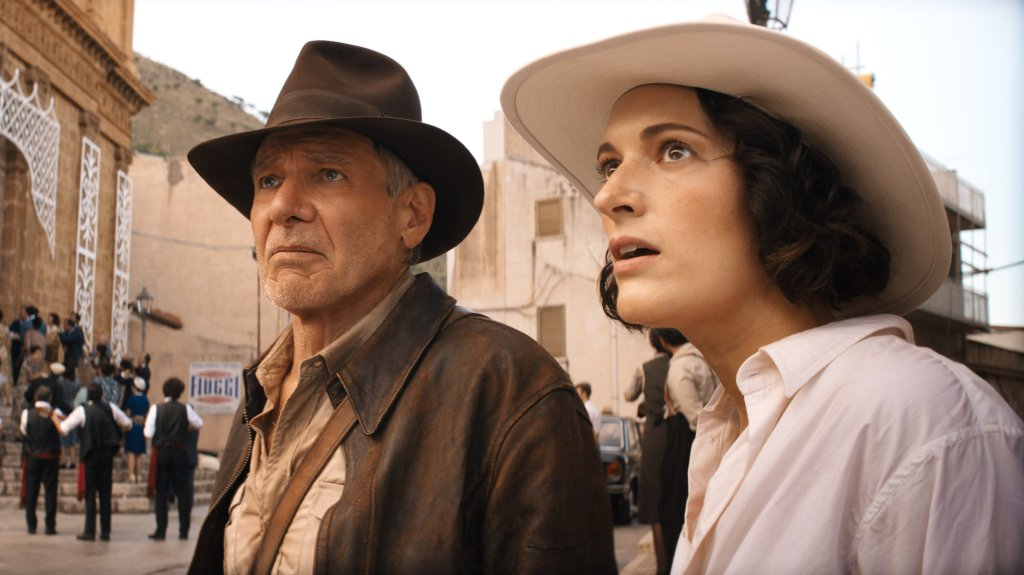
Here’s yet another movie churned out of Disney’s artless acquisition of Lucasfilm, but—to no one’s surprise—it’s only the second worst film in Indiana Jones franchise. The disappointment comes early on when a CGI Indy runs across a train top in a sequence that looks only marginally better than the vine scene in Crystal Skull. At the end of the day, this movie would have served Jones’s legacy better by not existing at all, but once you’re past that hump, there is a pleasantly amusing movie here, which includes an absurdly stupid but fun finale. Also: Mads Mikkelsen is one of the most versatile actors, like, ever.

Mission: Impossible Dead Reckoning Part 1

This is my second favorite action movie of the year (#1 is John Wick 4, which was the first movie that ever exhausted me in a positive way). I’m tempted to name Dead Reckoning my favorite Mission: Impossible movie, but AI-related plots are already feeling a little old hat and there weren’t enough high-tech gadgets or farfetched break-ins for my liking. Sure, they use plenty of masks and Tom Cruise parachutes onto a runaway train, but I miss the clever use of building hacking seen in previous entries. (Remember when they used an eye-scanner and a projector to break into the Kremlin? Huh-huh, that was cool.)

Talk to Me

This is the freshest urban legend vibe since It Follows and The Babadook. So many horror movies forget to be fun, which is only excusable when they’re really good. Talk to Me is fun and good, and its energetic pace thrilled the hell out of me. The kids in this Australian flick are endearing little pricks, which is evidenced by a wild montage of teens doing what teens do best: meddling with evil entities while laughing like a bunch of jackasses. There isn’t a tired scare-attempt in the entire movie, which isn’t something you can say about 99% of demonic possession flicks. The inevitable sequel will suck so embrace this one.

Barbie

Okay, this one has Pee-Wee’s Playhouse energy. My biggest problem with movies like this is they tend to establish a great fantasy world and then quickly move the characters to the boring “real world” (Last Action Hero is the worst offender of this trope). Thankfully, Barbie knows better and spends most of its runtime in a fantasy setting. This is the first movie of its kind that focuses more on its star power than the IP and it sure is refreshing. Overall, a very amusing movie and the humor is on point.

Oppenheimer

See my full thoughts here. Probably the best movie of the summer.

Oppenhype

If you’re lucky enough to see a 70mm screening of Oppenheimer, I envy you. You won’t have to sit through twenty minutes of mostly bad trailers because the movie itself is already pushing the limits of the IMAX film size. Pictures of the 11-mile long reel look as if its been jury-rigged to fit existing projectors. Unfortunately, it would have taken my group longer to drive to the nearest 70mm screening of Oppenheimer than it takes to actually watch it, so we settled for the digital IMAX projection even though there is a local theater projecting it on 35mm film.

I’m glad we chose to see it big. I love big movies with big aspect ratios. Oppenheimer is certainly big, but it’s also bold. Director Christopher Nolan famously avoids CGI whenever possible, but the limitations of shooting this way are sometimes obvious in his previous films. Dunkirk features thousands of soldiers when there should be hundreds of thousands. The climactic shootout at the end of Tenet seemed more like a paintball match than a spectacle. What you get here is a three-hour picture that promises a big detonation and only shows it to you in glimpses reminiscent of what it must have been like to see it in person, carefully peeking out from behind cover miles way.

That’s not a complaint, it’s an admirable choice. There’s not a shred of war footage in the entire movie. The only violence we see is the violence in Oppenheimer’s head.

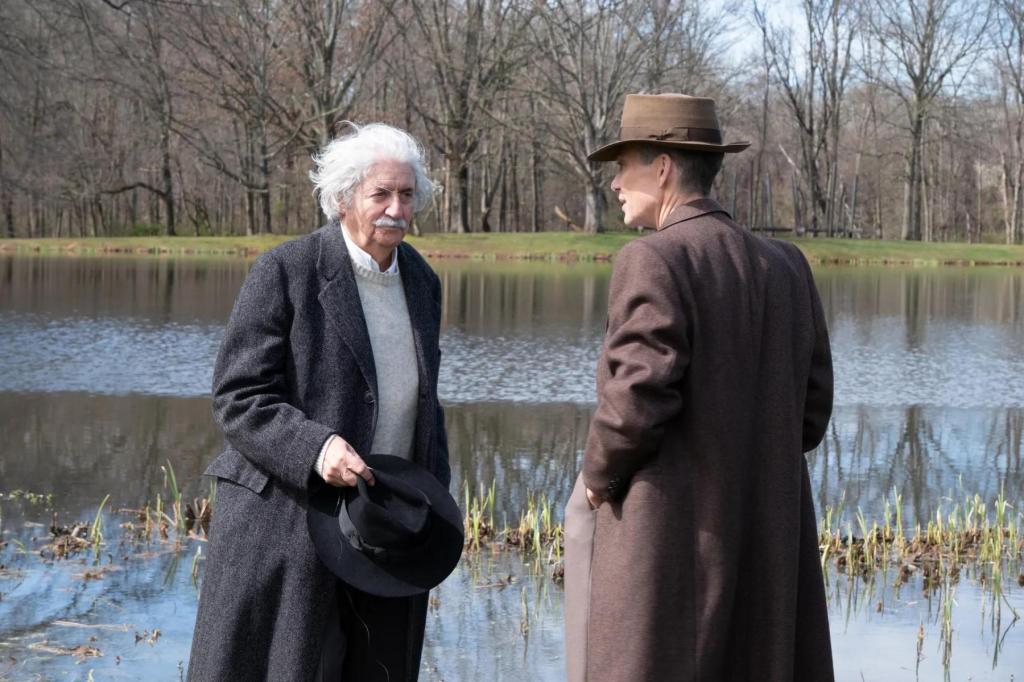
Was the real Oppenheimer capable of such empathy? Early on, we get our first indication that the character is going to be a challenging person to like when he injects cyanide into a professor’s apple over a classroom disagreement. Later, he’s disturbed by what he did and races back to the classroom to retrieve the poisoned apple moments before it unleashes unintended collateral damage. The historical accuracy of the scene is debatable, but I think it’s a peculiar coincidence that Alan Turing, another neurodivergent mastermind of the Allied victory in World War II, chose to kill himself with a cyanide-laced apple.

The film is so quickly paced (and dazzlingly scored) that even the audience with its benefit of hindsight is caught up in the scientists’ enthusiasm to build the mother of all weapons. By the time we remember the terrible implications, it’s too late, and the film abruptly cuts to Oppenheimer watching helplessly as two ominous crates ship out of Los Alamos. Soon after, Oppenheimer meets President Truman in person. Of the two men in this scene, one is portrayed as a tortured man who has a deep understanding of the very branch of science that eluded Einstein’s genius. The other is portrayed by Gary Oldman as a rankled sort with a high school education and the newfound power to cause unimaginable destruction. At the end of the scene, Truman ends up calling Oppenheimer a pussy when he doesn’t share his enthusiasm for the lives lost.

Famous actors with bit roles wander in and out of the movie at every other scene: Casey Affleck, Raimi Malek, Olivia Thirlby, James Remar, Tony Goldwyn, Matthew Modine to name only a few of these supporting-supporting actors. Josh Hartnett proves to be a surprisingly complex and capable actor. Macon Blair, the Jeremy Saulnier favorite who’s reportedly directing the Hollywood remake of The Toxic Avenger, levels up in this movie in a most impressive way as well. I’ve held Florence Pugh at arms length for some time now, but now I’m eager to reexamine her previous roles with a different eye. Saying the star power in this one is huge is an understatement.

Cillian Murphy deserves to be nominated for this movie, but my gut feeling is the Academy will overlook him as well as Emily Blunt. Robert Downey Jr. is just as deserving and I think he’ll probably win. I hope so. He’s never been better.

Another Round is a drunken masterpiece

I am a simple man. If I see Mads Mikkelsen is in a movie, I watch it.

In the Danish comedy-drama Another Round, a group of bored high school teachers discuss a Norwegian psychiatrist’s belief that 0.05% is the optimal blood content for confidence and creativity. The teacher who floats the idea isn’t half serious, but Mikkelsen’s character, Martin, decides to give it a go. With his newfound liquid courage, previously unruly students are suddenly engaged by his history lessons. His back and body feel better. Faculty members who barely noticed him before begin greeting him in the hallway.

His three compatriots learn of his success and decide they want in, but insist on masking the guilt of day-drinking with the facade of a research paper. This is officially a science experiment now. As is such, they’ll need rules and equipment. No drinking after 8. No drinking on weekends. They will smuggle breathalyzers into their classrooms alongside pint-sized bottles of booze. You get the sense that even as they type up their research paper, they all know good and well it’ll never be published. These guys just like drinking.

Indeed, the rules of their experiment are so flexible, it isn’t long until they decide that while 0.05% may be a good starting point, each person must have a unique alcohol need. So they experiment with varying levels of consumption. One teacher even tries huffing alcohol fumes so that the booze isn’t detectable on his breath. Another has to feign shock when a custodian discovers a hidden cache of booze on school grounds. All the slight changes to the rules culminate in a drink invented by jazz musicians in New Orleans, which is designed to look like a watered down cocktail, but is perhaps the most alcoholic beverage on the planet that won’t outright kill ya.

Like cancer, alcoholism is a subject that turns most films into gooey melodrama. Another Round is too honest for that. The movie frequently feels like it’s careening toward predictable heartache, yet veers hard into unfamiliar, often funny territory instead. It’s a movie that realizes that many of us know actual alcoholics in real life, and though we may wish they wouldn’t drink so much, we can still laugh with them and enjoy their company. I very much enjoyed the company of these characters.

Sideways is my favorite drinking movie. Another Round is damn near as good as that one. Hell, I wouldn’t be entirely surprised if I grew to like it even more with time.

Check out my comic strip website, Gruelgo! These days I post a lot more frequently there than here!

That other Terminator 3 movie

The trailer for Terminator: Dark Fate proudly proclaims James Cameron has returned to the franchise as producer, suggesting we’re getting the real sequel to Terminator 2. While I appreciate the effort to correct course (because it worked so well for Superman Returns and Neill Blomkamp’s failed Alien sequel), there’s already a reliable indicator that a third Terminator film is probably going to suck. It’s called Terminator 3: Rise of the Machines.

The teaser trailer which was released for T3 over sixteen years ago looked promising. That’s because it didn’t include any footage from the film. Nick Stahl is so miscast as John Connor that the brief flashforward of him leading the future resistance is embarrassingly unconvincing. Later it’s revealed Sarah died of leukemia, which is code for “Linda Hamilton hated the script.” Coffins and cars are bulletproof, the comic relief is eye-rolling, and the father-son dynamic between Schwarzenegger and Furlong has been entirely abandoned. Admittedly, these are all complaints that (probably) won’t crossover to the new film, but there are a couple of problems which seem inherent to any continuation of the saga.

The main reason the previous film was such a strong sequel is the original left the story wide open. T2 had a great what-if? premise: What would happen if someone discovered the future artifacts left in and around the machine press at the end of the first film? It’s unfortunate the characters of T2 arguably prevented any possibility of Skynet by destroying the very objects which led to its creation in the first place (depending on which understanding of the timeline you subscribe to). T3 ignores this inconvenience with a single line about how the robot uprising was merely postponed. I have big problems with an inevitable Skynet. Determinism isn’t a good look on a series which taught us, “There is no fate but what we make for ourselves.” 

The other reason T2 succeeded is its villain. We had never seen anything like Robert Patrick’s T-1000 before. In terms of ingenuity and performance, we never saw anything like it again. The villain in T3, on the other hand, is about as inspired as any decision made in a roomful of studio execs. How could anyone, including James Cameron himself, produce an antagonist even remotely as novel as the T-1000, particularly in a series that ended so definitively back in 1992?

I’m not trying to review a movie I haven’t even seen yet. I’ll probably go see it just because I have always been a sucker for Terminator media and it doesn’t matter what I think of the promotional material. But in the words of Guns N’ Roses: Where do we go now? After seeing Terminator 2 for the first time, I spent many years wondering exactly that.

Cast a Deadly Spell (1991)

CastADeadlySpell

Here’s another one of those movies I had no idea existed until it showed up on HBO one day in the early 90s. IMDB lists it as a TV movie, but it looks a helluva lot slicker than most of the TV movies I know. It’s got a killer cast of character actors including a young Julianne Moore and the creature effects are charming. Right now it’s streaming on HBO GO, which makes me wonder if someone who’s in charge of programming has similar B-movie tastes or they just randomly throw movies onto the service to fill a monthly quota.

In this fantasy version of 1940s Los Angeles, magic has become as ubiquitous as cell phones are today. As one character puts it, magic just makes everything easier. David Zucker liked to cram background gags into Airplane and his Naked Gun movies whenever the foreground characters were delivering exposition. Similarly, in Cast a Deadly Spell there’s almost always something going on in the background to remind you it’s an alternate universe, from levitating cocktail trays to a nightclub that’s bigger on the inside than it is on the outside.

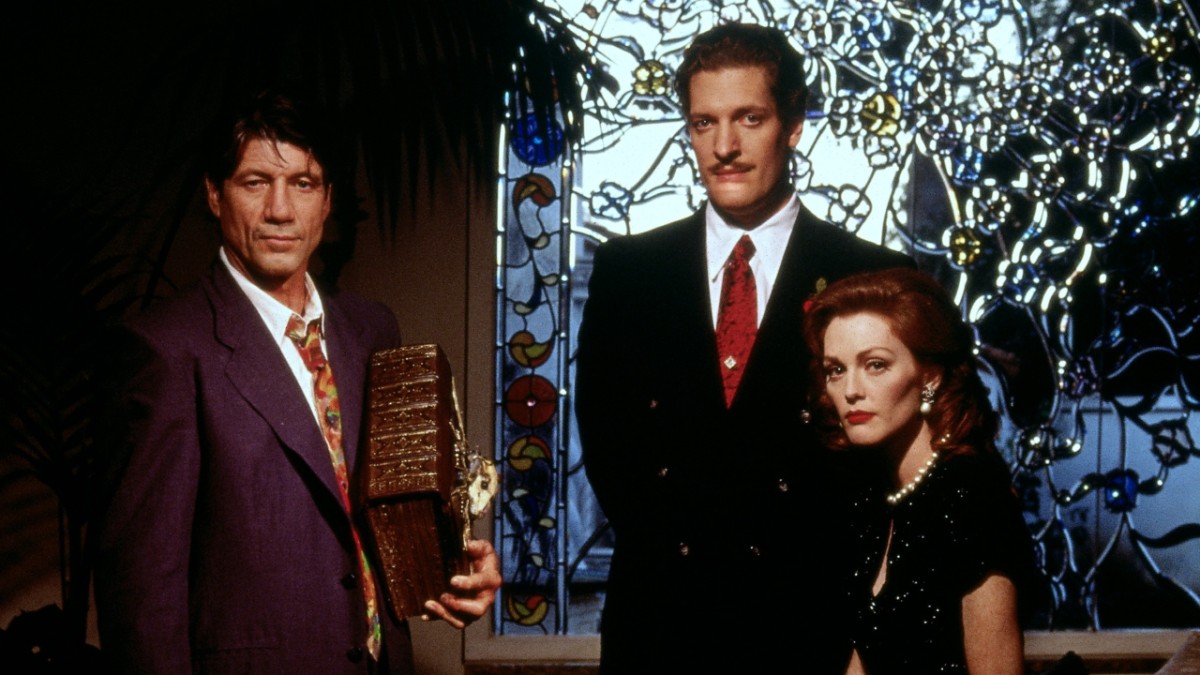
Indeed, the opening story card tells us everybody does magic, which is to say everyone but Fred Ward’s hard boiled detective, Harry Philip Lovecraft. That gives him an edge, as a detective who doesn’t carry talismans or charms is apparently in demand. In his introductory scene, Lovecraft cracks a case that had the LAPD stumped when he declares a voodoo doll the murder weapon.

In typical film noir style, Detective Lovecraft has just been hired by David Warner’s character to retrieve the priceless Necronomicon, which has been stolen by a gangster played by Clancy Brown. (To my knowledge, this is one of two movies Warner has appeared in involving the fictional grimoire, the other being Necronomicon, which I wrote about here.) Brown plans to employ the book in a ritual which will give him godlike powers at the expense of destroying the world.

While the movie shamelessly relies on the old detective tropes a little too much, it never really gets bogged down by it. As I’ve said before, the difference between tropes and cliches is we like tropes and perhaps no other genre gets away with it more than film noir. It’s a fun little movie that’s a lot bigger looking than it has any right to be, which probably comes down to the fact it was directed by Casino Royale’s Martin Campbell and produced by Gale Anne Hurd. That its actors were seemingly born to play roles like this doesn’t hurt either. The film has none of the disposable qualities of a typical made-for-TV movie at the time.

There was a sequel called Witch Hunt which substituted Fred Ward with Dennis Hopper. I don’t think it was as good, but I plan on catching back up to it soon anyway.

A Dark Song (2016)

A Dark Song

A while back I wrote about Take Shelter, a film which questioned its protagonist’s sanity in a meaningful way (the open-ended ending felt less like a cop-out and more like bold punctuation). The heroine of A Dark Song is in a similar sort of predicament: early on it’s revealed she has abandoned the medication and therapy prescribed to her in the wake of her son’s death. Some or all of what happens to her in the course of the movie could very well be the product of delusion. That doesn’t make it any less terrifying.

Whereas Michael Shannon’s character in Take Shelter was ostracized by his community for his (possible) mental illness, the main character of A Dark Song is barreling along the road to losing even more. Her name is Sophia and she will stop at nothing to speak to her dead son. Sophia’s internet research has led her to an occultist who claims he can help. Unfortunately, he looks less like a dark magician and more like a guy who listens to records backwards in his parents’ basement.

Sophia wipes out her savings to rent a secluded house in the Welsh countryside and pay Joseph’s hefty asking price. The ritual, he says, can take several months to complete, but at the end of it Sophia will get a chance to have her guardian angel grant any wish she desires. As Joseph draws a circle of salt around the perimeter of the home, he issues a dire warning: once the ritual starts, they can’t leave the house until their work is finished. Otherwise, they will suffer fates worse than hell itself.

Despite his authentic-looking grimoires and steadfast conviction, Joseph may be full of shit. And for a woman as vulnerable as Sophia, their pairing could be a deadly combination. She’s already demonstrated she’s willing to do whatever it takes, short of forgiving those responsible for her child’s death, and the abusive rites Joseph concocts are highly suspect from the get-go. By the time the rituals show any sign of working, you could just as well believe Sophia’s last trace of sanity has reached its breaking point.

I saw A Dark Song several months ago, which made me a little hesitant to write about it now, but it’s been fresh in my mind ever since, sometimes pestering me at night when I’m trying to sleep. I’ve seen a lot of movies in the months since, but few have been as memorable. Both of its actors are fantastic. Like The Head Hunter, which I wrote about last week, this movie makes the case that underfunded filmmakers should build their casts on quality as opposed to quantity.

Catch it while it’s still on Netflix.

The Head Hunter (2019)

HeadHunterTexting

In Evil Dead 2, Ash Williams gets sucked into a time portal during an attempt to banish his world of demons. The film ends on a cliffhanger: our unlikely hero inexplicably finds himself in the medieval ages which, for a time, felt like it could be a resolute ending—the story had already come full circle because Ash made the startling realization he was the hero foretold by the book of the dead. We didn’t need any more of an ending than that—but didn’t it get your imaginative juices a-flowin’ at the time, wondering what Ash would encounter in medieval times?

You could be forgiven for conjuring up an adventure that was far more horrific than the sequel we eventually got. And watching The Head Hunter, which wears its Evil Dead influences on its sleeve, I couldn’t help but feel Army of Darkness might have been better served with the extra helping of horror which wasn’t missing in the previous two films. Don’t get me wrong: I really like Army of Darkness, but I love the first two Evil Dead films. And The Head Hunter is a damn good Evil Dead film in its own right, gruesome and inventive.

The Head Hunter opens on a medieval warrior in wicked-looking armor who marches across the woods to do battle with a monster off screen. Most of the encounters in this movie take place off screen. We often see the warrior get geared up and head into action, but rarely see the action itself. There are times we can only hear the action, and the sound design is excellent, but the aftermath of the unseen spectacles is plenty gruesome. Whenever we see the warrior come home, towing the head of a mythological monster in a sack, he is never without nasty wounds.

Yes, the real reason the action takes place off screen is the filmmakers probably couldn’t afford to shoot it. But the locations, the set design, the makeup effects, the acting, the costumes, the camerawork, and especially the sound—every bit of it feels like it came out of a movie that was a lot more expensive than this one. The director’s first feature was ThanksKilling, a ridiculously cheap, ridiculously stupid, and ridiculously enjoyable horror movie that was entirely shot on consumer-grade video. It was nothing if not ambitious and no doubt the reason The Head Hunter finds its limitations so navigable.

In that opening scene mentioned above, we learn the head hunter’s daughter has been killed by a beast and now he wants revenge. You really don’t need to know anymore than that. Each scene is about discovery—what’s he doing? Why’s he doing it? What’s the deal with that horn blaring in the distance? All you need to know is this movie might have just been titled The Medieval Dead.

Warlock (1989) [Midnight Movie]

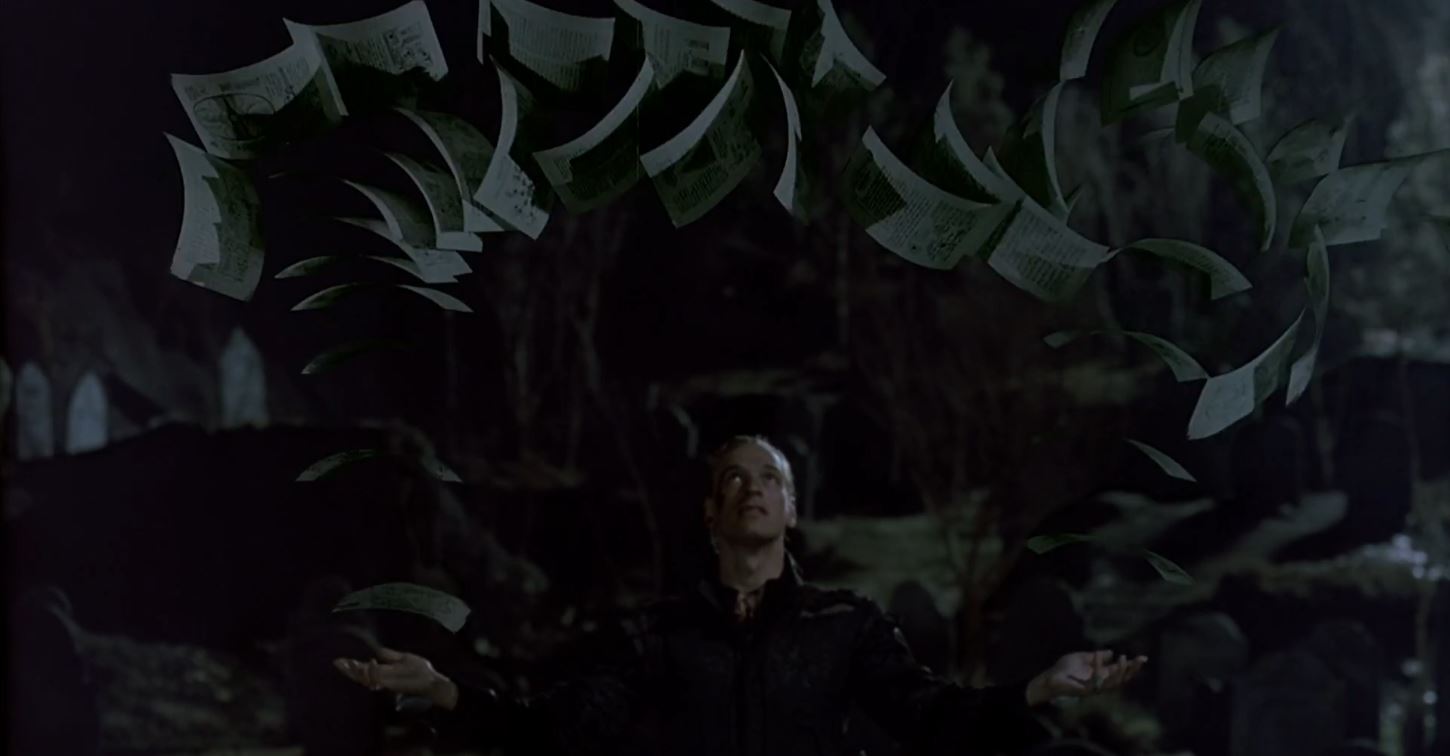
Julian Sands speed reader

I said I got bored blogging about movies, but apparently I just needed a break. Today I have a recommendation for a movie I don’t see discussed much anymore. Now this is coming from the only person on the planet who genuinely enjoyed The Wishmaster 2, so my opinion on anything should be taken with a grain of salt: I rank Warlock among the best witchcraft movies ever made. Warlock may very well be where my love for the subgenre began in the first place.

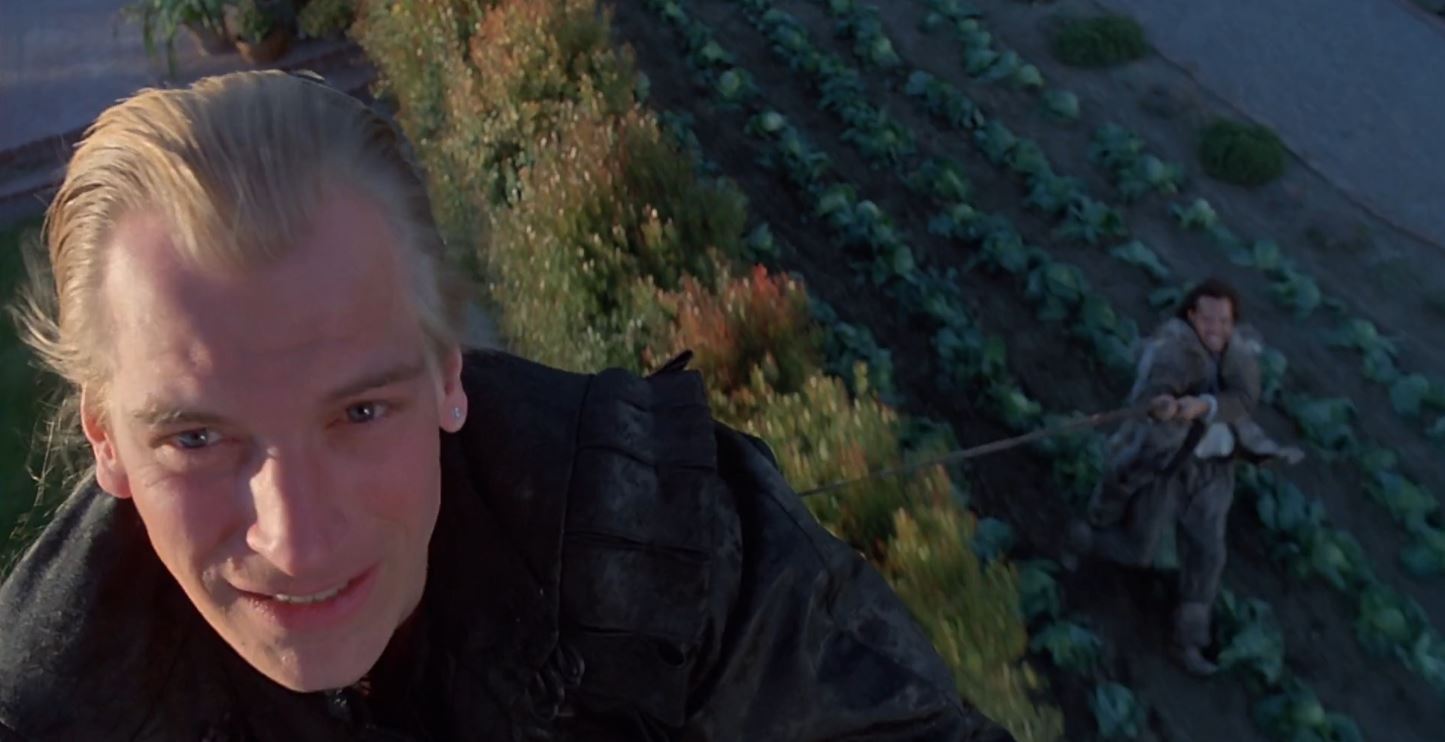
In 1600s Massachusetts, the meanest warlock in history eludes execution by casting a spell which whisks him away from the tower where he’s contained. Witch hunter Giles Redferne fearlessly chases the villain through the portal, but it turns out the spell is amiss and the two find themselves stuck in 1980s Los Angeles. The hero has a much harder time dealing with the culture shock: when the LA police arrive to question him, he lamely attacks them with his whip, which is no match for a stun gun.

UnlikelyDuoCrusin

As the warlock travels the countryside in search of a book which will allow him to undo creation, he casts a spell on the female lead, a spunky young woman named Kassandra: she’ll age twenty years everyday, which means she’ll die in half a week, tops. Hair graying and face wrinkling, Kassandra teams up with the witch hunter to reclaim her youth and save the universe. One of the many things that sets Warlock apart from the sensibilities of its era is that its lead female appears in old age makeup for a sizable chunk of the running time. Meanwhile, most of the horror scenes take place in broad daylight.

That’s exactly what makes Warlock so fun: its creativity. The warlock keeps a pair of eyeballs which look in the direction he needs to go; later, the prude witch hunter is faced with desecrating his own grave due to the plot’s time traveling shenanigans. During an amusing chase sequence across a Mennonite farm, the witch hunter reveals that hammering nails into a warlock’s footprints causes him pain, which is a bit of lore that feels like it belongs in a classic fairy tale. The movie is intentionally goofy at times, such as when the witch hunter insists on carrying a weather vane onto a commercial airliner, but though it plays it fast and loose with the logic you never feel insulted… except maybe during the scene in which Kassandra defeats a credit card machine by simply unplugging it.

High as a kite

A lot of people compare Warlock’s time traveling plot to The Terminator, but I feel the spirit of the movie is a lot more like Time After Time, the fun fantasy film in which HG Wells (Malcolm McDowell) follows Jack the Ripper (David Werner) into 1970s San Francisco. This film, like that one, features two great leads cast against type: Julian Sands and Richard E. Grant, who are far more entertaining to watch than the teenage leads who normally populate films like this.