Nebraska: Be somebody.

The entirely black and white Nebraska begins on a bridge that could be anywhere in the Midwestern states. The elderly Woody Grant (Bruce Dern) appears disheveled as he walks towards our point of view. A sheriff pulls up and asks where he’s headed. Woody points ahead. The sheriff asks where he’s coming from. Woody points behind him.

Woody’s son David (Will Forte), a stereo salesman who just got dumped by a painfully average woman, picks Woody up at the police station. Woody, as it turns out, has been suckered by a million-dollar sweepstakes, which only exists to sell magazine subscriptions; this is the second time he attempted to walk to Lincoln, Nebraska to collect his winnings. Says Woody’s wife, played by June Squibb: “I didn’t even know the sonuvabitch wanted to be a millionaire. Should’ve thought about that years ago and worked for it.” We later learn Woody married her because he had nothing better to do at the time.

In typical Alexander Payne fashion, it slowly becomes apparent why these people are the way they are and how they became permanent fixtures in each other’s lives. The director reveals new details in every interaction within the large cast of supporting players, including Stacy Keach, Bob Odenkirk, and June Squibb. Will Forte of Saturday Night Live fame may sound like the odd one out in this powerhouse cast, but his face perfectly emotes his sad clown character.

What’s the best way to make a legitimately touching movie? Be honest about your characters and where they end up. Don’t prime the audience with overcooked music and manufactured drama. It takes confidence to show this kind of restraint, but Nebraska manages. Low key as it is, I still found myself laughing a lot more than I did during Anchorman 2. And though I loathe “feel-good movies,” I felt pretty damn good when this movie was over.

I would say I’m not a fan of road trip movies, but on the other hand I loved Albert Brooks’s Lost in America and Alexander Payne’s earlier Sideways, both of which are all-time favorites of mine. Come to think of it, Payne has made a few road trip movies. Maybe no one makes them better.

Nebraska isn’t a movie for everyone, but I found it to be a very entertaining flick, at times hilarious when it wasn’t content with being merely funny. Born and raised in Oklahoma, I really dig the Midwestern vibes of this picture. Design a scene around an air compressor and you’ve got my attention.
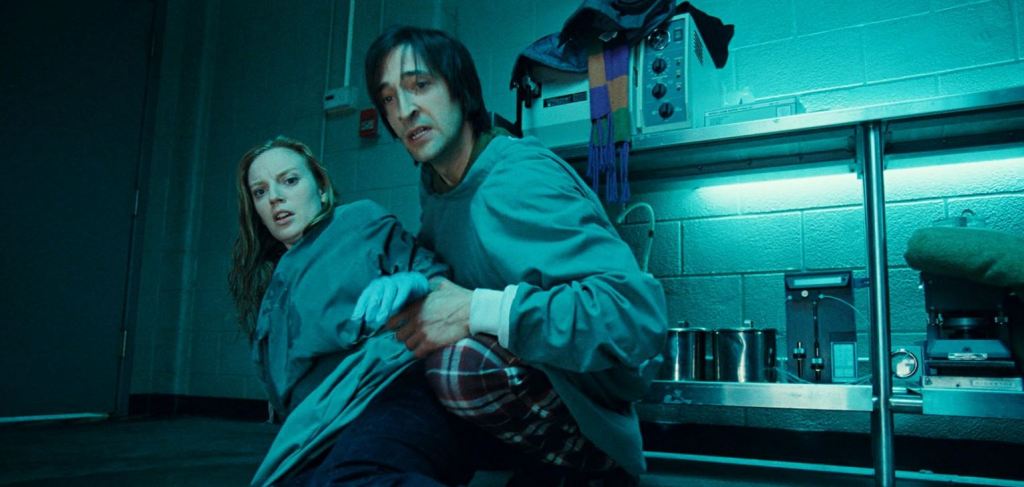
Splice isn’t what you think it is

Behold: the birth of a human-designed creature! It’s the second of its kind—a gross, slimy monstrosity about the size of a football. The scientists responsible, who happen to be dating, are Elsa and Clive (Sarah Polly and Adrien Brody). They drive a Gremlin. They eat pizza at work (because movie scientists always eat pizza). They think their designer creature is cute. And this will become relevant later on: Clive wants kids while Elsa doesn’t mind waiting.

The scientists are on the cusp of curing all the bad things that tend to happen to the human body. Naturally, bureaucrats conspire to take the project away. The scientists’ lofty goals simply aren’t profitable to the company’s investors. Polly pushes forward with the research anyway. It results in something that resembles a human fetus outside the womb. Now they’ve got something on their hands that was highly unethical to make in the first place. Getting rid of it is even more so.

The scientists attempt to keep the creature a secret, but this causes one complication after another. And if you’re anything like me, you’ll be waiting for the routine horror stuff to begin any second. Thankfully, the movie doesn’t become routine until the last seven minutes or so. By then, it’s earned it. Its horror is bizarre, cerebral, and wonderfully gross a lá David Cronenberg’s The Fly. The “monster” (and I’m really trying not to give too much away here) has more in common with Frankenstein’s than you might suspect.

So do you like body horror? This picture’s got it. You like dance scenes? There’s a pretty unique one, I guess you could say. You like movies that really aren’t for the faint of heart? Then step right up. Sure, sometimes you kinda know where it’s going, but that’s part of the fun: watching characters on a slow motion collision course with outcomes that could have been easily avoided earlier, but can’t be avoided now.

American Hustle is a delightful con

1978. Christian Bale’s Irving Rosenfeld, a sleazy man with a beer belly and a penchant for cheap jewelry, is preparing what another character describes as “an elaborate comb-over.” The comb-over is less about his ego and more of a disguise. He doesn’t want most people to know anything about him, least of all the truth. Thus is the life of a professional con artist.

Sydney (Amy Adams) explains that despite his physique and the aforementioned comb-over, she fell in love with Irving for one reason: his confidence. On their first date, he takes her to one of the dry cleaners he owns and lets her choose whatever she wants from the clothing that never got picked up. The scene is somehow just as sweet as it is funny. It isn’t long before Sydney is drawn into Irving’s world of running confidence scams. By the end of the movie, as Irving is worn down by the complexity of their schemes and the danger they find themselves in, she may be better at the game than him.

When the pair of criminals are caught by FBI agent Richie DiMaso (Bradley Cooper), the ambitious young man offers them a deal: help the Bureau entrap corrupt politicians or he’ll send them both to prison. The trio target Mayor Carmine Polito (Jeremy Renner) who, ironically, is probably the most honest person in the entire film. Dazzled by the con artists’ world, DiMaso slips from the straight-and-narrow path, believing he’s been accepted as part of the team. Meanwhile, Irving and Sydney are in fact running a separate con on him and everyone else who crosses their paths. As the Italian mafia enter the picture, Sydney tells Irving, “We’ve got to get over on all these guys.”

Amy Adams is so fucking good in this scene, she gives me chills. Jennifer Lawrence, playing Irving’s disgruntled and hilariously bad-tempered wife Rosalyn, is almost as good. There’s a scene in which Rosalyn sees Sydney for the first time and just knows, intuitively, she’s the woman who keeps Irving out all hours of the night. Meanwhile Louis C.K., playing DiMaso’s supervisor at the FBI, has a great running gag involving the world’s most pointless story about ice fishing.

American Hustle is as quickly paced and entertaining as any Scorsese movie, though with surprisingly little violence. I suspect the reason Irving and Sydney love Duke Ellington so much is because that’s how this film moves: like jazz. The beats aren’t always where you expect them. Director David O. Russell is unconcerned with comforting rhythms as he seemingly improvises the film’s style on the fly.

I watch movies obsessively. American Hustle may not seem like much to the casual moviegoer, but it’s a lightning rod for those of us who savory every detail, no matter how small. The characters do immoral things, but they’re far from bad and they’re downright lovable. This is my favorite movie of the year.

Event Horizon doesn’t affect the outside observer

When Sam Neill attempts to explain black holes to his crew members, they roll their eyes. One says, “Singularities? Speak English!” I can’t imagine a depressing future in which people who live in space are lost at the mere mention of singularities, but Paul W.S. Anderson apparently can. He’s the guy who made Mortal Kombat, Resident Evil, and Alien Versus Predator. He’s got as much taste as a toenail.

The Event Horizon, an interstellar ship with an experimental gravity drive, has vanished. Seven years later, it mysteriously reappears, orbiting Neptune. A second ship is sent to investigate. Sam Neill is the scientist who designed the Event Horizon, Laurence Fishburne is the captain, and Kathleen Quinlan looks great in a tank top. Due to unforeseen circumstances, the rescue vessel is damaged and the crew have to swap ships. Unfortunately, the Event Horizon begins to make the characters hallucinate. We’ll soon find out it’s been places it shouldn’t have been and brought something sinister back with it.

It’s fair to compare Event Horizon to Alien, even though that’s like comparing restroom graffiti to Picasso. On second thought, it’s actually among the better Alien rip-offs (and some of the official sequels, to be honest), because instead of yet another alien running around, it at least tries to do something different with the supernatural angle. I often see Event Horizon regarded with reverence in movie forums, and I certainly see why others love it, but I just wish it were a little more fun.

To be clear, it’s okay for horror films not to be fun, but those need to be exceptionally good in other ways. Event Horizon is not exceptionally good in any way. It’s not just joyless, it’s pointlessly joyless, partially because the director has the emotional complexity of a housefly. Compare it to another Sam Neill horror movie, one that’s also as serious as a heart attack: Possession. That’s a movie that actually has something to say and it’s even more unsettling than this one.

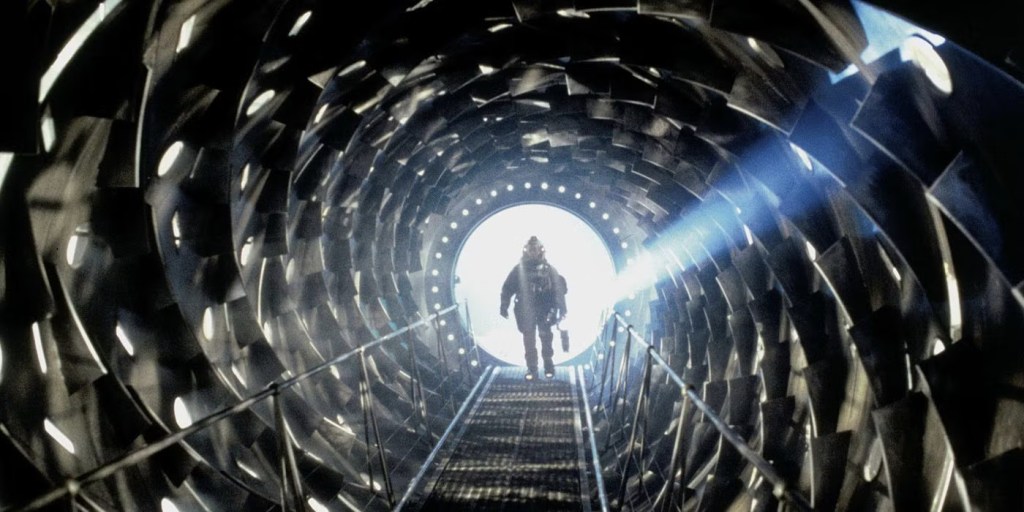
I’ll be the first to admit Event Horizon isn’t without merits. The set designs look fantastic, though there’s no logical reason for the maintenance lighting to turn eerie colors or for there to be a hundred headlights all over the wormhole generator. The CGI is terrible, but the rest of the special effects are top notch. I’ve heard tale that there’s a more graphic cut somewhere in the studio’s vault. I have the sneaking suspicion that’s a better film than this, the watered down theatrical version. I would be extremely interested to see it some day.

As is, Event Horizon just isn’t my cup of tea. Almost, but not quite.

The Arrival holds up today

The year was 1996. The must-see alien movie was Independence Day. Millions of moviegoers, myself included, chose that film over The Arrival, the trailer of which looked like dog shit. (Interestingly, The Arrival is much better than the trailer while the ID4 trailer is much better than the movie.) When The Arrival premiered on HBO some months later, I was immediately drawn in. The movie was ridiculous at times, but overall it was a thoughtful science fiction flick. Unfortunately, the movie bombed at the box office, which somehow didn’t stop a direct-to-video sequel.

A climate scientist is roaming a picturesque meadow. She stops to sniff the flowers and says, “This shouldn’t be here.” The camera pulls back—way back—into outer space. We discover she’s near the north pole and the meadow is completely surrounded by ice. (Never mind there isn’t any dirt that close to the north pole, just go with it.) The aliens aren’t coming. They’re already here. And whatever they’re up to is climatic in nature.

Enter Zane, a radio astronomer played by Charlie Sheen. The Hollywood bad boy seems like a terrible choice to play a scientist, but he believably pulls it off with a dorky goatee, spiked hair, and glasses. Zane has just recorded forty-two seconds of a radio signal from a star fourteen light years away. When he takes the recording to Phil Gordian (Ron Silver) at Jet Propulsion Lavatory, Gordian promises to send the audio up the ladder, but breaks the tape the moment Zane walks away. It’s pretty early for a bad guy reveal, but it’s best to get it out of the way now because, with Silver in the part, we all would have guessed he’s a bad guy anyway.

So when Zane loses his job for supposedly unrelated reasons, he pivots to “telecommunications” (read: installing home satellite dishes). Before long he has the idea to link several of the dishes in an unauthorized array for his own purposes. How he does this with 90s technology without stringing miles and miles of cable to his house, I don’t know, but it’s good to see a character with agency. He manages to lock onto the mystery signal again, but this time it’s not coming from the star, it’s coming from Earth.

Zane tracks the origin of the second signal to Mexico and takes the first plane to the general area of the broadcast location. There he meets the climate scientist from the beginning of the movie, whose separate investigation has brought her to the same place, and the pair discover a power plant the aliens are using to pump huge quantities of greenhouse gases into the atmosphere. See, the aliens like it hot so they need to raise our planet’s temperature, soon to be their planet.

The Arrival posits one WTF moment after another. Some of the risks Zane takes are pretty preposterous, but we want him to take those risks. The audience eventually demands answers more than he does.

Elysium is no District 9

It’s the future. Rich people live on a space station called Elysium. Poor people live on Earth, oppressed by robots, working menial jobs just to survive. The factory that manufactures the robots is where Max (Matt Damon) works. After receiving a lethal dose of radiation on the job, Max is told he’s only got a few days left to live.

On Elysium, the rich have access to med-bays which can cure any ailment including radiation sickness. All Max has to do—in theory—is sneak onto Elysium and climb into one of the bed-shaped devices. Unfortunately, Jodie Foster’s defense secretary (basically the head of border security, the “border” being space itself) is on high alert and will shoot dead any trespassers. Max, growing sicker by the second, has to have a robotic exoskeleton surgically implanted on his body just to remain mobile.

Excitement is curiously missing from Neill Blomkamp’s much anticipated follow-up to District 9. Here’s a movie which is far from terrible, but nothing really clicks. There was a wide variety of action sequences and creativity in Blomkamp’s previous film. In Elysium, it’s all about the gunfights. When you have a giant space station in the shape of a wheel, you’re telling me the most the filmmaker can come up with is standard shootouts, the majority of which take place on desolate old earth?

Is there a reason why Jodie Foster speaks in a phony accent? Even William Fichtner, one of Hollywood’s most solid character actors, is off his game. Casting Sharlto Copley (the weenie hero of District 9) as bad guy Kruger is a stroke of inspiration, but his character just isn’t realized enough for us to believe his machine-like agency. Matt Damon absolutely feels at home in a movie like this, but there’s not much for him to work with, either.

At the end of the day, I wouldn’t say Elysium scars Blomkamp’s reputation. I’m still excited to see his next movie because I still think (hope) he’s Hollywood’s ace in the hole. Hell, I still want to see what he would do in the Halo universe, which was at some point the original plan for the breakout director. I just pray he’s not a one-hit wonder.

Elysium is a solid rental, but only if you don’t have something better to do tonight. It looks great, has some interesting ideas, but that’s about it.

Can The Wolverine make up for Wolverine: Origins?

A group of guards wave a metal detector over Logan’s body. His adamantium bones, of course, set the wand off.

“Hip replacement,” Logan explains.

That scene is about twenty minutes in. By then we’ve already seen the atomic bombing of Nagasaki, the cameo of a former X-Man, a bar fight, and a sword that can slice through beer bottles. The violence is so graphic you’ll wonder how they got away with a PG-13 rating. So there’s a lot happening in The Wolverine, but it works. With a darker tone and a more tasteful approach to casting, this Logan pic quickly atones for the sins of Origins.

Logan’s no longer with the X-Men. He’s living in the Canadian wilderness while perfecting his brooding face. Shortly after avenging the death of a grizzly (straight from the pages of Wolverine #1), Logan receives an invite to Japan. There, a man he saved in Nagasaki is on his death bed. The tech CEO offers Logan the gift of mortality: “You can get married, have a family, lead a normal life.” Logan’s tempted, but politely turns down the offer. The old man dies, yakuza attack, and ninjas spring from the shadows. Somewhere along the way Logan loses his healing abilities. He becomes vulnerable at that point, but his adamantium bones still shield his vitals from bullets.

Convoluted? Kinda. Awesome? Very. We’ve seen many action sequences on top of a moving train before, but this one sets the new standard. Logan’s so determined and unflinchingly violent it seems more like the a Schwarzenegger flick than a modern action movie. It’s been far too long since we had a ‘roided action hero fist-fighting his way through an army of nameless bad guys.

I do think the film’s villain, Viper, is perhaps the weakest link, but there are enough bad guys to make up for it. Sure, the plot teeters on the edge of preposterous, but it’s a comic book movie—isn’t that why we’re all here? I wasn’t exactly expecting the sophistication of Shakespeare when I purchased my ticket.

Slight spoiler ahead…

About the mid-credit sequence: we now have a solid link between this film and the much-anticipated Days of Future Past. I have to admit I was pretty skeptical about it when it was announced (Professor X is no longer dead and Magneto has reclaimed the powers he was robbed of in The Last Stand… or perhaps they’re ignoring that film entirely), but seeing Patrick Stewart and Ian McKellen return to the characters was exciting. No, it doesn’t explain their return, but a bigger question remains: Why the fuck would Wolverine even attempt to walk through airport security?

Grant Theft Auto V

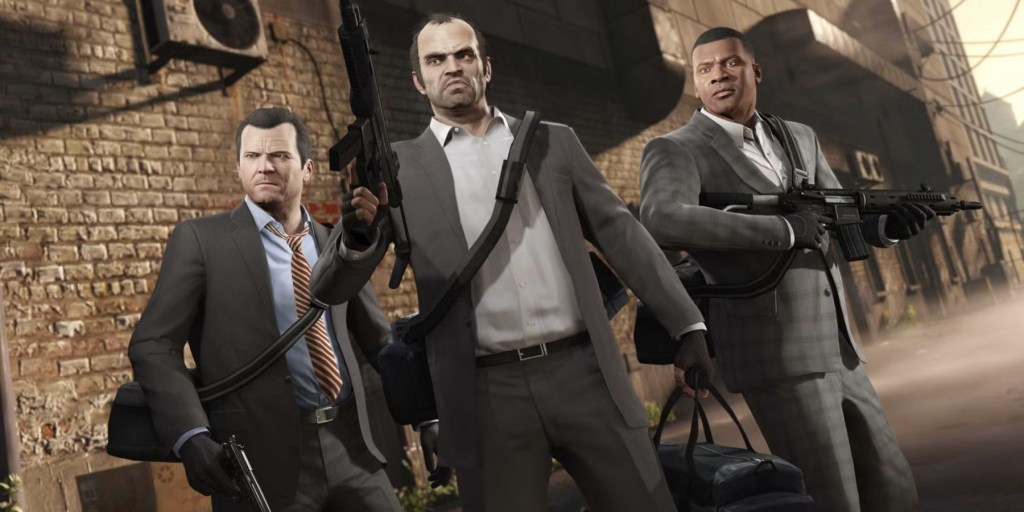
Michael and Trevor are running from a heist gone bad. The cops arrive as the men’s getaway vehicle, a helicopter, isn’t where it was supposed to be. Michael takes a bullet and Trevor escapes across a foggy snow bank. Nine years later, Michael and his family have entered the witness protection program, living it up in sunny Los Santos. Michael has everything a superficial Beverly Hills type could want, but he was much happier when he was pulling big scores. This is the first playable character.

The second playable character, Franklin, is a young street gangster who aspires to leave the hood. He doesn’t like the life he’s “supposed” to live, surrounded by low-level thugs who often brag about doing time for unambitious crimes. During an insurance scam, Franklin meets Michael. Michael sees himself in Franklin and Franklin sees someone who can elevate him to the big leagues. Thus is the beginning of a promising partnership in crime.

When Michael later catches his wife banging her tennis coach, he and Franklin hop into a pickup truck, drive to the man’s cliff-side house, and use a winch to pull one the support structures out from underneath it (just like Lethal Weapon 2). The problem is: tennis coaches don’t live in multi-million dollar houses in the hills. It turns out the house actually belongs to an associate of the Mexican cartel. Now Micheal and Franklin have no choice but to pay off debts by pulling off bigger and bigger heists.

You’ve seen Trevor, the third playable character, in the marketing materials. For several hours of gameplay, however, Trevor is absent. It’s a wise choice on Rockstar’s part. You keep hearing about him in the meantime, amping up the hype until he finally comes blasting into the story with all the kinetic energy of a wrecking ball. As he weasels his way back into Michael’s life, he brings with him the additional heat of The Lost motorcycle gang (remember them?) and the baggage of a meth operation.

The best crime stories work in layers (see: Layer Cake, a film which took the concept literally), folding in one incongruous situation after another. In their attempts to fix one situation, GTA V’s main characters often just create more situations. It’s a heavily layered plot involving methheads, street gangs, various levels of law enforcement, and a private military.

Gone is the feeling you have to do a ton of busywork in order to unlock all areas of the game. You still have to take jobs to advance, but very few feel like filler chores. With the addition of frequent checkpoints, you no longer feel the annoyance of having to start a mission over from the very start, which reduces the urge to rage-quit. Though the ragdoll physics have been downgraded and driving doesn’t feel as realistic, this is the best GTA game yet. All three characters are just as likable as the previous game’s Niko Bellic—and boy, did I really like Niko.

Like many, I was disappointed by Rockstar’s decision to release Grand Theft Auto V on consoles only. That means I’ll have to buy it again on PC if it comes out. And for those of us who played Sleeping Dogs on PC, GTA V is a minor step down in terms of graphics. Even so, I was impressed by the art direction. It’s not quite as pretty as Uncharted titles, but as it simultaneously streams data from your hard drive and the disc itself, you can rest assured that modern technical limits are being pushed. The draw distance is a notch above acceptable and long loading times are a virtually a thing of the past.

Easily the game of the year.

A look back at Tim Burton’s over-hyped Batman picture

1989 was a massive year for movies, the kind of year that only comes around every decade or so. We got a third Indiana Jones, a second Lethal Weapon, a fifth Freddy Krueger, and an eighth Jason Voorhees. Batman was the biggest moneymaker of them all by a large margin. You couldn’t peek into a classroom without seeing at least one bat logo on a kid’s tee.

My parents had taken me to see it at the theater on opening weekend. I found myself a little less interested than I was in the aforementioned movies—perhaps it was exhaustion from the constant stream of movie-going that year. This is probably the first time I’ve seen the movie in over twenty years. It’s okay.

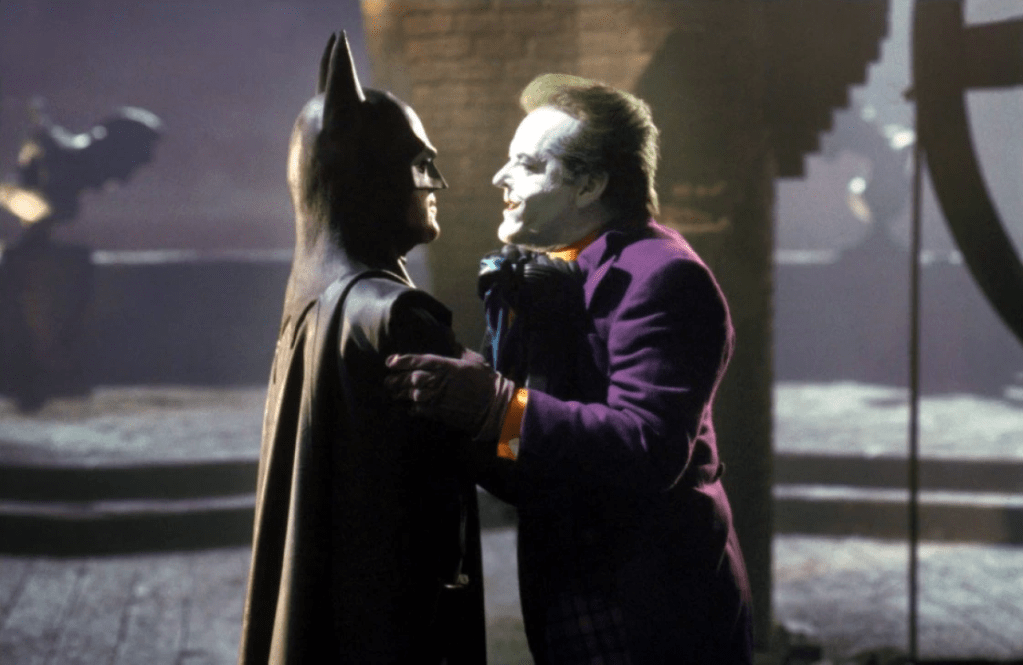
Long before Hollywood became obsessed with telling (and re-telling) the superhero origin story, Bruce Wayne is already Batman at the beginning of his first silver screen adventure. He’s already fighting crime, too, but has yet to establish the trust and cooperation of Police Commissioner Jim Gordon. When a shootout ensues at the local chemical plant, mobster Jack Napier (Jack Nicholson) falls into a vat of acid, which sets the character down the path of becoming the Joker. Christopher Nolan explores the idea a little more in his own Batman/Joker picture: the creation of a superhero naturally begets the creation of a supervillain. Wayne would have to feel at least a little bit responsible in a film more thoughtful than this.

It’s easy to warm to the idea of Michael Keaton as Batman, but the Bruce Wayne scenes are a slog. (Director Tim Burton greatly improves this mediocrity in the vastly superior sequel, Batman Returns, by reducing both Bruce Wayne’s and Batman’s screen time.) There’s a scene early on in which Batman-obsessed journalist Vicki Vale (Kim Basinger) goes on a date with Bruce Wayne. You’d think a guy who’s worth a billion dollars could afford to take his love interest to a nice restaurant, but instead they stay home for an impersonal dinner at a mile-long table. (Later, the Joker manages to take Vicki on a much more exciting date.) If Burton is trying to communicate that Bruce Wayne’s personal life is suffering because of his latex-clad alter ego, something got lost in translation.

It’s no wonder Nicholson gets top billing (and a significantly larger paycheck) as he has all of the greatest lines. “Honey, you’ll never believe what happened at the office today” is my favorite. There’s just something about the way Nicholson says it, and the circumstances leading up to it, that makes the throwaway line one of the more effective gags. (I can’t help but wonder if Jack Palance would have made a good Joker as he’s great in his scenes. Perhaps he chews the scenery quite a bit, but is that really a crime in a movie like this?)

One thing Burton nails is the look of Gotham City, achieved mostly with miniatures, which is so arresting it more or less carries over to the embarrassing Schumacher sequels. Unfortunately, the interiors seem to belong to a much cheaper movie (which is another one of the aspects improved on in Returns). Gotham is justifiably dark yet complimentary to Burton’s more fantastical leanings. When combined with the cartoonish villains, however, the world-building doesn’t always gel.

Two-hour movies really aren’t the place to tell the Batman/Joker mythos. The relationship would be better explored in long-form television, á la Superman’s Smallville. Call it Gotham, if you will. Warner Brothers, you can just send the check in the mail.

Superman Begins (to suck)

Man of Steel is what you get when too-cool-for-school movie director Zack Synder has too little confidence in a pop cultural icon who’s been around longer than anyone reading this. Give me old-fashioned Spandex and red briefs any day of the week. In due time, this blundered attempt at modernizing the hero will prove as dorky as elastic-cuffed jeans and fanny packs. If you want dark and gritty, here’s an idea: Don’t make a Superman movie, jackass.

Conversely, the trailers for Richard Donner’s Superman promised optimism: “You’ll believe a man can fly!” There was so much love poured into that 1979 film, it was bursting at the seams with magic. When Superman takes Lois on her first flight? That’s my favorite movie scene of all time. They made no attempt to modernize (read: dilute) the only thing fans wanted to see: the real Superman on the silver screen. Watching Man of Steel, which attempts to compensate for its weaknesses with exhausting action, one gets the sense the filmmakers would be embarrassed to be seen with the real Superman in public.

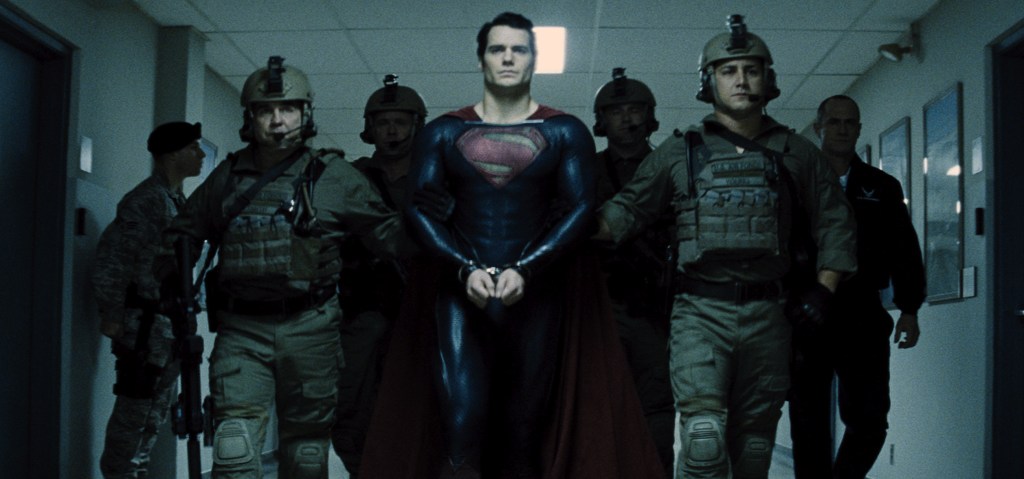
The film isn’t all bad—in fact, it’s far from the worst Superman movie. I’ve gotta hand it to the casting department: Henry Cavill would be the perfect Superman in a competent movie. Russell Crowe and Michael Shannon are best case scenarios for Jor-El and General Zod. Diane Lane is far too young and attractive to play Martha Kent, but great at what she does nonetheless. Meanwhile, Kevin Costner seems bored to be here… and when they have him needlessly murdered by a tornado of all things, can you blame him? (That scene will surely become as hotly debated as the door in Titanic.)

I am beyond sick of Hollywood retreading origin stories every American already knows, but the early scenes set on Krypton are fantastic. The special effects and the action there are breathtaking. The entire movie should have been taken place on Krypton as far as I’m concerned. After a sequence like that, the audience needs a breather. Instead, Snyder immediately throws more carnage and destruction at us two minutes later. I am not exaggerating that time frame.

This is all to say this movie is full of shit. You’ve got military jets and alien invasions and far too many shots of people running away from CGI destruction. Nothing about it feels like Superman, but I guess it’s the Superman we deserve when we keep voting for this shit with our wallets. The inevitable sequels really ought to focus on Martha and Lois a little bit more and Snyder really needs to chill the fuck out.