The Blob (1988) [31 Days of Gore]

I try to do a melt movie every year. This one might be the most mainstream of ’em all.

Like John Carpenter’s The Thing, 1988’s version of The Blob is one of those rare remakes better than the original, which just goes to show screenwriter Frank Darabont had a genuine love for the monster movies he grew up watching (this, by the way, is one of the monster movies I grew up watching). It was obviously a stepping stone along the way to movies like The Mist, but I think this one’s far more unsettling and its use of miniature effects are marvelous in the truest sense of the word. The first one is okay once you’re done stripping away the cult following and the nostalgia, but this one’s throwaway scenes are far more memorable than anything the original had to offer.

When I complain about the pacing in movies like Society, it’s because there’s pacing as good as this. Small town horror films are almost always fun (for reasons I can’t quite put my finger on), but this one especially maintains the momentum. You’ve got the small town sheriff (Jeffrey DeMunn), the small town diner, the small town movie theater, the small town bad boy (Kevin Dillon), and the small town cheerleader (Shawnee Smith).

The cheerleader isn’t an airhead or a damsel in distress, either. She genuinely and quite naturally kicks ass, which is always fun to see in older movies when it wasn’t about making a political statement. Although I’m a sucker for Hollywood romances, it’s interesting that there isn’t really a spark between the male and the female leads. They grow to respect each other, but it’s remarkably platonic for the era.

One day a UFO crashes in the woods and a bum pokes the wreckage with a stick. The gelatinous contents of the downed vessel climb the stick and adheres itself to the bum’s hand. The main characters happen upon the man on a nearby road and rush him to the hospital. When no one’s looking, the acidic blob feasts on its victim and grows several times larger. From there, it begins a feeding frenzy which culminates in the mysterious arrival of G-men in hazmat suits, led by Joe Seneca.

What’s great about this version of the blob is it’s not just an oozing mass. Nowadays it forms tentacles and tendrils, which makes the horror moments really stick out. You’ll see some absolutely terrifying stuff I wouldn’t even dream of spoiling. I don’t know why, but non-Newtonian substances really creep me out, and what director Chuck Russell concocts with some of his confined sets is the stuff of nightmares. The resolution is a cheat, but everything leading up to it is chock full of the reasons I watch horror movies.

The Funhouse (1981) [31 Days of Gore]

 A group of pot-smoking teens head out to the carnival one night when one of them has a dimwitted idea: instead of going home they’ll get on the haunted house ride, depart the rail-guided vehicles halfway through, and spend the night having sex among the creepy skeletons and pneumatically fired jump-scares. That sounds like a dreadfully routine horror film, but The Funhouse is actually one of my favorites because it skims over the usual pitfalls. Director Tobe Hooper gives us exactly what we want without boring us with all the stuff we’ve seen a million times before.

 As a bonus it’s a time capsule of what appears to be a genuine carnival. You can’t tell the difference between stock actors and real carnies, while some of the transients who wander into frame look as if they actually did. You might argue “nothing happens” for the first forty minutes or so, but I don’t think that’s fair. No, an unusual amount of world-building happens, which only heightens everything that follows. During this extended setup, a seemingly banal visit to a (possibly real) freak attraction actually answers a question we’ll have later on.

 Why is this movie so compelling to me? Because these aren’t your typical movie teens. They’re teens, period, and they’re remarkably well cast. Do you know how long it’s been since I feared for a character’s life? How long it’s been since I muttered “oh shit” while watching a movie like this? Everything about Funhouse feels real even though it’s far from it. I couldn’t give two shits about realism, I just want a movie that suspends my disbelief.

 Perhaps my favorite aspect of all is the way the film looks: lens flares are everywhere and there’s been no attempt to touch up the grain and some of the imperfections now that it’s on HD. It’s not quite as gritty or handheld as the movie that put Hooper on the map, but the look lends itself to the horror every bit as much as that one did. It’s one of those films that prove that pretty much all horror movies should be shot on film and viewed in a resolution no less than that provided by Blu-Ray.

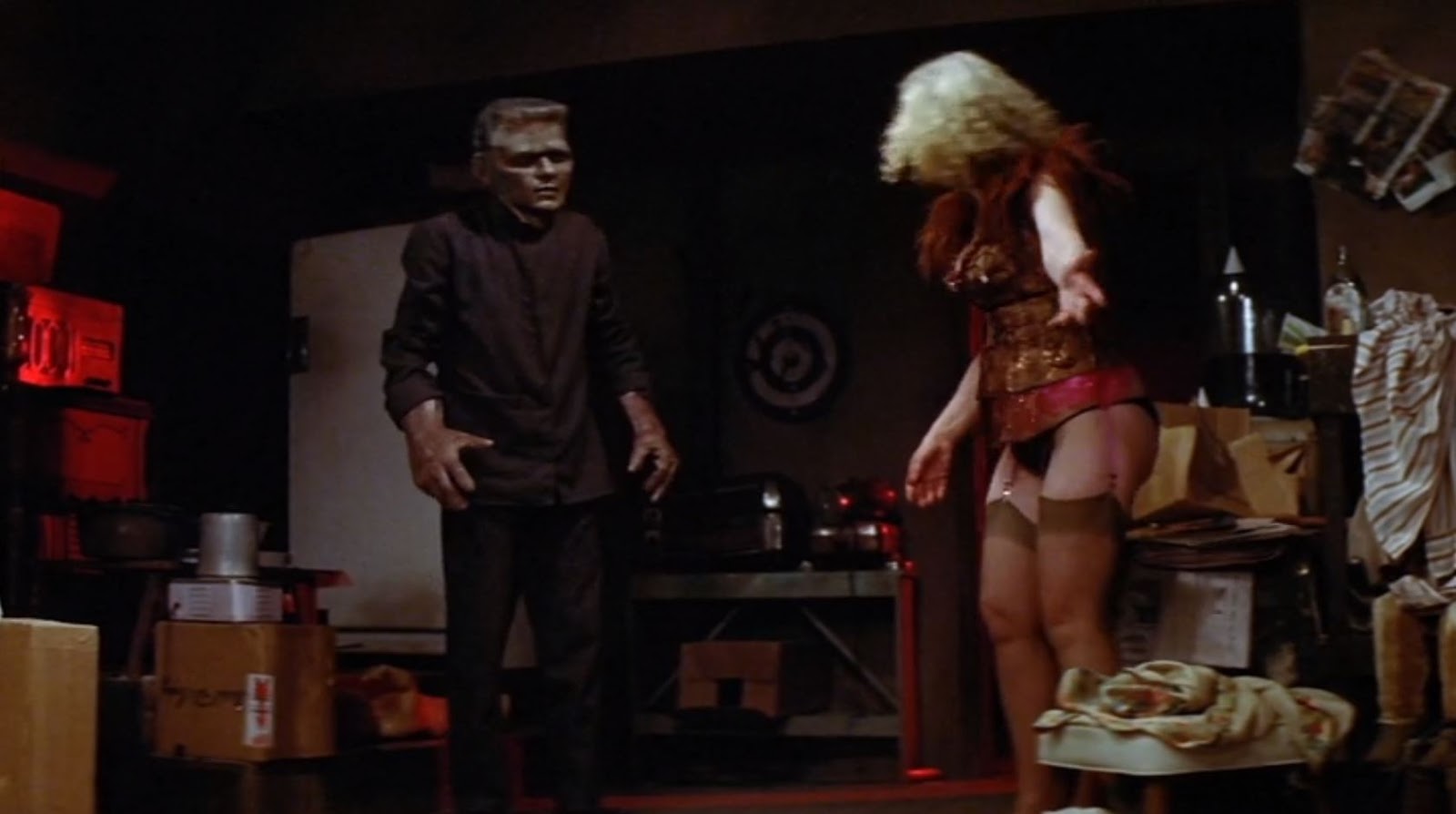
So yeah, you could say it’s “just” Texas Chainsaw Massacre in a fun house, but that’s not really a complaint, is it? I might actually prefer this movie to Massacre. I haven’t even mentioned the antagonists—not because they’re weak, but because the less you know about them the better. The Leatherface analog conceals his face with a Frankenstein mask, which makes it easy to see the influence classics like that had on Hooper and his contemporaries; Leatherface and the “bad guy” in Funhouse both have strong roots in cinema’s most memorable and empathetic monster.

When Funhouse’s antagonist takes his mask off… it’s just one of those moments I live for.

Gerald’s Game (2017) [31 Days of Gore]

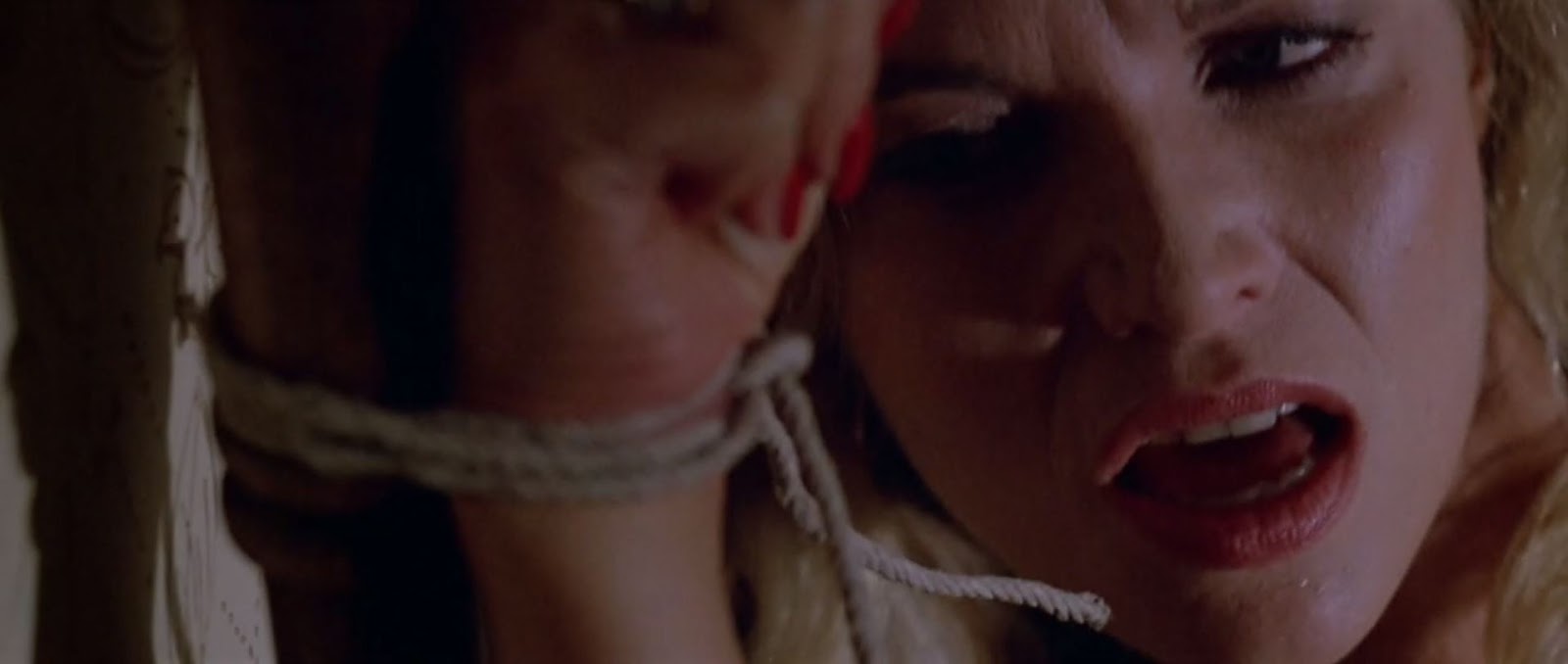
Jessie and Gerald (Carla Gugino and Bruce Greenwood) attempt to rejuvenate their love life by planning a weekend retreat in their isolated vacation home. Once there, Gerald suggests spicing things up in the bedroom with handcuffs. Jessie is uneasy about it and for good reason: these aren’t the novelty cuffs found in adult stores, but the real deal. When Jessie panics and demands Gerald release her, he has a heart attack and busts his head open on the floor.

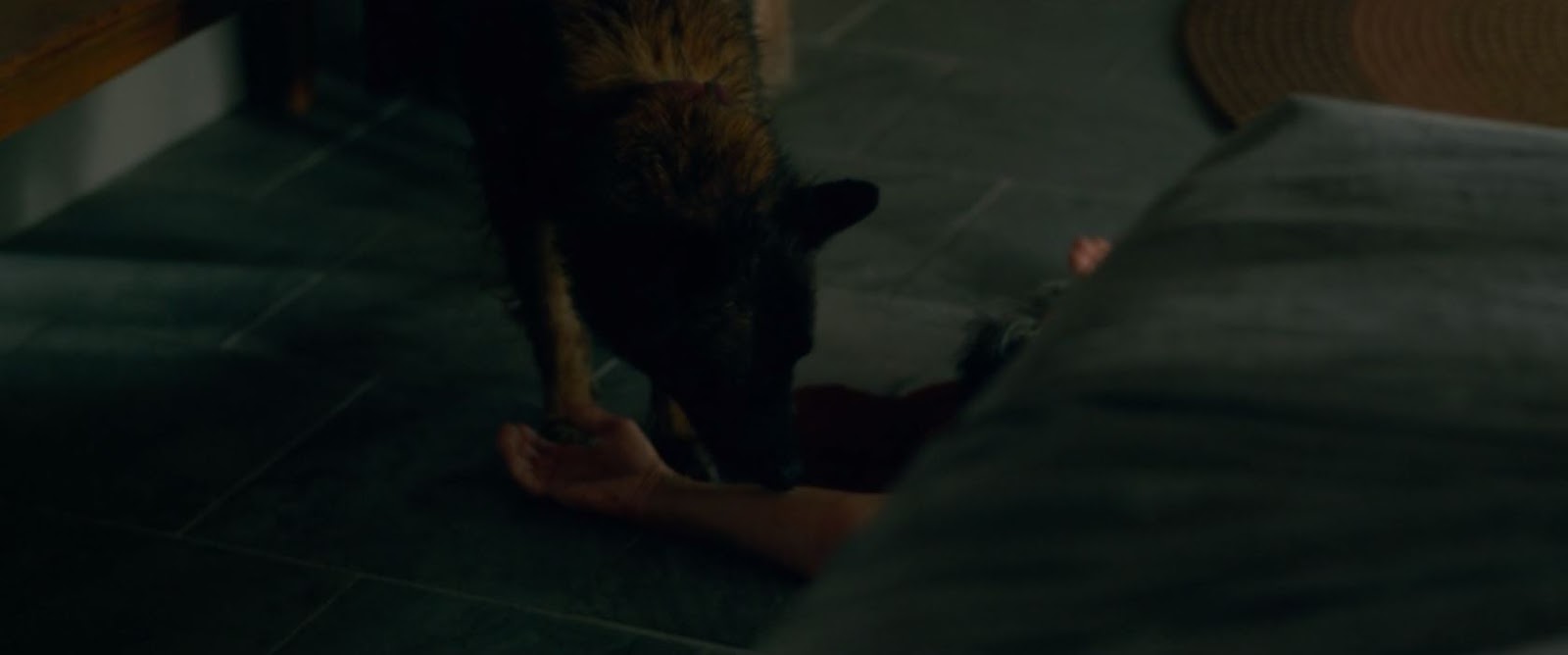
Now Jessie is chained to a bed and has to survive until someone checks on her… which they probably won’t for several days. Unfortunately, Gerald left the front door open and a stray dog wanders in to feast on his body. Jessie knows the dog is going to want fresher meat sooner or later and by then she may not have the energy to kick it away. The Netflix Original isn’t quite as good as Hulu’s 11.22.63 (I don’t think anything that came out that year was as good), but it isn’t by any means bad. Just unusual.

What’s unusual about it is the way the filmmakers figured out how to film Stephen King’s supposedly “unfilmmable novel.” So much of the story takes place inside the heroine’s head that the filmmakers have to concoct imaginary characters for her to talk to, each representing conflicting aspects of her psyche. One of these characters is a fictional version of her dead husband and the other is a more confident version of herself. The film is quite literally “psychological horror.”

A friend of mine complained that when he watched the trailer, he felt like he had seen the whole movie. I watched the trailer after seeing the movie and I agree that it gives too much away, but it manages to save the most visceral and terrifying moments. There’s an entire subplot, which is quintessential King, that’s not even hinted at in the trailer I saw.

The gore in Gerald’s Game doesn’t paint the walls, but it’s there. There are at least two moments which are damn hard to look at, one of which doesn’t spill a drop of blood. The other moment, which is bloody, is perhaps the grossest thing I’ve seen all month… next to that phlegm scene in House IV, anyway.

Tales from the Hood (1995) [31 Days of Gore]

Tales from the Hood’s promotional material spoiled so much of the movie it was a little harder to appreciate at the time of its release. Now, twenty years later, I’ve had enough time to forget the key moments and shocking reveals, of which there are plenty. Today I think it’s one of the best movies I’ve ever featured on 31 Days of Gore. The title makes it sound fun and hokey, along the lines of Leprechaun in the Hood, but this Spike Lee production is dead serious and infectiously angry.

Which isn’t to say it isn’t fun. Bad people get exactly what they deserve, true to its roots in EC horror, but my goodness. The bad people in this movie are really bad. Maybe that’s why the vengeance scenes are so delicious.

My problem with Society was it lost its bite when it gave us the Hollywood ending. I had the same problem with Minority Report, an otherwise perfect movie which turned yellow at the end. When you take issues as serious as these and tack on a happy ending, you’ve diluted your message. The endings for each of the stories in this anthology are anything but safe, which is exactly the way horror ought to be.

 In the container story, three gang members meet with a mortician (Clarence Williams III) in South Central, lured by the promise of a big drug score. But first, the mortician wants to tell them four stories about police brutality, domestic abuse, racist politicians, and black-on-black crime. With most anthology films, you’re lucky if you get one great story, let alone two, but Tales from the Hood starts strong and finishes strong.

 In the first story the mortician tells, the police are the monsters. In the second story, a mother’s abusive boyfriend (David Alan Grier) is the monster; a little boy actually sees him as a demonic presence who creeps into his room at night, drunk and angry. In the third story, Corbin Bernsen plays a monstrous politician with ties to the KKK; the former plantation he lives on is haunted by voodoo dolls. The final story told by the mortician is reminiscent of A Clockwork Orange; Rosalind Cash plays a scientist who uses behavioral modification in an attempt to reform a nasty gang member.

 There are so many great moments in all of the stories: David Alan Grier is truly terrifying; the politician clinging to (and literally hiding behind) the American flag; the unflinching look at gang violence set to gangsta rap… it’s a movie that just keeps building momentum as it moves along, crucifying (sometimes literally) whoever it damn well pleases. The conclusion of the container story is probably the weakest aspect of the movie, if only because it resorts to terrible looking CGI. Otherwise, it’s a perfect ending in the sense it’s not a happy one.

This isn’t just a great horror movie, it’s a great piece of fantasy.


Maximum Overdrive (1986) [31 Days of Gore]

Maximum Overdrive is one of the most gloriously dumb movies I’ve ever seen. In the beginning an ATM tells Stephen King, playing a touristy bystander, to go fuck himself. Minutes later a drawbridge opens prematurely, tossing cars and trucks into one another like toys. The filmmaking here is so incompetent through its overuse of slow motion and slapstick, it’s like something out of a bad screwball comedy. Thankfully, the bar is set so low at the get-go the movie really can’t go anywhere but up.

And man, does it ever go up… up and up and right through the stratosphere of good taste and logic. Children and dogs are killed with reckless abandon. Stunt dummies, when struck by vehicles, explode as if rigged with Tannerite. It’s great to see such a tasteless movie made by a guy who’s been overwhelmingly accepted by the mainstream.

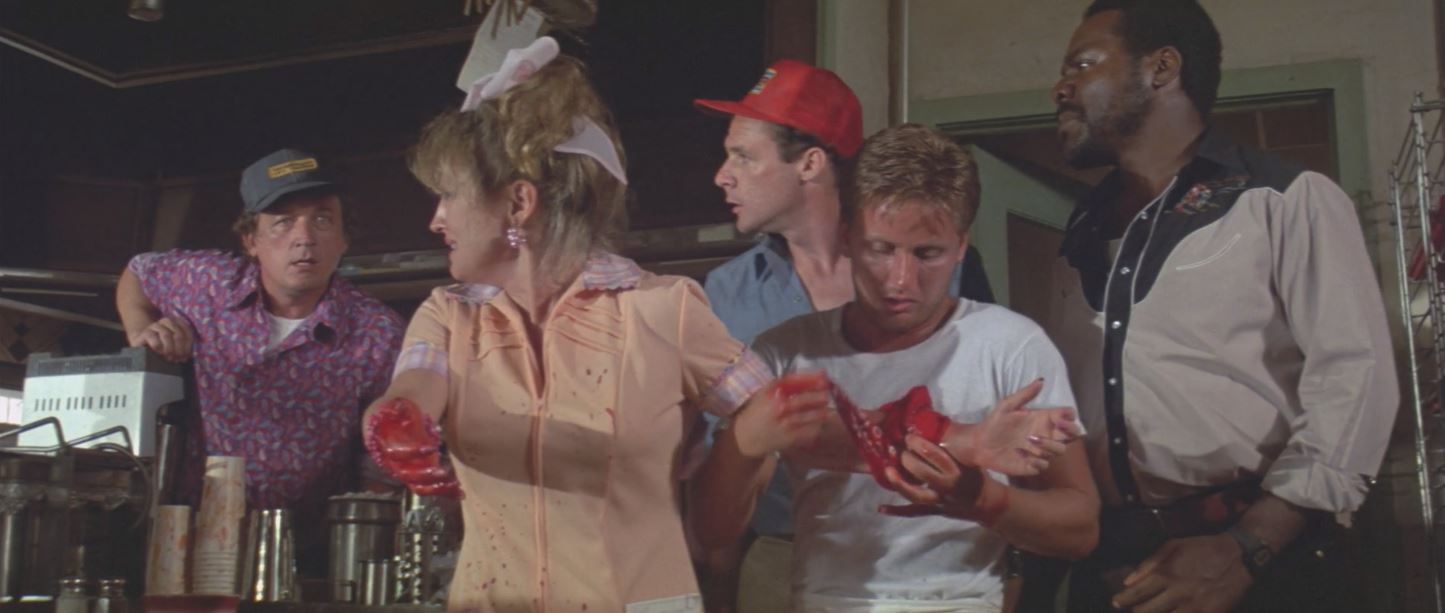
The year is 1986 and Earth has drifted into the tail of a comet. That’s about the closest we get to an explanation for machinery turning psycho on humankind. Soda machines spit out cans at the speed of bullets while steam rollers lie in ambush behind little league scoreboards. For a handful of days, big rigs will rule the planet. This is apparently a global phenomenon, but King focuses on a small band of survivors holed up in a truck stop.

I believe King has been critical of his own movie in the years since its release. It seems obvious cocaine played a big part in many of the directorial decisions here, which is a shame, but I can’t help but love this movie. It’s one of the most entertaining movies I’ve ever seen and, at times, it can be oddly brilliant. There’s a scene in which the machines need something and concoct a way to force the humans into giving it to ’em… I don’t want to spoil it, but I genuinely love that the movie went there. Even better, it spends an appropriate amount of time with the development before speeding back into the inexplicable madness.

Perhaps the most unusual thing about the movie is the child actor is better than his adult counterparts, which include Emilio Estevez, Laura Harrington, Pat Hingle, and Lisa Simpson’s voice actress, Yeardley Smith. At one point the kid is casually strolling through his neighborhood on a bicycle, surveying the victims of the unexplained phenomenon. Some of the murder weapons include: remote control cars, Walkmans, and lawnmowers. It was during this scene when I got hit with the hardest case of the giggles I’ve had all month.

Here’s a movie in which automobiles and guns have become sentient, yet characters still insist on driving cars and carrying guns. Look, you can’t poke holes in the logic of a movie which has none. That’s probably one of the greatest defenses for brain candy like this—the kind of movie in which a truck stop is packed to the brim with machine guns and explosive weaponry.

This is the stuff drive-ins were made for. I’d kill to see it with a midnight audience. What a fun, unadulterated piece of madness.

Shocker (1989) [31 Days of Gore]


 There comes a time when I get burnt out watching all these horror movies in a single month. That time is now. I just… this was a hard one to get through. I really hoped I would like it this time around, but it was even worse than I remembered.

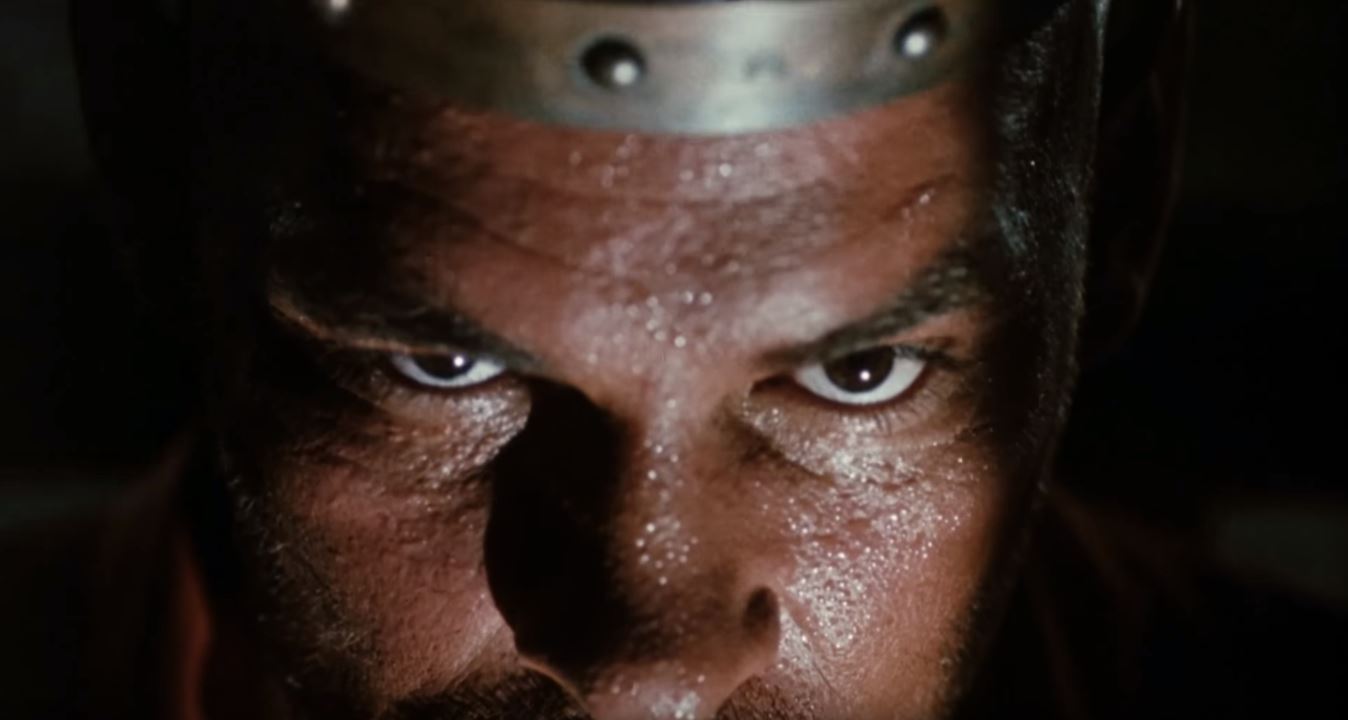
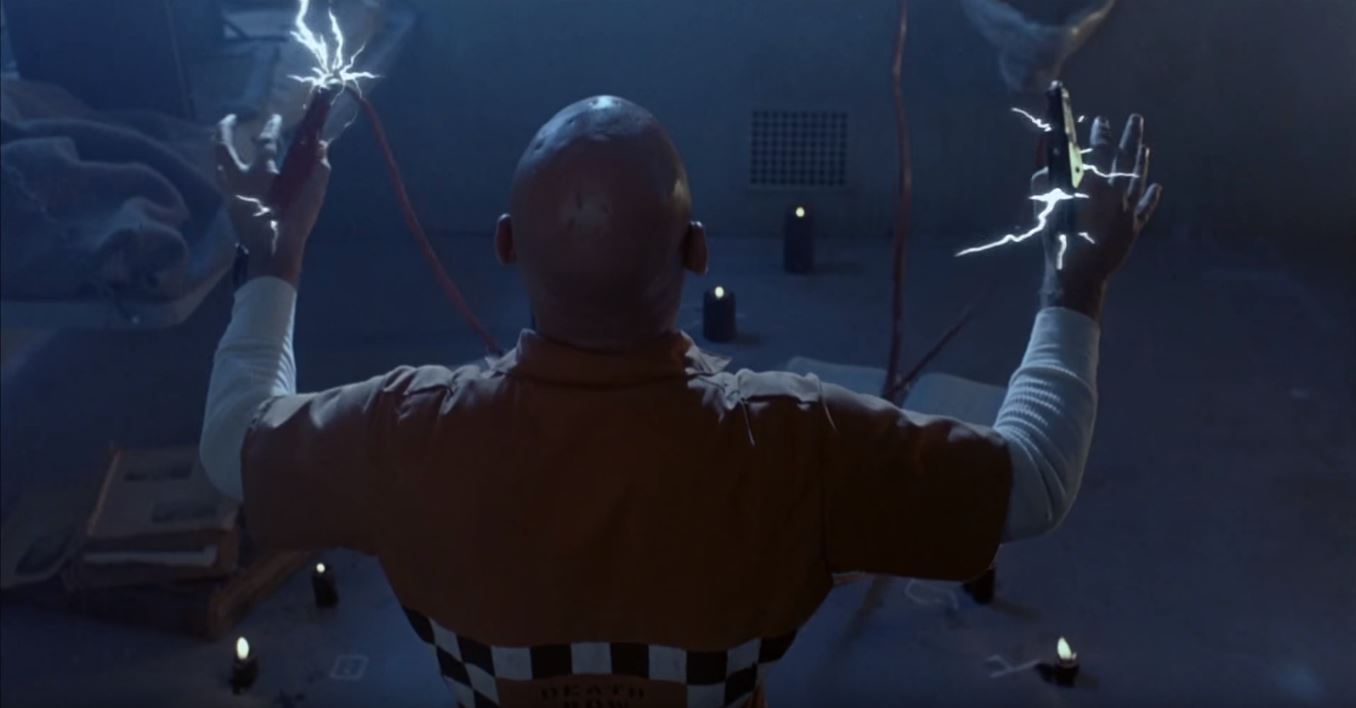
 I’ve heard Shocker described as a cult classic, but that can’t be right. It’s about a serial killer who gets transformed into pure energy after he’s fried in the electric chair. The problem is the movie’s so slow, the execution scene doesn’t take place until almost fifty minutes in; better movies would have knocked out the setup in five to ten minutes. For all the time it spends setting things up, there’s very little payoff and even fewer explanations.

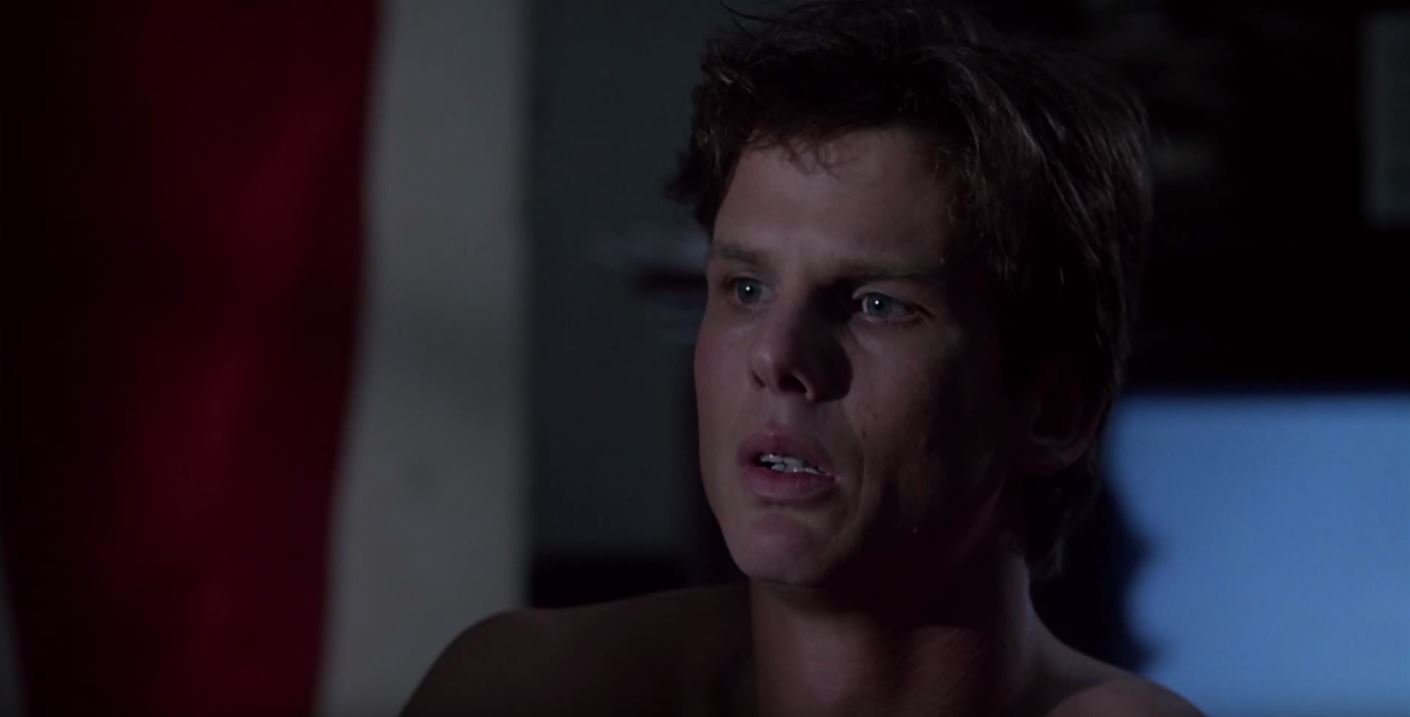
Peter Berg plays a high school jock who bonks his head on the field goal. Shortly after the concussion he has visions of the killer’s crimes, which ultimately lead to his arrest and conviction. That’s not all: Berg’s girlfriend is a helpful ghost and there’s even less of an explanation for why he can see her. As for how the killer gained his powers in the first place, there was an inexplicable ritual involving candles, a television, and jumper cables. I don’t need every little thing explained to enjoy a movie, but not a lick of this makes any sense.

Venturing into spoiler territory: Peter Berg chases the killer into a television set for the film’s climax, passing through its screen magically. Much like the scene in Waxwork II, the rivals fist fight from one famous piece of footage to the next. It’s the kind of wackiness I usually appreciate in horror movies, but although it looks pretty convincing it simply isn’t exciting. This is partly because the rules governing the whole affair are incomprehensible… saying any more would spoil the end, but I guarantee you’ll be scratching your head, too.

 Wes Craven, who I generally like, was obviously trying to create another Freddy Kruger. Freddy was effective because he got you in your sleep, something you can’t hope to escape. Here, the killer gets you through technology, which is just as inescapable as sleep, but the transparent attempt at striking oil twice is too much to ignore. I will say Mitch Pileggi, who plays the villain, is pretty damn good.

It’s just a mediocre movie, which I find far more offensive than a flat-out bad one. The effects are quite good, though, and I’m giving Craven the benefit of a doubt. It looks like a good movie ruined by things out of his control.


The Critters series (1988-1992) [31 Days of Gore]

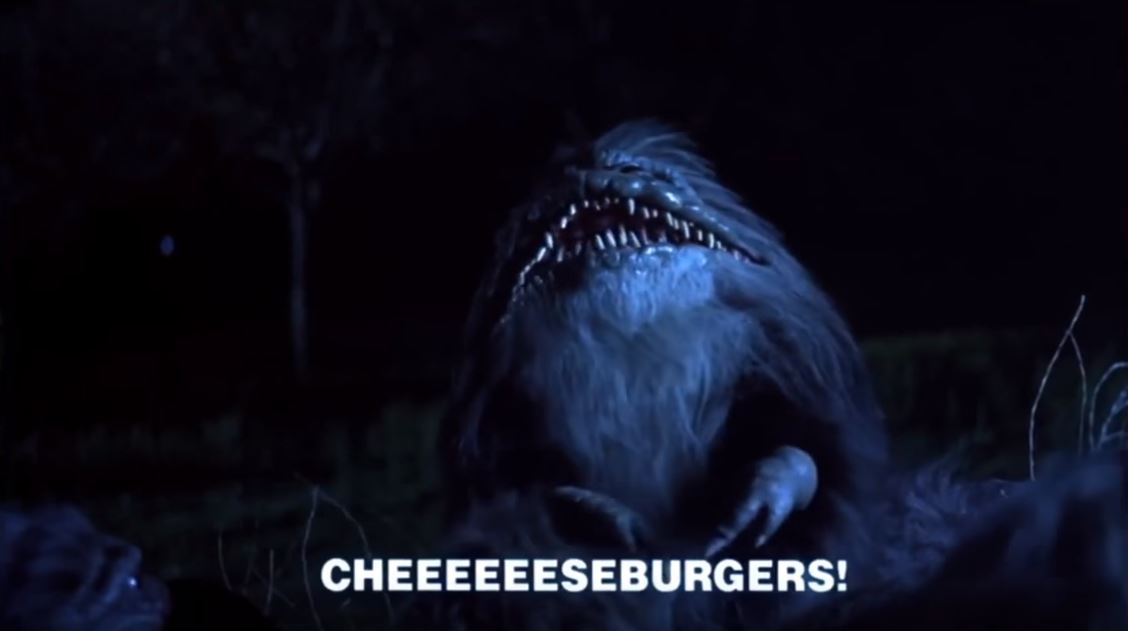
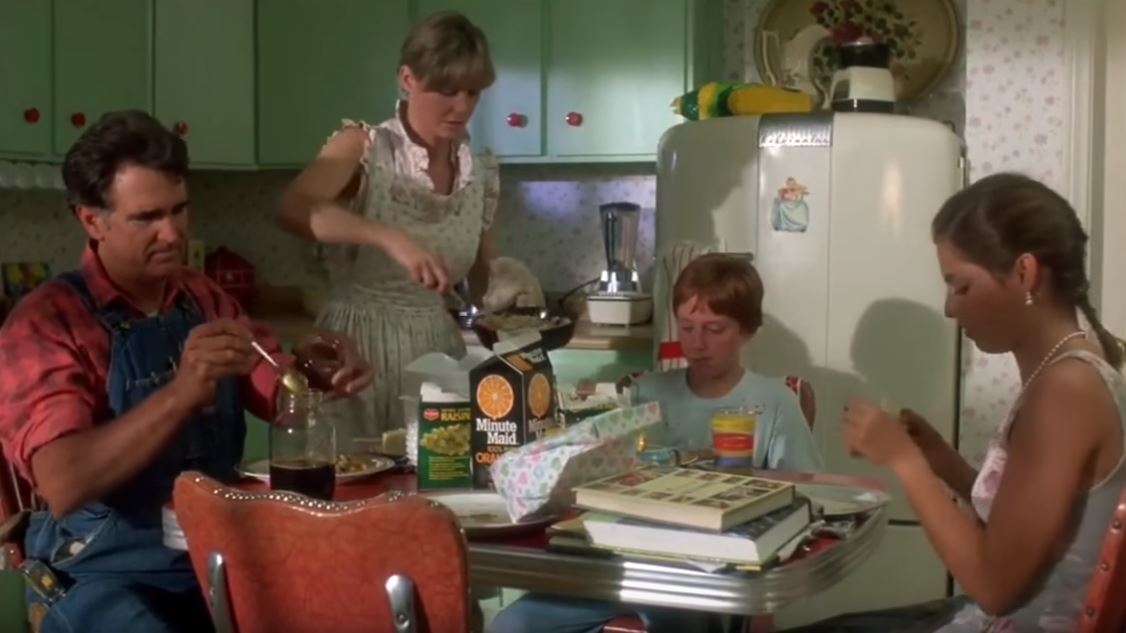
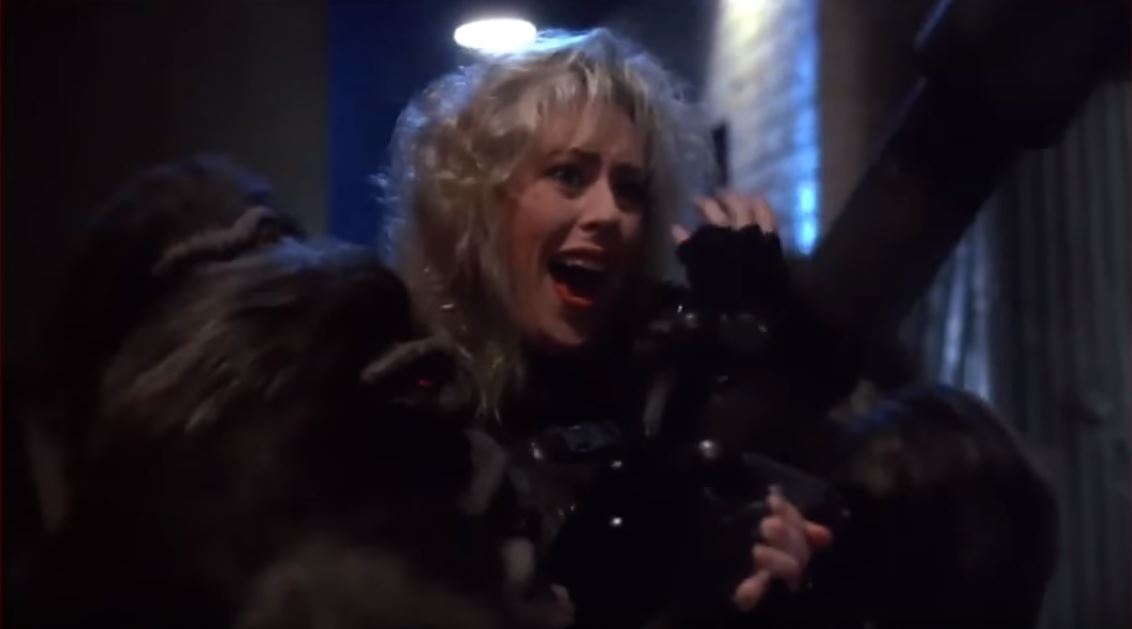
A note about the screenshots in this post: I forgot to take them from the movies when I had a chance so I pulled them from Movie Timelines’ excellent YouTube channel. This guy may not have the best audio and video quality, but he offers a fun way to revisit movie franchises. (I’m going to throw a shout-out to Screaming Soup as well, for no other reason than I feel like promoting YouTube channels today… I’ll drop two more recommendations in the Critters 2 review.)

Oh, how I used to love Critters. No, I wasn’t too stupid to realize it was a Gremlins cash-in, but a lot of the movies I like are cash-ins. Thankfully, there’s a distinction to be made between good cash-ins (such as Lucio Fulci’s Zombie) and lazy ones (such as Critters 4).

Critters (1986)

I’m not saying Critters is a great movie, but when there’s fifteen hundred movies about vampires and werewolves, don’t we have room for a handful of movie series about pet-sized monsters? Yes, the Gremlins series is better (and surprisingly darker than Critters despite its relative lack of blood), but that’s like going out of your way to say a fine restaurant is better than McDonald’s: sometimes you just want a Quarter Pounder with cheese and a lot of the time it’s much more satisfying. You’ve also got all the other fast food chains to choose from: Ghoulies, Hobgoblins, Munchies, Elves, the little monsters from The Gate, Cat’s Eye, and, one of my favorites, Trilogy of Terror. 

That’s a lot to choose from, but the situation is far from saturated. I’m just saying: more tiny monsters, please. And in the meantime, Critters is one of the better examples of the sub-genre.

The Brown family are the wholesome types, living on a farm in the countryside. Dee Wallace and Billy Green Bush are the parents while M. Emmet Walsh plays the sheriff. (Lin Shaye and Billy Zane are in this, too.) Then there’s the town drunk, named Charlie, a gap-toothed buffoon who becomes the unlikely but likable hero of the series. Unbeknownst to these earth-born characters, a couple of intelligent aliens known as krites have hijacked an extraterrestrial spaceship and hightailed it to our planet in order to feast on humans.

Then a couple of alien bounty hunters come to Earth to exterminate the krites. These guys are face-shifters who can look like anyone they want. One assumes the face of a popular rockstar while the other tries on the style of just about everyone he meets. He eventually chooses to look like Charlie, which really doesn’t have anything to do with the plot… I’m not sure what they were going for here.

A couple things to admire about movies in the 80s: they still had slow-burn beginnings and didn’t require a bazillion dollars to entertain us. But let’s point out a couple of bogus things, too: the movie straight-up rips off a scene in E.T. in which Elliot artificially warms his thermometer in order to play hooky (funny that both movies should feature Dee Wallace). Then, it rips off a scene in Gremlins which references E.T…. not once, but twice.

Enough nitpicking. Here’s what great about the mischievous krites: they talk. When one of them is blown away by a shotgun, the other exclaims in an alien language: “Fuck!” No, their antics aren’t quite as hilarious as the gremlins’, but they’re a load of fun and The Chiodo Brothers’ simplistic effects are far better and effective than they have any right to be.

Critters 2 (1988)

I clearly remember the day Critters 2 showed up at the local video store because I just about crapped my pants. I’ve said before that I admire its director, Mick Garris, and you can do worse than spending an afternoon on his official YouTube channel. What I like most about Garris is he’s a genuine horror nut. He took part in Joe Dante’s Trailers From Hell, unabashedly describing this, his maiden film, as “a low-budget sequel to a rip-off of Gremlins.

So the Browns have moved since the original film, but the son (now a teenager) has returned to town in order to visit his grandmother. (This is really just a nice way of saying most of the other actors passed on the sequel; interestingly, M. Emmet Walsh’s character is now played by Barry Corbin, which has gotta be one of the least distracting actor replacements of all time.) It turns out the eggs we saw at the previous cliffhanger have an incubation period of two years, which makes you wonder how the two critters in the first film turned into roughly a dozen in a matter of minutes.

Charlie the drunk has cleaned up his act since the first movie. Although we clearly saw the bounty hunters leave Earth without him, it’s established early on that he’s actually been going on space adventures with them. As expected, when the eggs inevitably hatch, the trio of bounty hunters return to Earth and start shooting the town up. Ug, who assumed the appearance of an earth-based musician, is still rocking the same face but radically different hair. His partner Lee changes his/her face numerous times throughout the picture without rhyme or reason. Again, I’m not even sure what the writers were going for with this face-changing stuff, but whatever.

The film takes place over Easter weekend and, due to a series of unlikely events, krite eggs are hidden for the little children to scavenge. Sounds like an awesome premise, but the movie never really does anything with it. (There’s actually quite a few of these anti-payoffs, particularly toward the end… there things happen only to be rendered pointless seconds later.) The cute little bastards hatch, wreak havoc, and the Easter egg hunt is never mentioned again.

Here’s the level of character stupidity we’re dealing with here: in one scene, the sheriff is attacked by krites, who managed to get inside his Easter Bunny costume, and thrown through the window of a church. Someone suggests it was a farm accident. Yeah.

Although this one doesn’t outright copy Gremlins like the original did, it certainly feels a lot more like Gremlins in the way the krites go about their shenanigans. Once again, the absolute limit of the PG-13 rating is pushed as Garris gets away with full-on breasts and a surprising amount of gore. I like the look of the original film better, mostly because I prefer night scenes, but the creature effects are just as good if not better.

Critters 3 (1991)

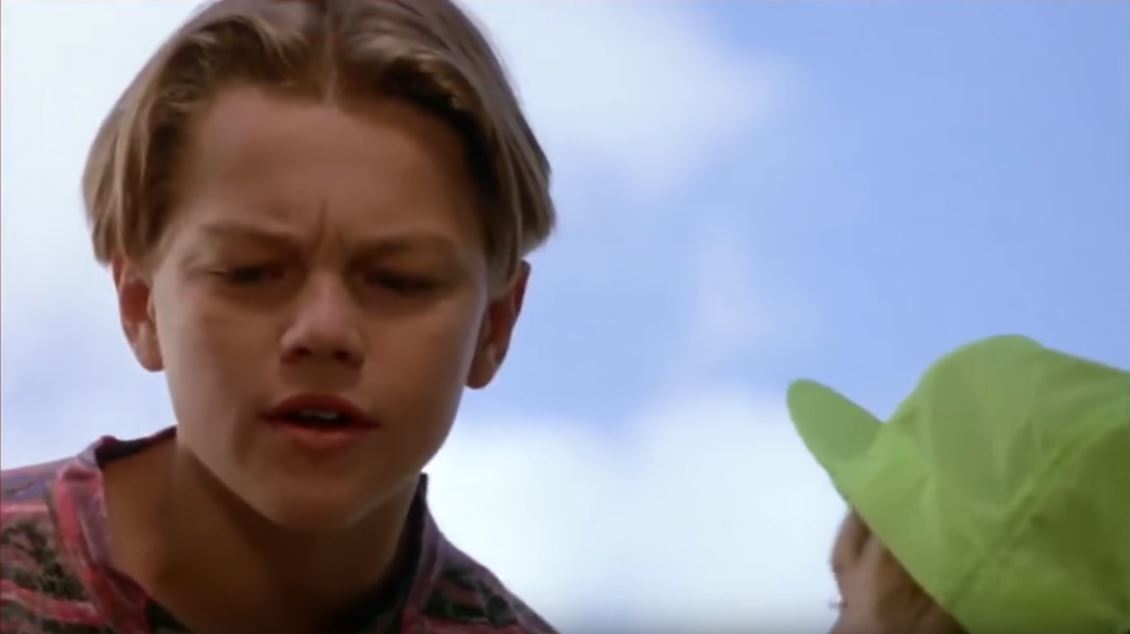
Yep, that’s Leonardo DiCaprio in his first feature. (How he didn’t win the Oscar here, I’ll never know.) He plays the son of a vicious landlord who’s evicting all the tenants from his rundown apartment building. What they don’t know is a fresh batch of krites have just moved in and they’re about to feast on the remaining dwellers… slowly and boringly.

I remember catching this on TV one weekend. I eventually got bored and decided to play Nintendo instead. I wouldn’t say straight-to-video sequels are the bane of my existence—I liked at least one of the Universal Soldier followups and didn’t completely hate Hellraiser: Deader—but it’s usually a safe bet they’re going to suck.

Critters 3 isn’t an exception, although it has its moments. As usual with the franchise, the best part is the critters themselves. The creature designs look creepier than ever (the red eyes have never been as vibrant), but there’s a slight reduction in the puppetry itself, probably because the filmmakers didn’t have the budget or the schedule they had on previous movies.

The second best part of these movies is Charlie, but in this one he only appears in the beginning and at the end. I appreciate they were trying to do something different, but it was the wrong decision nonetheless. The final product is neither good nor bad enough to entertain, but I was less offended by its mediocrity than most unnecessary sequels.

There really isn’t any more to say about this one.

Critters 4 (1992)

Hey, look! They shortened the wait between movies! That must mean this one is especially great!

At the end of the previous film, Charlie was contacted by Ug, via space telephone, and told he couldn’t destroy the final two krite eggs because it’s against intergalactic law to extinguish an endangered species. Charlie’s orders: wait for an autonomous pod to arrive and store the eggs for safe keeping. Critters 4 picks up immediately after this cliffhanger and you’d expect it to retain some of the momentum—what little was left—but it drops the ball immediately.

When he climbs in to store the eggs, the cryogenic pod malfunctions, freezes Charlie, and takes off for deep space. For reasons not explained (or maybe I was sleeping during the explanatory dialogue) the pod never makes its way to its intended destination. Instead, it’s coincidentally picked up by a far-future group of space travelers, including Brad Dourif and Angela Basset.

I didn’t pick at the earlier films, not because they were without flaws, but because they were fun. I’m going to pick at this one because I hated every second of it. For one, these people have no idea how mindbogglingly big space is. Two, they have perfected cryogenic freezing biological organisms, yet the entire crew remains awake for a space trip which takes years?

Here’s my dilemma: I enjoy three of the performers in this film, so I can’t blame it on them. I’m a big fan of co-writer David J. Schow, so I can’t blame it on him, either. I know next to nothing about the one-time director, but I’d hate to place the blame solely at his feet either. Let’s just pretend it never happened.

My mind was so bored I began to long for the previous films, which actually had a bit of worldbuilding in the background. You got the feeling Ug and company were going on crazy adventures every week, that there were worlds much more interesting than earth, that there were critters out there far wilder than the krites. It all could have been spun off and woven into a rich, expanded universe—comics, books, TV shows—but instead the series ends with a painful whimper.

In fact, I’d rather see something new in the Critters universe than an unneccessary Han Solo spin-off. But it seems the owners of the Critters IP were so tired of it, they were intent on killing it forever.
Little Evil (2017) [31 Days of Gore]

I’m glad Netflix has gotten into the movie production game, but man, they really need to step it up. It’s not quite bad enough to call “mediocre,” but I can say with 100% certainty I’ll never watch it again.

Adam Scott and Evangeline Lilly play newlyweds in Little Evil, a comedic take on Richard Donner’s The Omen. What Lilly failed to mention was her odd little boy, who Scott struggles to connect with, may or may not be the Antichrist. The concept is ripe for dark fun, but dressing the boy exactly like Damien and surrounding the leads with stock comedy characters isn’t very creative. This is routine stuff, only marginally better than your average Adam Sandler flick.

The supporting cast is decent enough. You get Sally Field, Clancy Brown, Donald Faison, and Bridget Everett who plays the kind of sidekick usually reserved for dimwitted males. She’s a dude-bro who makes dumb sex jokes and owns a monster truck. I like it and I don’t… good idea, disappointing execution.

What I loved about The Omen was I couldn’t wait to see how it resolved; you knew they probably wouldn’t kill a kid in a Hollywood movie, but if Gregory Peck didn’t kill the kid, the world—and all its children—would die. There was a little bit of that suspense in Little Evil, too, but then the filmmakers cheat and give themselves an easy out. That decision takes us far from the realm of “dark comedy” and puts us right back into “routine comedy” territory.

I love a good comedy, but this ain’t one of ’em. There are funny moments and it never really felt insulting to the intelligence, but rarely did I laugh out loud. Oh well, it just isn’t my kind of movie.

While Netflix Originals aren’t quite as good as theatrical productions, they’re a helluva lot better than the straight-to-video trend which proceeded them. Little Evil isn’t a movie I would recommend if it had premiered in theaters, but it’s an okay watch for a casual afternoon, provided you already subscribe to Netflix. I certainly don’t think it’s as funny or well made as the director’s Tucker & Dale vs Evil, but you could do a lot worse.

Society (1989) [31 Days of Gore]

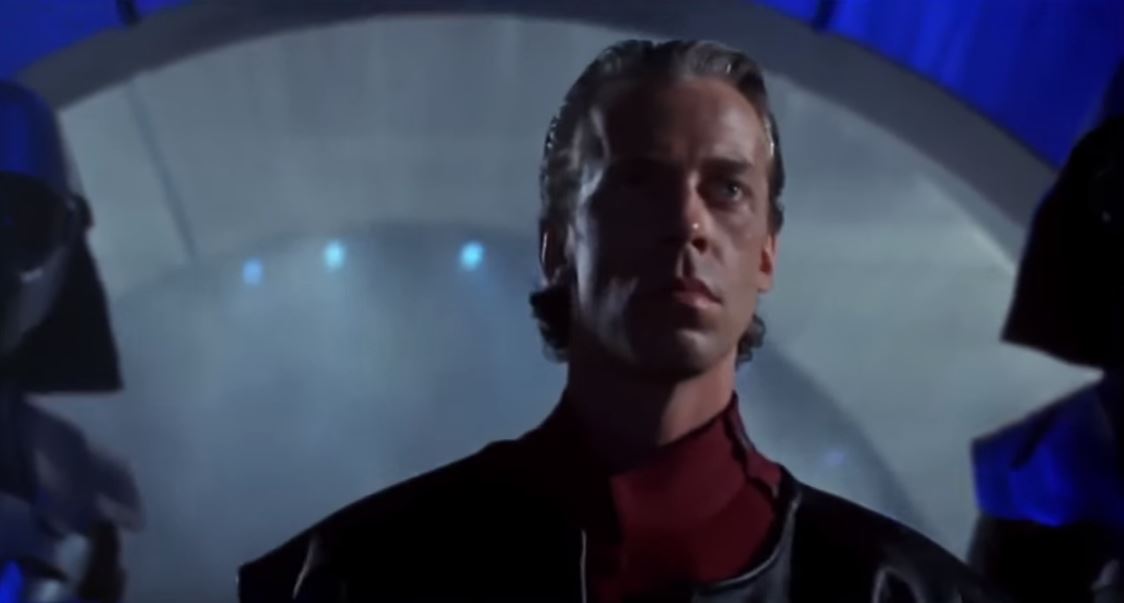
I’m generally a fan of director Brian Yuzna and special effects guru Screaming Mad George. Maybe they don’t make a lot of great movies, but they almost always make movies that are great to look at. As expected, Society is far from being a great movie, but I’ll be damned if there isn’t some great stuff in it. 90% of that greatness comes at the finale, which is far more memorable than the rest of the jerkily paced movie.

Television actor Billy Warlock plays Bill Whitney, a high school student who’s plagued by disturbing visions. (Yuzna credits his inspiration for these sequences to Salvador Dali’s The Great Masturbator, which should give you an indication of how weird Society can get.) Bill confides in his shrink that he believes he was secretly adopted because his family seems so alien to him. He also insists he doesn’t fit in with his classmates, but the scenes in which he’s seen at school are contradictory to this proclamation.

Early on there’s a scene in which Bill catches sight of his sister’s figure through the translucent door of the shower. Something about the image is not quite right, though; as Bill is inexplicably drawn toward the shower, his point of view reveals her anatomy is all out of whack. Later, when he ends up making love to one of his classmates, one of her hands caresses his body in a manner which would be humanly impossible. This is the best stuff the movie has to offer: the surprisingly subtle optical illusions.

What it’s not so good at is its pacing and character development. Bill isn’t portrayed as a teen who’s trying to live his life in spite of his problems. He’s portrayed as a normal teen who doesn’t even think about his problems whenever they’re not actively haunting him. In the normal scenes he seems like a completely different person, entirely unaffected by his life-altering troubles. This has the unfortunate side effect of making the movie feel uneven, as if they wanted half a horror flick and half an 80s comedy.

Back to the infamous finale: this is some of the best special effects work you can get, provided you like creature effects and body horror. The pacing still feels a little off, but even I have to admit I’d be dead not to be moved by something so fantastically macabre. I think this could have been a great movie, but they could have easily trimmed twenty minutes to make it move smoother. Also, resolutions like this one don’t exactly mesh with this kind of satire. It’s a cheat when a movie as fucked up as this one takes the easy way out.
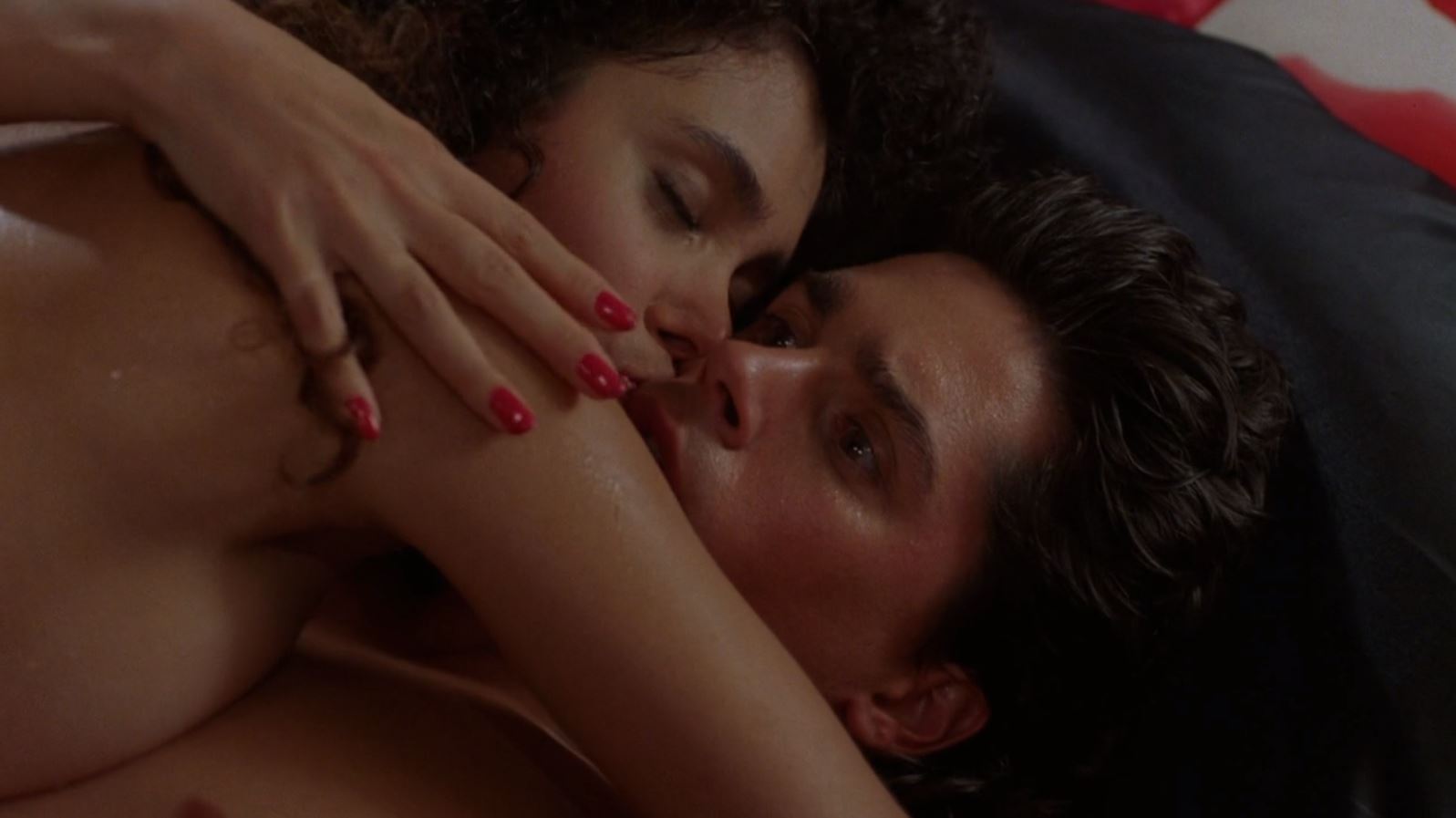
Otherwise, there’s something special here. You just have to look for it sometimes.

The New York Ripper (1982) [31 Days of Gore]

The New York Ripper is an acquired taste. In it, a serial killer who’s adopted a Donald Duck voice to taunt the police is murdering beautiful young women in The Big Apple. That’s it. That’s the entire setup.

The immediately apparent aspect of movies like The New York Ripper is the surrealism, which is likely the byproduct of an Italian film crew making an “American” movie. A foreign actor whose accent has been dubbed over should, in theory, be undetectable, but that’s never the case. And although Fulci and company drag their handheld cameras to the darkest corners of NYC, it doesn’t quite look like the city we’ve seen in countless movies. Some of the indoor locations were probably filmed in Italy, but even the stuff that’s undeniably New York feels… off.

“Off” is an effective feeling in horror movies.

As with Pieces, there’s something inherently fun about the tone in a drive-in movie kind of way. And it’s bold in the way it never cuts away from its depictions of sex or violence prematurely. The fact that it was the cinematic embodiment of everything the Moral Majority rallied against doesn’t hurt either, an aspect I think is lost on moviegoers who didn’t grow up in such embarrassingly stiff times (the VHS copy of The New York Ripper has nearly five minutes removed to appease Reagan-era sentiments).

Too many people maintain that a movie is always more effective when it only implies the carnage. If that were strictly true, why do the crusaders only rally against the ones that dare to show it? Better yet, why can’t we just appreciate both types of movies?

Fulci and his crew go everywhere in this movie and you get the feeling they did an awful lot of it without permits: sex shows, grimy movie theaters, disturbingly empty subways. This is a gritty film highlighted by cartoonish, over-the-top violence and the killer’s comical voice. It’s also one of the better movies I’ve featured this month.