The Toxic Avenger (2025)

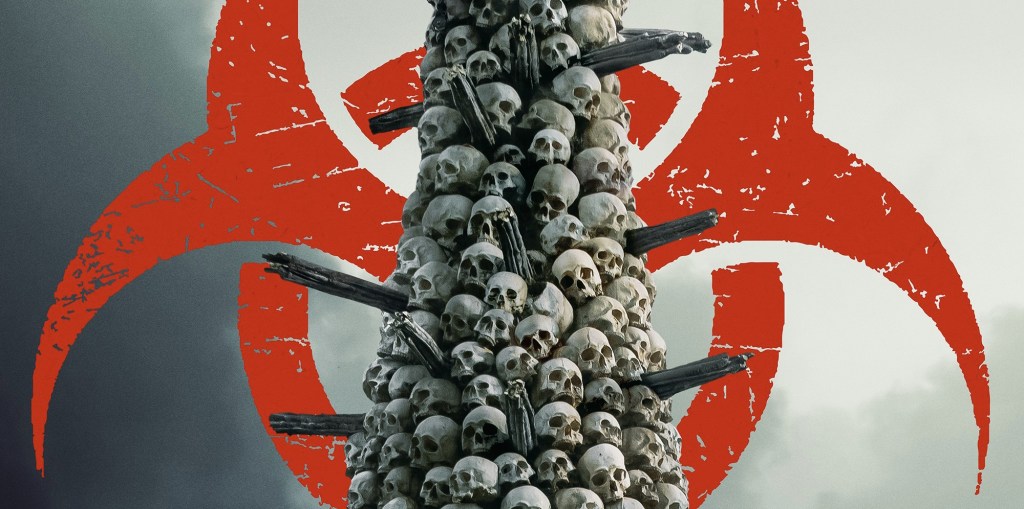
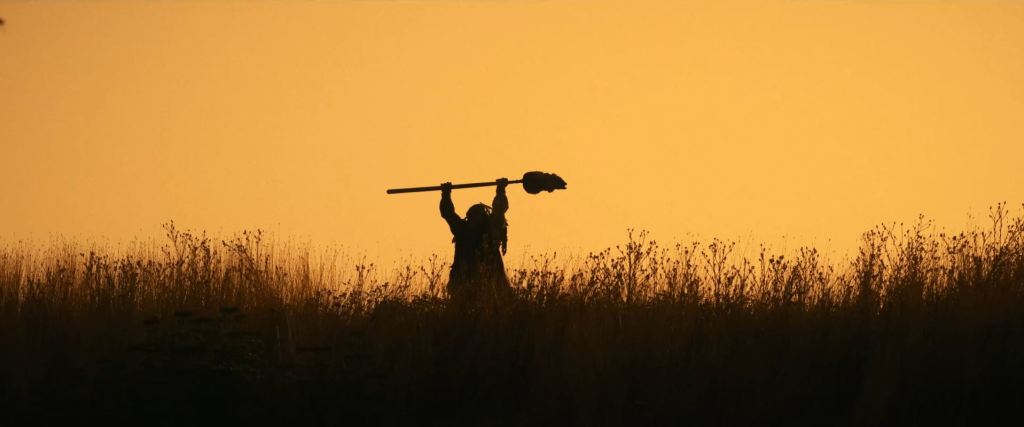
Winston Gooze (Peter Dinklage), the janitor at a corrupt drug manufacturer, has just been given six months to live. That night, the single parent gets drunk and roams the streets as he wrestles with the fear of leaving his stepson (Jacob Tremblay) alone. How he ends up in a tutu is less believable than how his counterpart, Melvin Junko, ended up in a tutu in Lloyd Kaufman’s original film of the same name. (This time around, the Toxic Avenger’s origin story isn’t part of a cruel prank, so one wonders: Why didn’t he just take the tutu off before leaving the house?) Ultimately, Winston decides to rob his employers and finds himself in the factory’s toxic runoff, which hideously deforms him, but gives him superhuman strength.

The large cast of villains (I especially like the henchman who never misses an opportunity to do a flip) are led by the corporation’s evil CEO, played by Kevin Bacon, who surprisingly understands the kind of movie he’s making, but at no point tries to hams it up as Hollywood actors tend to do in these kind of films. His runt of a little brother is played by Elijah Wood, who seems to genuinely enjoy appearing in oddball genre affairs ever since securing his massive fortune in The Lord of the Rings trilogy. Meanwhile Peter Dinklage perfects the right amount of grounded acting and comedic timing.

As a lifelong fan of the original, I went into The Toxic Avenger fully expecting it to suck as reboots of cult classics almost always do. I was surprised to find the most competently paced of the five films and, overall, I’d place it second only to the 1984 original… and if you were to rate it higher, I wouldn’t feel the need to fight you. Recently, there’s been much hullabaloo about The Naked Gun reboot potentially resurrecting the spoof film. Here’s literally the same type of cathartic laughter.

The trailers don’t convey how solid the movie is; Lloyd Kaufman’s films flew in the face of Hollywood conventions while the reboot prefers to satirize and indulge in them equally. In some ways it feels like a throwback to the superhero film of the 90s, before they became monotonously noisy and bloated with clap-bait for nerds. I know the competition is extremely incompetent, but director Macon Blair has crafted one of the least insulting reboots I’ve ever seen. This is as good as a mainstream Troma movie can possibly be.

My only complaint is they didn’t kill the cat. What’s a Troma movie without a handful of “that’s so wrong” deaths played for shameless entertainment? In the original you had old ladies beaten to death and children’s skulls crushed by moving cars. You could say this one pulls its punches in that respect, but that doesn’t feel like its intention. It’s just doing its own thing, in its own way, and it does it especially well.

Frankie Freako (2024)

When Conor’s wife gets dolled up in lingerie for date night, she tells him she was thinking that maybe they could do a little more than hold hands for a change. “What more is there?” Conor asks incredulously. There are many movies (most of them) in which I simply wouldn’t accept a joke as lame as that, but it’s less about the joke and more about the way it’s told. In his previous film, Psycho Goreman, director Steven Kostanski included a scene that had me laugh uncontrollably for several minutes straight; it involved a telepathic connection taking place, without warning, in a bathroom.

In an even earlier picture of his, Manborg, Kostanski crafted an entire feature held together by a few hundred bucks, duct tape, and a load of guerrilla creativity. That movie relied heavily (and charmingly) on the kind of CGI that wouldn’t convince a toddler, but boy was it fun. The bigger his budgets get, the less he relies on CGI and the more he employs the kind of practical effects that tickle me to pieces. In Frankie Freako, I’m thrilled to report the creature effects are obvious puppets.

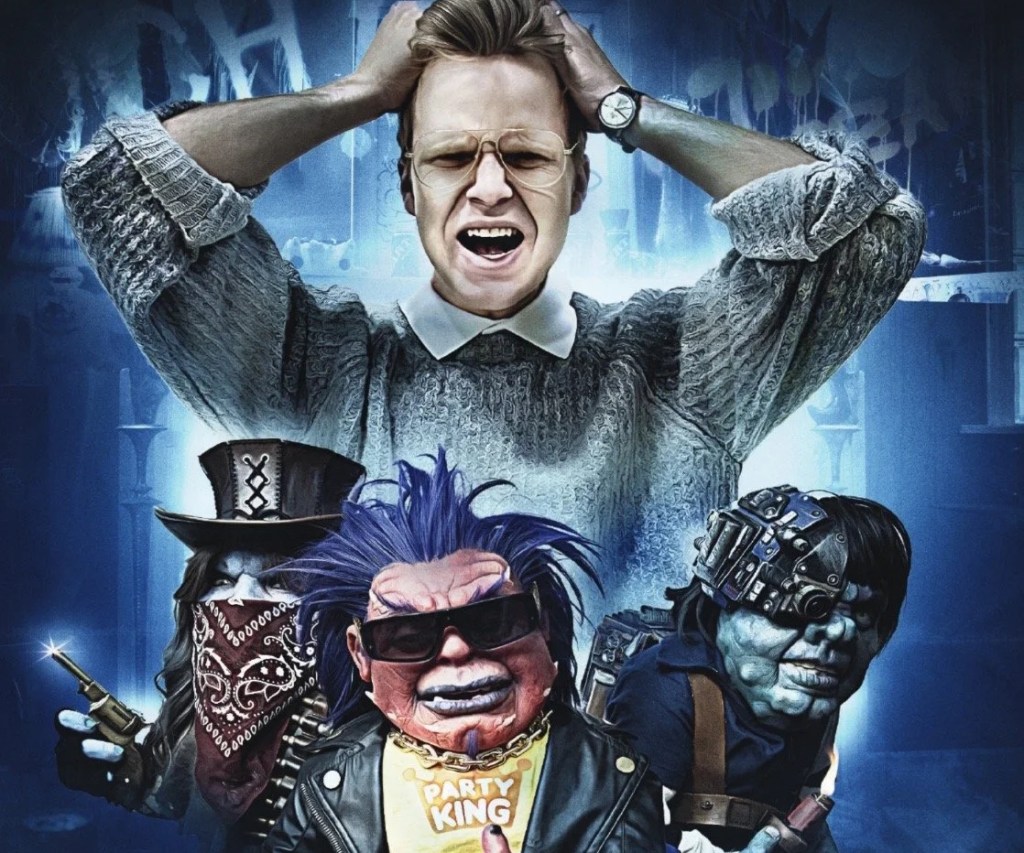
Conor, frustrated by the fact that even his boss thinks he’s a hopeless square, decides to call a party hotline as advertised on TV. Perhaps it’s more of a Canadian thing, but I ate, slept, and breathed late night television in the states and I absolutely do not remember any such advertisements for party lines that didn’t promise scantily clad women would call you, but I digress. Upon waking up the following morning, Conor discovers he blacked out while partying hard the night before. His trashed home is now inhabited by three prankster creatures of the Ghoulies variety who refuse to leave until Conor learns to lighten up permanently.

It’s not long before the evil corporation that subjugated Frankie Freako’s entire planet catches wind of the creatures’ whereabouts and kidnaps them along with Conor. The bad guys are voiced by the Red Letter Media regulars, which was particularly surprising as I clocked Rich Evans’ voice in Psycho Goreman immediately, but in this one, I had no idea he had such a large role (the main villain, in fact) until the credits rolled. At any rate, Conor must let his freak(o) flag fly in order to get back to earth and rekindle his relationship with his wife. All the while, Kostanski has fun with the kind of absurd plot conventions that were only routine in the coked-up 80s.

As of this writing, the movie is available on Shudder.

28 Years Later

I can’t remember the last time a trailer gave away so little plot information. It advertises a man and his twelve year old boy will leave the safety of their fortified island community to explore the mainland, which has been overrun by those infected by the psycho-virus Rage for twenty-eight years. This accurately represents perhaps twenty minutes of the film’s runtime. What happens next feels like truly uncharted territory… which is fitting for the crazed subject matter.

The enigmatic trailer also gives us only a fleeting glimpse of Ralph Fiennes, looking absolutely insane with his bald head and red skin. His mysterious character is spoken about in hushed whispers throughout the first half of the film, adding to the suspense of his eventual reveal. You think you have a pretty good idea of who he is and what kind of role he’ll fulfill, but you probably don’t. To say I was hyped to see this character is an understatement. I wasn’t let down in the least as he’s the best part of the movie.

As with 28 Weeks Later, this movie opens with a flashback to the first year of the virus’s spread. The opening isn’t as intense as the one which featured Robert Carlyle making an impossible decision, but it’s comforting to see Danny Boyle hit the ground running for his return to the series. You’d think the director’s Oscar might’ve gone to his head, steering this sequel straight into “elevated horror” territory; instead he has a group of infected psychopaths shred through a roomful of helpless children before descending on a hysterically laughing priest. Anyone who’s spent any time reading this blog will know this is exactly the kind of horror I cherish: the kind that isn’t embarrassed of the genre’s roots.

In more than one interview, Danny Boyle has tried to make the case that the 28 series aren’t zombie movies. In this movie, screenwriter Alex Garland has a Swedish soldier wash up on shore and flat-out refer to the infected people as “zombies,” perhaps jokingly. This is a jarring thing to hear when actual zombie movies typically go out of their way to avoid the “Z” word (which is even riffed on in Shaun of the Dead), as if they take place in a universe in which George Romero never existed. Speaking of the soldier, I previously pointed out that these movies are at their best when the military forces are absent. I’m happy to report the military presence in this one is applied even more sparingly than it was in the original picture.

In his genre movies, Danny Boyle has had a strange tendency to go off the rails in the final act (28 Days Later, Sunshine, Trainspotting 2) with wildly uneven results. This time Boyle tempers his tendencies… until the final two minutes, at which point he gloriously doubles down. Before that, however, 28 Years Later delivers the most emotionally satisfying conclusion, which relies less on spectacle and more on character and performance.

Movies like this tend to grow on me with time as I forget all but the most memorable scenes. It will likely be another ten years before I can honestly say which I enjoyed more: the original or this one. I would not be a bit surprised if it’s this one. There’s so much I want to discuss here, particularly the effortlessness of Jodie Comer’s performance, but I wouldn’t dream of spoiling what the trailer didn’t.

28 Weeks Later (18 years later)

The best part of 28 Weeks Later is its unforgettable opening, which is set during the events of the first film. In case you haven’t seen it, I won’t spoil the first ten minutes by discussing them here. It’s interesting that this film is at its best when it’s treading familiar waters, which proves how good the original was. When the story jumps twenty-eight weeks after the Rage virus initially spread, we learn that American military forces have moved into Britain to restore order. Survivors are now living in fortified safe zones where work and play has more or less resumed, albeit heavily surveilled.

I won’t tell you how all hell manages to break loose, either, as that would also spoil key events of the opening. When U.S. soldiers are ordered to start shooting infected and uninfected peoples alike, Sergeant Doyle (Jeremy Renner) deserts his sniper perch to help a band of survivors escape the rapidly collapsing city. One of those survivors is conveniently a research scientist who has discovered a breakthrough regarding the disease (Rose Byrne). The escape is the second most compelling scene of the movie, which adequately establishes Doyle as the right guy to lead the characters to safety.

Not that there’s much safety to be had beyond the walls of the safe zone. With the horde hot on their trail, the survivors scramble to reach an LZ where one of Doyle’s helicopter buddies may or may not be willing to pick them up. One of the many reasons I loved the first picture is because it does what so few of these types of films do: it solved problems without guns (until its oddly disconnected third act). Doyle is certainly an extremely likable character, but nearly every problem is a nail and his gun is the hammer. I don’t know. I just find these movies more interesting without the military elements.

Yesterday, I asserted that 28 Days Later was not a zombie movie as Danny Boyle didn’t bring the baggage of zombie movies to the table. I suspect director Juan Carlos Fresnaldillo was, in fact, modeling his film after zombie movies whether he intended to or not. While I wouldn’t call 28 Weeks Later a conventional movie, it’s a lot more conventional than its predecessor. It’s not at all bad, mind you, just more of what we’re used to. I think it’s worth anyone’s time, but especially fans of the original.

The cast also includes Robert Carlyle, who gives the best performance of the entire movie, Harold Perrineau from HBO’s Oz, and Idris Elba.

28 Days Later (22 years later)

My favorite horror movie of all time is George Romero’s Dawn of the Dead. I’ve waxed poetic about it many times on this blog, but long story short: I love everything about it. When a film becomes exemplary of its genre, I don’t clamor for more. I don’t want endless knock-offs and sequels. Which isn’t to say I did not thoroughly enjoy a handful of other zombie flicks like Day of the Dead, Return of the Living Dead and Shaun of the Dead, but in general, the last thing I actively want for is another zombie movie because—let’s face it—I’m at least halfway to dead myself and I’d rather just watch Dawn again.

When 28 Days Later came along, early internet forums were rife with Negative Nancies confidently stating, “Zombies do not run.” Simon Pegg later poked fun at running zombies, stating, “Death is not an energy drink.” A particularly snide critic in a local paper wrote, “If you can’t afford to make a movie with a decent camera, you can’t afford to make a movie.”

I think the problem with those naysayers is simple: 28 Days Later isn’t even trying to be a zombie movie. 28 Days Later shares more in common with George Romero’s The Crazies than Dawn of the Dead. The distinction is small, but apposite; when Quentin Tarantino said he admired Umberto Lenzi’s Nightmare City as a zombie film, the Italian filmmaker took offense, shouting, “Zombies?! What zombies?! It’s an infected peoples movie!” (Incidentally, here’s my review of Nightmare City, which I think you’ll agree is not a zombie picture even though that’s what producers hired Lenzi to make.) Danny Boyle himself has said his movie is not a zombie movie and he hardly seems like the type who’d watch many of them.

So if 28 Days Later is not a zombie movie, why, then, did I choose to reiterate my affection for George Romero’s 1978 zombie masterpiece at the top of this piece? For one: I can’t resist taking every opportunity to talk about it. Two: Because 28 Days Later is the Dawn of the Dead of infected people movies. It’s exemplary of its genre.

In the opening scene, well-meaning activists break into a Cambridge laboratory. They aim to free the chimpanzees who are undergoing cruel experiments there. What they don’t know is the primates are infected with a virus known as Rage. The moment one gets loose, Rage rapidly spreads across Britain, turning its hosts into primal psychopaths. For all the survivors know, it may have even spread across the entire world.

Jim (Cillian Murphy) wakes up from a coma twenty-eight days after the infection destroyed modern civilization. As he roams the empty British streets, he bumps into a couple of survivors, Selena and Mark, who catch him up to speed. They agree to take him to his parents’ house even though they warn him they’re likely dead (or worse). When Mark is bitten at Jim’s childhood home, Selena doesn’t hesitate to kill him. What’s especially striking about a post-apocalypse picture set in the UK is the relative lack of guns; there’s not always a merciful way to kill an infected companion.

Continuing on, Jim and Selena happen upon two survivors who are holed up in a high-rise apartment: a daughter and her father (Brendan Gleeson). The group of four decide to take a road trip to investigate the source of a radio signal promising salvation. I won’t tell you what happens when they get there, as the climax proves nearly as divisive as Boyle’s third act in Sunshine, but there’s a hopeful middle section in which the survivors bond with one another and even have some fun.

The sequence in Dawn of the Dead that sets it apart from so many horror movies in my mind is after the heroes have successfully fortified the shopping mall. It’s the first time we see them relax since the movie began—the first time there’s a glimmer of hope in the bleak situation. Boyle allows his characters a similar reprieve in his picture. For a brief moment they allow themselves to believe things may be alright, which only makes the subsequent horrors all the more impactful.

This was my first time watching the movie since I saw it in theaters twenty-two years ago. The prosumer camera Boyle’s crew used for most of the picture really did look like shit on the silver screen. It looks much better on televisions as that’s what the camera was made for. The brain is convinced that what it’s seeing is real because it feels less like a polished movie and more like civilian-shot war footage. Now that I hear there’s a 4K UHD on the way, I call shenanigans; you can’t “restore” footage of a movie that was originally shot in 480p, the resolution of a standard DVD (4K has sixteen times the resolution). I fear that whatever method this new edition employs will sacrifice the very identity of this movie. Is Sony really the distributor you trust to archive this flick?

Final Destination 6: Destination Finaler

The Final Destination franchise is the rare example of a horror formula done right. In the first act, the hero has a premonition of a freak accident that will kill a large group of people. Armed with this knowledge, the character can avoid (but not always stop) the tragedy, saving loved ones in the process. Unfortunately, it won’t be long until Death returns to finish off those who were “supposed to die,” usually in a predictable order.

I find the concept irresistible. If we can have hundreds of movies about vampires, zombies, and superheroes, why can’t Final Destination be a genre? The films still have a lot more steam in ’em than Freddy or Jason had by their sixth installments.

Final Destination Bloodlines is a lot more creative than its generic title would suggest. The film begins in 1968 at the grand opening of Skyview Tower, a preposterously tall restaurant that resembles Seattle’s Space Needle on growth serum. There’s a single elevator and a narrow set of hard-to-find stairs (nobody knows they exist until an employee points them out) which leads me to believe fire marshals must not exist in the Final Destination universe. A young woman named Iris foresees that the glass dance floor will crack as the restaurant nears capacity, which will kick off a hilarious chain of events that has victims being roasted alive, crushed by pianos, and impaled left and right.

This is thrilling stuff. It usually is, but the humor’s been turned up a skosh. The producers wisely stop just short of jumping the shark entirely, but manage to give the audience more of what they want. Consider how “Raindrops Keep Falling on My Head” plays from a tinny radio as the diners come falling out of the sky on the valet attendants. I really believe the first stories our prehistoric ancestors ever told was probably “Things That Can Kill You” and the Final Destination films tap into that primal excitement in a darkly funny way.

Fast forward to modern times and we learn that the premonition has in fact become a recurring nightmare for Iris’s college-age granddaughter, Stefani, whose grades are beginning to slip because of her intrusive visions. In an attempt to banish the thoughts and get her life back on track, Stefani travels homeward to meet Grandma Iris, who convinces her their entire family is cursed; Death will come for them in order of oldest to youngest.

You’ve seen this before. You already know that everybody who escaped Death the first time will gather with varying levels of skepticism while the hero struggles to convince them of the danger they’re in. Because they’re dealing with a faceless enemy which can’t explain its motivations (the franchise’s biggest strength), there will be some wild assumptions and leaps of logic that rarely prove right for the characters. In order to get scant insight into their predicament, they’ll have to speak to someone who actually knows what’s going on.

That knowledgeable character is usually the mysterious undertaker played by Tony Todd, who this time around gets a brief origin story. I rolled my eyes at the news that this installment would flesh the character out. Thankfully, his backstory is handled about as well as it could have been. But the rest of his scene? Not so much. I’m sure a lot of fans will appreciate Todd’s real-life send-off, but the way he verbalizes the previously unspoken moral of the Final Destination films comes off so hackneyed that I kinda expected him to turn to the camera and say, “And that’s the final destination.” Wink.

That doesn’t matter. I’m nitpicking a great movie. In a post last year, I said Final Destination may be my favorite horror franchise of all time. That’s still true. I’m looking forward to future installments (so long as soulless studio execs don’t go down the dreaded “reimagining” route). If the filmmakers keep it simple and only innovate just a little in each installment, this franchise could go on forever as far as I’m concerned.

See it with a crowd.

Final Destination may be my favorite Horror Franchise of All Time

As absurd as it is to believe that humans could intuit some sort of grand design, such premises are irresistible in movies, where even stinkers like Nicolas Cage’s Next can be engaging. The Final Destination series has two great premises: A) What if you could cheat Death? and B) What if by cheating Death you merely bought scant time alongside a hefty penalty? In the original Final Destination, Devon Sawa’s Alex is treated to a premonition of his impending demise, which allows him to save himself and a handful of his doomed acquaintances… initially anyway.

You would have a hard time naming many mainstream films that deal with ideas as unsettling as predeterminism—and that’s before you begin to ponder what, exactly, Death is and whether or not there’s an equal and opposite force that wanted Alex and company to live. Perhaps his premonition was merely a supernatural glitch—a bug in the cosmic code. Wisely, the series has yet to ruin its emergent questions with answers, although reports say the next installment will flesh out Tony Todd’s undertaker character, presumably because Hollywood screenwriters are allergic to mystique.

Great premises can only take you so far, but the series exhibits fine execution as well. Whenever Death’s preferred design fails, it devises Rube Goldberg levels of wildly entertaining events to correct its mistakes. The fourth film in the series, idiotically named The Final Destination, is the worst of the bunch with its SyFy levels of production value, but even it features a white supremacist getting dragged down the street by his own vehicle while somehow setting himself on fire in the process. If that’s the worst you have to offer, you’ve got yourself a solid franchise. Incidentally, my favorite Final Destination is the most recent entry despite some rather stupid character decisions, which is notable because there’s no other franchise in horror movie history that manged to save the best for last.

The formula is so novel, it holds up the weight of five films with ease. In the opening reel, our hero must find him or herself dying in a horrible accident that kills dozens if not hundreds of innocent bystanders. Moments later, the hero will wake up to find it was a bonafide premonition of the future, a future which can be changed. Unfortunately, it won’t be long before the large cast of expendable characters learn that Death will come back for them with a vengeance. What’s interesting about the formula is the filmmakers keep tweaking it with new rules that don’t conflict with the old ones.

In the first film, the principal characters learn that Death comes back for them in the order they were originally supposed to die, picking them off one by one like an invisible slasher. The second film reveals that Death, if unable to carry out its hit list forward, will work backwards (this one is the least logical Destination film because its heroine has multiple premonitions for no other reason than it’s convenient to the messy plot, but overall it may very well be the most entertaining). The third outing seems to suggest Death has at least enough consciousness to taunt its victims with photographic clues of their demises. The fourth expands the mythology in no discernible way at all, which is probably for the best considering it’s the least imaginative entry. And the fifth movie introduces the most radical expansion to the rules to date: Death will give you a pass if you willingly take someone else’s life. This leads to a boringly routine climax (a Final Destination movie really didn’t need a shootout scene), but also the most satisfying twist ending ever put to film.

Yeah, I said it. Eat your heart out, Shyamalan.

There’s a lot of silly stuff in these movies, most of it intended, which compliments the heavier implications. Nothing is more thrilling than cheating Death. Unfortunately, Death always wins in the end, it just so rarely does in the movies.

Eli Roth’s Thanksgiving

Let this sink in: it’s been sixteen whole years since Grindhouse premiered in theaters. You got two movies for the price of one: Robert Rodriguez’s Planet Terror and Quentin Tarantino’s Death Proof, garnished with four fake trailers directed by Rodriguez, Edgar Wright, Rob Zombie, and Eli Roth. After the experiment mildly failed at the box office (it released on Easter weekend of all dates), the movies were regrettably split into individual entities for DVD and VOD. The fake trailers were relegated to the special features section and low resolution YouTube videos.

One of those fake trailers absolutely blew the roof off with laughter: Eli Roth’s Thanksgiving, which was the horror director’s 2-minute ode to pre-Scream slasher flicks. The audience reaction probably could have tipped the Richter scale in the theater I saw it in. Nothing is more cathartic than a group of strangers laughing at things you ought not laugh at in polite society—and here was a mainstream movie doing it. And now, almost twenty years later, Eli Roth expands the two minutes into approximately ninety.

The movie opens on Thanksgiving day, 2022, as a Plymouth electronics store is about to open its doors for an early Black Friday sale. The rabid shoppers are gathered at the front doors, foaming at the mouths, when a misunderstanding sparks a riot that devolves into Final Destination levels of violent mishaps. Throats get slashed, heads get scalped, and people punch each other’s faces in over the limited supply of discounted waffle irons. Exactly one year later, a killer wearing a John Carver mask begins picking off the shoppers and security personnel responsible for the carnage. It’s up to a group of high school seniors to figure out who the killer is.

The killer’s identity doesn’t really matter and the reveal at the end is not particularly shocking. Eli Roth knows this and the audience should intuit this, too. I don’t think anyone was expecting a clever whodunnit when they purchased their tickets. What you should be expecting instead is an old fashioned slasher that just happens to be made in modern times—not to be confused with a “modern slasher,” which in this day and age is typically about as joyless as… well, getting cooked in an oven alive.

I couldn’t help but think of four other movies while watching this one: Pieces, Blood Rage, Deranged, and William Lustig’s Maniac (which I’m surprised to find I’ve never featured on this blog because it’s a doozy). If any or all of those are your cup of tea, then so is Thanksgiving. Otherwise, avoid it all costs because it’s really not intended for polite society. I must say that Eli Roth feels about 5 to 10% tamer in his depiction of gore as he remakes the fake trailer moments with varying levels of success.

Here’s what I’m thankful for this holiday season: Thanksgiving isn’t Cocaine Bear, which mocked the bygone era of exploitation films instead of embracing the genre. This one’s an honest-to-god slasher flick whose performers play it as straight as Leslie Nielsen did in his best comedies. There’s no winking at the camera and no indication the filmmakers think they’re above this kind of material.

The only characteristic Roth doesn’t nail: the acting isn’t bad at all, actually, and I wish the film stock looked more messed up like its Grindhouse counterpart. Other than that, it’s a fine antidote to the usual holiday offerings.

Gruelgo Comics

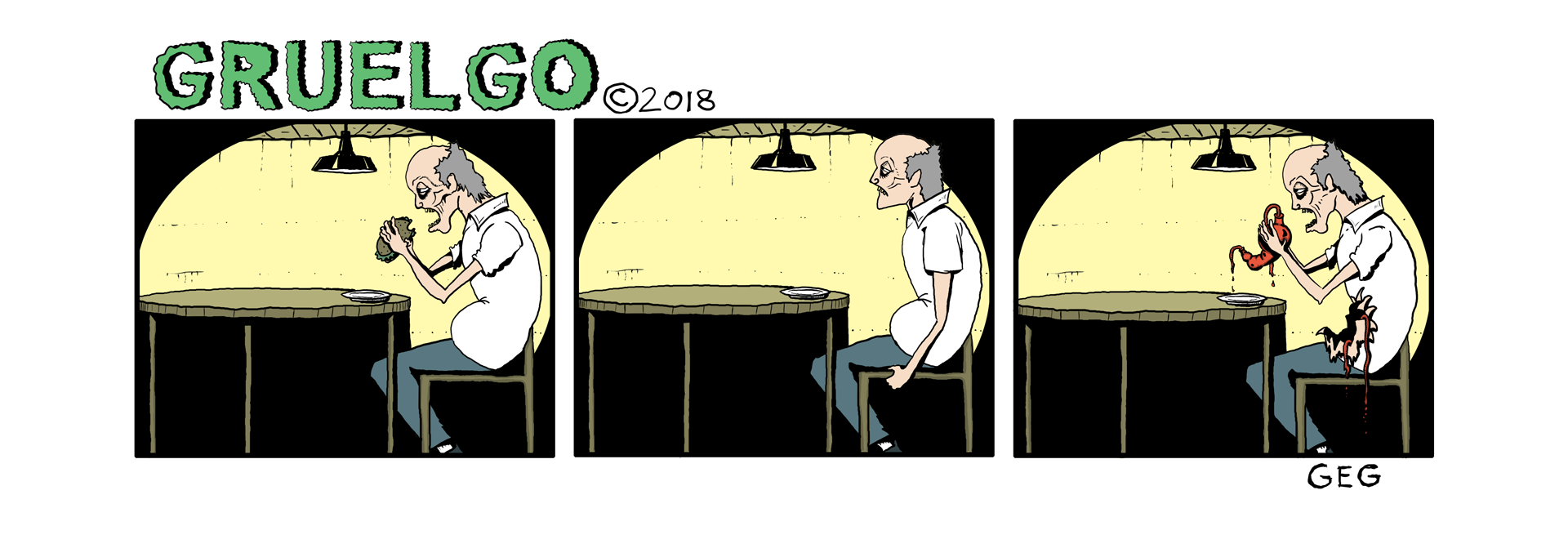
Last year I began working on a comic strip called Gruelgo (an anagram for my last name) and I wrote like two dozen of these things. The problem was I could rarely come up with good strips involving the title character, but had a ton of ideas involving his witchy wife, who was only supposed to be a supporting character. Unfortunately, the world already has a comic strip about a witch, so I abandoned the project.

Here are the three strips I saw to completion.

2018-5-142018-5-162018-5-20

Cast a Deadly Spell (1991)

CastADeadlySpell

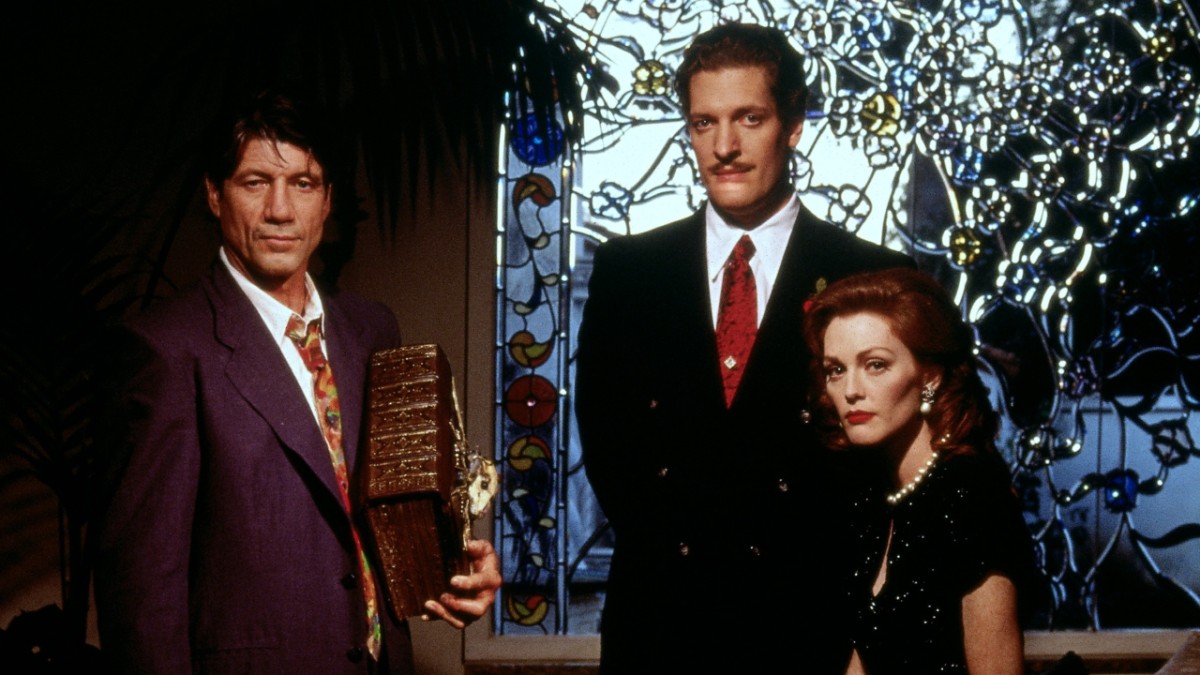
Here’s another one of those movies I had no idea existed until it showed up on HBO one day in the early 90s. IMDB lists it as a TV movie, but it looks a helluva lot slicker than most of the TV movies I know. It’s got a killer cast of character actors including a young Julianne Moore and the creature effects are charming. Right now it’s streaming on HBO GO, which makes me wonder if someone who’s in charge of programming has similar B-movie tastes or they just randomly throw movies onto the service to fill a monthly quota.

In this fantasy version of 1940s Los Angeles, magic has become as ubiquitous as cell phones are today. As one character puts it, magic just makes everything easier. David Zucker liked to cram background gags into Airplane and his Naked Gun movies whenever the foreground characters were delivering exposition. Similarly, in Cast a Deadly Spell there’s almost always something going on in the background to remind you it’s an alternate universe, from levitating cocktail trays to a nightclub that’s bigger on the inside than it is on the outside.

Indeed, the opening story card tells us everybody does magic, which is to say everyone but Fred Ward’s hard boiled detective, Harry Philip Lovecraft. That gives him an edge, as a detective who doesn’t carry talismans or charms is apparently in demand. In his introductory scene, Lovecraft cracks a case that had the LAPD stumped when he declares a voodoo doll the murder weapon.

In typical film noir style, Detective Lovecraft has just been hired by David Warner’s character to retrieve the priceless Necronomicon, which has been stolen by a gangster played by Clancy Brown. (To my knowledge, this is one of two movies Warner has appeared in involving the fictional grimoire, the other being Necronomicon, which I wrote about here.) Brown plans to employ the book in a ritual which will give him godlike powers at the expense of destroying the world.

While the movie shamelessly relies on the old detective tropes a little too much, it never really gets bogged down by it. As I’ve said before, the difference between tropes and cliches is we like tropes and perhaps no other genre gets away with it more than film noir. It’s a fun little movie that’s a lot bigger looking than it has any right to be, which probably comes down to the fact it was directed by Casino Royale’s Martin Campbell and produced by Gale Anne Hurd. That its actors were seemingly born to play roles like this doesn’t hurt either. The film has none of the disposable qualities of a typical made-for-TV movie at the time.

There was a sequel called Witch Hunt which substituted Fred Ward with Dennis Hopper. I don’t think it was as good, but I plan on catching back up to it soon anyway.