The Exorcist: 40th Anniversary Edition (1971) [Book]

One of the reasons I like fiction so much is it helps me put all manner of cultural and historical tidbits into perspective. For instance, Leave it to Beaver went off the air in 1963, and less than eight years later William Peter Blatty gave us his blood- and vomit-drenched novel, The Exorcist. I don’t know why I find that to be such an astonishing fact, I just do.

To put it another way: the same decade America finally got sick of The Beaver’s shit, the country was captivated by a little girl who screamed obscenities and masturbated violently with a crucifix. Another oddly routed synapse in your brain might make the following connection: the novel came out only a decade after mainstream American movies broke their silly taboo of showing a toilet on the screen. That’s a long way to go in just a handful of years.

For many years I’ve been perplexed by the fact that William Friedkin’s film adaptation of The Exorcist never really moved me one way or the other. It’s a movie I should love, if my general taste in horror is any indication, and a movie I always wanted to love. My feelings toward the film are especially peculiar considering Rosemary’s Baby, which has a lot in common with The Exorcist, was love at first sight for me. (I’m also the only person I know who loved Polanski’s The Ninth Gate, but that’s a whole other post.)

I’m minutes away from giving Friedkin’s film another chance, but I wanted to record my thoughts on the novel before my next viewing of the movie blurs my distinction between the two. First off, I thought the book was fantastic. And not just fantastic, but cunting fantastic, to borrow an oft-used phrase from the dialogue. I wouldn’t say Blatty spends a whole lot of time fleshing the characters out, but they’re real enough and, more importantly, the ease at which we get to know them keeps the pace from slouching.
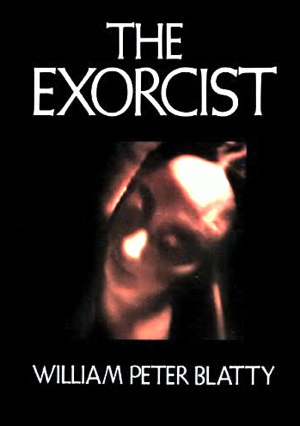
A note about the current edition: if Blatty is to be believed, the changes he made for the 40th Anniversary text are mostly superficial corrections he would have made the first time around if he didn’t have a deadline. There’s an added scene here and a bit of expanded dialogue there, but it’s my understanding that it’s more or less the same novel that came out in the seventies.

While the film is a surprisingly faithful adaptation of the novel (if my memory of the film serves me correctly, that is), the most noticeable difference is the somewhat reduced role of Lieutenant Kinderman, a point-of-view character who later becomes the main character of Blatty’s sequel, Legion. (Legion, by the way, would serve as the basis for The Exorcist III, a vastly underrated movie which knocked my socks off both times I watched it.) The second most noticeable difference is the very reason I prefer the book: it’s not made clear whether Regan MacNeil is actually possessed or suffering from a mental illness.

Yeah, William Peter Blatty seems to think telekinesis and ESP are completely possible things recognized by science in real life (which is how he explains the bed-shaking and the levitating for those who prefer the non-supernatural version), but he gets a pass because it was written in the seventies and everyone back then seemed to believe in weird stuff like that. As for the famous head-rotation which explicitly takes place in the film? In the novel, Regan’s mother only thinks she sees her daughter’s head spin around (she later doubts whether anything supernatural occurred at all). That scene always bothered me in the film because it’s not like we ever saw the demon spin her head back to reverse the damaged he’d done to her spine, but oh well.

Blatty goes out of his way to humanize his Jesuits, characters who too often become set dressings in stories like this. I wasn’t raised in a religious household, so stepping into the shoes of a priest burdened with Catholic guilt is a bit of a novelty. I think the priest-who-lost-his-faith routine is a bit old hat these days, but in the context of the story it works quite well and works towards a satisfying conclusion.

I especially like the emphysematic Kinderman, who’s somehow both sly and polite, often striking up friendly conversations with the people he’s investigating for murder. In fact, it was George C. Scott’s portrayal of Kinderman in The Exorcist III that made me want to check out the rest of William Blatty’s stuff (I almost started with Legion, but I’m glad I didn’t.)

If you can’t wait for the TV series to come back on the air this Friday, you can do worse than passing your time with the original novel. I’m off to watch the movie for the first time in years so I’ll probably blog about that sooner than later. After reading the book, I’m very excited to give the film another chance.

Split Second (1992) [Midnight Movie]

It’s the year 2008 and global warming has managed to submerge London in about a foot of murky water. I’m not sure where the mutant rats figure into this poor man’s cyberpunk world, but the little buggers are ubiquitous and the characters will wreck entire apartments just to gun ’em down. Harley Stone (Rutger Hauer) is a loose cannon of a cop who punches and kicks anyone who gets in his way. When a fellow cop inquires about his sanity, the chief of police (Alun Armstrong) replies with that good ol’ “he’s the best there is” cliche.

Actually, calling anything in this movie cliched might be missing the point. It isn’t “only” science fiction, fantasy, horror, and action, but I want to say it’s a parody of all that stuff, too. It even goes out of its way to do the old “meet your new partner” routine with surprising freshness. Or maybe I’m being too kind to it, considering I feel like I’m the only person who likes this movie. And I always liked this movie.

Split Second opens in a scuzzy night club called The Non-Stop Striptease. A spiky-collared Rottweiler attempts to bite Stone’s nuts off in the alleyway entrance, at which point Stone calmly flashes the dog his badge and says, “I’m a cop, asshole.” This placates the dog. We don’t know why Stone is here—we get the feeling he doesn’t know, either—but soon a woman’s heart is ripped out and, somehow, no one saw who was responsible for the murder. This doesn’t stop Stone from racing out into the dark streets, punching and shooting anything that moves (or doesn’t) in an attempt to alleviate his severe anxiety.

See, a long time ago Stone’s partner was murdered by the very thing which is running around town, ripping hearts out and drawing intricate astrological signs in blood. Stone has been steadily going downhill ever since the incident and it’s not until later when we find out why he’s psychically linked to the beast. The monster, by the way, is ten feet tall, has a wicked set of teeth and claws, but turns out to be one of the most disappointing rubber suits you’ll ever see. Never mind that because the ride up until that point is fun as hell.

Featuring Kim Cattrall, Pete Postlethwaite, and Michael J. Pollard, this British production from The Burning director (my favorite slasher film) is a madhouse that rarely loses steam. You’ll laugh at it for the first ten to twenty minutes, then you’ll realize it’s very much in on the joke, allowing you to laugh with it for the rest of the running time. Rutger Hauer is one of the few bonafide actors who fell into these low budget films with the same wit and enthusiasm he had in more serious efforts—you can tell he’s enjoying it, too. I can’t think of anyone else who was equally great in both A- and B-movies, then slipped back into A-movies without missing a step.

Do you like the early 90s ridiculous vision of the future? Do you like Rutger Hauer? If yes, you’re going to like this movie. Early nineties Terminator, Alien, and Predator ripoffs are kind of a guilty pleasure for me, if only because I’m so damn nostalgic for them.

And you know what? Fuck the haters. This is a legitimately exciting movie. It was the perfect cure for the unbelievably disappointing Star Trek Beyond, which I saw on the same day. How a movie can have so much cool stuff in it, and completely fail to excite me, I’ll never know, but I digress. Split Second delivers the speed.

The Exorcist is one of the best shows nobody’s watching

So why hadn’t I seen the television version of The Exorcist yet? Because I had no idea it existed until earlier this week. And when I did find out, I rolled my eyes and started the first episode on Hulu just to see how bad it was so I could move on.

Fast forward to this weekend and I’m all caught up on the eight episodes (episode 9 of 10 doesn’t air until December 9th, by the way). Putting aside some terribly distracting CGI moments and a questionable plot twist, The Exorcist is kicking all kinds of ass. 
Here are some of the pros:
1. It’s not a reboot like Lethal Weapon, it’s a respectful continuation. 
2. This is one of the strongest casts I’ve seen on TV in a very long time. Ben Daniels as the exorcist is the closest you can get to topping Max von Sydow.
3. While not as graphic as the film (or the stuff AMC frequently gets away with), the extra crazy stuff is still implied. You just have to pay attention or you’ll miss it sometimes.

I wish the show would catch on, but it’s probably not going to. It’s a damn shame, too.

Maniac Cop (1988) [31 Days of Gore]

This is it, folks: the year’s final 31 Days of Gore post. It’ll be eleven whole months until the next one.

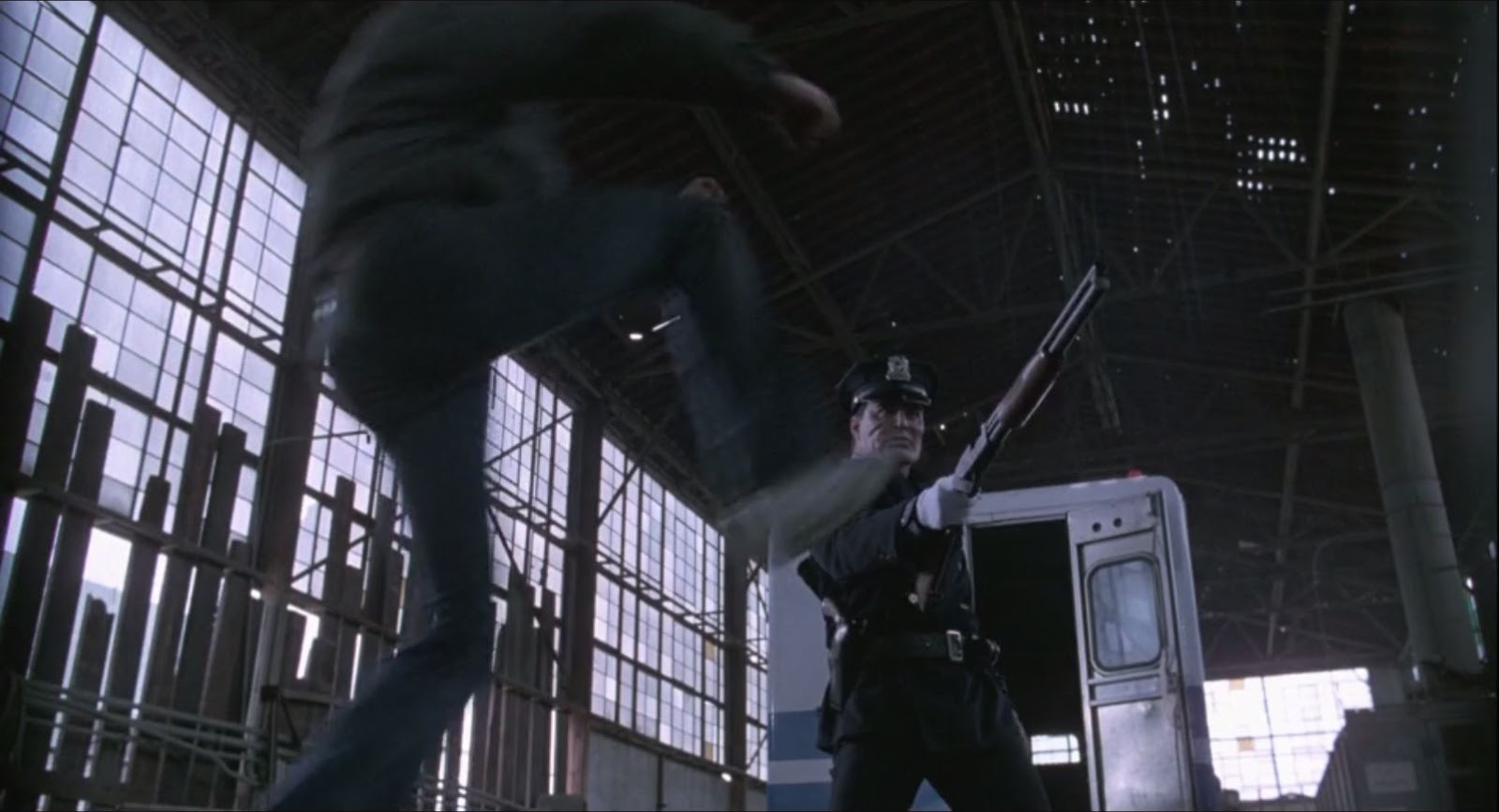
I hadn’t seen Maniac Cop in so long I forgot how good it is. With a screenplay by the legendary Larry Cohen, who wrote some seriously offbeat genre flicks (It’s Alive, God Told Me To, Black Caesar, and The Stuff), the pacing of the movie is extraordinary. The movie opens with a kill, does a normal scene, shows another kill, normal scene, kill, normal scene, etc, etc. The titular maniac cop snags himself more victims in the first twenty minutes than the average horror movie dispatches in its entirety. Sometimes you see where an individual scene is going—and sometimes you’re right—but overall this is one surprising cookie.

Imagine you’re being chased by a couple of thugs through the dark, curiously empty streets of New York City. Then you spot a rather large cop (Robert Z’Dar) standing in the shadows of a nearby park and race to him for assistance. When you get close, however, you realize something is wrong and, before you have the time to recoil, he wraps his hand around your throat with superhuman strength and wrings your neck. It’s a creepy premise, the implications of which are properly explored through news segments which reflect the city’s growing fear and distrust toward police officers. Most genre films wouldn’t bother going so deep.

Now check out this cast of players: Robert Z’Dar, Tom Atkins, Bruce Campbell, Lauren Landon, William Smith, and Shaft himself, Richard Roundtree. As far as exploitation movies go, can it get any better? It rarely does. I love this cast.

Tom Atkins plays a straight-shooter lieutenant who can’t stand the thought of some bozo walking around in a police uniform and killing people. When Bruce Campbell’s character, also a cop, is implicated as the serial killer, Atkins is the only one who stops to consider it could be a setup. It turns out the real maniac cop knows exactly how to set someone up because he has inside information. And he has that inside information because he really was a cop at one time in his life, which leads to the whodunnit elements of the film.

Naturally, when the maniac cop shows up to the police station to tie up loose ends, Bruce Campbell escapes custody with the help of his mistress, fellow cop Lauren Landon. The two lovers then team up with Atkins to work out the killer’s identity and clear Campbell’s name.

I love this movie. It turns out Nicholas Winding Refn, the director of Drive and Bronson, is also a big fan. He and director William Lustig are co-producing a remake. I don’t think I’ve ever been more excited for a remake in my life.

Cameos include Jake LaMotta (Lustig’s uncle) and Sam Raimi.

Note: I was planning to feature the entire trilogy, but I think I’ll be getting the sequels on Blu-Ray to review at a later date. Right now, the streaming options available to me aren’t even in widescreen. 

Would You Rather (2012) [31 Days of Gore]

Would You Rather looks like the kind of movie I usually despise. But recently, Bloody Disgusting’s YouTube channel give it a recommendation so I decided to check it out because I haven’t covered many newer movies this year. I must say I’m impressed.

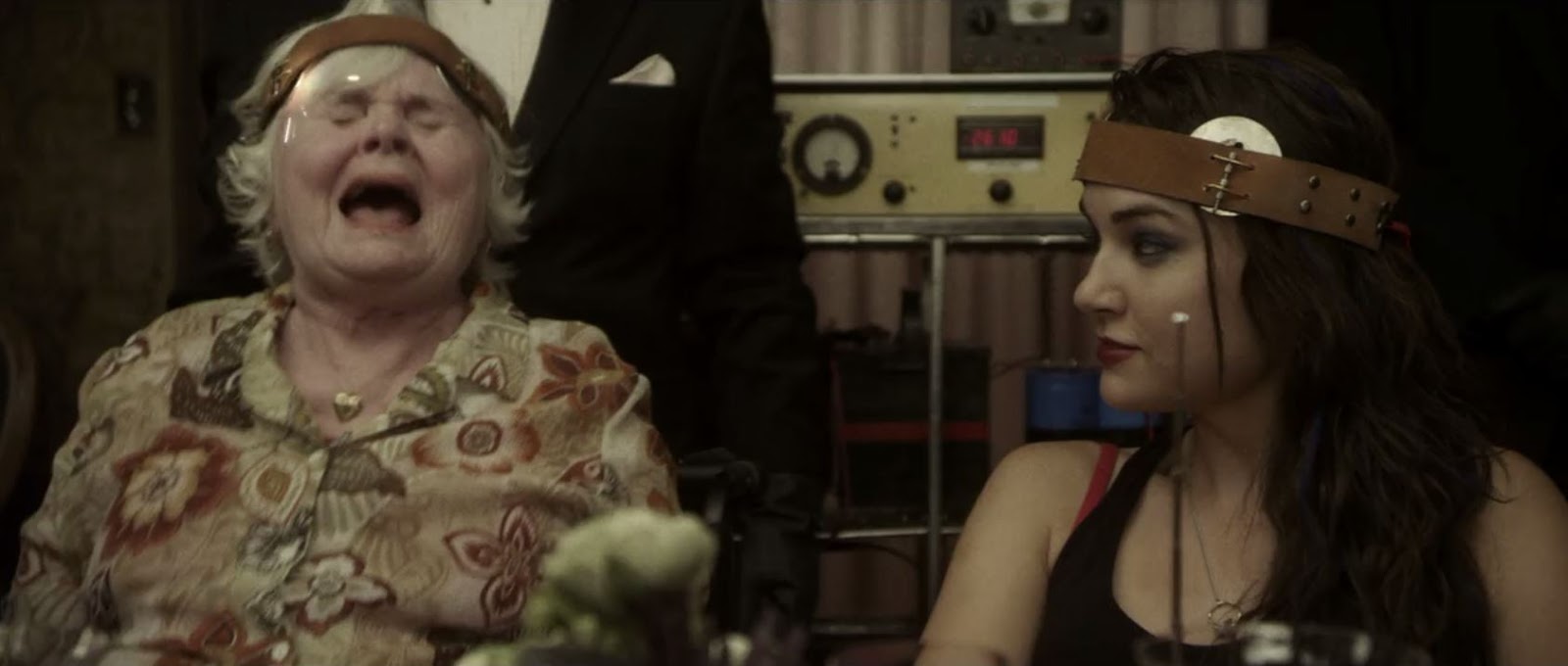
Iris (Brittany Snow) is a wholesome young blonde who’s had to put her life on hold in order to care for her sick brother. One day she meets the super rich Shepard Lambrick (Jeffery Combs) who invites her and a handful of others to a mysterious dinner party. Iris reluctantly accepts, but when she makes it known she’s a vegetarian, Lambrick offers her a deal: if she eats all the meat on her plate, he’ll give her ten thousand dollars, cash. When Lambrick notices another dinner guest (John Heard) hasn’t touched his wine because he’s sixteen years sober, the charitable host offers the ex-alcoholic a similarly fucked up deal.

And that’s only the appetizer. What the guests soon learn is they’ve been invited to play a twisted version of Would You Rather, which goes something like this: Would you rather stab the person next to you in the leg, or give the person at the end of the table three lashes with a whip? The problem with most movies with built-in candy bar scenes is they find trouble topping the previous ones. Would You Rather manages to top everything that came before it time after time. This is one diabolically entertaining movie with a lot of gruesome surprises. The pleasure Lambrick gets from orchestrating the game is some darkly funny stuff to see.

Brittany Snow’s presence makes you suspect this is yet another mindless horror movie aimed solely at the kind of teens who’ve never seen a legitimate horror movie in their lives, but it feels more like a Twilight Zone episode or a Richard Matheson story. I think I would have preferred it more if the dinner guests were voluntarily playing the sick games, rather than forced by gunpoint, but that’s a superficial complaint. (I mean, come on, isn’t it sicker when good people do fucked up stuff when they don’t actually have to?)

I made three predictions during the movie and two of them (including the end) turned out to be right. Even so, I hesitate to call this movie predictable. “Predictable” suggests I disliked the movie, yet I really, really liked it. No, I don’t think it’s predictable, just that it’s a certain kind of a story that has to go the way it did. The more I think about Would You Rather, the more I like it.

Tourist Trap (1979) [31 Days of Gore]

Strap in, folks. It’s another “Who needs bathing suits for swimming?” movie which manages to show absolutely no nudity whatsoever. I mean, why even have that scene at all if everybody’s just going to be bobbing lazily up to their necks? No playful splashing? No erotic horsing around? What the actual fuck, guys?

The teens of Tourist Trap, which I happen to think is a great generic title for a horror movie, go skinny dipping after their Volkswagen Type 181 breaks down in the middle of nowhere. Chuck Connors, playing an overall-wearing good ol’ boy, happens upon the kids and warns them about the moccasins who nest in the very water they’re swimming in. Cut to: everybody fully clothed and miraculously dry, at which point Connors offers them a ride to his home. His home, as it turns out, is a “museum” full of all manner of junk. The overwhelming majority of his collection consists of mannequins, which the movie calls “wax statues,” but I know department store mannequins when I see them. One of the mannequins looks suspiciously like his dead wife. Its “wax” feels a lot like flesh. You can see where this is going, right?

I’m usually careful with spoilers, but it’s hard to extend that rule to anything so shamelessly derivative of Psycho. Tourist Trap thinks it’s pulling a fast one on the audience, but anyone who’s ever seen a movie will know, almost immediately, that Chuck Connors is the killer. It’s as obvious as a punch to the face. Yes, The Rifleman is the killer. The movie initially wants us to believe the strange happenings are caused by Chuck Connors’ unseen brother, but come on, guys. We all know it as soon as we see him. Hell, my fucking dog called it, too.

Once they get that reveal out of the way, we get a perfectly fine horror movie along the lines of the wonderful Motel Hell. You get to see Chuck Connors dressed bizarrely, playing with dolls as he chews the scenery in the best fucking way possible. The only reason I can’t give it a recommendation to everyone is the good stuff happens too late and only leaves you wanting more. They have such a great gag here, I just wish there was more of it.

The Ice Cream Man (1995) [31 Days of Gore]

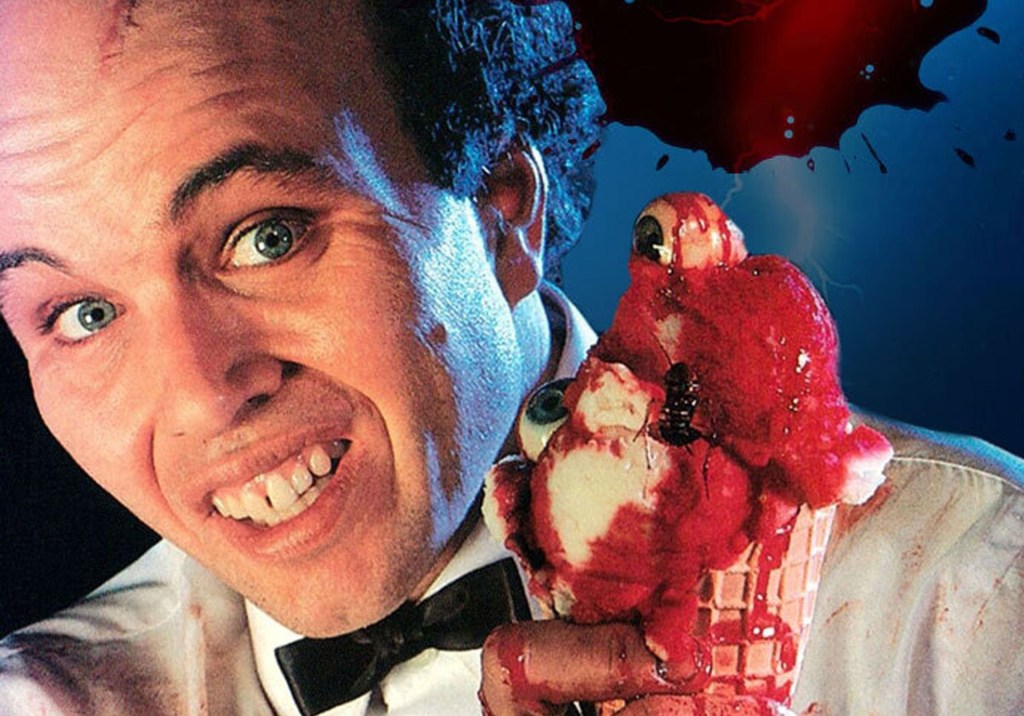
Oh, boy. I may have hit my limit. I feel like I’ve blown my fucking mind out on bad movies this year. Here’s one so egregious I don’t even want to talk about it. You might accuse me of being too hard on this movie. Clint Howard is one of my favorite faces in the industry. This blog attests to the fact that horror-comedy is my favorite type of horror and comedy. I originally saw it when I was twelve years old, which should have been the perfect viewing age for something like this. Try showing it to a two year old and you might be able to dazzle ’em… maybe.

In its 85-minute running time there are about fifty seconds of awesome. The rest is slow, plodding, and boringly shot, not to mention entirely illogical. It’s like one of those “rad” children films that frequently turned up in video stores in the early-to-mid 90s, only there’s just a little bit of gore, which feels shoehorned in only to ensure a journalist from Fangoria showed up to take pictures on set. (The severed heads, by the way, look absolutely amazing. Everything else… oof.)

Clint Howard plays the titular ice cream man. When he was a kid, he witnessed the so-called Ice Cream King get gunned down during a drive-by shooting. His mother found her trauma-stricken boy sitting on the curb, eating an ice cream cone, mere inches from the dead body. He glanced up at her and asked, “Who’s going to bring me ice cream, Mommy?” That part was kind of funny, actually.

That’s the problem: a lot of the movie is kind of funny. It would have been much funnier if they weren’t trying so hard. It would have been a lot more watchable, too, if most of the killings didn’t take place off camera. Despite the subject matter, the movie’s so tame I don’t think they would have edited very much to show it on the USA network twenty years ago.

Anyway, now that he’s all grown up, the ice cream man kills children, grinds them up, and mixes their remains into the ice cream he sells around town. Three neighborhood kids uncover his evil scheme and take matters into their own hands. Armed with giant model rockets, they decide to finish the ice cream man, once and for all. I mean… fuck. Haven’t we seen this too many times before? It’s the same old shit, a decade too late.

So the main character, whose name is Tuna, is supposed to be fat kid. Instead of casting a tubby kid, the filmmakers cast a photogenically skinny kid and stuffed his hooded shirts with what appears to be ordinary bed pillows. The movie-long effort seems pointless until the payoff at the very end of the film: with the ice cream man dead, Tuna no longer eats so much ice cream and therefor loses all his weight. Excellent character arc, that.

The Exorcist III: Legion (1990) [31 Days of Gore]

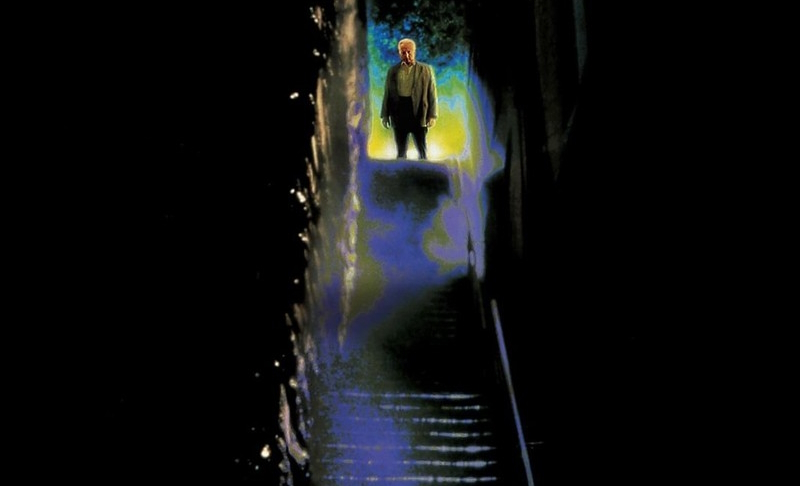
George C. Scott plays William Kinderman, a grizzled police lieutenant whose best friend was Father Karras from the first film. (Kinderman was briefly portrayed by Lee J. Cobb in the original movie, but in the novel the character had a much larger role, providing an alternative viewpoint to Karras’s already shaky faith.) The cop is investigating the gruesome murder of a twelve year old boy who was decapitated and crucified. The killing fits the MO of the so-called Gemini Killer, who was shot dead by police the same night Regan was exorcised. What does this have to do with anything? Well, it’s a stretch, but the film is so well made it’s perfectly believable within the context of the story.

The Exorcist III came on TV when I was home sick from school one day and I unexpectedly enjoyed the hell out of it as it did not garner warm reviews at the time of its release. In the years since, I’ve always wanted to see it again. Cue Scream Factory’s re-release of the movie, which is now the best way to see it at. I watched it last night long after I should have been in bed. The improved sound mix alone is better than most of the movies I reviewed this month; the subtle use of surround speakers increases the creepiness as you never quite know if it’s a rustling leaf or a demon whispering in your ear.

The trailers in 1990 gave away one of the film’s biggest twists. I bet most reviews did as well so this one won’t. If you haven’t seen any of the marketing material yet, don’t. That way the mid-movie reveal about the man in Cell 11, who’s played by Brad Dourif, won’t get ruined for you. Dourif’s performance here is something special. I’ve seen hundreds of actors go for broke in their depictions of insanity, but few have hit the mark so well. He fulfills a role similar to Hannibal Lector in the sense he may be even more dangerous when he’s locked up (incidentally, this film preceded Silence of the Lambs by one year).

You can tell writer/director William Peter Blatty wanted to protect the secret of Cell 11, too, because the reveal is executed with great care and attention to detail. Blatty battled the studio on a lot of unnecessary changes. For one, he didn’t even want the word “Exorcist” in the title at all because he wanted to distance himself from the laughably bad The Exorcist II: The Heretic. His instinct was correct because the movie has largely been overlooked until horror fans reevaluated it relatively recently.

This isn’t a cash-grab. It’s an organic continuation of the original story. It happens to contain what many believe to be the most effective jump-scare in history. It’s remarkable how masterfully quiet the moment is when you analyze it the second time around.