Phantasm II (1988) [31 Days of Gore]

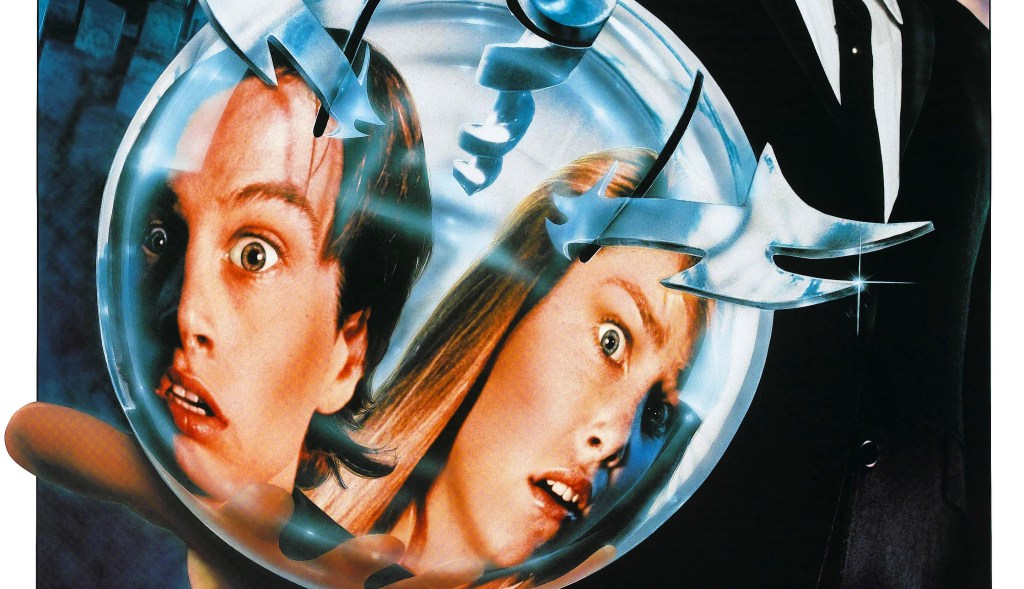
Reggie Bannister is kind of the Robert Duvall of horror. In the first Phantasm, his character (also named Reggie) was relegated to the role of the goofy sidekick. This time he’s practically the star, getting even more screen time than the main character. You’ll see Reggie’s name oft mentioned on horror forums too. There’s just something about his unassuming persona that clicks.

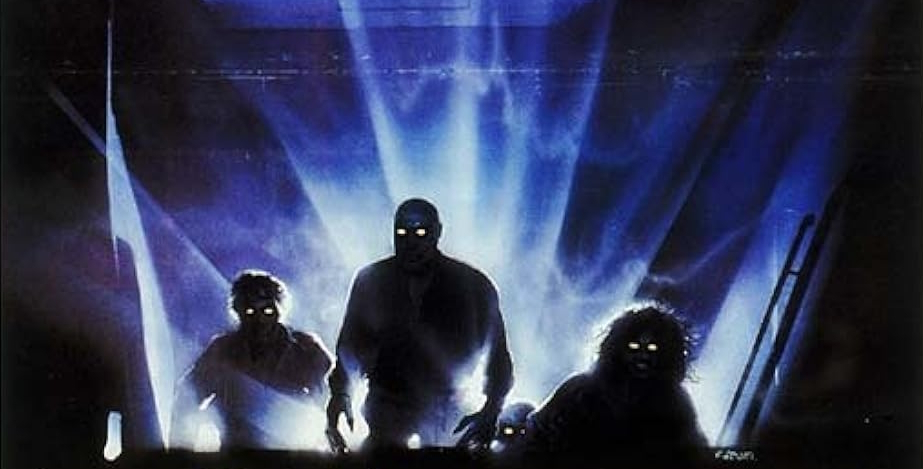
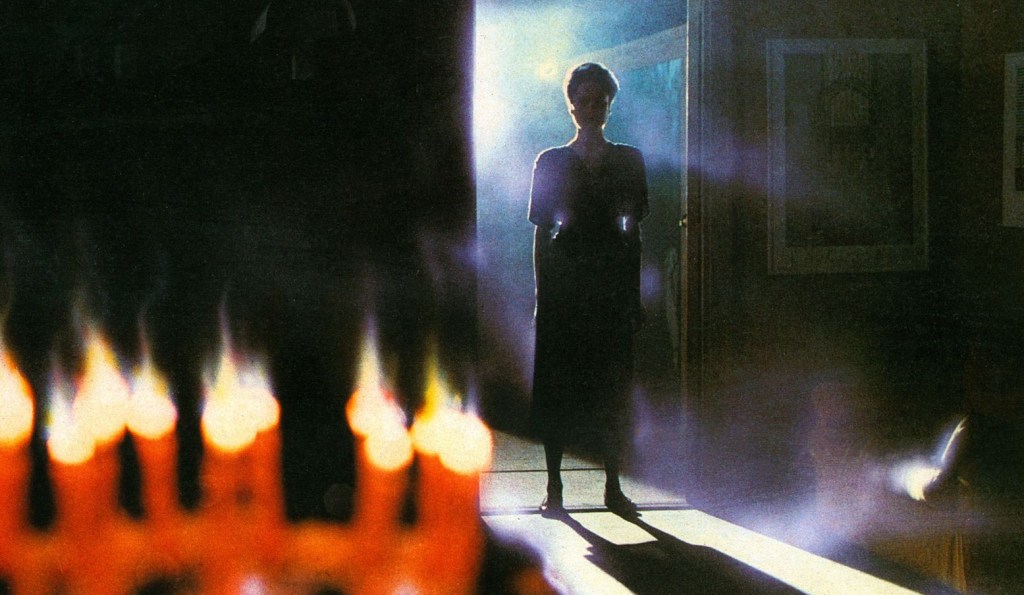
Yesterday I said Phantasm II was my favorite in the series, though most of the heavy lifting was done in the previous film, which had enough world-building to spare for a sequel. But Phantasm II has the distinctly 80s horror look which really takes me back. This is the first time I’ve seen it on anything other than VHS. The film looks stunning.

The sequel picks up exactly where the previous one left off, concocting an unlikely conclusion to the cliffhanger, which has Reggie blowing up his own house to save Mike’s life. The film skips forward several years to show Mike (played by James Le Gros now) is all grown up. Reggie picks him up from the mental institution, but on his way home his house explodes (again), thereby motivating Reggie to help Mike murder the Tall Man.

So Mike’s been having visions about the Tall Man for years. Somehow, he’s been psychically linked to a blonde by the name of Liz (Paula Irvine) who shares his visions. I’m not sure how this happened, but the pair fell in love long before ever meeting. Reggie, fresh from the funeral of his wife and kids, also finds love in the form of a banging brunette they meet on the side of the road. I love Reggie to death, but this woman is way out of his league—not to mention his age bracket, so it’s disappointing none of the leads are even suspicious of her.

Once the climax begins, it’s a fine spectacle. The movie is much better paced than the original and it doesn’t blow its wad until it’s good and ready. Phantasm II makes a little more sense than its predecessor, too, and looks better to boot, but perhaps it’s not quite the milestone I remembered it being. Neither is it a pointless sequel. The first one was packed to the brim with ideas and this one feathers out the edges.

Phantasm (1979) [31 Days of Gore]

I’ll be featuring a Phantasm movie each day leading up to my review of Phantasm RaVager.

Mike and Jody, 13 and 24 respectively, are a couple of boys just trying to get by after the death of their parents. Following the funeral of a mutual friend, which only compounds their grief, Mike witnesses the freakishly tall caretaker (Angus Scrimm) lift the casket with one arm and effortlessly toss it into the back of his hearse with inhuman strength. To explain what the Tall Man is up to would ruin the best part of the mythology, but I will say it’s ambitious for a $300,000 movie.

Mike visits the local fortune teller who not only makes him do the Gom Jabbar test from Dune, she actually says, “Fear is the killer.” (Later, a scene is set in a bar called Dune’s, suggesting the references to Frank Herbert’s novel are more homage than rip-off.) The fortune teller can make things magically appear out of thin air, but Mike is curiously unaffected by this. The prediction the fortune teller makes isn’t just wrong, it feels like a setup for a payoff the filmmakers abandoned by the time they got around to making the end of the movie.

There’s a lot of improvisational filmmaking, which somehow adds to the charm more than it detracts, even as the logic steadily drains out of the story. Reggie Bannister’s character, Reggie, is killed once off screen and once again on screen, but both times he comes merrily strolling back into the picture (fake-killing him in the sequels becomes a bit of a tradition). The first time he cheats death, he tells the main characters he totally rescued some characters off screen, but they’re safe now so don’t worry about them anymore; in reality, the actors were probably no longer available and director Don Coscarelli needed a throwaway line to explain their sudden absence.

Despite the constant attempts at jump-scares, Phantasm is likely too tame and pleasantly paced for many viewers, but it’s rarely boring. Angus Scrimm’s performance, though brief, is right on the edge of over-acting, which is actually perfect for a movie like this. The minimalist yet skillful cinematography evokes Kubrickian framing, which compliments the simplistic score. I’ve always admired Phantasm, but I think I like it a little more with age. It’s much better than it has any right to be.

Phantasm 2 was my favorite of the series. We’ll see how it holds up tomorrow.

The Mist (2007) [31 Days of Gore]

The Mist is about a group of shoppers who get trapped inside a supermarket when a strange mist settles on the town. A local zealot interprets the event as the end times and quickly rallies a group of brain-dead followers to do her misguided deeds of faith, which will eventually turn sacrificial in nature. The film’s hero, played by the always likable Thomas Jane, just wants to keep the dangerously frightened shoppers placated until he finds a way to get his son home.

This is all material that I should and typically do like. Monsters? Check. Religious folk acting like fools? Love it. But when you have Stephen King and Frank Darabont providing the brains behind your movie, the result should be a little better than this. Case in point: a group of expendable characters are determined to get themselves killed by the monsters lurking around the warehouse in the back. Granted, the characters don’t know the mist has monsters in it (yet), but they also don’t know the mist isn’t harmful to humans. When Jane asks them why they’re being so dense, the small group (led by genre veteran William Sadler) makes all kinds of flimsy excuses for acting like idiots.

MINOR SPOILERS BELOW

As for the famous ending… it was certainly a shocker, but I’m wondering whether or not the movie earned it. I’ve complained about happy endings in horror movies for years—if the survivors are smiling by the time the credits roll (see: The Visit), you’ve probably done a lousy job of putting them through hell. To be sure, my favorite final shot is probably The Texas Chainsaw Massacre, in which the blood-drenched heroine is screaming crazily in the back of a truck. It’s clear she’ll never be right again and the film’s made more powerful because of it.

The Mist certainly doesn’t take the easy way out, but somehow it felt like an afterthought to me. King has stated he preferred Darabont’s ending, but it seemed like an oddly cruel thing to do to the smarter characters. I’ll never forget it, sure, but wouldn’t it have been more meaningful if there was a reason behind it, other than, “Ha, bet you never saw this coming!”? On the other hand, I’m willing to admit I might be missing the meaning altogether: that Jane’s character ultimately succumbed to the same fear that had the dumber characters acting like morons.

Look, considering how many people seem to love the film, I’m well aware I’m being harder on The Mist than most movies… but considering its pedigree, shouldn’t I be? This is my second viewing and I just can’t understand why it doesn’t appeal to me like it did for most. Just one of those things, I suppose, and I have the sneaking suspicion I’ll give it a third shot sometime in the future.

Out of the Dark (1995) [31 Days of Gore]

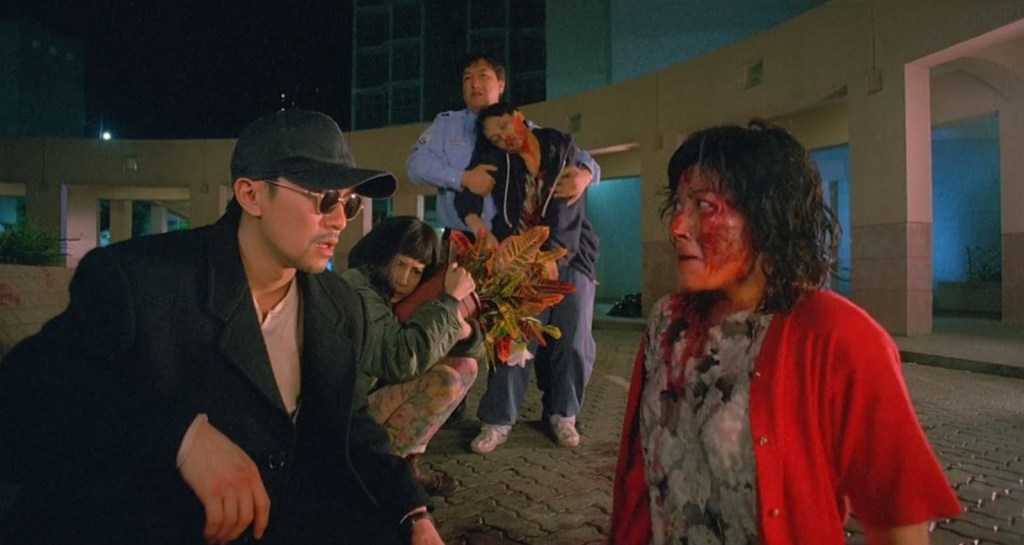
The goofy security staff (think: Police Academy) at a haunted high-rise are terrorized by strange happenings. The only man who can help is an eccentric ghost hunter (Stephen Chow) who lives in a mental institution by day and breaks out to fight evil every night. If you’re looking for character development, motivation, or anything else that would only get in the way of high-octane entertainment, you’ve come to the wrong place. What you’ll get here is dark humor and slapstick violence, served with a generous helping of insanity.

Out of the Dark is all about style over substance. Its furious editing and camerawork homages everyone from Martin Scorsese to John Woo. It’s apparent, too, that the filmmakers had just seen Pulp Fiction and The Professional. I started the movie an hour after I should have been in bed and found myself unable to turn it off. It’s the kind of movie that hooks you so immediately that attempting to hold it at arm’s length will only exhaust you. Just relax and let it happen to you.

Early on, one of the security officers scoops a dying man up into his arms with the intention of racing him to the hospital. But when a slasher shows up the officer instinctively uses the victim’s body as a shield against the repeated knife attacks. Keep in mind, this is all shot like a Three Stooges bit and it’s no less funny. Later, when the hero of the film bursts onto the scene to save the day, he accidentally shoots the victim.

I’ve always been a fan of Stephen Chow, often loving parts of his films, but rarely embracing them as a whole. Here’s one I endorse wholeheartedly… as long as you like politically incorrect horror-comedies with the physics of a Chuck Jones cartoon. (At one point, a refrigerator falls on a man’s head; he survives with little more than a headache.) It’s a wonderfully unpredictable film.

HP Lovecraft’s Necronomicon: Book of the Dead (1994) [31 Days of Gore]

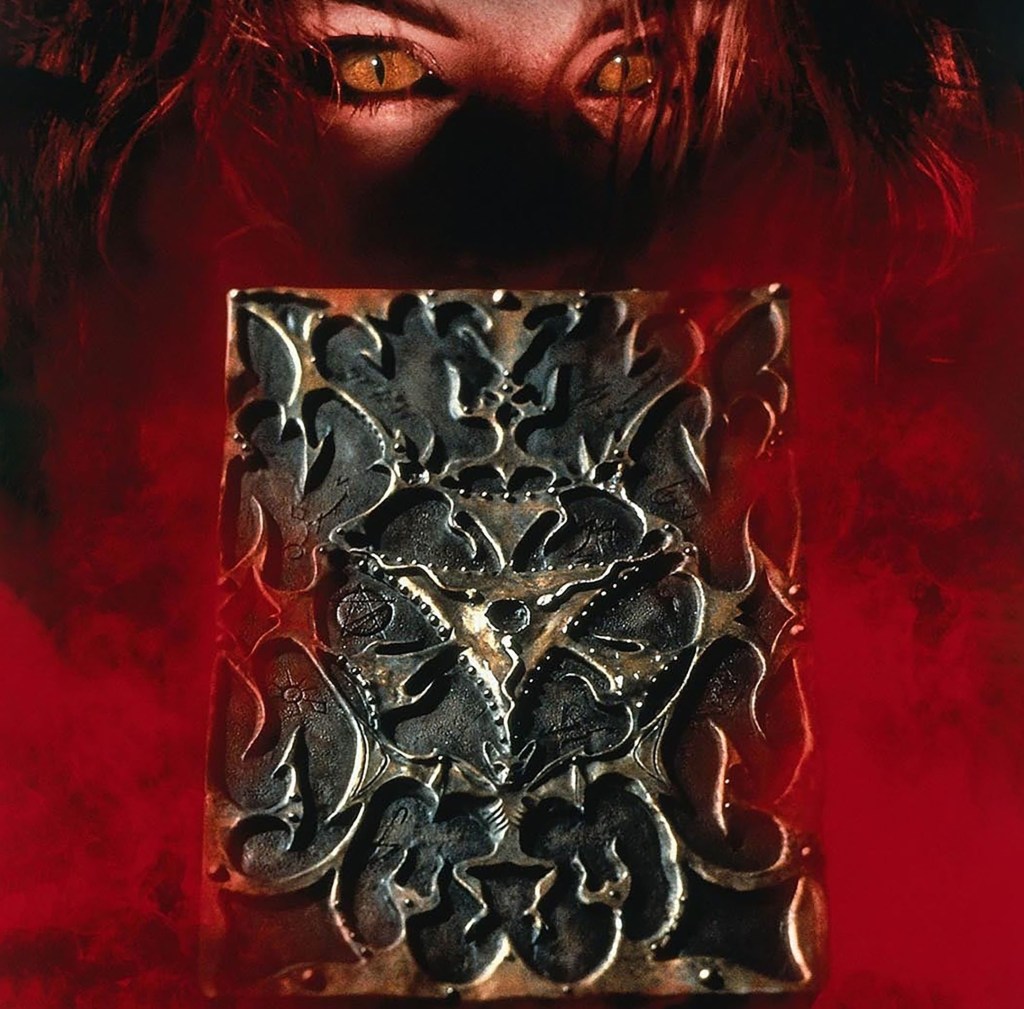
H.P. Lovecraft (Jeffrey Combs in heavy makeup) sneaks into a crypt beneath a library, Indiana Jones style. There he finds The Necronomicon, the book of the dead. The design of the grimoire is intricate, ancient-looking, and creepy—just as it should be. The other props and special effects are a cut above most horror films, too; there’s a lot of miniatures, reverse photography, and even some shots filmed upside down so that blood and goo appear to rise from the floor magically. This story is the container for the other short films in the anthology, which are directed by Christophe Gans, Shusuke Kaneko, and Brian Yuzna.

I’m an absolute sucker for movies like this. I love dangerous books and the characters who’re obsessed with them. As much as I should dislike this movie—and it gives me plenty of reasons—this is at least my third viewing since its limited release in 1993. It isn’t a great movie, but it’s highly watchable… two-thirds of it, anyway.

The first tale is The Drowned. This is the best story in the movie. Bruce Payne plays a grieving widower who has just inherited a cliffside hotel. He discovers his benefactor uncle (Richard Lynch) left a suicide note, which recounts how he acquired the Necronomicon from a mysterious fish-man and used it to resurrect his dead family with tendril-laden results. Payne resurrects his own dead wife, failing to heed his uncle’s warnings. Despite a stupidly rushed ending, The Drowned manages to create one of the most Lovecraftian moods ever put on film. 

Let me suggest fast-forwarding through The Cold, the uninspired second tale of the movie. David Warner is so understandably bored, you can almost hear him wondering how his costars got into movies at all. This is low-effort filmmaking at its worst. The less said about it the better. 

The third tale, Whispers, is alternatively boring and insane. You would expect Brian Yuzna to produce the best story of the bunch, and while he certainly supplies the most notable creature effects, the main character is a monotonously loud policewoman who—get this—has a melodramatic discussion about motherhood in the middle of a car chase. She pursues her suspect into a cavernous lair beneath an abandoned warehouse. There she encounters creatures who crave bone marrow, which sounds metal as fuck, but the action is needlessly interrupted by a pointless dream scene. The segment’s message is about as hammy as the church propaganda in a hell house.

Overall, Necronomicon’s biggest sin is its inattention to detail. Lovecraft is supposedly reading these stories sometime in the 1920s, yet each of the short films are set in contemporary times. Sometimes you think the costumes are reflecting olden times, then suddenly you see a modern car drive by in the background. I’m sure there’s a magical explanation for this, but it’s still wonky and distracting. Nonetheless, this is one of those movies I love even though my brain tells me “no.”

31 Days of Gore: The Demons series

It’s Halloween. This year’s 31 Days of Gore closes with an Italo-horror trilogy.

Demons (1985)

Several people mysteriously receive tickets to an untitled movie. Shortly before showtime, one of the attendees finds a mask in the lobby and tries it on, goofing around for her friends. Somehow, the mask cuts her cheek. Such wounds are rarely minor, especially in films co-written by Dario Argento and director Lamberto Bava.

Later, one of the characters in the movie-within-the-movie finds a suspiciously familiar mask and cuts his cheek. It’s not long before he turns into a demon, much to the disgust of the squeamish audience. Meanwhile, the woman who cut her cheek “in real life” wanders off to the theater’s bathroom where she begins to transform into a demon as well. Some time later, a friend comes to check on her and ends up brutally murdered. Then, as the saying goes: all hell breaks loose.

The women’s boyfriend (or a pimp… probably a pimp) doesn’t seem too heartbroken when he discovers his companions have been turned into demons. In fact, he’s the first person to announce, “We’ve gotta get outta here!” Heartless? Maybe, but it’s sensible and he’s the best character in the entire movie. Played by Bobby Rhodes, he’s like a black Hugo Stiglitz, kicking and switchblading his way through every problem that comes his way.

When the survivors become trapped on the balcony level, Rhodes commands them to rip up the seats and use them as barricades. When they find dead bodies among them, which can turn into demons at any second, he makes his impromptu army toss them over the side immediately. Someone says some nonsense about “respecting the dead,” but Rhodes isn’t having it. He’s too experienced, too crafty to get himself killed over boring bullshit.

In too many horror films, characters make one boneheaded decision after another. In Demons, there are a few characters who’d be perfectly willing to fulfill that role, but there’s always another character, like Rhodes, who’s willing to step up, slap ’em across the face, and keep the pace exhilarating. Agency as rare as this is always entertaining. 

The camera never cuts away from the good stuff, there are plenty of killings (and victims) to go around, and music by Billy Idol, Go West, and Mötley Crüe gives it all a fun yet aggressive energy. The climax is splatter-filled and frantic, and the glowing eyes of the demons are used to wonderful effect. Gems like this are why so many horror fans (myself included) would sit through one shitty rental after another.

Major spoilers for the first film follow….

Demons 2 (1986)

I hoped Demons 2 would pick up where the original left off. The sword-wielding survivor of the first film was just becoming interesting when the credits rolled. Last time we saw him, he’d slayed a theater full of demons with the help of the unlikely appearance of a helicopter. Although Demons 2 technically takes place after the events of the first film, it’s little more than a beat-for-beat redo.

What worked well for Evil Dead 2 doesn’t work as well here. Nonetheless, it’s a pleasant surprise that Lamberto Bava cast familiar faces, particularly Bobby Rhodes who stole the original picture for me. Although his new character lasts a little longer this time, Rhodes isn’t quite as fun or energetic as he was the last time we saw him. Why they didn’t just make him the main character of either film beats the shit out of me. Were they afraid of too much awesomeness?

This time Bava trades the movie theater setting for a high-rise apartment building. Everyone who lives there seems to be watching the same horror film on television. A narrator informs us the events of the first film “convinced the world that demons can exist.” That’s an intriguing premise that ultimately has no bearing on this film whatsoever. They could have at least told us how the outbreak of demons was stopped, but that’s never answered.

The original film managed to introduce its large cast of victims in the first twenty or thirty minutes. This one takes over forty. The characters are a little dumber, the glowing eyes of the demons aren’t as effective, and—for reasons incomprehensible to me—the demons are as scared of fire as Frankenstein’s monster, even though they presumably come from hell. The biggest sin is it’s just not nearly as fun.

It’s almost a great horror movie when you consider it on its own merit, but it’s impossible not to long for the original.

No more spoilers from here on out.

The Church (1989)

So now the pedigree of the series becomes a little more complicated. Lamberto Bava went on to direct The Ogre, which Italian distributors tried to pass off as a sequel to Demons 2 even though it certainly wasn’t. Meanwhile, Umberto Lenzi made an unofficial entry to the series called Black Demons. I don’t know who the hell is enforcing Italian copyright law, but my guess is nobody because filmmakers there have been making unofficial sequels for decades.

Dario Argento, on the other hand, intended to produce an official Demons 3, but that movie morphed into The Church, starring Dario’s daughter, Asia Argento. Although it shares similarities with the first two films, the tone of The Church is such a radical departure, there’s no point in comparing them at all.

That’s not a bad thing. Demons 2 disappoints because it hits so many of the same notes as the original. The Church succeeds because it takes the original premise (that demons can spread like a viral outbreak) and scraps almost everything else, including the movie-within-a-movie angle. The Church unfolds at a much slower movie than its predecessors, but the atmosphere, enhanced by Philip Glass and Goblin music, keeps it captivating.

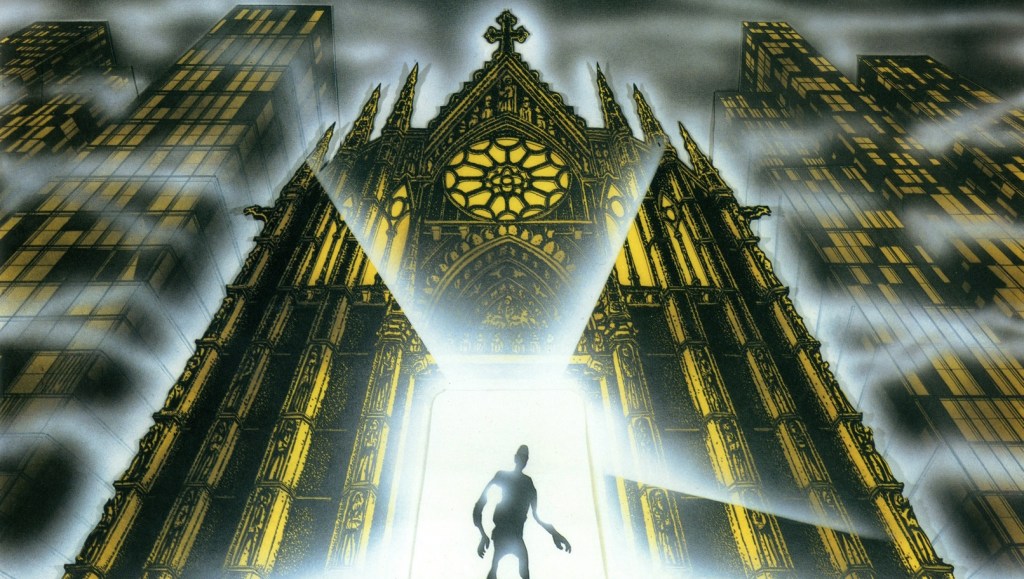
Teutonic Knights massacre a village of cursed people, bury them in a mass grave, and build a church to cover it up. The church’s architect installed secret features straight out of an Indiana Jones movie, which will activate only if the seal to the tomb is someday broken. Fast forward to modern times and even the clergymen are unaware of what took place there so many years ago. It won’t be long until they find out.

Par for the course, there’s some stilted dialogue and nonsensical WTF moments. The leading woman, pursued by a grotesque demon in her own home, calls the cops, dives through a window, runs across her yard, and finds herself trapped in a flannel blanket. Naturally, you assume she ran through a clothesline, but it turns out the cops—who she called twenty seconds ago—have already shown up to throw a blanket over her head for being hysterical. In America, you couldn’t get that kind of response time even if you lived inside a police station.

I’m not one to grade an Italian horror film on logic as flaws like that are simply inherent with their dreamlike filmmaking sensibilities. Everything else—and I do mean everything—is pure perfection. The Church is one of the most flavorful horror films ever made. I know I said it can’t be compared to the original, but I like it a lot more. In fact, it’s the best movie of the thirty I reviewed this month. Watch it now and watch it often.

That’s all for 31 Days of Gore this year, but don’t wait eleven months to come back!
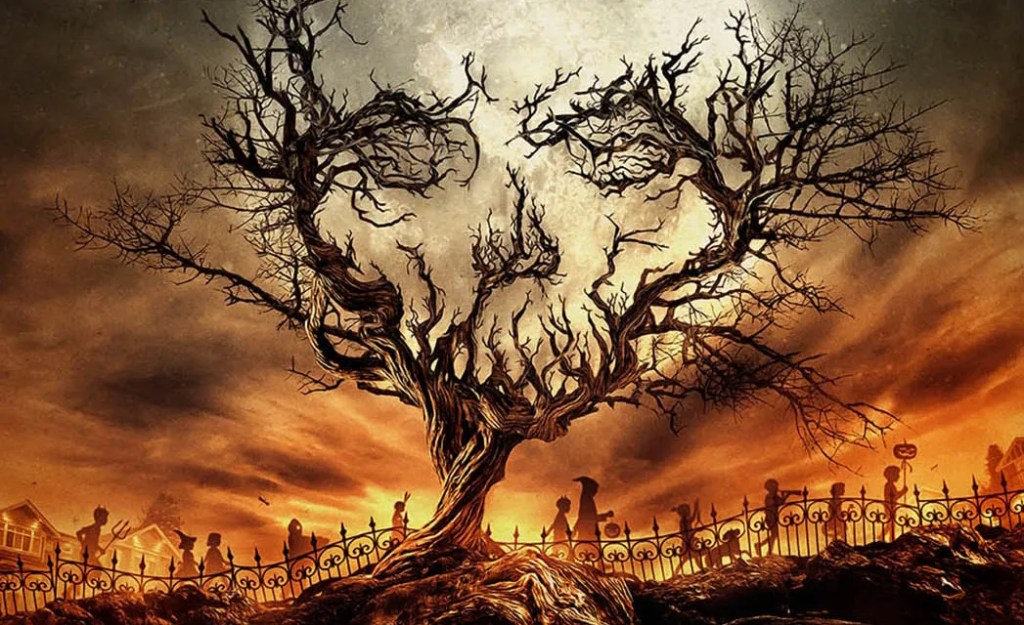
31 Days of Gore: Tales of Halloween (2015)

It’s October. Time to talk horror. This year I’m reviewing a different horror movie each day of the month.

With Adrienne Barbeau, Lisa Marie, Stuart Gordon, Lin Shaye, Barbara Crampton, Joe Dante, and a couple of Troma regulars, the cast of Tales of Halloween reads like the guest list at a horror convention. My only complaint about the casting? Nobody gets any more than a handful of minutes on screen.

Barbeau, riffing on her role in The Fog, gets the most screentime in this anthology. Her narration serves as the glue for the ten stories, the subjects of which range from aliens to psychopathic children. At worst its stories are pointless, but never boring. More often than not, the segments are gleefully entertaining.

In the first segment, a child wonders why his joyless parents confiscate his Halloween haul every year. When he’s supposed to be in bed, he sneaks out of his bedroom and discovers his parents pigging out on the treats perversely. That’s when he decides to carve them up with a meat cleaver. In another segment, a couple of idiotic criminals kidnap the son of a wealthy man. When they call to make their demands, the father says, “Not interested.”

What’s admirable about Tales of Halloween is how seamless it all is. While I liked The ABC’s of Death just a little bit more, that series was a quilted showcase for twenty-six different filmmakers whose varying styles sometimes clashed with one another. Tales of Halloween, on the other hand, is a genuine collaboration, having actors from one segment walking through the background of the next.

If it’s cartoonish black comedy you’re looking for, Tales of Halloween brings the goods. You could do a lot worse on a Friday night.

Come back at midnight Central Time for the next (and last!) movie.

31 Days of Gore: Head of the Family (1996)

It’s October. Time to talk horror. This year I’m reviewing a different horror movie each day of the month.

Lance (Blake Adams) is the redneck owner of a small town cafe who’s fallen in love with the wife of a dangerous biker. Her name is Loretta (Jacqueline Lovell) and, in perfect B-movie dialogue, Lance says, “It’s like fucking a firecracker whenever I’m with her.” Lance isn’t very bright, Loretta isn’t either, and her husband is probably dumber than them both combined.

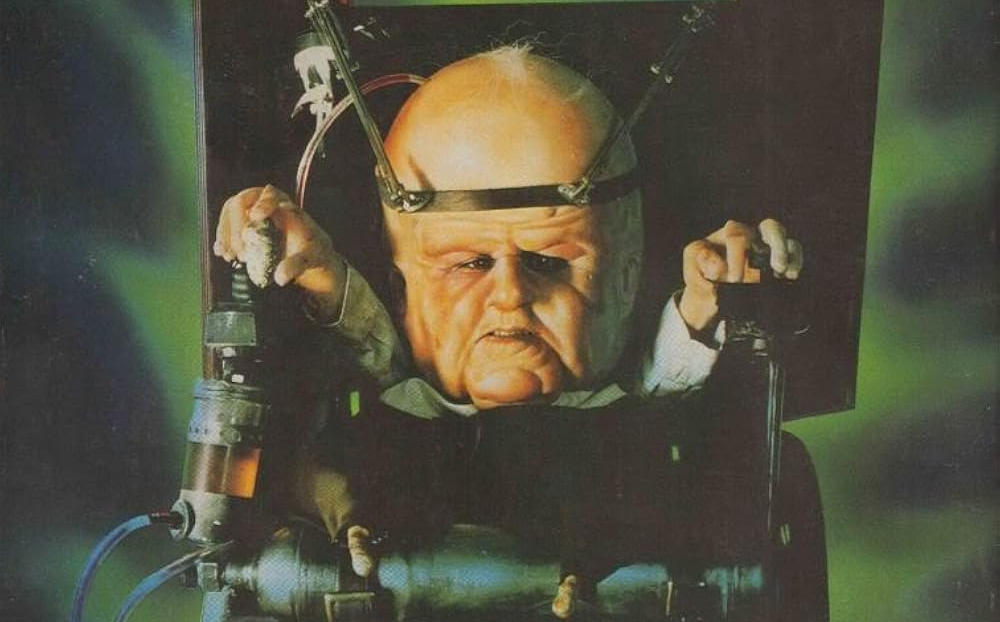
Then there’s the Stackpools, an alien-like family of weirdos. They consist of a giant man-child, a geek (in the circus sense of the word) with bulging eyes, and an unnaturally endowed woman played by a real-life pornstar. The titular head of the family is the fourth sibling, Myron, who’s little more than an over-sized head in a wheelchair. (That’s right: the title of this movie is literal.) Stranger still, Myron controls his quadruplet siblings with his telepathic mind.

Myron’s a mad scientist who longs to find a proportionate body that can support his massive brain power. Like something out of a Roadrunner cartoon, the Stackpools barricade the rural highway with a sign that detours motorists to the front door of their mansion. Once there, the brute of the family knocks them out so that Myron can experiments on them in his basement.

When Lance accidentally uncovers the family’s dark secret, he decides to blackmail them. He won’t turn them into the authorities as long as the family offs Loretta’s husband. The head of the family reluctantly agrees. When Loretta’s husband turns up missing, she and Lance could live together happily ever after… or at least until Loretta tires of Lance and his cheating ways. Unfortunately, Lance gets greedy and tries to blackmail even more out of the Stackpools: an allowance of two thousand bucks a week, which Myron isn’t keen on paying.

This isn’t Shakespeare, but compared to a lot of the movies I’ve watched this month, the dialogue goes above and beyond the bare minimum required for a flick like this. The acting is as good as it needs to be and sometimes a little better. It’s a fun film that I can only recommend to people who smile when they see a giant head rather than roll their eyes.

Come back at midnight Central Time for the next movie.

31 Days of Gore: Tormented (2014)

It’s October. Time to talk horror. This year I’m reviewing a different horror movie each day of the month.

In Tormented (aka Berkshire County) a teenage girl named Kylie goes to school one day to discover the chad she reluctantly went down on at a costume party not only recorded the entire thing, but shared the video with all of her classmates. Although the boy said he and his girlfriend had broken up, it turns out they hadn’t (shocking, right?) and the girlfriend’s more pissed at Kylie than her douchebag boyfriend (again, shocking). The bullying doesn’t stop at school. When Kylie gets home, it turns out even her mother blames her.

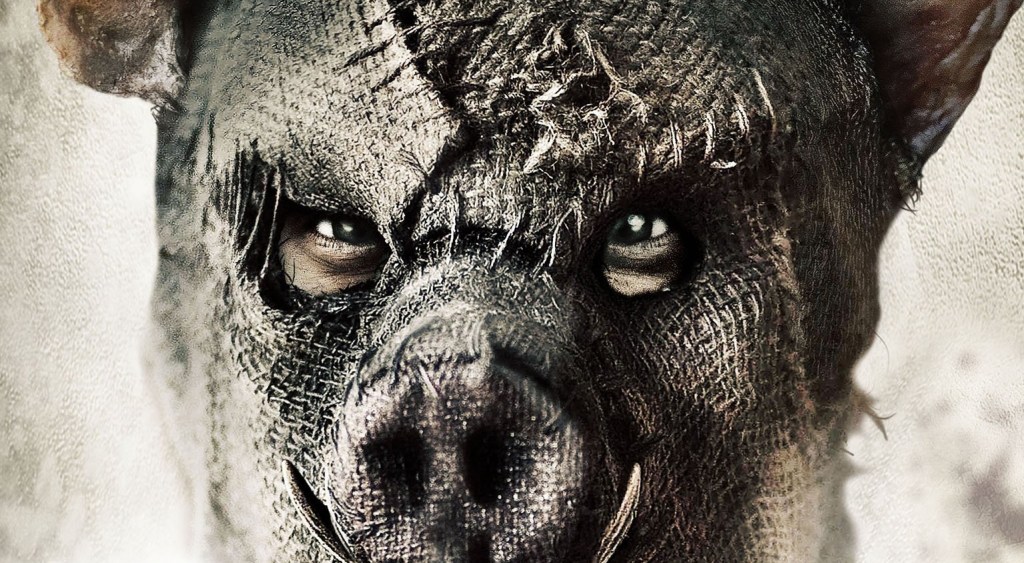
So what does this subplot have to do with the rest of the movie? I’m not entirely sure. I guess it’s about a young woman having to choose between facing her fears or… dying horribly? Kylie’s already been through too much by the time the movie brings in its horror elements. Having a family of masked psychos break into the house while she’s babysitting a couple of kids seems artlessly cruel. Maybe they were trying to make some kind of statement, but it’s little more than an after-school special tacked onto the beginning of a slasher film.

I know many horror movies require teenagers to be dumb, but there’s a part where Kylie gets a chance to get away. She’s sitting behind the wheel of her car, keys in the ignition, when the 911 dispatcher tells her, “You’re better off staying where you are.” Kylie agrees. Then she gets out of her car and walks back into the house with the masked maniacs. I was dangerously close to throwing something at my TV.

I think that’s the biggest problem with Tormented: you’ve got fine direction, a good actress, and competent filmmaking, but a lousy script. There are few surprises, many boneheaded decisions, incompetent cops, and a twist ending which will surprise no one.

Come back at midnight Central Time for the next movie.

31 Days of Gore: Dead Heat (1988)

It’s October. Time to talk horror. This year I’m reviewing a different horror movie each day of the month.

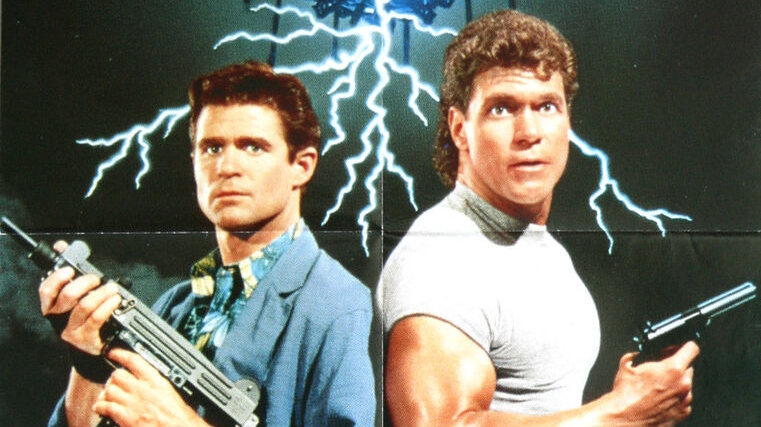
Dead Heat, which stars Treat Williams and Joe Piscopo, begins like any other buddy cop film. The problem with all the Lethal Weapon copycats is they could never quite nail the balance between action and well-written humor. Dead Heat attempts to throw another genre into the mix: horror. It’s not very good at any of them.

As goofy as it is, Dead Heat has an energy that immediately drew me in… at arm’s distance, anyway. Early on, Williams and Piscopo have a shootout with a couple of jewel thieves who just won’t die until one steps on a grenade and Williams rams the other one with an unmarked car. When the cops visit the bodies in an autopsy room, the medical examiner informs them the bodies have been on her table before.

Early on in their investigation of the zombified crime ring, Treat Williams is killed and resurrected himself. Williams discovers he doesn’t have a heartbeat and doesn’t breathe even though he (initially) appears to be in good health. He only has twelve hours to nail the bad guys, at which point he will decompose completely. After one action sequence, a woman comments, “You’re hurt!” To which Williams deadpans, “Lady, I’m dead.

The makeup effects aren’t bad. The movie itself is, and maybe this goes without saying, but it’s a good bad movie as long as you can stomach mediocre action and lazy one-liners. Just be warned that the filmmakers seem to think Joe Piscopo is a decent substitute for Eddie Murphy, but he’s not… obviously. I’ve always wondered why Treat Williams (playing a character named Roger Mortis… hardy-har-har) was never a bigger star.

Come back at midnight Central Time for the next movie.