Pieces (1982) [31 Days of Gore]

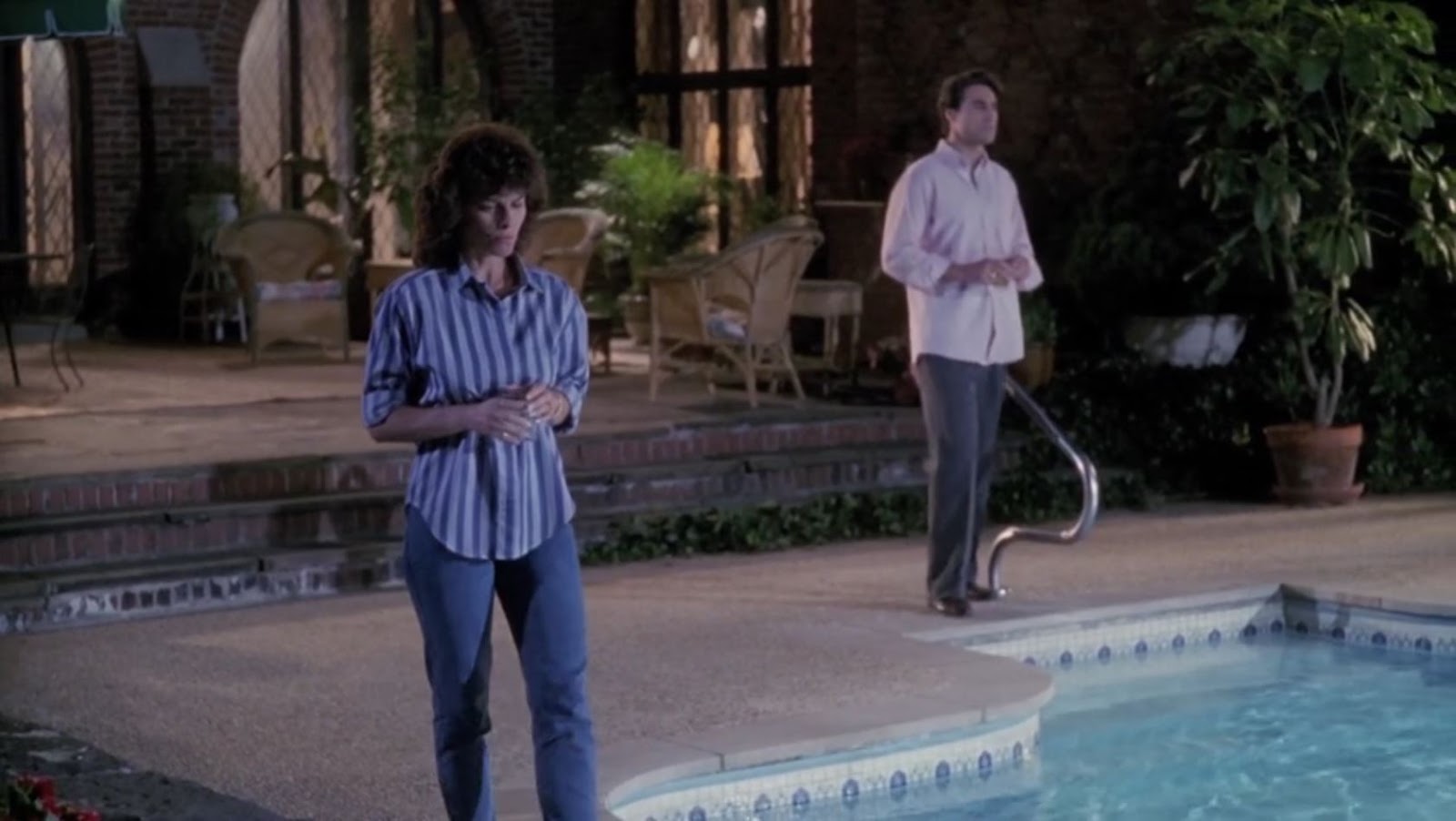
Boston, 1942: a mother catches her son with pornographic material and wrecks his room in a fit of rage. With measured calmness, the boy axes her to death and hacksaws her head off. When the police arrive the boy is found trembling in a closet, making up stories about a killer fleeing the scene of the crime. The cops buy it.

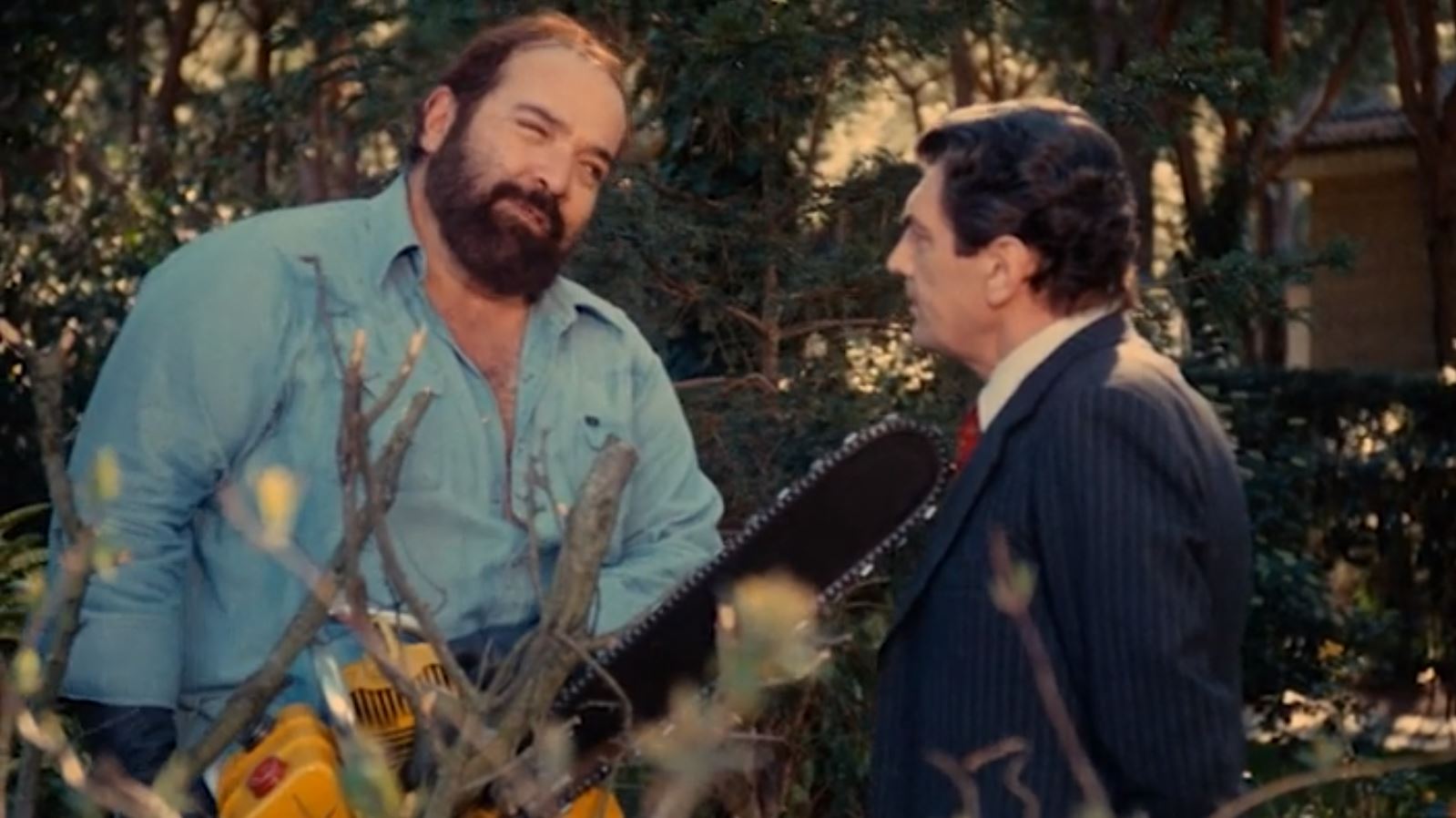
Fast forward to the 1980s: a college girl is sunbathing on the grass as a figure stalks about the trees. We’ve seen this before: the figure will turn out to be a voyeuristic groundskeeper or a dimwitted boyfriend, but not the killer. You can rest assured there probably won’t be another kill for at least twenty or thirty minutes… in other movies. In Pieces, however, the figure leaps from the bushes and lops her head off with a chainsaw. In broad daylight no less.

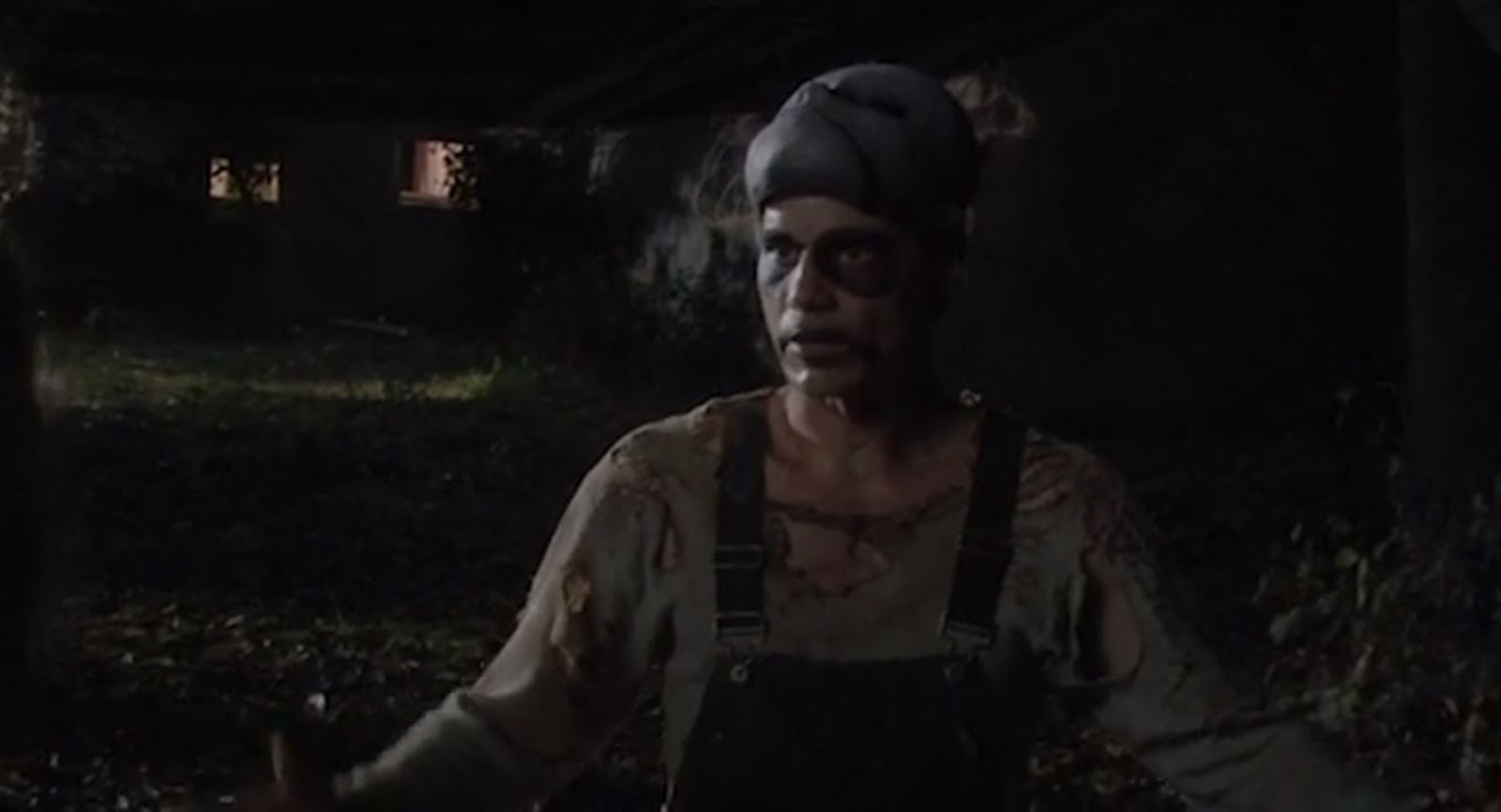
The homicide detectives arrive and that’s when the movie becomes a serviceable whodunit. The pool of suspects include the dean, a handful of students, the groundskeeper, and an oddly composed professor. You’ll think you know who the killer is, but Pieces might just surprise you.

Let’s examine one of the best poster lines of all time: “Pieces… it’s exactly what you think it is.” More accurately, for fans of 80s slasher flicks, it’s exactly what we want it to be. Aging TV actors? Check. Hilariously stilted dialogue? Double-check. Thrills per minute? Check, check, and triple-check. All this with a heavy pinch of the Italian horror music.

Pieces is a stand-out in what was perhaps the most saturated year of slasher flicks. The reason it stands out is because it’s not what you think it is… unless you’ve somehow never developed a cold cynicism after being burned by the abundance of gratuitously slow, stupidly boring slasher movies. In fact, calling it a slasher movie is a disservice; Pieces is straight-up exploitation of the I-can’t-believe-this-got-made variety. It shares more in common with Hershell Gordon Lewis and Frank Henenlotter than Sean Cunningham and Wes Craven. I’m not saying one flavor is objectively better than the other, but this is the kind of shit I love.

With great special effects and an unwillingness to pan away, it’s one of the rare movies which lives up to its scuzzy promotional materials. That alone deserves accolades. Easily the purest and most enjoyable gore movie I’ve featured since Blood Rage.

Behind the Mask: The Rise of Leslie Vernon (2006) [31 Days of Gore]

Here’s the Spinal Tap of slasher movies. Filmed mockumentary style, Behind the Mask takes place in the same universe as Freddy Krueger, Jason Voorhees, and Michael Myers. Leslie Vernon is a deranged killer who wishes to join their iconic ranks, so he invites a documentary crew to follow his pre-spree preparation rituals.

It isn’t easy being a slasher. In one scene Leslie details the excruciating process of finding the right group of victims. In order for it to work flawlessly, he’s gotta have the perfect mix of jocks, stoners, and hormone-addled teens surrounding the virginal heroine who may or may not make it to the very end. In another scene he shows the fictional filmmakers how he sabotages the makeshift weapons and escape routes his victims might use to thwart him.

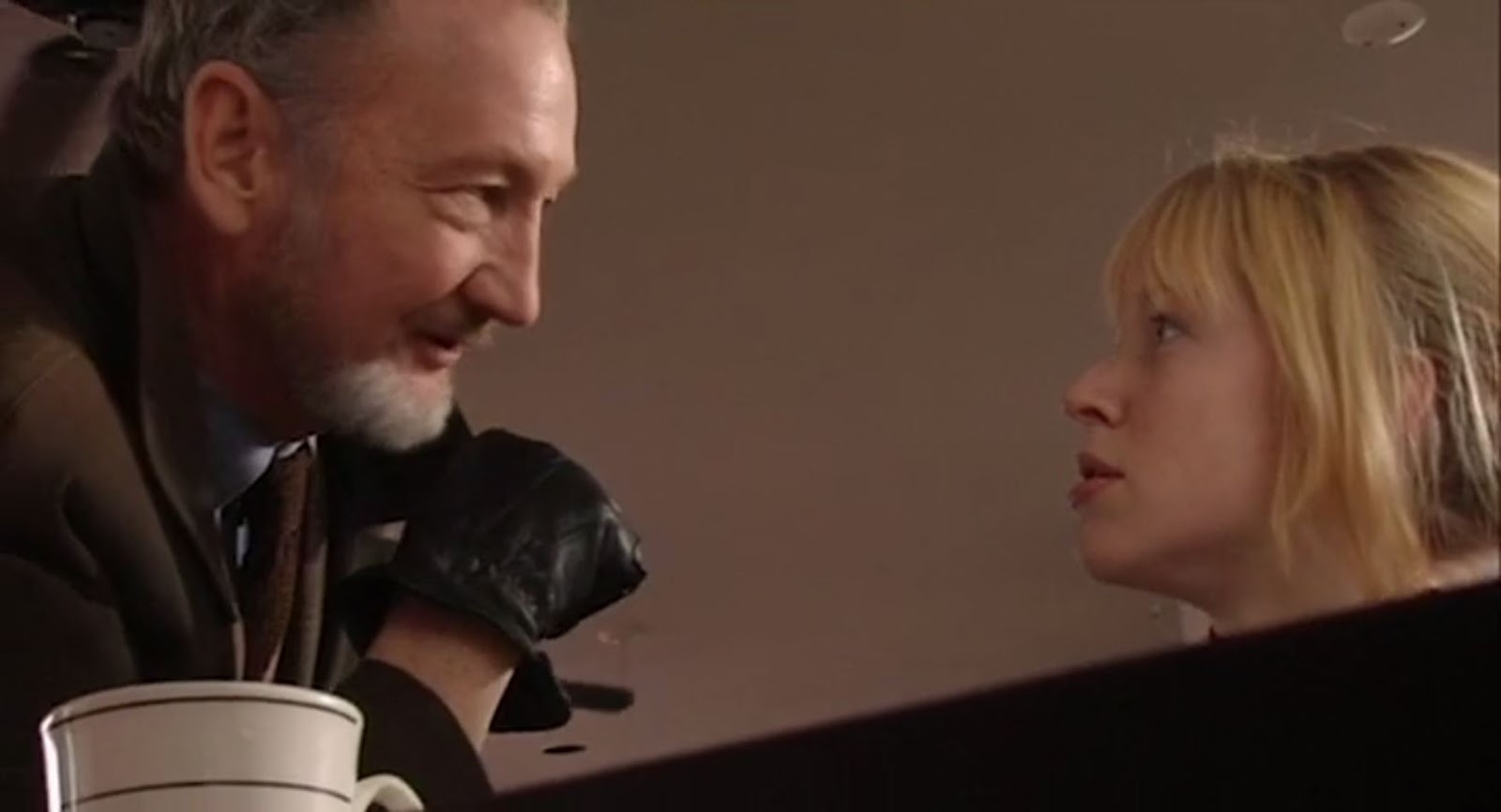
For something which looks so cheap, the movie’s surprisingly well made. (I loved the idea of digital cameras democratizing the filmmaking process in the late 90s and early 2000s, but rarely the results.) The unknown leads are talented, sometimes outshining the recognizable faces which include Robert Englund, Zelda Rubinstein, and The Walking Dead’s Scott Wilson. I’m not the biggest fan of movies which poke fun at the tropes of horror, but Behind the Mask isn’t making fun of them so much as it’s pointing out how unlikely they are.

So it’s a head-scratcher that the movie eventually descends into the very thing it’s lampooning. There’s a major reveal you’ll see coming from several minutes away and although the movie thinks its uncharacteristically serious climax is subverting the cliches of previous horror films, it still very much feels like a run-of-the-mill finale. Since it’s so creative for the first hour or so, the last ten minutes or so are kind of disappointing.

I still recommend the hell out of this movie. It’s a great ride up until it forgets it’s a comedy.

The Midnight Meat Train (2008) [31 Days of Gore]

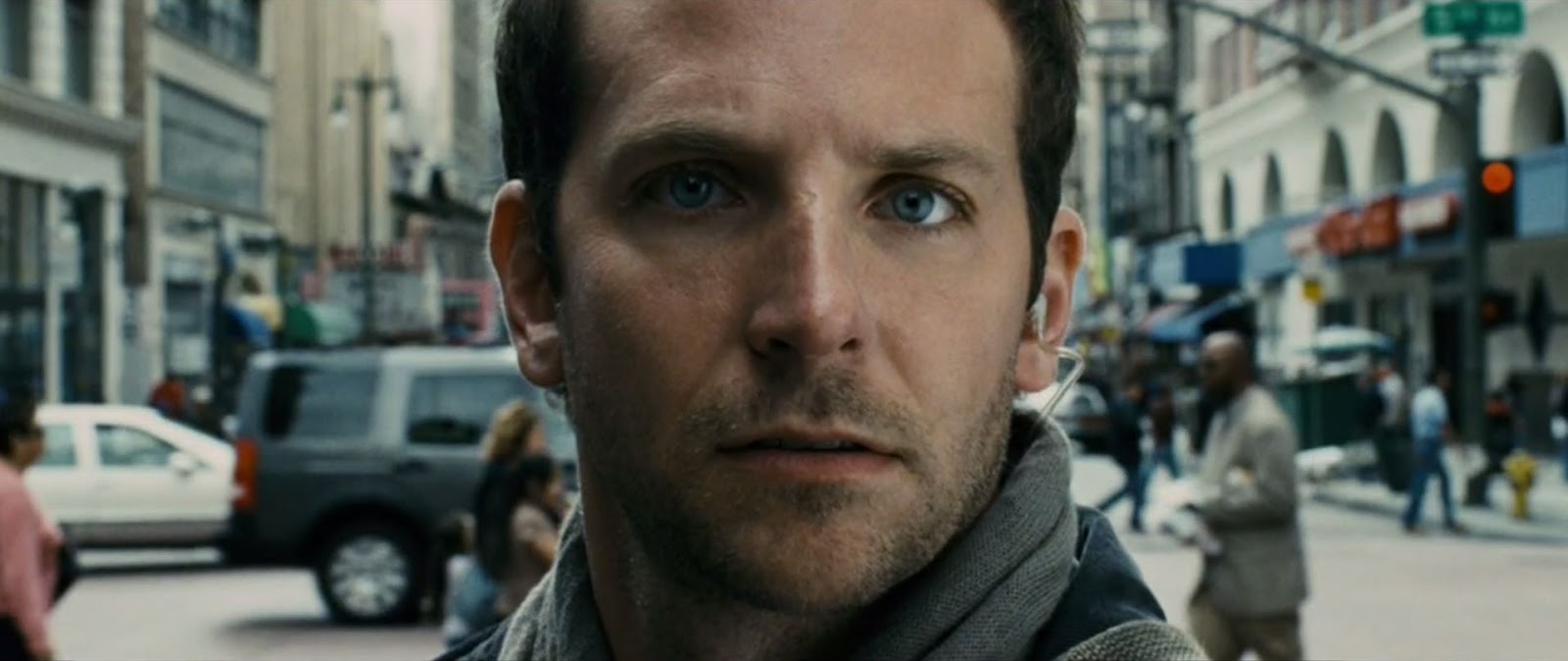
Bradley Cooper and Leslie Bibb are a banging hot couple who live in a spacious apartment in the middle of New York City. This despite the fact Cooper is a struggling photographer and Bibb is a waitress at a shitty diner. Don’t get hung up on the unlikeliness of this setup or you’ll have an even harder time suspending disbelief later on. Yeah, I know I’ve raved about less believable movies than this one, but context is important and Midnight Meat Train wants you to believe every bit of it.

Early on, Cooper is introduced to a painfully shallow (and painfully stereotypical) art gallery manager, played by Brooke Shields, who informs him his art isn’t brave enough to interest anyone. Wounded by the critique, he roams the streets at night looking for the darkest, most dangerous photographs he can get. The first great photograph, according to Shields, depicts the attempted rape of a woman by subway thugs. Three more pictures like that, she says, and Cooper will earn a spot in her next gallery.

‘Kay.

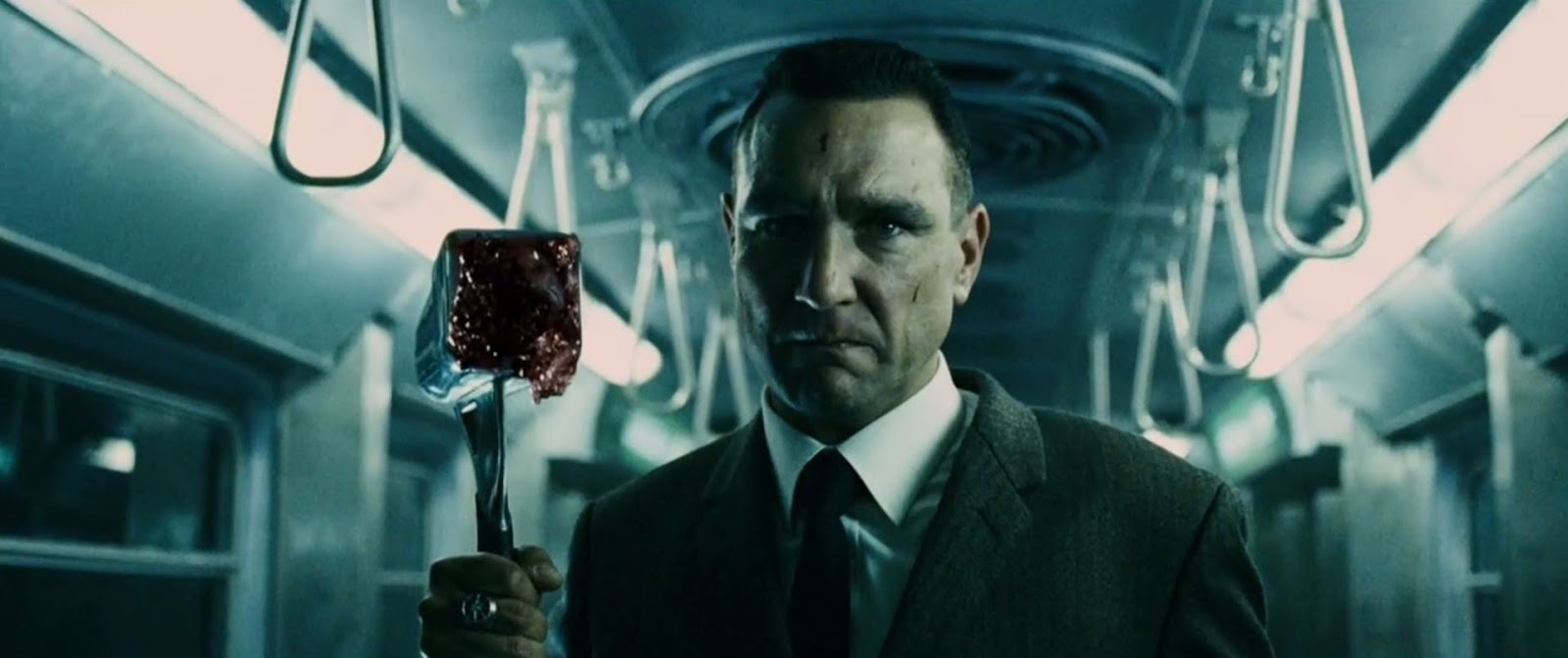
Later, Cooper learns what the audience already knows: the woman he photographed boarded a subway train and never got off. It turns out a mysterious man in a suit and tie (Vinnie Jones) butchers passengers on the train every night. What is he doing with the bodies? Where is the train going? Who the hell is he? Those questions are kind of answered by the end, but the answers feel more like excuses than reasons—excuses for showing a bunch of mayhem without substance.

I only vaguely remember the original story from Clive Barker’s Books of Blood, which is odd considering I distinctly remember so many of the other stories from that volume. If memory serves me correctly, it was a good horror story squeezed in between a bunch of great ones. To be fair, I’m frequently underwhelmed by adaptations of Barker’s work even though I can’t get enough of them. I’m just curious why the filmmakers chose this story over some of the others in the series (cheapest to film, perhaps?).

This isn’t the first time I tried this movie. On my most recent viewing, I was admiring the adult characters and serious tone, trying to remember why I hadn’t finished it the first time. Then it happened: Ted Raimi makes a cameo (usually a good thing) in which the butcher hits him in the back of the head so hard it sends Raimi’s eyeball flying at the camera. Sure, that sounds cool, but the CGI employed here is about as convincing as the effects used in the Lionsgate logo. The problem is rarely the CGI itself, it’s the way it’s used… use it to show me something that’s literally impossible to film. Don’t use it to put practical effect wizards out of work.

When the movie isn’t going full Matrix with its gore, it looks great and the performances are better than this script deserves. I love these kinds of high concepts, and I love characters who are helplessly drawn to the shadows, but the story just failed to excite me. It’s a shame, too, because there are some very watchable moments here. I especially liked Bibb’s acting when she realizes her lover is going insane.

Chopping Mall (1986) [31 Days of Gore]

Growing up, there was Critic’s Choice Video, Blockbuster, and, eventually, Hollywood Video in town. When I exhausted the horror sections in all three, I turned to the video store in the local supermarket, which had a surprising number of underrated gems. (Some of the weirdest shit could be found in the grocery store, which makes me regret not taking advantage of it sooner.) Chopping Mall was one of them.

Fast-forward to today and the film’s been remastered by Arrow Video, which treats splatter films with the same care as Scream Factory and Grindhouse Releasing. I love VHS for what it was, but anyone who maintains it’s better than these HD re-releases is hopelessly nostalgic. This is the closest you can get to seeing this movie in a theater for the first time.

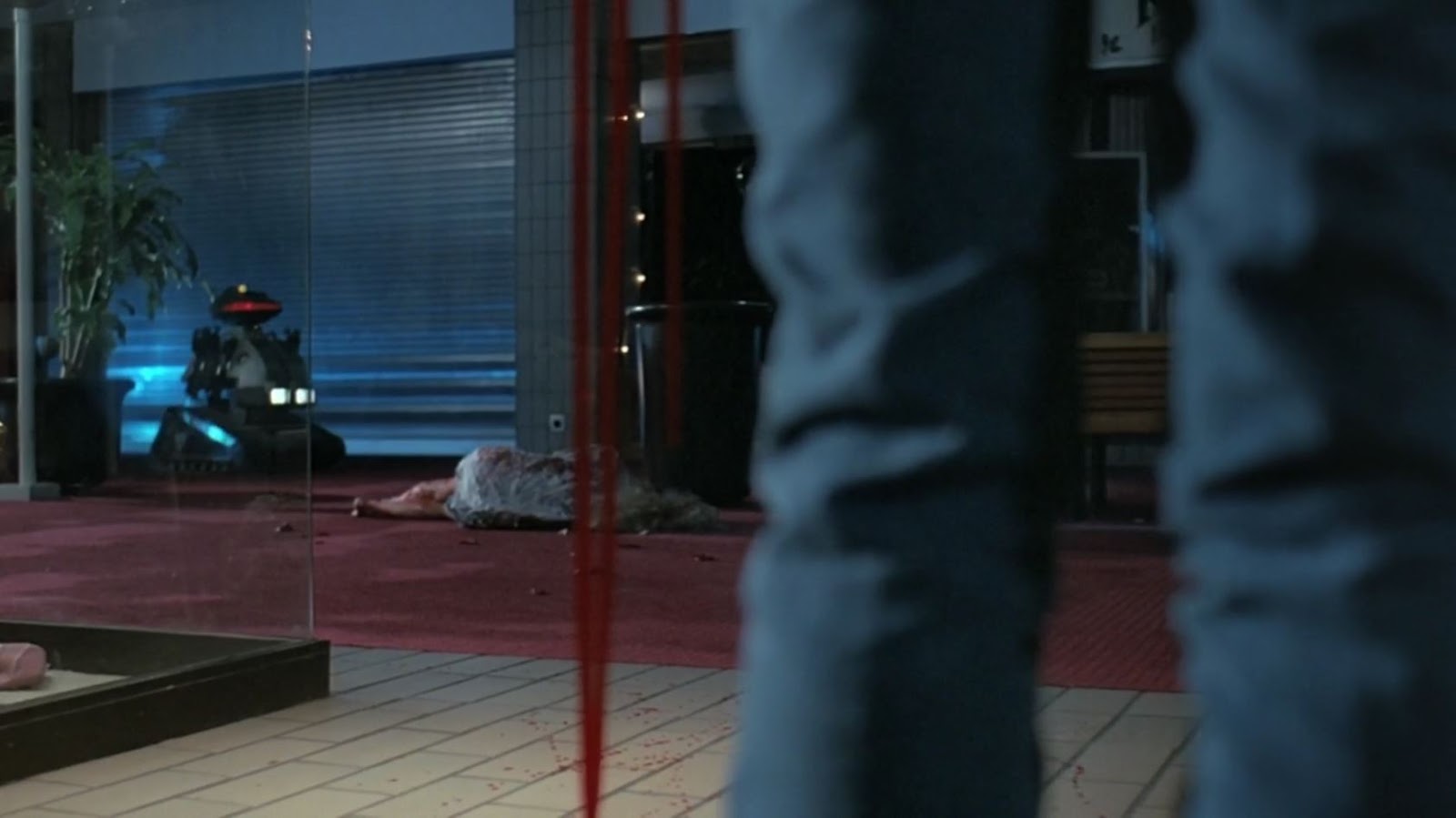
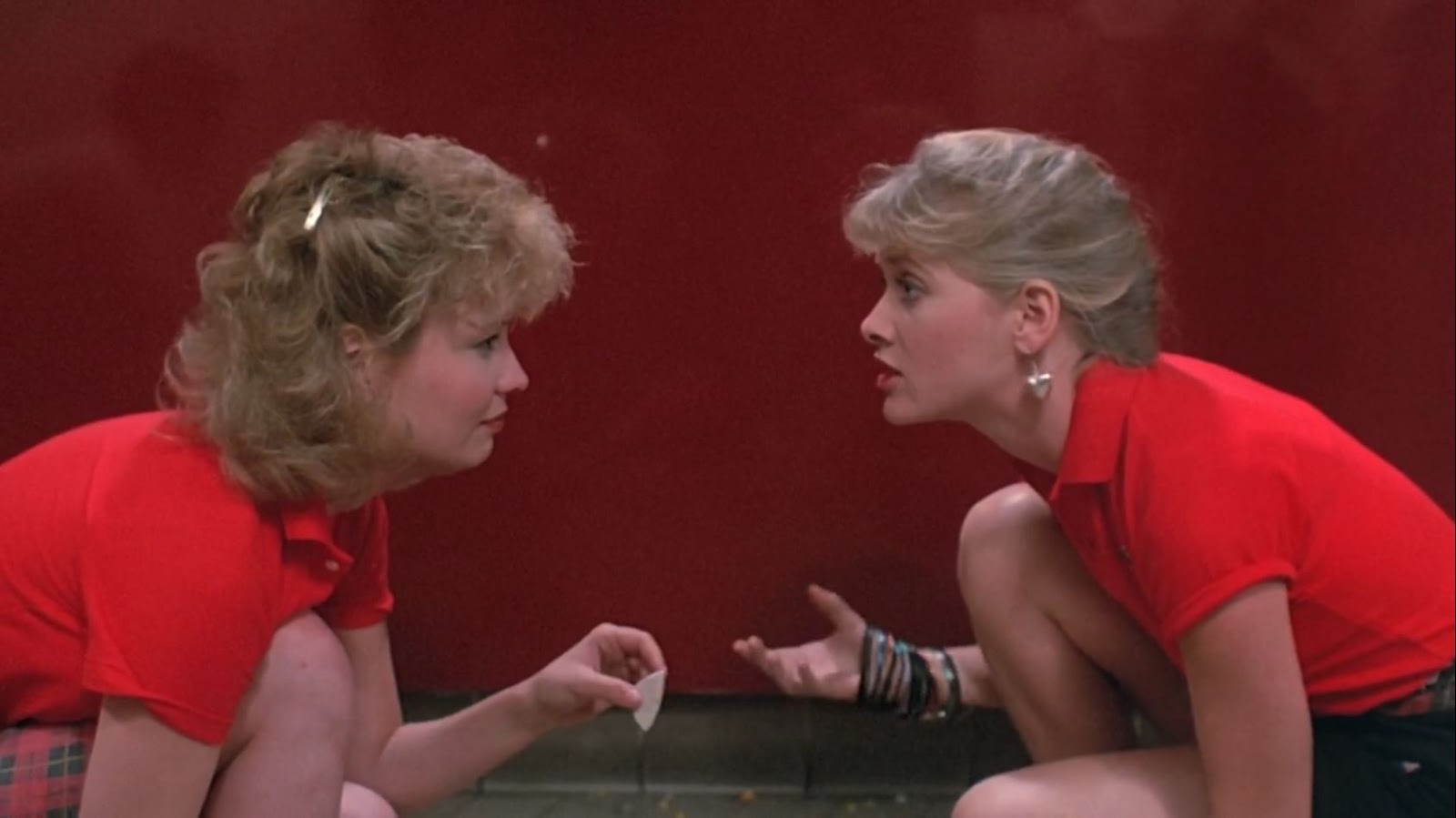
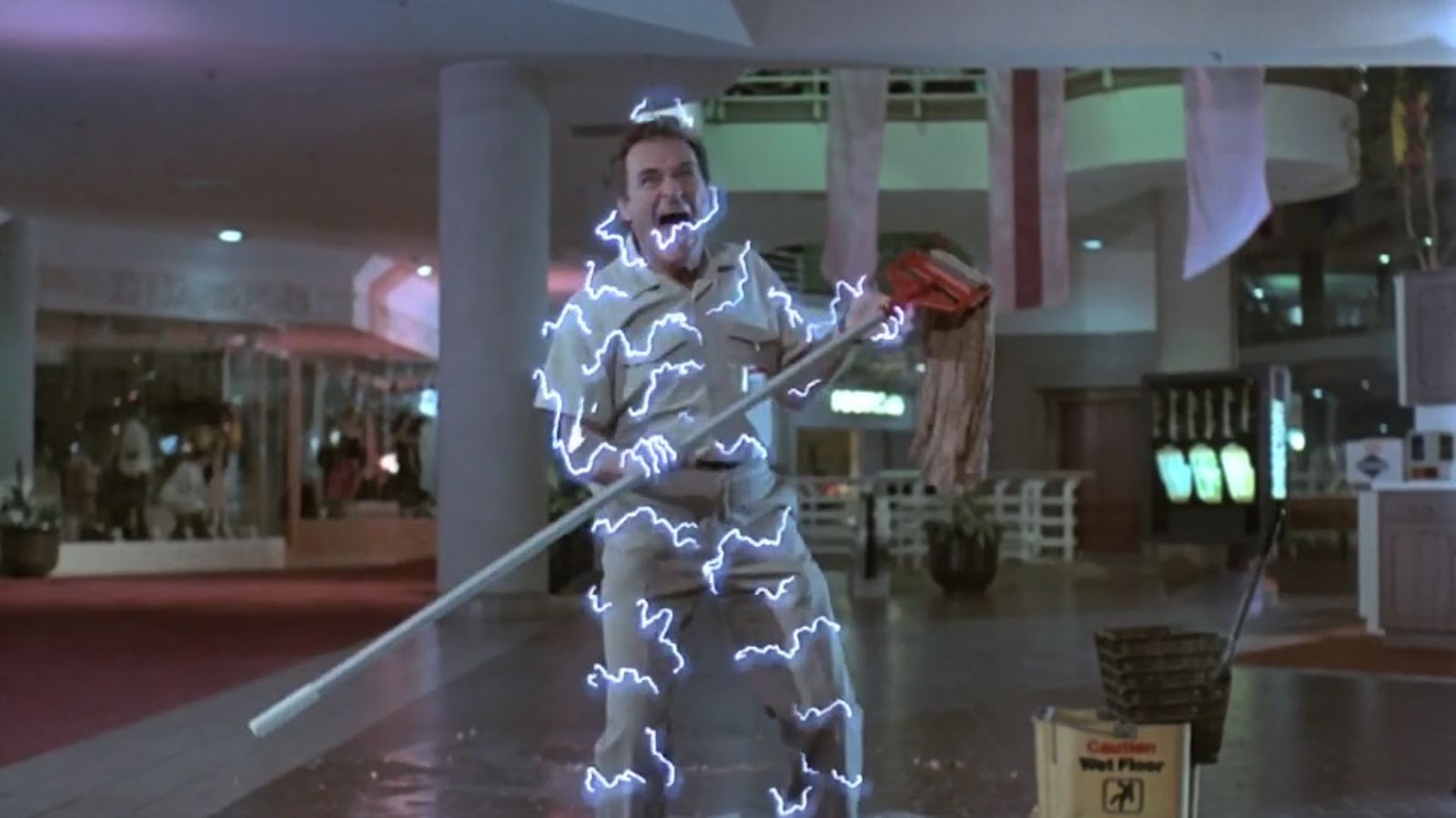
What I admire most about Chopping Mall is its elegant simplicity. A group of horny teenagers party in a mall after hours. Unfortunately, the mall is patrolled by futuristic security bots, which go homicidal after an electrical storm affects their programming. Dick Miller, playing a janitor, is one of the first to go; he’s angrily mopping up a spill when one of the robots decides to electrocute him for no other reason than our entertainment.

When the three robots discover the teenagers, they chase them through ventilation shafts, clothing stores, and staff-only corridors, shooting lasers from their head-mounted visors. This is the kind of movie where fully automatic assault rifles can be found at a sporting goods shop called Peckinpah’s. Even better: the restaurant in the mall is decorated with B-movie posters. Why? Why not.

Chopping Mall is fast, funny, and absolutely bonkers. At 77 minutes, the movie doesn’t even come close to wearing out its welcome. It’s amazing that, with a sub-million dollar budget, the film is so watchable and fun. Watch it with a group of rowdy drunks and have a grand ol’ time.

Two Evil Eyes (1990) [31 Days of Gore]

Two Evil Eyes sounds like a dream come true: a double-feature based on the works of Edgar Allan Poe, one directed by George Romero and the other by Dario Argento.

I wouldn’t say it’s a great movie, but it manages to hold up after multiple viewings. The acting is sufficient and it feels like it’s aimed strictly at adults. Other anthology films, like Creepshow, attempt to soften the hokey-factor by addressing it with loads of humor. Two Evil Eyes isn’t entirely without humor, but it’s always refreshing to see a horror film that A) you can take seriously and B) doesn’t bore the ever-lovin’ shit out of ya.

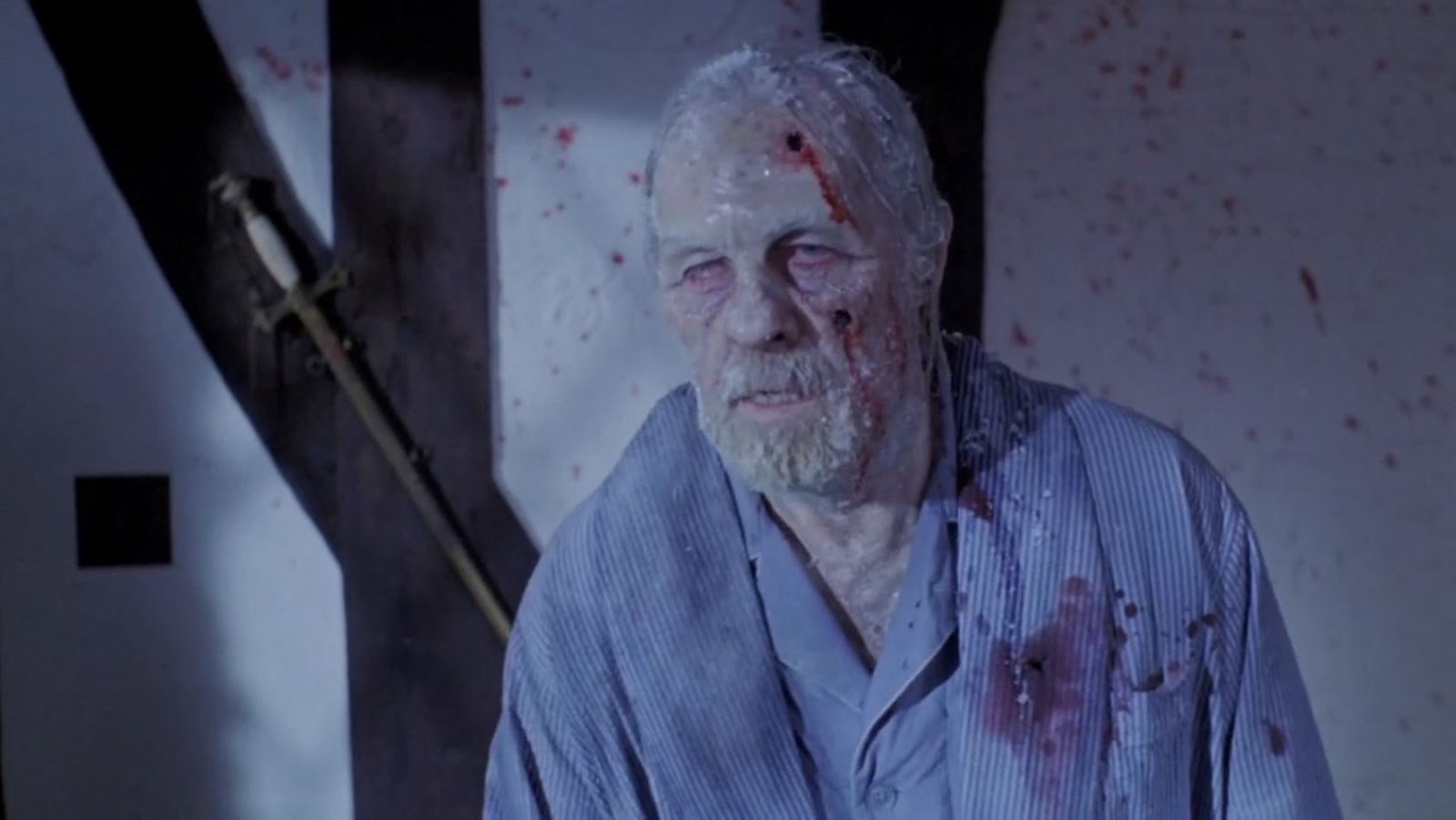
Romero’s segment comes first. It stars Creepshow’s Adrienne Barbeau and After Midnight’s Ramy as lovers despite the fact Barbeau’s wealthy husband (Bingo O’Malley) is on his deathbed. Zada, who happens to be a hypnotist, puts a spell on the man to make sure he doesn’t leave Barbeau out of the will. (I’m simplifying here because the boring legalese is much more complicated than it needs to be.) Unfortunately, Zada never issues the command to awaken the old man from his trance, so it keeps a part of him awake even in death.

 The idea of keeping someone in a perpetual state of conscious death is genuinely creepy, even if the voice which emanates from the body verges on unintentional comedy. My biggest complaint is that the setup is dragged out until the bitter end. It goes on for so long, in fact, I’ve already told you more than I should have.

The next segment, which begins immediately after Romero’s abruptly ends, was actually my introduction to Argento years ago. The director opens his segment at a dark crime scene, complete with a pendulum murder weapon. The contrast between the directors’ style is immediately apparent: Romero was a technical filmmaker who never let the cinematography distract from the story, while Argento favored visual prose. (We could argue all day about which style is superior, but I’ve liked Romero’s films more consistently, even if they didn’t look as good.)

Whereas Romero’s segment gradually eased you into the macabre, Argento uses the far-fetched crime scene to set the tone for the rest of the movie: this isn’t reality. This is a nightmare.

I feel it’s far easier to suspend disbelief here than it was in the first story, even though it asks you to believe a whole lot more. There’s some very funny stuff in the second segment, but it’s not the goofy fun-funny of Creepshow and HBO’s Tales from the Crypt. It tickles a much deeper and darker funny bone and goes well over the line while doing it. There’s a scene so comically bizarre, I can’t help but wonder… was Argento satirizing Weekend at Bernies?

 So Harvey Keitel plays a photographer who’s fascinated with grizzly deaths. Why John Amos’s detective character is so casual about letting a civilian poke around crime scenes doesn’t matter because, like I said, you’re immediately thrust into this bizarre world without any promise of realism. One day, while he’s developing pictures in his lab, Keitel discovers his wife has taken in a stray black cat. Keitel doesn’t like the cat because the cat doesn’t like him. Perhaps it intuits he’s a bad man?

 And he is a bad man, which is first evidenced when he strangles the cat to death for one of his photography sessions (spoiler: the cat comes back). That’s usually the point with stories like this: bad people have to do bad things to good people so we can cheer when they get what they have coming to ’em. It gets tiring in lesser efforts, but Two Evil Eyes keeps it fresh enough to retain our interest.


Blade Runner 2049

I just saw Blade Runner 2049 and even though I’m deep into this month’s 31 Days of Gore, I’ve kinda gotta talk about this one. I knew next to nothing about the sequel and was surprised immediately. Going into it, I knew Ryan Gossling played a blade runner and I knew Harrison Ford showed up for at least a cameo. That’s pretty much it. I saw the teaser trailer, but nothing beyond that.

I’m not going to spoil anyone else on the character details, either. I will say I love what was revealed two or three minutes in and I’m guessing the more recent trailers probably gave it away. It’s also nice how they handle the question at the end of the original film. I wasn’t in the mood for a three-hour movie when showtime came around, but mercifully, it certainly didn’t feel like three hours. I completely forgot just how tired I was until the credits rolled and I stood from my seat.

So many belated sequels look at odds with their 80s counterparts. This one not only looks like it was cut from the same cloth, there’s about thirty years of technology added to the futurism we got the last time around, making the worldbuilding all the more convincing. I’m glad they kept the Atari billboards in, too… there’s just something appealing about that logo. As far as belated sequels go, this one’s right up there with Fury Road.

The original Blade Runner wasn’t an instant favorite for me; it took several years and multiple versions until The Final Cut unexpectedly blew my mind one night. Blade Runner 2049, on the other hand, is an instant favorite. I may not like it quite as much as the original, but it’s pretty damn close and seems to incorporate more Phildickian themes than Ridley Scott did.

The Child’s Play series (1988-2017) [31 Days of Gore]

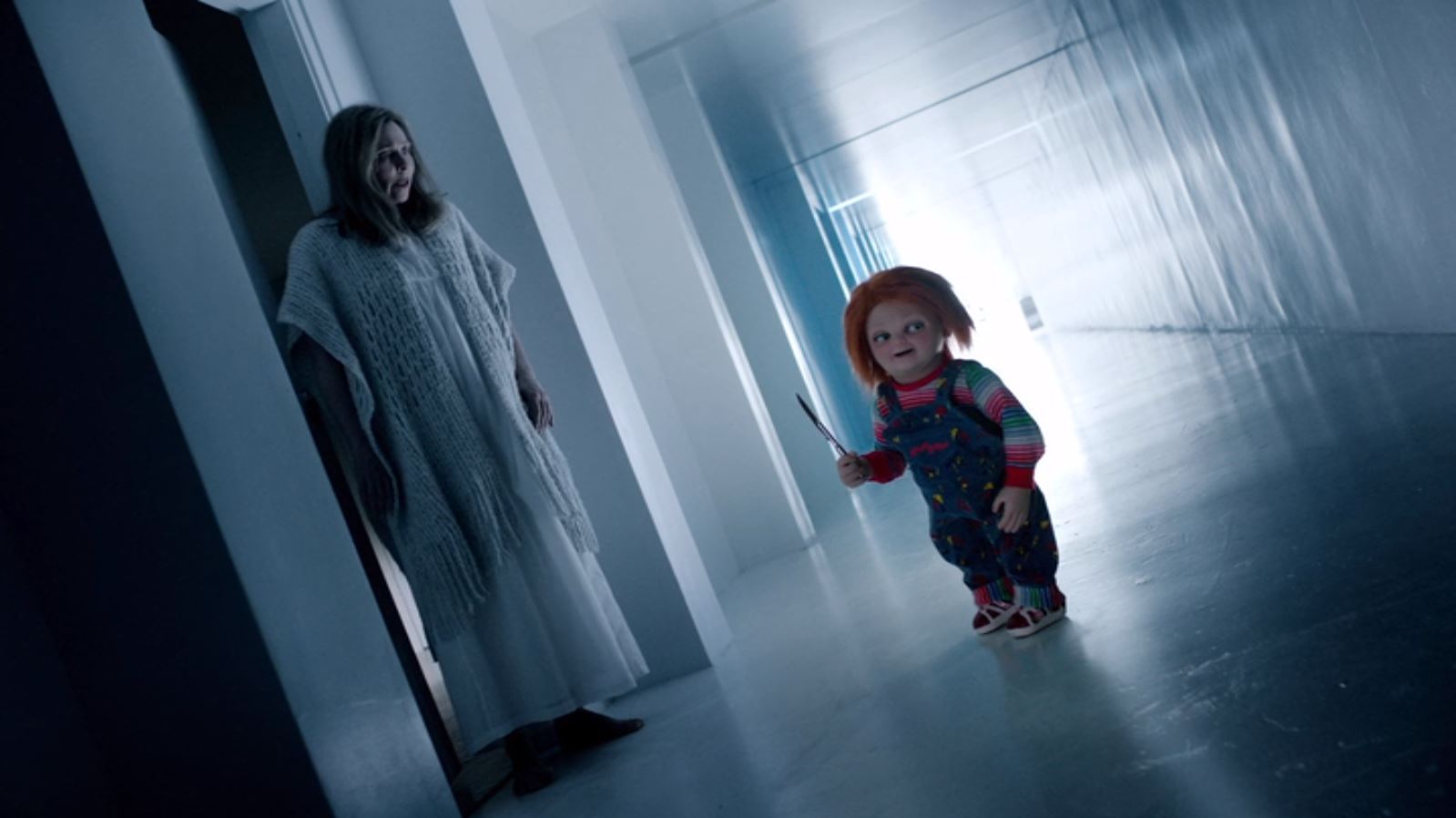
 I’ve been looking forward to a Child’s Play marathon for a while now, so I’m pleased the seventh entry released just in time for 31 Days of Gore. I think it’s interesting that the creators of most horror icons saw the originals as mere stepping stones to bigger and better things, but Don Mancini hasn’t just been with the series since the beginning, he’s become the go-to director.

Child’s Play (1988)
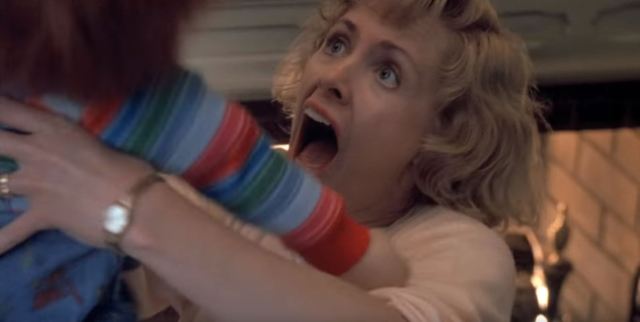
 I remember the first time I saw Child’s Play like it was yesterday. What I didn’t remember was how good it is. The moment the single mother (Catherine Hicks, who’s wholly believable here) realizes her son’s doll never had its batteries installed is the kind of horror I live for. From the moment the batteries fall out of the box, to the moment she has to confirm what she already knows (but doesn’t want to believe)… that long, drawn-out moment in the middle? That’s horror.

It doesn’t matter how many times I see this movie, there’s always going to be that thought in the back of my head: “What’s Chucky gonna do when she discovers his secret?” Logically, I know it’s going to be the same thing that happened the last time I saw it, but great movies don’t always play by logic. (And yes, I just called Child’s Play a great movie.)

At that point the heroine’s best friend has been murdered and the only suspect is her 6 year old son. What she doesn’t know is the most dangerous man she’ll ever cross paths with is living inside the doll she tucks in with her son every night. A sinister detail: Chucky likes to whisper to the little boy when no one else is around; he tells him his dead father sent him from heaven to look after him.

That’s astoundingly fucked up.

What makes Chucky work better than so many of his contemporaries is the same thing that made Freddy Kruger so memorable: casting so good it hurts. Chucky’s a mean little shit. But goddamn, it sure is fun watching him take satisfaction in the terrible things he does. That voice just can’t be topped—Brad Dourif is every bit as good as Robert Englund.

The pacing of the movie is perfect, too. We’ve seen the skeptical homicide detective a million times, but even though this one (Chris Sarandon) doesn’t really believe Hicks, he doesn’t go out of his way not to believe her, which keeps the plot from getting bogged down by time-wasting bullshit. In retrospect, it’s surprising Chucky’s kill-count is so small in his initial outing because the movie never bores you in between its bits of action. The entire reason it’s so good is because of the bits between the action.

I’m just in awe of how well it holds up today. I legitimately love this movie.

Child’s Play 2 (1990)
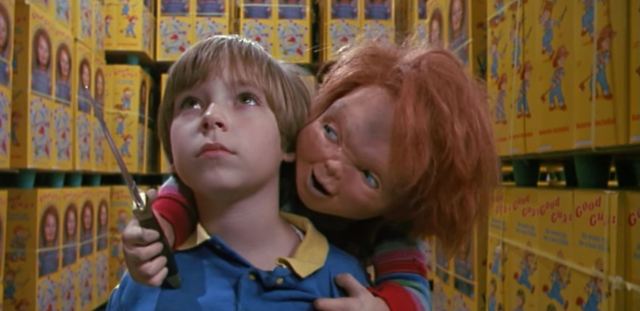
Even though there are only two years between them, Child’s Play looks very much like an 80s movie and Child’s Play 2 looks very much like a 90s movie. I like the way part 2 looks even though it’s almost entirely devoid of shadows in so many of its scenes. It’s like they lit it for TV but shot it on film and you get this surreal look unlike anything of today. Come to think of it, Robocop 2, Naked Gun 2 1/2, and even Teenage Mutant Ninja Turtles II shared this undeniably 90s look—strange that they should all be sequels made around the same time as this one. And you know what? There’s something fitting about making a movie with a killer doll look so colorful and fun.

What I enjoy most about Child’s Play 2 is the fact it knows it ain’t gonna be as good as the first. It took Freddy and Jason sequels years to stop kidding themselves; this sequel accepts what it is immediately. I appreciate a movie that lets us know, early on, that it’s going to be silly right out of the gate: less than five minutes in, a man installing plastic eyeballs into the freshly restored Chucky doll is inexplicably electrocuted (by, like, magic or something), back-flips, and smashes a window. And by then a couple of lines have already explained what happened to Catherine Hicks and Chris Sarandon since the end of the last one. It’s better that the movie doesn’t dwell on the leads’ absence because we all know it’s code for: “They declined to be in the sequel.”

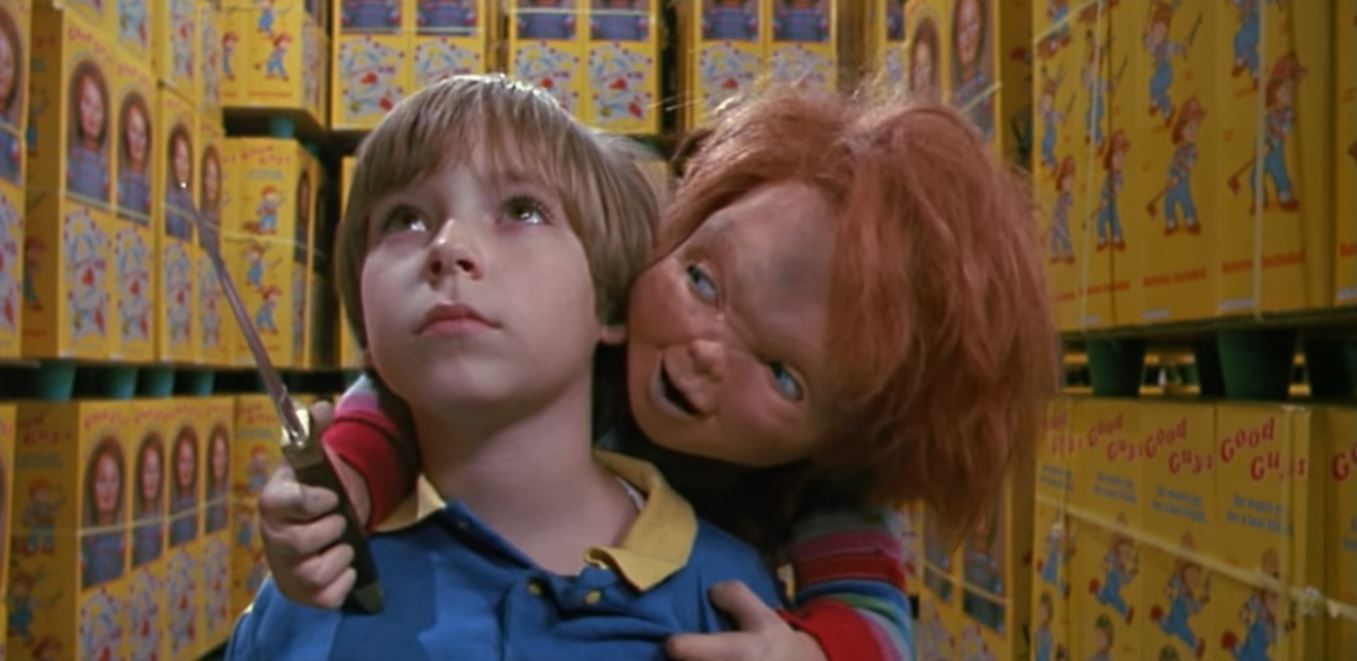
So quality assurance at the Good Guys factory has painstakingly reassembled the Chucky doll for testing purposes. That’s it. No more exposition, no complicated mumbo jumbo—Chucky’s back and he wants the same thing he wanted in the final act of the previous film: to possess Andy’s body.

The same kid who played Andy is back, and although he wasn’t very good the first time around it’s nice they didn’t change actors. He’s less annoying and he’s marginally better at acting. His new foster parents are played by two people I love to see in movies like this: Jenny Agutter and Greg Germann. You may not believe these two people would ever meet and marry in real life, but Agutter is the closest thing we get to Hicks’s performance while Germann is playing the kind of asshole you can’t wait to see get killed.

Andy’s foster sibling, a cigarette-smoking teenager who’s apparently had a dozen different foster parents, isn’t particularly interesting, but she isn’t uninteresting if only because she’s a necessary evil to keep the movie from wandering. The actress isn’t bad, either, so I have no complaints.

Though only two years have passed, the animatronic work on Chucky has improved tremendously and Brad Dourif seems to have really eased into the role. I don’t think anything he says in this one is quite as shocking as the moment he reveals himself to Andy’s mother, but there are a lot of great laughs to be had.

As far as horror sequels, this is one of the best.

Child’s Play 3 (1991)
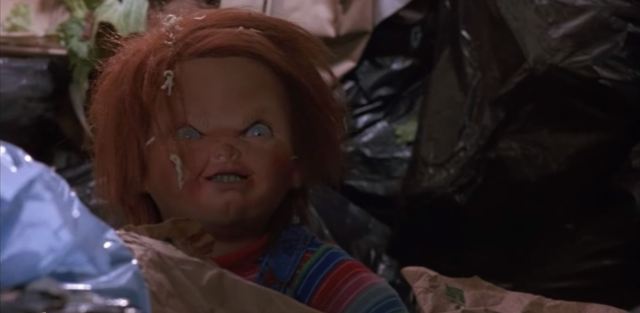
There’s a new actor playing Andy: the masturbator from Serial Mom. This is because the series has jumped into the future. Why is there a time-jump? I would assume because the producers got sick of working with children, but then there’s a prominent child actor in this one, too, so who knows. I’ll be honest: I didn’t really care for this movie the first time I saw it. It’s probably the reason that, until now, I never bothered with the sequels which came after it.

Once again, we’re quickly brought up to speed: the Good Guy factory is going back into production after an eight-year hiatus. During cleanup, the blood of Chucky’s disfigured corpse accidentally drips into the molten plastic for the first line of new dolls. (Never mind the fact that successful toy companies in the real world probably don’t abandon factories for years at a time without converting the space to something else… I’m willing to roll with it.) Soon after, the freshly resurrected Chucky murders the CEO of the company and uses his office computer to discover where Andy’s at today.

It turns out Andy is a troubled teen who hasn’t been able to fit in at anywhere his foster program has placed him. Now he’s been sent to a military boarding school where he doesn’t fit in, either. It’s kind of disappointing the majority of the film is, for the most part, set in a single location after Chucky was so mobile in the previous films. The school simply isn’t an interesting setting, particularly when so many of the military characters are straight up ripping off dialogue from war movies—sometimes verbatim. Worse, Child’s Play 3 felt especially tired the year it came out because there was already another movie set in a boarding school that came out the same year (Toy Soldiers with Sean Astin and Lou Gossett Jr.)

Anyway, Chucky has himself shipped to the school (tell me, exactly, how he could have possibly gift-wrapped and dropped himself in the mail) so that he can kill Andy, but a little black boy who’s staying at the school intercepts the package first. Chucky’s pissed the boy screwed up his plan until he realizes the kid will make a suitable vessel for his spirit. “Just think,” the doll marvels. “Chucky’s gonna be a bro!”

What’s especially disappointing about all the boring military stuff is the fact that Chucky is pretty much as good as he’s ever been—it’s everything else that stinks. The kills aren’t quite as fun and the animatronics are perhaps a little less expressive, but as far as third films go, the quality of the villain is surprisingly consistent. I did manage to enjoy the movie more than I did the first time I saw it, but I’ve learned what to expect from third films. Jason and Freddy’s third outings were better than Chucky’s, but I got a kick out of it anyway.
Bride of Chucky (1998)

Until now, I’ve never seen this movie. I’ve seen parts of it channel surfing, but it came at a time when I was much more interested in girls than horror movies. This is surprising to me because I was a big fan of Jennifer Tilly—ever since the Getaway remake and Bound—and she’s perfectly cast here. It’s not often name-brand actresses are game for flicks like this, and I can’t think of anyone better suited for the role than Tilly.

Although this one was made nearly eight years after Child’s Play 3, there was an eight-year jump between 2 and 3. So this one takes place right after the last one, putting the story back in modern times. I don’t know why, but that time-jump bugged me more than it should have. I just think if you’re going to take Chucky to the future, you might as well put him on a space ship or something, not have him running around military schools and carnivals.

We open on a nervous policeman smuggling a bag of evidence out of his station’s lockup. The contents are what’s left of Chucky’s body after he took a tumble into a giant fan at the end of the last film. The remains end up in the possession of Tiffany Valentine (Jennifer Tilly) who heads back home to her trailer park and painstakingly stitches the doll back together to resurrect Chucky. It turns out that Tiffany and Chucky were a hot item before he lost his human body in the first film, and it’s taken her ten years to track his remains down and bring him back to life. Unsurprisingly, the two of them immediately get into a lover’s quarrel which ends with Chucky shoving a television into Tiffany’s bathtub and bringing her spirit back in a doll of her own.

Against all odds, this stuff is pretty fantastic. I didn’t think the shift to all-out humor was going to work (and maybe it doesn’t), but I laughed my ass off quite a bit. In fact, nothing about this movie should work, but it does, and that’s what makes it special. I hate to say it, but I can’t think of a single Freddy, Jason, or Michael Myers sequel that tickled me as much as this movie did. It’s just so ornery and fun.

What’s great about Bride is the same thing that’s wrong with so many other horror sequels: the villain is now the protagonist. And how many horror sequels have successfully added a second killer to the mix? Bringing in Tilly’s character feels a bit like lightning striking twice in the sense she’s every bit as entertaining as Chucky.

This is the best one since the original. It features John Ritter and, oddly enough, Katherine Heigl.

 Seed of Chucky (2003)

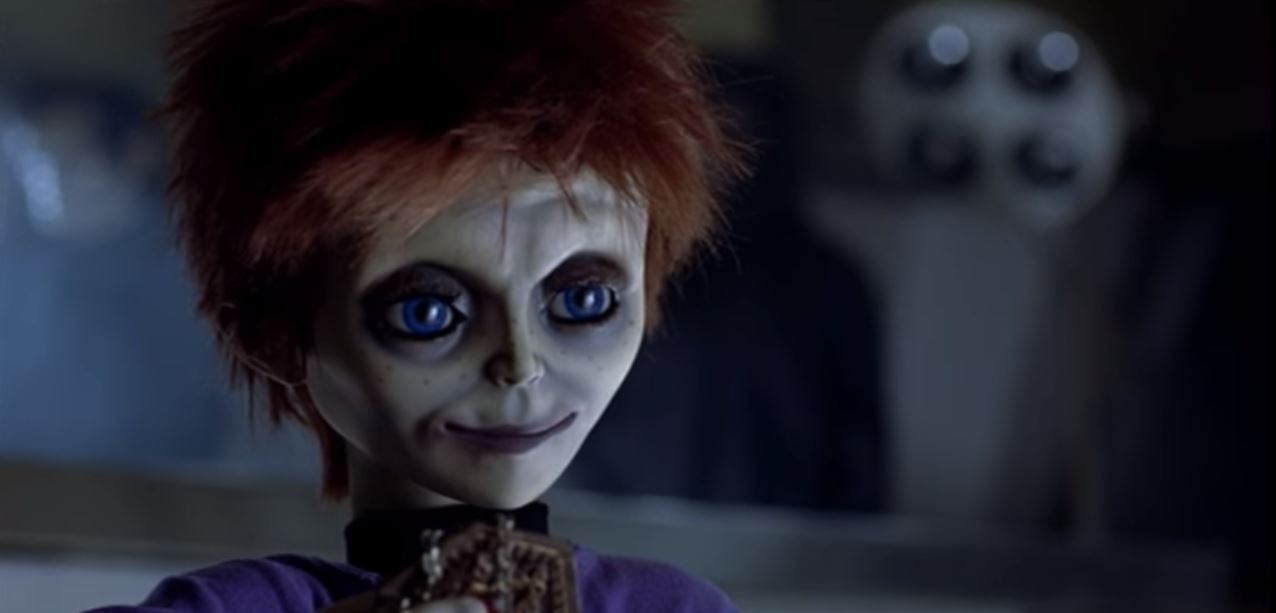
I was all on board for Chucky having a bride, but a kid? Seems like we’re pushing it at this point. Like I said about the previous film: none of that wacky stuff should’ve worked and it’s a miracle that it did. What are the chances it’ll work again—why even attempt it? I know the kid was established in the previous film, but we could have just looked the other way and pretended it never happened. As is, it feels like a throwaway joke becoming an entire movie.

Seed just doesn’t have the energy the previous film had. Every sequel up until now made it a point to bring us up to speed as quickly as possible. This one dwells for twenty minutes or so and, worse, postpones the inevitable entrance of the killer dolls we paid money to see. Chucky is still funny at times, but Tiffany has been crippled by her desire to become a recovering serial murder. The domestic disputes she and Chucky get into could have been funny (and they were the last time around), but now they only elicit a chuckle.

Speaking of things that aren’t very funny: movie stars playing themselves. Jennifer Tilly, who played Chucky’s human girlfriend in the last movie, is now playing herself as a weight-obsessed starlet who sleeps with movie directors in order to get parts. Great character in the last movie, boring this time around, especially when Tiffany makes wink-wink jokes at Tilly’s expense. There’s a scene in which Redman, also playing himself, is being stalked by Tiffany at the dinner table and I was much more interested in what he was eating than the imminent kill.

The only aspect that made me laugh with any kind of reliability was John Waters’ character, a perverted paparazzi who has a great line I won’t spoil here. It was mildly amusing that Chucky’s son would have gender dysphoria and choose to go by Glen or Glenda. I feel like the director of the previous film would have made the jokes work a little better, which is especially strange considering this one’s the first one that’s directed by the guy who invented Chucky in the first place.

I wish I could give this one a recommendation, I really do, but the pacing is all wrong and the gore, while plentiful, just isn’t all that satisfying to me.

Curse of Chucky (2013)
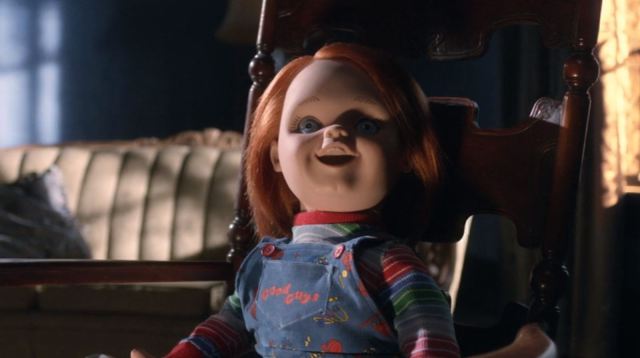
At this point in the series, I didn’t know what to expect. Worse, I didn’t know if I wanted to keep going. (If not for 31 Days of Gore, I probably wouldn’t have continued the marathon for at least a few months.) I was vaguely aware the series “returned to horror,” but after the slouch that was part 3, I wasn’t sure I wanted it to.

Thankfully, Curse of Chucky isn’t half bad. It’s not great, but it’s certainly not as bad as the third film and Seed. It’s just a middle-of-the-road Chucky movie with a few dull (no pun intended) moments, and that’s okay considering it’s been ten years since the last one. Perhaps they’re warming up to something spectacular.

A paraplegic and her mother receive an unmarked package in the mail at their creepy old home in the middle of nowhere. The contents of the package, of course, is a Good Guys doll, which doesn’t quite look like the Chucky we know and love, but it turns out there’s a good reason for it. That night the mother dies, apparently by suicide, and the heroine’s sister comes to stay with her, bringing along a husband, a daughter, and an attractive nanny (none of these characters are interesting in the least). Naturally, the daughter takes a liking to the doll who whispers to her when no one else is around.

The problem with the franchise returning to horror is it’s nowhere near as competent as it was the first time and it could have used some more humor to at least give us entertainment value. Its loss of effectiveness has to do with attractive yet uninteresting talent, the kind of talent that usually fills out SyFy’s movie-of-the-weeks and television commercials. (The priest character could quite possibly be the dullest priest I have ever seen in a movie, which is a remarkable feat.) The one exception is Fiona Dourif, the real life daughter of Brad Dourif, which is especially surprising considering her involvement initially reeked of nepotism and fan service. To be sure, it is fan service, but it’s not at all the insulting kind. She’s easily the best part of the movie, save for Chucky himself.

The movie spends so much time distancing itself from the comedy of the prior two entries, it’s a bit of a head-scratcher that it undoes this new direction at the end. Either way, I’m actually kind of excited to see where it’s all going again. I hope it finds a better balance between its two genres.

Cult of Chucky (2017)
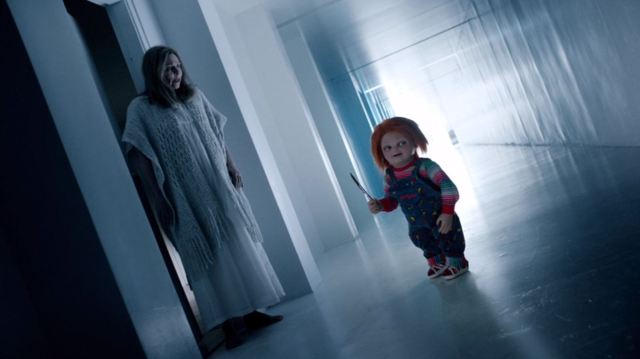
Andy Barclay’s back and he’s all grown up now, living in a cabin in the woods. It turns out that sometime since the last movie, Chucky came back to finish what he started in the first three films, but Andy was prepared: he shot part of the doll’s head off with a shotgun and keeps the remains locked up in a safe so that Chucky can never, ever get resurrected. That might work if it happened at the end of a movie, but not at the beginning.

 Nica, the paraplegic who was institutionalized at the end of the previous film, has just been transferred to a medium security mental institution. (Chucky will at one point make a reference to One Flew Over the Cuckoo’s Nest, a film his voice actor appeared in.) Even though Chucky’s head is believed to be in Andy’s safe, bad things begin to happen in and around the building. I wouldn’t expect any less, but the problem is: how does Don Mancini make any of this fresh?

 The answer: by making the movie wonderfully stupid. Or, maybe “gleefully absurd” is a fairer way to put it. Either way, this is one of the best straight-to-video sequels I’ve seen in my life. It’s so purposely convoluted, you’ll have no idea what’s going to happen next. Even the title’s creative use of “cult” is a bit of a red herring.

 Here’s the deal: the series aimed for humor once and overshot the target by a country mile. Cult of Chucky makes Curse seem like a better movie in retrospect; now it makes sense why Mancini would reset the tone of the series. We needed a buffer between the over-the-top absurdity of Seed and the morbid absurdity of Cult.

 This one’s probably my third favorite of the franchise. It’s not great, but it is a great surprise. Don’t let anyone ruin any of it for you before you get a chance to see it.
 

The Relic (1997) [31 Days of Gore]

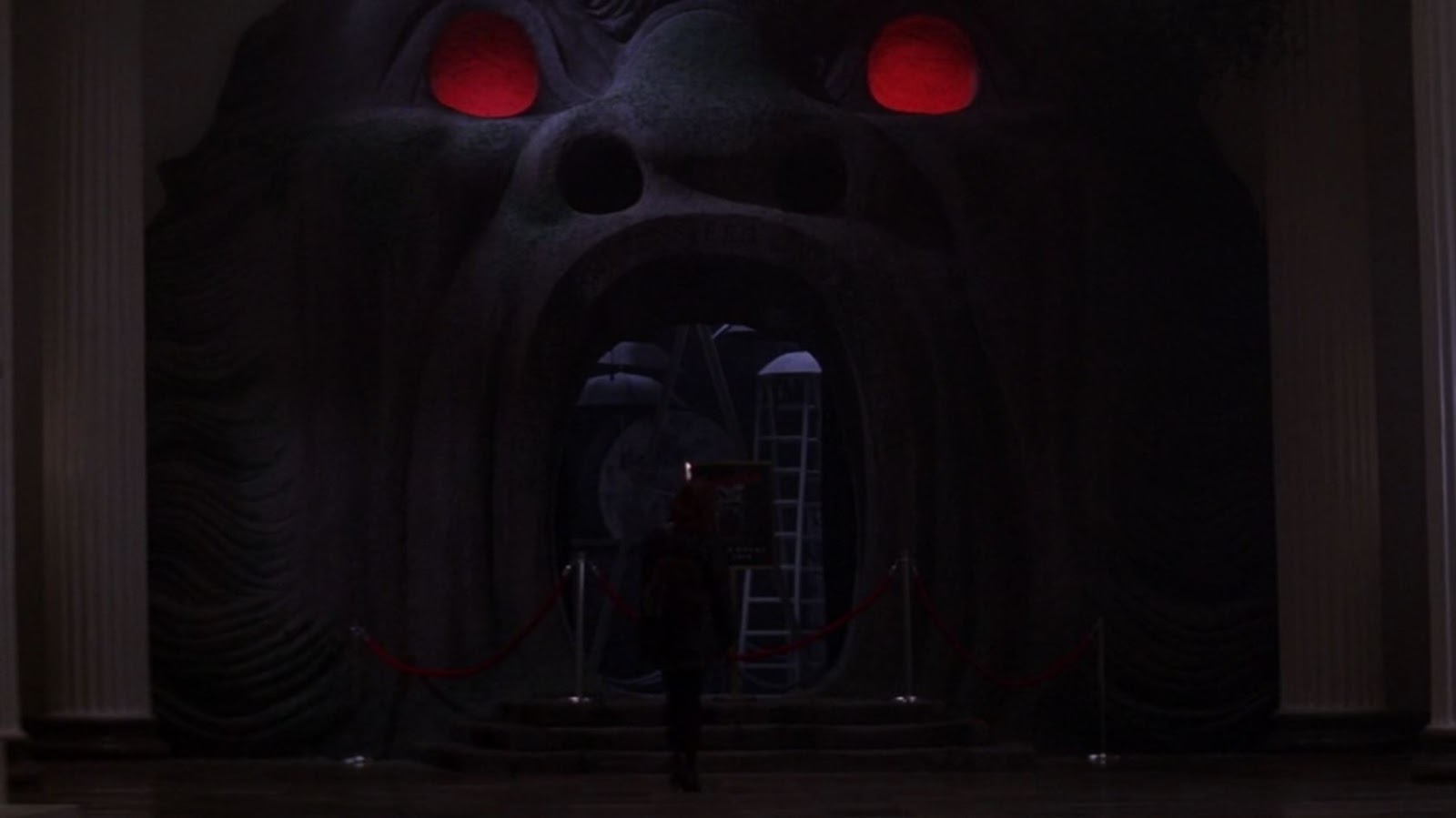
The Relic in a nutshell? There’s a monster loose in a museum. Policeman and Science Lady must stop it. And the movie is dark… super dark. That’s not a complaint. I love the way this movie looks. Give me shadows and lens flares and I’m in heaven.
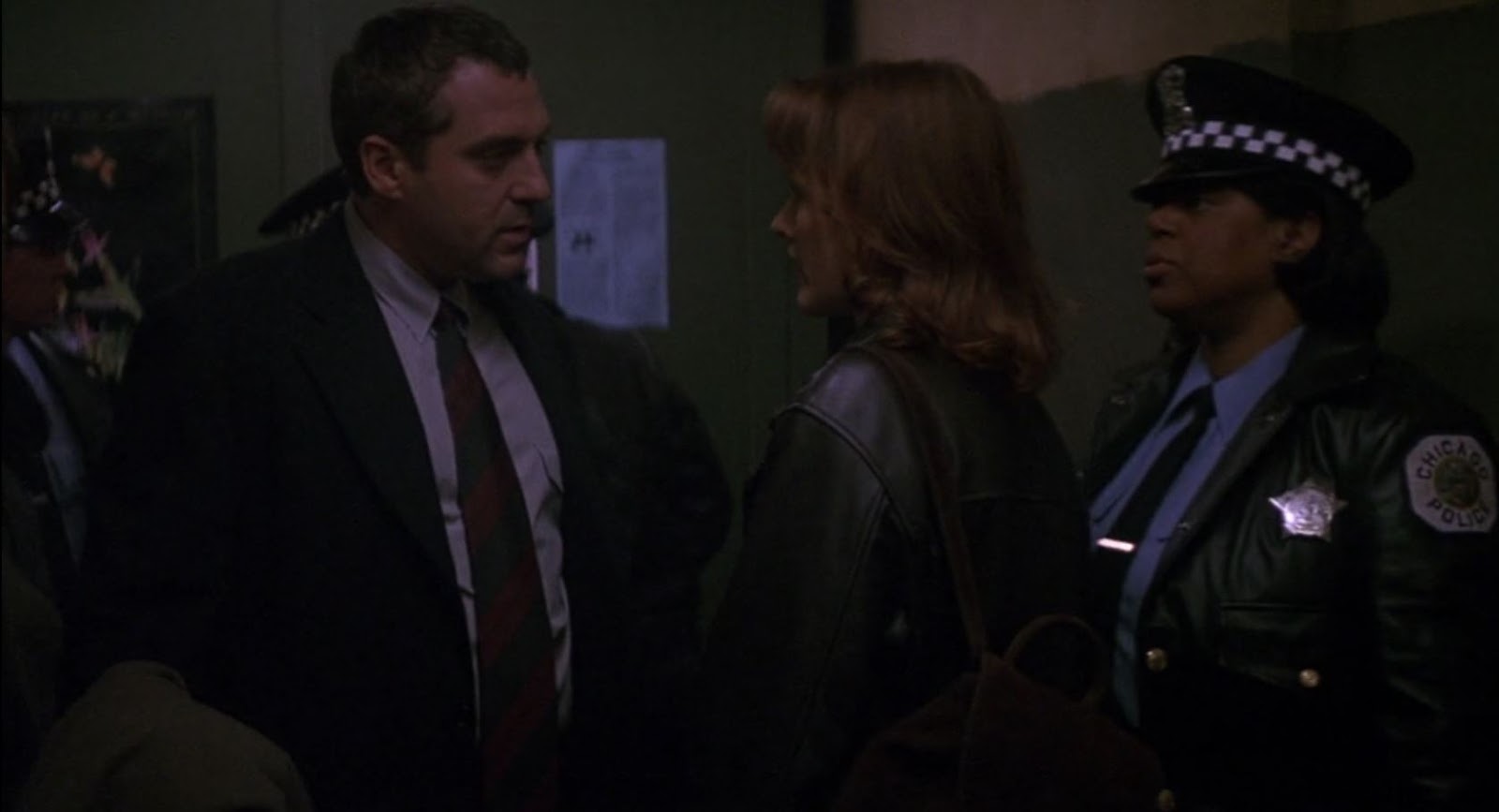
We also get a handful of character actors I’ve always liked: Penelope Ann Miller, Tom Sizemore, and Linda Hunt. If you ever read my Outland post, you’ll know I’m a fan of director Peter Hyams, too. The Relic is one of his best, an honest monster movie which dances the line between familiarity and predictability. Not only is this the fourth or fifth time I’ve seen it, two of those times I saw it in theaters.


Yet I won’t gloss over the fact The Relic is absolutely absurd. It heavily simplifies much of the source material’s plot and timeline, which is to say nothing about the noticeable reduction in graphic violence. The monster in the novel kills children (if I remember correctly), but the movie monster doesn’t dare. This is to be expected from a Hollywood film, but the question is: Why bother including those children in the movie at all? Their deaths in the novel actually advanced the plot. In the movie the kids just make some mediocre wisecracks before they’re exploited for a cheap scare.

The monster is larger than a buffalo, yet an army of policemen can’t seem to locate it in the museum or the labyrinth of tunnels which conveniently reside beneath it. Sizemore’s character is adamant that the museum remains closed until his policemen have solved the murder mysteries, but there’s a weaselly character who performs the same function as the mayor from Jaws. Similarly irksome are the water-filled tunnels beneath the museum. We’ve seen this stuff in many horror movies; I liked it best when it was done in Aliens.
So if you’re looking for a perfect horror movie, keep looking. What makes this one good are the strong performances, lead characters, Stan Winston’s creature effects, and the high quality gore. Otherwise it’s a standard people-trapped-inside-with-a-monster film, but we get so few of ’em it automatically rises to the top. Even the monster itself is above average, at least when the film’s not indulging in 1990s CGI.

One more thing I want to point out is how some of the humor is better than the low-effort shit they cram into most movies. I don’t think it’s very funny when the male lead complains that his wife got custody of his dog, which is a running joke for some reason, but the coroner scene is a hoot. It reminds me of the banter between Sean Connery and Frances Sternhagen in the aforementioned Outland. So yeah, there’s some generic Hollywood comedy in there, but there’s some decent wordplay as well.
Graduation Day (1981) [31 Days of Gore]

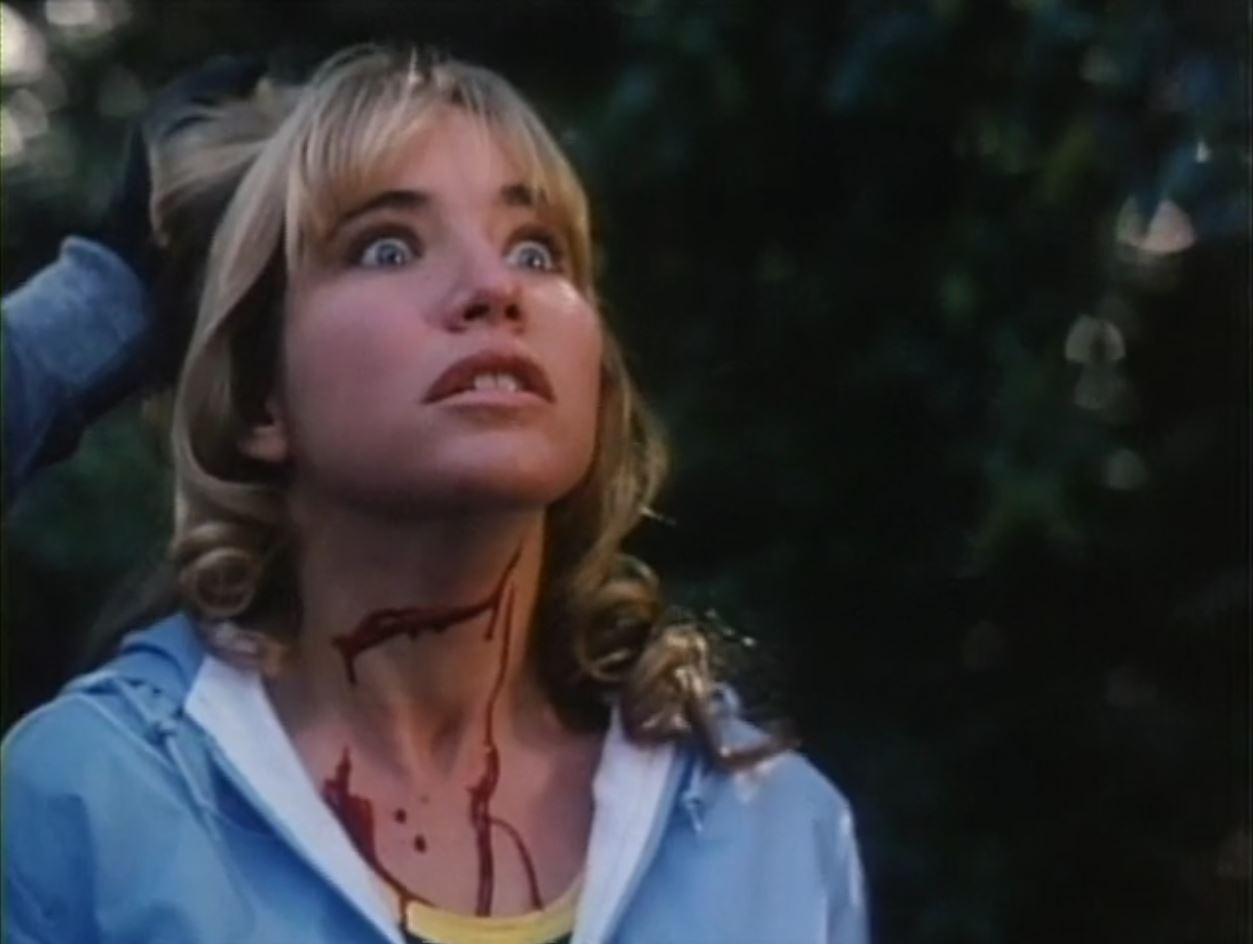
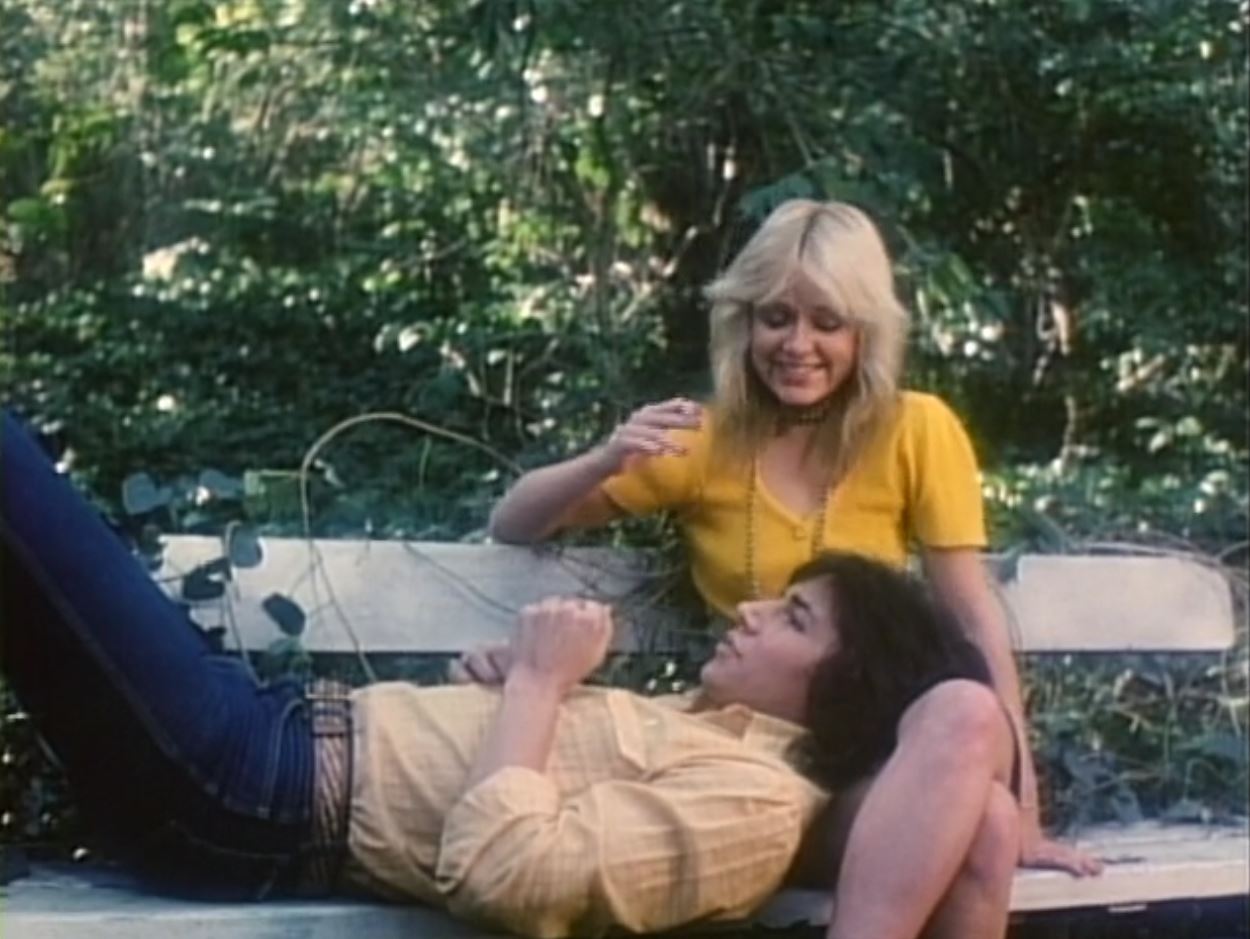
Sturgeon’s Law states that “90% of everything is crap.” In the case of Troma Entertainment’s vast library of films, that number is far higher than 90%… and this is coming from a pretty big fan of Troma. In his book, Everything I Need to Know About Filmmaking I Learned from the Toxic Avenger, even Troma President Lloyd Kaufman says most of their movies are shit.

Graduation Day is shit, too, and I’m left scratching my head at the relatively decent user rating on Amazon. To be fair, it’s slightly easier to get through than the worst slasher movies, and there are amusing moments to be had unlike the entirely soulless Madman which I begrudgingly featured last year. As a bonus, you get to see Christopher George at the end of his career and Vanna White and Linnea Quigley at the beginning of theirs. Wikipedia claims the movie cost an estimated $250,000 and made almost $24 million at the box office, which kind of makes me wonder why Troma is broke all the time.

A teenager on the high school track team collapses and dies after finishing a race. The girl’s older sister, Anne, returns home from the Navy. Her father is a vicious drunk and her mother’s a spineless enabler. None of this has anything to do with anything. Neither does the scene in which Anne is assaulted by a truck driver who spouts a lot of nonsense about “lesbos.” Really: a lot of the movie is one unrelated scene after another, especially during those first thirty minutes.

In the beginning they want you to think Anne is the killer. Then they suggest the principle, a security guard, and eventually implicate a classmate. When the movie finally reveals the killer, you won’t care enough to be shocked. Meanwhile the visual quality is absolute shit, which is to be expected from Troma; they seem to have less knowledge about video codecs than a beginning YouTuber.

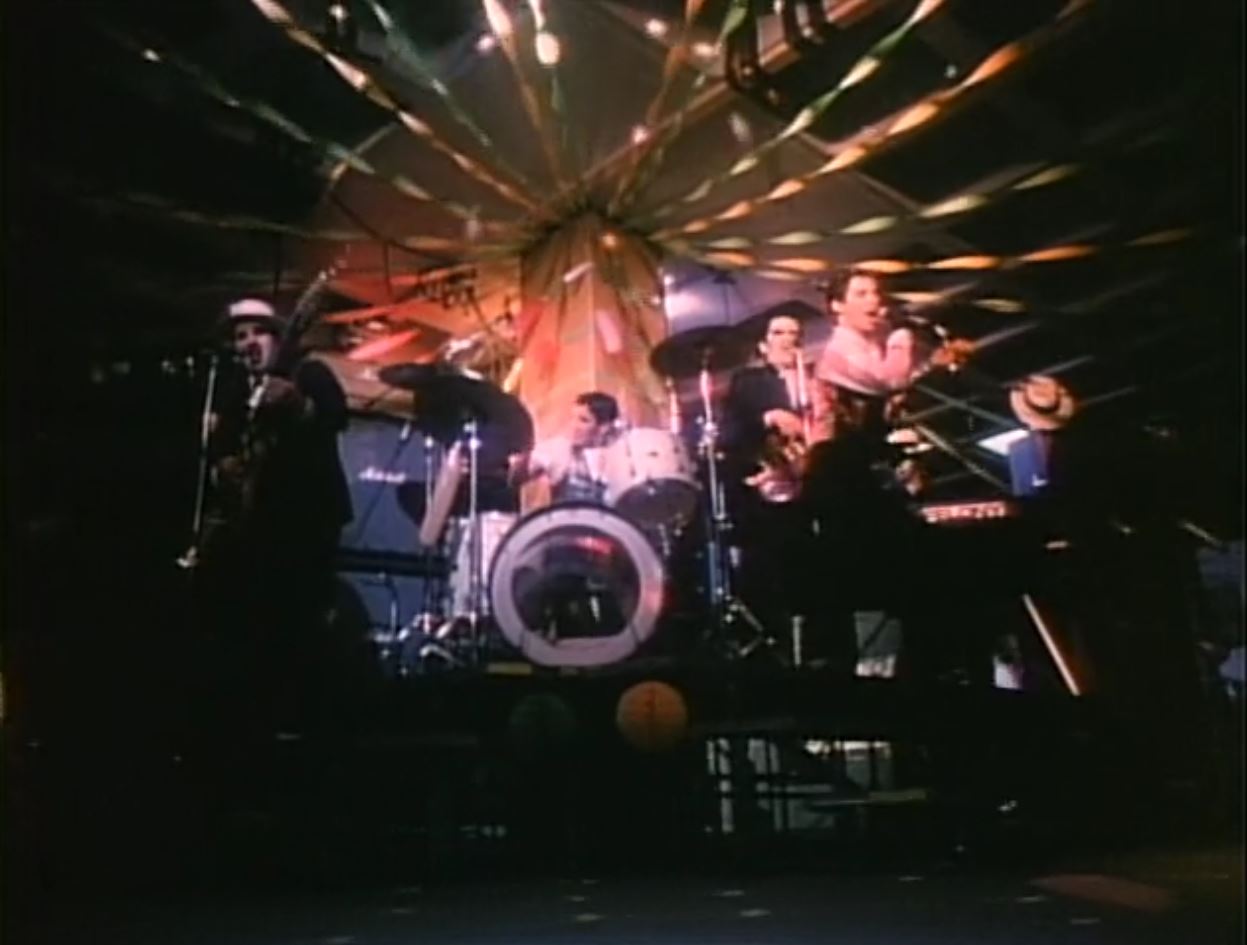
It’s not all bad, though. There’s a decent kill about thirty minutes in, decent in the sense it’s entertainingly bad. There’s a hilariously bad (great?) musical number which is cleverly edited to another death sequence. There’s a kill involving a creative use of a pole vaulting pit. The opening credits are quintessential Troma cheese. And that’s about all this movie has to offer.

I’m glad I’ve finally seen it, just to say I have, but if you’re not a completionist you’ll do better to move on.

IT, Alien Covenant, and Life (2017) [31 Days of Gore]

Time to catch up on some of the stuff I should have written about when I was taking a break from this blog.

IT

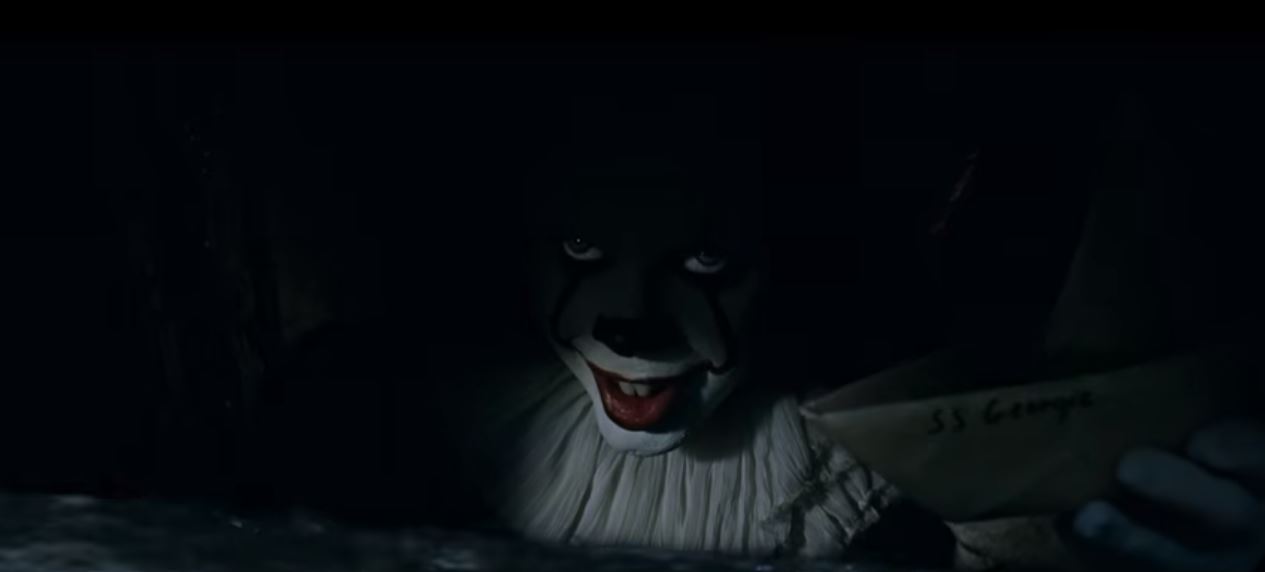
You already know the story: a group of kids—The Losers’ Club—descend into the sewers in search of a missing boy. What they find is a clown that’s anything but funny. I find the clown a lot creepier in theory than in execution, but I genuinely like clowns so maybe that’s a personal problem.

IT looks great and it rarely bores, but I almost get the feeling it thinks it’s better than what it really is: a monster movie. Don’t get me wrong, I went for pulp and I certainly got it, but then there’s oddly placed pieces of character development—or under-development; it’s obvious the stuff from the book wasn’t designed for a brisk two-hour movie, and there are so many characters you couldn’t possibly spend enough time with all of them, so it feels a little weird to see it all truncated. I don’t think IT is a great movie as is, but if another hour of it ever shows up in a director’s cut some day, it very well could be great.

Early on, it’s established that one of the kids freezes up when it comes to slaughtering lambs at his job. You think this is setting up important character information, but it turns out it’s merely setting up the cattle-gun itself, which the kid will eventually use for protection. The town bullies, too, sort of feel like an awkward detail now; The Losers’ Club wouldn’t exist without ’em, but the resolution of the subplot seemed utterly rushed and ultimately pointless to me.

I usually love stuff like this, but this time I’m left feeling a little underwhelmed. Decent horror movie with great performances, but I think I need to see it again when the sequel comes out.

Alien Covenant

The internet really hated Alien Covenant, almost as much as it hated Prometheus (my review can be found here), and because I felt no urgency to see it, I passed on seeing it in theaters. A curious thing happened when I caught it on VOD: I liked it a lot. I’m kind of exhausted by the Giger xenomorphs and expected Alien Salvation, but I was pleasantly surprised the aliens aren’t a huge part of this movie and they aren’t quite like the ones we’ve seen before. It’s not a radical change, but it’s enough to breathe new life into the franchise.
Some time after the events of Prometheus, a group of space-faring colonists take a detour to investigate a distress signal. An android identical to the previous film’s (Michael Fassbender) is the closest thing we’ve got to a main character, until another character steps up to become the Ripley analog. Meddling with one of the most beloved movie characters of all time doesn’t sound like a good idea, but it somehow never felt insulting or cynical to me. In fact, I was kind of happy to see Ridley Scott pay so much tribute to the direct sequel of his original film.
One of the biggest complaints I repeatedly heard about Covenant is the characters are stupid. I don’t think they’re stupid. Naive, sure, and maybe a little dim, but if you can get past the first film’s idea that modern day truckers can be astronauts, then you should be able to suspend your disbelief that completely unprepared people would ever be sent on a mission like this, if only because A) it gives the film an excuse to get to the horror bits quicker and B) it puts Danny McBride in a role he’s surprisingly good in.
Another complaint is the obvious twist near the end of the movie. Why Ridley Scott thought it needed to be a twist, I’ll never know—it would’ve been a lot more suspenseful had he not tried to hide it so sloppily. Still, it leads to an ending that’s not comforting, which is rare for $100 million dollar movies, and the fact there were decent R-rated horror movies in theaters this year is nothing to sneeze at.


Life


Life stars Jake Gyllenhaal, Rebecca Ferguson, and Ryan Reynolds as astronauts who intercept an extraterrestrial sample on the International Space Station. This is no spoiler, though it takes too long for the movie to get to it: the biological sample rapidly evolves and begins killing them one by one. In a matter of days, it’s smart enough to understand the inner workings of the ISS and forms a plan to reach Earth.Okay.

I like this movie on paper, but it’s a little too obvious about what it’s trying to do. It’s nice to see astronauts appropriately reacting to their amazing surroundings with awe (an oversight in Alien Covenant), but these heavy-handed scenes drag on. In one scene the crew is having dinner in a scene that’s reminiscent of the original Alien, but it’s lifeless and unbelievable. I’m not sure the cast was firing on all cylinders.

I think there’s a fun story here, it just isn’t executed particularly well, and I’m getting a little bored with “rapidly evolving” monsters. (2009’s Splice handled this trope much better, and you can read that review here.) Life’s not a bad movie, but it’s not a good one, either. Like Alien Covenant, the ending’s the best part because it doesn’t want to reassure us that everything’s a-okay in the world.

Still, I’m glad we’re getting movies like these in theaters. I think it’s a good sign for the future of horror. It’s been a long time since mainstream movies had any bite.