31 Days of Gore: The Demons series

It’s Halloween. This year’s 31 Days of Gore closes with an Italo-horror trilogy.
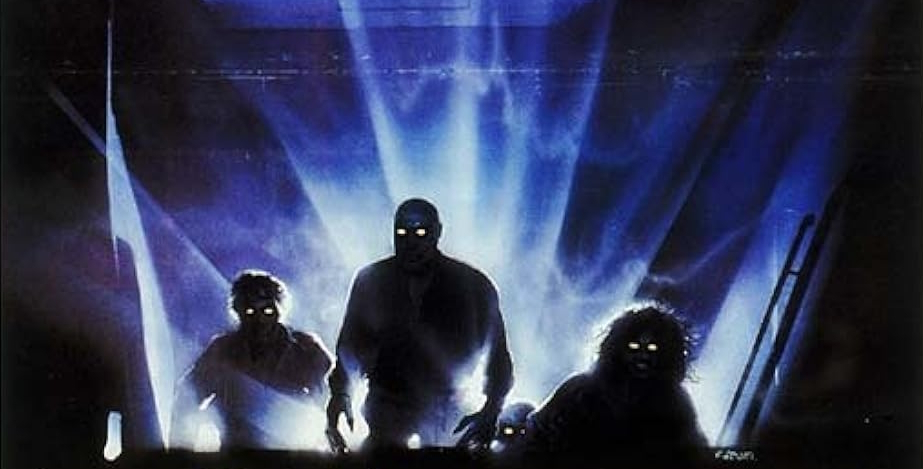
Demons (1985)

Several people mysteriously receive tickets to an untitled movie. Shortly before showtime, one of the attendees finds a mask in the lobby and tries it on, goofing around for her friends. Somehow, the mask cuts her cheek. Such wounds are rarely minor, especially in films co-written by Dario Argento and director Lamberto Bava.

Later, one of the characters in the movie-within-the-movie finds a suspiciously familiar mask and cuts his cheek. It’s not long before he turns into a demon, much to the disgust of the squeamish audience. Meanwhile, the woman who cut her cheek “in real life” wanders off to the theater’s bathroom where she begins to transform into a demon as well. Some time later, a friend comes to check on her and ends up brutally murdered. Then, as the saying goes: all hell breaks loose.

The women’s boyfriend (or a pimp… probably a pimp) doesn’t seem too heartbroken when he discovers his companions have been turned into demons. In fact, he’s the first person to announce, “We’ve gotta get outta here!” Heartless? Maybe, but it’s sensible and he’s the best character in the entire movie. Played by Bobby Rhodes, he’s like a black Hugo Stiglitz, kicking and switchblading his way through every problem that comes his way.

When the survivors become trapped on the balcony level, Rhodes commands them to rip up the seats and use them as barricades. When they find dead bodies among them, which can turn into demons at any second, he makes his impromptu army toss them over the side immediately. Someone says some nonsense about “respecting the dead,” but Rhodes isn’t having it. He’s too experienced, too crafty to get himself killed over boring bullshit.

In too many horror films, characters make one boneheaded decision after another. In Demons, there are a few characters who’d be perfectly willing to fulfill that role, but there’s always another character, like Rhodes, who’s willing to step up, slap ’em across the face, and keep the pace exhilarating. Agency as rare as this is always entertaining. 

The camera never cuts away from the good stuff, there are plenty of killings (and victims) to go around, and music by Billy Idol, Go West, and Mötley Crüe gives it all a fun yet aggressive energy. The climax is splatter-filled and frantic, and the glowing eyes of the demons are used to wonderful effect. Gems like this are why so many horror fans (myself included) would sit through one shitty rental after another.

Major spoilers for the first film follow….
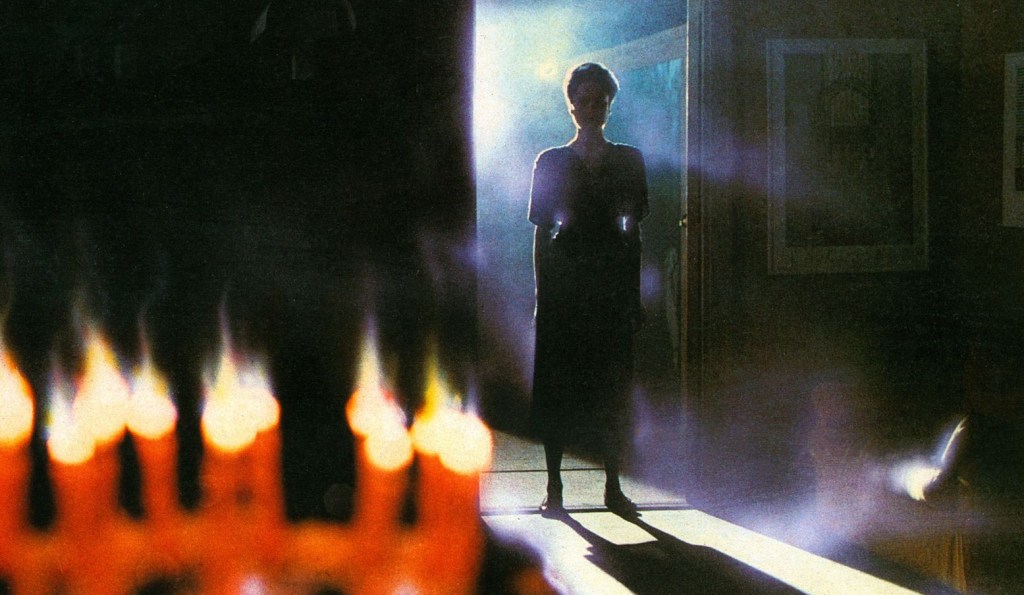
Demons 2 (1986)

I hoped Demons 2 would pick up where the original left off. The sword-wielding survivor of the first film was just becoming interesting when the credits rolled. Last time we saw him, he’d slayed a theater full of demons with the help of the unlikely appearance of a helicopter. Although Demons 2 technically takes place after the events of the first film, it’s little more than a beat-for-beat redo.

What worked well for Evil Dead 2 doesn’t work as well here. Nonetheless, it’s a pleasant surprise that Lamberto Bava cast familiar faces, particularly Bobby Rhodes who stole the original picture for me. Although his new character lasts a little longer this time, Rhodes isn’t quite as fun or energetic as he was the last time we saw him. Why they didn’t just make him the main character of either film beats the shit out of me. Were they afraid of too much awesomeness?

This time Bava trades the movie theater setting for a high-rise apartment building. Everyone who lives there seems to be watching the same horror film on television. A narrator informs us the events of the first film “convinced the world that demons can exist.” That’s an intriguing premise that ultimately has no bearing on this film whatsoever. They could have at least told us how the outbreak of demons was stopped, but that’s never answered.

The original film managed to introduce its large cast of victims in the first twenty or thirty minutes. This one takes over forty. The characters are a little dumber, the glowing eyes of the demons aren’t as effective, and—for reasons incomprehensible to me—the demons are as scared of fire as Frankenstein’s monster, even though they presumably come from hell. The biggest sin is it’s just not nearly as fun.

It’s almost a great horror movie when you consider it on its own merit, but it’s impossible not to long for the original.

No more spoilers from here on out.
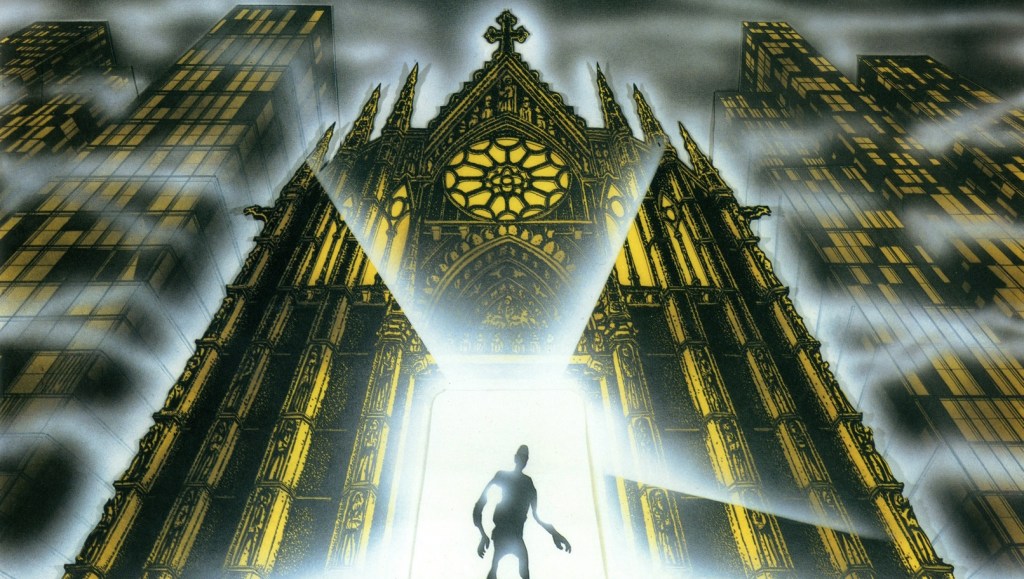
The Church (1989)

So now the pedigree of the series becomes a little more complicated. Lamberto Bava went on to direct The Ogre, which Italian distributors tried to pass off as a sequel to Demons 2 even though it certainly wasn’t. Meanwhile, Umberto Lenzi made an unofficial entry to the series called Black Demons. I don’t know who the hell is enforcing Italian copyright law, but my guess is nobody because filmmakers there have been making unofficial sequels for decades.

Dario Argento, on the other hand, intended to produce an official Demons 3, but that movie morphed into The Church, starring Dario’s daughter, Asia Argento. Although it shares similarities with the first two films, the tone of The Church is such a radical departure, there’s no point in comparing them at all.

That’s not a bad thing. Demons 2 disappoints because it hits so many of the same notes as the original. The Church succeeds because it takes the original premise (that demons can spread like a viral outbreak) and scraps almost everything else, including the movie-within-a-movie angle. The Church unfolds at a much slower movie than its predecessors, but the atmosphere, enhanced by Philip Glass and Goblin music, keeps it captivating.

Teutonic Knights massacre a village of cursed people, bury them in a mass grave, and build a church to cover it up. The church’s architect installed secret features straight out of an Indiana Jones movie, which will activate only if the seal to the tomb is someday broken. Fast forward to modern times and even the clergymen are unaware of what took place there so many years ago. It won’t be long until they find out.

Par for the course, there’s some stilted dialogue and nonsensical WTF moments. The leading woman, pursued by a grotesque demon in her own home, calls the cops, dives through a window, runs across her yard, and finds herself trapped in a flannel blanket. Naturally, you assume she ran through a clothesline, but it turns out the cops—who she called twenty seconds ago—have already shown up to throw a blanket over her head for being hysterical. In America, you couldn’t get that kind of response time even if you lived inside a police station.

I’m not one to grade an Italian horror film on logic as flaws like that are simply inherent with their dreamlike filmmaking sensibilities. Everything else—and I do mean everything—is pure perfection. The Church is one of the most flavorful horror films ever made. I know I said it can’t be compared to the original, but I like it a lot more. In fact, it’s the best movie of the thirty I reviewed this month. Watch it now and watch it often.

That’s all for 31 Days of Gore this year, but don’t wait eleven months to come back!
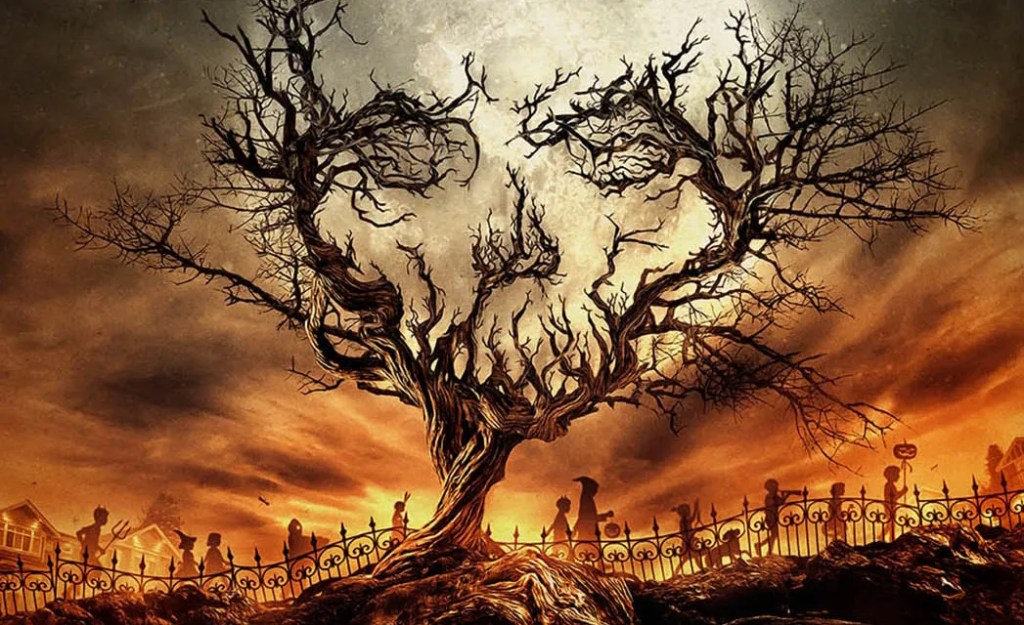
31 Days of Gore: Tales of Halloween (2015)

It’s October. Time to talk horror. This year I’m reviewing a different horror movie each day of the month.

With Adrienne Barbeau, Lisa Marie, Stuart Gordon, Lin Shaye, Barbara Crampton, Joe Dante, and a couple of Troma regulars, the cast of Tales of Halloween reads like the guest list at a horror convention. My only complaint about the casting? Nobody gets any more than a handful of minutes on screen.

Barbeau, riffing on her role in The Fog, gets the most screentime in this anthology. Her narration serves as the glue for the ten stories, the subjects of which range from aliens to psychopathic children. At worst its stories are pointless, but never boring. More often than not, the segments are gleefully entertaining.

In the first segment, a child wonders why his joyless parents confiscate his Halloween haul every year. When he’s supposed to be in bed, he sneaks out of his bedroom and discovers his parents pigging out on the treats perversely. That’s when he decides to carve them up with a meat cleaver. In another segment, a couple of idiotic criminals kidnap the son of a wealthy man. When they call to make their demands, the father says, “Not interested.”

What’s admirable about Tales of Halloween is how seamless it all is. While I liked The ABC’s of Death just a little bit more, that series was a quilted showcase for twenty-six different filmmakers whose varying styles sometimes clashed with one another. Tales of Halloween, on the other hand, is a genuine collaboration, having actors from one segment walking through the background of the next.

If it’s cartoonish black comedy you’re looking for, Tales of Halloween brings the goods. You could do a lot worse on a Friday night.

Come back at midnight Central Time for the next (and last!) movie.

31 Days of Gore: Head of the Family (1996)

It’s October. Time to talk horror. This year I’m reviewing a different horror movie each day of the month.

Lance (Blake Adams) is the redneck owner of a small town cafe who’s fallen in love with the wife of a dangerous biker. Her name is Loretta (Jacqueline Lovell) and, in perfect B-movie dialogue, Lance says, “It’s like fucking a firecracker whenever I’m with her.” Lance isn’t very bright, Loretta isn’t either, and her husband is probably dumber than them both combined.

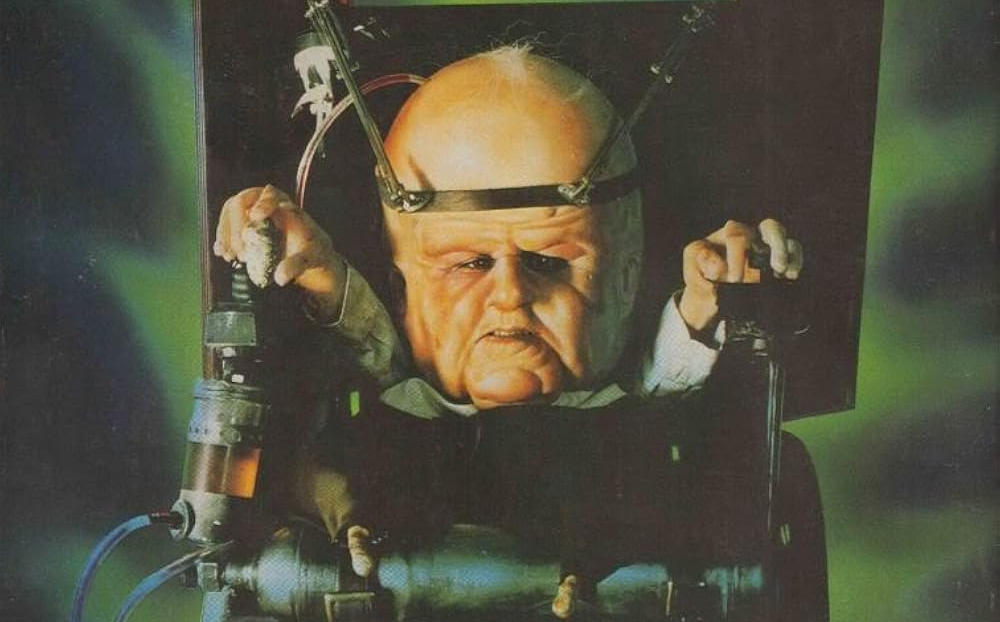
Then there’s the Stackpools, an alien-like family of weirdos. They consist of a giant man-child, a geek (in the circus sense of the word) with bulging eyes, and an unnaturally endowed woman played by a real-life pornstar. The titular head of the family is the fourth sibling, Myron, who’s little more than an over-sized head in a wheelchair. (That’s right: the title of this movie is literal.) Stranger still, Myron controls his quadruplet siblings with his telepathic mind.

Myron’s a mad scientist who longs to find a proportionate body that can support his massive brain power. Like something out of a Roadrunner cartoon, the Stackpools barricade the rural highway with a sign that detours motorists to the front door of their mansion. Once there, the brute of the family knocks them out so that Myron can experiments on them in his basement.

When Lance accidentally uncovers the family’s dark secret, he decides to blackmail them. He won’t turn them into the authorities as long as the family offs Loretta’s husband. The head of the family reluctantly agrees. When Loretta’s husband turns up missing, she and Lance could live together happily ever after… or at least until Loretta tires of Lance and his cheating ways. Unfortunately, Lance gets greedy and tries to blackmail even more out of the Stackpools: an allowance of two thousand bucks a week, which Myron isn’t keen on paying.

This isn’t Shakespeare, but compared to a lot of the movies I’ve watched this month, the dialogue goes above and beyond the bare minimum required for a flick like this. The acting is as good as it needs to be and sometimes a little better. It’s a fun film that I can only recommend to people who smile when they see a giant head rather than roll their eyes.

Come back at midnight Central Time for the next movie.

31 Days of Gore: Tormented (2014)

It’s October. Time to talk horror. This year I’m reviewing a different horror movie each day of the month.

In Tormented (aka Berkshire County) a teenage girl named Kylie goes to school one day to discover the chad she reluctantly went down on at a costume party not only recorded the entire thing, but shared the video with all of her classmates. Although the boy said he and his girlfriend had broken up, it turns out they hadn’t (shocking, right?) and the girlfriend’s more pissed at Kylie than her douchebag boyfriend (again, shocking). The bullying doesn’t stop at school. When Kylie gets home, it turns out even her mother blames her.

So what does this subplot have to do with the rest of the movie? I’m not entirely sure. I guess it’s about a young woman having to choose between facing her fears or… dying horribly? Kylie’s already been through too much by the time the movie brings in its horror elements. Having a family of masked psychos break into the house while she’s babysitting a couple of kids seems artlessly cruel. Maybe they were trying to make some kind of statement, but it’s little more than an after-school special tacked onto the beginning of a slasher film.

I know many horror movies require teenagers to be dumb, but there’s a part where Kylie gets a chance to get away. She’s sitting behind the wheel of her car, keys in the ignition, when the 911 dispatcher tells her, “You’re better off staying where you are.” Kylie agrees. Then she gets out of her car and walks back into the house with the masked maniacs. I was dangerously close to throwing something at my TV.

I think that’s the biggest problem with Tormented: you’ve got fine direction, a good actress, and competent filmmaking, but a lousy script. There are few surprises, many boneheaded decisions, incompetent cops, and a twist ending which will surprise no one.

Come back at midnight Central Time for the next movie.

31 Days of Gore: Dead Heat (1988)

It’s October. Time to talk horror. This year I’m reviewing a different horror movie each day of the month.

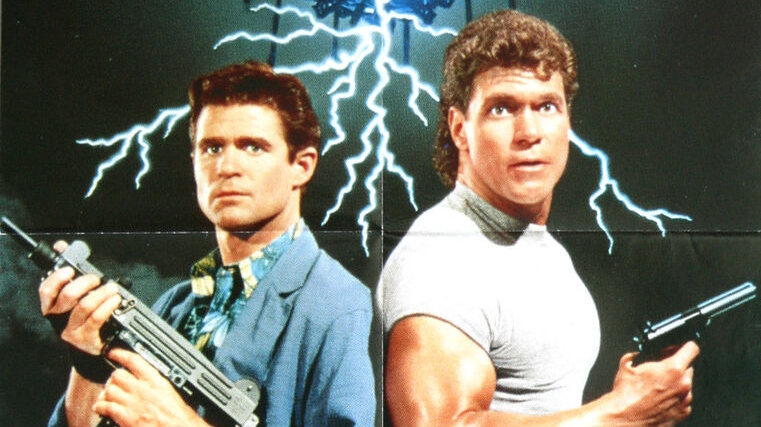
Dead Heat, which stars Treat Williams and Joe Piscopo, begins like any other buddy cop film. The problem with all the Lethal Weapon copycats is they could never quite nail the balance between action and well-written humor. Dead Heat attempts to throw another genre into the mix: horror. It’s not very good at any of them.

As goofy as it is, Dead Heat has an energy that immediately drew me in… at arm’s distance, anyway. Early on, Williams and Piscopo have a shootout with a couple of jewel thieves who just won’t die until one steps on a grenade and Williams rams the other one with an unmarked car. When the cops visit the bodies in an autopsy room, the medical examiner informs them the bodies have been on her table before.

Early on in their investigation of the zombified crime ring, Treat Williams is killed and resurrected himself. Williams discovers he doesn’t have a heartbeat and doesn’t breathe even though he (initially) appears to be in good health. He only has twelve hours to nail the bad guys, at which point he will decompose completely. After one action sequence, a woman comments, “You’re hurt!” To which Williams deadpans, “Lady, I’m dead.

The makeup effects aren’t bad. The movie itself is, and maybe this goes without saying, but it’s a good bad movie as long as you can stomach mediocre action and lazy one-liners. Just be warned that the filmmakers seem to think Joe Piscopo is a decent substitute for Eddie Murphy, but he’s not… obviously. I’ve always wondered why Treat Williams (playing a character named Roger Mortis… hardy-har-har) was never a bigger star.

Come back at midnight Central Time for the next movie.

31 Days of Gore: Feast (2005)

It’s October. Time to talk horror. This year I’m reviewing a different horror movie each day of the month.

There’s a bar in the middle of nowhere. It’s just an average night until a blood-drenched man with a shotgun bursts through the door and orders the patrons to fortify the place. “Who the hell are you?” the bartender asks. “I’m the guy who’s gonna save your ass,” the stranger replies in heroic confidence. A split second later, a monster bursts through the window rips his head off.

The monsters in Feast are draped in roadkill coats and cattle-skull masks. They’re gnarly-lookin’ creatures who rip and tear with gruesome panache. In a misguided act of desperation, the bar patrons attempt to scare them away by dangling a dead monster baby from a stick. In the gory aftermath of that scene, Henry Rollins’ character admits: “Yeah, that was a bad idea.”

I don’t know why I closely followed the development of Feast on Ben Affleck and Matt Damon’s Project Greenlight, but never watched the movie until now. In case you’re unfamiliar with Project Greenlight, it was a reality TV show in which the famous actors plucked an unknown filmmaker from obscurity to make a feature length film. The first two movies that came out of Project Greenlight sucked so bad, Affleck and Damon decided to go for broke and make a balls-to-the-wall horror film.

Feast would be improved if the shots were just a little longer and the director didn’t try to be so damn cute in the first act. There’s an exhausting amount of wink-wink, nudge-nudge bullshit in the beginning, in which the filmmakers practically announce they’re going to give us the unexpected. Unfortunately, when you’re expecting the unexpected, you get exactly what you expected. If the film had lured us into believing it was a by-the-numbers horror picture (You’re Next comes to mind), the unexpected stuff would have been more rewarding, not to mention not as self-congratulatory. Never mind that. Everything else about Feast is great.

Most of these actors you’ll either know by name or recognize from other movies. Not only does it feature western actor Clu Gulager, it was directed by his son, John Gulager, the third season winner of Project Greenlight. After a success like this, John might be relegated to horror pictures for the rest of his life. I hope he’s comfortable with that because it’s clear that’s what he was born to do.

Come back at midnight Central Time for the next movie.

31 Days of Gore: From a Whisper to a Scream (1987)

It’s October. Time to talk horror. This year I’m reviewing a different horror movie each day of the month.

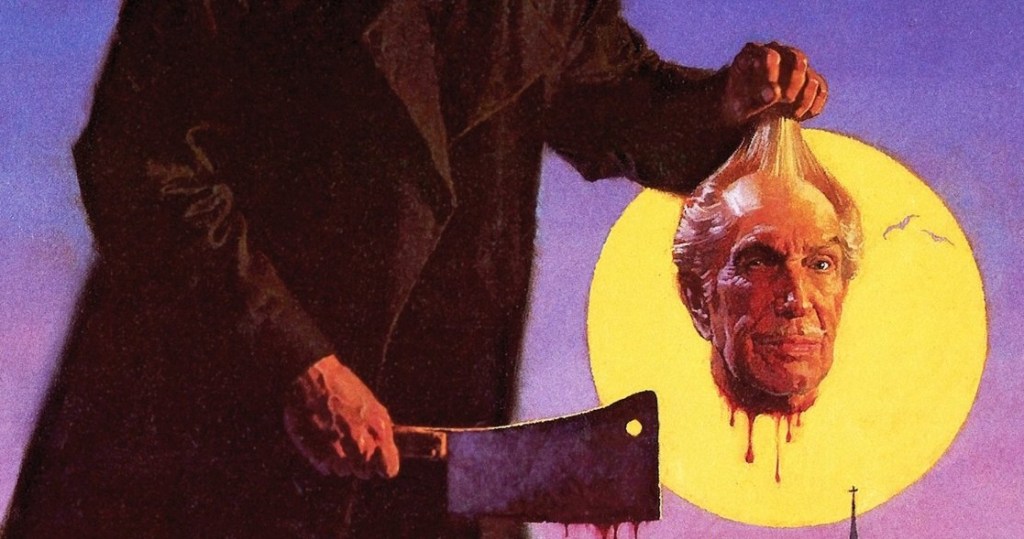
When a movie has Vincent Price, Clu Gulager, and Rosalind Cash, you don’t need to do much deliberating. Just watch the damn thing. That’s what I did. Then I groaned when I realized it was an anthology film.

I’m not saying anthology films suck, I’m just saying even the best ones tend to have at least one shitty entry. The first segment in From a Whisper to a Scream is weak, and it embarrassingly cops out before showing us what we all really wanted to see. Nevertheless, the second story tops it. That’s not exactly hard to do when you set the bar so low.

These stories mostly adhere to the rules of EC comics: something terrible must happen to an innocent person. In the end, the instigator must get what they deserve, usually in an ironic manner. It’s a little old hat and there’s not much room for suspense. From a Whisper to a Scream tries to deviate from the formula, but when it does the outcome is needlessly cruel.

The container story begins with the lethal injection of a deranged woman. A reporter who witnesses the execution later ends up at an old library cared for by Vincent Price. Price tells the reporter their town is haunted. He presents his case by showing the reporter four stories from various points in the town’s history.

In the first story, Clu Gulager plays the part of a hallucinogenic old man who falls for an uninterested younger woman. In the second story, a gunshot victim, played by Terry Kiser (Weekend at Bernie’s), ends up betraying the swamp-dwelling man who nursed him back to help. The third story is about a woman who falls in love with a glass-eating circus freak who’s bound by voodoo to remain in the carnival for the rest of his life. Pretty standard stuff.

Then there’s the fourth story. Like I said above, it’s hard to play around with such a simple formula, but when you have a real piece of work like the protagonist in this story, you’ve got yourself a great throwback to the stories often seen in The Vault of Horror and Tales from the Crypt. This one reminds me of a cross between Vic Morrow’s story in The Twilight Zone: The Movie and the classic Star Trek episode, And the Children Shall Lead.

The unreasonably prolific Cameron Mitchell plays a Union sergeant who doesn’t mind gunning down Confederates (or his own soldiers) even after he’s learned the war has ended. He and his group of immoral soldiers are taken captive in a town run by children. It’s later explained that their parents were massacred in the war and the kids decided to form their own society. When, at last, they reveal the oft-discussed “magistrate,” it’s wonderfully bizarre.

As a whole, From a Whisper to a Scream is pretty solid, even if some of its elements are structurally weak. Vincent Price doesn’t seem particularly enthused to be here and three of the five stories are meh. But Terry Kiser’s and Cameron Mitchell’s stories make the slog worth it.

Come back at midnight Central Time for the next movie.

31 Days of Gore: Knock Knock (2015)

It’s October. Time to talk horror. This year I’m reviewing a different horror movie each day of the month.

Keanu Reeves plays a forty-something architect whose family has gone on vacation without him. Later that night, a couple of young women show up on his doorstep, seduce him, then refuse to leave his home. When he threatens to call the cops, they giggle and say they’ve got a good story to tell: “You want to check her ID?” asks one of the women. “She’s too young to have one.”

From that point forward, Keanu’s character is forced to take part in their nightmarish games. After tying him to a bed, one of the women wears his daughter’s clothes and rapes him while the other woman videotapes. At various points throughout the movie, Keanu gets the opportunity to make a run for it, but he chooses not to, hoping until the bitter end that he’ll find some way to fix this problem and cover up his infidelities.

Not many movie stars would do a picture like this. Hell, most would have run the other way when offered The Matrix after getting burned by Johnny Mnemonic. It’s clear Keanu is a genuine fan of genre films. Knock Knock is obviously not a movie he did for the paycheck—the entire budget was less than most movie star salaries. It’s a brave move to take a role like this for such little pay.

Knock Knock is probably Eli Roth’s best-looking film, but it’s perhaps his least entertaining. I liked it, but maybe I would have liked it more if I had seen Death Game, which Roth apparently wanted to remake. I missed the old Roth—the juvenile and fun Roth—but he doesn’t get up to his old tricks until the credits are about to roll. There’s actually a very funny bit near the end involving Facebook. Had the rest of the movie been so unhinged, I probably would have been able to recommend it more.

2023 Update: I’ve seen Death Game now and, as I suspected, my opinion of Knock Knock slightly improved.

Come back at midnight Central Time for the next movie.

31 Days of Gore: Mark of the Devil (1970)

It’s October. Time to talk horror. This year I’m reviewing a different horror movie each day of the month.

There are those who will tell you Mark of the Devil is a proto-torture film along the lines of Saw and Hostel. I’ve even heard it compared to films like Cannibal Holocaust and Blood Feast. These comparisons are wrong. This is no more a torture film than Passion of the Christ. It’s a lot less exploitative, too.

Mark of the Devil was certainly marketed as an exploitation film. The producers drummed up publicity by having theaters pass out barf bags. It was probably a cash-in on Vincent Price’s Witchfinder General (a.k.a. The Conqueror Worm), which came out two years prior. Unfortunately, I think too many reviewers are remembering the hokey way Mark of the Devil was promoted rather than the film itself.

A man who’s been accused of witchcraft has his fingers chopped off before he’s tarred and feathered for the villagers’ amusement. Moments later, two more accused witches are burned on the pyre. The blasé man responsible for these horrific acts is known as “the Albino.” Business is booming for the Albino until a traveling witch hunter arrives with his eager protege, played by Udo Kier.

Kier’s character humiliates the Albino for falsely accusing a local woman (Olivera Vuco) of witchcraft simply because she won’t have sex with him. Naturally, Kier falls in love with the damsel, which leads to one of the film’s major conflicts: Kier’s mentor also accuses this woman of witchcraft and temporarily convinces Kier he’s going against God if he doesn’t do the same. While the woman’s official indictment is prepared, which will make her torture legal, the other accused witches are burned, stretched, and mutilated in various ways until they fabricate confessions which name future victims. Rinse and repeat.

This is a film which is full of memorable villains and beautiful performers. The photography is masterful in its use of contrast, juxtaposing these beautiful faces with images of shocking violence. If anything is a surefire sign this isn’t a straight-up exploitation movie, it’s the music, which isn’t the ominously droning theme you’d expect from such a title, but something softer, flowerier, akin to Theme from a Summer Place. It’s clear the director wishes to underline the tragic love story, not the senseless torture.

A lot of films about witch-hunting are metaphors for modern issues. Mark of the Devil, though, is literally about witch-hunting, a dark chapter in history which should never be forgotten, much less watered down by panning the camera away. Movies like this remind us that unspeakable violence is often committed by “good, god fearing people” in the name of dearly held beliefs. Despite any historical inaccuracies or technical problems it may have, Mark of the Devil is one of the most effective films about the subject, period.

Come back at midnight Central Time for the next movie.

31 Days of Gore: Deranged (1974)

“Do you know the meaning of Christmas, Kevin?”

It’s October. Time to talk horror. This year I’m reviewing a different horror movie each day of the month.

I’m beginning to suspect I’ve seen Deranged before and completely forgot it. That’s because it’s a completely forgettable film despite decent acting, better-than-average camerawork, and a wonderfully odd séance, which involves a lonely widow pretending she’s possessed by the spirit of her dead husband; the spirit, the woman claims, wants the main character to “make her feel like a woman again.”

The movie opens with the following card: “The motion picture you are about to see is absolutely true.” I never believe a movie when it goes out of its way to tell me it’s a true story, but I believe it even less when it adds the word “absolutely.” For extra realism, the movie is hosted by a newspaper columnist who breaks the fourth wall with his asides. The newsman gives the film a hokey Faces of Death feel, which is fun for half of the movie, but this mockumentary gimmick is abandoned by the second half.

Roberts Blossom, best known as the sweet old man from Home Alone, plays Cobb the serial killer. In an introductory scene it’s made clear he loves his sick mother a little too much; at one point he’s trying to feed her pea soup even as her nose bleeds all over it. When she dies, he’s heartbroken, but he gets the brilliant idea to dig her up and bring her back home. When the town sheriff pulls Cobb over with his mother in the passenger seat, the policeman mistakes the smell of a rotting corpse for alcohol on Cobb’s breath… and sends Cobb on his merry little way. It’s the seventies, after all.

All is well for Cobb now that Mom’s back at home—other than the fact her skin is deteriorating. No matter; he’ll just borrow skin from living women to keep her fresh. It’s not long until Cobb is wearing the skin himself (What part of “Deranged” was unclear to you?), baiting more women than he actually needs to complete his restoration project.

I enjoyed the first half of Deranged, but the second half stretches the premise too thin. I like good horror movies and I like bad ones, but mediocre is unforgivable.

Come back at midnight Central Time for the next movie.