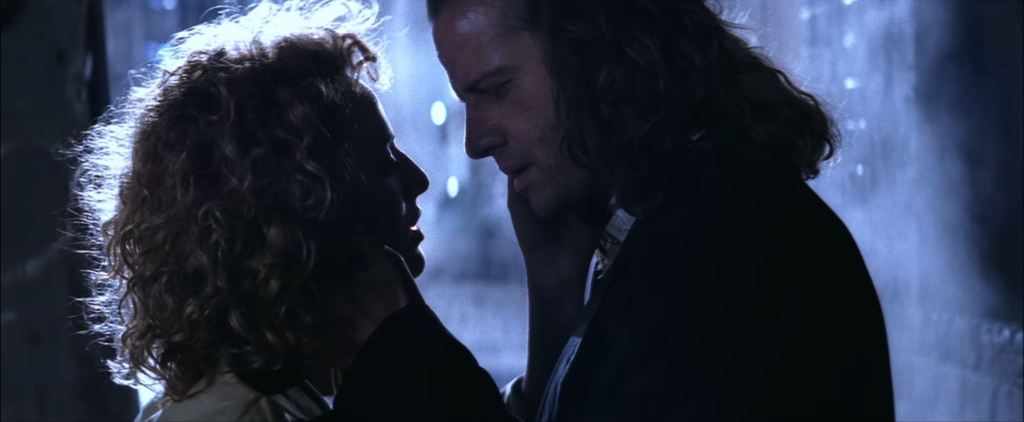
Midnight Movie: Deadly Friend (1986)

Paul, the teenage hero of Wes Craven’s Deadly Friend, not only designs advanced robots, but he teaches college courses, dissects human brains, and somehow finds the time to hang out with his friends. The robot he’s created, “BB,” looks like a robot from any other 80s movie. It can crack locks, shoot hoops, and move heavy furniture. The only thing his robot can’t do is dodge shotgun spray, which we learn when it ding-dong ditches the neighborhood crazy lady, played by Anne Ramsey from The Goonies and Throw Momma from the Train. Don’t you just love her?

Paul’s love interest (Kristy Swanson in her first leading role) is repeatedly abused by her alcoholic father. In one of the film’s three or four dream sequences, which are filmed Nightmare on Elm Street style, she stabs her dear old dad with a broken flower vase. What follows is a jarringly bloody scene. Jarring because watching Deadly Friend is like getting thirty minutes into Short Circuit before discovering it’s an R-rated horror movie.

And here’s where my objectiveness flies out the window. I love killer robot movies. Terminator, Runaway, Chopping Mall, Screamers… I can’t get enough of this shit. What’s disappointing about Deadly Friend is they dispense with the actual robot twenty minutes in. The movie then goes the Donovan’s Brain/Frankenstein route: after Swanson’s father accidentally kills her, Paul transplants BB’s brain to her body. As expected, the world’s first robo-girl doesn’t come in peace. How she got superhuman strength isn’t explained nor is it entirely important in a movie like this.

This is an 80s movie, through and through, no doubt conceived by coked-up movie executives who wanted a gorier E.T. The Extraterrestrial. I mention E.T. because that’s exactly what Deadly Friend’s plot structure seems to mimic. Genre movies back then simply moved at a different pace than they do now. While most “slow-burn” horror films bore, this one has a pleasant pace. It really takes its time, but never takes more than we’re willing to give it. It makes the absurd climax, which is cram-packed with unintentional laughs, all the more entertaining.

J.J. Abrams said he got the name for one of his The Force Awakens characters from Phantasm. I’m beginning to wonder if he lifted BB-8’s name from this movie.

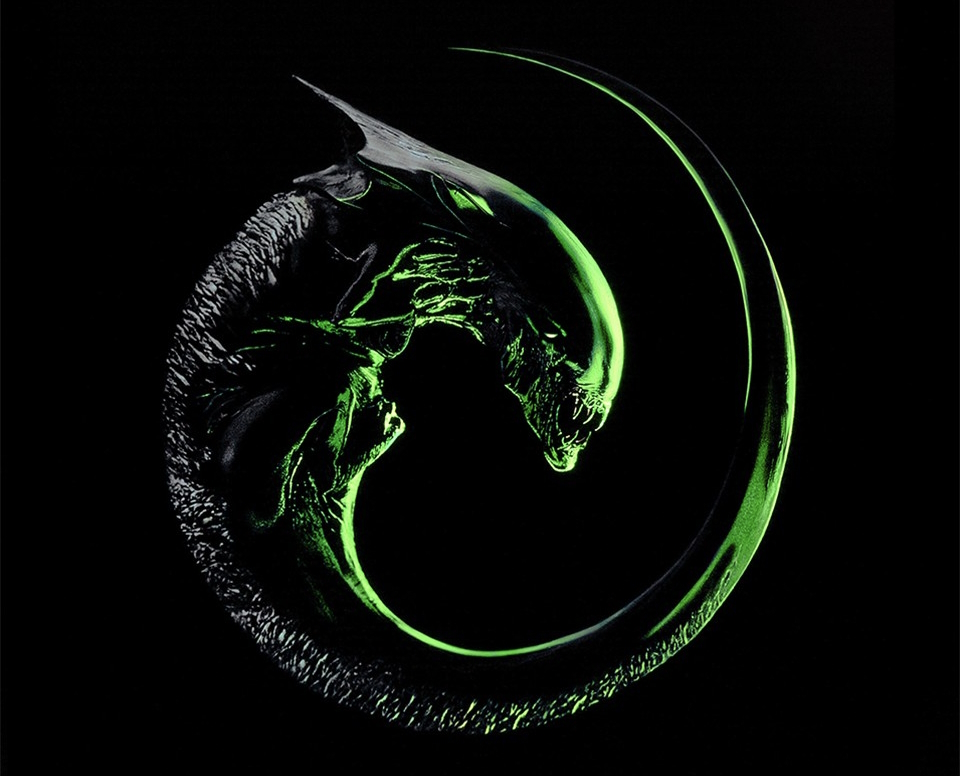
Alien 3: The Assembly Cut is a very different movie

For years I’ve heard about the so-called Assembly Cut of Alien 3, but didn’t expect much from it. I wouldn’t say I hated Alien 3 (although I would say that of Alien Resurrection), I just think Aliens’ version of Ripley is possibly my favorite movie character in history. I don’t know why I find her so endearing, I just do. I get chills whenever I merely think about her saying, “Get away from her, you bitch!” But in Alien 3 she just seems… off.

Those who claim Alien 3 was only disappointing because its critics were expecting more Aliens are mistaken. A lot of us loved the first sequel because it was so different from the original, not just because it was an action picture. Right out of the gate, Alien 3 makes the mistake of treading the same water as the original. It’s also important to remember Alien clones were a dime a dozen those days; the whole “we’re trapped in a spaceship/military complex/prison with an alien” thing was already severely played out by ’92. It was understandable audiences expected something different from a series which had yet to repeat itself.

Thankfully, the first forty minutes of The Assembly Cut feel like a completely different animal than the theatrical cut. In this edit, Ripley washes up on a beach after her escape pod crash lands on the penal colony known as Fury 161. Charles Dance’s character, whose best scenes are restored in this version, is out for a stroll on the beach when he discovers Ripley’s unconscious body. Many will oppose the idea that Ripley hops in bed with the first guy she sees, but I’ll be damned if it isn’t completely believable. It’s not, “We want you to believe these characters are suddenly in love,” but more like, “Sometimes, lonely adults have sex.”

Although there were so many lame alien clones at the time, The Assembly Cut makes it clear Fincher could have made the first truly skilled knock-off. Unfortunately, the special effects suck as bad as they did in ’92 and Ripley’s reaction to learning of Newt’s death still underwhelms. I was hoping the heavy-handed crucifixion imagery at the end of the movie was gone, and although that shot is improved in a way, it’s still stupid and pretentious. Other than that, The Assembly Cut is a decent end to the trilogy.

There are various other improvements I won’t spoil. I’ll just point out the alien’s entrance is much spookier than the one we initially got.

Millennium (1989)

Without giving too much away, Millennium is a time travel movie. The year (in one timeline) is 1989. A midair collision causes a jumbo jet to plunge rapidly toward earth. When the flight engineer checks the situation in the back, he discovers the passengers are already dead. Seconds before impact, the black box records the man’s final words: “They’re all burned up!”

The black box is one of several juicy mysteries for the investigators, led by Bill Smith (Kris Kristofferson). Another mystery: all the digital watches which survived the crash are now ticking backwards. I wanted the movie to explain why and how the watches tick backwards, but it never does. When it does explain things, it explains too much, often at the expense of the story. For example, there is absolutely no reason seasoned time travelers should need ideas like paradoxes and nonlinear timelines explained to them in excruciating detail. You’d think that stuff would be taught on the first day of Time Travel 101.

The film imagines a future phenomenon called “timequakes.” Unlike Vonnegut’s terrifying interpretation of the term, the timequakes in Millennium occur in the story’s present (a thousand years from now) whenever one of the time travelers change something in the past (1989). It’s disappointing that the phenomenon has less to do with temporal dimensional stuff and more to do with boring ol’ earthquakes, but after the time travelers experience one, they’re relieved that, “We haven’t changed much.” Which, like much of the movie, doesn’t make a lick of sense. If their actions in the past changed their present selves, how the hell would they know? Look, I’m not knocking a time travel movie for having plot holes. I’m knocking it because better time travel movies know how to skate by the problems all time travel movies have. Millennium is a lot like a magician who hasn’t mastered the art of misdirection yet.

What I like about the movie is the way it plays with perspective. In Back to the Future 2, Marty returns to events depicted in the first movie, but we see them from entirely different viewpoints. In Millennium, and maybe this is due to budget limitations and/or laziness, the movie wraps around to expand on earlier scenes, sometimes using the exact same shots as before. Sometimes it’s boring, sometimes it’s mildly interesting how nothing more than additional context could change a scene’s tone. Investigator Bill Smith is the focus for the first half of the movie and then… someone else becomes the main character.

Meanwhile the chemistry between Kristofferson and Cheryl Ladd tries too hard to be “future Casablanca.” Anyone who’s ever worked as a real life airline pilot or a safety inspector will scream at the screen frequently. My biggest complaint is the movie would have been a lot more interesting had it explored what happens after its final shot. That climax, by the way, is full of unintentional laughs, but the film is more or less believable as a whole. It’s just one of those movies that’s too odd for me to dislike. For instance, the all-seeing council is a direct descendant of Flash Gordon and Zardoz while the future sets, though utterly unconvincing, have a cyberpunk flair about them.

Here’s what John Varley has to say about the production, according to Wikipedia:

“We had the first meeting on Millennium in 1979. I ended up writing it six times. There were four different directors, and each time a new director came in I went over the whole thing with him and rewrote it. Each new director had his own ideas, and sometimes you’d gain something from that, but each time something’s always lost in the process, so that by the time it went in front of the cameras, a lot of the vision was lost.”

Millennium isn’t great, but it’s a helluva lot better than its 11% on Rotten Tomatoes.

Space Cop is a terrible movie so… success?

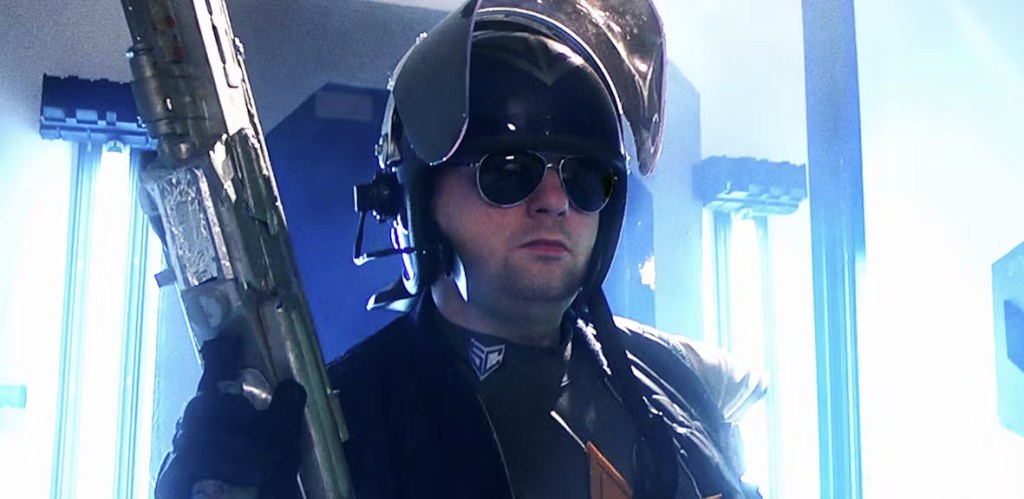
Do you know how family videos are only funny to people in the family? That’s probably what Red Letter Media’s Space Cop is like. If you’re a fan of these guys, you’ll probably enjoy their movie. When the promotional material suggests it would someday be a contender for RLM’s own Best of the Worst series, they weren’t kidding. It’s a bad movie, but that’s their expertise, isn’t it? Expecting them to make anything else is like asking Mike Tyson to figure skate.

I’m no stranger to crowdfunded films so I knew what I was getting into… in other words, I wasn’t expecting much. Space Cop is A) better than I thought it would be and B) a lot more entertaining than the Angry Video Game Nerd movie, even if that one had a lot more production value (and still looked like shit). Space Cop starts off promising enough and feels like an authentic movie for the first few minutes despite soap opera lighting. Then it quickly descends into the non sequitur jokes and politically incorrect humor which work, if I’m being kind, roughly half of the time.

As for the plot, a gung-ho policeman from the future (Rich Evans) is accidentally transported to 2007 after he chases aliens into some kind of time-space vortex. During a modern day shootout in a cryogenics lab, the future cop accidentally thaws a cop from the past (Mike Stoklasa). They’ll have to team up to save the world from a devious plot involving aliens and a brain in a jar… or something. I don’t know and it doesn’t really matter.

The two main characters are only about as good as a memorable Saturday Night Live sketch, stretched to feature length. The actors’ decision to speak in “funny” voices from beginning to end is, at best, easy to look past, while at worst I can see it grating on the uninitiated. When Patton Oswalt makes a cameo, it’s pretty clear the boys were reluctant to trim their only star’s footage because it goes on and on. The length then becomes part of the joke.

My biggest issue with the movie is a complaint RLM have voiced themselves: the best bad movies are the ones that aren’t intentionally bad. Movies that set out to be bad just can’t capture the charm of bad movies trying to be good. Space Cop isn’t a good bad movie, but it’s a decent bad movie, at least when the jokes hit their target. If you’re a veteran of bad movies, and you like RLM—really like them—then you probably want to support them in this venture.

31 Days of Gore: Manborg (2013)

It’s October. Time to talk horror. This year I’m reviewing a different horror movie each day of the month.

Here’s a movie which was reportedly made for a little over $700 ($1,000 CAD according to Wikipedia). Yes, it’s probably the cheapest looking movie I’ve reviewed all month, but it certainly doesn’t look like they only spent $700 on it… I would have guessed the budget was at least twice that.

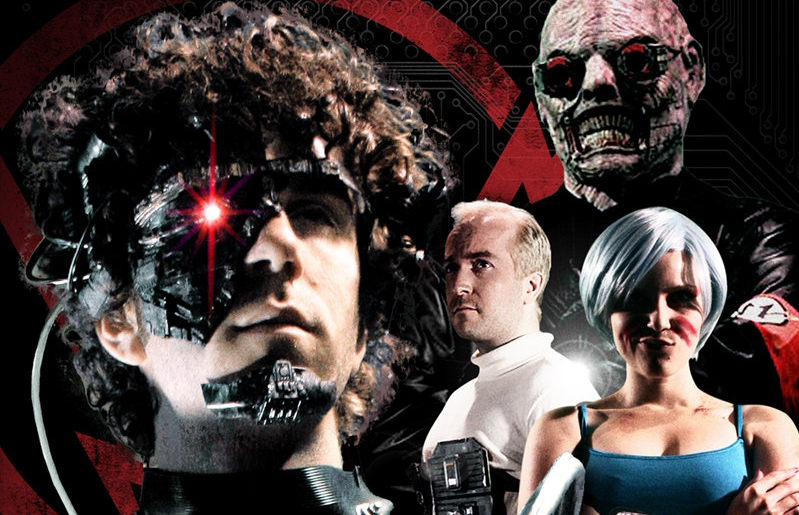
Manborg’s influences include Star Wars, Robocop, Shadowrun, Mortal Kombat, DOOM, Hellraiser, and The Running Man to name a few. The cyberpunk costumes are made out of spray-painted duct tape, plumbing parts, and a handful of comm-electronics the producers likely found lying around thrift stores. A hovering robot is obviously a modified action figure, animated with stop-motion, and the set designs utilize everything from homegrown CGI to cardboard.

And guess what. Manborg is probably one of the funnest movies I’ve watched this year. I’ve heard good thing about Astron-6, the small production company behind Manborg and Father’s Day, but this is my first time watching their stuff. It reminds me of another ultra-low budget spectacle called The Taint, which hopefully indicates a movement of poor moviegoers who are pissed off big studios no longer make entertainment for adults.

Manborg opens with a hilariously cheap-looking war between humanity and Count Draculon, a villain who’s leading an army of mutated Nazis straight out of hell. The main character dies. When he wakes up, now a cyborg, he and a ragtag crew of misfits are forced to fight in a gladiator arena for hell’s amusement.

The supporting characters include a Liu Kang knockoff, whose voice is dubbed by an obviously Caucasian actor, a female kung-fu assassin, and an illiterate Australian with a penchant for revolvers. There’s a little too much winking for the camera for my tastes, but that’s a minor complaint because most of the movie is deadpanned, which makes it feel a lot more authentic.

What else can I say about Manborg? You already know if you want to see it or not. I suggest that you do.

Come back at midnight Central Time for the next movie.

The Martian: NASA’s answer to Top Gun

Andy Weir’s novel begins:

I’m pretty much fucked.
That’s my considered opinion.
Fucked.

Early on, the movie adaptation drops the F-bomb twice, which is the maximum allowed for a PG-13 film, given there’s not much violence or nudity. Through the use of clever cutaways, the filmmakers manage to preserve the unfiltered character nicely. And no, these workarounds are not nearly as insulting as sanitizing the word with a perfectly timed gunshot, à la Live Free and Die Hard.

I’m glad, too. Mark Whatley (Matt Damon) is an endearing character whose cursing is integral to his personality. He’s the only human on Mars, stranded by a mission which went tits up. His diet, consisting mostly of microwaved potatoes, is in constant peril. Worst of all, he just ran out of ketchup. That he only says (and types) “fuck” a handful of times is kind of amazing, really.

The thing that struck me most about The Martian are the landscapes. None of it is obvious CGI and none of it looks like rose-filtered Earth locations, either. The horizons and the sun look just about right. Having just seen the trailer for Ron Howard’s In the Heart of the Sea, whose liberal use of bad CGI verges on obscene, I couldn’t believe my eyes. The Martian has some of the most subtle special effects I’ve ever seen. Every minute is visually believable.

The film wastes no time setting up the comradery among the martian astronauts, whose mission is jeopardized by a freak storm. The commander (Jessica Chastain) makes the hard decision to return to Earth prematurely. Moments later, she has to make the even harder decision: leaving Whatley behind when he’s struck by a flying satellite dish. Everyone believes he’s dead because the component which relays his life signs to the ship has been impaled by shrapnel.

Cleverly, the film trades first person narration for the video diaries Whatley keeps to entertain himself, which involve ransacking his coworkers’ personal effects and making fun of the things he finds. He tells the GoPro cameras stationed around the habitat what he’s up to every step of the way. The first order of business is setting up a crop a of potatoes. Then he’ll have to “science the shit out of the situation” in order to send an SOS back home. In his first message, he says in a comically weak voice, “Surprise.”

Unfortunately, Murphy’s Law is in full effect on Mars. You always know something is about to go wrong, but you never know what or how. It’s the same kind of suspense which made Apollo 13 so tense even though we all knew the characters make it back home. Like that movie, The Martian doesn’t try too to make its audience teary-eyed. It’s primary mission is to entertain, which is exactly what elevates it above the endless supply of movie directors trying to mimic 2001: A Space Odyssey by infusing artificial mysticism into their space films (see: the incredibly insulting Mission to Mars and the merely okay Red Planet).

The Martian has everything I wanted from Gravity and Interstellar. This is real science fiction and not the Hollywood bastardization of the genre. Sure, a few of the things that happen are unlikely (Weir said he wishes he had chosen a different disaster to kick off the story as a storm of that nature is unlikely on the red planet), but there are plenty of scenes which contain more science than all the previous martian movies combined.

This is all to say The Marian is easily the best science fiction movie of the 21st century. It’s no wonder why the NASA program is promoting it like their version of Top Gun, which was a boon to the Navy’s recruitment efforts. The PG-13 rating is wise because there will be countless children pursuing careers in science and aeronautics after seeing it. We need more movies like it—exactly like it. In fact, Hollywood should just go ahead and commit to adapting every novel Andrew Weir ever publishes from here on out.

“The moon blew up without warning and with no apparent reason.” Seveneves is my ideal summer book

In Neal Stephenson’s Seveneves, the moon explodes in the first sentence. At first, the damage is mostly cosmetic because all the moon’s mass is technically still there, albeit in seven large chunks. The moon’s center of gravity (and here is one of Stephenson’s many lessons in physics) remains more or less where it was before the mysterious collision so it’s business as usual for Earth’s tides. Unfortunately, it’s not long before two of those seven chunks collide and create more chunks. Scientists the world over realize that each time another chunk is created, the odds of another collision only increase. The collisions are eventually going to result in an earth-wide event called the White Sky, which immediately precedes “the Hard Rain.”

One character describes the Hard Rain like this: “Those fiery trails we’ve been seeing in the sky lately, as the meteorites come in and burn up? There will be so many of those that they will merge into a dome of fire that will set aflame anything that can see it. The entire surface of the Earth is going to be sterilized.”

Long story short, the Hard Rain is coming in two years, at which point Earth will be inhospitable for a period of fifty centuries or more. Humanity only has a handful of months to prepare the preservation of the entire species. It’s going to require a ton of jury rigging and massive risk-taking to complete such a project. And if that’s not exciting to you, check you pulse, pal. It’s a very hard science fiction story that strongly reminds me of Larry Niven and Jerry Pournelle’s seminal Footfall, minus the elephant-aliens.

Seveneves begs to be read slowly and deliberately. If Stephenson’s writing were any denser, it would pass the Schwarzchild radius and devour us all. For those of you who haven’t read any of his stuff, I say “dense” in the kindest way possible—like Gene Wolfe turned up to eleven. You may have heard critics accuse Stephenson of slipping into tangents in which he goes into meticulous detail about language, culture, history, science, mathematics, or whatever else he finds pertinent to the plot. Well, yeah. That’s, like, kind of his shtick. The info dumps are so absurdly long, they eventually become amusing.

You likely won’t find a novelist who knows more about anything, but particularly orbital mechanics; Stephenson literally had a job tracking the trajectory of space debris. And boy, does he take every opportunity to remind us he knows what the hell he’s talking about.

Fury Road: George Miller’s latest road rage masterpiece

Mad Max is the first movie I ever saw. Road Warrior is one of my favorite movies of all time. I’m not even going to pretend I can be objective about this one… just let me gush.

Fury Road is a two hour movie with about eight minutes of dialogue and comes from a filmmaker who thankfully hasn’t learned the “right” way to make a Hollywood blockbuster. Nothing about it is formulaic. Movies as bold as Fury Road make me feel retroactively cheated by more typical films like The Age of Ultron.

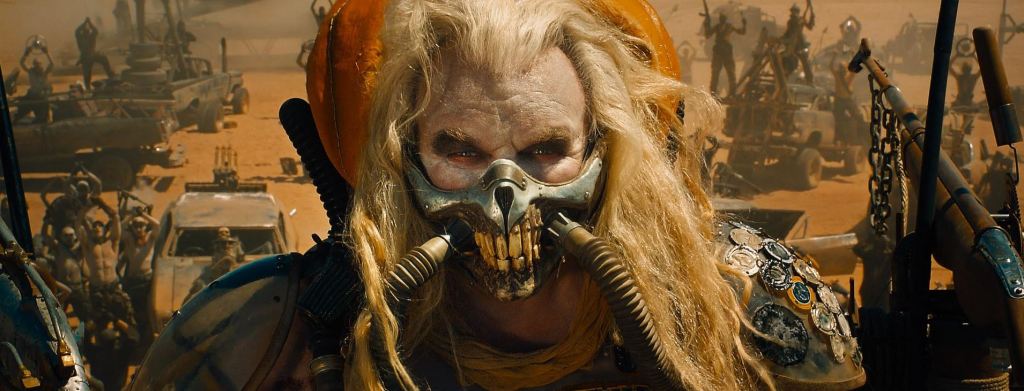
Tom Hardy and Charlize Theoron share equal billing in the opening credits—it’s every bit Imperator Furiosa’s film as it is Max’s. Hugh Keays-Bryne, who played Toecutter in the original film, returns as Immortan Joe, a villain who gives Hannibal Lector and Darth Vader a run for their money. Nicholas Hoult (yes, the kid from About a Boy) is nearly unrecognizable as Nux, the famished maniac who proclaims in the trailers: “Oh, what a day! What a lovely day!”

Within minutes of the opening shot, Max’s trademark Interceptor is smeared across the wasteland by the War Boys, presumably the biggest-baddest gang around. Max is captured and turned into a “blood bag” for Nux; as all War Boys are the biological children of Immortan Joe, many share his blood deficiencies and require frequent transfusions. When Furiosa smuggles Immortan Joe’s unwilling wives out of the compound on a big rig, the War Boys give chase, chaining Max to the front of a souped-up car. The chase begins and it doesn’t stop until the movie’s over.

Director George Miller has been trying to make this for twenty years. It shows. You can clearly see the decades of thought enriching every minute of screentime. Each scene is significantly different than the last, despite using the same three elements throughout: a desert, vehicles, and a huge cast of sickly-looking psychopaths. I always cherish a movie that shows me one thing I’ve never seen before. Fury Road does something new roughly every five to ten minutes. I haven’t been this wowed by a mainstream movie since the bridge sequence in True Lies over twenty years ago.

So many action directors working today, all of which are younger than Miller, should be envious and perhaps a little ashamed. This is one of the big ones. This is what keeps me going.

Outland: High Noon in space

William T. O’Niel (Sean Connery) is a space marshal who’s been assigned to a mining outpost on IO, one of the many moons of Jupiter. His wife has left him, disillusioned with the space life. Whereas most boys hide girlie mags under the bed, their son has been caught hiding pictures of Earth.

Peter Boyle plays Mark Sheppard, the crooked operations manager. When the marshal introduces himself to Sheppard’s crew, he’s welcomed by the roughnecks warmly. Sheppard, on the other hand, makes it clear he intends to be the one calling the shots. Meanwhile, some of the miners have been experiencing deadly hallucinations. The marshal discovers an import drug is to blame and, surprise-surprise, Sheppard may be involved in the scheme.

As the investigation unfolds, the marshal makes friends with the infirmary’s head doctor, played by the extremely likable Francis Sternhagen. The banter between these two is often funny and very endearing. Peter Boyle is exceptional, too. “If you’re after more money,” he tells the marshal, “you’re very smart. But if you’re serious, you’re very stupid.” The marshal isn’t after money at all, of course. While the film doesn’t make it clear why he’s so motivated, it doesn’t need to because it uses the shorthand of classic westerns. He’s simply a man with a strong sense of right and wrong; the audience doesn’t question it because he’s played by Sean Connery.

And the marshal really puts his life on the line. In the last quarter of the movie, hitmen are on their way to assassinate the marshal. The minutes to their shuttle’s arrival are counting down on the loud flip clocks that are stationed throughout the facility, grating on the marshal’s anxiety with every click and clack. The marshal fails to deputize any help because the odds he’s facing are suicidal. No, it isn’t a rip-off of High Noon. It’s a loving remake.

Director Peter Hyams is very good at making solid films like Outland. Mechanical plots have always been one of his strong suits and his technical abilities provided him steady work in Hollywood. Some filmmakers are simply good at working within the system while others can only exist outside of it. Both are admirable when they produce films as good as this. Think about it: Hyams managed to make a good sequel to 2001: A Space Odyssey, which must have been a job no one envied. So maybe he isn’t what anybody would call an artist with a capital A, but he’s often the right guy for the job.

Highlander: There can be only one (and several sequels)

Highlander 1986

Suppose, for a second, you’re a Trans-Am-driving gun nut who happens upon a dark alley in which two complete strangers are sword fighting. Do you A) drive to the nearest payphone and call the cops or B) get out and shoot at these people who you don’t even know? If you chose B, you belong in this movie.

You know Highlander’s tagline even if you don’t know the franchise: There can be only one. But why must there only be one? When the French Christopher Lambert (playing a Scot) asks questions like that, the Scottish Sean Connery (playing an Egypt-born Spaniard) replies with another question: “Why does the sun rise?” That’s a cheat because even grade school children know why the sun rises, but no one seems to know why Immortals “must” fight. Considering how cool it is, I suppose it doesn’t matter. I mean, who doesn’t like sword fights that produce roughly as many sparks as a bumper car grid?

I’m getting ahead of myself. The year is 1985. Connor MacLeod (Lambert) is spectating a wrestling match at Madison Square Garden that gives him intense flashbacks to his life as a Scottish highlander in the 1500s. When he ducks out early to head to the parking lot, Connor is attacked by another Immortal. Connor beheads the mysterious attacker and absorbs his essence in a supernatural light show known as a quickening. Beheading is the only way to kill an Immortal and the quickening is the process which allows the victor to absorb the defeated party’s strengths and abilities.

Meanwhile, the “seven-foot tall” Kurgan (Clancy Brown) arrives in New York City. The Kurgan is Connor’s arch nemesis, having killed his mentor Juan Sánchez-Villalobos Ramírez (Connery). Don’t worry—through the magic of questionable screenwriting, Ramírez will return for a more significant role in the sequel. At any rate, the Kurgan has spent the last four hundred years quickening as many Immortals as he can. According to Ramírez, if someone like the Kurgan wins this ancient contest, the world will be plunged into eternal darkness.

The pacing is a little rough. The acting is good enough. You will be forgiven for scratching your head or making MST3K-style quips here and there. My mother tells me this was one of the first movies I ever fell in love with and that she would often hear me, from the other room, popping it into the VCR to watch it again and again. I was so young I don’t remember, but it certainly is up my alley.

When the movie was over I slipped Westworld into the Blu-Ray player and all but forgot about Highlander. But when I went to bed later that night, distant memories of the infamous sequel began to haunt me. When I was eight or nine years old, I had rented it on Pay-Per-View and recorded it to VHS. I still have the tape to this day.

I remembered Sean Connery was in it and just had to know what kind of movie magic they spun to bring his character back to life. I had frequently read how awful the movie was, which was at odds with how much I enjoyed it as a kid. So I bit the bullet and decided to watch Highlander 2 for the first time as an adult.

I may never be able to enjoy another movie again.

Highlander 2 (1991)

Forty years after the conclusion of the last film, Connor MacLeod is not just mortal, but an elderly and extraordinarily wealthy individual, as immortality no doubt reaps some great compound interest. He’s devoted himself to science-based philanthropy. One of the projects he helped fund was an artificially generated shield around the planet after corporate greed destroyed the ozone layer. Unfortunately, the shield has permanently blocked sunlight and created a runaway greenhouse effect. It’s also controlled by the very corporation that helped destroy the atmosphere in the first place. As it turns out, the ozone layer has recovered since the shield went up and the project’s executives will stop at nothing to keep this inconvenient (for them) truth suppressed.

Enter Louise Marcus (Virgina Madsen) who seeks to expose the truth by bringing the shield down. Within minutes of meeting Connor, two Immortals from the distant past (or another planet, depending on which version you’re watching) arrive on bitchin’ hover technology to assassinate the former contest winner. Despite his advanced age, Connor manages to decapitate one and quickens, restoring his youth and immortality. Shortly after hopping on a hover board to dispatch the other assassin, Connor and Louise have passionate sex, right there on the grimy streets.

If you’re wondering how they contrive to resurrect Sean Connery’s Ramírez, it doesn’t make any sense… nor does it matter. All that matters is he’s back, he gets a lot more screen time, and the actor seems to be having the time of his life elevating an otherwise standard fish-out-of-water role. Connery alone is worth the price of admission. Ramírez reunites with Connor and helps him and Louise take on the corporate powers that be.

Siskel & Ebert said only brain-dead moviegoers could enjoy Highlander 2. Some regard it as the worst film ever made (those people have yet to see Now you See Me). If you find the utterly ambitious and genuinely creative Highlander 2 more offensive than the plethora of soulless cash grabs coming out of Hollywood nearly every month, I ask you to reexamine your standards. You cannot call this film boring. You cannot call it passionless. Insane? Well, I’ll give you that one.

Highlander 2 is set in a dystopian cyberpunk future. For the most part, it’s a visually convincing setting. Somehow director Russell Mulcahy managed to squeeze better world-building out of his budget than Freejack, Johnny Mnemonic, and Cyborg combined. The theatrical cut of the film (which is what I initially saw on Pay-Per-View twenty years ago) even visited another planet, but the infamous alien subplot has since been reworked and retconned in subsequent editions.

Granted, the theatrical cut of Highlander 2 ruined the mythology of the original film within the first few minutes. It asserts the Immortals were (surprise!) aliens all along. Luckily, this revelatory dialogue had been filmed with characters who spoke telepathically; the obvious fix was to simply rerecord the voice-over dialogue. In the subsequent versions, all verbal references to the alien planet Zeist are edited out of the dialogue even though the visual references more or less remain, albeit visually altered. This way audiences are led to believe (if they’re still paying attention) that it’s not an alien planet, but in fact Earth a long time ago.

These changes don’t really help the film, though, as it still suggests that Connor and Ramírez knew each other prior to their meeting in the original film. If anything, the changes made the movie more confusing. For instance, when the past assassins are given their orders to kill Connor, they say, “But he’s an old man now.” “Now,” even though the scene is set far in the past?

And you know what? Who cares? Just keep slathering on the 90s cyberpunk aesthetic and sparky sword fights. Highlander 2 is incapable of demonstrating restraint in its crusade for awesomeness. You get hover boards. You get bad guys who look like they’re straight out of a Hellraiser film. And you will never see a hero have sex with the heroine so quickly after they meet… and, uh, I do stress the word “quickly.” (Perhaps that’s the quickening.)