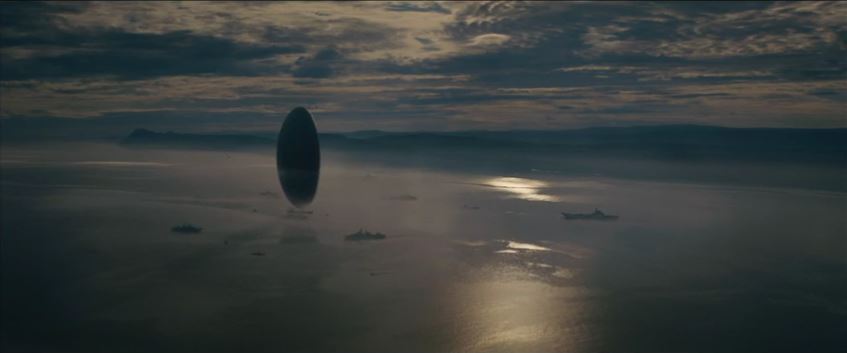
Rogue One: A Star Wars Story

Ever since I read about the prequel trilogy (and I don’t think I ever heard the word “prequel” used before then, which is strange because now we have to endure its use on a daily basis) I’ve learned to wait. And after that trilogy wrapped up I, like millions of others, thought there would never be another Star Wars movie again… certainly not one as good as The Force Awakens. At any rate, it’s an exciting time for fans of the franchise because we’re entering new territory: here’s a movie that doesn’t focus on the saga characters. No Luke, no Leia, no Solo.

Right now we get to say, “Ooo! I can’t believe another Star Wars movie is already coming out!” But how long will it be until we’re saying, “Ugh, I can’t believe another Star Wars movie is already coming out…”? I know they’re not currently planning to pump them out with the frequency of Marvel movies, but Star Wars advertising and merchandise seems to be much more pervasive than the superhero stuff. There’s that, then there’s the fact I can’t completely trust the corporate behemoth that is Disney, because who knows what will happen once this dizzying whirlwind of fan service begins to dissipate.

In the meantime: I can’t believe there’s a new Star Wars movie out!

So while I’m not among the mega fans of the series, I have dabbled in the comics, the video games, and Timothy Zahn’s Heir to the Empire. Ever since playing the awesomely cinematic Shadows of the Empire, I always wanted to see a feature film spin-off of the Star Wars series. And when I went to see last year’s The Force Awakens, there was this pretense that I wouldn’t compare it to the original trilogy, but we all know that was impossible. Yet with Rogue One it’s truly new territory—the first time we get to see a Star Wars film fresh in decades. No need to judge it against what’s come before it, this one’s supposed to stand on its own… at least that was my assumption.

Below there are no bigger spoilers than what you would have seen if you watched all the trailers and followed the official press. If you were adamant about not watching the trailers (in other words: stronger than I), then don’t read any further, either. If you just want to know my opinion on the film: I really liked it, but while I wouldn’t necessarily call it predictable, many of the major plot points weren’t particularly surprising. That’s the problem with prequels in general, I suppose, and I certainly liked this one better than anything in George Lucas’s prequel trilogy. (And yes, I did like the prequel trilogy.)

Most of my disappointments with Rogue One are all based on my own preconceptions, which turned out to be wildly inaccurate in a lot of ways. I didn’t know we were going to get CGI Tarkin, a pun-making Vader who feels a little too spry considering we mostly just see him walk around in A New Hope, and one callback after another. I knew this was a story about how the good guys managed to acquire the Death Star plans, but I didn’t know it was going to rely so heavily on what came before it.

Other complaints: the trailers give away a lot more than The Force Awakens trailers did, we don’t get to spend enough time with these characters before they head off for war, and—most disappointing of all—the two human leads are bland and boring in relation to the supporting cast. I’m sure Felicity Jones and Diego Luna are talented people, I just never really believed their characters’ motivations, mostly because the actors aren’t given a whole lot to work with here. Meanwhile Forest Whitaker makes interesting creative choices for a performance in a popcorn flick, and while I’m not a hundred percent on board with the result, the effort is nice nonetheless.

Putting all that aside, Rogue One kicks a surprising amount of ass. The film looks like a Star Wars movie, but doesn’t feel like one until the final act, which actually felt a lot more authentic than the unoriginal ending of The Force Awakens. It’s just unfortunate we saw so much of it in the trailers and press material. Interestingly enough, it’s a lot less kid-friendly than most of the other films in the sense there’s nothing half as lame as a CGI Yoda doing parkour, and I think a lot of children will have a hard time following what’s going on. The best part of it all is director Gareth Edwards may have just opened a door to a darker, harder Star Wars spin-off in the foreseeable future, which is all I ever wanted since Star Wars 1313 was announced (and cruelly canceled).

I don’t think this is a movie for everyone, even though just about anyone can enjoy it. I think it’s a movie intended for people who sincerely can’t get enough of Star Wars. And don’t worry about showing up late because they played nine (mostly terrible) trailers before the movie started.

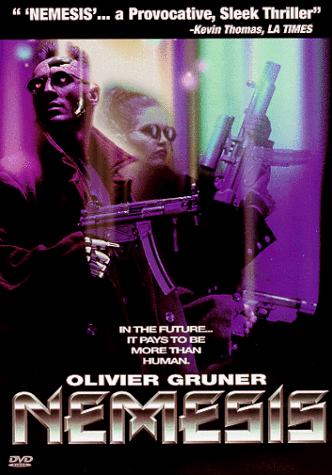
Nemesis (1992) [Midnight Movie]

The opening credits aren’t even over by the time the bullets begin to fly in Nemesis, one of the better cyberpunk adventures of the early 90s. And boy do the bullets fly. In one scene the heroes and the villains alike are shredding through walls to pass from one room to another. Then the hero (Olivier Gruner) creates an escape hatch in the floor by firing his futuristic machine gun in a circle around his feet.

Yes, this is mindless action, but holy shit is it glorious.

Any character in the film can (and usually will) double-cross the hero without warning—to the point it stops making a whole lot of sense. And it’s not really clear why the action hops from one rundown location to the next, other than that’s just the way director Albert Pyun works. (In an interview with io9, Pyun sheds some light on his methods, which were often more practical than artistic.)

So it’s the future and just about anyone who’s anyone has had their bodies heavily modded with illegal implants. Some of the bad guys have faces which split open like nutshells to reveal automatic firearms concealed inside. Other characters exist as digitized ghosts in the machine to guide the hero through the complicated plot. Meanwhile the (presumably) human character can do back- and side-flips as well as the enhanced characters because fuck it, why not?

In the opening scene, Gruner’s character, a kind of blade runner, is ambushed by a group of cyborgs who leave his less-than-human body on the brink of death in a scene reminiscent of Murphy’s demise in Robocop. After a long recovery in the body shop, he tracks them down, shoots the ringleader, and ends up in a dank jail cell for reasons that are escaping me at the moment. A lot of spectacular shit happens and Gruner finds out his boss (Tim Thomerson) has implanted a time bomb in his heart. Gruner, whose ex-lover has been reduced to an artificial consciousness rivaling Siri, leads him through the web of deceit and explosions, insisting he make his way to the top of a volcano because… well, probably because the film crew had access to a volcano location.

The plot really doesn’t matter. What matters is you get beautiful stunt women, more explosions than you can shake a stick at, and early performances by Thomas Jane and Jackie Earle Haley, the latter of whom I didn’t realize was in the movie until I saw the credits. You should know by now if this is your kind of movie. I’ve enjoyed many of Pyun’s movies, which is why it sucks to read his most recent tweet:

Judging from his blog, the disease hasn’t stopped him from directing. Right on.

The Universal Set [Short Story]

The Universal Set
by Grant Gougler

The crazy woman was on the corner again. Of course she was on the corner. There was nowhere else crazy could go.

Bay wondered why the cops hadn’t done anything about her yet. It was obscene she got to spout her nonsense where anyone, including children, could hear it. The woman was beginning to draw crowds!

People came to laugh at her dancing, her screaming, her obscenities, and she fed off their energy and they fed off hers. Bay had laughed at first, too, but now the crazy woman was beginning to worry her.

The woman wasn’t just an anomaly anymore. Now she was there more often than not, standing on the bench for all to see and shouting with every ounce of breath for all to hear. And what she was saying… it was so cruel and mean! How could anyone think like that, much less put that absurd level of badness out into the air where anyone—especially children!—could be exposed to it?

“What’s wrong with her?” Bay’s son asked.

“Nothing, honey. Just pretend she’s not there.”

“Why is she so loud?”

“Just get in the car before your ice cream melts.”

“Maybe we should listen to her.”

“No,” Bay snapped. She’d lost control of her voice, and felt the tears welling up in her son long before they actually pooled in his eyes. “Oh… oh, I’m sorry, honey. I didn’t mean—”

“I was just asking a question!” he wailed.

“I know. I had no right to shout at you.”

The doors of the car were closed then and the crazy woman’s diatribe had become unintelligible. The air conditioner chilled Bay in contrast to the humid hotness outside. Despite the cold air, the ice cream was streaking down her knuckles and making the skin between her fingers sticky.

Bay could already feel her friends and family sending tendrils of concern in her direction. The tendrils were slow at first, like seaweeds grazing the bottom of a boat, but soon they were enveloping her thoughts piecemeal.

It wasn’t long until the fireflies arrived: macroscopic drones which were as ubiquitous as they were intrusive. A dozen or so surrounded the car, shooting video through the windows.

“That woman out there,” Bay explained carefully, “isn’t an Empath like most people.”

“That’s why I can’t feel what she’s feeling?”

“That’s right. And what she feels… you don’t want any part of it, honey. It’s hatred, plain and simple. And if you catch it, it can damper your own Empathy.”

Bay expected the boy to reel from such a terrible idea, but he did not. Instead she felt the shame shimmering on her son’s forehead like a heat mirage. He diverted his eyes as Bay scrutinized him. All the while, she could feel more and more of the tendrils paying attention to the scene. The story was blowing up beyond a local level as the fireflies streamed it live.

“Son,” Bay said, attempting to limit her tone of accusation. “I can feel your shame. What did you do?”

“Nothing,” the boy said sheepishly.

“Then why do you feel bad about something?”

He was absentmindedly playing with the buttons on the armrest. “I… I kind of took a snapshot of her.”

“You did what?!” Bay had planned to control the anger in her voice, but didn’t catch it in time. First she felt her son’s fear, then a crippling wave of shame from the viewers. The tendrils were angry at her for being so brutish, and they were agitating the water of her psyche. “I’m sorry, honey. I just wanted to know why you would do such a thing. I didn’t mean to frighten you.”

“I just thought she was interesting,” the boy said with a shrug.

The boy’s shame reminded Bay to keep her own reactions in check. She couldn’t afford slipping again, couldn’t afford sending out any more badness. Couldn’t afford upsetting those who were watching.

She had to empty her head of the bad vibes. If they bounced around in there too long they could cause considerable harm. Everybody knew bad thoughts were bad for you. It was the kind of common sense the crazy woman derided during her paranoid monologues, the very reason she had been abandoned by the system. Bay had to shake the badness from her body. Had to take a deep breath to detox herself of the negativity.

Bay asked her son, as calmly as possible: “Were you going to share that woman’s picture with your friends or something?”

A crescendo of good vibes came washing over Bay and she was delighted by the approval. Most of the tendrils agreed with her delicate ways. Yet there were still holdouts, in the very back of the vast network of minds, tendrils sent by people halfway across the country. They were people she’d never known and would likely never meet, yet they were watching the scene unfold just the same.

The story was blowing up. She could feel it.

Bay knew she could win over the holdouts by the end of the discussion. She had to. If she didn’t they could cast her from the waters like the crazy woman. Sure, the waters were choppy and exhausting, but she could not imagine life without them. Bay needed them, needed their good vibes, and they needed hers.

Everybody needed somebody. Otherwise they would end up like the crazy lady, dancing and screaming desperately for attention: “WATCH ME DRY-HUMP THIS BANANA IN EXCHANGE FOR MY BAD VIBES! FREE LUNACY FOR ALL YOU EMPATHIC FUCKS TO SOAK UP LIKE THE BRAINLESS SPONGES YOU ARE! COME AND GET IT BEFORE IT’S ALL GONE ON THE CORNER OF 15TH AND JEFFERSON!”

“Honey,” Bay said, prodding her son. “You’re avoiding the question.”

“I tried to share the picture,” he confessed, “but the feed disappeared.”

“That’s because she’s not a good thing to share, honey. The things she’s saying aren’t even legal to share, which is why the system automatically flags them. And that’s why she goes outside to spread her lies and her fear: it’s the only place she has left.”

Half the tendrils were placated for the moment, but the other half agitated the water even harder. Bay wasn’t sure why they were so upset. WHAT HAVE I DONE? she asked them and they laughed at her ignorance while a few promised they would kill her.

MUST NOT LOSE THE GROUP, Bay thought in a panic. HAVE TO TURN THEM BACK TO ME….

Bay shocked herself with the realization that this thought had taken place in the conscious part of her mind, not in the subconscious wings where selfish thoughts were permissible. She felt the backlash in the form of bad vibes, a great deluge of them drowning her with pain and shame and hatred and anger. The fireflies were pressing against the windows then, making room for the dozens of others which had been drawn to her disgrace.

The story had officially gone global. And in that moment she and her son were the most famous people on the planet. In that moment…

OH, PLEASE! she begged. PLEASE DON’T CRUCIFY ME! IT WAS AN ACCIDENT, I SWEAR!

But the anger came hard and the tendrils were almost uniformly maligned against her. The entire world seemed to hate her then.

SHAME ON YOU YOU PATHETIC EXCUSE OF A PARENT! said the tendrils. HOW DARE YOU TALK TO YOUR LITTLE BOY LIKE THAT YOU RAT FUCKING PIECE OF SHIT! HOW CAN YOU CALL YOURSELF AN EMPATH YOU STUPID CUNT??!!

As she choked on the shame she glanced at her son in the seat beside her. So peaceful. So innocent. So naive to the badness in the world… naive was better. Naive was good.

Oblivious to what was happening to his mother, the boy had finally begun to control the melting of his cone. His grin was huge as he licked at the ice cream strategically. He was getting the opposite of what Bay was getting at that very moment. There was a kind of economy to the vibes: if you were getting the bad ones, then that only meant someone had to be getting the good ones.

Cowering against the shame, Bay screamed hysterically. Despite the badness, Bay could sense the boy’s polar goodness in the form of great satisfaction: SUCH A GOOD CONE! VANILLA IS MY FAVORITE FLAVOR! The drowning woman reached for the goodness as if it were a lifeline.

I LIKE VANILLA, TOO! she announced desperately. VANILLA IS MY FAVORITE FLAVOR!

Then the swell of anger split again: some of it Pro Vanilla, some of it Team Chocolate. Yet so much of the anger on both sides of the divide was still aimed directly at her.

SHE LIKES VANILLA? OH, I’M SO FUCKING SHOCKED.

I JUST WANT TO STATE FOR THE RECORD THAT NOT ALL VANILLA FANS ARE TOTAL FUCKHEADS.

FUCK YOU, YOU HATEFUL VANILLAMONGER!

FUCK YOU, YOU UNEDUCATED COCK!

The deeper Bay sank, the more the waters calmed. The anger was ripping itself apart as it attacked anything it could: chocolate, vanilla, music, celebrities, and everything in between. It was a snake devouring itself, a trapped animal gnawing off its own foot.

And then, as inexplicably as it all began, it was over. The waters calmed. Bay was forgiven as much as she was forgotten.

So she ate her ice cream, wishing the cops would do something about the crazy woman. The tendrils agreed. All was good again for several seconds.
Split Second (1992) [Midnight Movie]

It’s the year 2008 and global warming has managed to submerge London in about a foot of murky water. I’m not sure where the mutant rats figure into this poor man’s cyberpunk world, but the little buggers are ubiquitous and the characters will wreck entire apartments just to gun ’em down. Harley Stone (Rutger Hauer) is a loose cannon of a cop who punches and kicks anyone who gets in his way. When a fellow cop inquires about his sanity, the chief of police (Alun Armstrong) replies with that good ol’ “he’s the best there is” cliche.

Actually, calling anything in this movie cliched might be missing the point. It isn’t “only” science fiction, fantasy, horror, and action, but I want to say it’s a parody of all that stuff, too. It even goes out of its way to do the old “meet your new partner” routine with surprising freshness. Or maybe I’m being too kind to it, considering I feel like I’m the only person who likes this movie. And I always liked this movie.

Split Second opens in a scuzzy night club called The Non-Stop Striptease. A spiky-collared Rottweiler attempts to bite Stone’s nuts off in the alleyway entrance, at which point Stone calmly flashes the dog his badge and says, “I’m a cop, asshole.” This placates the dog. We don’t know why Stone is here—we get the feeling he doesn’t know, either—but soon a woman’s heart is ripped out and, somehow, no one saw who was responsible for the murder. This doesn’t stop Stone from racing out into the dark streets, punching and shooting anything that moves (or doesn’t) in an attempt to alleviate his severe anxiety.

See, a long time ago Stone’s partner was murdered by the very thing which is running around town, ripping hearts out and drawing intricate astrological signs in blood. Stone has been steadily going downhill ever since the incident and it’s not until later when we find out why he’s psychically linked to the beast. The monster, by the way, is ten feet tall, has a wicked set of teeth and claws, but turns out to be one of the most disappointing rubber suits you’ll ever see. Never mind that because the ride up until that point is fun as hell.

Featuring Kim Cattrall, Pete Postlethwaite, and Michael J. Pollard, this British production from The Burning director (my favorite slasher film) is a madhouse that rarely loses steam. You’ll laugh at it for the first ten to twenty minutes, then you’ll realize it’s very much in on the joke, allowing you to laugh with it for the rest of the running time. Rutger Hauer is one of the few bonafide actors who fell into these low budget films with the same wit and enthusiasm he had in more serious efforts—you can tell he’s enjoying it, too. I can’t think of anyone else who was equally great in both A- and B-movies, then slipped back into A-movies without missing a step.

Do you like the early 90s ridiculous vision of the future? Do you like Rutger Hauer? If yes, you’re going to like this movie. Early nineties Terminator, Alien, and Predator ripoffs are kind of a guilty pleasure for me, if only because I’m so damn nostalgic for them.

And you know what? Fuck the haters. This is a legitimately exciting movie. It was the perfect cure for the unbelievably disappointing Star Trek Beyond, which I saw on the same day. How a movie can have so much cool stuff in it, and completely fail to excite me, I’ll never know, but I digress. Split Second delivers the speed.

Arrival (2016)

There’s so much I want to say about Arrival, but the movie works so much better the less you know about it. I certainly wouldn’t say the trailers ruined it, just that I was disappointed I saw them before letting the film unfold naturally. I’ve felt uneasy about the idea of a sequel to Blade Runner, but now that I’ve seen director Denis Villeneuve’s follow-up to Sicario (my fourth favorite film of 2015), I can breathe easy. Here’s a director who’s probably going to be a household name like Spielberg and Scorsese. He’s also the guy who’s going to pick up the torch Neill Blomkamp dropped.

This is my favorite science fiction film since last year’s Ex Machina. It might be the best movie I’ve seen all year. Arrival is so far removed from Hollywood’s narrow view of science fiction, it’s no wonder it released in November rather than the summer (it will also help get it the Oscar nominations it deserves). I don’t remember the last time I saw a non-summer movie in the middle of the day which was as packed as this one, either, so hopefully it’s making boat loads of money.

We need more of this.

No, entire cities aren’t destroyed in the opening act. The President of the United States doesn’t look out the window of the White House and whisper, “My God.” Not only are no landmarks destroyed, they’re nowhere to be found—the alien ship which settles over America chooses to do so in Montana of all places. Even though the trailer gives away the reveal, it’s no less breathtaking seeing it within the context of the story.

The characters representing the government agencies provide strong conflict for the scientific characters without becoming the Jaws Mayor. Usually you’re supposed to hate the military character Forest Whitaker is playing, but you typically don’t draw actors as accomplished as he is if you’re so predictable. Michael Stuhlbarg’s CIA stooge also has clear and understandable motives, even though he, too, would have been made a villain in lesser movies.

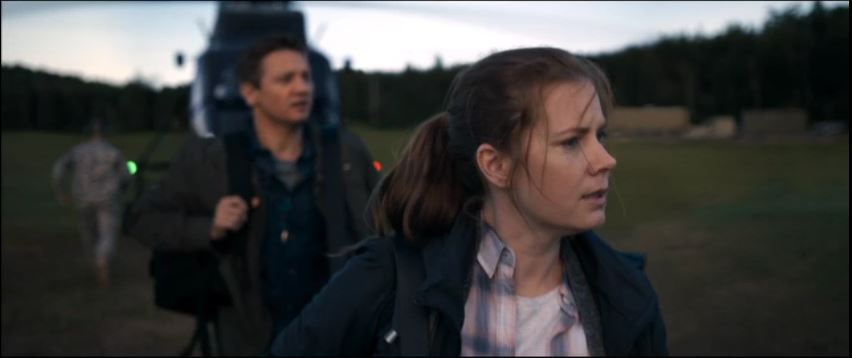
I’ve complained several times on this blog about how scientists are often portrayed in movies. I’m glad I can say Amy Adams and Jeremy Renner nail it. They’re not pizza-eating losers in lab coats and they’re just the right amount of nerdy—the kind of people you would actually see interviewed in science documentaries. Adams’ character especially is complex and to say any more than that might give away some of the best stuff in the movie.

A Boy and His Dog (1975) [Trailer]

I don’t normally post fan edits, but this one’s poignant. (The official trailer, on the other hand, is all kinds of lame). Somehow I’ve never seen this movie despite the fact Harlan Ellison is one of my favorite writers of all time. I’m still deciding whether I want to rent it or buy the Blu-Ray.
As usual, there’ll be a Midnight Movie featured here this Friday so be sure to come back and check it out. Or don’t. It’s a free country, last I checked, but I must confess I didn’t see the results of the election at the time of scheduling this post. 
And I feel fiiiiiiiiiiiiine.

Midnight Movie: Starship Troopers (1997)

“If I tell the world that a right-wing, fascist way of doing things doesn’t work, no one will listen to me. So I’m going to make a perfect fascist world: everyone is beautiful, everything is shiny, everything has big guns and fancy ships, but it’s only good for killing fucking bugs!” — Paul Verhoeven

At first glance, the cast looked like it belonged in a television drama for teenagers. The jingoistic satire didn’t translate well to newspaper ads and 30-second TV spots. The goofy marketing made it look like a straight-to-video movie had somehow wormed its way into a theatrical release. And yet, I still went to see Starship Troopers on opening night, shuffling into the theater with the lowest of expectations. There were maybe six other people there including, I think, a local film critic who occasionally shone a penlight on his notes and impatiently touched the illumination dial on his wristwatch.

In Paul Verhoeven’s Robocop, the narrative is frequently interrupted by satirical advertisements and news segments, as if the film has commercial breaks baked right into it. Likewise, Starship Troopers opens with over-the-top war propaganda, simultaneously establishing its irreverent attitude and the premise: in the future, humans really hate bugs: the arachnid alien combatants who’ve thrown a wrench in humanity’s plan to colonize every nook and cranny of the galaxy. In fact, humans hate bugs so much that young men and women everywhere can’t wait to give up everything and fight the bastards.

Enter Johnny Rico (Casper Van Dien) and his dimwitted high school friends. Amusingly, the first act plays like a futuristic teenybopper drama before jerking the rug out from under the heroes’ feet. Rico has a hot girlfriend (Denise Richards), a hunky rival (Patrick Muldoon), a dangerously flirty gal pal named Dizzy (Dina Meyer), and an ultra-nerdy best friend played by Neil Patrick Harris, whose appearance in an R-rated romp was mildly scandalous at the time (Verhoeven had employed similar stunt casting with Elizabeth Berkley in his trash-masterpiece Showgirls, two years prior).

Rico’s girlfriend is sent to the space navy, his brainy best friend gets absorbed by the military’s science sector, and Rico ends up in the most elite squad of ground troops in existence. His drill sergeant is played by Clancy Brown, who always takes genre projects seriously and the same can be said of Michael Ironside (Total Recall’s Richter), who plays the lieutenant of Rico’s group. There Rico makes new friends for the first time in his adult life, including Jake Busey, whose maniacal appearance instantly washes away the Dawson’s Creek vibe from the earlier portion of the picture.

Just when Rico’s finally begins to gel with his new life, who of all people will suddenly transfer to his squad? Dizzy, the hot little baddie who’s been pursuing Rico since high school. Here’s something I really love about Starship Troopers: in practically every movie in which the leading character is pursued by two love interests, he or she inevitably ends up with the sickeningly wholesome, less attractive option. Not my boy Rico. Soon after his boring girlfriend dumps him via a video call, Rico hooks up with the considerably more exciting Dizzy.

The score by Basil Poledouris is as rousing as anything he’s ever done while the early CGI is somehow much more convincing than most digital effects today. As for the action, it’s exciting, well-paced, and comically bloody as per Verhoeven’s style. If you held a gun to my head and asked me to choose my favorite film of Robocop, Total Recall, and Starship Troopers, I literally couldn’t do it.

I had friends in high school who were even bigger science fiction readers than I. Two of them were dead-set against the idea of a Hollywood adaptation of Robert Heinlein’s source material. There are still critics who assert Verhoeven “ruined the book” by choosing to parody its values (though a lot fewer of them exist today as the general consensus of the film only seems to improve with time). Yes, Isaac Asimov wrote in his memoirs that Heinlein grew more conservative and militaristic with age. Though this is certainly true, Heinlein has suggested he was merely exploring such a society as a possibility, not necessarily promoting it.

Then you have modern SF writers like John Stalzi, who are about as liberal and anti-war as they come, writing military fiction in nearly the same vein as Heinlein. Long before the Sad Puppies (an extreme right-wing group of close-minded assholes who attempted to manipulate the Hugo Awards) I used to enjoy reading science fiction from a wide swath of political and philosophical backgrounds. To like Heinlein’s version and Verhoeven’s isn’t contradictory, but exemplary of what I loved about the brainy genre in the first place. In fact, Joe Halderman’s The Forever War, itself a direct counter-argument to Heinlein’s novel, is among my favorite SF novels of all time.

Though I wish the movie version had gotten the jet packs that Heinlein imagined in the novel, I’m going with Verhoeven’s version all the way.