Guyver 2: Dark Hero (1994) | 31 Days of Gore

It’s been a year since Sean Barker became the Guyver. By day he draws mysterious images from his dreams. By night he brutally murders criminals. (A guy’s gotta have hobbies.) Although Sean insists it’s the Guyver unit that kills people, not him, his girlfriend from the first film is understandably creeped out by his unusual night habits. After the couple splits up, Sean learns about an archeological dig which has uncovered cave paintings like the visions from his dreams. He leaves everything behind and heads to Utah.

There he meets the daughter of the head archeologist, Cori Edwards (Kathy Christopherson). Sean wastes no time pursuing Cori on the rebound as he becomes a worker at the dig site, uncovering alien artifacts and skulls. When a monster attacks the camp, Sean has to do his Guyver thing. What Sean doesn’t know is the Chronos corporation, which was seemingly destroyed in the previous film, is secretly financing the dig to uncover alien weaponry. Some of his coworkers are in fact Zoanoids: the human/monster hybrids he fought in the previous film.

While the original Guyver film targeted the children’s market with a PG-13 rating, the sequel goes full R. It also dumps the forced comic relief, instead trying to emulate the darker tone of the manga source material. This is fine and dandy, but Screaming Mad George has departed as co-director, which is immediately clear as the creature designs are a little less inspired this time around. Also gone is Brian Yuzna, who served as the producer on the first one. On the other hand, the Guyver suit itself is noticeably streamlined and looks more like metal than rubber.

Replacing Jack Armstrong’s Guyver is David Hayter, the voice of Metal Gear Solid’s Solid Snake. To my knowledge, it’s only one of a handful of times Hayter has ever done live-action work. It’s surprising that he swung a leading role for his first real acting gig. No, the acting isn’t great, but does it need to be in a movie like this? It’s pretty much a Lifetime movie for dudes. I can’t find any reason to fault that. In fact, the only major misfire is how many shots are completely out of focus in this otherwise professional production.

Guyver 2 is obviously the superior picture by normal standards, even if its focus puller needs an eye examination, but I found the campiness of the first film to be more exciting. That film took such care to cast actors with strong facial features that you never forgot who’s who in their monster forms. The fights were a lot more frequent and the practical monster transformations were more creative than the mid-90s CGI used here. I don’t want to compare them too much, though, because I enjoyed both tremendously.

Dead Space (1991) | 31 Days of Gore

Dead Space (no relation to the awesome video game of the same name) is a movie for those of you who thought Forbidden World was too exciting. It’s a routine Alien knock-off that at times aspires to be The Thing, but in the words of Butt-Head, “These effects aren’t very special, huh-huh.” There are numerous reaction shots of the actors watching the monster scurry across the room, but it feels like the second unit forgot to shoot all the pickup-shots of the monster itself. The monster constantly evolves throughout the mercifully short runtime, but the metamorphoses typically take place off camera.

The film opens as Commander Krieger and his robot sidekick pal around the galaxy, battling space pirates. The exterior shots of the opening battle are lifted directly from Roger Corman’s Battle Beyond the Stars, so incompetently edited that I initially thought the hero’s ship exploded at one point. Badly needing repairs, Krieger and his robot buddy head to the nearest planet. Thus ends the most exciting scene of the movie.

The scientists who reside on the planet are led by a thirty-five year old Bryan Cranston, who refuses to pull the plug on the dangerous lifeform they’ve created. Mere seconds after showing the pint-sized creature to Krieger, the creature escapes and kills one of the scientists. Wisely, the scientists band together until it’s time to split into pairs for casual sex. The monster attacks again and we’re treated to plodding shots of the heroes looking for the monster and fleeting shots of the monster itself.

Briefly, the monster breaks free from the confines of the cheap set. Krieger and his faithful robot companion hunt it across the alien landscape, which looks suspiciously like Vasquez Rocks disguised with a blue filter and fog machines. At one point, Krieger falls forty feet from a cliffside and lands on the rocks below. Regardless, he’s up and attem after a minute of masculine grunting.

The film’s most grating habit is the half-baked technobabble. The screenwriter clearly has little knowledge of infectious diseases, but insists on having the scientists talk about virology at length. They call the creature itself a virus, long after it has evolved past the point of requiring a microscope to be seen. And if you’re wondering what the scientists were up to in the first place, their plan was to create a virus to counter another virus ravaging the galaxy, which is clearly supposed to be Space AIDS. I’m not sure their science checks out.

If, like me, you thought the novelty of seeing a young Bryan Cranston in a cheesy B-movie sounds fun, you’ll be massively disappointed. Dead Space is far too bland to be “so bad it’s good.” It’s dull and run-of-the-mill in every way. I’ve had paper cuts more enjoyable than this movie.

They (Still) Live

As I can’t imagine anyone reaching this blog without having already seen They Live before, I play fast and loose with spoilers.

I recently saw They Live as part of a 35th anniversary screening put on by Fathom Events. Oddly enough, it’s not the first time I’ve seen it on a big screen in the 21st century—the last time was at a double feature in a friend’s backyard, projected onto an inflatable screen and paired with Roddy Piper’s vastly inferior (but somewhat entertaining) Hell Comes to Frogtown. As real life political corruption and Joe Schmoe stupidity in the United States reaches hilariously depressing extremes, They Live hits harder than ever before. It could be my generation’s Dr. Strangelove or: How I Stopped Worrying About Inequality and Learned to Idolize the Wealthy.

I rank John Carpenter movies as follows: The Thing is his best, Escape from New York is stylistically his coolest, and They Live would be his most entertaining if not for the stupendously wild Big Trouble in Little China. Part of the reason They Live is so fun is “Rowdy” Roddy Piper, whose theatrical wrestling background translates into an endearing screen presence that’s simultaneously relatable and larger than life. When he initially discovers aliens have infiltrated and control every level of government, he chuckles in defeat. “It figures it’d be something like this.”

This pessimism comes shortly after he delivers a “I believe in America” speech that would seem contradictory to his character if you don’t detect the indifference in his tone. His only pal, a laid-off steel worker played by Keith David, openly berates the idea of the American dream—he hasn’t seen his family in months because he has to go wherever the scant opportunity to work takes him. The character points out that when the steel companies were in trouble, the workers pulled through for them, but when the workers were in trouble, the executives gave themselves bonuses. “The Golden Rule,” he says, “is he who has the gold makes the rules.” David is easily the most skilled and believable actor in the entire production, at times delivering reams of dialog while Piper mostly plays the silent type.

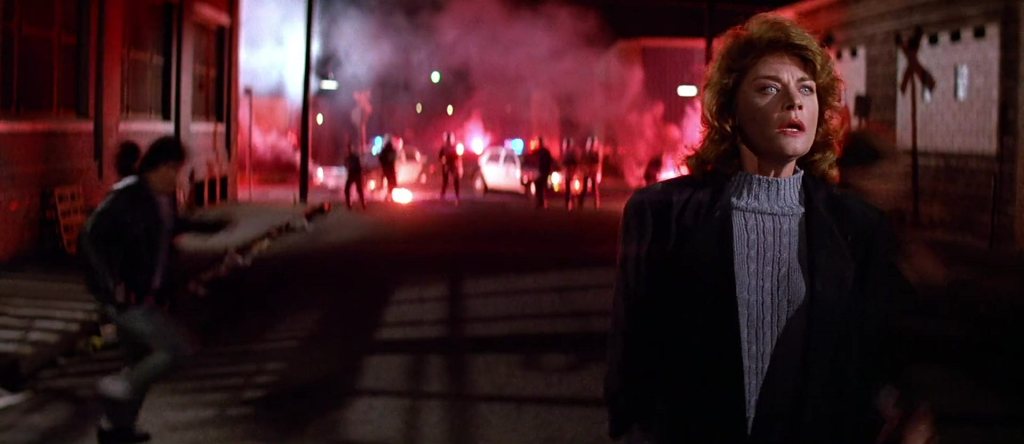
Midway through the movie, when you would normally expect a boringly routine love interest to be introduced, Carpenter instead pairs his hero with Meg Foster. Foster plays an oddly detached woman who immediately knocks his ass out of a tall window in an attempt to kill him. Later, she shows up to apologize in what appears to be a meet-cute moment. Here’s a detail I’ve never noticed before now: during their reunion, one of the background characters is instructing members of the resistance to attempt to befriend and gain the trust of their enemies as a means of infiltration… which is exactly what Foster is doing to Piper. It reminds me of that part in The Sixth Sense when the boy is explaining that some dead people don’t even realize they’re dead while the camera lingers on Bruce Willis’s face. Another detail my girlfriend pointed out: Meg Foster is the one who led the police to the resistance’s hideout in the first place.

I believe the famous five-minute fight in the alleyway still holds the cinematic record for the longest of its kind. I’ve always thought of it as a welcome indulgence of little import, but this time I reconsidered Carpenter’s intentions. Consider how many lower class men and women are in David’s shoes, helplessly preoccupied with their own struggles to make an honest living in a system they know is rigged. People like that know that hard work isn’t all it takes and yet they work hard anyway so as not to lose any ground. Getting them to release their tenuous grip on the status quo that shuns them would very well require a knockdown, drag-out fight of the caliber exhibited here.

Salient details that are easy to miss: not all the cops in Carpenter’s dystopia are aliens in disguise, but they all serve the elite. And not all of the elite are aliens, either, as greedy humans work with the aliens despite knowing that the endgame will result in a planet that’s uninhabitable for their own species. One of the downtrodden drifters (Buck Flower) from the beginning of the movie finds himself sipping champagne by the end, rubbing elbows with the economic overlords who just ordered the police force to bulldoze his homeless encampment. “We all sell out everyday,” he reasons. “Might as well be on the winning team.”

I haven’t even mentioned the iconic sunglasses. Created by scientists in the resistance, the special sunglasses let the wearers see the world in literal black and white. It turns out every form of mass media and all consumer goods are hypnotizing people to continue consuming, reproducing, and not questioning authority. The satire is sharp, but the metaphors are blunt. You can feel Carpenter’s rage against the inevitably destructive corporate machine oozing out of every pore of the screen.

I see a lot of old genre flicks screened for modern audiences. I love watching these movies with a group of strangers, but a lot of the time they laugh at the movie rather than with it. Curiously, They Live is one of the only times I’ve seen a modern audience laugh strictly at all the right parts. That’s some unusual staying power there.

Screenshots sourced from Movie-screencaps.com.

That other Terminator 3 movie

The trailer for Terminator: Dark Fate proudly proclaims James Cameron has returned to the franchise as producer, suggesting we’re getting the real sequel to Terminator 2. While I appreciate the effort to correct course (because it worked so well for Superman Returns and Neill Blomkamp’s failed Alien sequel), there’s already a reliable indicator that a third Terminator film is probably going to suck. It’s called Terminator 3: Rise of the Machines.

The teaser trailer which was released for T3 over sixteen years ago looked promising. That’s because it didn’t include any footage from the film. Nick Stahl is so miscast as John Connor that the brief flashforward of him leading the future resistance is embarrassingly unconvincing. Later it’s revealed Sarah died of leukemia, which is code for “Linda Hamilton hated the script.” Coffins and cars are bulletproof, the comic relief is eye-rolling, and the father-son dynamic between Schwarzenegger and Furlong has been entirely abandoned. Admittedly, these are all complaints that (probably) won’t crossover to the new film, but there are a couple of problems which seem inherent to any continuation of the saga.

The main reason the previous film was such a strong sequel is the original left the story wide open. T2 had a great what-if? premise: What would happen if someone discovered the future artifacts left in and around the machine press at the end of the first film? It’s unfortunate the characters of T2 arguably prevented any possibility of Skynet by destroying the very objects which led to its creation in the first place (depending on which understanding of the timeline you subscribe to). T3 ignores this inconvenience with a single line about how the robot uprising was merely postponed. I have big problems with an inevitable Skynet. Determinism isn’t a good look on a series which taught us, “There is no fate but what we make for ourselves.” 

The other reason T2 succeeded is its villain. We had never seen anything like Robert Patrick’s T-1000 before. In terms of ingenuity and performance, we never saw anything like it again. The villain in T3, on the other hand, is about as inspired as any decision made in a roomful of studio execs. How could anyone, including James Cameron himself, produce an antagonist even remotely as novel as the T-1000, particularly in a series that ended so definitively back in 1992?

I’m not trying to review a movie I haven’t even seen yet. I’ll probably go see it just because I have always been a sucker for Terminator media and it doesn’t matter what I think of the promotional material. But in the words of Guns N’ Roses: Where do we go now? After seeing Terminator 2 for the first time, I spent many years wondering exactly that.

Mea

2018-8-5 Mea WebVersion

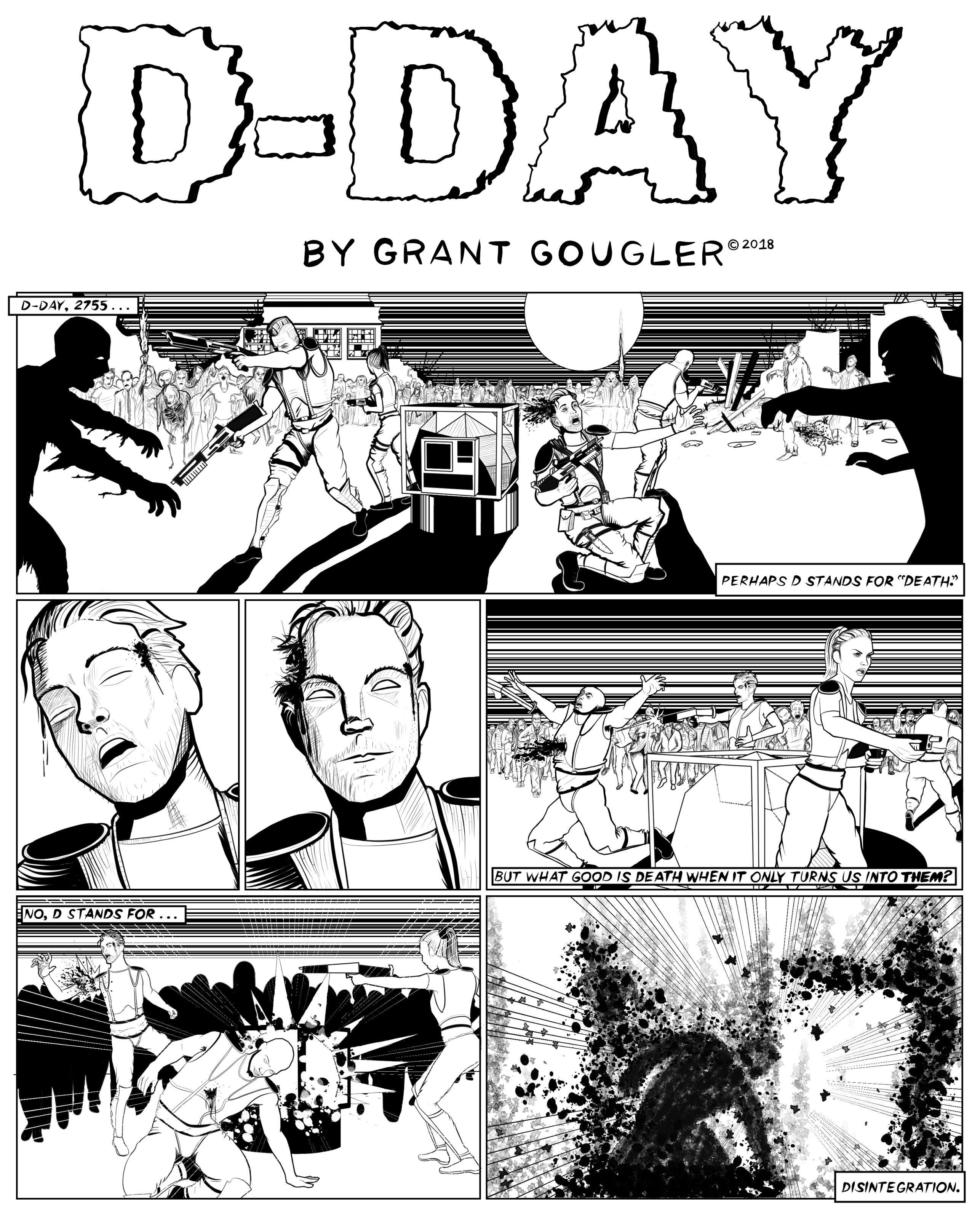
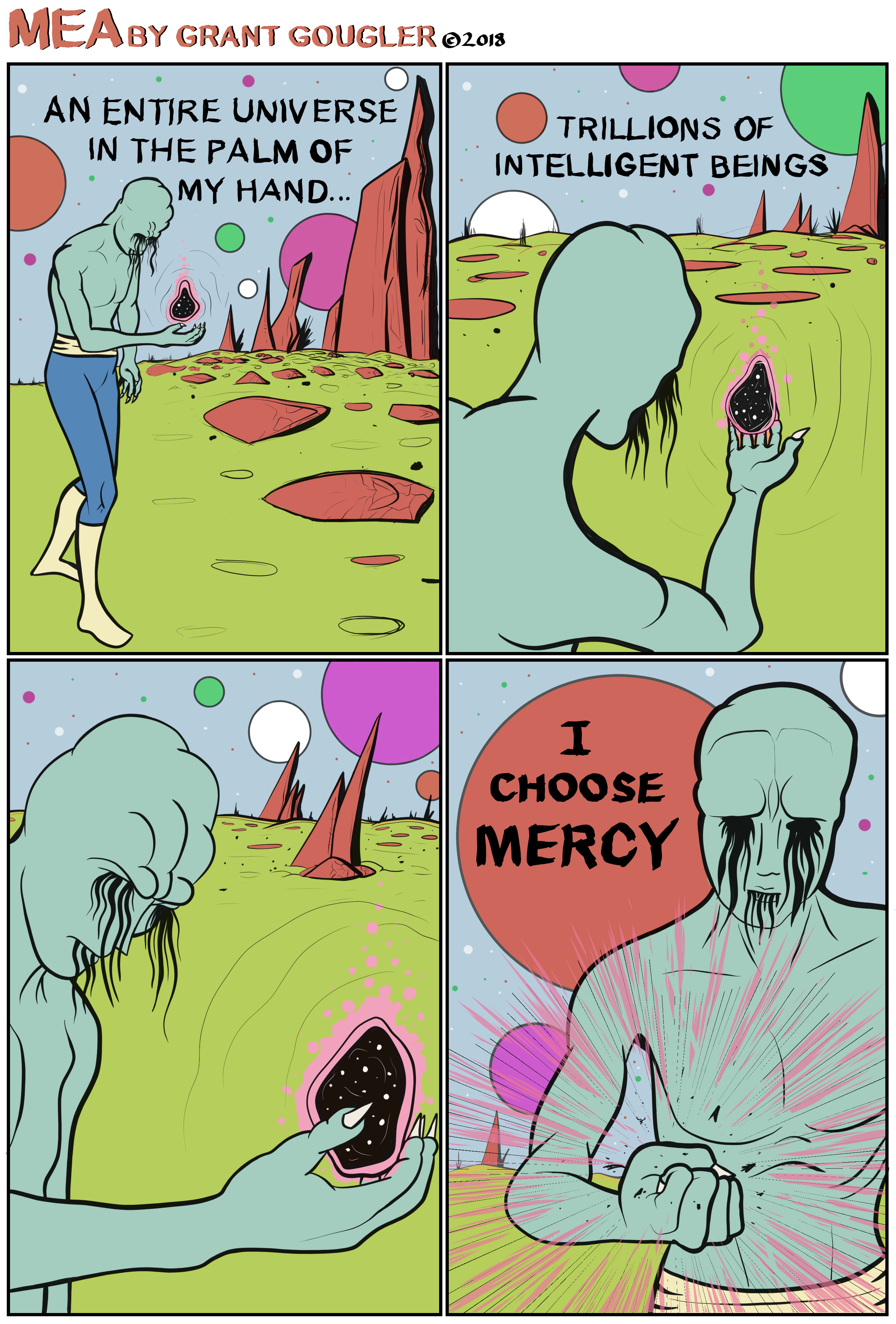
This is what I’m into at the moment: single page comics. Other than a handful of three-panel strips, this is my first stab at sequential art since about ’98, when I attempted an ongoing comic on notebook paper (it was terrible). Obviously there’s a strong Jack Kirby influence on this one. I’ll be posting more of these one-pagers in the near future so subscribe to this blog if you’re interested (the button’s on the right for desktop users and on the bottom for those browsing on mobile).

Cold Moons and Back-Alley Abortions

I’ve got some bad news which is probably good news in the long run: I’m pushing back the release date for Corpus Evil. There are a hundred reasons for doing this, but the best reason is it’s simply going to be a lot better. I think I was also on the road to a nervous breakdown.

So consider the bevy of memorable characters Michael McDowell has introduced to me so far: the dimwitted Dean Howell, whose rifle explodes in his face shortly before he’s shipped off to The Vietnam War; he somehow becomes a dreadful presence in The Amulet even though he spends the entire novel in a coma, his face wrapped in bandages. His wife Sarah, who was too good for Dean to begin with, has to suffer the wrath of her lazy, gluttonous mother-in-law, Jo Howell. Jo blames everyone but herself for what has happened to Dean and it just so happens she has the means of making them pay.

Cold Moon Over Babylon introduced Jerry and Margaret Larkin, downtrodden siblings who were raised by their tired grandmother after their parents happened upon a sack of rattlesnakes. The family dynamics here feel like McDowell Lite, as if he were practicing for the larger and much more endearing cast of characters he would put on parade in The Elementals, which includes the comically cynical Luker McCray and his mischievous teenage daughter, India; I especially enjoyed the moments in which India’s foul-mouthed nature conflicted with her alcoholic grandmother, Big Barbara McCray, a southern aristocrat who dazzlingly skims the surface of Predictable Stereotype.

Gilded Needles

So it was inevitable I would read Gilded Needles this week, having no idea who or what McDowell would introduce next. (Summaries be damned, I’ve been going into his stories blind ever since I read the first one.) How do you top the Howells and the McCrays? How could it possibly get any better?

For the first time in my experience, McDowell moves his setting out of Alabama and into the dark, depressing streets of 1800s New York. Opium dens. Whorehouses. Highly illegal abortion operations. It’s the characters who live in this fully realized squalor who become the morally ambiguous heroes of Gilded Needles. The story pits Black Lena Shanks against Judge James Stallworth, the latter of whom has sentenced three of Lena’s family members to death. In retaliation, Lena’s family of misfits send the judge and his family invitations to their own funerals.

The supernatural elements are gone, but the gleeful absurdity of The Amulet kind of returns as the two families square off. I wouldn’t say it’s quite as fun as The Elementals, but it’s pretty damn close and it’s a helluva lot darker. There’s something especially satisfying about the huge cast of ruthless characters and how far they’ll go to exact their revenge on people who simply disliked them because they weren’t born into the same social class. Why so many of McDowell’s books stayed out of print for so long, I’ll never know, but let’s hope they’re here to stay.

Because I read and unexpectedly enjoyed Michael Crichton’s Sphere last week, I thought I’d check out the movie which was based on it. This was a mistake. I can’t remember the last time I watched such a dull, mediocre movie. I find it amazing that an actress as talented as Sharon Stone can appear in movies like this and appear to be both bored and incompetent. Samuel L. Jackson, who’s almost always interesting, also disappoints.

How do you make a story about a giant squid boring? By reducing the squid’s role almost entirely, that’s how. I’m sure it was probably because of budgetary reasons, but the film supposedly cost around $80 million, long before that kind of budget was the norm, so it’s a bit of a head-scratcher that it should feel so cheap and small. This is The Abyss re-imagined without any of the awe, excitement, or groundbreaking special effects.

Doomed Boy Scouts and Alien Objects

Here’s everything I knew about Nick Cutter’s The Troop when I started it: it was a horror novel which people seemed to like. That’s pretty much it.

I thought it was going to be about a viral outbreak and, without giving too much away, it kind of is, but it’s more parasitic in nature… and kind of gross, too. In other words, it was right up my alley. It was a bit of a stretch to believe such a thing could find itself on the same island as a character like Shelley (this little fucker deserves a cell next door to Hannibal Lecter), but it was worth suspending my disbelief. If, like me, you had trouble enjoying Stephen King’s Dreamcatcher, this is a much better version of that story.

The Troop

Growing up, I was inexplicably drawn to the cover of Arthur C. Clarke and Gentry Lee’s Rama Revealed when I saw it sitting on the shelf of a book store one day. When I realized it was a sequel, I convinced my mother to order the first in the series, Rendezvous with Rama, at Steve’s Sundry (R.I.P.). The rest is history: I annihilated the series and I’ve been a fan of Clarke and science fiction ever since. I even loved the sequels as a kid (though I’ve never been able to get into them as an adult) and I’ve been forever chasing the high that first book gave me.

I love superstructures and I love big science fiction. The harder the better. I’m increasingly turned off by the self-aware geek-chic SF of today, which seems to be suffocated by pop cultural references and nostalgia. I want academic characters talking about real world theories and all the known unknowns and unknown unknowns, and everything in between.

Sphere

Over the years, the itch has been scratched here and there. Asimov’s Foundation (though I somehow never read beyond the first book) did the trick. Larry Niven’s Ringworld and The Ringworld Engineers did okay, too (let’s just pretend the series ended there). More recently and unexpectedly, however, Michael Crichton’s Sphere kicked all kinds of ass for me, mostly because I’ve had a love-hate relationship with Crichton’s work… also because I have no idea what possessed me to read it. It’s kind of like Rendezvous with Rama if it had been written by James Cameron.

I’ll take it.

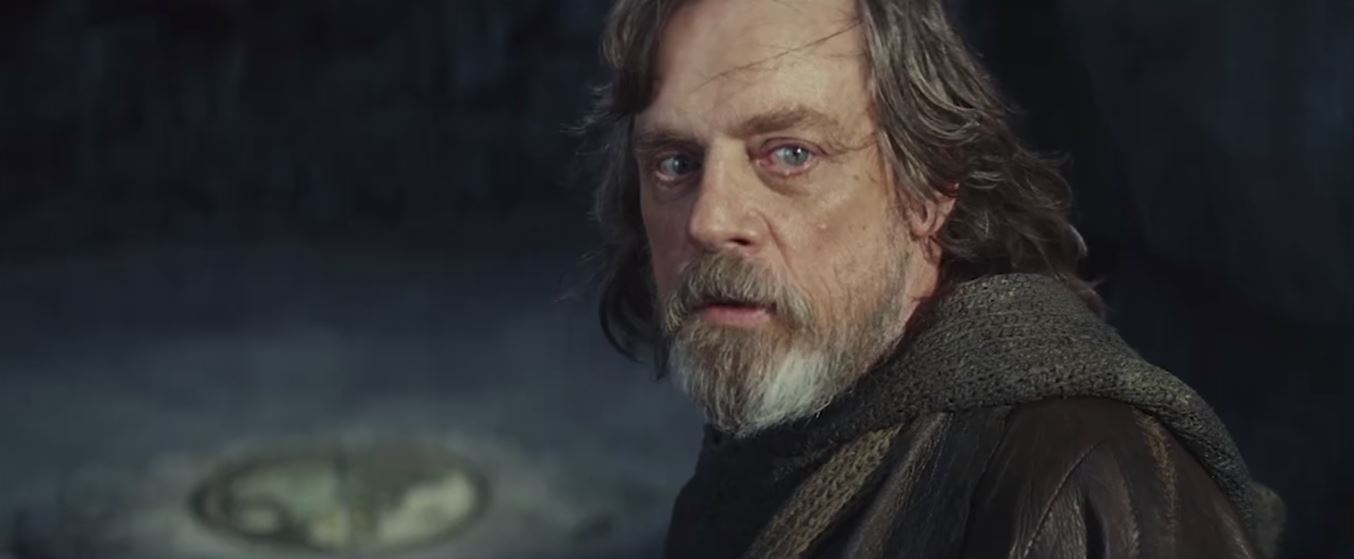
The Last Jedi (2017) [Midnight Movie]

A lot of people thought The Force Awakens was too derivative of the original trilogy. Starkiller Base notwithstanding, I disagree, but I can see where those people are coming from. I just thought it was a smart move to give us a healthy dose of familiarity in order to make sure the new trilogy got off to a solid start. (But yeah, I could have easily checked out during that final assault.)

Despite my enjoyment of Awakens, I went into The Last Jedi hoping for a lot less familiarity. The good news is I’ve never seen a Star Wars movie that looks like this outside the expected space battles. The bad news is I was seventeen minutes late (the first time I’ve been late to a movie since 1997) due to the fact I’m kind of a complete idiot. I’ll tell you this, though: I never knew how important the opening crawl was until now.

So yeah, I was a little too annoyed with myself (and the theater playing it at a criminally low volume) to really lose myself in the movie. There’s not a whole lot I can say until I see it under proper viewing conditions. I will say the visuals topped the previous movie.

Oh, and I was neutral on porgs before the movie, but they seemed kind of pointless. I’m kind of glad JJ’s coming back because he leans towards the weird more than the cute.

December 16th update. I’ve seen the movie again, distraction-free, and confirmed what I already suspected: this isn’t a great Star Wars movie. It feels like JJ had a good idea where the story was going and Rian Johnson abandoned it all in the interest of making sure all of the fan theories were wrong. The problem is the fan theories were working with what had been established. This movie doesn’t.

One or two (or even three or four) of these surprise moments would have been perfectly acceptable, but the movie’s plot takes numerous hard turns and, in doing so, fails to give us anything we would want or expect from a Star Wars film. Meanwhile, Finn’s subplot ends up nowhere, the new characters fall embarrassingly flat, and although there are sparks of excitement, they’re nowhere near as potent or sustained as they were in previous films.

I can’t say I saw any of the surprises coming, but none of them felt very… surprising. In fact, it was more like unwrapping a gift and discovering socks inside. When the twists fly in the face of what you’ve established, isn’t that just cheating? This feels like a child telling a story: “And then this happens, and then, and then….” It just doesn’t really connect.

Some of this playing with expectations would have worked in a different kind of movie, particularly the adult-oriented movies Johnson is known for, but hardened sentiments do nothing positive for a fairy tale set in space. Fairy tales work because of the tropes, but most of all because they ultimately give us what we want to see. Jedi is a remarkably pulpless fantasy for a series about laser swords and princesses, good and evil. It feels like fan fiction written by someone who genuinely loves the source material, but now I’m left with the desire to see the official version.

And what they’ve done to Luke is probably the blandest, most disappointing aspect of it all. Unfortunately, this is a canon Disney will stick to like glue, which means there are no redos. There were blips, in the beginning, in which he felt and acted like the Luke we know and love, but those moments were brief. It’s funny that a movie that blabbers on and on about hope would effectively kill the hope for future films.

I think the biggest takeaway from The Last Jedi is that the honeymoon period is officially over. Now we’re stuck with Disney til death do us part. I can’t believe we’ve waited two years for this. I would have rather gotten Star Wars 1313 than one good movie and two mediocre ones. And that’s yet another reason to resent Disney’s acquisition of the property: we almost got a game which looked like a masterpiece, but instead we got EA’s Battlefront 2.

I still think it’s one of the best looking movies of the year and some of the new locations were more appealing than anything in Force Awakens. But, as with the prequels, I think the hardcore fans are going to be pretty disappointed when the new wears off. I’m not the biggest fan of the prequels myself, but I appreciate ’em a helluva lot more than this one. Come to think of it, I don’t think any of these bad guys are as interesting as General Grievous. (Speaking of which: why are there so many bad guys in the new trilogy?)

Even after writing all this I feel like I’m still in the denial I was in after seeing it the first time. I can’t help but think, “Maybe I’ll like it when I see it again in the future,” and “maybe it’ll all make sense after the third one’s out,” but I think it’s more likely that JJ’s going to have an even harder time getting the series back on track than he did the last time.