Midnight Movies: The Toxic Avenger II & III

I originally saw the original The Toxic Avenger on USA Up All Night! when I was something like eight or nine years old. On my many repeat viewings of the worn VHS I recorded myself, I would laugh gleefully when, upon committing vehicular homicide, one of the evil punks announces he has to go to bed early “because I’ve gotta go to church.” Years later, at the beginning of Toxic Avenger Part IV, Stan Lee’s voiceover recounts the events of the first film before going on to say, “Then… two rotten sequels were made. Sorry about that!”

Curiously, I’ve watched the “rotten sequels” more than I saw the fourth movie. I actually prefer Toxie’s makeup and his John Candy-like demeanor in the two middle entries. The biggest problem with the back-to-back II & III is they were intended to be one film until director Lloyd Kaufman, realizing he had shot too much footage, had the idea to split the one movie into two. The problem is Kaufman overestimated just how much usable footage he had.

Following the events of the first film, Melvin the mop boy, aka Toxie, has successfully cleaned Tromaville of crime and pollution. He lives with his blind girlfriend Claire (even Kaufman has admitted he doesn’t know why they changed the character’s name from Sarah) and finds himself without purpose. So he sets off to Japan in search of his long lost father, only to find the man sets off his Spidey-Sense (uh, I mean “Tromatons”) because he is, in fact, an evil drug lord. Meanwhile, in Toxie’s absence, an evil corporation moves into Tromaville.

The good stuff is present, albeit smothered in the padding. Part II opens with a hilariously stupid fight before the promising pace trips on the overuse of voiceovers and the extended interlude in Japan. A lot of the footage that’s used in Toxic Avenger II is actually recycled in Toxic Avenger III, sometimes with replaced dialogue, sometimes unaltered, but always at the expense of fun. In other words, there’s a great Troma movie between the two pictures and if a skilled fan editor hasn’t made a singular supercut yet, I’d be very surprised.

When I was younger, I preferred Part II because I somehow liked the stuff in Japan. Now that I’m older, it’s clear the third film, The Last Temptation of Toxie, is the superior picture. The opening was obviously shot after Kaufman decided to split the film into two. The fight may not be as long and complex as the one which opened the previous movie, but its brevity helps solidify the pace and believe me: this movie can use all the help it can get.

Toxie’s relationship with Claire takes an unexpectedly cute turn. Toxie literally sells his soul to the devil to pay for the operation to restore her eyesight (and to get his mother a microwave oven). He does this knowing full well that once she can see, she may be repulsed by his hideously deformed nature. That’s our little Melvin—a selfless darling—and we can only hope the inevitable Hollywood remake will absorb the more subtle ingredients of the franchise rather than focusing solely on the exploitation stuff.

Nothing in these two films is half as wild (or gleefully politically incorrect) as the punks who squash a little boy’s head before beating an elderly woman to death. Nor is the dialogue ever quite as poetic as the thug who exclaims, “I’ve always wanted to cornhole me a blind bitch!” Unless you’re a completionist, or a die hard Troma fan, it’s probably acceptable to skip all the sequels. But there is some of that old magic here. It’s only in short bursts, few and far between.

Keanu (2016)

Movie nerds can spot fellow movie nerds from across the room. Key and Peele don’t just parody specific movies (see: their Gremlins 2 sketch), but sometimes entire types of movies (see: their funhouse villain sketch). Any comedy team who casts character-actors like Clint Howard, while paying rapt attention to lighting and cinematography, is speaking my language. I’m sure Keanu is only one of many worthwhile films that will result from this partnership.

Rell (Jordan Peele) has just been dumped by his girlfriend. When we first see him, he’s moping beside a bong and a couple of posters for New Jack City and Heat. His best friend Clarence (Keegan-Michael Key) is a suburbanite who drives around in a mini-van while listening to George Michael on repeat. Clarence is on his way to cheer Rell up, but it turns out he doesn’t need to anymore. Rell has adopted a stray kitten he calls Keanu and all is well in the world.

What Rell and Clarence don’t know is Keanu has just escaped a shootout at a Mexican cartel operation. The two super-assassins responsible for the shootout are also played by Key and Peele in heavy makeup and wigs. The bad guys also want the kitten, but when a local gang tries to trash the house of a dumb drug dealer (Will Forte), they accidentally target Rell’s house next door. The leader of the gang, played by Method Man, takes a liking to the kitty, too. So when Rell and Clarence go to get Keanu back, the gang mistakes them for the aforementioned assassins and… well, this certainly sounds like a routine comedy, doesn’t it?

And it is a routine comedy, but not the low-effort kind. This is the kind of movie Richard Pryor and Gene Wilder could have starred in thirty years ago: a simple vehicle for complex talent. Each time the movie starts to lose its footing on the slippery slope of situation comedy, they completely save it with their antics. There’s an unlikely and somewhat contrived scene in which the boys must perform a wall-flip in order to prove they’re the assassins. In most comedies, the flip itself would be the joke. The joke here is Clarence’s face when he somehow nails it. It’s not about what happens, but how it happens.

So do you like Key and Peele’s TV show? If you do, you’ll like Keanu. It’s pretty rare for sketch performers to make the leap to the silver screen so well. Most comedians probably just see it as a promotion, but Key and Peele have been grooming themselves for film for years. Yeah, it’s absurd to believe a street gang could ever mistake these two for legendary assassin, but I’m willing to suspend my disbelief for gags as good as these.

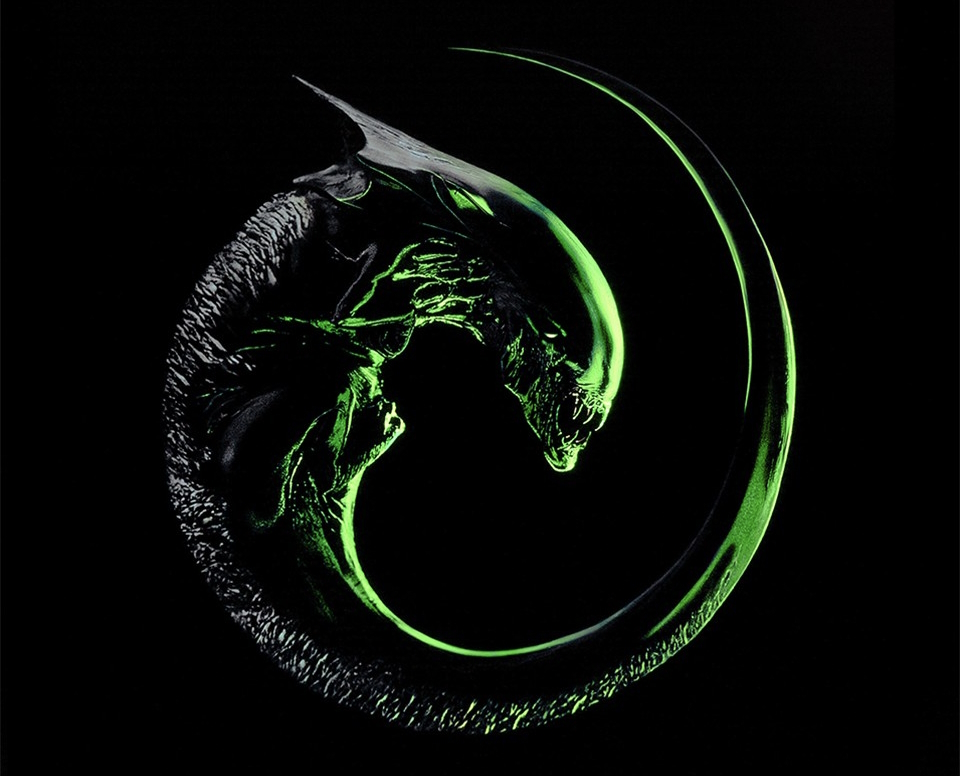
Alien 3: The Assembly Cut is a very different movie

For years I’ve heard about the so-called Assembly Cut of Alien 3, but didn’t expect much from it. I wouldn’t say I hated Alien 3 (although I would say that of Alien Resurrection), I just think Aliens’ version of Ripley is possibly my favorite movie character in history. I don’t know why I find her so endearing, I just do. I get chills whenever I merely think about her saying, “Get away from her, you bitch!” But in Alien 3 she just seems… off.

Those who claim Alien 3 was only disappointing because its critics were expecting more Aliens are mistaken. A lot of us loved the first sequel because it was so different from the original, not just because it was an action picture. Right out of the gate, Alien 3 makes the mistake of treading the same water as the original. It’s also important to remember Alien clones were a dime a dozen those days; the whole “we’re trapped in a spaceship/military complex/prison with an alien” thing was already severely played out by ’92. It was understandable audiences expected something different from a series which had yet to repeat itself.

Thankfully, the first forty minutes of The Assembly Cut feel like a completely different animal than the theatrical cut. In this edit, Ripley washes up on a beach after her escape pod crash lands on the penal colony known as Fury 161. Charles Dance’s character, whose best scenes are restored in this version, is out for a stroll on the beach when he discovers Ripley’s unconscious body. Many will oppose the idea that Ripley hops in bed with the first guy she sees, but I’ll be damned if it isn’t completely believable. It’s not, “We want you to believe these characters are suddenly in love,” but more like, “Sometimes, lonely adults have sex.”

Although there were so many lame alien clones at the time, The Assembly Cut makes it clear Fincher could have made the first truly skilled knock-off. Unfortunately, the special effects suck as bad as they did in ’92 and Ripley’s reaction to learning of Newt’s death still underwhelms. I was hoping the heavy-handed crucifixion imagery at the end of the movie was gone, and although that shot is improved in a way, it’s still stupid and pretentious. Other than that, The Assembly Cut is a decent end to the trilogy.

There are various other improvements I won’t spoil. I’ll just point out the alien’s entrance is much spookier than the one we initially got.

The Nice Guys (2016)

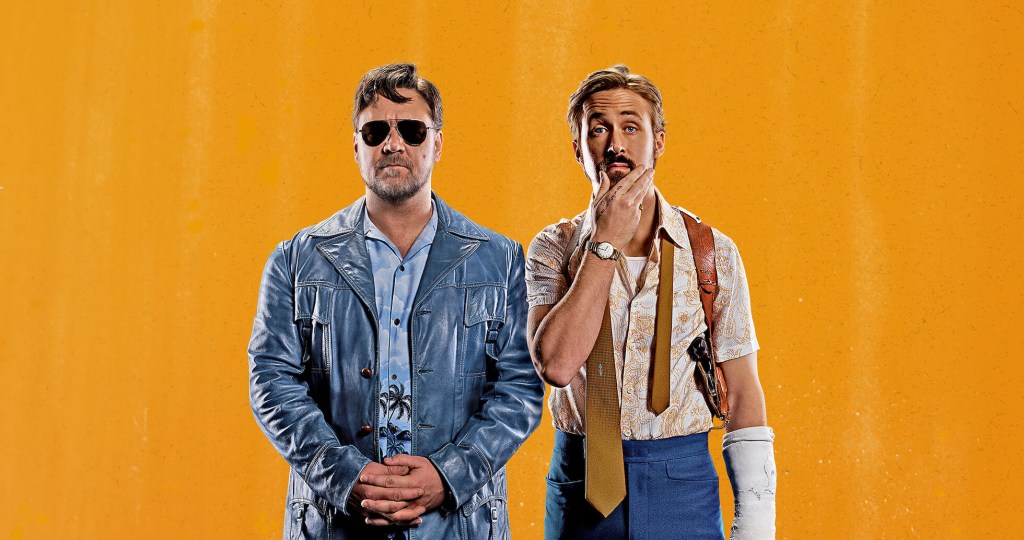
Look, kids. This is what summer blockbusters used to look like. I like Captain America movies as much as the next guy, but this is the film I was most hyped to see this year. If you’re wondering how Shane Black’s latest buddy action film stacks up to his previous underrated classic, Kiss Kiss, Bang Bang, I’ll save you the suspense: it’s probably even better.

The Nice Guys was supposed to open later this year, but Warner Bros. moved it forward to give its original date to Central Intelligence, which appears to be another soulless comedy for Dwayne Johnson and Kevin Hart. Now The Nice Guys is opening against Neighbors 2 and The Angry Birds Movie, further proof that studio executives have no fucking clue what they’re doing. In promos, you can tell producer Joel Silver and the cast of the film are understandably bitter about the idiotic scheduling.

Ryan Gosling plays Holland March, a shitty private detective who has rare bouts of intuition. Like Saul Goodman, his client list consists of confused elderly people. Russell Crowe plays Jackson Healy, a guy who beats people up for money and he’s just been hired to kick Holland’s ass. Soon they’ll discover they have overlapping cases, at which point they team up and scour 1970s Los Angeles for leads. Holland’s impressionable young daughter, who’s at least a little smarter than her dad, tags along for the ride. She’s not incidental to the plot, either.

My favorite supporting characters are Keith David and Beau Knapp’s henchmen. These nuts would have stolen the show if not for the perfectly cast leads. David is just one of those guys I love seeing in movies and his presence here makes it all the more legitimate as a throwback film. Knapp, who I’m not entirely familiar with, plays a presumably coked-up idiot who has a hilariously evil laugh.

Gosling and Crowe make a brilliant team. I really miss the mid-budget action-comedy. This is exactly what going to the movie theater was like when I was kid.

The VVitch (2016)

I love movies about witches, whether there’s an actual witch or it’s just hysteria. The latter is typically more terrifying than the former, but The VVitch gives us the best of both worlds. Patient and irresistibly atmospheric, it layers on the horrors experienced by a Christian family who have been outcast from their New England community.

Katherine, (Kate Dickie from Game of Thrones), is the mother of five children who spends the entirety of the movie grieving. Dickie’s acting is subtle for the most part and believably grand when necessary. William (Ralph Ineson, also from Game of Thrones) is the father of the family; he’s responsible for the sin which got his family exiled to the wilderness in the first place. The film wisely keeps his criminal indiscretion vague so we won’t pass judgment on him too early. Whereas his wife sobs herself to sleep, William stoically chops wood to cope with their hardships.

Their children include a newborn baby, creepy twins who spend their days playing with a goat, and Thomasin (Anya Taylor-Joy) who doesn’t seem to be aware her younger brother Caleb is developing feelings for her now that she’s becoming a woman. Because their father is a lousy hunter, Caleb and Thomasin secretly decide to hunt on their own despite the trouble they’ll get into when they return. It’s then that they stumble upon the witch’s hut in the woods. At this point, I wouldn’t dream of telling you what happens next.

The best thing about The VVitch, which already has plenty to like, is its unpredictability. I suspect first time director Robert Eggers felt himself veering dangerously off course while writing the script, but instead of correcting himself, he said “eh, let’s see where this goes” and barreled right off the intended path. I can’t imagine we’ll see a better horror film this year.

Midnight Movie: Chuck Norris vs. Communism (2015)

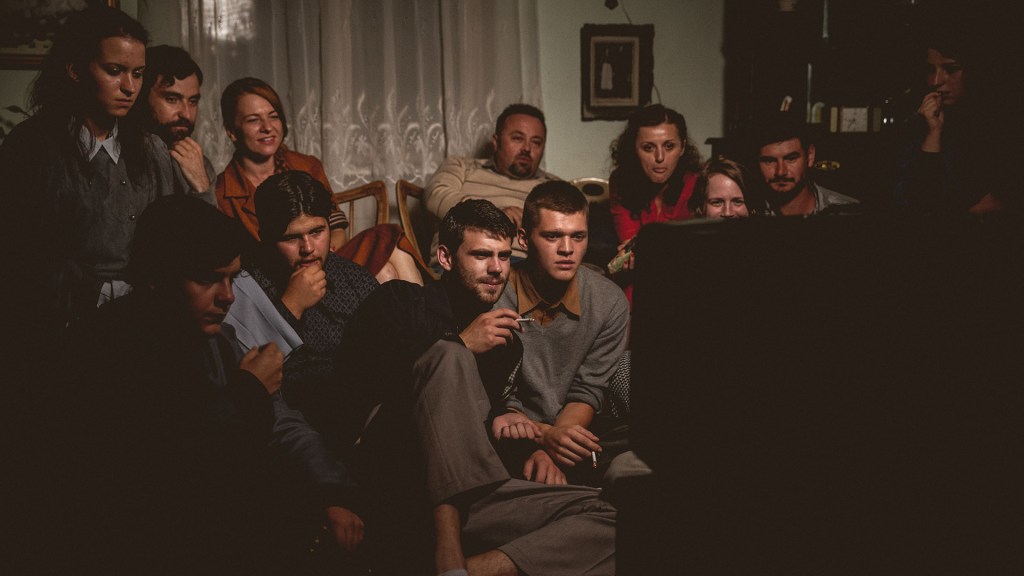
Following in the wake of American Grindhouse, Corman’s World, Machete Maidens Unleased!, and the highly watchable Electric Boogaloo: The Wild, Untold Story of Cannon Films, Chuck Norris vs. Communism represents yet another slice of history dealing with the cultural significance of B-movies. This time the focus is Irina Nistor, a translator who dubbed three thousand bootleg videotapes in spite of her country’s oppressive regime. According to one of the film’s subjects: “For regular people, video nights were the one thing that helped us survive.” Another bit of insight: “The films changed what you thought, what you were looking for, what you were interested in. You developed through films.”

Set toward the tail end of the Cold War, Nicolae Ceaușescu is the General Secretary of the Communist Party and shit generally sucks for common folk in Romania. Censorship is so extreme, Ceaușescu’s lackeys are going over every second of television programming with a magnifying glass. They delete anything which might even begin to suggest that life might be better elsewhere. 

Although VCRs can cost as much as a car there, people are buying them and showing western films to their friends and family despite frequent raids by the secret police. After the movies, the children go outside to make believe they’re Jean-Claude Van Damme, Sylvester Stallone, and Chuck Norris. Meanwhile, the adults draw comparisons between the movie’s injustices and their own. One interviewee points out that they couldn’t talk about these movies on the bus the next day. There was no telling who might be listening. No telling who’d turn them in.

The well-shot reenactments, which make effective use of brutalist architecture, are part political thriller and part espionage (think: The Secret Lives of Others). These taut scenes are sandwiched in between interviews about how films change people for the better. This is one of the leanest documentaries about film I’ve ever seen. If you love movies of any type, you’ll probably love this one. Cinema obviously wasn’t the only force pressing for revolution, but it was an integral one.

Millennium (1989)

Without giving too much away, Millennium is a time travel movie. The year (in one timeline) is 1989. A midair collision causes a jumbo jet to plunge rapidly toward earth. When the flight engineer checks the situation in the back, he discovers the passengers are already dead. Seconds before impact, the black box records the man’s final words: “They’re all burned up!”

The black box is one of several juicy mysteries for the investigators, led by Bill Smith (Kris Kristofferson). Another mystery: all the digital watches which survived the crash are now ticking backwards. I wanted the movie to explain why and how the watches tick backwards, but it never does. When it does explain things, it explains too much, often at the expense of the story. For example, there is absolutely no reason seasoned time travelers should need ideas like paradoxes and nonlinear timelines explained to them in excruciating detail. You’d think that stuff would be taught on the first day of Time Travel 101.

The film imagines a future phenomenon called “timequakes.” Unlike Vonnegut’s terrifying interpretation of the term, the timequakes in Millennium occur in the story’s present (a thousand years from now) whenever one of the time travelers change something in the past (1989). It’s disappointing that the phenomenon has less to do with temporal dimensional stuff and more to do with boring ol’ earthquakes, but after the time travelers experience one, they’re relieved that, “We haven’t changed much.” Which, like much of the movie, doesn’t make a lick of sense. If their actions in the past changed their present selves, how the hell would they know? Look, I’m not knocking a time travel movie for having plot holes. I’m knocking it because better time travel movies know how to skate by the problems all time travel movies have. Millennium is a lot like a magician who hasn’t mastered the art of misdirection yet.

What I like about the movie is the way it plays with perspective. In Back to the Future 2, Marty returns to events depicted in the first movie, but we see them from entirely different viewpoints. In Millennium, and maybe this is due to budget limitations and/or laziness, the movie wraps around to expand on earlier scenes, sometimes using the exact same shots as before. Sometimes it’s boring, sometimes it’s mildly interesting how nothing more than additional context could change a scene’s tone. Investigator Bill Smith is the focus for the first half of the movie and then… someone else becomes the main character.

Meanwhile the chemistry between Kristofferson and Cheryl Ladd tries too hard to be “future Casablanca.” Anyone who’s ever worked as a real life airline pilot or a safety inspector will scream at the screen frequently. My biggest complaint is the movie would have been a lot more interesting had it explored what happens after its final shot. That climax, by the way, is full of unintentional laughs, but the film is more or less believable as a whole. It’s just one of those movies that’s too odd for me to dislike. For instance, the all-seeing council is a direct descendant of Flash Gordon and Zardoz while the future sets, though utterly unconvincing, have a cyberpunk flair about them.

Here’s what John Varley has to say about the production, according to Wikipedia:

“We had the first meeting on Millennium in 1979. I ended up writing it six times. There were four different directors, and each time a new director came in I went over the whole thing with him and rewrote it. Each new director had his own ideas, and sometimes you’d gain something from that, but each time something’s always lost in the process, so that by the time it went in front of the cameras, a lot of the vision was lost.”

Millennium isn’t great, but it’s a helluva lot better than its 11% on Rotten Tomatoes.

Midnight Movie: Southbound (2016)

A couple of men, covered in blood, are driving down an old desert highway. The passenger glances out the window and spots something sinister hovering in the distance. When the driver asks him what’s wrong, the man brushes away his friend’s concern. Whatever’s after these two guys isn’t natural, but they’ve been dealing with it long enough that they’ve grown used to its presence.

Following the conclusion of that scene, the movie shifts focus to a group of travelers. And over the course of the next hour or so, we’ll be drifting from one character’s point of view to another, on or near the same desolate highway. Although these are some of the same people who brought us the V/H/S series, to call Southbound an anthology film is misleading. I prefer to call it “protagonistically challenged.”

What a time to be alive. After a decade or so of mostly terrible horror, 2015 has been the best year for the genre since the eighties. We Are Still Here paid homage to Fulci, It Follows to Carpenter, Deathgasm to Raimi and Jackson, and now Southbound seems to be influenced by everyone from Lovecraft to Craven. The kids raised on Video Nasties are the ones making movies now. Thanks to them, the genre is successfully making up for the 2000s, when all the films either looked too shitty or too slick.

A lot of horror movies don’t make a lot of sense because they don’t have to. There are times Southbound feels like it doesn’t make sense, but it’s not to the film’s detriment. You get the feeling early on that its madness is intentional, while the jarring nature of its sudden focus-shifts gives it the qualities of a nightmare. Just short of ninety minutes, the film’s brevity also feels dreamlike. Most horror films drag on a little too long while this one gets in, gets out, and leaves you wanting more.

If you’re wondering if it’s better than V/H/S, it is. This time the tone remains uniform throughout. It doesn’t feel like a bunch of short stories with only superficial connections. This is a bonafide movie and a damn good one at that.

Dude Bro Party Massacre III is the new standard for YouTube-to-feature success

Following Robert Rodriguez’s Planet Terror there was a rash of low budget movies which had been digitally aged to look like overplayed film prints. Efforts like Hobo with a Shotgun and Father’s Day succeeded—kind of—but the charm of authentic older movies was rarely present. Worse, the effort to disguise digital cameras in film grain and scratches was almost always more distracting than convincing. Dude Bro Party Massacre 3, which sounds like it’s going to skewer its inspirations more than it ultimately does, is cut from the same cloth. Instead of settling for the rarely passable “film-look,” it layers a VHS “modified to fit your television set” visual style on top of its fake film artifacts. The heavy-handed effect is convincing enough that you’ll wonder if they ran the final cut through a dual-VCR a dozen times.

The movie opens with a fictional note: the film was banned in several countries including the United States. The filmmakers ask us to believe the copy we’re watching was taped from its only broadcast on public access television. This deceit allows the filmmakers, members of the Five Second Films comedy troupe, to squeeze in short films during the hastily edited commercial breaks under the guise of retro TV ads. Although the snippets are only five seconds a piece, they’re some of the funniest gags in the movie, provided you remember what late night commercials looked like back then (think: the advertisements which aired during USA’s Up All Night).

Dude Bro Party Massacre 3 uses its opening sequence to establish the story so far. We learn that in the first film, a woman “who never learned how to open doors” was trapped in a sorority house which was set ablaze during a college prank gone wrong. Horribly disfigured, she exacted revenge on her victims one by one, only to predictably meet her demise by the end of the picture. In the sequel, her daughter took up the mantle and continued the killing spree until she, too, was dispatched as these movies require. The third film, which genuinely feels like the third in an actual movie series, opens with the sole survivor from the last picture getting himself killed five minutes in. Now there’s a new killer and she’s going to pick off the latest group of expendable frat boys who decide to party at a cabin in the woods.

Having recently reviewed Space Cop, I was skeptical about 5 Second Films’ ability to produce a feature-length title. Many of Red Letter Media’s problems with the format seemed to be a matter of length even though they’re known for some of the longest popular videos on YouTube. So how could a comedy troupe known for five-second sketches make the jump to feature-length? Pretty well, it turns out.

The gore gags, although transparently and purposely cheap, are every bit as creative and distasteful as the stuff in Lloyd Kaufman’s Poultrygeist. The background music sounds as if it may be fan-submitted, garage-quality tracks. Because it’s only ninety minutes long, it doesn’t overstay its welcome. Yes, Dude Bro Party Massacre III is a pretty good movie even though I’m still not entirely on board with young filmmakers making fun of slasher films as an excuse to make one themselves.

I’ve been disappointed that the only standard I really had to compare these fan-funded projects to was the Angry Video Game Nerd movie, not only because it wasn’t very good. Well, here’s the new standard as far as I’m concerned. These regular joes made a movie and so can you… provided you have a humongous subscriber base on YouTube to help fill out a $200,000 Kickstarter campaign. Nonetheless, the end result is a gross-out spectacle that didn’t need studio approval to get made. Very fun stuff.

(Cameos include Larry King, veteran pornstar Nina Hartley, Andrew W.K., Patton Oswalt and a few familiar faces from YouTube.)

Space Cop is a terrible movie so… success?

Do you know how family videos are only funny to people in the family? That’s probably what Red Letter Media’s Space Cop is like. If you’re a fan of these guys, you’ll probably enjoy their movie. When the promotional material suggests it would someday be a contender for RLM’s own Best of the Worst series, they weren’t kidding. It’s a bad movie, but that’s their expertise, isn’t it? Expecting them to make anything else is like asking Mike Tyson to figure skate.

I’m no stranger to crowdfunded films so I knew what I was getting into… in other words, I wasn’t expecting much. Space Cop is A) better than I thought it would be and B) a lot more entertaining than the Angry Video Game Nerd movie, even if that one had a lot more production value (and still looked like shit). Space Cop starts off promising enough and feels like an authentic movie for the first few minutes despite soap opera lighting. Then it quickly descends into the non sequitur jokes and politically incorrect humor which work, if I’m being kind, roughly half of the time.

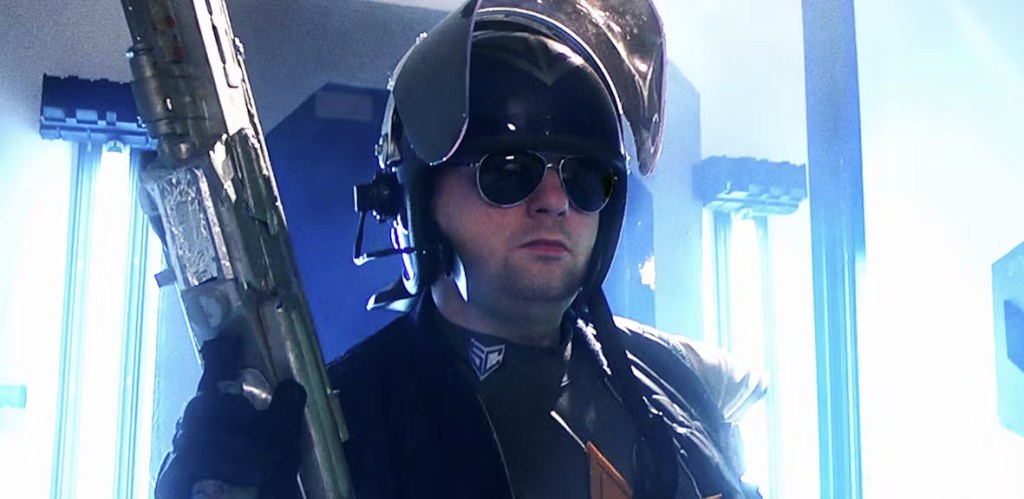
As for the plot, a gung-ho policeman from the future (Rich Evans) is accidentally transported to 2007 after he chases aliens into some kind of time-space vortex. During a modern day shootout in a cryogenics lab, the future cop accidentally thaws a cop from the past (Mike Stoklasa). They’ll have to team up to save the world from a devious plot involving aliens and a brain in a jar… or something. I don’t know and it doesn’t really matter.

The two main characters are only about as good as a memorable Saturday Night Live sketch, stretched to feature length. The actors’ decision to speak in “funny” voices from beginning to end is, at best, easy to look past, while at worst I can see it grating on the uninitiated. When Patton Oswalt makes a cameo, it’s pretty clear the boys were reluctant to trim their only star’s footage because it goes on and on. The length then becomes part of the joke.

My biggest issue with the movie is a complaint RLM have voiced themselves: the best bad movies are the ones that aren’t intentionally bad. Movies that set out to be bad just can’t capture the charm of bad movies trying to be good. Space Cop isn’t a good bad movie, but it’s a decent bad movie, at least when the jokes hit their target. If you’re a veteran of bad movies, and you like RLM—really like them—then you probably want to support them in this venture.