Phantasm III: Lord of the Dead (1994) [31 Days of Gore]

Once again, the opening picks up exactly where the previous film left off, concluding the cliffhanger which had Mike and Liz trapped in a runaway hearse. Reggie, who was clearly dying the last time we saw him, reveals it was little more than a scratch. Sure, whatever. The other two characters don’t get off so easy as the Tall Man decapitates Liz and kidnaps Mike. It’s a little strange that Mike doesn’t mourn Liz’s death at all, but at least the movie hits the ground running, eschewing all the routine emotional stuff that movies like this suck at anyway.

What the movie doesn’t eschew, unfortunately, are some disappointingly routine horror tropes. While searching for Mike in a ghost town, Reggie is taken hostage by three expendable characters who’re scavenging abandoned storefronts and cars. It all feels like a pointless detour until we’re finally introduced to Tim, a kid who’s been playing Home Alone ever since the Tall Man killed everyone else in his town.

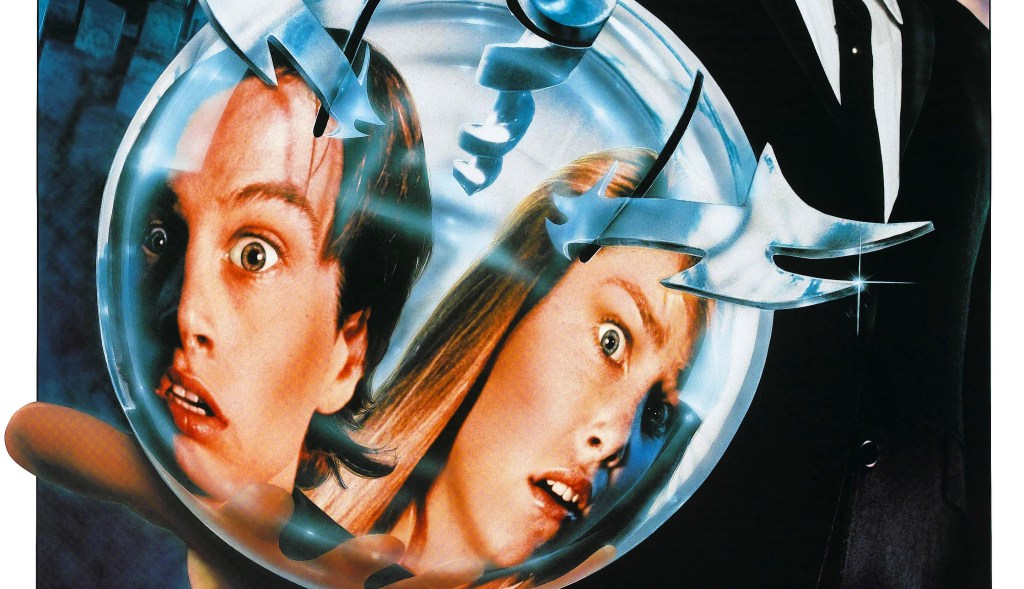
Tim is supposed to remind us of Mike in the first film, I guess, but he doesn’t because he’s a ruthless killer. At one point he slices a bad guy’s throat with a razor-lined Frisbee, which is suspiciously similar to a death scene in Hard Ticket to Hawaii. Later, the duo will end up in yet another ghost town where they’ll pick up a nunchaku-packing wanderer by the name of Rocky. I appreciate the exploitation value Tim and Rocky bring to the series, but their one-liners are generic and their motivation is murky.

The best part of Phantasm III is returning director Don Coscarelli manages to preserve the mystery surrounding the Tall Man while simultaneously expanding the mythos. We learn a little more about the spheres’ origin and what’s inside them. We see the Tall Man sitting in a throne, surrounded by candles in a mausoleum, which squares nicely with the series’ fantasy aspirations as it makes him look like the evil wizard of a fairy tale.

What I could have used a little less of was the cheese of bringing Jody back as a spirit guide. Now that the actor who originally played Mike is back, what we get is a sappy reunion picture. At any rate, it shows Coscarelli was probably thinking more about his fans than the mainstream audience he seemed to be gunning for in the previous film. I can’t fault him for that, but I still liked the last two movies a little more than this one, even if the special effects here are better for the most part. As far as second sequels go, Phantasm III is among the best.

This time around, Reggie peaks as the lovable buffoon. There’s a bit more humor and, while it doesn’t detract from the horror, it clashes terribly with the cheesy mentioned above. I’ll say this about Reggie: for a middle-aged ice cream man who’s on his third house and his second Barracuda, he must have some amazing insurance. Once again, he doesn’t waste any time throwing himself into the dating world after the death of a loved one.

So what does the Tall Man want from Mike, anyway? Three films in and I haven’t figured it out yet. Maybe they’ll finally explain it in Phantasm IV: Oblivion, which I’ll feature tonight at midnight, Central Time.
Phantasm II (1988) [31 Days of Gore]

Reggie Bannister is kind of the Robert Duvall of horror. In the first Phantasm, his character (also named Reggie) was relegated to the role of the goofy sidekick. This time he’s practically the star, getting even more screen time than the main character. You’ll see Reggie’s name oft mentioned on horror forums too. There’s just something about his unassuming persona that clicks.

Yesterday I said Phantasm II was my favorite in the series, though most of the heavy lifting was done in the previous film, which had enough world-building to spare for a sequel. But Phantasm II has the distinctly 80s horror look which really takes me back. This is the first time I’ve seen it on anything other than VHS. The film looks stunning.

The sequel picks up exactly where the previous one left off, concocting an unlikely conclusion to the cliffhanger, which has Reggie blowing up his own house to save Mike’s life. The film skips forward several years to show Mike (played by James Le Gros now) is all grown up. Reggie picks him up from the mental institution, but on his way home his house explodes (again), thereby motivating Reggie to help Mike murder the Tall Man.

So Mike’s been having visions about the Tall Man for years. Somehow, he’s been psychically linked to a blonde by the name of Liz (Paula Irvine) who shares his visions. I’m not sure how this happened, but the pair fell in love long before ever meeting. Reggie, fresh from the funeral of his wife and kids, also finds love in the form of a banging brunette they meet on the side of the road. I love Reggie to death, but this woman is way out of his league—not to mention his age bracket, so it’s disappointing none of the leads are even suspicious of her.

Once the climax begins, it’s a fine spectacle. The movie is much better paced than the original and it doesn’t blow its wad until it’s good and ready. Phantasm II makes a little more sense than its predecessor, too, and looks better to boot, but perhaps it’s not quite the milestone I remembered it being. Neither is it a pointless sequel. The first one was packed to the brim with ideas and this one feathers out the edges.

Phantasm (1979) [31 Days of Gore]

I’ll be featuring a Phantasm movie each day leading up to my review of Phantasm RaVager.

Mike and Jody, 13 and 24 respectively, are a couple of boys just trying to get by after the death of their parents. Following the funeral of a mutual friend, which only compounds their grief, Mike witnesses the freakishly tall caretaker (Angus Scrimm) lift the casket with one arm and effortlessly toss it into the back of his hearse with inhuman strength. To explain what the Tall Man is up to would ruin the best part of the mythology, but I will say it’s ambitious for a $300,000 movie.

Mike visits the local fortune teller who not only makes him do the Gom Jabbar test from Dune, she actually says, “Fear is the killer.” (Later, a scene is set in a bar called Dune’s, suggesting the references to Frank Herbert’s novel are more homage than rip-off.) The fortune teller can make things magically appear out of thin air, but Mike is curiously unaffected by this. The prediction the fortune teller makes isn’t just wrong, it feels like a setup for a payoff the filmmakers abandoned by the time they got around to making the end of the movie.

There’s a lot of improvisational filmmaking, which somehow adds to the charm more than it detracts, even as the logic steadily drains out of the story. Reggie Bannister’s character, Reggie, is killed once off screen and once again on screen, but both times he comes merrily strolling back into the picture (fake-killing him in the sequels becomes a bit of a tradition). The first time he cheats death, he tells the main characters he totally rescued some characters off screen, but they’re safe now so don’t worry about them anymore; in reality, the actors were probably no longer available and director Don Coscarelli needed a throwaway line to explain their sudden absence.

Despite the constant attempts at jump-scares, Phantasm is likely too tame and pleasantly paced for many viewers, but it’s rarely boring. Angus Scrimm’s performance, though brief, is right on the edge of over-acting, which is actually perfect for a movie like this. The minimalist yet skillful cinematography evokes Kubrickian framing, which compliments the simplistic score. I’ve always admired Phantasm, but I think I like it a little more with age. It’s much better than it has any right to be.

Phantasm 2 was my favorite of the series. We’ll see how it holds up tomorrow.

The Mist (2007) [31 Days of Gore]

The Mist is about a group of shoppers who get trapped inside a supermarket when a strange mist settles on the town. A local zealot interprets the event as the end times and quickly rallies a group of brain-dead followers to do her misguided deeds of faith, which will eventually turn sacrificial in nature. The film’s hero, played by the always likable Thomas Jane, just wants to keep the dangerously frightened shoppers placated until he finds a way to get his son home.

This is all material that I should and typically do like. Monsters? Check. Religious folk acting like fools? Love it. But when you have Stephen King and Frank Darabont providing the brains behind your movie, the result should be a little better than this. Case in point: a group of expendable characters are determined to get themselves killed by the monsters lurking around the warehouse in the back. Granted, the characters don’t know the mist has monsters in it (yet), but they also don’t know the mist isn’t harmful to humans. When Jane asks them why they’re being so dense, the small group (led by genre veteran William Sadler) makes all kinds of flimsy excuses for acting like idiots.

MINOR SPOILERS BELOW

As for the famous ending… it was certainly a shocker, but I’m wondering whether or not the movie earned it. I’ve complained about happy endings in horror movies for years—if the survivors are smiling by the time the credits roll (see: The Visit), you’ve probably done a lousy job of putting them through hell. To be sure, my favorite final shot is probably The Texas Chainsaw Massacre, in which the blood-drenched heroine is screaming crazily in the back of a truck. It’s clear she’ll never be right again and the film’s made more powerful because of it.

The Mist certainly doesn’t take the easy way out, but somehow it felt like an afterthought to me. King has stated he preferred Darabont’s ending, but it seemed like an oddly cruel thing to do to the smarter characters. I’ll never forget it, sure, but wouldn’t it have been more meaningful if there was a reason behind it, other than, “Ha, bet you never saw this coming!”? On the other hand, I’m willing to admit I might be missing the meaning altogether: that Jane’s character ultimately succumbed to the same fear that had the dumber characters acting like morons.

Look, considering how many people seem to love the film, I’m well aware I’m being harder on The Mist than most movies… but considering its pedigree, shouldn’t I be? This is my second viewing and I just can’t understand why it doesn’t appeal to me like it did for most. Just one of those things, I suppose, and I have the sneaking suspicion I’ll give it a third shot sometime in the future.

Out of the Dark (1995) [31 Days of Gore]

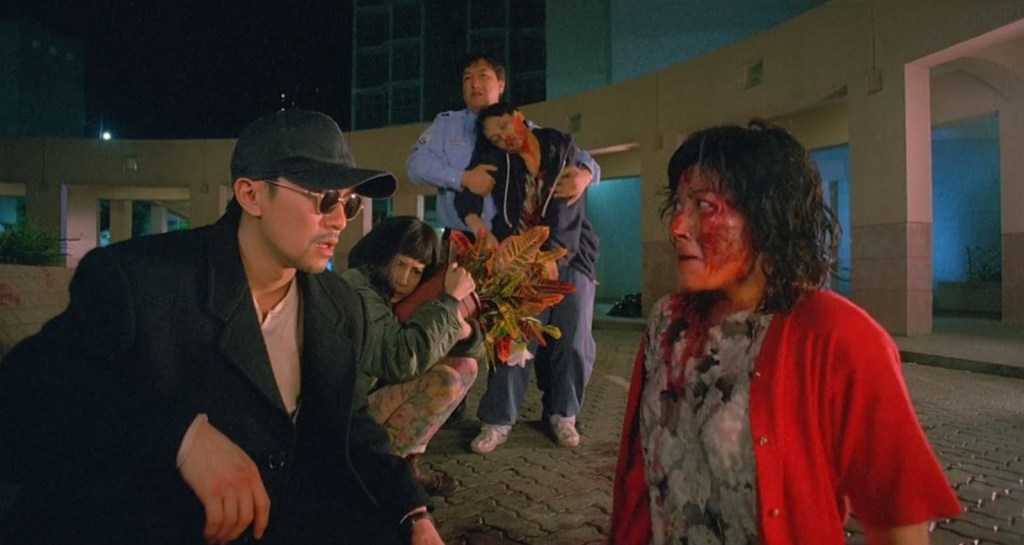
The goofy security staff (think: Police Academy) at a haunted high-rise are terrorized by strange happenings. The only man who can help is an eccentric ghost hunter (Stephen Chow) who lives in a mental institution by day and breaks out to fight evil every night. If you’re looking for character development, motivation, or anything else that would only get in the way of high-octane entertainment, you’ve come to the wrong place. What you’ll get here is dark humor and slapstick violence, served with a generous helping of insanity.

Out of the Dark is all about style over substance. Its furious editing and camerawork homages everyone from Martin Scorsese to John Woo. It’s apparent, too, that the filmmakers had just seen Pulp Fiction and The Professional. I started the movie an hour after I should have been in bed and found myself unable to turn it off. It’s the kind of movie that hooks you so immediately that attempting to hold it at arm’s length will only exhaust you. Just relax and let it happen to you.

Early on, one of the security officers scoops a dying man up into his arms with the intention of racing him to the hospital. But when a slasher shows up the officer instinctively uses the victim’s body as a shield against the repeated knife attacks. Keep in mind, this is all shot like a Three Stooges bit and it’s no less funny. Later, when the hero of the film bursts onto the scene to save the day, he accidentally shoots the victim.

I’ve always been a fan of Stephen Chow, often loving parts of his films, but rarely embracing them as a whole. Here’s one I endorse wholeheartedly… as long as you like politically incorrect horror-comedies with the physics of a Chuck Jones cartoon. (At one point, a refrigerator falls on a man’s head; he survives with little more than a headache.) It’s a wonderfully unpredictable film.

HP Lovecraft’s Necronomicon: Book of the Dead (1994) [31 Days of Gore]

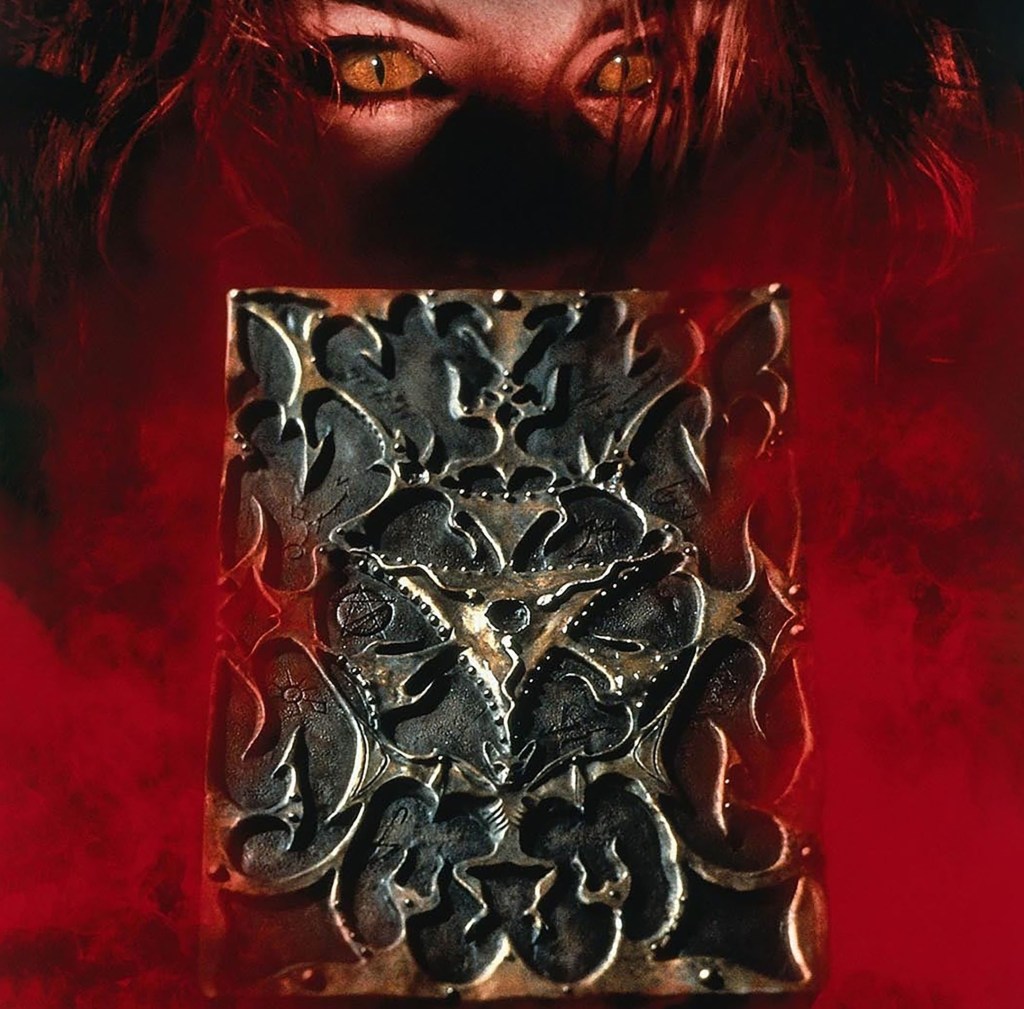
H.P. Lovecraft (Jeffrey Combs in heavy makeup) sneaks into a crypt beneath a library, Indiana Jones style. There he finds The Necronomicon, the book of the dead. The design of the grimoire is intricate, ancient-looking, and creepy—just as it should be. The other props and special effects are a cut above most horror films, too; there’s a lot of miniatures, reverse photography, and even some shots filmed upside down so that blood and goo appear to rise from the floor magically. This story is the container for the other short films in the anthology, which are directed by Christophe Gans, Shusuke Kaneko, and Brian Yuzna.

I’m an absolute sucker for movies like this. I love dangerous books and the characters who’re obsessed with them. As much as I should dislike this movie—and it gives me plenty of reasons—this is at least my third viewing since its limited release in 1993. It isn’t a great movie, but it’s highly watchable… two-thirds of it, anyway.

The first tale is The Drowned. This is the best story in the movie. Bruce Payne plays a grieving widower who has just inherited a cliffside hotel. He discovers his benefactor uncle (Richard Lynch) left a suicide note, which recounts how he acquired the Necronomicon from a mysterious fish-man and used it to resurrect his dead family with tendril-laden results. Payne resurrects his own dead wife, failing to heed his uncle’s warnings. Despite a stupidly rushed ending, The Drowned manages to create one of the most Lovecraftian moods ever put on film. 

Let me suggest fast-forwarding through The Cold, the uninspired second tale of the movie. David Warner is so understandably bored, you can almost hear him wondering how his costars got into movies at all. This is low-effort filmmaking at its worst. The less said about it the better. 

The third tale, Whispers, is alternatively boring and insane. You would expect Brian Yuzna to produce the best story of the bunch, and while he certainly supplies the most notable creature effects, the main character is a monotonously loud policewoman who—get this—has a melodramatic discussion about motherhood in the middle of a car chase. She pursues her suspect into a cavernous lair beneath an abandoned warehouse. There she encounters creatures who crave bone marrow, which sounds metal as fuck, but the action is needlessly interrupted by a pointless dream scene. The segment’s message is about as hammy as the church propaganda in a hell house.

Overall, Necronomicon’s biggest sin is its inattention to detail. Lovecraft is supposedly reading these stories sometime in the 1920s, yet each of the short films are set in contemporary times. Sometimes you think the costumes are reflecting olden times, then suddenly you see a modern car drive by in the background. I’m sure there’s a magical explanation for this, but it’s still wonky and distracting. Nonetheless, this is one of those movies I love even though my brain tells me “no.”

31

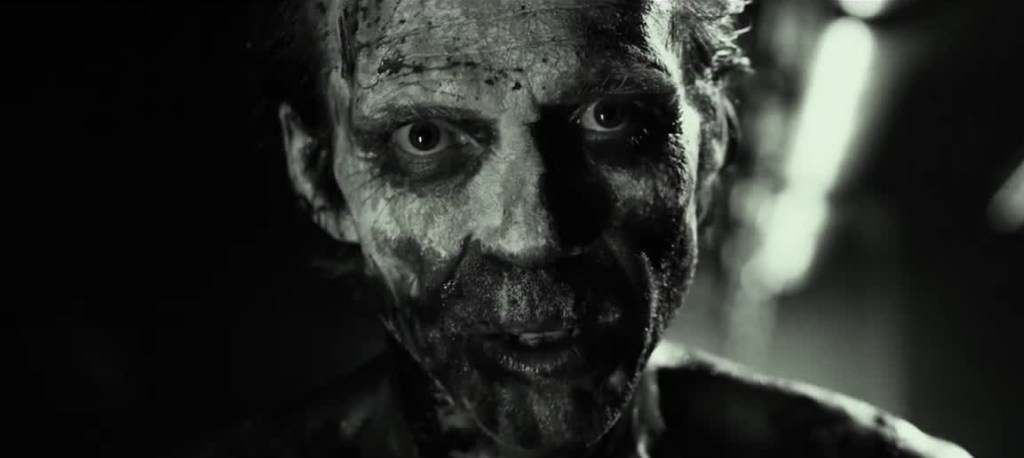
31 is like a horror version of The Running Man, masterminded by Malcom McDowell and Judy Geeson. A group of hypersexual carnies, including Sheri Moon Zombie and a remarkably fit Meg Foster (two years shy of 70, by the way), are taken hostage and forced to play the twisted game. Remember the video game Manhunt? It’s like that. Director Rob Zombie concocts one great villain after another, but unlike more memorable Most Dangerous Game movies, has absolutely nothing to say. (I’d be fine with that if it were at least entertaining.)

The most frustrating thing about Zombie is he’s almost there. He’s uncompromising, unapologetic, doesn’t pull punches, and makes old fashioned horror without a lick of unnecessary CGI. Best of all, he populates his films with veteran B-movie performers who may otherwise be pushing autographs for a hundred bucks a pop at horror conventions. Unfortunately, his characters are too dumb to fulfill the all-important role of becoming a surrogate for the viewer. You need characters you can relate to so you can wonder: “What would I do in this situation?”

If Zombie put one-tenth of the effort into his good guys as he puts into villains like Doomhead (Richard Brake, who’s legitimately fantastic), we’d have a great film. This is why The Devil’s Rejects is still his most watchable project to date: everybody in that movie is a villain, which is what Zombie excels at. If he’d put Doomhead in the lead and made him go against even badder guys, I would’ve been thrilled.

Unfortunately, that’s a different film and this one looks as if it were edited with a cross-cut paper shredder. Editing is supposed to establish things like geography, a sense of time, flow, and most of all coherency. 31 accomplishes little of that. At one point, the group is split up by a trap door, but for most of the scene I thought they were all on the same side. In another scene, the characters watch one of their own die and somehow discover his body in the very next room.

I’m always pulling for Zombie to make a great movie because I think he’s got it in him. He keeps proving me wrong. The joke’s on me, though, because I paid ten bucks to see the damn thing. I haven’t been more disappointed all year.

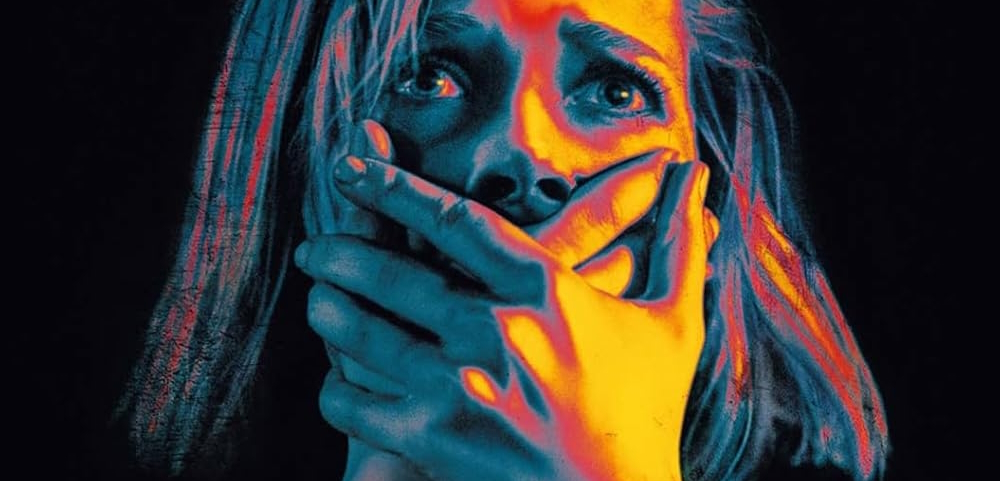
Don’t Breathe (2016)

There’s a scene in Don’t Breathe that people are going to talk about for a long time. It’s a rabbit-in-the-stew kind of moment. Think along the lines of what Kathy Bates did in Misery… or maybe the “hair gel” scene in There’s Something About Mary is a more apt comparison. Either way, I haven’t seen such a memorable WTF moment since Bone Tomahawk. I guarantee the scene is fueling Don’t Breathe’s runaway word-of-mouth.

On the way out the theater doors, I overheard just as many people praising the scene as lambasting it. But at least the audience was electrified. Most of the movies I’ve seen this year evoked little more than a shrug as attendees quietly collected their belongings and shuffled outside to remember where they parked. Don’t Breathe knows the secret to making a story stick: you can try to please everyone, but nobody falls in love with movies that play it safe.

Have you ever seen The People Under the Stairs? Don’t Breathe reminds me of that one. A trio of good-for-nothing burglars break into a house, knowing full well the Gulf War veteran who lives there (Stephen Lang) is blind. They expect the guy to be a pushover, but once he shuts off the electric to his fortified home, they come to realize the odds are in his favor. You’ll probably be rooting for him until you discover… well, let’s not get ahead of ourselves.

Although I wasn’t the biggest fan of Fede Alvarez’s Evil Dead remake, I was interested to see what the guy made next. Now he tries his hand at an original horror movie which doesn’t comprise on scares. Unlike his previous film, this one is quiet—so quiet you can hear a pin drop in the theater. You’ll notice the people around you holding their breath, tensing for the next jump-scare, which are few and far between. It’s just a straightforward (and gross) horror film that works.

My biggest complaint is the Rottweiler in the film. That dog is one of the shittiest actors I’ve seen in years.

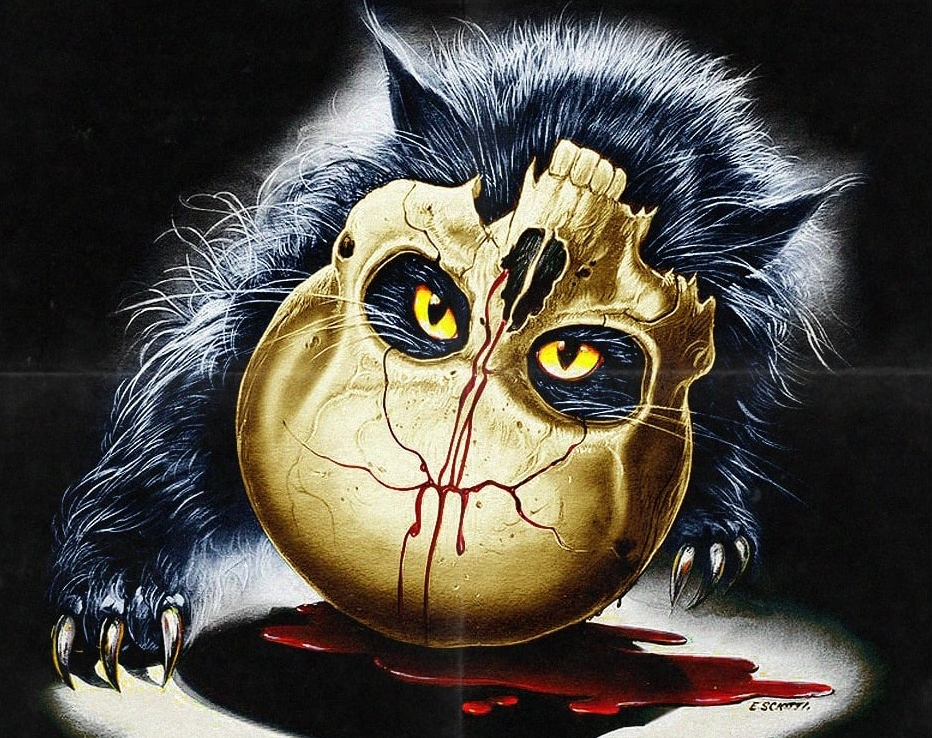
Midnight Movie: A Cat in the Brain (1990)

“A lot of Italian genre directors are animal lovers. Mario Bava loved cats, Riccardo Freda loves horses, and Dario Argento loves himself.” — Lucio Fulci

Fade in: An aerial shot of a man, sitting at his desk, writing frantically. We hear him muttering like a lunatic. His scribbling pen can barely keep up with the ideas boiling out of him: “A throat torn out by a maddened cat… burned alive… buried alive… tortured… scalded…!” Meanwhile, the camera pushes in close to his head and the perspective enters his skull. There’s a cat in there, which munches on his brain like a vulture on roadkill.

Cut to: A cold body lying on a medical table. A section of the rump is missing. The body is then ripped apart by a chainsaw as the camera lingers.

Cut to: A man frying meat in a pan. He sits down in front of a television screen and cuts into his meal with a knife and fork. On the television, an actress seductively informs the viewer, “I love you so much I could eat you.” The man raises his fork and proclaims, “Just what I’m about to do!”

Lucio Fulci’s A Cat in the Brain (aka Nightmare Concerto) is gleeful insanity. This is Fulci’s version of 8 1/2, but instead of casting a movie star surrogate, Fulci casts himself in the lead role. Like many of Fulci’s movies, the camerawork and acting are dreamlike, but this time used to comedic effect. Meta-horror is often lame, especially when there are movies inside the movie (this time it’s stock footage from Fulci’s own films), but this one isn’t. It took me a while to get the joke—all of fifteen minutes. This isn’t Fulci ripping off Fellini; it’s Fulci making fun of Fellini as well as filmmaking in general. Being a horror director must be one of the strangest jobs in the world, which is especially apparent (and hilarious) when Fulci’s fictional shrink reviews some of his actual films.

Here are some of the things you’ll see in A Cat in the Brain: a Nazi using a woman’s vagina as a billiards pocket, a hilariously psychopathic psychiatrist, and a literal cat inside a man’s head. Fulci is one of the unlikeliest likable protagonists.

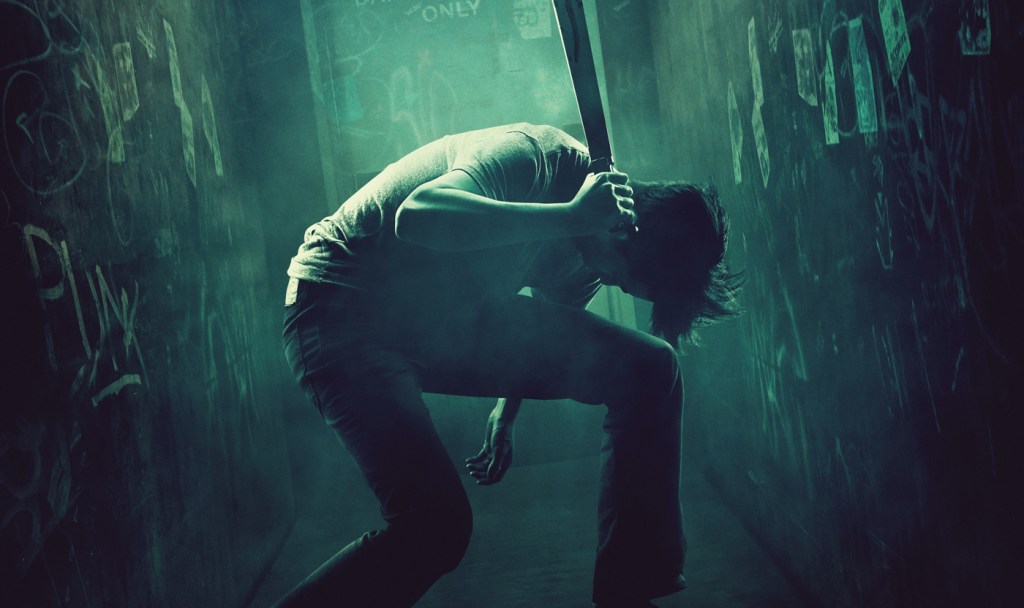
Green Room (2016)

You could argue Green Room is more thriller than horror, but bones are broken, throats are torn out, and faces are mauled. The camera rarely cuts away as the imagery shocks and awes. There’s no supernatural element—not that that’s a requisite for horror—but the skinheads here are effectively monsters because they’re depicted not as cannon fodder, but three-dimensional humans. The things that happen in Green Room are, to put it mildly, horrific. And if I were to make a list of the best movies of the twenty-first century, I’d rank it extremely high.

A wandering punk band is hard up for cash. They reluctantly end up taking a gig at a rundown neo-Nazi joint in the middle of nowhere. In true punk fashion, the band decides to rile up the crowd with a cover of “Nazi Punks Fuck Off.” That goes over about as well as you might expect. Fortunately, the rest of their set is played hard enough to win the skinheads over by the end. After the show, the band heads back to the green room and accidentally discover the venue’s operators are covering up the murder of a young woman.

While the skinheads scramble to come up with a plan, the band is locked in the green room with a psychopath. He subtly mentions his revolver only holds five cartridges, “because they’re so fucking big that’s all that can fit in the cylinder.” Meanwhile, the neo-Nazis outside the room call Darcy Banker, their leader and the owner of the property. Banker is played by Patrick Stewart, whose performance is neither too cold or too hot. He’s not a man who relishes his villainy. His only motivation is to get the witnesses off his property as quickly as possible so he can murder them elsewhere.

The simple plan complicates quickly. Banker, who’s always failing to keep the situation from escalating, comes up with one idea after another to flush the band members out of the green room. He approaches the problem matter-of-factly, as if coordinating the extermination of rodents. To him, it’s just another problem in the life of a businessman, albeit an amoral one. Another interesting choice is the skinheads aren’t caricatures; when Banker loses his cool and humiliates one of his men, he promptly apologizes for his transgression. His henchmen aren’t expendable in his mind, they’re family.

There’s no fantasy violence here. There are no characters who do unbelievably heroic or villainous things. The good guys are gonna take a licking. Some of the bad guys are gonna take a licking, too. We all hate movies in which stupidly written characters do stupid things, but here’s a rare example in which smartly written characters do stupid things. After all, they’re young, immature, and panicking in a realistic way.