Phantasm (1979) [31 Days of Gore]

I’ll be featuring a Phantasm movie each day leading up to my review of Phantasm RaVager.

Mike and Jody, 13 and 24 respectively, are a couple of boys just trying to get by after the death of their parents. Following the funeral of a mutual friend, which only compounds their grief, Mike witnesses the freakishly tall caretaker (Angus Scrimm) lift the casket with one arm and effortlessly toss it into the back of his hearse with inhuman strength. To explain what the Tall Man is up to would ruin the best part of the mythology, but I will say it’s ambitious for a $300,000 movie.

Mike visits the local fortune teller who not only makes him do the Gom Jabbar test from Dune, she actually says, “Fear is the killer.” (Later, a scene is set in a bar called Dune’s, suggesting the references to Frank Herbert’s novel are more homage than rip-off.) The fortune teller can make things magically appear out of thin air, but Mike is curiously unaffected by this. The prediction the fortune teller makes isn’t just wrong, it feels like a setup for a payoff the filmmakers abandoned by the time they got around to making the end of the movie.

There’s a lot of improvisational filmmaking, which somehow adds to the charm more than it detracts, even as the logic steadily drains out of the story. Reggie Bannister’s character, Reggie, is killed once off screen and once again on screen, but both times he comes merrily strolling back into the picture (fake-killing him in the sequels becomes a bit of a tradition). The first time he cheats death, he tells the main characters he totally rescued some characters off screen, but they’re safe now so don’t worry about them anymore; in reality, the actors were probably no longer available and director Don Coscarelli needed a throwaway line to explain their sudden absence.

Despite the constant attempts at jump-scares, Phantasm is likely too tame and pleasantly paced for many viewers, but it’s rarely boring. Angus Scrimm’s performance, though brief, is right on the edge of over-acting, which is actually perfect for a movie like this. The minimalist yet skillful cinematography evokes Kubrickian framing, which compliments the simplistic score. I’ve always admired Phantasm, but I think I like it a little more with age. It’s much better than it has any right to be.

Phantasm 2 was my favorite of the series. We’ll see how it holds up tomorrow.

Doctor Mordrid (1992) [Midnight Movie]

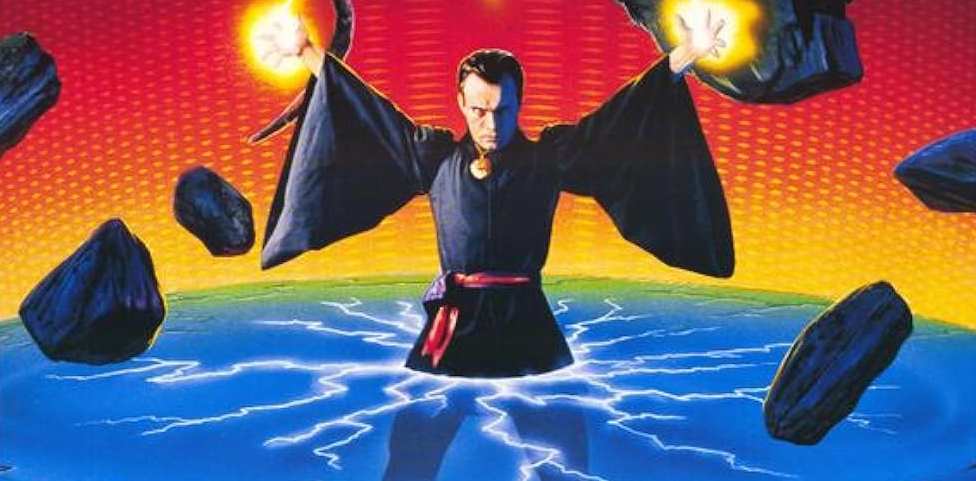
Doctor Mordrid entered production as an official Doctor Strange film until directors Albert and Charles Band let their option expire. That didn’t stop them from making the movie anyway (I wouldn’t expect any less from Full Moon Pictures). The character names have been changed. The filmmakers are legally obliged to inform you that absolutely no part of their movie takes place in the Sanctum Sanctorum. This is a film about an alchemist—not a wizard, not a magician, and certainly not a sorcerer. Any similarity to Marvel characters, living or dead, is purely coincidental.

The “alchemist’s” name is Anton Mordrid (Jeffrey “The Re-Animator” Combs) and he’s in charge of protecting the film’s MacGuffin: the Philosopher’s Stone. He and his brother Kabal (Brian “Cobra” Thompson) were taught all manner of wizardry—er, I mean alchemy—when they were children. Kabal is breakin’ bad now that he’s all grown up and he plans to unleash demons from hell… or something. I didn’t really follow that part, but if he succeeds, Earth is all kinds of fucked. He leaves a rash of murders in his wake, which begs the attention of Samantha Hunt (Yvette Nipar), the policewoman who just happens to live in Mordrid’s apartment building.

What develops between Mordrid and Samantha is one of the mildest romances in movie history. You won’t even know they’re attracted to each other until the last scene in the movie—and even then you won’t know for sure. What Mordrid suggests to her, out of the clear blue, is the equivalent of popping the question to a neighbor you occasionally see when you go for a walk. I love Combs to death, but his chemistry with actress Nipar is nonexistent. Considering they appear quite at ease with one another in this behind-the-scenes video, I’m not sure how the ball was dropped, but I suspect it had something to do with Full Moon’s speedy production schedule.

Look, Full Moon made tons of movies. They’ve managed to produce more memorable features than you would expect from a fledgling studio, so you can’t be surprised whenever they make a dud like this one. The directors, at that point in their careers, were such experienced filmmakers you can’t even laugh at the movie in a so-bad-it’s-good way. Technically, it’s a well-made film, it just happens to stink. Even if you go into it seeking the “so bad it’s good” factor, you’re bound to be disappointed.

Midnight Movie: The Visitor (1979)

The Visitor opens on a plane of unreality in which a force of good (John Huston) comes face to face with a force of evil. When the evil flings off its sacramental robe, it reveals it has taken the form of a little girl. Cut to a different plane of existence: Italian actor Franco Nero, in Christ-like garb, tells a group of bald disciples the mystical backstory concerning these warring forces. My eyes glazed over at this long, dull explanation, which is probably why I had so much trouble following the rest of the movie.

Maybe I would have been lost anyway, but a great deal of The Visitor suddenly made sense in the end. I hoped to be taken on a cosmic trip, but with exposition like Nero’s, the film is like winning a free vacation, but finding out you have to listen to a timeshare pitch first. I’m not saying it’s a bad movie because it’s actually quite good for borrowing so heavily from so many different sources. (Rosemary’s Baby and The Omen came to mind for me. Others have compared it to everything from The Exorcist to Star Wars.) Despite its obvious influences, you’ve never see anything like it.

Following its dreamlike prologue, the audience is whisked away to a basketball game in Atlanta, Georgia. When the away team nearly turns the score over in the final seconds, a little girl in the front row uses her supernatural powers to make the basketball explode in the player’s hands. (No one seems to think it’s weird that the basketball blew up like a Tannerite-stuffed piñata.)

The eight year old girl responsible is accompanied by her mother, played by Joanne Nail (Switchblade Sisters). Nail’s character is being courted by Lance Henriksen, the owner of the basketball team. Henriksen proposes to the girl’s mother, who refuses his offer despite creepy persistence. We soon learn Henriksen is an agent of evil when we see him in the boardroom of rich and powerful Illuminati types. The mysterious figures, led by Mel Ferrer, remind Henriksen that their evil plot hinges on Nail getting pregnant again.

Meanwhile John Huston’s character arrives on Earth. He can freely hop between realms, but requires a commercial airliner to take him to Atlanta. When the little girl discovers her arch-nemesis is now on Earth, she angrily uses her Omen-like powers to turn a birthday gift into a loaded gun and promptly shoots her mother in the spine. This “accident” leads to a couple more surprisingly high-profile talents: Shelly Winters and Glenn Ford, who play the new nanny and a police detective. Eventually the film will introduce Nail’s ex-husband, a doctor played by Sam Peckinpah. 

The problem with The Visitor (and I’m nitpicking here because the more I think about it, the more I like it) is it has too much plot for what it wants to be. And it’s a plot that will be just a little too familiar for fans of pre-Halloween horror. I usually love movies like this and I’m no stranger to psychedelic journeys, but no one’s asking the directors of acid films to stitch their visual exercises together with coherent—but ultimately pointless—plots. I just feel The Visitor would work a lot better if it didn’t try to be so damned routine in between its short bursts of wonderful lunacy. 

Midnight Movie: Masters of the Universe

Here’s one I haven’t seen since I was a kid. I didn’t really watch Saturday morning cartoons as I was never a morning person, so the extent of what I know about He-Man comes from this movie. I hope I don’t offend the die hard fans with my ignorance because, frankly, you guys kinda scare me. So let’s not pretend this stuff is Shakespeare. The extremely bad attempts at comic relief make that perfectly clear.

The mighty warrior He-Man (Dolph Lundgren) lives on planet Eternia, home of Castle Grayskull. The castle, which holds a plethora of magic secrets, has just been seized by the villainous Skeletor (Frank Langella) and the commander of his hellish army, a witch named Evil-Lyn (Meg Foster). There the villains have taken “The Sorceress of Grayskull” hostage with the help of a “cosmic key” which rips holes in the space-time continuum. This plot device will conveniently usher the characters to Earth, probably because Cannon Film Group was unwilling to raise enough money to shoot entirely on Eternia sets.

It’s on Earth that a duplicate of this cosmic key is lost and He-Man must recover it before Skeletor’s minions do. Joining him are a character named Man-At-Arms, a troll, and a female warrior known as Teela, played by Chelsea Field. This band of heroes cross paths with the most insignificant characters in the film: a couple of teenagers played by Courtney Cox and TV actor Robert Duncan McNeill.

I’m gonna take a wild guess that Cox and McNeill’s characters weren’t part of the original mythos. They feel like an afterthought, added by misguided screenwriting logic: “We should give audience members someone they can relate to!” The film wastes so much time on these white bread teenagers, it’s a cheat to everyone who came to see swords, sorcery, and cheesy action. If, like me, you thought Masters of the Universe was going to be set almost entirely in a fantastical world like Flash Gordon, you’re going to be disappointed.

Masters of the Universe desperately wants to be the next Star Wars film, and although Bill Conti’s music and most of the camerawork are up to snuff, most scenes will have you wondering if you’re watching the first take. During a panoramic of Skeletor’s army marching across a battlefield, one of the extras trips and has trouble standing back up. In an action sequence, He-Man is heroically holding off the bad guys as his friends flee through a doorway; the door, which is supposed to be propped against a wall, keeps falling down and distracting Lundgren from his acting. Later, when being lashed by one of Skeletor’s henchmen, Lundgren’s reactions to the whip are hilariously out of sync.

Despite its many flaws, Masters of the Universe just isn’t bad enough to enter “so bad it’s good” territory. And despite some wonderful costume creations, it isn’t quite good enough for anyone else, either, unless they’re fans of the source material. The film looks pretty good in HD and roughly half of the special FX are actually kind of impressive, but Frank Langella’s skull makeup restricts his performance instead of enhancing it.

Horns is available on-demand before it hits theaters

Ignatius Perrish (Daniel Radcliff) is a twenty-something whose childhood girlfriend has just been murdered. Everyone thinks he’s the killer—even his parents. One day, after a hard night of drinking, Ig wakes up to find devil horns have sprouted from his temples.

The horns have a peculiar effect on people. Nobody seems to think the horns are out of the ordinary, even as they feel compelled to tell Ig their darkest secrets. Ig’s doctor tells him he does oxytocin. Heather Graham’s character, a waitress, confesses she lied to the cops investigating the murder because she wants to be on TV. A bartender tells Ig he wants to burn his own establishment down for the insurance money. Ig tells him to have at it and the bartender obliges because the horns also influence others’ decisions.

This movie adaptation of Joe Hill’s novel suffers in the standard screenplay format. Whereas the novel opens with the horns, the movie puts off the horns’ appearance for just a little too long. The reason the hero grows horns in the first place is barely touched on at all. For that reason, it works a little better as a companion piece than a standalone feature.

That’s the bad. The rest is really good, at least when it’s not trying to play it safe. Sometimes it feels the filmmakers pussyfoot around the demonic aspects of the story, which kind of misses the point. Otherwise, there is plenty of snake-charming, plenty of startling confessions, lots of juicy violence. But to call this movie horror is a little misleading. “Dark urban fantasy” is a better label.

Daniel Radcliffe makes a good Ignatius Perrish. The rest of the cast is solid, too. I particularly liked Juno Temple (I usually do), Heather Graham, David Morse, and the casting of Ig’s parents: James Remar and Kathleen Quinlan. It’s a good picture, just a little rough in spots.

Highlander: There can be only one (and several sequels)

Highlander 1986

Suppose, for a second, you’re a Trans-Am-driving gun nut who happens upon a dark alley in which two complete strangers are sword fighting. Do you A) drive to the nearest payphone and call the cops or B) get out and shoot at these people who you don’t even know? If you chose B, you belong in this movie.

You know Highlander’s tagline even if you don’t know the franchise: There can be only one. But why must there only be one? When the French Christopher Lambert (playing a Scot) asks questions like that, the Scottish Sean Connery (playing an Egypt-born Spaniard) replies with another question: “Why does the sun rise?” That’s a cheat because even grade school children know why the sun rises, but no one seems to know why Immortals “must” fight. Considering how cool it is, I suppose it doesn’t matter. I mean, who doesn’t like sword fights that produce roughly as many sparks as a bumper car grid?

I’m getting ahead of myself. The year is 1985. Connor MacLeod (Lambert) is spectating a wrestling match at Madison Square Garden that gives him intense flashbacks to his life as a Scottish highlander in the 1500s. When he ducks out early to head to the parking lot, Connor is attacked by another Immortal. Connor beheads the mysterious attacker and absorbs his essence in a supernatural light show known as a quickening. Beheading is the only way to kill an Immortal and the quickening is the process which allows the victor to absorb the defeated party’s strengths and abilities.

Meanwhile, the “seven-foot tall” Kurgan (Clancy Brown) arrives in New York City. The Kurgan is Connor’s arch nemesis, having killed his mentor Juan Sánchez-Villalobos Ramírez (Connery). Don’t worry—through the magic of questionable screenwriting, Ramírez will return for a more significant role in the sequel. At any rate, the Kurgan has spent the last four hundred years quickening as many Immortals as he can. According to Ramírez, if someone like the Kurgan wins this ancient contest, the world will be plunged into eternal darkness.

The pacing is a little rough. The acting is good enough. You will be forgiven for scratching your head or making MST3K-style quips here and there. My mother tells me this was one of the first movies I ever fell in love with and that she would often hear me, from the other room, popping it into the VCR to watch it again and again. I was so young I don’t remember, but it certainly is up my alley.

When the movie was over I slipped Westworld into the Blu-Ray player and all but forgot about Highlander. But when I went to bed later that night, distant memories of the infamous sequel began to haunt me. When I was eight or nine years old, I had rented it on Pay-Per-View and recorded it to VHS. I still have the tape to this day.

I remembered Sean Connery was in it and just had to know what kind of movie magic they spun to bring his character back to life. I had frequently read how awful the movie was, which was at odds with how much I enjoyed it as a kid. So I bit the bullet and decided to watch Highlander 2 for the first time as an adult.

I may never be able to enjoy another movie again.

Highlander 2 (1991)

Forty years after the conclusion of the last film, Connor MacLeod is not just mortal, but an elderly and extraordinarily wealthy individual, as immortality no doubt reaps some great compound interest. He’s devoted himself to science-based philanthropy. One of the projects he helped fund was an artificially generated shield around the planet after corporate greed destroyed the ozone layer. Unfortunately, the shield has permanently blocked sunlight and created a runaway greenhouse effect. It’s also controlled by the very corporation that helped destroy the atmosphere in the first place. As it turns out, the ozone layer has recovered since the shield went up and the project’s executives will stop at nothing to keep this inconvenient (for them) truth suppressed.

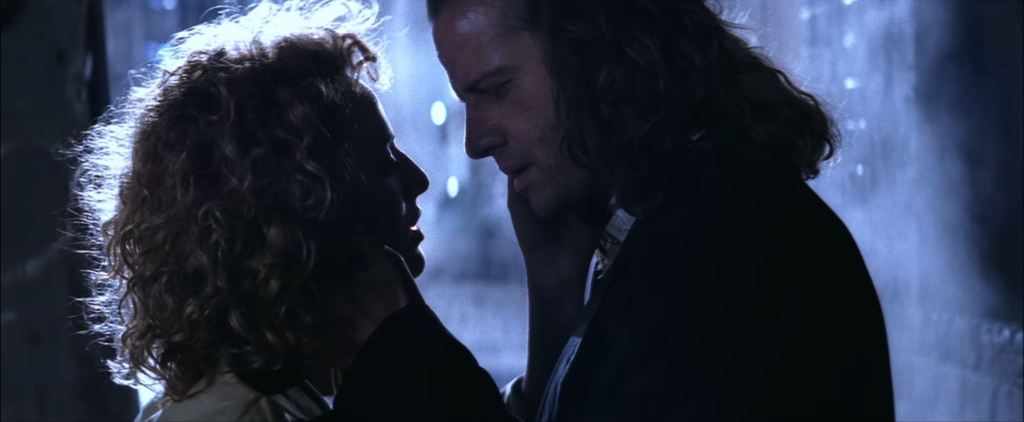
Enter Louise Marcus (Virgina Madsen) who seeks to expose the truth by bringing the shield down. Within minutes of meeting Connor, two Immortals from the distant past (or another planet, depending on which version you’re watching) arrive on bitchin’ hover technology to assassinate the former contest winner. Despite his advanced age, Connor manages to decapitate one and quickens, restoring his youth and immortality. Shortly after hopping on a hover board to dispatch the other assassin, Connor and Louise have passionate sex, right there on the grimy streets.

If you’re wondering how they contrive to resurrect Sean Connery’s Ramírez, it doesn’t make any sense… nor does it matter. All that matters is he’s back, he gets a lot more screen time, and the actor seems to be having the time of his life elevating an otherwise standard fish-out-of-water role. Connery alone is worth the price of admission. Ramírez reunites with Connor and helps him and Louise take on the corporate powers that be.

Siskel & Ebert said only brain-dead moviegoers could enjoy Highlander 2. Some regard it as the worst film ever made (those people have yet to see Now you See Me). If you find the utterly ambitious and genuinely creative Highlander 2 more offensive than the plethora of soulless cash grabs coming out of Hollywood nearly every month, I ask you to reexamine your standards. You cannot call this film boring. You cannot call it passionless. Insane? Well, I’ll give you that one.

Highlander 2 is set in a dystopian cyberpunk future. For the most part, it’s a visually convincing setting. Somehow director Russell Mulcahy managed to squeeze better world-building out of his budget than Freejack, Johnny Mnemonic, and Cyborg combined. The theatrical cut of the film (which is what I initially saw on Pay-Per-View twenty years ago) even visited another planet, but the infamous alien subplot has since been reworked and retconned in subsequent editions.

Granted, the theatrical cut of Highlander 2 ruined the mythology of the original film within the first few minutes. It asserts the Immortals were (surprise!) aliens all along. Luckily, this revelatory dialogue had been filmed with characters who spoke telepathically; the obvious fix was to simply rerecord the voice-over dialogue. In the subsequent versions, all verbal references to the alien planet Zeist are edited out of the dialogue even though the visual references more or less remain, albeit visually altered. This way audiences are led to believe (if they’re still paying attention) that it’s not an alien planet, but in fact Earth a long time ago.

These changes don’t really help the film, though, as it still suggests that Connor and Ramírez knew each other prior to their meeting in the original film. If anything, the changes made the movie more confusing. For instance, when the past assassins are given their orders to kill Connor, they say, “But he’s an old man now.” “Now,” even though the scene is set far in the past?

And you know what? Who cares? Just keep slathering on the 90s cyberpunk aesthetic and sparky sword fights. Highlander 2 is incapable of demonstrating restraint in its crusade for awesomeness. You get hover boards. You get bad guys who look like they’re straight out of a Hellraiser film. And you will never see a hero have sex with the heroine so quickly after they meet… and, uh, I do stress the word “quickly.” (Perhaps that’s the quickening.)