13 Sins to fortune

Elliot (Mark Webber) is a thirty-two year old loser who doesn’t even have the guts to tell his boss to go to hell when he’s fired over bogus reasons. He’s got a mentally handicapped brother, a pregnant fiancé, and a rancorous father who was driving the car that killed Elliot’s mother. You’ll probably roll your eyes at these obvious setups, believing you know exactly how the movie will employ them. You’ll be at least a little bit wrong. Early on, the movie is a master at misdirection. Later on, it’s a little easier to predict.

Elliot gets a phone call from a stranger. Kill the fly in his car, the stranger says, and a thousand dollars will be sent to his account. Elliot humors the tinny voice and, sure enough, the money is instantly deposited. The second challenge is to swallow the fly, which is worth even more money. I won’t spoil what the rest of the thirteen challenges are, but the cops are already after Elliot by the fourth one.

Even as the challenges ramp up in illegality, Elliot begins to come out of his shell. Whereas he used to be a timid man, he enjoys making waves. After smooth-talking his way out of a run-in with the cops, led by Ron Perlman, we see Elliot smile uncharacteristically. The audience smiles, too. We feel like we’re with him every step of the way, rooting for him as the challenges get progressively weirder, including one that’s ripped right out of Weekend at Bernie’s.

This isn’t to say the execution is flawless. I merely tolerate the flatly shot digital cinematography, but it seems to be the unfortunate new trend for low budget genre flicks as streaming services gain popularity. I can’t imagine any movie that’s shot so blandly ever reaching classic status, but here we are. The new “film” makers are lighting their movies as plainly as possible so they have a neutral image to color correct in post. The result is movies that will never be as bold or likable as the ones that traditionally commit to their looks on the day of shooting. I imagine that as the digital recording formats improve (the problem isn’t the format, per se, it’s the methods), this era will stick out like a sore thumb.

The movie wants to say something about human nature and greed, but the message bounces all over the place; perhaps it wants to say too much for its hour and a half running time. The tone seems to fluctuate throughout, peaking when it’s humorously dark and bottoming out whenever Elliot shows serious humanity. The ending artificially wraps up the escalating complications with a neat little bow. Overall, it’s a decent roller coaster ride that ends anticlimactically. Oh well, it was fun while it lasted.

It followed me home, can I keep it? (It Follows)

A nineteen year old woman has consensual sex with a charming young man in his car. Immediately after, his mood changes and he informs her he just infected her with a sexually-transmitted curse. Before leaving, he gives her some tips: Stay out of buildings that don’t have multiple exits (“It’s slow, but It’s not stupid”) and pass It to someone else as soon as possible because It always goes after the latest person to be infected first.

There is so much bullshit in which the average film would have gladly spun its tires: The “parents don’t understand” angle. The “cops think you’re lying” angle. The “my friends are concerned I’m going crazy” angle. We’ve seen that stuff a million times and It Follows spares us the usual routines.

It knows when to show the monster. It knows when to leave it to hide It. It’s one of the rare films which understands both methods can be effective. The titular It stalks real American streets, pursuing the heroine across eerily familiar scenery. It’s such an honest portrait of what passes as the American dream that you can’t help but believe this is a real thing that is happening. I will refrain from describing It’s appearance and let you find out for yourself, but I will say it’s done without the use of CGI.

I’ve long had a fascination with how poorly teens are portrayed in movies. Whereas many screenwriters are in their early twenties, I’m not sure why they’re so disconnected from youth. Thankfully, the teens in It Follows behave and talk like real teenagers. Not only are they actually played by real teenagers, writer/director David Robert Mitchell knows how to write them, vulnerabilities and all. Remember that name as he has a promising future ahead of him.

Movies like this tend to fall apart by the third act, but the climax was the most satisfying part of the entire movie for me. The teenagers’ plan is exactly the kind of plan teenagers would come up with. And whereas so many other horror movies invent bogus reasons for not bringing in the cops, the threat is such an enigma the characters couldn’t even explain It to the cops. They really are on their own here.

The electronic soundtrack by Disasterpiece is something else I want to highlight. What a bombastic theme. It’ll be stuck in my head for decades.

Fury Road: George Miller’s latest road rage masterpiece

Mad Max is the first movie I ever saw. Road Warrior is one of my favorite movies of all time. I’m not even going to pretend I can be objective about this one… just let me gush.

Fury Road is a two hour movie with about eight minutes of dialogue and comes from a filmmaker who thankfully hasn’t learned the “right” way to make a Hollywood blockbuster. Nothing about it is formulaic. Movies as bold as Fury Road make me feel retroactively cheated by more typical films like The Age of Ultron.

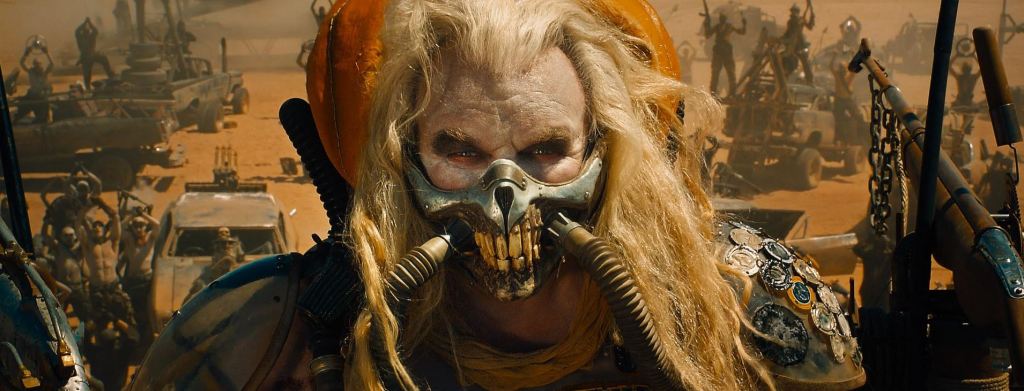
Tom Hardy and Charlize Theoron share equal billing in the opening credits—it’s every bit Imperator Furiosa’s film as it is Max’s. Hugh Keays-Bryne, who played Toecutter in the original film, returns as Immortan Joe, a villain who gives Hannibal Lector and Darth Vader a run for their money. Nicholas Hoult (yes, the kid from About a Boy) is nearly unrecognizable as Nux, the famished maniac who proclaims in the trailers: “Oh, what a day! What a lovely day!”

Within minutes of the opening shot, Max’s trademark Interceptor is smeared across the wasteland by the War Boys, presumably the biggest-baddest gang around. Max is captured and turned into a “blood bag” for Nux; as all War Boys are the biological children of Immortan Joe, many share his blood deficiencies and require frequent transfusions. When Furiosa smuggles Immortan Joe’s unwilling wives out of the compound on a big rig, the War Boys give chase, chaining Max to the front of a souped-up car. The chase begins and it doesn’t stop until the movie’s over.

Director George Miller has been trying to make this for twenty years. It shows. You can clearly see the decades of thought enriching every minute of screentime. Each scene is significantly different than the last, despite using the same three elements throughout: a desert, vehicles, and a huge cast of sickly-looking psychopaths. I always cherish a movie that shows me one thing I’ve never seen before. Fury Road does something new roughly every five to ten minutes. I haven’t been this wowed by a mainstream movie since the bridge sequence in True Lies over twenty years ago.

So many action directors working today, all of which are younger than Miller, should be envious and perhaps a little ashamed. This is one of the big ones. This is what keeps me going.

Outland: High Noon in space

William T. O’Niel (Sean Connery) is a space marshal who’s been assigned to a mining outpost on IO, one of the many moons of Jupiter. His wife has left him, disillusioned with the space life. Whereas most boys hide girlie mags under the bed, their son has been caught hiding pictures of Earth.

Peter Boyle plays Mark Sheppard, the crooked operations manager. When the marshal introduces himself to Sheppard’s crew, he’s welcomed by the roughnecks warmly. Sheppard, on the other hand, makes it clear he intends to be the one calling the shots. Meanwhile, some of the miners have been experiencing deadly hallucinations. The marshal discovers an import drug is to blame and, surprise-surprise, Sheppard may be involved in the scheme.

As the investigation unfolds, the marshal makes friends with the infirmary’s head doctor, played by the extremely likable Francis Sternhagen. The banter between these two is often funny and very endearing. Peter Boyle is exceptional, too. “If you’re after more money,” he tells the marshal, “you’re very smart. But if you’re serious, you’re very stupid.” The marshal isn’t after money at all, of course. While the film doesn’t make it clear why he’s so motivated, it doesn’t need to because it uses the shorthand of classic westerns. He’s simply a man with a strong sense of right and wrong; the audience doesn’t question it because he’s played by Sean Connery.

And the marshal really puts his life on the line. In the last quarter of the movie, hitmen are on their way to assassinate the marshal. The minutes to their shuttle’s arrival are counting down on the loud flip clocks that are stationed throughout the facility, grating on the marshal’s anxiety with every click and clack. The marshal fails to deputize any help because the odds he’s facing are suicidal. No, it isn’t a rip-off of High Noon. It’s a loving remake.

Director Peter Hyams is very good at making solid films like Outland. Mechanical plots have always been one of his strong suits and his technical abilities provided him steady work in Hollywood. Some filmmakers are simply good at working within the system while others can only exist outside of it. Both are admirable when they produce films as good as this. Think about it: Hyams managed to make a good sequel to 2001: A Space Odyssey, which must have been a job no one envied. So maybe he isn’t what anybody would call an artist with a capital A, but he’s often the right guy for the job.

Horns is available on-demand before it hits theaters

Ignatius Perrish (Daniel Radcliff) is a twenty-something whose childhood girlfriend has just been murdered. Everyone thinks he’s the killer—even his parents. One day, after a hard night of drinking, Ig wakes up to find devil horns have sprouted from his temples.

The horns have a peculiar effect on people. Nobody seems to think the horns are out of the ordinary, even as they feel compelled to tell Ig their darkest secrets. Ig’s doctor tells him he does oxytocin. Heather Graham’s character, a waitress, confesses she lied to the cops investigating the murder because she wants to be on TV. A bartender tells Ig he wants to burn his own establishment down for the insurance money. Ig tells him to have at it and the bartender obliges because the horns also influence others’ decisions.

This movie adaptation of Joe Hill’s novel suffers in the standard screenplay format. Whereas the novel opens with the horns, the movie puts off the horns’ appearance for just a little too long. The reason the hero grows horns in the first place is barely touched on at all. For that reason, it works a little better as a companion piece than a standalone feature.

That’s the bad. The rest is really good, at least when it’s not trying to play it safe. Sometimes it feels the filmmakers pussyfoot around the demonic aspects of the story, which kind of misses the point. Otherwise, there is plenty of snake-charming, plenty of startling confessions, lots of juicy violence. But to call this movie horror is a little misleading. “Dark urban fantasy” is a better label.

Daniel Radcliffe makes a good Ignatius Perrish. The rest of the cast is solid, too. I particularly liked Juno Temple (I usually do), Heather Graham, David Morse, and the casting of Ig’s parents: James Remar and Kathleen Quinlan. It’s a good picture, just a little rough in spots.

Now you know your ABCs, won’t you come and die with me?

The ABCs of Death is an ambitious anthology film with twenty-six directors and twenty-six stories, each of which is titled after a letter of the alphabet. D is for “Dogfight,” F is for “Fart,” and L is for “Libido,” which tells the story of a masturbation contest, the loser of which gets impaled. That one is among the most memorable, not to mention one of the most twisted.

At this point you should already know if this movie’s for you or not. If it is, keep reading. If it’s not, skip it. Really. One of my friends proclaimed it was too extreme for him when he suggested it to me (apparently I’m the guy “who likes that kinda shit” and I don’t know how I feel about that). Taboo isn’t just a recurring theme, it’s celebrated.

At more than two hours long, The ABCs of Death has more than one shitty story, but overall I found it more entertaining than Sturgeon’s Law suggests: ninety percent of it is not crap. Sometimes the word the filmmakers came up with is a bit of a stretch, sometimes the story works better in theory than in execution (and vice versa), sometimes the stories simply suck. But where else are you going to see a Japanese Dr. Strangelove and something as gratuitously offensive as a plane painted on a bare breast and…? Well, I won’t spoil that one for you.

Overall, I think I liked The ABCs of Death more than the V/H/S/ movies.

Highlander: There can be only one (and several sequels)

Highlander 1986

Suppose, for a second, you’re a Trans-Am-driving gun nut who happens upon a dark alley in which two complete strangers are sword fighting. Do you A) drive to the nearest payphone and call the cops or B) get out and shoot at these people who you don’t even know? If you chose B, you belong in this movie.

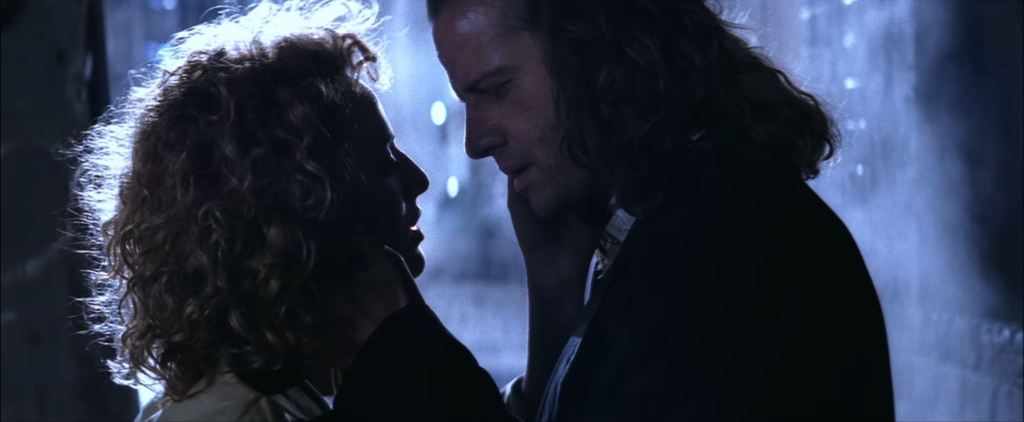
You know Highlander’s tagline even if you don’t know the franchise: There can be only one. But why must there only be one? When the French Christopher Lambert (playing a Scot) asks questions like that, the Scottish Sean Connery (playing an Egypt-born Spaniard) replies with another question: “Why does the sun rise?” That’s a cheat because even grade school children know why the sun rises, but no one seems to know why Immortals “must” fight. Considering how cool it is, I suppose it doesn’t matter. I mean, who doesn’t like sword fights that produce roughly as many sparks as a bumper car grid?

I’m getting ahead of myself. The year is 1985. Connor MacLeod (Lambert) is spectating a wrestling match at Madison Square Garden that gives him intense flashbacks to his life as a Scottish highlander in the 1500s. When he ducks out early to head to the parking lot, Connor is attacked by another Immortal. Connor beheads the mysterious attacker and absorbs his essence in a supernatural light show known as a quickening. Beheading is the only way to kill an Immortal and the quickening is the process which allows the victor to absorb the defeated party’s strengths and abilities.

Meanwhile, the “seven-foot tall” Kurgan (Clancy Brown) arrives in New York City. The Kurgan is Connor’s arch nemesis, having killed his mentor Juan Sánchez-Villalobos Ramírez (Connery). Don’t worry—through the magic of questionable screenwriting, Ramírez will return for a more significant role in the sequel. At any rate, the Kurgan has spent the last four hundred years quickening as many Immortals as he can. According to Ramírez, if someone like the Kurgan wins this ancient contest, the world will be plunged into eternal darkness.

The pacing is a little rough. The acting is good enough. You will be forgiven for scratching your head or making MST3K-style quips here and there. My mother tells me this was one of the first movies I ever fell in love with and that she would often hear me, from the other room, popping it into the VCR to watch it again and again. I was so young I don’t remember, but it certainly is up my alley.

When the movie was over I slipped Westworld into the Blu-Ray player and all but forgot about Highlander. But when I went to bed later that night, distant memories of the infamous sequel began to haunt me. When I was eight or nine years old, I had rented it on Pay-Per-View and recorded it to VHS. I still have the tape to this day.

I remembered Sean Connery was in it and just had to know what kind of movie magic they spun to bring his character back to life. I had frequently read how awful the movie was, which was at odds with how much I enjoyed it as a kid. So I bit the bullet and decided to watch Highlander 2 for the first time as an adult.

I may never be able to enjoy another movie again.

Highlander 2 (1991)

Forty years after the conclusion of the last film, Connor MacLeod is not just mortal, but an elderly and extraordinarily wealthy individual, as immortality no doubt reaps some great compound interest. He’s devoted himself to science-based philanthropy. One of the projects he helped fund was an artificially generated shield around the planet after corporate greed destroyed the ozone layer. Unfortunately, the shield has permanently blocked sunlight and created a runaway greenhouse effect. It’s also controlled by the very corporation that helped destroy the atmosphere in the first place. As it turns out, the ozone layer has recovered since the shield went up and the project’s executives will stop at nothing to keep this inconvenient (for them) truth suppressed.

Enter Louise Marcus (Virgina Madsen) who seeks to expose the truth by bringing the shield down. Within minutes of meeting Connor, two Immortals from the distant past (or another planet, depending on which version you’re watching) arrive on bitchin’ hover technology to assassinate the former contest winner. Despite his advanced age, Connor manages to decapitate one and quickens, restoring his youth and immortality. Shortly after hopping on a hover board to dispatch the other assassin, Connor and Louise have passionate sex, right there on the grimy streets.

If you’re wondering how they contrive to resurrect Sean Connery’s Ramírez, it doesn’t make any sense… nor does it matter. All that matters is he’s back, he gets a lot more screen time, and the actor seems to be having the time of his life elevating an otherwise standard fish-out-of-water role. Connery alone is worth the price of admission. Ramírez reunites with Connor and helps him and Louise take on the corporate powers that be.

Siskel & Ebert said only brain-dead moviegoers could enjoy Highlander 2. Some regard it as the worst film ever made (those people have yet to see Now you See Me). If you find the utterly ambitious and genuinely creative Highlander 2 more offensive than the plethora of soulless cash grabs coming out of Hollywood nearly every month, I ask you to reexamine your standards. You cannot call this film boring. You cannot call it passionless. Insane? Well, I’ll give you that one.

Highlander 2 is set in a dystopian cyberpunk future. For the most part, it’s a visually convincing setting. Somehow director Russell Mulcahy managed to squeeze better world-building out of his budget than Freejack, Johnny Mnemonic, and Cyborg combined. The theatrical cut of the film (which is what I initially saw on Pay-Per-View twenty years ago) even visited another planet, but the infamous alien subplot has since been reworked and retconned in subsequent editions.

Granted, the theatrical cut of Highlander 2 ruined the mythology of the original film within the first few minutes. It asserts the Immortals were (surprise!) aliens all along. Luckily, this revelatory dialogue had been filmed with characters who spoke telepathically; the obvious fix was to simply rerecord the voice-over dialogue. In the subsequent versions, all verbal references to the alien planet Zeist are edited out of the dialogue even though the visual references more or less remain, albeit visually altered. This way audiences are led to believe (if they’re still paying attention) that it’s not an alien planet, but in fact Earth a long time ago.

These changes don’t really help the film, though, as it still suggests that Connor and Ramírez knew each other prior to their meeting in the original film. If anything, the changes made the movie more confusing. For instance, when the past assassins are given their orders to kill Connor, they say, “But he’s an old man now.” “Now,” even though the scene is set far in the past?

And you know what? Who cares? Just keep slathering on the 90s cyberpunk aesthetic and sparky sword fights. Highlander 2 is incapable of demonstrating restraint in its crusade for awesomeness. You get hover boards. You get bad guys who look like they’re straight out of a Hellraiser film. And you will never see a hero have sex with the heroine so quickly after they meet… and, uh, I do stress the word “quickly.” (Perhaps that’s the quickening.)

Zardoz: The gun is good. The penis is evil.

The year is 2293. Zed (Sean Connery) is a part of a post-apocalyptic group of barbarians who worship a floating head statue called Zardoz. Zardoz shows up from time to time and commands Zed’s group to rape and kill the peasants who live on the countryside. The god even supplies the weapons and ammunition in exchange for sacrifices. This goes on for several decades until, one day, Zardoz commands them to start agriculture. The Brutals begin to question their god, so Zed smuggles himself aboard the floating head to get answers. He soon finds himself whisked away to The Vortex, a domed city where the Eternals live.

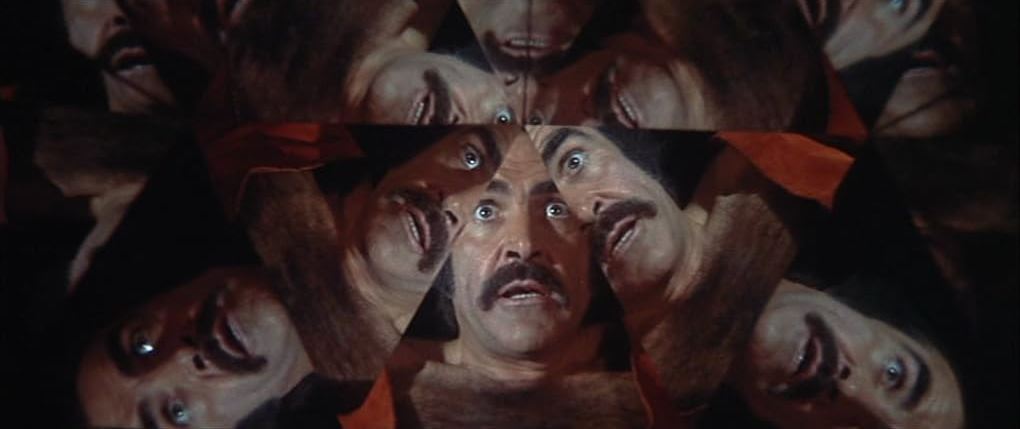
This is when things get weird… well, weirder. The Eternals don’t like life anymore. As their advanced technologies have eliminated the need—and subsequently the desire—for sex, one can easily see why they’re so bored. Many of them are thrilled to find Zed has infiltrated their compound as it’s the only exciting thing in ages. At one point the Eternals decide to test exactly what kind of stimuli gives Zed an erection… the scene is hilarious, mostly thanks to Sean Connery.

I’m often accused of liking bad movies, but this isn’t true. Last night I tried watching Ice Pirates for the first time in two decades. That’s a bad movie. What makes Ice Pirates bad and the eighties version of Flash Gordon good is simple: one’s a Star Wars cash-in which tries too hard to be funny; the other is a genuine love letter to its source material. Zardoz is in the same camp as Flash Gordon in the sense there is passionate filmmaking on display here. Casual moviegoers may snicker, but then again casual moviegoers are the reason superhero movies are getting churned out every other week.

Director John Boorman made Zardoz after his plan to follow up Deliverance with a live action adaptation of The Lord of the Rings fell through. After Zardoz bombed, he made Exorcist II: The Heretic, which was… well, you can’t win ’em all, I suppose.

Zardoz is weird at its finest. It’s 2001: A Space Odyssey if directed by Fellini. It’s psychedelic, ambitious, blasphemous, pessimistic, and optimistic. Speaking of Kubrick’s 2001, cameraman Geoffrey Unsworth turns in cinematography here that could’ve won an Oscar. And where else are you going to see a movie star of Sean Connery’s stature in a red diaper and knee-high boots? (Before Connery signed on, the role was supposed to be played by Burt Reynolds, but he got sick… I’m sure he’s not kicking himself over this one.)

Young, fun, and dead before 31: Logan’s Run

In the otherwise utopian future of Logan’s Run, humans are required to die at the ripe old age of thirty. Most people who reach the cut-off age believe the execution ritual is in fact transferring their immortal souls to a higher plane of existence even though all the spectators can clearly see their bodies fucking explode. Those who try to escape their birthday spankings are called runners. The men who hunt them down are called sandmen.

One such sandman is Logan Five (Micheal York). Logan loves the chase. He and his work partner toy with terrified targets before dispatching them violently. The glee on Logan’s face is truly vile; the way he dispenses the word “runner” is analogous to the way white supremacists scream their favorite slur.

One day Logan is forced to go undercover in order to find Sanctuary, the safe haven where runners attempt to go. Unfortunately, Logan’s partner thinks he really went on the lam so Logan must actually run. (I believe Spielberg’s Minority Report owes some unpaid homage to this.) The next thing you know there’s an oddly placed cameo by Farrah Fawcett, a lot of fiery deaths (because sandmen use flare guns instead of pistols), and a “big reveal” that pales in comparison to the one in Planet of the Apes. As you probably guessed, Logan will slowly have the wool pulled from his eyes.

Logan’s Run posits that people under the age of thirty are idiots. The film’s young and insanely attractive citizens mill about their dome city in slinky costumes with sex-crazed mindsets. I’ll be the first to admit these kind of movies are an acquired taste, but I just love this kind of shit. As far as movies go, it’s the closest you can get to the kind of bizarre science fiction that truly insane novelists like Philip Jose Farmer and Roger Zelzany unleashed in yellow DAW paperbacks. You’re going to see an unbelievable amount of sex, violence, and gratuitous nudity for a PG-rated film, and sheer awesomeness in the truest sense of the word.

It’s a hell of a spectacle, yes, but not a seamless one. Analog future technology is adorable when watched in the digital age. The miniature effects look as realistic as toys. There’s a robot effect so painfully obvious you can actually see the lips of the actor who’s wearing the costume.

Logan’s Run is far too goofy to be considered a classic, but you’ll probably grin an awful lot.

How much man could The Omega Man man if The Omega Man could Omega Man man?

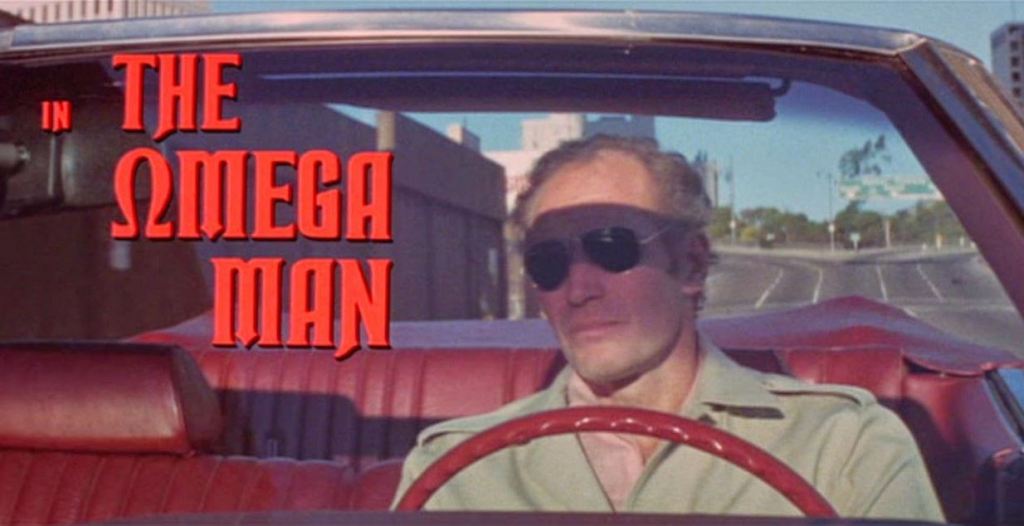
Dr. Neville (Charlton Heston) is driving his convertible through deserted Los Angeles. It’s a pleasant day and he’s just vibing, listening to Theme from a Summer Place on an 8-track player. When Heston spots movement in a window, the machine gun comes out and he releases a barrage of bullets. This is two years after a biological apocalypse has rendered nearly everyone else on the planet dead. According to the poster, “The last man alive… is not alone!” That’s because most of the people who survived the plague are now mutants who specifically want to kill Neville.

If this sounds vaguely familiar, it’s because it’s a 1970s retelling of Richard Matheson’s 1954 classic novel, I Am Legend, in which the bad guys are vampires, not mutants. It also served as the basis for Vincent Price’s The Last Man on Earth, which is a fairly standard but watchable B-movie, and a 2007 Will Smith vehicle which bore the same title as the novel even though it entirely missed the point. Matheson’s novel depicted Dr. Neville as a man so badly isolated that when the vampires came to his home to taunt him nightly, he often fantasized about opening the door and stepping out.

The Omega Man scales back the isolation-horror and becomes one of the very first tough guy films, complete with witty one-liners (which mega Omega Man fan Tim Burton has pointed out in interviews). While browsing a car lot, Neville has a humorous conversation with an imaginary car salesman who’s trying to screw him over. After being captured by the bad guys, Heston asks, “Are you fellas really with the Internal Revenue Service?” When it’s revealed that Neville is not, in fact, the last person alive, his love interest decides to go shopping, referring to her shotgun as a “credit card.”

The film’s so hip, in fact, the mutant ghouls wear mirrored shades with their sacramental robes. This may have seemed a little silly in the 70s, but in the time since it’s managed to age like a fine wine. The last woman alive is sassy black Lisa (Rosalind Cash), who’s not the only prominent character in the film who wears a bitchin’ afro. The first time she meets Heston it’s with perfect comedic timing: she catches him caressing the curves of a department store mannequin.

The Blu-Ray looks great, though it’s painfully obvious whenever motorcycle-driving Charlton Heston transforms into a stunt double with a bad toupee. Also shitty is the inclusion of the same special features which appeared on a DVD version ten years ago. Nonetheless, I haven’t enjoyed the picture more. Watch it before Tim Burton inevitably remakes it.