Midnight Movie: Clown (2014)

I never thought clowns were scary, but I love seeing them in movies. It’s almost as if they were made for the screen. (For a recent example, see: Álex de la Iglesia’s The Last Circus.) Anyway, you remember that part in Parenthood in which Steve Martin has to dress up as a clown for his son’s birthday party? Imagine if he discovered the costume wouldn’t come off. Then, as his frustrations mounted, he developed urges to murder innocent children. That’s the premise behind Clown, a remarkably deadpan horror-comedy written by a couple of filmmakers who got Eli Roth to produce after they made a proof of concept trailer.

Kent McCoy, real estate agent, is stuck in an old clown costume he found. All attempts to take it off—which have involved hemostats, razor blades, and power tools—have only injured him. The costume is fusing to his body like reverse-molting. His skin turns white so he has to wear flesh-colored makeup to pass in public. Unfortunately, it’s clear he’ll never look normal again and his appearance is progressively devolving into something hideous.

While researching the origins of the costume, Kent contacts an expert played by Fargo’s Peter Stormare. Stormare’s character reveals the costume’s not made out of fabric at all, but it’s the hide of an ancient Icelandic demon. Ridiculous, right? Wisely, the film plays it with a straight face and never elbows you for a laugh, which is far funnier than a Sharknado-level farce. Getting trapped in a clown costume actually is a scary concept because it would be as embarrassing as accidentally showing up to school without pants on. Illogical, yes, but so are most nightmares.

The demon the skin belonged to was known for eating children, an urge which proves contagious to Kent. The filmmakers leverage that aspect of the plot into a moral quandary that comes into play towards the end of the movie. Without giving too much away, people often say they would do absolutely anything for their children. Clown explores the darker implications of an otherwise innocent statement like that.

While Clown’s promotional material suggests it might assault you with buckets of gore, it neither wants to push the envelope or shy away from the good stuff. It implies more than it shows, yet it makes sparing yet effective use of body horror. These guys sneak the crazy stuff into your blind spot and by the time it’s in your peripheral vision it’s too late.

I really liked this movie, which is bizarre and subtle at the same time. I was reminded of the shocking reveal at the end of Rosemary’s Baby, which is simultaneously the worst thing that could happen and somehow amusing. The acting is good and the characters seem real and grounded. They don’t even do anything especially stupid like make excuses for why they don’t call the police. I mean, if an Icelandic demon fused with your body, who you gonna call anyway?

If you ever wondered why I’m an Eli Roth fan, it’s because of his involvement in movies like this. We need more cheerleaders for the smaller voices in genre films. Roth’s enthusiasm is infectious.

Midnight Movie: Fortress of Amerikkka (1989)

John Waters once said, “Get more out of life. See a fucked-up movie.”

I’ve written about the purity of exploitation films many times. They promise a certain kind of entertainment—usually mindless—and they either deliver or they don’t. Here’s one that delivers, but once it crosses the line, it doesn’t stop. Early on, a defenseless old man gets drawn between a car and a tree in gruesome fashion. Soon after, a terrified child get shot in the back. Not that any of it looks real, mind you, but it’s still not for the faint of heart.

Fortress of Amerikkka has a lot in common with Surf Nazis Must Die. They both have sleazy titles, they both contain unbridled cheese, and they were both distributed by Troma Entertainment (of course). Surf Nazis Must Die is just a little more fun; any revenge film in which the hero is a motorcycle-driving black mama is clearly better than one in which a white actor (Gene LeBrock) plays a Native American named John Whitecloud.

Whitecloud has just been released from prison. The first thing he does is stock up on weapons and ammunition at the local gun store. There he has a run-in with the dirty cop who killed his brother and put him away in the first place. The cop tells Whitecloud he better watch his back, a scene every movie like this must include. Meanwhile, there’s a militia performing training exercises in the surrounding woods. The villain, who reminds me of Donald Trump making Amerikkka great again, commands his mindless followers to kill anyone who stumbles upon the location of their camp, which seems to be damn near everyone but the cops.

These are two very different plots which run parallel until, suddenly, they don’t. And here’s where the confusion comes into play: Why is America spelled with a triple-K? It leads you to believe the militia has ties with the Klan, yet they’re a racially inclusive and female friendly group, as far as I can tell. Troma films have been known for being as subtle as a cannonball, so I’m not sure what the social commentary is here, if any. I just can’t bring myself to believe the guy who directed two Class of Nuke’Em High sequels had anything more important to say than “violence and boobies, yay!”

The “that’s so wrong” factor of this movie is simply stunning. Get a bunch of drunk friends together and you’ll probably have a blast. It’s one of the wildest Troma films that wasn’t produced in-house.

Dead By Daylight: First Impressions

Dead By Daylight gives you the choice of playing a victim or a movie slasher. In order for the killer to win he must prevent the victims from escaping, which requires catching, disabling, and hanging them on meat hooks. Survivors only have to escape, but there’s a catch: the killer’s compound is entirely fenced in. The only way to open one of the gates is by repairing the generators, which are scattered about the map. It takes a long time to repair each one, adding to the suspense. The killer generally knows where the generators are at all times, but the victims have to actively search for them without the aid of a radar.

There’s also a point system. The more points you have, the more items and power-ups you can buy in between matches. The point system encourages the victims to help one another, as opposed to fending for themselves (which happens, too), while inspiring the lone killer to get creative with his traps and tactics. I’m actually surprised by how much teamwork is to be found in a title which doesn’t feature in-game chat.

What’s even more surprising is the simple concept’s longevity. There’s only the one game mode and all the maps look more or less the same beyond their drab color schemes. You’re either going to be one of three available killers (which requires hosting a game and sometimes waiting damn near forever for four other players to join) or one of the four survivors, meaning there’s not a whole lot to see beyond your first few matches. With so few combinations, I expected this one to get stale quick, but I find myself loading it up frequently. It’s very easy to jump in and out of it.

Matches last only a handful of minutes and, generally, don’t take long getting into. The overall boot time is fairly low, too, which is probably why I play CS:GO so often. Like that game, Dead By Daylight provides a surprising amount of replayability not in spite of its simplicity, but because of it. Meanwhile the graphics are more than acceptable and the sounds of blades and meat hooks puncturing flesh are crisp and satisfying.

Theme goes a long way and that’s the biggest thing Dead By Daylight has going for it. Unfortunately (for me) it doesn’t completely bring that 80s horror vibe which the upcoming Friday the 13th game promises. It just looks a little too much like a late 90s horror movie for my liking, while the victim roster is curiously lacking a teen heroine, a dimwitted jock, and a clueless police officer. Still, playing as the killer and stalking real-life players with a intimidating walk is even more fun than you may think.

If you’re not a fan of slasher movies, you should probably skip this one. Otherwise, I certainly don’t feel like I threw my money away as the twenty dollar price tag seems just about right. Besides, the thrill of finding a victim hiding in a closet is something I can’t convey with words. I find the game’s strengths more than makes up for the bugs, most of which aren’t game-breaking.

At the time of this writing, the game doesn’t have a serviceable party system. Players are constantly entering and immediately leaving lobbies in search of their friends, which sometimes makes soloing take longer than it should. The devs have tweeted they will address this issue soon, but a party system could potentially break a game that purposely omitted in-game chat because those players will no doubt be using VOIP software to coordinate against the killer.

Midnight Movies: The Toxic Avenger II & III

I originally saw the original The Toxic Avenger on USA Up All Night! when I was something like eight or nine years old. On my many repeat viewings of the worn VHS I recorded myself, I would laugh gleefully when, upon committing vehicular homicide, one of the evil punks announces he has to go to bed early “because I’ve gotta go to church.” Years later, at the beginning of Toxic Avenger Part IV, Stan Lee’s voiceover recounts the events of the first film before going on to say, “Then… two rotten sequels were made. Sorry about that!”

Curiously, I’ve watched the “rotten sequels” more than I saw the fourth movie. I actually prefer Toxie’s makeup and his John Candy-like demeanor in the two middle entries. The biggest problem with the back-to-back II & III is they were intended to be one film until director Lloyd Kaufman, realizing he had shot too much footage, had the idea to split the one movie into two. The problem is Kaufman overestimated just how much usable footage he had.

Following the events of the first film, Melvin the mop boy, aka Toxie, has successfully cleaned Tromaville of crime and pollution. He lives with his blind girlfriend Claire (even Kaufman has admitted he doesn’t know why they changed the character’s name from Sarah) and finds himself without purpose. So he sets off to Japan in search of his long lost father, only to find the man sets off his Spidey-Sense (uh, I mean “Tromatons”) because he is, in fact, an evil drug lord. Meanwhile, in Toxie’s absence, an evil corporation moves into Tromaville.

The good stuff is present, albeit smothered in the padding. Part II opens with a hilariously stupid fight before the promising pace trips on the overuse of voiceovers and the extended interlude in Japan. A lot of the footage that’s used in Toxic Avenger II is actually recycled in Toxic Avenger III, sometimes with replaced dialogue, sometimes unaltered, but always at the expense of fun. In other words, there’s a great Troma movie between the two pictures and if a skilled fan editor hasn’t made a singular supercut yet, I’d be very surprised.

When I was younger, I preferred Part II because I somehow liked the stuff in Japan. Now that I’m older, it’s clear the third film, The Last Temptation of Toxie, is the superior picture. The opening was obviously shot after Kaufman decided to split the film into two. The fight may not be as long and complex as the one which opened the previous movie, but its brevity helps solidify the pace and believe me: this movie can use all the help it can get.

Toxie’s relationship with Claire takes an unexpectedly cute turn. Toxie literally sells his soul to the devil to pay for the operation to restore her eyesight (and to get his mother a microwave oven). He does this knowing full well that once she can see, she may be repulsed by his hideously deformed nature. That’s our little Melvin—a selfless darling—and we can only hope the inevitable Hollywood remake will absorb the more subtle ingredients of the franchise rather than focusing solely on the exploitation stuff.

Nothing in these two films is half as wild (or gleefully politically incorrect) as the punks who squash a little boy’s head before beating an elderly woman to death. Nor is the dialogue ever quite as poetic as the thug who exclaims, “I’ve always wanted to cornhole me a blind bitch!” Unless you’re a completionist, or a die hard Troma fan, it’s probably acceptable to skip all the sequels. But there is some of that old magic here. It’s only in short bursts, few and far between.

Keanu (2016)

Movie nerds can spot fellow movie nerds from across the room. Key and Peele don’t just parody specific movies (see: their Gremlins 2 sketch), but sometimes entire types of movies (see: their funhouse villain sketch). Any comedy team who casts character-actors like Clint Howard, while paying rapt attention to lighting and cinematography, is speaking my language. I’m sure Keanu is only one of many worthwhile films that will result from this partnership.

Rell (Jordan Peele) has just been dumped by his girlfriend. When we first see him, he’s moping beside a bong and a couple of posters for New Jack City and Heat. His best friend Clarence (Keegan-Michael Key) is a suburbanite who drives around in a mini-van while listening to George Michael on repeat. Clarence is on his way to cheer Rell up, but it turns out he doesn’t need to anymore. Rell has adopted a stray kitten he calls Keanu and all is well in the world.

What Rell and Clarence don’t know is Keanu has just escaped a shootout at a Mexican cartel operation. The two super-assassins responsible for the shootout are also played by Key and Peele in heavy makeup and wigs. The bad guys also want the kitten, but when a local gang tries to trash the house of a dumb drug dealer (Will Forte), they accidentally target Rell’s house next door. The leader of the gang, played by Method Man, takes a liking to the kitty, too. So when Rell and Clarence go to get Keanu back, the gang mistakes them for the aforementioned assassins and… well, this certainly sounds like a routine comedy, doesn’t it?

And it is a routine comedy, but not the low-effort kind. This is the kind of movie Richard Pryor and Gene Wilder could have starred in thirty years ago: a simple vehicle for complex talent. Each time the movie starts to lose its footing on the slippery slope of situation comedy, they completely save it with their antics. There’s an unlikely and somewhat contrived scene in which the boys must perform a wall-flip in order to prove they’re the assassins. In most comedies, the flip itself would be the joke. The joke here is Clarence’s face when he somehow nails it. It’s not about what happens, but how it happens.

So do you like Key and Peele’s TV show? If you do, you’ll like Keanu. It’s pretty rare for sketch performers to make the leap to the silver screen so well. Most comedians probably just see it as a promotion, but Key and Peele have been grooming themselves for film for years. Yeah, it’s absurd to believe a street gang could ever mistake these two for legendary assassin, but I’m willing to suspend my disbelief for gags as good as these.

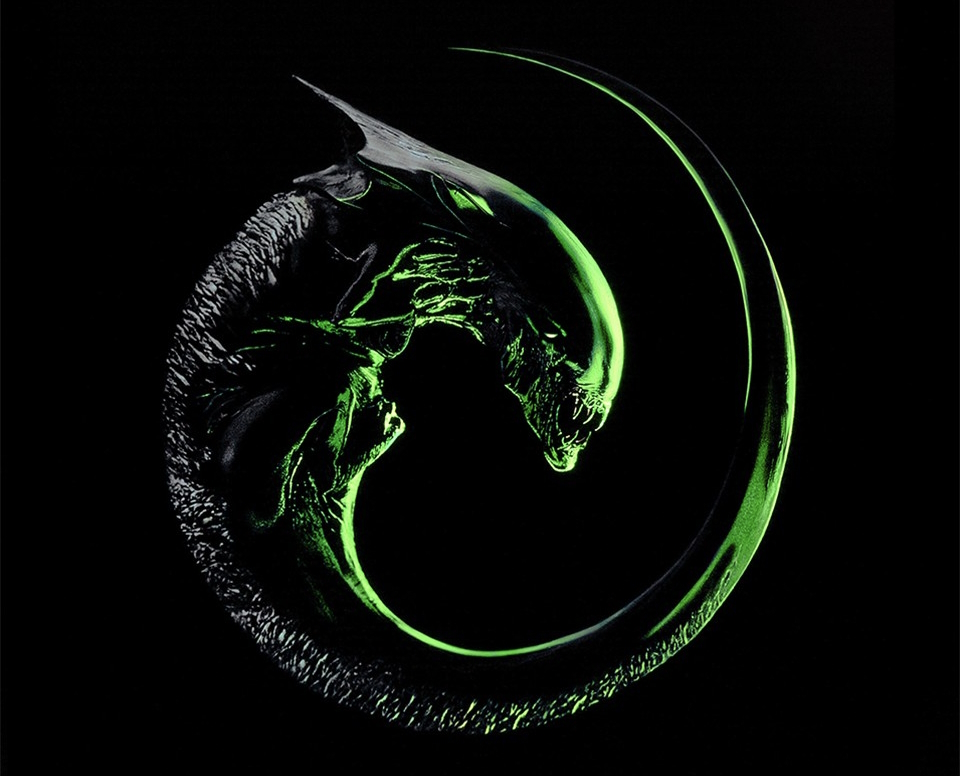
Alien 3: The Assembly Cut is a very different movie

For years I’ve heard about the so-called Assembly Cut of Alien 3, but didn’t expect much from it. I wouldn’t say I hated Alien 3 (although I would say that of Alien Resurrection), I just think Aliens’ version of Ripley is possibly my favorite movie character in history. I don’t know why I find her so endearing, I just do. I get chills whenever I merely think about her saying, “Get away from her, you bitch!” But in Alien 3 she just seems… off.

Those who claim Alien 3 was only disappointing because its critics were expecting more Aliens are mistaken. A lot of us loved the first sequel because it was so different from the original, not just because it was an action picture. Right out of the gate, Alien 3 makes the mistake of treading the same water as the original. It’s also important to remember Alien clones were a dime a dozen those days; the whole “we’re trapped in a spaceship/military complex/prison with an alien” thing was already severely played out by ’92. It was understandable audiences expected something different from a series which had yet to repeat itself.

Thankfully, the first forty minutes of The Assembly Cut feel like a completely different animal than the theatrical cut. In this edit, Ripley washes up on a beach after her escape pod crash lands on the penal colony known as Fury 161. Charles Dance’s character, whose best scenes are restored in this version, is out for a stroll on the beach when he discovers Ripley’s unconscious body. Many will oppose the idea that Ripley hops in bed with the first guy she sees, but I’ll be damned if it isn’t completely believable. It’s not, “We want you to believe these characters are suddenly in love,” but more like, “Sometimes, lonely adults have sex.”

Although there were so many lame alien clones at the time, The Assembly Cut makes it clear Fincher could have made the first truly skilled knock-off. Unfortunately, the special effects suck as bad as they did in ’92 and Ripley’s reaction to learning of Newt’s death still underwhelms. I was hoping the heavy-handed crucifixion imagery at the end of the movie was gone, and although that shot is improved in a way, it’s still stupid and pretentious. Other than that, The Assembly Cut is a decent end to the trilogy.

There are various other improvements I won’t spoil. I’ll just point out the alien’s entrance is much spookier than the one we initially got.

The Nice Guys (2016)

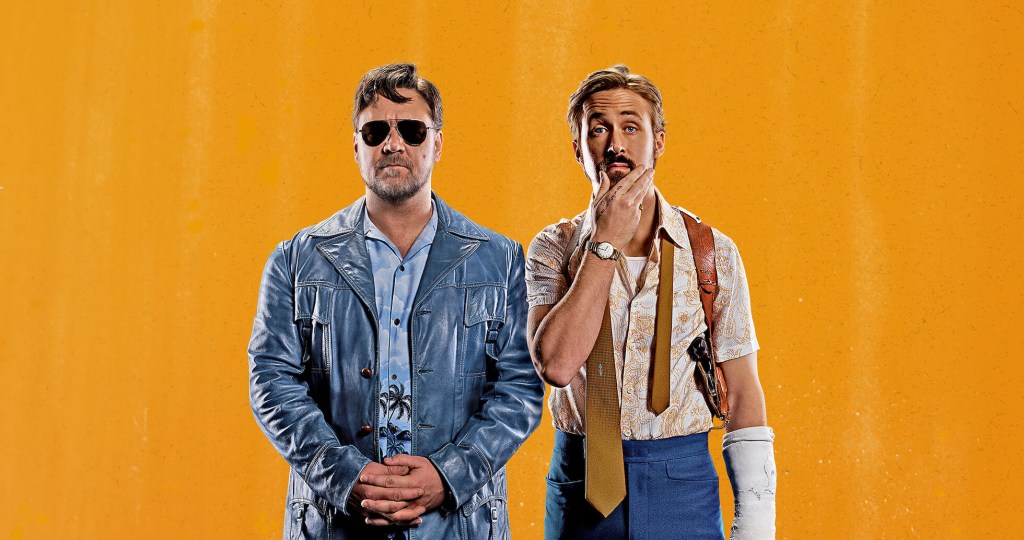
Look, kids. This is what summer blockbusters used to look like. I like Captain America movies as much as the next guy, but this is the film I was most hyped to see this year. If you’re wondering how Shane Black’s latest buddy action film stacks up to his previous underrated classic, Kiss Kiss, Bang Bang, I’ll save you the suspense: it’s probably even better.

The Nice Guys was supposed to open later this year, but Warner Bros. moved it forward to give its original date to Central Intelligence, which appears to be another soulless comedy for Dwayne Johnson and Kevin Hart. Now The Nice Guys is opening against Neighbors 2 and The Angry Birds Movie, further proof that studio executives have no fucking clue what they’re doing. In promos, you can tell producer Joel Silver and the cast of the film are understandably bitter about the idiotic scheduling.

Ryan Gosling plays Holland March, a shitty private detective who has rare bouts of intuition. Like Saul Goodman, his client list consists of confused elderly people. Russell Crowe plays Jackson Healy, a guy who beats people up for money and he’s just been hired to kick Holland’s ass. Soon they’ll discover they have overlapping cases, at which point they team up and scour 1970s Los Angeles for leads. Holland’s impressionable young daughter, who’s at least a little smarter than her dad, tags along for the ride. She’s not incidental to the plot, either.

My favorite supporting characters are Keith David and Beau Knapp’s henchmen. These nuts would have stolen the show if not for the perfectly cast leads. David is just one of those guys I love seeing in movies and his presence here makes it all the more legitimate as a throwback film. Knapp, who I’m not entirely familiar with, plays a presumably coked-up idiot who has a hilariously evil laugh.

Gosling and Crowe make a brilliant team. I really miss the mid-budget action-comedy. This is exactly what going to the movie theater was like when I was kid.

The VVitch (2016)

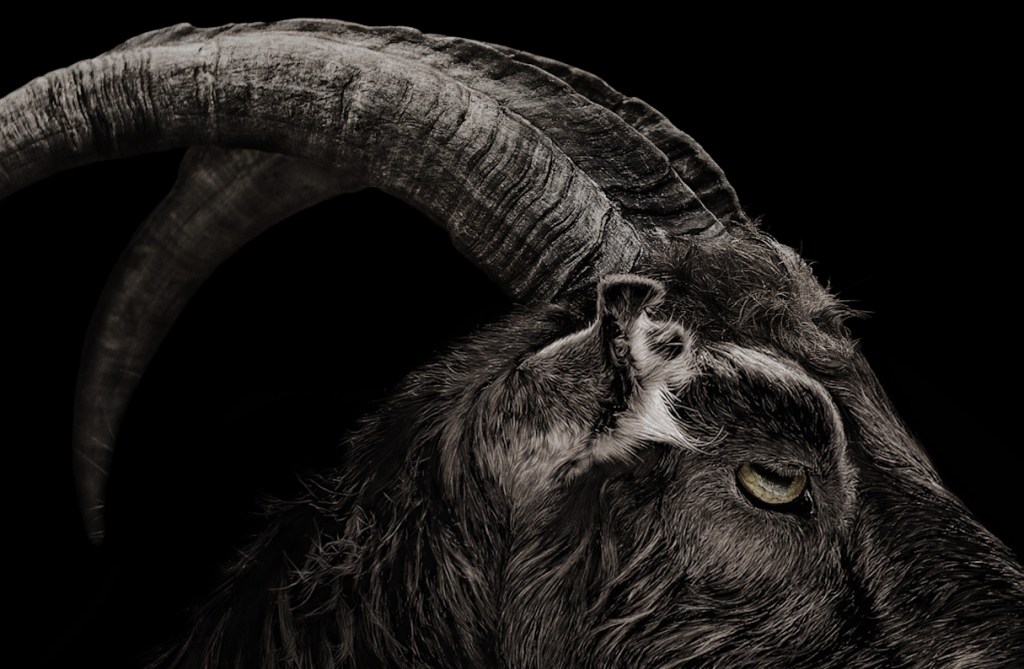
I love movies about witches, whether there’s an actual witch or it’s just hysteria. The latter is typically more terrifying than the former, but The VVitch gives us the best of both worlds. Patient and irresistibly atmospheric, it layers on the horrors experienced by a Christian family who have been outcast from their New England community.

Katherine, (Kate Dickie from Game of Thrones), is the mother of five children who spends the entirety of the movie grieving. Dickie’s acting is subtle for the most part and believably grand when necessary. William (Ralph Ineson, also from Game of Thrones) is the father of the family; he’s responsible for the sin which got his family exiled to the wilderness in the first place. The film wisely keeps his criminal indiscretion vague so we won’t pass judgment on him too early. Whereas his wife sobs herself to sleep, William stoically chops wood to cope with their hardships.

Their children include a newborn baby, creepy twins who spend their days playing with a goat, and Thomasin (Anya Taylor-Joy) who doesn’t seem to be aware her younger brother Caleb is developing feelings for her now that she’s becoming a woman. Because their father is a lousy hunter, Caleb and Thomasin secretly decide to hunt on their own despite the trouble they’ll get into when they return. It’s then that they stumble upon the witch’s hut in the woods. At this point, I wouldn’t dream of telling you what happens next.

The best thing about The VVitch, which already has plenty to like, is its unpredictability. I suspect first time director Robert Eggers felt himself veering dangerously off course while writing the script, but instead of correcting himself, he said “eh, let’s see where this goes” and barreled right off the intended path. I can’t imagine we’ll see a better horror film this year.

Midnight Movie: Bloodsport (1988)

Bloodsport kind of has an identity crisis. It’s not so bad it’s good (cheesy montages and poor dubbing notwithstanding), but it’s almost good enough to be… well, good. It wasn’t Jean Claude Van Damme’s first movie, but it’s probably the one which put him on the map. Van Damme plays a U.S. Army Captain who goes AWOL to participate in the underground kumite (“koo-muh-tay”), a tournament in which thirty martial artists gather in Hong Kong to face off until there’s only one left. One character describes it as “cockfighting with humans.”

Along the way, he meets Donald Gibb (Ogre from Revenge of the Nerds) who provides so-so comic relief until the film’s villain smashes his skull in. At that point, the stakes have been raised and Van Damme’s character not only has to fight for his own honor, but for… oh, who cares? If you haven’t seen Bloodsport, all you want to know is: Is the fighting any good? Sort of. Sometimes Van Damme’s moves are so plodding, I wonder why the director employs slow motion at all.

There’s a curious lack of blood for a movie that has “Blood” right there in its title. Still, the film’s extremely watchable, I guess because it’s so rarely boring. Cannon was good at making cheap movies look expensive. Consider the fact this was made for around four million dollars, adjusted for inflation, and a modern studio wouldn’t get this kind of production value for anything less than fifty million or so.

The character Van Damme plays in Bloodsport was a real guy who was full of shit when he convinced the filmmakers to tell his story. That doesn’t matter at all.

Midnight Movie: Law Enforcement Guide to Satanic Cults [VHS]

Senseless moral panics will never go away, but the 80s and early 90s did ’em best, as proven by today’s featured video. The introduction has the sweater-clad host inviting us to “pay attention and notice the reverse of everything that is normal becoming abnormal.” What does that even mean? Word salads like that sound suspiciously like the kind of nonsense you’d hear an actual cultist say.

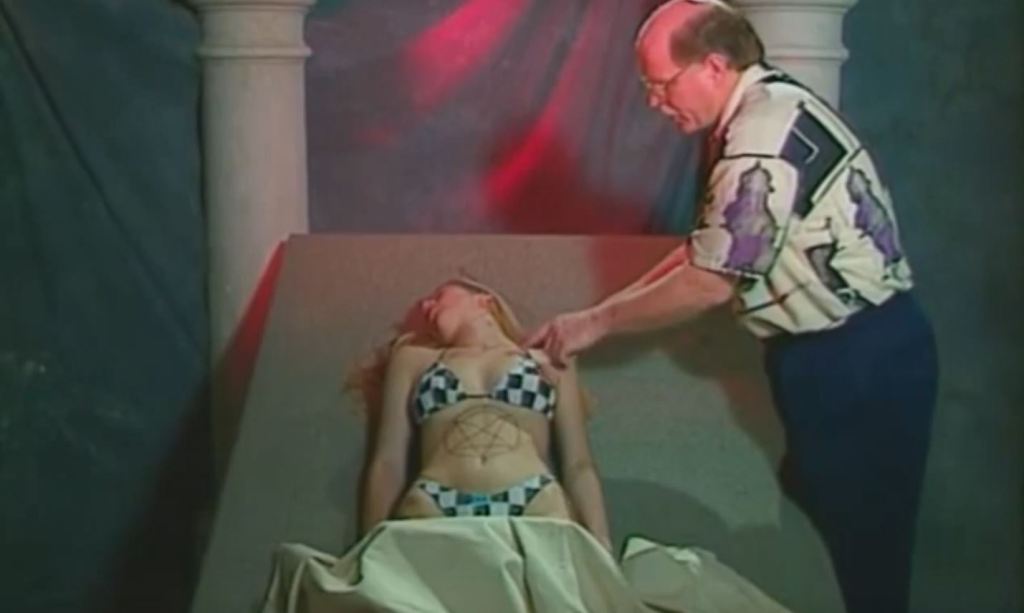
It’s not long until the video brings in a fake expert who visits a neighborhood park. There he conveniently stumbles upon the remnants of a Satanic ritual. It’s immediately clear the only orgy that actually took place there was the orgy of evidence manufactured by the unscrupulous filmmakers. “Oh, look. There’s a pentacle right there, mere feet from where we set up our cameras. Let’s go have a look.”

As expected, the video manages to link Satanism to decorative candles, video games, modern music, homosexuality, pornography, and everything else “concerned parents” wanted to condemn at the time. Then there’s the excessively detailed list of signs that indicate your child may be the victim of a Satanic cult. This list is indistinguishable from a list of “signs your kid might be abused, period,” but the filmmakers seem convinced only Satanists are capable of such crimes.

While the Guide to Satanic Cults is chock-full of hilarious (but potentially dangerous) misinformation, the middle section drags. When the “expert’s” segment ends, I’d suggest fast-forwarding to the aforementioned “bikini girl” scene, which is obviously the repressed host’s excuse to touch a nearly naked model. I don’t know how she didn’t crack up laughing when he removed the fitted sheet from her body. And I imagine the editors had to use a pretty advanced noise gate to cover up all his heavy breathing.