The Great Silence (1968) [Western Wednesday]

My favorite stories tend to put the heroes and the bad guys in the same room long before the final showdown. Early on in The Great Silence, Sergio Corbucci places his three most combustible characters in the same stagecoach, which will take them to the little town where the final shootout will go down. And boy, I do mean brutal: the resolution is so alien to what casual audiences are used to, Corbucci was forced to shoot an alternate ending. Any copy you can track down today will have the original ending in all its hard-hitting glory.

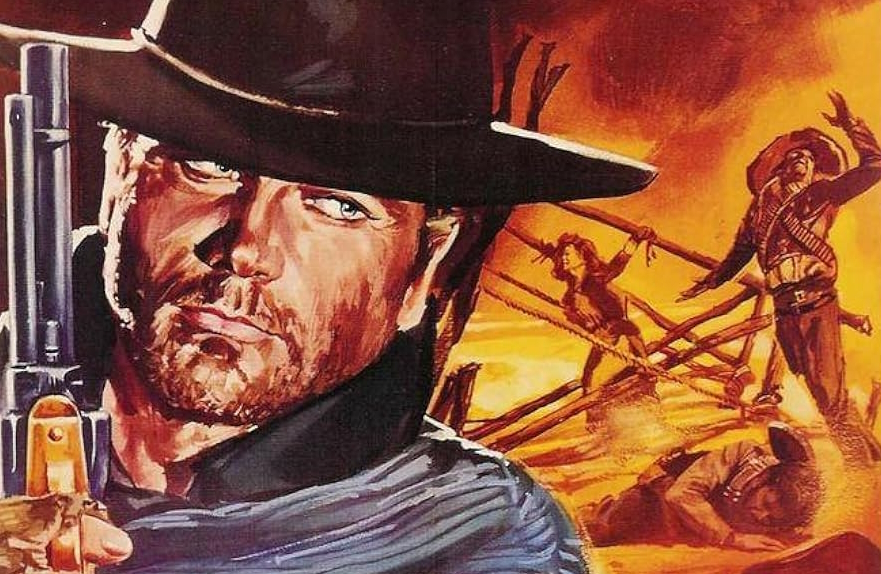
The hero of the film is Silence (Jean-Louis Trintignant) who had his vocal cords cut when he witnessed his parents’ murder as a kid. Legend says they call him Silence because the silence of death is the only thing that remains in his wake. His holster is a wooden box, which can also be attached to the end of his pistol like a makeshift rifle stock. Instead of killing bad guys, he shoots their thumbs off so they can never hold a pistol again. Corbucci supposedly got the idea for a silent gunslinger from Marcello Mastroianni, who always wanted to make a western, but couldn’t speak English worth a damn.

Then there’s the sheriff who’s played by Frank Wolff, an American-born actor who made his career out of foreign films and westerns. He’s an honest, scared, and competent lawman who’s investigating the town over allegations that its bounties aren’t ethical, even though they’re technically lawful. The character immediately distrusts the latest addition to his stagecoach: a bounty hunter named Loco who cheerfully ties his victims’ corpses to the roof. It’s obvious Loco is a man who didn’t give a damn about the law until it became corrupted enough to protect him.

Here’s the thing about Loco: when you create a hero as bad ass as Silence, you’ve gotta work hard to come up with a worthy villain. So Corbucci cast none other than the legendarily mad Klaus Kinski. When Loco kills the husband of Pauline (the beautiful Vonetta McGee of Blackula fame), she sells her house to the banker who’s responsible for creating the corrupt bounties. She plans to use the money to hire Silence so that he can set things right. Silence, who’s fallen in love with Pauline, tries and fails to goad Loco into a shootout. The problem is, Loco is as clever as he is sneaky. He refuses to partake in a shootout until the conditions favor him.

It’s a slow burn to the explosive ending, which makes it clear the filmmakers are unwilling to dilute their message for commercial viability. This is probably the reason the film never saw a proper release in the United States until a few years after DVD players came along. What I just watched was one of those earlier DVDs and it only makes me wish more for a proper Blu-Ray release.

Ultimately, I’ve enjoyed other Corbucci films a little more for keeping true to the entertainment-over-art style of spaghetti westerns, but few have been as masterful—or risky—as this one. It’s a great movie because it’s harder to digest than simple westerns. Love it or hate it, you won’t be unaffected.
Western Wednesday: Butch Cassidy and the Sundance Kid (1969)

I used to know this movie like the back of my hand. Unfortunately—and here’s a good case for never watching a movie more than twice in a single decade—I saw it so many times I eventually grew bored of it. That was right around the time I discovered The Wild Bunch, which made this film seem a little too sleek in comparison. Fast forward to my thirties and I’ve forgotten just enough of it to enjoy it again, but not quite love it.

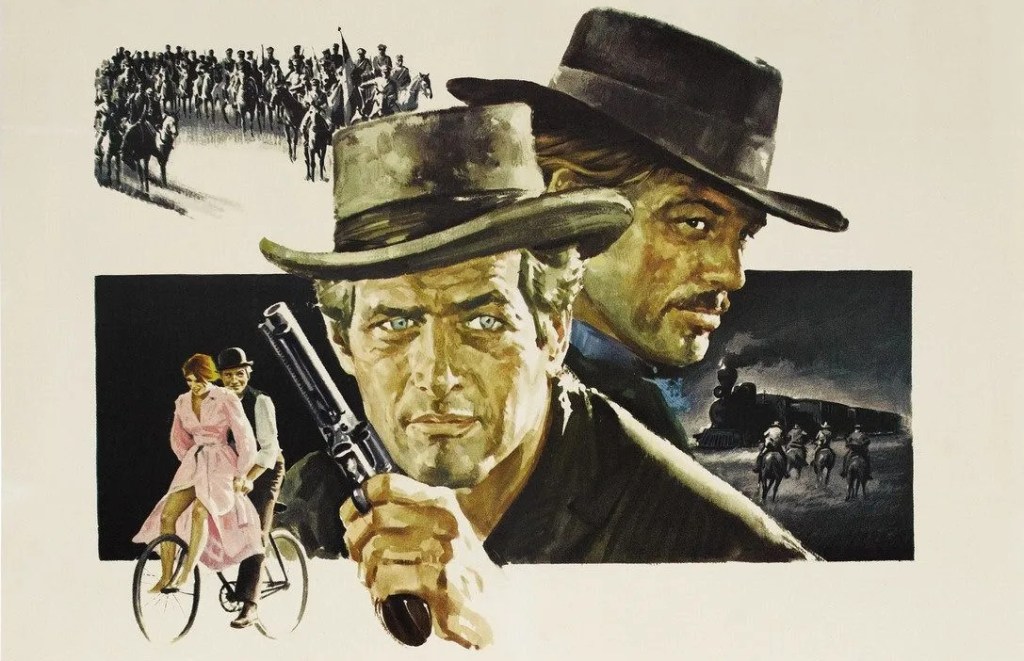
Like many westerns, Butch Cassidy and the Sundance Kid is set in a time when the gunslinger is becoming obsolete. In The Wild Bunch, the main characters knew it the moment they laid eyes on their first car. In this film, Butch (Paul Newman) and Sundance (Robert Redford) should have known it from the moment they acquired their first bike. After botching a train robbery, the duo realize the rules of the west have changed, but they didn’t get the memo.

Knowing there’s no way they’ll be able to survive if they continue their outlaw ways, Butch and Sundance find themselves at a crossroads. They reluctantly discuss their options around a table owned by Sundance’s patient love interest (Katharine Ross), who probably would have been Butch’s love interest if he’d been the one to meet her first. Butch, who’s always the know-it-all of the duo, suggests they should pack up and head for greener pastures in Bolivia. When they arrive, they find their destination is little more than abandoned farmland and dust.

There’s a reason William Goldman’s screenplay is analyzed to death in screenwriting classes. The story, which indulges in and pokes fun at the idea of myths and legends, has a lean simplicity to it. The banter is a not-very-distant ancestor to the kind of humorous dialogue that appears in Hollywood blockbusters as recent as The Force Awakens. The plot quickly establishes the main characters, the female lead, and the gang, whose leadership is hanging by a thread. It won’t be long until Butch and Sundance are on the run, chased down by an all-star team of man-hunters whose faces we never see.

The first half of the film deserves its classic status and then some. Unfortunately, the best scenes dry up in the second half. Everyone loves the long sequence of chase scenes in which they’re desperately trying to throw the unseen antagonists off their trail, crossing desert, rock, and water to do it. They occasionally pause to watch their pursuers from afar with an even mixture of dread and awe. “Who are those guys?” they ask repeatedly. Nothing else really compares until, of course, that iconic freeze frame at the end.

Despite its bottom-heaviness, Butch Cassidy and the Sundance Kid is a hugely entertaining popcorn flick. That’s pretty much all I feel like saying about it at this point in my life, which is part of the reason I like movies so much—sometimes they change as much as I do. Maybe I’ll love it again the next time I see it, but I don’t plan on watching it again for a very long time.

Western Wednesday: The Revenant (2015)

I’ve always wondered why we’re drawn to stories in which a relatable hero is put through absolute hell. I assume the first stories ever told were about rival tribes, untrustworthy people, and dangerous predators—the very things The Revenant is about.

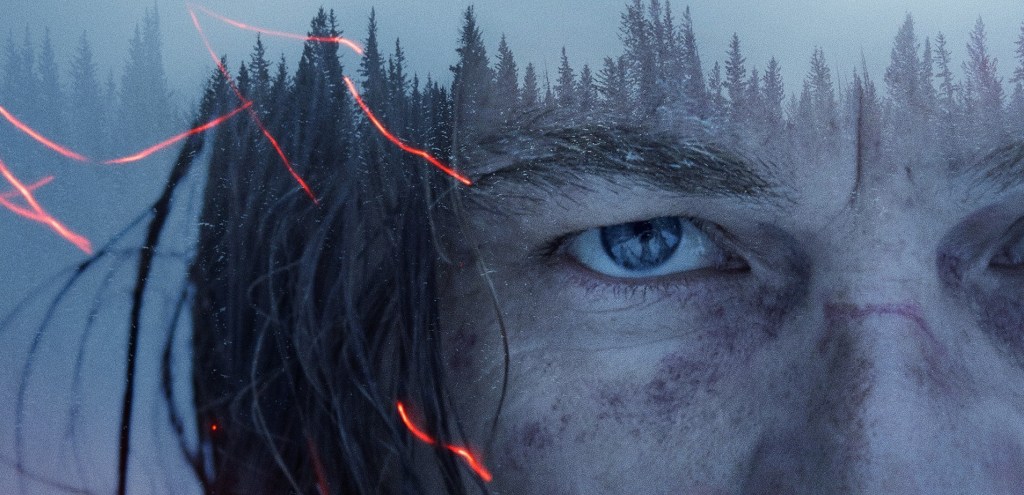
What makes it more compelling than most movies is Leonardo DiCaprio’s willingness to get the shot. He actually plunges into ice cold water and crawls through real snow naked. There is so little cheating here and director Alejandro González Iñárritu, who won the Oscar for Best Director last year, wants us to know it’s all real, too; he doesn’t bother using a different take when his actor’s breath—or blood—gets on the camera lens. I’d say DiCaprio will probably win Best Actor if I didn’t think the Oscars has some illogical vendetta against him.

In the early 1800s, Hugh Glass (DiCaprio) and his “half-breed” son are trackers in a fur trapping outfit. Fellow trapper John Fitzgerald (Tom Hardy) is the kind of blowhard who has a problem with everyone, especially Glass. Fitzgerald is, without a doubt, the biggest movie asshole of the year. You don’t love to hate him like a lot movie villains, you just hate him, period, in the way you hated Nurse Ratched and Dolores Umbridge. After Glass is gruesomely mauled by a bear, what Fitzgerald thinks best is suffocating him so that he can no longer slow the others down.

The Revenant is a beautifully nasty movie, shot on lenses so wide the vast landscapes curl around the edges. There’s at least one ham-fisted visual metaphor, which you wouldn’t expect from a director of this caliber, but overall I enjoyed it, if only because Iñárritu forces himself to step out of his comfort zone yet again. But other than its lead performances, the only thing The Revenant really has going for it is its admittedly breathtaking technical accomplishments. I don’t think it will win Best Picture, if only because Iñárritu’s last film did, and it’s not my first (or even second) favorite western of the year.

Western Wednesday: City Slickers

“All America lies at the end of the wilderness road, and our past is not a dead past, but still lives in us. Our forefathers had civilization inside themselves, the wild outside. We live in the civilization they created, but within us the wilderness still lingers. What they dreamed, we live, and what they lived, we dream.” 

— T.K. Whipple (As quoted in the beginning of Larry McMurtry’s Lonesome Dove.)

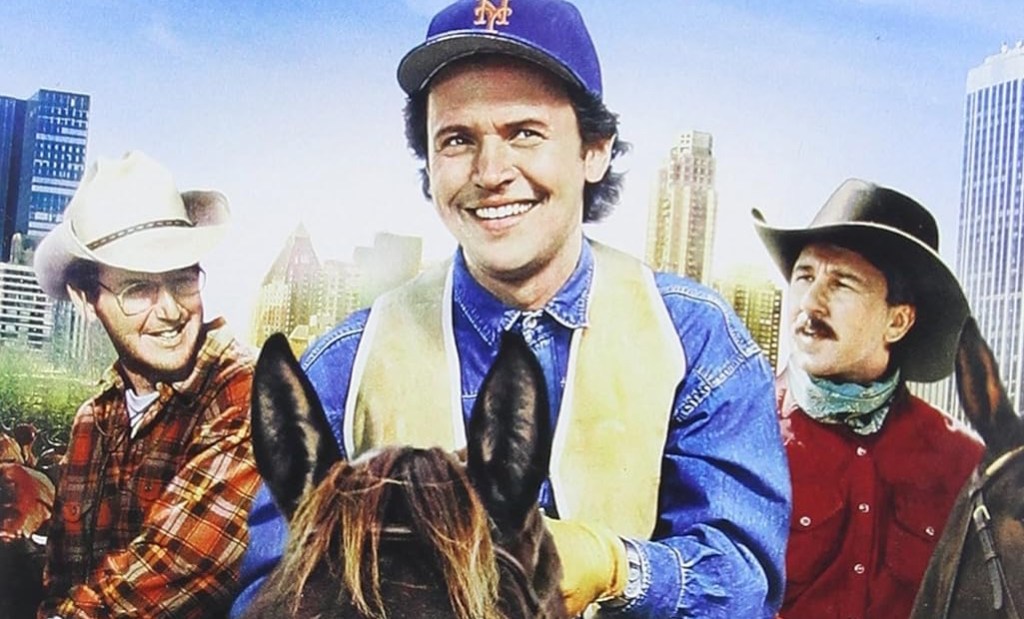
Billy Crystal’s character is thirty-nine, an age which seemed ancient when I first saw City Slickers at the drive-in theater twenty-five years ago. Like Logan’s Run, it’s a movie I can better appreciate now that I’ve gained perspective on this funny thing called age. I’m going through a phase in which I’m drawn to reading and watching westerns almost exclusively. Taking a couple of weeks off to drive cattle actually sounds more attractive than a trip to Disney World (though to be perfectly honest, this city slicker would prefer to do neither).

It’s suggested that every year, Crystal’s less neurotic friends (Daniel Stern and Bruno Kirby) concoct semi-idiotic vacations and drag him along. Their latest scheme indulges a western fantasy, in which well-to-do city folk can pay for the opportunity to become temporary cowpunchers. Crystal is reluctant to go until his patient wife points out that he’s forgotten how to smile. She thinks this goofy adventure might be good for him.

City Slickers isn’t terribly successful at being a comedy, but it’s a surprisingly deep character story. The three friends are much more than their archetypes would suggest. Stern, for instance, pretends he’s fallen asleep so he doesn’t have to speak to his overbearing wife; he possesses more wants and fears than the two-dimensional characters in most comedies. Kirby, who’s an even better actor than Crystal, proves to be more interesting than the playboy owner of a sporting goods shop we’re initially introduced to—particularly when he reveals why he’s so weird about women. A lot of comedies would have mined his strange job for cheap laughs. This one doesn’t.

Then you have Curly, who’s played by Jack Palance. Palance is one of my all-time favorite actors due to his uncanny ability to chew scenery in a believable way (I still think he would have made a better Joker than Jack Nicholson). In lesser comedies, he would have parodied his former screen persona for a cheap laugh. Thankfully, City Slickers isn’t content with being “just a comedy” because he warms up to these guys about halfway through. It’s refreshing what the filmmakers do with Palance, despite the fact they completely undo all that hard work in the inferior sequel.

So yeah, as a comedy it’s kind of slow—the goofy music can be as insistent as a bad laugh-track while a lot of the minor characters are unbelievably over-the-top, particularly Stern’s wife, whose face is often filmed with a bit of a fishbowl lens, which is a comedy technique that’s never been funny. Although I’ve seen much funnier comedies than City Slickers, few of them were as good. I feel prepared for thirty-nine.

Western Wednesday: The Hateful Eight (2015)

While I still think Pulp Fiction is probably my generation’s most influential film, Quentin Tarantino’s most entertaining film for me is Inglourious Basterds. That opening scene, between Hanz Landa and the poor dairy farmer, is one of the tensest, funniest, scariest, and most beautifully patient things ever burned to celluloid. With The Hateful Eight, Tarantino attempts to sustain that note for nearly two hours in the snow-covered scenery of Wyoming.

The film opens on Major Marquis Warren, a bounty hunter played by Samuel L. Jackson. He’s sitting on a saddle which is mounted to a pile of dead bounties. The cold weather has killed his horse and the pile of frozen corpses amount to a few thousand dollars—if he can get them back to town. A stagecoach comes his way and he finagles a ride with the man in the back: John “The Hangman” Ruth (Kurt Russell), who’s handcuffed himself to Daisy Domergue (Jennifer Jason Leigh), a vile woman wanted for murder. She doesn’t seem to mind much when Ruth beats the shit out of her, which is often. Hell, she may even like it.

Along the way they pick up another suspicious traveler, Chris Mannix (Walton Goggins), who claims he’s the new sheriff. Ruth—who starts out paranoid and becomes increasingly so by the minute—reluctantly agrees to take the man into the stagecoach. Unable to beat a blizzard, they hole up at Minnie’s Haberdashery, a cozy outpost with a stocked bar and a chess game by the fireplace. Ruth begins to suspect that at least one of the eight people in the haberdashery is planning to free his prisoner. When they ask Domergue herself, she says, “You’re right! Me and one of them fellas is in cahoots! We’re just waiting for everybody to go to sleep… that’s when we’re going to kill y’all!” The way she says it is both hilarious and chilling and manages to tell her captors nothing more about their predicament.

There’s a reason Tarantino uses Kurt Russell and music which was originally produced for John Carpenter’s The Thing. Surprisingly, that film has more influence on The Hateful Eight than the spaghetti westerns that so heavily inspired Django Unchained. Imagine The Thing, without the alien, and a western setting. That’s The Hateful Eight.

Russell plays the kind of confident dork he was in Death Proof, but it’s Jennifer Jason Leigh who steals the show with her over-the-top villainy, hilarious in the way she only gets meaner the more she’s used like a punching bag. I don’t think Samuel Jackson is quite as good as he was in Unchained, but that was a role of a lifetime; in this one he gets the most substantial monologue of the entire movie. The rest of the cast, including Demián Bichir, Tim Roth, and Michael Madsen, are perfectly suspicious. With any luck, Tarantino will do at least one more western before his career is over, but topping his first two will take more than skill.

The Hateful Eight is long, slow, and gratuitously violent. My kind of movie.

Western Wednesday: My Name is Nobody (1973)

In 1973, the year before Blazing Saddles released, the spaghetti western was dead. Sergio Leone had already made what many consider to be the greatest western of all time. His assistant director on the first two Dollar films, Tonino Valerii, went on to direct Day of Anger with Lee Van Cleef. So it was surprising that Leone arranged to have Valerii direct My Name Is Nobody, a send-up of the subgenre they had defined.

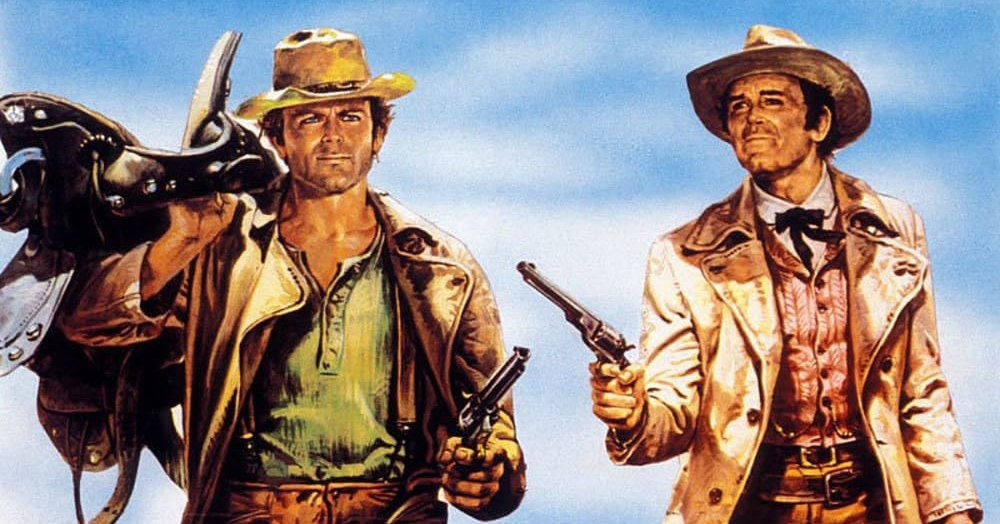
Jack Beauregard (Henry Fonda) is a bit of a legend in the gunslingin’ world, which means he frequently has to dispatch the men who’ve come to kill him for rep. In the aftermath of his latest shootout, a bystander asks, “Is there anyone faster?” The reply: “Nobody.” Enter Nobody, a childlike wanderer played by Terence Hill.

Three bad guys attempt to dupe Nobody into delivering a booby trapped picnic basket to Jack. Nobody agrees. When Jack asks what’s in the basket, Nobody says, “Oh, this? I reckon it’s a bomb.” To which Jack replies, “I reckon you’re right.” Nobody tosses the basket back to the bad guys and yells, “He didn’t want it!” as the basket explodes.

Meanwhile, a group of bandits known as the Wild Bunch (an intentional reference to Sam Peckinpah, whose name also appears on a grave marker) are laundering stolen gold by passing it off as the production of a dummy mining operation. Although Jack assumes Nobody is just another gunslinger who’s come to kill him for a shot at fame, Nobody reveals that he idolizes the gunslinger; he actually wants Jack to take on the gang single-handedly so that his name can go down in history books. Jack just wants to quietly retire to Europe.

Like Two Mules for Sister Sara, My Name is Nobody is not what I’d call a classic, but it’s more memorable than most movies. Then again, maybe it’s only memorable because we’ve seen some of these scenes a hundred times before, only this time Leone and Valerii have turned them into gags. Also in on the joke: Ennio Morricone, whose score plays like a parody of his own works. You get the feeling these guys weren’t mourning the death of the spaghetti western, but merrily digging its grave.

Western Wednesday: Bone Tomahawk (2015)

For a film that shows up this quietly on VOD after a limited theater release, Bone Tomahawk is much better than it has any right to be. Twenty years ago, the same film would have been advertised extensively before dominating the box office for a week or two—maybe more depending on the competition. There’s a scene so shocking, people would have talked about it the way they talked about the big reveal in The Crying Game or the leg-cross in Basic Instinct. Nothing about its quality suggests it was made by a first-time director, either.

A couple of outlaws, played by Sig Haig and David Arquette, stumble onto the sacred burial ground of the “trogdolytes,” a small sect of inbred cannibals. The trogdolytes promptly kill Haig as Arquette flees to a nearby town. Samantha (Lili Simmons) is recruited to operate on the outlaw’s injured leg while her husband, Arthur (Patrick Wilson), stays at home recuperating from a leg injury of his own. The following morning, the sheriff (Kurt Russell) discovers the outlaw, Samantha, and even the deputy have been kidnapped in the middle of the night. The sheriff gathers a search party and sets out to find the cannibals’ cavern. It’s in the agoraphobic expanses of the wild west that this group stumbles into horror movie territory.

I can probably count the number of movies that legitimately unsettled me on one hand. Bone Tomahawk is one of them. A lot of horror films coddle the audience to the point that even a child can reliably predict who’ll be left standing by the end. No one’s safe in this film. When the hero starts out with a bum leg, you already know it’s not the kind of story in which differences can be solved by a routine shootout.

That shocking scene I mentioned earlier is something so sick and jarringly twisted, Bone Tomahawk will likely spread through word of mouth until it’s a household name. I just can’t imagine a movie this incendiary can come and go so quietly. See it today and recommend it to everyone you know so that it can obtain its cult status sooner rather than later.

Western Wednesday: La Resa dei Conti (The Big Gundown)

Grindhouse Releasing’s rich packaging for The Big Gundown is immediately inviting, which is strange because I rarely care about such things. I expected two or three discs, but four? With this edition, you’ll get the American version of the film on Blu-Ray and DVD, the Italian-language version of the director’s cut, La Resa dei Conti, with optional subtitles as opposed to dubbed voice work, and a CD containing Morricone’s score. I’ve listened to the soundtrack five times now. I’m listening to it as I write this.

The movie opens on a trio of outlaws trying to outrun the famous bounty hunter Jonathan Corbett (Lee Van Cleef in his first leading role at the age of forty-one). What they don’t know is he isn’t following them. He’s actually well ahead of ’em. When they fall into his trap, he tells them they either get the gun or the rope as he calmly chooses a single a bullet for each of the men. A few days later, Corbett is attending a wedding party where a Texas railroad tycoon (Walt Barnes) convinces him to run for senator. Corbett agrees it’s time to settle down, but only after going on one last bounty: to apprehend a child murderer.

Soon after the manhunt begins, Corbett thinks he found the guy. The suspect draws on him and Corbett guns him down with ease. Corbett confesses disappointment, saying, “I thought he’d be smarter.” Naturally, the movie can’t end there, so it turns out Corbett killed the wrong guy (conveniently enough, the wrong guy was wanted for murder anyway). We learn the guy he’s really after is smarter when he successfully gives Corbett the slip.

The name of the bounty is Cuchillo and he’s played by Cuban actor Tomás Milián. The filmmakers want you to believe Cuchillo is a master escape artist, but here’s one of my few complaints: Corbett becomes uncharacteristically incompetent whenever he catches up to Cuchillo. The tricks Cuchillo plays on Corbett just wouldn’t work on the kind of godlike bounty hunter who can arrange a trap ahead of the outlaws who think he’s behind them. There’s a line later in the movie that kind of explains why Corbett gets downright stupid at times, but it’s a bit of a cheat.

Leonard Maltin called The Big Gundown the best spaghetti western without Leone’s name on it. I wouldn’t agree, but it’s up there—like, way up there—among the absolute best. There are plenty of great scenes, beautiful camera work, and a ton of production value. I am unconditionally in love with this film and Grindhouse Releasing’s presentation. It’s worth every penny.

Western Wednesday: Two Mules for Sister Sara (1970)

“Everybody’s got a right to be a sucker once.”

A gunslinger stumbles upon a damsel in distress in the middle of the desert. This time the gunslinger is Clint Eastwood and the damsel is Shirley MacLaine. The two of them play Hogan and Sara. After Hogan guns down the group of bad guys, Sara puts her clothes back on. Hogan’s thrown for a loop when he sees the habit and the rosary. He doesn’t feel right leaving a nun all alone in the desert so he agrees to take her with him, even after he discovers Sara’s in deep shit with the French for providing money and support to Mexican revolutionaries.

Two Mules for Sister Sara is primarily a comedy that often forgets it’s a western. Then it overcompensates in its climax, which is jarringly violent considering what came before it. The film is pretty funny, sure, but it must have been disappointing to see it during its original run, only a year after the release of Butch Cassidy and the Sundance Kid, which is a lot more evenly cooked.

The running gag: although she’s a nun, Sara says and does some unladylike things. After Hogan helps her climb a tree, he apologizes for touching her bottom. “It’s no sin that you pushed me up the tree with your hands on my ass,” she says. Hogan’s double-take of her language is priceless. But that’s pretty much all this movie is: funny. There’s some amusing dialog, good writing, and a touching moment or two, but overall it’s playing it just a little too safe.

It comes from a time when westerns were like Marvel movies (plentiful) and the studios were just as reluctant to adjust a winning formula as they are today. That so many people seem to consider Two Mules for Sister Sara to be some kind of classic sets the bar for classics just a little too low. It’s a good movie and I’ll probably even watch it again someday, but I don’t know about great.

Western Wednesday: Django (1966)

Django begins with the titular gunslinger (Franco Nero) dragging a coffin through all manner of terrain. Later, when he finally makes it to a saloon, someone asks him if there’s a body in the box. Django replies, “Yeah. His name is Django.” I won’t tell you who’s actually in the box. You’ll find out about a third of the way into the picture.

Seconds after the opening credits, Django happens upon a gruesome scene: a gang of bandits are preparing to bludgeon a prostitute to death. You expect Django to intervene, but he doesn’t. Instead, he watches from afar as a second gang swoops in and lays waste to the first. You think the prostitute’s life has been spared until you realize they’re only untying her to retie her to a cross, which they intend to torch. “Burnin’s a lot better than getting beaten to death,” they assure her. (Is it, though?)

You get the feeling Django has been hoping he doesn’t have to get involved. Then it’s clear it’s no longer his decision to make; he’s operating on autopilot when he approaches the men and says in his dubbed voice, “If I bothered you, would you accept my apology?” A split second later his pistol comes out, blazing hellfire, and drops five men in the blink of an eye.

After saving the prostitute’s life, Django takes her to town, finds a room, and meets the leader of the local Klan, Major Jackson. Jackson gets his rocks off on hunting innocent Mexicans for sport. After gunning down over forty of Jackson’s men, Django finds himself at the center of a war between Jackson’s gang and bandits.

It sounds a lot more clichéd than it is. Django’s the real deal—a character of such popularity and charm he’s been portrayed by a dozen different actors in dozens of movies following this one. Like a lot of legends, the details change depending on who’s telling it, but overall the important stuff remains the same. Sure, it’s mostly style over substance, but Django is tragic, shamelessly entertaining, and absurdly violent for its time. If you’ve never seen it before, be prepared to get amped.