Fantastic Four (2015) is 4gettable

I’m conflicted about writing this review for Fantastic Four. I have little more to say than what most viewers have already said. I kinda feel bad about making fun of it at all because this movie’s just not all there in the head, man. Eyewitnesses to the disastrous production suggest the sophomore movie director was suffering from a massive breakdown. There were reports some of the cast and crew were showing up to the set on drugs and alcohol, but I wonder if anybody was sober.

Even knowing the film’s storied production history doesn’t explain its choices. You don’t see the Fantastic Four get their powers until an hour in. They barely use the powers until the anti-climactic battle with the film’s villain, who is dispatched as quickly as he’s introduced. Among the strangest creative decisions is the Thing (Jamie Bell) doesn’t wear any pants. If I had to guess, I’d say it’s because the CGI department wasn’t good enough to animate cloth.

Fantastic Four is the kind of movie in which a high school genius, Reed Richards (Miles Teller), builds a functioning teleporter and somehow gets disqualified from the science fair. Immediately after, Richards is approached by government scientists, one of whom is Susan Storm (Kate Mara). The scientists reveal they’re also experimenting with teleportation, but they can’t bring their test subjects back the way Richards can.

Naturally, Richards is given a job on the project, but we learn the obligatory g-men in movies like this are clueless about the real world applications for what would be the most amazing invention in human history. If anyone actually invented teleportation technology, the real governments of the world would drool all over it. The screenwriters, however, seem hellbent on throwing illogical adversities at their characters because a 2-day screenwriting course told them to “include lots of conflict.”

Soon after Richards is recruited, the film introduces Victor von Doom, whose dumb speeches are about as poignant as Jaden Smith’s tweets. Previous screen versions of Doctor Doom got a lot more right than this one. Trank’s version would have us believe the villain is a genius even though he seems more like a tech bro whose parents still pay for his World of Warcraft subscription.

There’s no good reason for Doom to even be in this movie, just a sloppy excuse. What’s worse is he and Richards are both madly in love with Sue (yawn), which creates a love triangle nobody wanted. This plot thread leads absolutely nowhere as Doom later tries to crush Sue to death… and if that’s not true love, I don’t know what is. Come to think of it, hardly anything they set up has any payoff or resolution.

Other comic book adaptations would have given us at least one action sequence early on. This one doesn’t unless you count a one-minute car chase involving Johnny Storm (Michael B. Jordan) about twenty minutes in. It’s a bold move which might have paid off in a better movie that actually cared about its characters. This movie doesn’t. For example, Ben Grimm appears early on to help Richards construct his science fair experiment, but exits the stage until it’s time for him to transform into the Thing.

Nearly an hour into the movie, the four male characters get drunk and take an unauthorized trip through the teleporter. You’ll be happy something is finally happening, and there’s some decent body horror involved, but what’s insulting is no one thinks to take Sue along, whose contributions to the project were supposedly crucial. I actually found the alternate dimension scenes to be enjoyable, but this stuff should have happened ten minutes in, not halfway through. Just when the movie nearly hooked me, it jumps one year into the future.

Kids won’t like this movie because it takes so long to get to the good stuff. Adults won’t like it unless they’ve never seen a movie before. Part of what drew me to Jack Kirby’s source material was the fact that, with the exception of Johnny, the Fantastic Four were seasoned adults who at least tried to make scientifically rational decisions. With actors as young as these, it reeks of studio interference. To this day, Roger Corman’s infamously cheap production is the most genuine Fantastic Four of all. At the very least it gave us age-appropriate actors and didn’t completely rewrite the mythology to be dark and cynical.

Fantastic Four is the second most represented title in my childhood comic book collection. Obviously I love the comics, but I’m beginning to suspect their powers (particularly Richards’) are just too goofy for live action. I would not be the least bit surprised if the inevitable reboot is just as floppy. Of all the weird decisions this movie makes, I can’t believe they actually include sequel bait at the end of this one. That’s hilariously optimistic.
Creep: What the hell is he doing here?

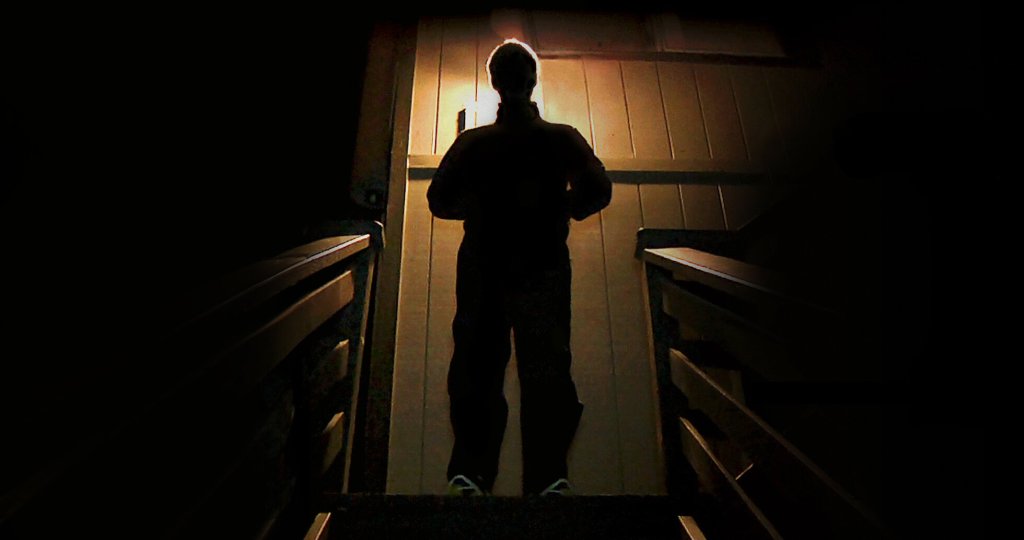
I’ve said I dislike found footage movies, but it’s because they usually suck for reasons having little to do with the way they’re shot. Creep, despite a run-of-the-mill trailer, doesn’t suck. It’s a simple movie, which involves a secluded house, a sympathetic protagonist, and a creep of epic proportions. There’s also an ax and a werewolf mask at play, insisting immediately that we probably won’t get a happy ending.

I’m not very familiar with Mark Duplass, who plays the titular creep, but great character actors are good at embracing the qualities which separate them from genetically-blessed movie stars. Duplass looks so much like a real-life creep he was born to play this role. It’s a lot of fun watching him enjoy a character who’s anything but glamorous.

The setup? Aaron (director Patrick Brice) is an out-of-work videographer who answers a Craigslist ad placed by Josef, the creep. Josef says doctors have given him only three months to live so he wants to shoot a video diary about his daily life. That way, his unborn son (yet to be conceived) can see what he was like. Josef confesses he was inspired by the schlocky melodrama My Life, which starred Michael Keaton and Nicole Kidman. If that isn’t particularly amusing to you, Creep probably isn’t up your alley. 

Aaron’s job is to follow Josef and record him going about his daily routine, but nobody else on the planet has a routine as bizarre as Josef’s. The first thing Josef wants to do is have Aaron shoot footage of him taking a bath. Reluctantly, Aaron agrees. Whereas many horror films make their characters too stupid to get themselves out of harm’s way (because otherwise the movie would be over then), Aaron’s cast from a different mold. Aaron doesn’t lack self-preservation just because it’s convenient to the plot, but because he’s a habitual people-pleaser. Josef, on the other hand, is a psychopath who loves to prey on people like Aaron, constantly testing limits for his own amusement.

We all know people who are too polite to say no to overbearing strangers with sob stories. Aaron is the kind of person who would loan deadbeats money knowing full well it isn’t actually going towards rent. Because of this, Aaron will make you scream at the screen—not because he’s stupid (though you could make that argument), but because he’s buying into Josef’s manipulative personality. For people like Aaron, being used is the path to avoiding confrontation… that and he kind of needs the money.

Josef’s antics eventually escalate to the point even Aaron has had enough. To say anymore would give away what happens next. The movie’s biggest strength, other than its diabolical simplicity and unusually strong performances, is the fact you never quite know what kind of movie it is, where it’s going, or how Josef and Aaron’s relationship is going to develop. If you’re expecting a slasher film, you’ll probably be disappointed. If you loathe slasher films, you’ll probably be disappointed, too.

I did not completely buy the ending and there’s a weak epilogue which attempts to put a lampshade on the climactic absurdity. It’s as if they only realized how unbelievable the conclusion was after they shot it, and instead of reshooting the scene, they decided to offer a weak explanation as to why it went down the way it did. That doesn’t really matter because movies like this rarely have good endings, anyway. Creep brings the goods just the same.

You get the feeling Brice and Duplass are two friends who had the idea for Creep over drinks one night and decided to shoot it with little more than a vague outline. There’s an unpredictable energy to it that’s exciting. It’s made all the more impressive when you take into consideration that a movie born of such simplistic elements has no right to be as enjoyable as this is. If there’s any justice, both of these filmmakers will swiftly move up the Hollywood ladder.

The Incredible Shrinking Ant-Man

Whenever someone makes fun of Superman’s red briefs, I roll my eyes. Are his red undies pointless? Maybe from a utilitarian point of view, but there’s a good reason they’re there: to provide contrast to the suit and to keep it from appearing boring. Visually, it’s perfect. Superman without his exterior underwear seems even more childlike to me, like a grown man wearing a pajama onesie. If everything must have a function, then why not ditch the cape while you’re at it? The trademark curl? Hell, why not just change his fucking name while you’re at it?

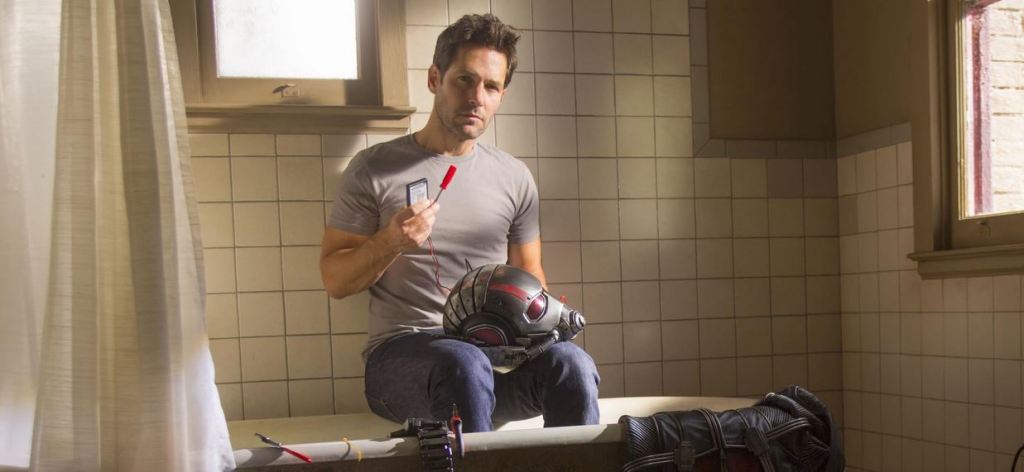
Ant-Man embraces the fact that its source material is an old comic book. Hank Pym (Michael Douglas) is the original Ant-Man who hangs up the shrink-suit early in the picture. In present times he discovers his villainous protégé, Darren Cross (Corey Stoll), has stolen his research and plans to sell it to shady individuals. This all sounds awfully standard on paper, but it’s tweaked just enough to function perfectly fine in a comic book movie.

Soon we meet Scott Lang (Paul Rudd), a former cat burglar who’s trying to go straight so he can be a good father. Yeah, we’ve seen that a million times before, so it’s best that the movie doesn’t dwell on it. The problem Lang is he’s supposed to be a kick-ass cat burglar, but he and his crew are depicted as bumbling idiots for comedic relief. It’s just kind of hard to believe Pym, a brilliant scientist, would pass the torch to somebody who gets captured by police so frequently.

If Ant-Man hadn’t been included in a double-feature at the drive-in, I would have skipped it. You can’t blame me, though, since we all assumed Disney was backtracking from the standard set by Guardians of the Galaxy after it had been announced Edgar Wright was removed from the director’s seat. There’s no doubt in my mind Wright would have made a (much) better movie, but his stamp of creativity is still here. The final product offers something much more imaginative than routine Marvel movies.

I don’t think there’s enough here to sustain the inevitable sequels, but I’m happy to report the initial outing is not a normal movie. Normal movies don’t have the audacity to make battlefields out of briefcases. Normal movies destroy entire cities, Ant-Man is content with destroying train sets. That kind of ingenuity is so good it hurts and it’s no doubt remnants from Wright’s time on the project.

The Death of "Superman Lives"

Two of my favorite subjects are terrible movies and movies which were never made. I always assumed we dodged a bullet when Tim Burton’s Superman Lives fell through, but I’m not so sure anymore. After watching the Kickstarted documentary The Death of “Superman Lives”: What Happened? I think Tim Burton’s Superman would have beaten Snyder’s fist-over-fist. At any rate, we can all agree it would have been better than Wild Wild West, which is the mega-flop Warner Bros. pivoted to after killing Burton’s passion project.

I know it’s popular today to hate comics of the 90s (I still like old school Spawn), but DC’s Death of Superman would have made an interesting movie, even if it did embody what was wrong with the era. I read Kevin Smith’s leaked script back in the AOL days: some of Smith’s dialogue was goofy and verbose (and never would have survived a rewrite), but it was an exciting read if you imagined Christopher Reeve in the part. According to the documentary, that’s exactly what Smith was going for when he wrote it.

Since the movie was never made, The Death of “Superman Lives” uncovers a treasure trove of concept art, including some of Burton’s own drawings. The sheer variety of aliens they designed for Brainiac’s ship suggests we missed out on something special. Interestingly, the budget was initially estimated at $300 million. Comparatively, Waterworld cost $175 million and was the most expensive movie up until that point. Naturally, the studio ordered many cuts to the script.

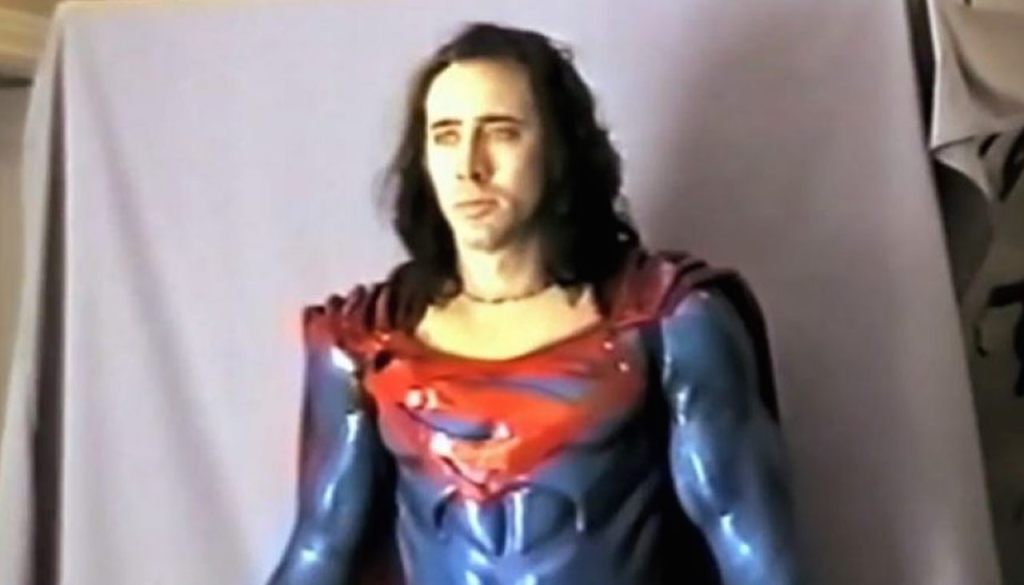
When you see some of the more fantastical designs for Superman’s look, you can be forgiven for wondering what the hell the production was thinking. The documentary makes it clear Burton’s crew wasn’t taking liberties with Superman’s traditional look, but experimenting with suits he’d wear later in the movie, including a regeneration suit following his resurrection. Burton confesses it’s the reason he’s a lot more careful today about letting pre-production material get out: artists need time to experiment behind closed doors.

While I wouldn’t say it’s a great documentary, it does what great documentaries do: it changes my opinion. I now think Tim Burton’s Superman Lives may have been a fine picture.

13 Sins to fortune

Elliot (Mark Webber) is a thirty-two year old loser who doesn’t even have the guts to tell his boss to go to hell when he’s fired over bogus reasons. He’s got a mentally handicapped brother, a pregnant fiancé, and a rancorous father who was driving the car that killed Elliot’s mother. You’ll probably roll your eyes at these obvious setups, believing you know exactly how the movie will employ them. You’ll be at least a little bit wrong. Early on, the movie is a master at misdirection. Later on, it’s a little easier to predict.

Elliot gets a phone call from a stranger. Kill the fly in his car, the stranger says, and a thousand dollars will be sent to his account. Elliot humors the tinny voice and, sure enough, the money is instantly deposited. The second challenge is to swallow the fly, which is worth even more money. I won’t spoil what the rest of the thirteen challenges are, but the cops are already after Elliot by the fourth one.

Even as the challenges ramp up in illegality, Elliot begins to come out of his shell. Whereas he used to be a timid man, he enjoys making waves. After smooth-talking his way out of a run-in with the cops, led by Ron Perlman, we see Elliot smile uncharacteristically. The audience smiles, too. We feel like we’re with him every step of the way, rooting for him as the challenges get progressively weirder, including one that’s ripped right out of Weekend at Bernie’s.

This isn’t to say the execution is flawless. I merely tolerate the flatly shot digital cinematography, but it seems to be the unfortunate new trend for low budget genre flicks as streaming services gain popularity. I can’t imagine any movie that’s shot so blandly ever reaching classic status, but here we are. The new “film” makers are lighting their movies as plainly as possible so they have a neutral image to color correct in post. The result is movies that will never be as bold or likable as the ones that traditionally commit to their looks on the day of shooting. I imagine that as the digital recording formats improve (the problem isn’t the format, per se, it’s the methods), this era will stick out like a sore thumb.

The movie wants to say something about human nature and greed, but the message bounces all over the place; perhaps it wants to say too much for its hour and a half running time. The tone seems to fluctuate throughout, peaking when it’s humorously dark and bottoming out whenever Elliot shows serious humanity. The ending artificially wraps up the escalating complications with a neat little bow. Overall, it’s a decent roller coaster ride that ends anticlimactically. Oh well, it was fun while it lasted.

It followed me home, can I keep it? (It Follows)

A nineteen year old woman has consensual sex with a charming young man in his car. Immediately after, his mood changes and he informs her he just infected her with a sexually-transmitted curse. Before leaving, he gives her some tips: Stay out of buildings that don’t have multiple exits (“It’s slow, but It’s not stupid”) and pass It to someone else as soon as possible because It always goes after the latest person to be infected first.

There is so much bullshit in which the average film would have gladly spun its tires: The “parents don’t understand” angle. The “cops think you’re lying” angle. The “my friends are concerned I’m going crazy” angle. We’ve seen that stuff a million times and It Follows spares us the usual routines.

It knows when to show the monster. It knows when to leave it to hide It. It’s one of the rare films which understands both methods can be effective. The titular It stalks real American streets, pursuing the heroine across eerily familiar scenery. It’s such an honest portrait of what passes as the American dream that you can’t help but believe this is a real thing that is happening. I will refrain from describing It’s appearance and let you find out for yourself, but I will say it’s done without the use of CGI.

I’ve long had a fascination with how poorly teens are portrayed in movies. Whereas many screenwriters are in their early twenties, I’m not sure why they’re so disconnected from youth. Thankfully, the teens in It Follows behave and talk like real teenagers. Not only are they actually played by real teenagers, writer/director David Robert Mitchell knows how to write them, vulnerabilities and all. Remember that name as he has a promising future ahead of him.

Movies like this tend to fall apart by the third act, but the climax was the most satisfying part of the entire movie for me. The teenagers’ plan is exactly the kind of plan teenagers would come up with. And whereas so many other horror movies invent bogus reasons for not bringing in the cops, the threat is such an enigma the characters couldn’t even explain It to the cops. They really are on their own here.

The electronic soundtrack by Disasterpiece is something else I want to highlight. What a bombastic theme. It’ll be stuck in my head for decades.

Fury Road: George Miller’s latest road rage masterpiece

Mad Max is the first movie I ever saw. Road Warrior is one of my favorite movies of all time. I’m not even going to pretend I can be objective about this one… just let me gush.

Fury Road is a two hour movie with about eight minutes of dialogue and comes from a filmmaker who thankfully hasn’t learned the “right” way to make a Hollywood blockbuster. Nothing about it is formulaic. Movies as bold as Fury Road make me feel retroactively cheated by more typical films like The Age of Ultron.

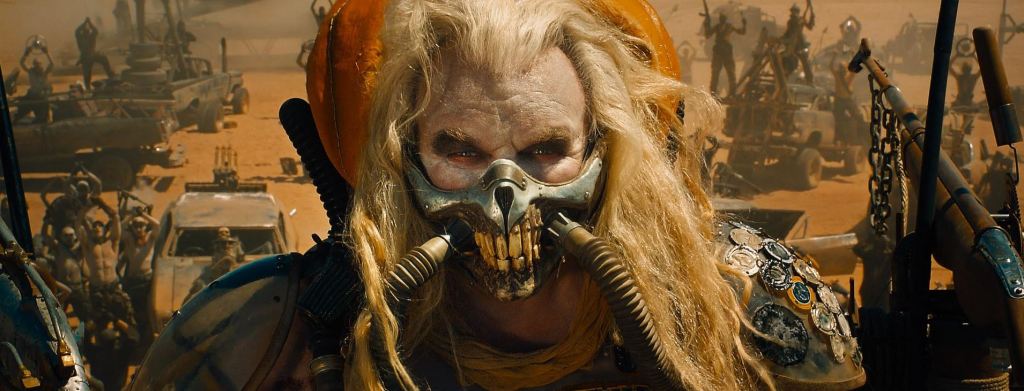
Tom Hardy and Charlize Theoron share equal billing in the opening credits—it’s every bit Imperator Furiosa’s film as it is Max’s. Hugh Keays-Bryne, who played Toecutter in the original film, returns as Immortan Joe, a villain who gives Hannibal Lector and Darth Vader a run for their money. Nicholas Hoult (yes, the kid from About a Boy) is nearly unrecognizable as Nux, the famished maniac who proclaims in the trailers: “Oh, what a day! What a lovely day!”

Within minutes of the opening shot, Max’s trademark Interceptor is smeared across the wasteland by the War Boys, presumably the biggest-baddest gang around. Max is captured and turned into a “blood bag” for Nux; as all War Boys are the biological children of Immortan Joe, many share his blood deficiencies and require frequent transfusions. When Furiosa smuggles Immortan Joe’s unwilling wives out of the compound on a big rig, the War Boys give chase, chaining Max to the front of a souped-up car. The chase begins and it doesn’t stop until the movie’s over.

Director George Miller has been trying to make this for twenty years. It shows. You can clearly see the decades of thought enriching every minute of screentime. Each scene is significantly different than the last, despite using the same three elements throughout: a desert, vehicles, and a huge cast of sickly-looking psychopaths. I always cherish a movie that shows me one thing I’ve never seen before. Fury Road does something new roughly every five to ten minutes. I haven’t been this wowed by a mainstream movie since the bridge sequence in True Lies over twenty years ago.

So many action directors working today, all of which are younger than Miller, should be envious and perhaps a little ashamed. This is one of the big ones. This is what keeps me going.

Outland: High Noon in space

William T. O’Niel (Sean Connery) is a space marshal who’s been assigned to a mining outpost on IO, one of the many moons of Jupiter. His wife has left him, disillusioned with the space life. Whereas most boys hide girlie mags under the bed, their son has been caught hiding pictures of Earth.

Peter Boyle plays Mark Sheppard, the crooked operations manager. When the marshal introduces himself to Sheppard’s crew, he’s welcomed by the roughnecks warmly. Sheppard, on the other hand, makes it clear he intends to be the one calling the shots. Meanwhile, some of the miners have been experiencing deadly hallucinations. The marshal discovers an import drug is to blame and, surprise-surprise, Sheppard may be involved in the scheme.

As the investigation unfolds, the marshal makes friends with the infirmary’s head doctor, played by the extremely likable Francis Sternhagen. The banter between these two is often funny and very endearing. Peter Boyle is exceptional, too. “If you’re after more money,” he tells the marshal, “you’re very smart. But if you’re serious, you’re very stupid.” The marshal isn’t after money at all, of course. While the film doesn’t make it clear why he’s so motivated, it doesn’t need to because it uses the shorthand of classic westerns. He’s simply a man with a strong sense of right and wrong; the audience doesn’t question it because he’s played by Sean Connery.

And the marshal really puts his life on the line. In the last quarter of the movie, hitmen are on their way to assassinate the marshal. The minutes to their shuttle’s arrival are counting down on the loud flip clocks that are stationed throughout the facility, grating on the marshal’s anxiety with every click and clack. The marshal fails to deputize any help because the odds he’s facing are suicidal. No, it isn’t a rip-off of High Noon. It’s a loving remake.

Director Peter Hyams is very good at making solid films like Outland. Mechanical plots have always been one of his strong suits and his technical abilities provided him steady work in Hollywood. Some filmmakers are simply good at working within the system while others can only exist outside of it. Both are admirable when they produce films as good as this. Think about it: Hyams managed to make a good sequel to 2001: A Space Odyssey, which must have been a job no one envied. So maybe he isn’t what anybody would call an artist with a capital A, but he’s often the right guy for the job.

Horns is available on-demand before it hits theaters

Ignatius Perrish (Daniel Radcliff) is a twenty-something whose childhood girlfriend has just been murdered. Everyone thinks he’s the killer—even his parents. One day, after a hard night of drinking, Ig wakes up to find devil horns have sprouted from his temples.

The horns have a peculiar effect on people. Nobody seems to think the horns are out of the ordinary, even as they feel compelled to tell Ig their darkest secrets. Ig’s doctor tells him he does oxytocin. Heather Graham’s character, a waitress, confesses she lied to the cops investigating the murder because she wants to be on TV. A bartender tells Ig he wants to burn his own establishment down for the insurance money. Ig tells him to have at it and the bartender obliges because the horns also influence others’ decisions.

This movie adaptation of Joe Hill’s novel suffers in the standard screenplay format. Whereas the novel opens with the horns, the movie puts off the horns’ appearance for just a little too long. The reason the hero grows horns in the first place is barely touched on at all. For that reason, it works a little better as a companion piece than a standalone feature.

That’s the bad. The rest is really good, at least when it’s not trying to play it safe. Sometimes it feels the filmmakers pussyfoot around the demonic aspects of the story, which kind of misses the point. Otherwise, there is plenty of snake-charming, plenty of startling confessions, lots of juicy violence. But to call this movie horror is a little misleading. “Dark urban fantasy” is a better label.

Daniel Radcliffe makes a good Ignatius Perrish. The rest of the cast is solid, too. I particularly liked Juno Temple (I usually do), Heather Graham, David Morse, and the casting of Ig’s parents: James Remar and Kathleen Quinlan. It’s a good picture, just a little rough in spots.

Now you know your ABCs, won’t you come and die with me?

The ABCs of Death is an ambitious anthology film with twenty-six directors and twenty-six stories, each of which is titled after a letter of the alphabet. D is for “Dogfight,” F is for “Fart,” and L is for “Libido,” which tells the story of a masturbation contest, the loser of which gets impaled. That one is among the most memorable, not to mention one of the most twisted.

At this point you should already know if this movie’s for you or not. If it is, keep reading. If it’s not, skip it. Really. One of my friends proclaimed it was too extreme for him when he suggested it to me (apparently I’m the guy “who likes that kinda shit” and I don’t know how I feel about that). Taboo isn’t just a recurring theme, it’s celebrated.

At more than two hours long, The ABCs of Death has more than one shitty story, but overall I found it more entertaining than Sturgeon’s Law suggests: ninety percent of it is not crap. Sometimes the word the filmmakers came up with is a bit of a stretch, sometimes the story works better in theory than in execution (and vice versa), sometimes the stories simply suck. But where else are you going to see a Japanese Dr. Strangelove and something as gratuitously offensive as a plane painted on a bare breast and…? Well, I won’t spoil that one for you.

Overall, I think I liked The ABCs of Death more than the V/H/S/ movies.