The Exorcist (1973) [Midnight Movie]

Have you ever had an old friend you didn’t care much for until a chance meeting, years later, made you realize you’re head over heels in love with them? Me either, but that was what watching The Exorcist last night was like for me.

Yeah, I know. I should have always loved this movie. But I didn’t. Sue me.

In my defense, the only other time I saw the film in my adult life would have been around the time the director’s cut showed up on TV, a cut which doesn’t improve the film at all. In fact, it does exactly the opposite. I was too distracted by the cheap attempts at subliminal imagery, superimposed over otherwise flawless shots, and the inclusion of deleted scenes which were better left on the cutting room floor. I think they even touched up Regan’s vomit with CGI, if memory serves me correctly.

Long story short, my previous viewing had me repeating, “Are you fucking kidding me?!” I know it’s an old tune to sing, but aging movie directors shouldn’t be allowed to “improve” the films they made when they were young unless it’s an effort to undo changes made by third parties such as censorship groups or studio executives. It’s depressing to think the director’s cut is probably the only thing that gets shown in theaters anymore.

Unlike the original Star Wars trilogy, the theatrical cut of The Exorcist still exists and it looks amazing in HD. The first time I saw the movie was on VHS, which can’t replicate the grain and shadows the film wears so well. (If I ever get a chance to see an actual print of the film properly projected in a theater, I’ll take it in a heartbeat. It feels almost blasphemous to watch it digitally no matter how good home HD technology becomes.) The one and only problem seeing the film this clearly is the seams in Max von Sydow’s old age makeup become a little more apparent than they ever were on VHS.

I talked about the story elements in my review of the book yesterday, so I’ll skip to what makes the movie special. In the novel, it’s heart-wrenching when Chris MacNeil is taking little Regan to one medical specialist after another, but it has a slightly bigger impact in the movie even though that section of the story is reduced in length. Director William Friedkin reportedly hired real doctors and specialists to perform the procedures on Linda Blair’s character, which makes it all the more realistic and traumatizing. Actually seeing and hearing all those loud and crunchy machines is almost as visceral as the scenes of Regan’s possession manifesting itself.

The cast is top notch, too. The three adult leads (James Miller, von Sydow, and Ellen Burstyn) all embody the characters as they existed on the page. And I prefer Lee J. Cobb’s detective to George C. Scott’s portrayal of the same character in the third film. (Scott seemed a little to serious in contrast to Cobb’s geniality.) Casting a real life Jesuit in the role of Father Dyer is a stroke of genius, and I feel like I don’t even need to mention how good the 14 year old Linda Blair is in the movie, considering her performance has become legendary. (Come to think of it… why does she have so much trouble finding big movie roles these days? Did she play the part too well?)

Look, I was always wrong about The Exorcist… and I’m glad I was wrong because my most recent viewing feels like it was the first time. It’s one of the greatest movies ever made.
Nemesis (1992) [Midnight Movie]

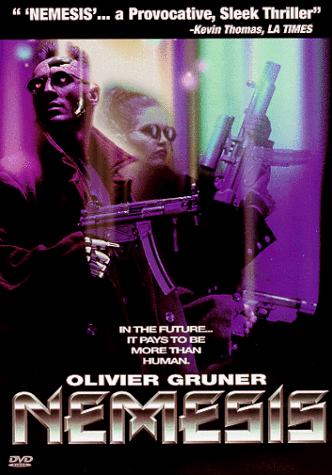
The opening credits aren’t even over by the time the bullets begin to fly in Nemesis, one of the better cyberpunk adventures of the early 90s. And boy do the bullets fly. In one scene the heroes and the villains alike are shredding through walls to pass from one room to another. Then the hero (Olivier Gruner) creates an escape hatch in the floor by firing his futuristic machine gun in a circle around his feet.

Yes, this is mindless action, but holy shit is it glorious.

Any character in the film can (and usually will) double-cross the hero without warning—to the point it stops making a whole lot of sense. And it’s not really clear why the action hops from one rundown location to the next, other than that’s just the way director Albert Pyun works. (In an interview with io9, Pyun sheds some light on his methods, which were often more practical than artistic.)

So it’s the future and just about anyone who’s anyone has had their bodies heavily modded with illegal implants. Some of the bad guys have faces which split open like nutshells to reveal automatic firearms concealed inside. Other characters exist as digitized ghosts in the machine to guide the hero through the complicated plot. Meanwhile the (presumably) human character can do back- and side-flips as well as the enhanced characters because fuck it, why not?

In the opening scene, Gruner’s character, a kind of blade runner, is ambushed by a group of cyborgs who leave his less-than-human body on the brink of death in a scene reminiscent of Murphy’s demise in Robocop. After a long recovery in the body shop, he tracks them down, shoots the ringleader, and ends up in a dank jail cell for reasons that are escaping me at the moment. A lot of spectacular shit happens and Gruner finds out his boss (Tim Thomerson) has implanted a time bomb in his heart. Gruner, whose ex-lover has been reduced to an artificial consciousness rivaling Siri, leads him through the web of deceit and explosions, insisting he make his way to the top of a volcano because… well, probably because the film crew had access to a volcano location.

The plot really doesn’t matter. What matters is you get beautiful stunt women, more explosions than you can shake a stick at, and early performances by Thomas Jane and Jackie Earle Haley, the latter of whom I didn’t realize was in the movie until I saw the credits. You should know by now if this is your kind of movie. I’ve enjoyed many of Pyun’s movies, which is why it sucks to read his most recent tweet:

Judging from his blog, the disease hasn’t stopped him from directing. Right on.

Split Second (1992) [Midnight Movie]

It’s the year 2008 and global warming has managed to submerge London in about a foot of murky water. I’m not sure where the mutant rats figure into this poor man’s cyberpunk world, but the little buggers are ubiquitous and the characters will wreck entire apartments just to gun ’em down. Harley Stone (Rutger Hauer) is a loose cannon of a cop who punches and kicks anyone who gets in his way. When a fellow cop inquires about his sanity, the chief of police (Alun Armstrong) replies with that good ol’ “he’s the best there is” cliche.

Actually, calling anything in this movie cliched might be missing the point. It isn’t “only” science fiction, fantasy, horror, and action, but I want to say it’s a parody of all that stuff, too. It even goes out of its way to do the old “meet your new partner” routine with surprising freshness. Or maybe I’m being too kind to it, considering I feel like I’m the only person who likes this movie. And I always liked this movie.

Split Second opens in a scuzzy night club called The Non-Stop Striptease. A spiky-collared Rottweiler attempts to bite Stone’s nuts off in the alleyway entrance, at which point Stone calmly flashes the dog his badge and says, “I’m a cop, asshole.” This placates the dog. We don’t know why Stone is here—we get the feeling he doesn’t know, either—but soon a woman’s heart is ripped out and, somehow, no one saw who was responsible for the murder. This doesn’t stop Stone from racing out into the dark streets, punching and shooting anything that moves (or doesn’t) in an attempt to alleviate his severe anxiety.

See, a long time ago Stone’s partner was murdered by the very thing which is running around town, ripping hearts out and drawing intricate astrological signs in blood. Stone has been steadily going downhill ever since the incident and it’s not until later when we find out why he’s psychically linked to the beast. The monster, by the way, is ten feet tall, has a wicked set of teeth and claws, but turns out to be one of the most disappointing rubber suits you’ll ever see. Never mind that because the ride up until that point is fun as hell.

Featuring Kim Cattrall, Pete Postlethwaite, and Michael J. Pollard, this British production from The Burning director (my favorite slasher film) is a madhouse that rarely loses steam. You’ll laugh at it for the first ten to twenty minutes, then you’ll realize it’s very much in on the joke, allowing you to laugh with it for the rest of the running time. Rutger Hauer is one of the few bonafide actors who fell into these low budget films with the same wit and enthusiasm he had in more serious efforts—you can tell he’s enjoying it, too. I can’t think of anyone else who was equally great in both A- and B-movies, then slipped back into A-movies without missing a step.

Do you like the early 90s ridiculous vision of the future? Do you like Rutger Hauer? If yes, you’re going to like this movie. Early nineties Terminator, Alien, and Predator ripoffs are kind of a guilty pleasure for me, if only because I’m so damn nostalgic for them.

And you know what? Fuck the haters. This is a legitimately exciting movie. It was the perfect cure for the unbelievably disappointing Star Trek Beyond, which I saw on the same day. How a movie can have so much cool stuff in it, and completely fail to excite me, I’ll never know, but I digress. Split Second delivers the speed.

Memoirs of an Invisible Man (1992) [Midnight Movie]

You have to admire the simplicity of this setup: Nick Holloway (Chevy Chase) becomes invisible after a freak accident. Rogue CIA spook David Jenkins (Sam Neill) will stop at nothing to capture the invisible man for nefarious, espionage-related reasons. So far, so good, right? Poor Daryl Hannah, unfortunately, gets relegated to playing the afterthought love interest who’s simply here to stretch out the middle portion of the movie. Can you imagine being the star of Splash, then having to eat shit in a role like this?
It’s hard to make invisibility boring, but Memoirs of an Invisible Man forgets to include any of the built-in fantasies most people would have when daydreaming about the subject. In Unnecessary Monologue #2,356, Chase’s voiceover confesses he thought being invisible would be fun, but it’s not.

Seriously? Being invisible isn’t the most awesome thing in the world? Maybe that’s why I like the movie a lot more today than I did when I was a kid: a kid can’t look past the preposterous notion that invisibility would be a burden rather than a useful super power. 

Here’s my other problem with Memoirs: Chevy Chase didn’t want to be funny in it. That sounds like I’m being snarky—and I am, to an extent, because his notorious ego is the entire reason this film doesn’t work—but director John Carpenter said this about Chase:

He wanted to sort of slowly, whether this is right or wrong, to slowly move away from broad comedy and do something with a little more depth. And so he resisted the comedy all the way through it. 

On the plus side, the score is exciting, Sam Neil plays a great bad guy, and the special effects are out of this world. You automatically know how they did an effect in 99% of today’s movies, and the answer is usually: “Oh, that’s just CGI.” In Memoirs, there are some head-scratchers. The invisible man will chew bubble gum, inhale cigarette smoke into his lungs, and see his own stomach full of food (minus the stomach) before puking the contents up. I really had no idea how they did some of this stuff before looking it up.

Otherwise, it’s not a great movie for fans of John Carpenter. There are times a scene can have a bit of a whimsical Starman feel to it, but most of the time the camera is moving far too often (and far too conventionally) for this to be a genuine Carpenter flick. Meanwhile the concept isn’t deceptively simple in Carpenter’s usual style, it’s just straight forward and simple. It’s one of his few movies which really is about what it’s supposed to be about, yet the result still isn’t bad enough to pan it.

It’s just a movie. Often an enjoyable one. I have nothing more or less to say.

Arrival (2016)

There’s so much I want to say about Arrival, but the movie works so much better the less you know about it. I certainly wouldn’t say the trailers ruined it, just that I was disappointed I saw them before letting the film unfold naturally. I’ve felt uneasy about the idea of a sequel to Blade Runner, but now that I’ve seen director Denis Villeneuve’s follow-up to Sicario (my fourth favorite film of 2015), I can breathe easy. Here’s a director who’s probably going to be a household name like Spielberg and Scorsese. He’s also the guy who’s going to pick up the torch Neill Blomkamp dropped.

This is my favorite science fiction film since last year’s Ex Machina. It might be the best movie I’ve seen all year. Arrival is so far removed from Hollywood’s narrow view of science fiction, it’s no wonder it released in November rather than the summer (it will also help get it the Oscar nominations it deserves). I don’t remember the last time I saw a non-summer movie in the middle of the day which was as packed as this one, either, so hopefully it’s making boat loads of money.

We need more of this.

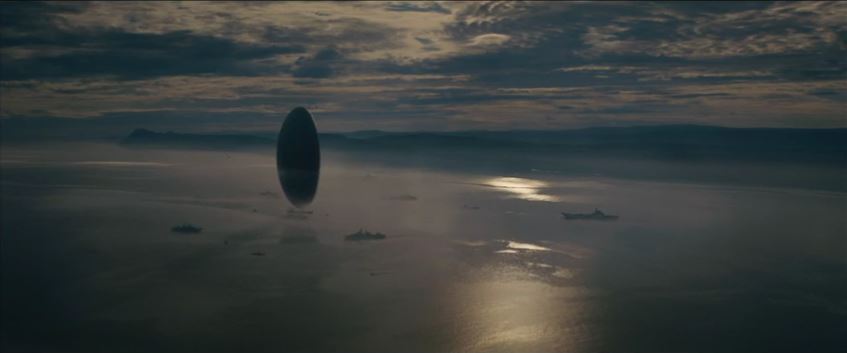
No, entire cities aren’t destroyed in the opening act. The President of the United States doesn’t look out the window of the White House and whisper, “My God.” Not only are no landmarks destroyed, they’re nowhere to be found—the alien ship which settles over America chooses to do so in Montana of all places. Even though the trailer gives away the reveal, it’s no less breathtaking seeing it within the context of the story.

The characters representing the government agencies provide strong conflict for the scientific characters without becoming the Jaws Mayor. Usually you’re supposed to hate the military character Forest Whitaker is playing, but you typically don’t draw actors as accomplished as he is if you’re so predictable. Michael Stuhlbarg’s CIA stooge also has clear and understandable motives, even though he, too, would have been made a villain in lesser movies.

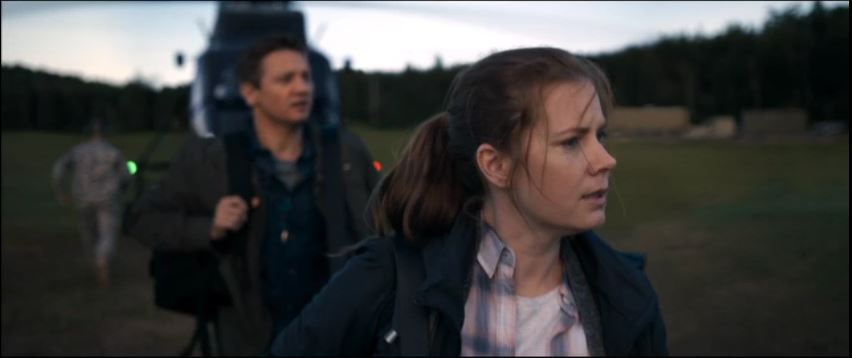
I’ve complained several times on this blog about how scientists are often portrayed in movies. I’m glad I can say Amy Adams and Jeremy Renner nail it. They’re not pizza-eating losers in lab coats and they’re just the right amount of nerdy—the kind of people you would actually see interviewed in science documentaries. Adams’ character especially is complex and to say any more than that might give away some of the best stuff in the movie.

Gods of Egypt (2016) [Midnight Movie]

How did this happen? How did I enjoy something as absurd and silly as this? How could I go into it so negatively and come out so satisfied? Because it’s a surprisingly fun fantasy film, that’s how.

In fact, here’s a long list of fantasy films I enjoyed a lot less than I enjoyed Gods of Egypt:

  • 300
  • Peter Jackson’s King Kong
  • The Hobbit trilogy
  • Howard the Duck
  • Independence Day movies
  • Indiana Jones and the Kingdom of the Crystal Skull
  • Jumanji
  • Men in Black II
  • Any of The Mummy films
  • Any of the Pirates of the Caribbean sequels
  • Sin City 2
  • Sky Captain and the World of Tomorrow
  • Stardust (actually, I liked this one about the same)
  • Star Wars prequels
  • Underworld
  • Wild Wild West
  • Willow

So why did Gods of Egypt get some of the same negative press as the more infamous films on the list above? How in the hell did it get such a low Rotten Tomatoes rating while painfully routine comedies and remakes consistently garner higher ratings? I don’t have the answer to those questions and I suspect anyone who claims to know for sure is reaching just a little too far. Even so, I can’t help but feel something dishonest is going on here, such as pressure from social media groups or… okay, now even I’m reaching. (Let’s not forget this stuff is subjective… maybe the movie really is shit and I’m just out of touch.)

Yet it seems Gods of Egypt was dragged through the mud long before its February release date and everyone wanted it to fail. I expected pretty much what everyone else expected: another mind-numbing 300 ripoff with loads of bad CGI and no creativity whatsoever. I’m not saying the CGI in Gods of Egypt isn’t bad, just that it’s a lot less distracting than I expected. This is a huge, somewhat complex fantasy world—how else could they have filmed it? On location? (The Lord of the Rings filmed an awful lot on location, sure, but this ain’t Lord of the Rings. It set out to be a lot richer than that world.) It also doesn’t feel nearly as phony as Sky Captain and the Star Wars prequels did.

Yes, there’s an awful lot of white faces and English-speaking characters for a story that’s allegedly Egyptian. And no, this isn’t a very accurate portrayal of that particular mythology, either. (I guess that’s where the fantasy part comes in, isn’t it?) I’ll be honest: most of the humor was what you would expect from bad children’s movies, and the action is pretty lackluster whenever it goes all Matrix-y. On the other hand Nikolaj Coster-Waldau, who hasn’t found a lot of mainstream success beyond Game of Thrones, has “movie star” written all over him while Gerard Butler is an extremely likable screen presence as well. Both of these guys aren’t getting the hits they deserve.

Look, if you’ve ever enjoyed Highlander, Flash Gordon, or Krull, you should really give this one a chance, especially now that it’s on HBO. I can’t say I would have liked it as much had I paid money for it, but for a free movie, this is some very creative entertainment.

A Boy and His Dog (1975) [Trailer]

I don’t normally post fan edits, but this one’s poignant. (The official trailer, on the other hand, is all kinds of lame). Somehow I’ve never seen this movie despite the fact Harlan Ellison is one of my favorite writers of all time. I’m still deciding whether I want to rent it or buy the Blu-Ray.
As usual, there’ll be a Midnight Movie featured here this Friday so be sure to come back and check it out. Or don’t. It’s a free country, last I checked, but I must confess I didn’t see the results of the election at the time of scheduling this post. 
And I feel fiiiiiiiiiiiiine.

Assault on Precinct 13 (1976) [Midnight Movie]

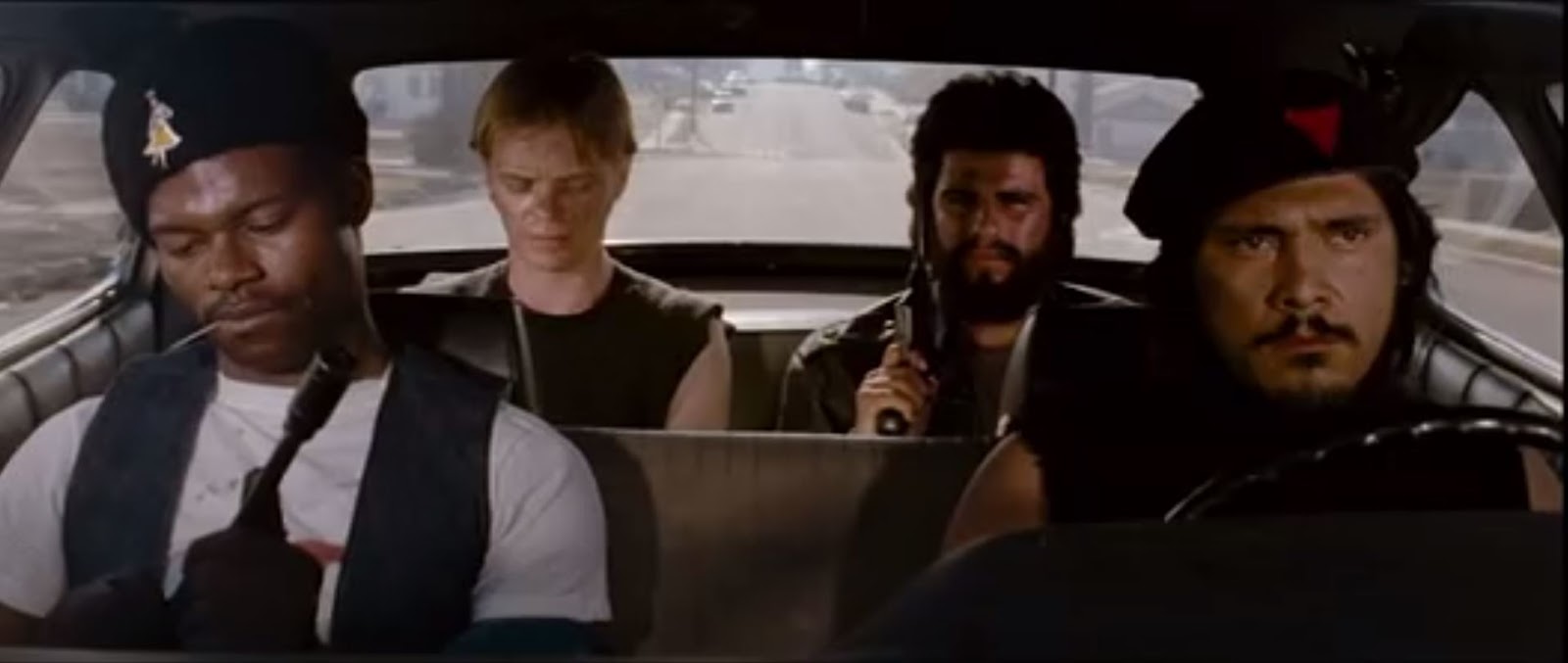
In the opening scene, the handheld point of view is following a diverse group of Los Angeleno gang members who are obviously up to no good. The gritty style, in combination with John Carpenter’s pleasantly droning music, is immediately inviting. We begin to wonder: Why are we here? What are these guys up to? Just when you think you’re about to get an answer, the players are ambushed by police and brutally gunned down.

Come to think of it, you never really know what the gang members are up to or why they do what they do. Carpenter chooses to keep them enigmatic, which makes their resolve doubly spooky. You rarely (if ever) see them talking and there isn’t a singular villain who explains his diabolical plot to the audience. Lesser movies, such as the embarrassingly average 2005 remake with Ethan Hawke, would have missed the point: these guys are scary because we don’t what makes them tick. If Anton Chigurh had been the type to join a street gang, this is where he would have pledged.

Soon after the gundown, we’re introduced to Lieutenant Bishop (Austin Stoker), a green policeman who’s just been assigned overnight duty at the titular precinct which is about to be permanently closed down. It’s a thankless job, the last thing Bishop had in mind when he became a police officer. There he meets Napoleon Wilson (Darwin Joston), a lifer who’s unexpectedly brought to the holding cells along with a handful of other prisoners. Then there’s Leigh (Laurie Zimmer), an oddly collected and level-headed clerical worker who seems as mysterious as the gang which besieges the precinct.

When Leigh first meets Bishop, she offers him coffee. “Black?” she asks him. “For over thirty years,” replies Bishop, before breaking out in a huge grin. It’s the kind of exchange modern movies really suck at. It’s reminiscent of the scene in the original Shaft, in which the characters compare the color of their skin to coffee mugs and point out they’re not so black and white after all. Fast forward to today and I’m guessing 1995’s Die Hard with a Vengeance is probably the last time a major action film dealt with race without completely embarrassing itself, which is pretty sad if you ask me.

So there are many details along the way, showing how the characters find themselves in the dangerous situation, but here’s all you need to know: the good guys are holed up in the building and the bad guys will stop at nothing to kill them. The great thing about Carpenter is he was a working class filmmaker who wasn’t interested in making movies the modern way. All you really need is a camera, a hero, and bad guys. That’s movies in their purest form.

Assault on Precinct 13 is one of my favorites—easily in my top fifty, perhaps twenty. The last time I saw it was on a badly worn VHS rental. Seeing it in HD blew my mind because I had no idea it looked this damn good. (Please forgive the low quality of the screenshots… I was having technical issues.) I’ve never enjoyed the film more thoroughly than I did tonight.