Gruelgo Comics

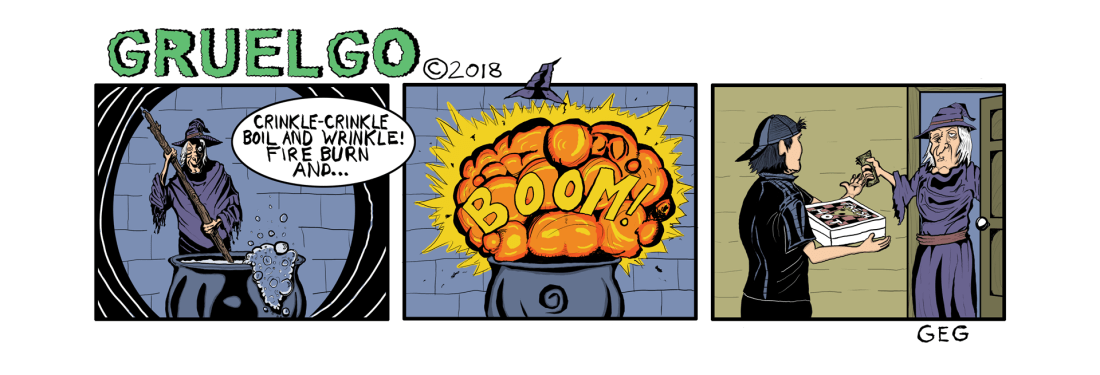
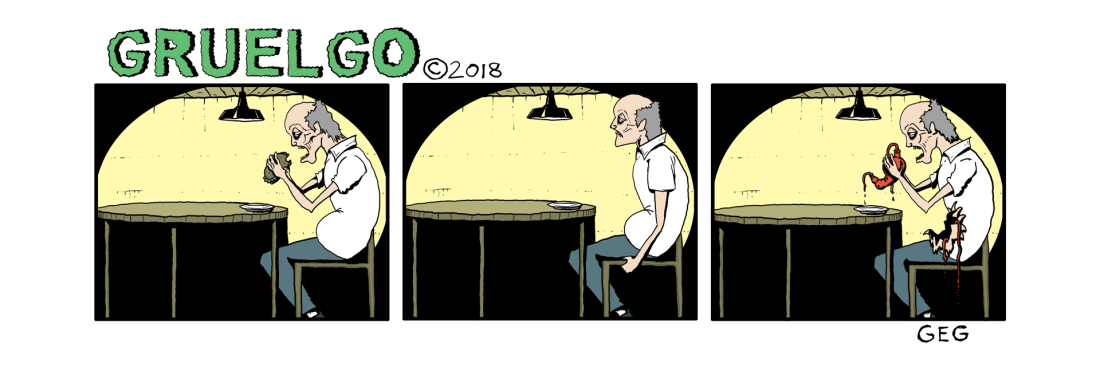
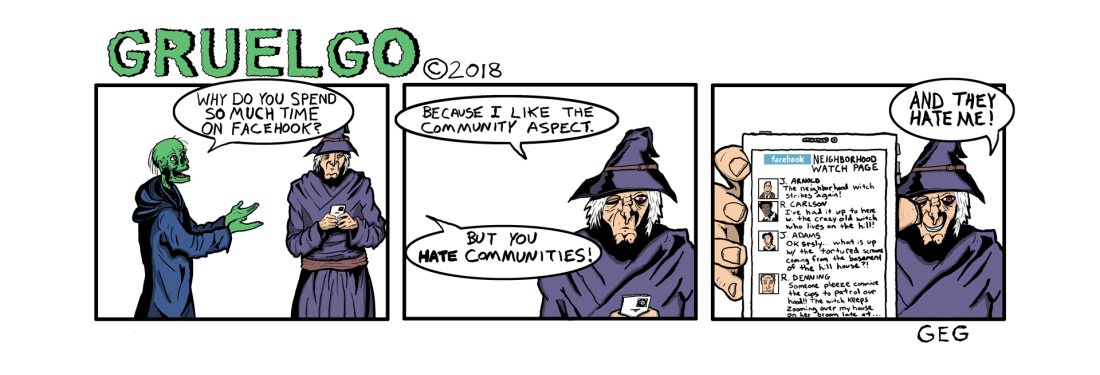
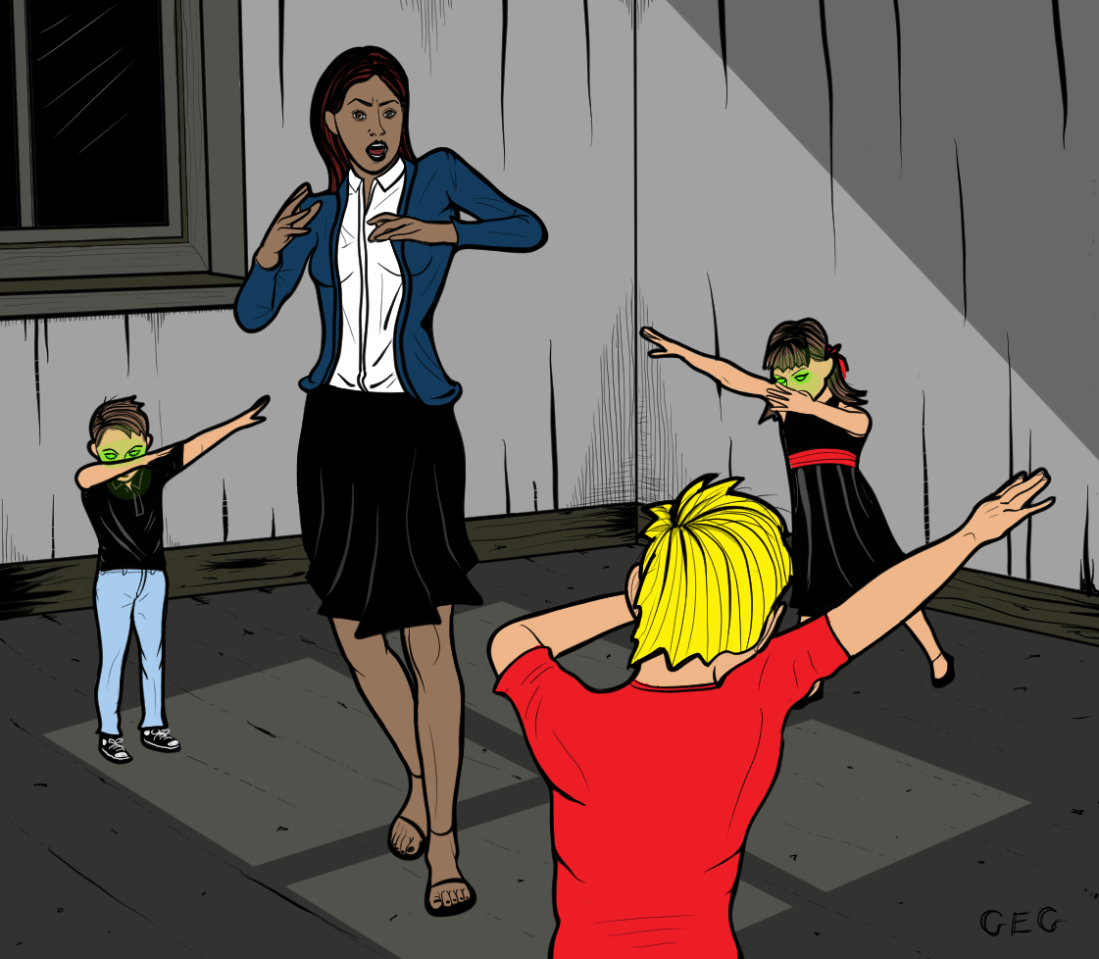
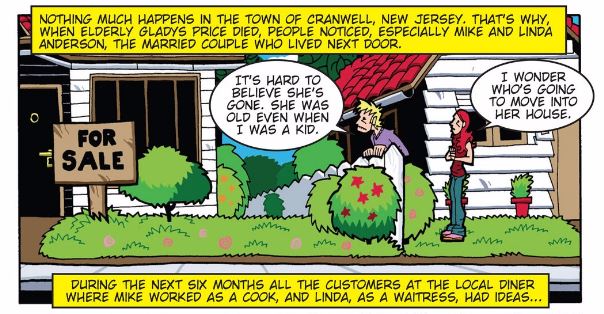
Last year I began working on a comic strip called Gruelgo (an anagram for my last name) and I wrote like two dozen of these things. The problem was I could rarely come up with good strips involving the title character, but had a ton of ideas involving his witchy wife, who was only supposed to be a supporting character. Unfortunately, the world already has a comic strip about a witch, so I abandoned the project.

Here are the three strips I saw to completion.

2018-5-142018-5-162018-5-20

Mea

2018-8-5 Mea WebVersion

This is what I’m into at the moment: single page comics. Other than a handful of three-panel strips, this is my first stab at sequential art since about ’98, when I attempted an ongoing comic on notebook paper (it was terrible). Obviously there’s a strong Jack Kirby influence on this one. I’ll be posting more of these one-pagers in the near future so subscribe to this blog if you’re interested (the button’s on the right for desktop users and on the bottom for those browsing on mobile).

Hellspawn and Creep Shows

A three-chapter sample of Corpus Evil is coming soon. I expected to have it online this week, but I decided to get a mailing list set up so that anyone who reads it can choose to be notified when the novel releases. The problem is setting up mailing lists is much more complicated than I expected. (It’s probably not complicated at all, but it is boring if you’re expecting a set-it-and-forget-it solution.) That and I really don’t know what my newsletter would entail, other than: “Hey, the novel’s out. Um, bye now.”

So I’ve been reading a ridiculous amount of Spawn lately in an effort to catch up. I don’t give a damn what people say, I still love 90s comics and I even like (fight me) Rob Liefeld because his stuff reminds me of what I tried to draw when I was a kid. (On second thought, this connection is probably a chicken-and-egg situation.) I never cared much for moderation and 90s comics were gloriously excessive.

Todd McFarlane was the king of this stuff. I drew Spawn and Violator about a million times growing up and I still doodle ’em to this day (uh, that sounded raunchy but you know what I meant). As much as I love McFarlane’s art, I keep thinking the same thing whenever I read his writing: I wish Spawn comics didn’t take themselves so seriously. (For context, I’m currently working my way through the Jim Downing issues and his name might as well be Debbie Downer.)

Then I crawled out of bed this morning and discovered RLM uploaded a serendipitous video (see above) in which they review Faust, a Brian Yuzna film about a “superhero” who’s suspiciously similar to Spawn. I quite like Yuzna and special FX wizard Screaming Mad George, but I somehow missed this pairing. In other words, I know what I’m watching this evening.

If you live anywhere near The Circle Cinema in Tulsa, you should probably check out their 35mm showing of Creepshow this June. Creepshow is a huge influence on Corpus Evil; I listened to John Harrison’s soundtrack for the film more than anything else while I was writing it. In fact, I think Creepshow is a more enjoyable Tales from the Crypt adaptation than HBO’s Tales from the Crypt.

Horror Talk (via an /r/horror post) drew my attention to an unproduced script for a Friday the 13th sequel. Here’s the direct link. I haven’t started it yet, but I’m keeping it open in a spare tab for light reading.

The weather here is stupid. Clouds are stupid. Chances of rain are stupid. Everything is stupid.

Logan (2017) [Midnight Movie]

I generally like MCU movies (more than X-Men movies, in fact), but the stylistic continuity is limiting to what the filmmakers can do. Each movie is different, to an extent, but directors aren’t allowed a whole lot of breathing room, which is a shame because the franchise attracts such big names. I want to see Kenneth Branagh make a Kenneth Branagh movie starring Thor, not a run-of-the-mill MCU movie. Meanwhile, Edgar Wright’s removal from Ant-Man still feels like we missed out on something great.

X-Men’s stylistic continuity, on the other hand, has been thoroughly torched, tossed out the window, and struck by a large truck. The varying tone has made the franchise a little spotty (to put it nicely), but it’s apparently given director James Mangold a whole lot of breathing room—the same kind of breathing room Christopher Nolan had when he rebooted the Batman franchise. 
This isn’t a Wolverine film. It’s a James Mangold film. And it’s probably my favorite mainstream comic book movie since Richard Donner’s Superman. I’ve merely liked X-Men movies up until now. Here’s the first one I loved.
It’s notable something this different got made with such a huge IP. It just doesn’t move like a carefully plotted action movie. It moves like a deliberate drama and feels like a classic western. Usually when I see these movies, I’m reminded of all the other comic book movies. This one reminded me of Clint Eastwood’s A Perfect World and Unforgiven.

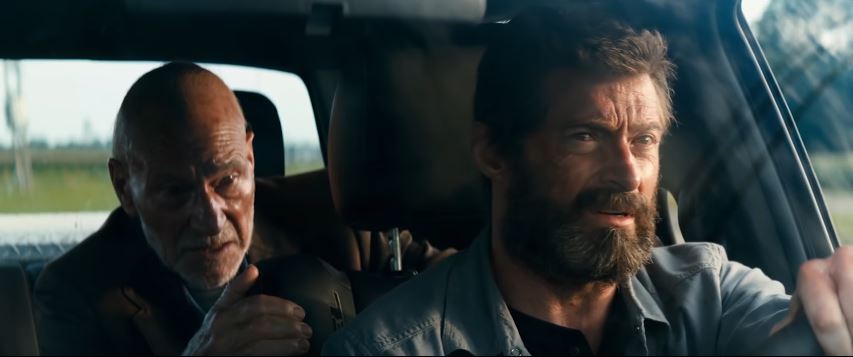
The first time we see Logan, he’s sleeping off a hangover in the back of the limo he drives for a living. He’s awakened by the sound of thugs trying to steal his wheels. He tells them exactly what you’d expect Wolverine to say: “You don’t want to do this.” Yet you get the feeling Logan’s talking to himself this time. He’s old, he’s limping, and when the thugs shoot him, the wounds remain for the remainder of the movie. He’s also experiencing a bit of blade-extension dysfunction.
It turns out Logan’s healing factor gets weaker the older he gets and, as a result, he’s experiencing the effects of adamantium poisoning. (He’s something like two hundred years old at this point… it’s especially amusing to see the world famous hero require reading glasses.) Logan lives with Professor X and the mutant albino Caliban (Stephen Merchant, who’s great in the role) in the middle of nowhere. It’s likely they’re the last mutants alive. Charles is worse for the wear than Logan; the first time we see the professor he’s zooming about jerkily in his wheelchair, mumbling like a madman. Sometimes he has seizures, which puts everybody within a large radius at risk of death by telepathic shock.
And Charles cusses now… a lot. He’s gotten quite curmudgeonly in his old age, earning some of the best laughs in the movie. Patrick Stewart manages to play him with equal amounts of realism and dignity. 
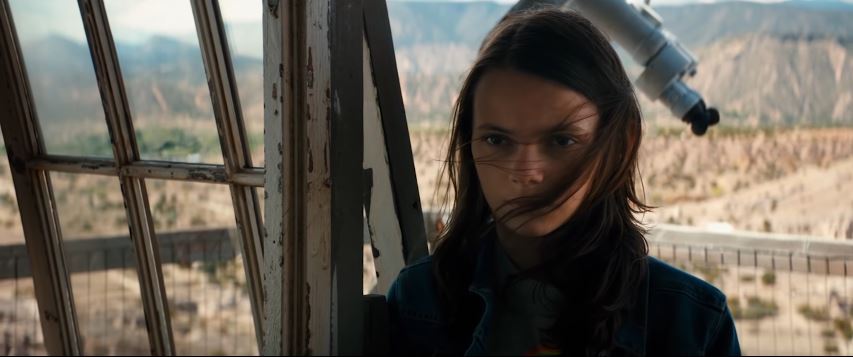
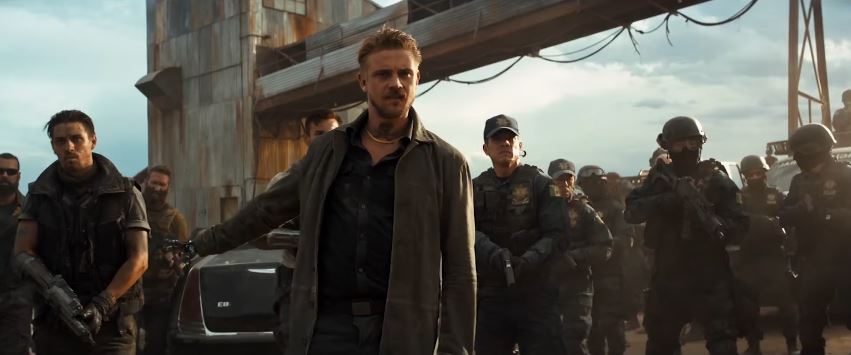
One day Logan is hired to drive a woman and her daughter across the country. It turns out the little girl is more than what she appears to be: she has mutant abilities which are suspiciously like Wolverine’s. Naturally, the secret lab responsible for her existence sends their highly militarized security team to get her back. The leader of the team is the film’s villain, Donald Pierce (Boyd Holbrook). Pierce doesn’t like “muties” and refers to his band of cyber-enhanced killers as “the good guys.” This is probably the best movie villain since Fury Road’s Immortan Joe.
There’s a bit of a surprise about midway through the movie. I’m amazed the trailers haven’t spoiled it. Lately, there have been a lot of surprises in movies like this, but when the surprises are, “Oh, look, another crossover cameo,” they kind of lose their effectiveness, don’t they? The surprise in Logan isn’t like that at all. It’s jarring, yes, but far from distracting.
What’s special about Logan is it sticks with you like a real fucking movie. I’m still piecing together some of the backstory and it occurred to me, a day later, that a lot of this stuff had deeper meaning than I initially thought. The balls-to-the-wall action at the end almost feels at odds with the rest of the movie, but maybe the movie earned it.
I saw the trailer for Justice League after watching Logan and I’ve gotta be honest: I pretty much couldn’t care less. I have a feeling a lot of superhero movies are going to feel old hat compared to this one. There are certain ways these movies comfort us, even when we’re sick of being comforted, so I’m not convinced this is the right time for the DCU to adopt a Saturday morning cartoon vibe. Meanwhile, Logan has more in common with The Road than its own franchise. And man, it feels so damn fresh.

Tales from the Crypt Vol. 1 (2007 revival series) [Comic Books]

With the worrisome news that M. Night Shyamalan is rebooting the Tales from the Crypt television series for TNT, I looked to the relatively recent comic book revival to lift my spirits. Instead, it all but crushed them. Even the lackluster cover suggests a downgrade in quality, but once you get to the first story you’re assaulted by some hideously out-of-place artwork.

Case in point:

Does anything about the above panel suggest horror to you? I’m not saying this is bad art, just that it has no business being in a Tales from the Crypt title. Yeah, I get they’re going in a new direction, but creative decisions like these suggest the creators were more interested in doing their own thing and only slapped a familiar title on it to sell it to an unsuspecting fan base. (I admit it worked on me, but isn’t the idea to sell a series of comics, as opposed to just one?) This looks more like Sunday paper funnies and the other stories don’t do much better of capturing the original run’s spirit.
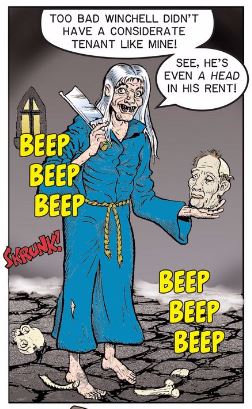
Below is probably the best panel from the entire thing:
There’s something wrong when you have a lot less bite than your 1950s counterpart.

Jason Vs. Leatherface (1995) [Comic Books]

Sometime between Friday the 13th VII and VIII, Jason gets unexpectedly freed from his watery resting place, wanders onto a freight train, then kills a hobo and his dog. From there he hitches a ride to Texas and—wouldn’t you know it?—he stumbles across Leatherface and his family of dimwitted cannibals. Talk about coincidence!

Before going any further, maybe it’s time to confess my shameful secret: I loved (and still love) comic books from the 90s. Yeah, modern fans live to shit on the era of impossibly posed women and gun-wielding anti-heroes, but if it weren’t for the likes of graphically explicit horror titles (and Spawn… let’s not forget Spawn), I might not have read many rags outside of Mad Magazine and EC reprints.

Speaking of EC horror, I was sure the evil businessmen responsible for draining Camp Crystal Lake (and subsequently freeing Jason) were going to get their just deserves in true Tales from the Crypt fashion. Nope. Just as in real life, these corrupt businessmen skate right by any undesirable consequences for their amoral actions. Maybe there was a follow-up planned that would address the lake’s draining, but as is it seems like an extremely convoluted excuse to get Jason up and killing again.

Which begs the question: How did the lake get refilled? And how does Jason find himself at the bottom of it again in time to take Manhattan? Those questions are not entirely explained. JvL feels more like an alternate timeline, sprouting from a fork in the road before Part VIII and Jason Goes to Hell, even though the comics’ editorials are adamant this is all canon.

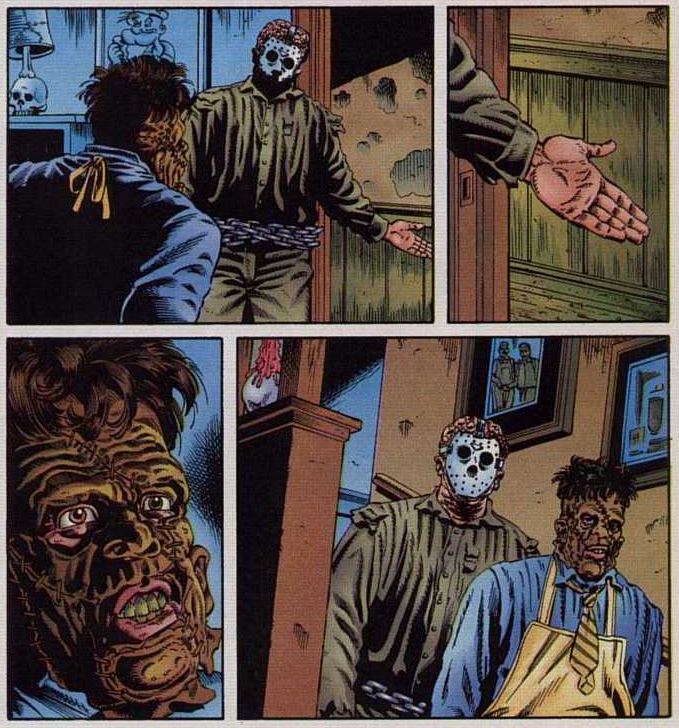
The title, too, is misleading: if you’re expecting a colossal battle between the horror icons, you’ve come to the wrong place. At their first meeting, Jason and Leatherface get into a scuffle, but Leatherface loses his chainsaw within a couple of panels. At this point Jason could easily kill Leatherface, but he doesn’t because, for the first time since he was a child, he found somewhere he fits in.

And that’s where Jason Vs. Leatherface unexpectedly shines: the character development. I didn’t ask for it and I didn’t think I wanted it, but getting inside Jason’s head isn’t just a gimmick to fluff out three issues. I’m always annoyed when sequels and spin-offs attempt to rob a character’s mystique by explaining too much of their backstory, but it works here. Apparently Jason is a character who could use some fleshing out, which might explain why so many of the sequels grew stale.

You can tell writer Nancy A. Collins (a horror novelist) has a soft side for Jason, choosing to see him as a human being who doesn’t know why he kills. This version of Jason actually reminds me of Man-Thing and a little bit of Swamp Thing (the latter of which Collins also worked on). Nobody can blame Frankenstein’s monster for killing the little girl in the 1931 film… Jason Vs. Leatherface is a lot more gruesome than that, but hey, it was the 90s. What did you expect?

So Jason and Leatherface finally square off, which isn’t the story’s high point, but most of the stuff leading up to that point (and coming after it) is organic and endearing, particularly when Jason sympathizes with Leatherface’s situation. You expect a versus story to answer the “Who would win?” question, but Collins isn’t the least bit interested, which is a brave choice considering that’s how most buyers were sold on it. I would even say this mini-series is actually better than many of the movies which inspired it.

You’re going to like Jason here even though he is a ruthless serial killer.

Fantastic Four (2015) is 4gettable

I’m conflicted about writing this review for Fantastic Four. I have little more to say than what most viewers have already said. I kinda feel bad about making fun of it at all because this movie’s just not all there in the head, man. Eyewitnesses to the disastrous production suggest the sophomore movie director was suffering from a massive breakdown. There were reports some of the cast and crew were showing up to the set on drugs and alcohol, but I wonder if anybody was sober.

Even knowing the film’s storied production history doesn’t explain its choices. You don’t see the Fantastic Four get their powers until an hour in. They barely use the powers until the anti-climactic battle with the film’s villain, who is dispatched as quickly as he’s introduced. Among the strangest creative decisions is the Thing (Jamie Bell) doesn’t wear any pants. If I had to guess, I’d say it’s because the CGI department wasn’t good enough to animate cloth.

Fantastic Four is the kind of movie in which a high school genius, Reed Richards (Miles Teller), builds a functioning teleporter and somehow gets disqualified from the science fair. Immediately after, Richards is approached by government scientists, one of whom is Susan Storm (Kate Mara). The scientists reveal they’re also experimenting with teleportation, but they can’t bring their test subjects back the way Richards can.

Naturally, Richards is given a job on the project, but we learn the obligatory g-men in movies like this are clueless about the real world applications for what would be the most amazing invention in human history. If anyone actually invented teleportation technology, the real governments of the world would drool all over it. The screenwriters, however, seem hellbent on throwing illogical adversities at their characters because a 2-day screenwriting course told them to “include lots of conflict.”

Soon after Richards is recruited, the film introduces Victor von Doom, whose dumb speeches are about as poignant as Jaden Smith’s tweets. Previous screen versions of Doctor Doom got a lot more right than this one. Trank’s version would have us believe the villain is a genius even though he seems more like a tech bro whose parents still pay for his World of Warcraft subscription.

There’s no good reason for Doom to even be in this movie, just a sloppy excuse. What’s worse is he and Richards are both madly in love with Sue (yawn), which creates a love triangle nobody wanted. This plot thread leads absolutely nowhere as Doom later tries to crush Sue to death… and if that’s not true love, I don’t know what is. Come to think of it, hardly anything they set up has any payoff or resolution.

Other comic book adaptations would have given us at least one action sequence early on. This one doesn’t unless you count a one-minute car chase involving Johnny Storm (Michael B. Jordan) about twenty minutes in. It’s a bold move which might have paid off in a better movie that actually cared about its characters. This movie doesn’t. For example, Ben Grimm appears early on to help Richards construct his science fair experiment, but exits the stage until it’s time for him to transform into the Thing.

Nearly an hour into the movie, the four male characters get drunk and take an unauthorized trip through the teleporter. You’ll be happy something is finally happening, and there’s some decent body horror involved, but what’s insulting is no one thinks to take Sue along, whose contributions to the project were supposedly crucial. I actually found the alternate dimension scenes to be enjoyable, but this stuff should have happened ten minutes in, not halfway through. Just when the movie nearly hooked me, it jumps one year into the future.

Kids won’t like this movie because it takes so long to get to the good stuff. Adults won’t like it unless they’ve never seen a movie before. Part of what drew me to Jack Kirby’s source material was the fact that, with the exception of Johnny, the Fantastic Four were seasoned adults who at least tried to make scientifically rational decisions. With actors as young as these, it reeks of studio interference. To this day, Roger Corman’s infamously cheap production is the most genuine Fantastic Four of all. At the very least it gave us age-appropriate actors and didn’t completely rewrite the mythology to be dark and cynical.

Fantastic Four is the second most represented title in my childhood comic book collection. Obviously I love the comics, but I’m beginning to suspect their powers (particularly Richards’) are just too goofy for live action. I would not be the least bit surprised if the inevitable reboot is just as floppy. Of all the weird decisions this movie makes, I can’t believe they actually include sequel bait at the end of this one. That’s hilariously optimistic.