Click-Click-Click-Click [Short Story]

Click-Click-Click-Click
by Grant Gougler

What is the worst sound in the world? Fingers drumming against a tabletop? Nails screeching across a chalkboard? A baby wailing in a movie theater?

None of the above. The worst sound is the sound that’s keeping you awake.

It could be an argument between neighbors, the chirping of a cicada, a freak whistle of wind. It could be a toilet that never stops running, or a ceiling fan which isn’t quite balanced. Tonight it’s the restless claws of my dachshund, Pal, who sounds like he’s trying out for 42nd Street on my hardwood floors. He semi-circles the bed, then taps down the hallway and back again.

Click-click-click-click. Click-click-click-click. Click-click-click… click.

So why don’t I just get up and yell at him? Ah, but you’re thinking like a waking person. You need to come down here where I am, gliding on the mindlessness between day and tomorrow, body all-but paralyzed while my thoughts pulsate with worry…

Bills, school, work, money. Bills, school, click, money. Bills, click, click, click, click, money. Bills, click, click, click, click, click….

And you know what? I am yelling at him, but only in my head: For fuck’s sake, Pal! Shut! The fuck! Up! Let me go to sleep!

Sometimes he does shut the fuck up, but only long enough to get a drink of water or to lick his crotch or whatever the hell he’s doing down there. But then he goes right back to clicking again… click-click-click-click-click-click-click-aaaagggghhhh!

That’s it! I have to do something!! I have to do something right clicking now!!!

Forcing myself to sit up is like trying to claw my way out of a pool of wet concrete, but I manage, and I open my mouth to yell at the top of my lungs. Then I catch sight of Pal sitting in his bed, trembling in fear as he watches the thing that’s walking around the room, going click-click-click-click.

The Exorcist (1973) [Midnight Movie]

Have you ever had an old friend you didn’t care much for until a chance meeting, years later, made you realize you’re head over heels in love with them? Me either, but that was what watching The Exorcist last night was like for me.

Yeah, I know. I should have always loved this movie. But I didn’t. Sue me.

In my defense, the only other time I saw the film in my adult life would have been around the time the director’s cut showed up on TV, a cut which doesn’t improve the film at all. In fact, it does exactly the opposite. I was too distracted by the cheap attempts at subliminal imagery, superimposed over otherwise flawless shots, and the inclusion of deleted scenes which were better left on the cutting room floor. I think they even touched up Regan’s vomit with CGI, if memory serves me correctly.

Long story short, my previous viewing had me repeating, “Are you fucking kidding me?!” I know it’s an old tune to sing, but aging movie directors shouldn’t be allowed to “improve” the films they made when they were young unless it’s an effort to undo changes made by third parties such as censorship groups or studio executives. It’s depressing to think the director’s cut is probably the only thing that gets shown in theaters anymore.

Unlike the original Star Wars trilogy, the theatrical cut of The Exorcist still exists and it looks amazing in HD. The first time I saw the movie was on VHS, which can’t replicate the grain and shadows the film wears so well. (If I ever get a chance to see an actual print of the film properly projected in a theater, I’ll take it in a heartbeat. It feels almost blasphemous to watch it digitally no matter how good home HD technology becomes.) The one and only problem seeing the film this clearly is the seams in Max von Sydow’s old age makeup become a little more apparent than they ever were on VHS.

I talked about the story elements in my review of the book yesterday, so I’ll skip to what makes the movie special. In the novel, it’s heart-wrenching when Chris MacNeil is taking little Regan to one medical specialist after another, but it has a slightly bigger impact in the movie even though that section of the story is reduced in length. Director William Friedkin reportedly hired real doctors and specialists to perform the procedures on Linda Blair’s character, which makes it all the more realistic and traumatizing. Actually seeing and hearing all those loud and crunchy machines is almost as visceral as the scenes of Regan’s possession manifesting itself.

The cast is top notch, too. The three adult leads (James Miller, von Sydow, and Ellen Burstyn) all embody the characters as they existed on the page. And I prefer Lee J. Cobb’s detective to George C. Scott’s portrayal of the same character in the third film. (Scott seemed a little to serious in contrast to Cobb’s geniality.) Casting a real life Jesuit in the role of Father Dyer is a stroke of genius, and I feel like I don’t even need to mention how good the 14 year old Linda Blair is in the movie, considering her performance has become legendary. (Come to think of it… why does she have so much trouble finding big movie roles these days? Did she play the part too well?)

Look, I was always wrong about The Exorcist… and I’m glad I was wrong because my most recent viewing feels like it was the first time. It’s one of the greatest movies ever made.

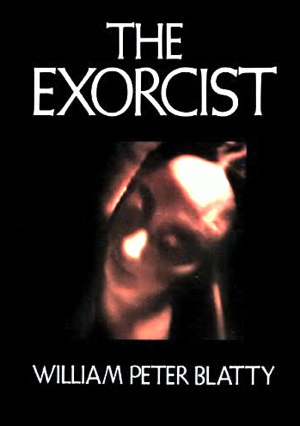
The Exorcist: 40th Anniversary Edition (1971) [Book]

One of the reasons I like fiction so much is it helps me put all manner of cultural and historical tidbits into perspective. For instance, Leave it to Beaver went off the air in 1963, and less than eight years later William Peter Blatty gave us his blood- and vomit-drenched novel, The Exorcist. I don’t know why I find that to be such an astonishing fact, I just do.

To put it another way: the same decade America finally got sick of The Beaver’s shit, the country was captivated by a little girl who screamed obscenities and masturbated violently with a crucifix. Another oddly routed synapse in your brain might make the following connection: the novel came out only a decade after mainstream American movies broke their silly taboo of showing a toilet on the screen. That’s a long way to go in just a handful of years.

For many years I’ve been perplexed by the fact that William Friedkin’s film adaptation of The Exorcist never really moved me one way or the other. It’s a movie I should love, if my general taste in horror is any indication, and a movie I always wanted to love. My feelings toward the film are especially peculiar considering Rosemary’s Baby, which has a lot in common with The Exorcist, was love at first sight for me. (I’m also the only person I know who loved Polanski’s The Ninth Gate, but that’s a whole other post.)

I’m minutes away from giving Friedkin’s film another chance, but I wanted to record my thoughts on the novel before my next viewing of the movie blurs my distinction between the two. First off, I thought the book was fantastic. And not just fantastic, but cunting fantastic, to borrow an oft-used phrase from the dialogue. I wouldn’t say Blatty spends a whole lot of time fleshing the characters out, but they’re real enough and, more importantly, the ease at which we get to know them keeps the pace from slouching.

A note about the current edition: if Blatty is to be believed, the changes he made for the 40th Anniversary text are mostly superficial corrections he would have made the first time around if he didn’t have a deadline. There’s an added scene here and a bit of expanded dialogue there, but it’s my understanding that it’s more or less the same novel that came out in the seventies.

While the film is a surprisingly faithful adaptation of the novel (if my memory of the film serves me correctly, that is), the most noticeable difference is the somewhat reduced role of Lieutenant Kinderman, a point-of-view character who later becomes the main character of Blatty’s sequel, Legion. (Legion, by the way, would serve as the basis for The Exorcist III, a vastly underrated movie which knocked my socks off both times I watched it.) The second most noticeable difference is the very reason I prefer the book: it’s not made clear whether Regan MacNeil is actually possessed or suffering from a mental illness.

Yeah, William Peter Blatty seems to think telekinesis and ESP are completely possible things recognized by science in real life (which is how he explains the bed-shaking and the levitating for those who prefer the non-supernatural version), but he gets a pass because it was written in the seventies and everyone back then seemed to believe in weird stuff like that. As for the famous head-rotation which explicitly takes place in the film? In the novel, Regan’s mother only thinks she sees her daughter’s head spin around (she later doubts whether anything supernatural occurred at all). That scene always bothered me in the film because it’s not like we ever saw the demon spin her head back to reverse the damaged he’d done to her spine, but oh well.

Blatty goes out of his way to humanize his Jesuits, characters who too often become set dressings in stories like this. I wasn’t raised in a religious household, so stepping into the shoes of a priest burdened with Catholic guilt is a bit of a novelty. I think the priest-who-lost-his-faith routine is a bit old hat these days, but in the context of the story it works quite well and works towards a satisfying conclusion.

I especially like the emphysematic Kinderman, who’s somehow both sly and polite, often striking up friendly conversations with the people he’s investigating for murder. In fact, it was George C. Scott’s portrayal of Kinderman in The Exorcist III that made me want to check out the rest of William Blatty’s stuff (I almost started with Legion, but I’m glad I didn’t.)

If you can’t wait for the TV series to come back on the air this Friday, you can do worse than passing your time with the original novel. I’m off to watch the movie for the first time in years so I’ll probably blog about that sooner than later. After reading the book, I’m very excited to give the film another chance.

The Day Before [Short Story]

The Day Before
by Grant Gougler

In retrospect, it had to happen eventually. Can we all agree on that, at least? Like storing powder-kegs in a room full of candlelight, we shouldn’t have expected it not to happen. We couldn’t have expected it not to happen. At least, that’s my opinion. And looking back on the way we were before it happened, when we were so… so….

Look, I can’t be the only one who reflects on those times with an even mixture of anger and envy.

Yes, I miss the days before we knew about the great big bad thing we were inevitably headed for, but at the same time I wonder: What warning signs are we missing now? What next big bad thing is waiting around the corner this time? And why are we always so ignorant until it actually happens? Why do we only become brilliant analysts—and all of us do—after the big bad thing occurs?

Everybody remembers what they were doing and where they were when they first heard the news… or, god forbid, witnessed it with their own eyes. Yet I try to remember what I was doing the day before it happened, during my final day of ignorance. And yes, I’m angry at myself, for being so near-sighted, but I also find envy when I think about what life was like then… sweet, simple life.

But what was I doing that day, the day before it happened? What was life like? I couldn’t tell you. I honestly couldn’t. (Can you?) And it bothers me that something so terrible can so naturally become normal. It bothers me that on the day it happened, I already couldn’t remember the day before.

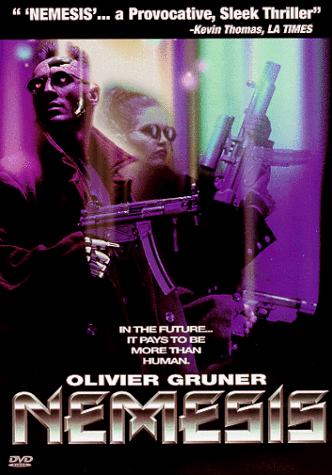
Nemesis (1992) [Midnight Movie]

The opening credits aren’t even over by the time the bullets begin to fly in Nemesis, one of the better cyberpunk adventures of the early 90s. And boy do the bullets fly. In one scene the heroes and the villains alike are shredding through walls to pass from one room to another. Then the hero (Olivier Gruner) creates an escape hatch in the floor by firing his futuristic machine gun in a circle around his feet.

Yes, this is mindless action, but holy shit is it glorious.

Any character in the film can (and usually will) double-cross the hero without warning—to the point it stops making a whole lot of sense. And it’s not really clear why the action hops from one rundown location to the next, other than that’s just the way director Albert Pyun works. (In an interview with io9, Pyun sheds some light on his methods, which were often more practical than artistic.)

So it’s the future and just about anyone who’s anyone has had their bodies heavily modded with illegal implants. Some of the bad guys have faces which split open like nutshells to reveal automatic firearms concealed inside. Other characters exist as digitized ghosts in the machine to guide the hero through the complicated plot. Meanwhile the (presumably) human character can do back- and side-flips as well as the enhanced characters because fuck it, why not?

In the opening scene, Gruner’s character, a kind of blade runner, is ambushed by a group of cyborgs who leave his less-than-human body on the brink of death in a scene reminiscent of Murphy’s demise in Robocop. After a long recovery in the body shop, he tracks them down, shoots the ringleader, and ends up in a dank jail cell for reasons that are escaping me at the moment. A lot of spectacular shit happens and Gruner finds out his boss (Tim Thomerson) has implanted a time bomb in his heart. Gruner, whose ex-lover has been reduced to an artificial consciousness rivaling Siri, leads him through the web of deceit and explosions, insisting he make his way to the top of a volcano because… well, probably because the film crew had access to a volcano location.

The plot really doesn’t matter. What matters is you get beautiful stunt women, more explosions than you can shake a stick at, and early performances by Thomas Jane and Jackie Earle Haley, the latter of whom I didn’t realize was in the movie until I saw the credits. You should know by now if this is your kind of movie. I’ve enjoyed many of Pyun’s movies, which is why it sucks to read his most recent tweet:

Judging from his blog, the disease hasn’t stopped him from directing. Right on.

The Universal Set [Short Story]

The Universal Set
by Grant Gougler

The crazy woman was on the corner again. Of course she was on the corner. There was nowhere else crazy could go.

Bay wondered why the cops hadn’t done anything about her yet. It was obscene she got to spout her nonsense where anyone, including children, could hear it. The woman was beginning to draw crowds!

People came to laugh at her dancing, her screaming, her obscenities, and she fed off their energy and they fed off hers. Bay had laughed at first, too, but now the crazy woman was beginning to worry her.

The woman wasn’t just an anomaly anymore. Now she was there more often than not, standing on the bench for all to see and shouting with every ounce of breath for all to hear. And what she was saying… it was so cruel and mean! How could anyone think like that, much less put that absurd level of badness out into the air where anyone—especially children!—could be exposed to it?

“What’s wrong with her?” Bay’s son asked.

“Nothing, honey. Just pretend she’s not there.”

“Why is she so loud?”

“Just get in the car before your ice cream melts.”

“Maybe we should listen to her.”

“No,” Bay snapped. She’d lost control of her voice, and felt the tears welling up in her son long before they actually pooled in his eyes. “Oh… oh, I’m sorry, honey. I didn’t mean—”

“I was just asking a question!” he wailed.

“I know. I had no right to shout at you.”

The doors of the car were closed then and the crazy woman’s diatribe had become unintelligible. The air conditioner chilled Bay in contrast to the humid hotness outside. Despite the cold air, the ice cream was streaking down her knuckles and making the skin between her fingers sticky.

Bay could already feel her friends and family sending tendrils of concern in her direction. The tendrils were slow at first, like seaweeds grazing the bottom of a boat, but soon they were enveloping her thoughts piecemeal.

It wasn’t long until the fireflies arrived: macroscopic drones which were as ubiquitous as they were intrusive. A dozen or so surrounded the car, shooting video through the windows.

“That woman out there,” Bay explained carefully, “isn’t an Empath like most people.”

“That’s why I can’t feel what she’s feeling?”

“That’s right. And what she feels… you don’t want any part of it, honey. It’s hatred, plain and simple. And if you catch it, it can damper your own Empathy.”

Bay expected the boy to reel from such a terrible idea, but he did not. Instead she felt the shame shimmering on her son’s forehead like a heat mirage. He diverted his eyes as Bay scrutinized him. All the while, she could feel more and more of the tendrils paying attention to the scene. The story was blowing up beyond a local level as the fireflies streamed it live.

“Son,” Bay said, attempting to limit her tone of accusation. “I can feel your shame. What did you do?”

“Nothing,” the boy said sheepishly.

“Then why do you feel bad about something?”

He was absentmindedly playing with the buttons on the armrest. “I… I kind of took a snapshot of her.”

“You did what?!” Bay had planned to control the anger in her voice, but didn’t catch it in time. First she felt her son’s fear, then a crippling wave of shame from the viewers. The tendrils were angry at her for being so brutish, and they were agitating the water of her psyche. “I’m sorry, honey. I just wanted to know why you would do such a thing. I didn’t mean to frighten you.”

“I just thought she was interesting,” the boy said with a shrug.

The boy’s shame reminded Bay to keep her own reactions in check. She couldn’t afford slipping again, couldn’t afford sending out any more badness. Couldn’t afford upsetting those who were watching.

She had to empty her head of the bad vibes. If they bounced around in there too long they could cause considerable harm. Everybody knew bad thoughts were bad for you. It was the kind of common sense the crazy woman derided during her paranoid monologues, the very reason she had been abandoned by the system. Bay had to shake the badness from her body. Had to take a deep breath to detox herself of the negativity.

Bay asked her son, as calmly as possible: “Were you going to share that woman’s picture with your friends or something?”

A crescendo of good vibes came washing over Bay and she was delighted by the approval. Most of the tendrils agreed with her delicate ways. Yet there were still holdouts, in the very back of the vast network of minds, tendrils sent by people halfway across the country. They were people she’d never known and would likely never meet, yet they were watching the scene unfold just the same.

The story was blowing up. She could feel it.

Bay knew she could win over the holdouts by the end of the discussion. She had to. If she didn’t they could cast her from the waters like the crazy woman. Sure, the waters were choppy and exhausting, but she could not imagine life without them. Bay needed them, needed their good vibes, and they needed hers.

Everybody needed somebody. Otherwise they would end up like the crazy lady, dancing and screaming desperately for attention: “WATCH ME DRY-HUMP THIS BANANA IN EXCHANGE FOR MY BAD VIBES! FREE LUNACY FOR ALL YOU EMPATHIC FUCKS TO SOAK UP LIKE THE BRAINLESS SPONGES YOU ARE! COME AND GET IT BEFORE IT’S ALL GONE ON THE CORNER OF 15TH AND JEFFERSON!”

“Honey,” Bay said, prodding her son. “You’re avoiding the question.”

“I tried to share the picture,” he confessed, “but the feed disappeared.”

“That’s because she’s not a good thing to share, honey. The things she’s saying aren’t even legal to share, which is why the system automatically flags them. And that’s why she goes outside to spread her lies and her fear: it’s the only place she has left.”

Half the tendrils were placated for the moment, but the other half agitated the water even harder. Bay wasn’t sure why they were so upset. WHAT HAVE I DONE? she asked them and they laughed at her ignorance while a few promised they would kill her.

MUST NOT LOSE THE GROUP, Bay thought in a panic. HAVE TO TURN THEM BACK TO ME….

Bay shocked herself with the realization that this thought had taken place in the conscious part of her mind, not in the subconscious wings where selfish thoughts were permissible. She felt the backlash in the form of bad vibes, a great deluge of them drowning her with pain and shame and hatred and anger. The fireflies were pressing against the windows then, making room for the dozens of others which had been drawn to her disgrace.

The story had officially gone global. And in that moment she and her son were the most famous people on the planet. In that moment…

OH, PLEASE! she begged. PLEASE DON’T CRUCIFY ME! IT WAS AN ACCIDENT, I SWEAR!

But the anger came hard and the tendrils were almost uniformly maligned against her. The entire world seemed to hate her then.

SHAME ON YOU YOU PATHETIC EXCUSE OF A PARENT! said the tendrils. HOW DARE YOU TALK TO YOUR LITTLE BOY LIKE THAT YOU RAT FUCKING PIECE OF SHIT! HOW CAN YOU CALL YOURSELF AN EMPATH YOU STUPID CUNT??!!

As she choked on the shame she glanced at her son in the seat beside her. So peaceful. So innocent. So naive to the badness in the world… naive was better. Naive was good.

Oblivious to what was happening to his mother, the boy had finally begun to control the melting of his cone. His grin was huge as he licked at the ice cream strategically. He was getting the opposite of what Bay was getting at that very moment. There was a kind of economy to the vibes: if you were getting the bad ones, then that only meant someone had to be getting the good ones.

Cowering against the shame, Bay screamed hysterically. Despite the badness, Bay could sense the boy’s polar goodness in the form of great satisfaction: SUCH A GOOD CONE! VANILLA IS MY FAVORITE FLAVOR! The drowning woman reached for the goodness as if it were a lifeline.

I LIKE VANILLA, TOO! she announced desperately. VANILLA IS MY FAVORITE FLAVOR!

Then the swell of anger split again: some of it Pro Vanilla, some of it Team Chocolate. Yet so much of the anger on both sides of the divide was still aimed directly at her.

SHE LIKES VANILLA? OH, I’M SO FUCKING SHOCKED.

I JUST WANT TO STATE FOR THE RECORD THAT NOT ALL VANILLA FANS ARE TOTAL FUCKHEADS.

FUCK YOU, YOU HATEFUL VANILLAMONGER!

FUCK YOU, YOU UNEDUCATED COCK!

The deeper Bay sank, the more the waters calmed. The anger was ripping itself apart as it attacked anything it could: chocolate, vanilla, music, celebrities, and everything in between. It was a snake devouring itself, a trapped animal gnawing off its own foot.

And then, as inexplicably as it all began, it was over. The waters calmed. Bay was forgiven as much as she was forgotten.

So she ate her ice cream, wishing the cops would do something about the crazy woman. The tendrils agreed. All was good again for several seconds.

Split Second (1992) [Midnight Movie]

It’s the year 2008 and global warming has managed to submerge London in about a foot of murky water. I’m not sure where the mutant rats figure into this poor man’s cyberpunk world, but the little buggers are ubiquitous and the characters will wreck entire apartments just to gun ’em down. Harley Stone (Rutger Hauer) is a loose cannon of a cop who punches and kicks anyone who gets in his way. When a fellow cop inquires about his sanity, the chief of police (Alun Armstrong) replies with that good ol’ “he’s the best there is” cliche.

Actually, calling anything in this movie cliched might be missing the point. It isn’t “only” science fiction, fantasy, horror, and action, but I want to say it’s a parody of all that stuff, too. It even goes out of its way to do the old “meet your new partner” routine with surprising freshness. Or maybe I’m being too kind to it, considering I feel like I’m the only person who likes this movie. And I always liked this movie.

Split Second opens in a scuzzy night club called The Non-Stop Striptease. A spiky-collared Rottweiler attempts to bite Stone’s nuts off in the alleyway entrance, at which point Stone calmly flashes the dog his badge and says, “I’m a cop, asshole.” This placates the dog. We don’t know why Stone is here—we get the feeling he doesn’t know, either—but soon a woman’s heart is ripped out and, somehow, no one saw who was responsible for the murder. This doesn’t stop Stone from racing out into the dark streets, punching and shooting anything that moves (or doesn’t) in an attempt to alleviate his severe anxiety.

See, a long time ago Stone’s partner was murdered by the very thing which is running around town, ripping hearts out and drawing intricate astrological signs in blood. Stone has been steadily going downhill ever since the incident and it’s not until later when we find out why he’s psychically linked to the beast. The monster, by the way, is ten feet tall, has a wicked set of teeth and claws, but turns out to be one of the most disappointing rubber suits you’ll ever see. Never mind that because the ride up until that point is fun as hell.

Featuring Kim Cattrall, Pete Postlethwaite, and Michael J. Pollard, this British production from The Burning director (my favorite slasher film) is a madhouse that rarely loses steam. You’ll laugh at it for the first ten to twenty minutes, then you’ll realize it’s very much in on the joke, allowing you to laugh with it for the rest of the running time. Rutger Hauer is one of the few bonafide actors who fell into these low budget films with the same wit and enthusiasm he had in more serious efforts—you can tell he’s enjoying it, too. I can’t think of anyone else who was equally great in both A- and B-movies, then slipped back into A-movies without missing a step.

Do you like the early 90s ridiculous vision of the future? Do you like Rutger Hauer? If yes, you’re going to like this movie. Early nineties Terminator, Alien, and Predator ripoffs are kind of a guilty pleasure for me, if only because I’m so damn nostalgic for them.

And you know what? Fuck the haters. This is a legitimately exciting movie. It was the perfect cure for the unbelievably disappointing Star Trek Beyond, which I saw on the same day. How a movie can have so much cool stuff in it, and completely fail to excite me, I’ll never know, but I digress. Split Second delivers the speed.