The Exorcist: 40th Anniversary Edition (1971) [Book]

One of the reasons I like fiction so much is it helps me put all manner of cultural and historical tidbits into perspective. For instance, Leave it to Beaver went off the air in 1963, and less than eight years later William Peter Blatty gave us his blood- and vomit-drenched novel, The Exorcist. I don’t know why I find that to be such an astonishing fact, I just do.

To put it another way: the same decade America finally got sick of The Beaver’s shit, the country was captivated by a little girl who screamed obscenities and masturbated violently with a crucifix. Another oddly routed synapse in your brain might make the following connection: the novel came out only a decade after mainstream American movies broke their silly taboo of showing a toilet on the screen. That’s a long way to go in just a handful of years.

For many years I’ve been perplexed by the fact that William Friedkin’s film adaptation of The Exorcist never really moved me one way or the other. It’s a movie I should love, if my general taste in horror is any indication, and a movie I always wanted to love. My feelings toward the film are especially peculiar considering Rosemary’s Baby, which has a lot in common with The Exorcist, was love at first sight for me. (I’m also the only person I know who loved Polanski’s The Ninth Gate, but that’s a whole other post.)

I’m minutes away from giving Friedkin’s film another chance, but I wanted to record my thoughts on the novel before my next viewing of the movie blurs my distinction between the two. First off, I thought the book was fantastic. And not just fantastic, but cunting fantastic, to borrow an oft-used phrase from the dialogue. I wouldn’t say Blatty spends a whole lot of time fleshing the characters out, but they’re real enough and, more importantly, the ease at which we get to know them keeps the pace from slouching.
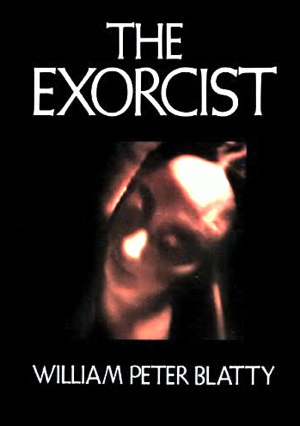
A note about the current edition: if Blatty is to be believed, the changes he made for the 40th Anniversary text are mostly superficial corrections he would have made the first time around if he didn’t have a deadline. There’s an added scene here and a bit of expanded dialogue there, but it’s my understanding that it’s more or less the same novel that came out in the seventies.

While the film is a surprisingly faithful adaptation of the novel (if my memory of the film serves me correctly, that is), the most noticeable difference is the somewhat reduced role of Lieutenant Kinderman, a point-of-view character who later becomes the main character of Blatty’s sequel, Legion. (Legion, by the way, would serve as the basis for The Exorcist III, a vastly underrated movie which knocked my socks off both times I watched it.) The second most noticeable difference is the very reason I prefer the book: it’s not made clear whether Regan MacNeil is actually possessed or suffering from a mental illness.

Yeah, William Peter Blatty seems to think telekinesis and ESP are completely possible things recognized by science in real life (which is how he explains the bed-shaking and the levitating for those who prefer the non-supernatural version), but he gets a pass because it was written in the seventies and everyone back then seemed to believe in weird stuff like that. As for the famous head-rotation which explicitly takes place in the film? In the novel, Regan’s mother only thinks she sees her daughter’s head spin around (she later doubts whether anything supernatural occurred at all). That scene always bothered me in the film because it’s not like we ever saw the demon spin her head back to reverse the damaged he’d done to her spine, but oh well.

Blatty goes out of his way to humanize his Jesuits, characters who too often become set dressings in stories like this. I wasn’t raised in a religious household, so stepping into the shoes of a priest burdened with Catholic guilt is a bit of a novelty. I think the priest-who-lost-his-faith routine is a bit old hat these days, but in the context of the story it works quite well and works towards a satisfying conclusion.

I especially like the emphysematic Kinderman, who’s somehow both sly and polite, often striking up friendly conversations with the people he’s investigating for murder. In fact, it was George C. Scott’s portrayal of Kinderman in The Exorcist III that made me want to check out the rest of William Blatty’s stuff (I almost started with Legion, but I’m glad I didn’t.)

If you can’t wait for the TV series to come back on the air this Friday, you can do worse than passing your time with the original novel. I’m off to watch the movie for the first time in years so I’ll probably blog about that sooner than later. After reading the book, I’m very excited to give the film another chance.

The Day Before [Short Story]

The Day Before
by Grant Gougler

In retrospect, it had to happen eventually. Can we all agree on that, at least? Like storing powder-kegs in a room full of candlelight, we shouldn’t have expected it not to happen. We couldn’t have expected it not to happen. At least, that’s my opinion. And looking back on the way we were before it happened, when we were so… so….

Look, I can’t be the only one who reflects on those times with an even mixture of anger and envy.

Yes, I miss the days before we knew about the great big bad thing we were inevitably headed for, but at the same time I wonder: What warning signs are we missing now? What next big bad thing is waiting around the corner this time? And why are we always so ignorant until it actually happens? Why do we only become brilliant analysts—and all of us do—after the big bad thing occurs?

Everybody remembers what they were doing and where they were when they first heard the news… or, god forbid, witnessed it with their own eyes. Yet I try to remember what I was doing the day before it happened, during my final day of ignorance. And yes, I’m angry at myself, for being so near-sighted, but I also find envy when I think about what life was like then… sweet, simple life.

But what was I doing that day, the day before it happened? What was life like? I couldn’t tell you. I honestly couldn’t. (Can you?) And it bothers me that something so terrible can so naturally become normal. It bothers me that on the day it happened, I already couldn’t remember the day before.

Nemesis (1992) [Midnight Movie]

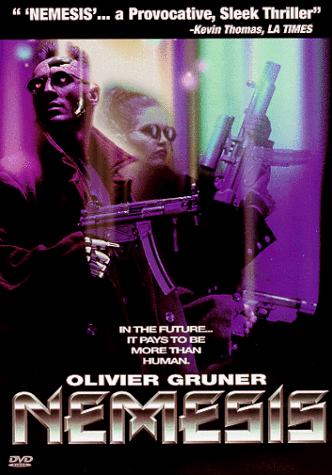
The opening credits aren’t even over by the time the bullets begin to fly in Nemesis, one of the better cyberpunk adventures of the early 90s. And boy do the bullets fly. In one scene the heroes and the villains alike are shredding through walls to pass from one room to another. Then the hero (Olivier Gruner) creates an escape hatch in the floor by firing his futuristic machine gun in a circle around his feet.

Yes, this is mindless action, but holy shit is it glorious.

Any character in the film can (and usually will) double-cross the hero without warning—to the point it stops making a whole lot of sense. And it’s not really clear why the action hops from one rundown location to the next, other than that’s just the way director Albert Pyun works. (In an interview with io9, Pyun sheds some light on his methods, which were often more practical than artistic.)

So it’s the future and just about anyone who’s anyone has had their bodies heavily modded with illegal implants. Some of the bad guys have faces which split open like nutshells to reveal automatic firearms concealed inside. Other characters exist as digitized ghosts in the machine to guide the hero through the complicated plot. Meanwhile the (presumably) human character can do back- and side-flips as well as the enhanced characters because fuck it, why not?

In the opening scene, Gruner’s character, a kind of blade runner, is ambushed by a group of cyborgs who leave his less-than-human body on the brink of death in a scene reminiscent of Murphy’s demise in Robocop. After a long recovery in the body shop, he tracks them down, shoots the ringleader, and ends up in a dank jail cell for reasons that are escaping me at the moment. A lot of spectacular shit happens and Gruner finds out his boss (Tim Thomerson) has implanted a time bomb in his heart. Gruner, whose ex-lover has been reduced to an artificial consciousness rivaling Siri, leads him through the web of deceit and explosions, insisting he make his way to the top of a volcano because… well, probably because the film crew had access to a volcano location.

The plot really doesn’t matter. What matters is you get beautiful stunt women, more explosions than you can shake a stick at, and early performances by Thomas Jane and Jackie Earle Haley, the latter of whom I didn’t realize was in the movie until I saw the credits. You should know by now if this is your kind of movie. I’ve enjoyed many of Pyun’s movies, which is why it sucks to read his most recent tweet:

Judging from his blog, the disease hasn’t stopped him from directing. Right on.