

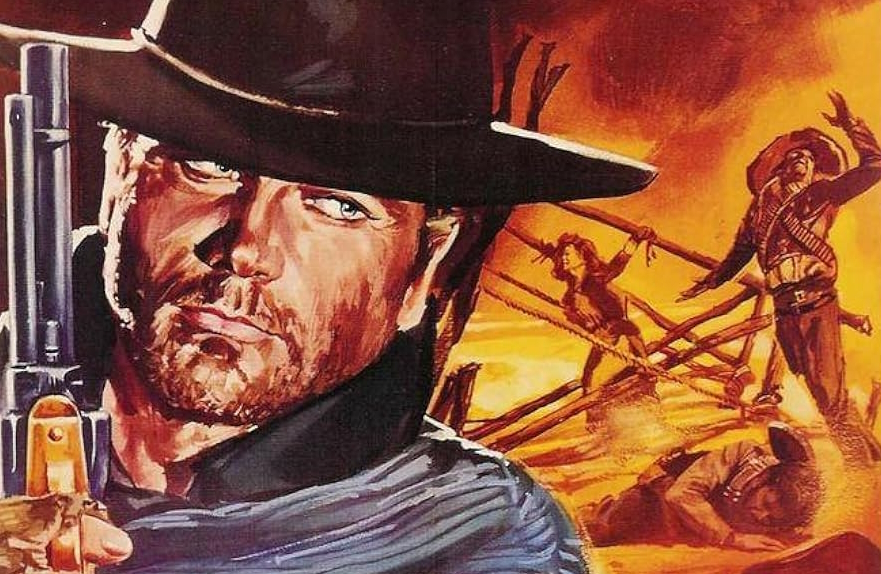
Django begins with the titular gunslinger (Franco Nero) dragging a coffin through all manner of terrain. Later, when he finally makes it to a saloon, someone asks him if there’s a body in the box. Django replies, “Yeah. His name is Django.” I won’t tell you who’s actually in the box. You’ll find out about a third of the way into the picture.
Seconds after the opening credits, Django happens upon a gruesome scene: a gang of bandits are preparing to bludgeon a prostitute to death. You expect Django to intervene, but he doesn’t. Instead, he watches from afar as a second gang swoops in and lays waste to the first. You think the prostitute’s life has been spared until you realize they’re only untying her to retie her to a cross, which they intend to torch. “Burnin’s a lot better than getting beaten to death,” they assure her. (Is it, though?)
You get the feeling Django has been hoping he doesn’t have to get involved. Then it’s clear it’s no longer his decision to make; he’s operating on autopilot when he approaches the men and says in his dubbed voice, “If I bothered you, would you accept my apology?” A split second later his pistol comes out, blazing hellfire, and drops five men in the blink of an eye.
After saving the prostitute’s life, Django takes her to town, finds a room, and meets the leader of the local Klan, Major Jackson. Jackson gets his rocks off on hunting innocent Mexicans for sport. After gunning down over forty of Jackson’s men, Django finds himself at the center of a war between Jackson’s gang and bandits.
It sounds a lot more clichéd than it is. Django’s the real deal—a character of such popularity and charm he’s been portrayed by a dozen different actors in dozens of movies following this one. Like a lot of legends, the details change depending on who’s telling it, but overall the important stuff remains the same. Sure, it’s mostly style over substance, but Django is tragic, shamelessly entertaining, and absurdly violent for its time. If you’ve never seen it before, be prepared to get amped.
 The Goug' Blog