
“The moon blew up without warning and with no apparent reason.” Seveneves is my ideal summer book

In Neal Stephenson’s Seveneves, the moon explodes in the first sentence. At first, the damage is mostly cosmetic because all the moon’s mass is technically still there, albeit in seven large chunks. The moon’s center of gravity (and here is one of Stephenson’s many lessons in physics) remains more or less where it was before the mysterious collision so it’s business as usual for Earth’s tides. Unfortunately, it’s not long before two of those seven chunks collide and create more chunks. Scientists the world over realize that each time another chunk is created, the odds of another collision only increase. The collisions are eventually going to result in an earth-wide event called the White Sky, which immediately precedes “the Hard Rain.”

One character describes the Hard Rain like this: “Those fiery trails we’ve been seeing in the sky lately, as the meteorites come in and burn up? There will be so many of those that they will merge into a dome of fire that will set aflame anything that can see it. The entire surface of the Earth is going to be sterilized.”

Long story short, the Hard Rain is coming in two years, at which point Earth will be inhospitable for a period of fifty centuries or more. Humanity only has a handful of months to prepare the preservation of the entire species. It’s going to require a ton of jury rigging and massive risk-taking to complete such a project. And if that’s not exciting to you, check you pulse, pal. It’s a very hard science fiction story that strongly reminds me of Larry Niven and Jerry Pournelle’s seminal Footfall, minus the elephant-aliens.

Seveneves begs to be read slowly and deliberately. If Stephenson’s writing were any denser, it would pass the Schwarzchild radius and devour us all. For those of you who haven’t read any of his stuff, I say “dense” in the kindest way possible—like Gene Wolfe turned up to eleven. You may have heard critics accuse Stephenson of slipping into tangents in which he goes into meticulous detail about language, culture, history, science, mathematics, or whatever else he finds pertinent to the plot. Well, yeah. That’s, like, kind of his shtick. The info dumps are so absurdly long, they eventually become amusing.

You likely won’t find a novelist who knows more about anything, but particularly orbital mechanics; Stephenson literally had a job tracking the trajectory of space debris. And boy, does he take every opportunity to remind us he knows what the hell he’s talking about.
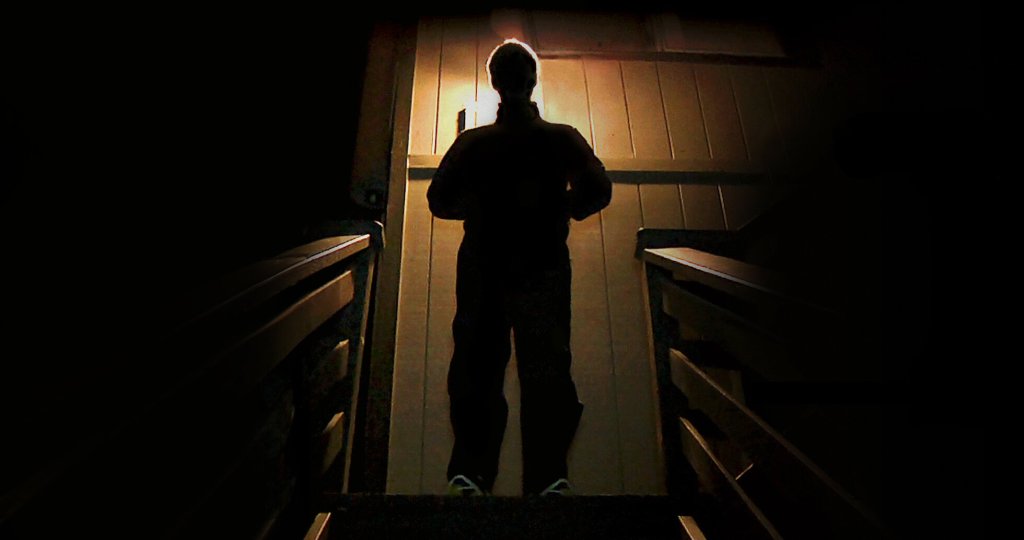
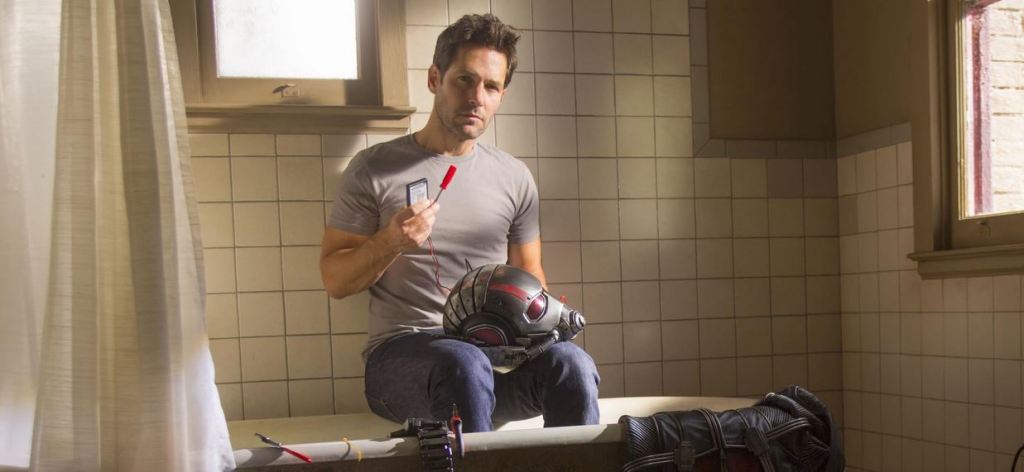
Creep: What the hell is he doing here?

I’ve said I dislike found footage movies, but it’s because they usually suck for reasons having little to do with the way they’re shot. Creep, despite a run-of-the-mill trailer, doesn’t suck. It’s a simple movie, which involves a secluded house, a sympathetic protagonist, and a creep of epic proportions. There’s also an ax and a werewolf mask at play, insisting immediately that we probably won’t get a happy ending.

I’m not very familiar with Mark Duplass, who plays the titular creep, but great character actors are good at embracing the qualities which separate them from genetically-blessed movie stars. Duplass looks so much like a real-life creep he was born to play this role. It’s a lot of fun watching him enjoy a character who’s anything but glamorous.

The setup? Aaron (director Patrick Brice) is an out-of-work videographer who answers a Craigslist ad placed by Josef, the creep. Josef says doctors have given him only three months to live so he wants to shoot a video diary about his daily life. That way, his unborn son (yet to be conceived) can see what he was like. Josef confesses he was inspired by the schlocky melodrama My Life, which starred Michael Keaton and Nicole Kidman. If that isn’t particularly amusing to you, Creep probably isn’t up your alley. 

Aaron’s job is to follow Josef and record him going about his daily routine, but nobody else on the planet has a routine as bizarre as Josef’s. The first thing Josef wants to do is have Aaron shoot footage of him taking a bath. Reluctantly, Aaron agrees. Whereas many horror films make their characters too stupid to get themselves out of harm’s way (because otherwise the movie would be over then), Aaron’s cast from a different mold. Aaron doesn’t lack self-preservation just because it’s convenient to the plot, but because he’s a habitual people-pleaser. Josef, on the other hand, is a psychopath who loves to prey on people like Aaron, constantly testing limits for his own amusement.

We all know people who are too polite to say no to overbearing strangers with sob stories. Aaron is the kind of person who would loan deadbeats money knowing full well it isn’t actually going towards rent. Because of this, Aaron will make you scream at the screen—not because he’s stupid (though you could make that argument), but because he’s buying into Josef’s manipulative personality. For people like Aaron, being used is the path to avoiding confrontation… that and he kind of needs the money.

Josef’s antics eventually escalate to the point even Aaron has had enough. To say anymore would give away what happens next. The movie’s biggest strength, other than its diabolical simplicity and unusually strong performances, is the fact you never quite know what kind of movie it is, where it’s going, or how Josef and Aaron’s relationship is going to develop. If you’re expecting a slasher film, you’ll probably be disappointed. If you loathe slasher films, you’ll probably be disappointed, too.

I did not completely buy the ending and there’s a weak epilogue which attempts to put a lampshade on the climactic absurdity. It’s as if they only realized how unbelievable the conclusion was after they shot it, and instead of reshooting the scene, they decided to offer a weak explanation as to why it went down the way it did. That doesn’t really matter because movies like this rarely have good endings, anyway. Creep brings the goods just the same.

You get the feeling Brice and Duplass are two friends who had the idea for Creep over drinks one night and decided to shoot it with little more than a vague outline. There’s an unpredictable energy to it that’s exciting. It’s made all the more impressive when you take into consideration that a movie born of such simplistic elements has no right to be as enjoyable as this is. If there’s any justice, both of these filmmakers will swiftly move up the Hollywood ladder.

The Incredible Shrinking Ant-Man

Whenever someone makes fun of Superman’s red briefs, I roll my eyes. Are his red undies pointless? Maybe from a utilitarian point of view, but there’s a good reason they’re there: to provide contrast to the suit and to keep it from appearing boring. Visually, it’s perfect. Superman without his exterior underwear seems even more childlike to me, like a grown man wearing a pajama onesie. If everything must have a function, then why not ditch the cape while you’re at it? The trademark curl? Hell, why not just change his fucking name while you’re at it?

Ant-Man embraces the fact that its source material is an old comic book. Hank Pym (Michael Douglas) is the original Ant-Man who hangs up the shrink-suit early in the picture. In present times he discovers his villainous protégé, Darren Cross (Corey Stoll), has stolen his research and plans to sell it to shady individuals. This all sounds awfully standard on paper, but it’s tweaked just enough to function perfectly fine in a comic book movie.

Soon we meet Scott Lang (Paul Rudd), a former cat burglar who’s trying to go straight so he can be a good father. Yeah, we’ve seen that a million times before, so it’s best that the movie doesn’t dwell on it. The problem Lang is he’s supposed to be a kick-ass cat burglar, but he and his crew are depicted as bumbling idiots for comedic relief. It’s just kind of hard to believe Pym, a brilliant scientist, would pass the torch to somebody who gets captured by police so frequently.

If Ant-Man hadn’t been included in a double-feature at the drive-in, I would have skipped it. You can’t blame me, though, since we all assumed Disney was backtracking from the standard set by Guardians of the Galaxy after it had been announced Edgar Wright was removed from the director’s seat. There’s no doubt in my mind Wright would have made a (much) better movie, but his stamp of creativity is still here. The final product offers something much more imaginative than routine Marvel movies.

I don’t think there’s enough here to sustain the inevitable sequels, but I’m happy to report the initial outing is not a normal movie. Normal movies don’t have the audacity to make battlefields out of briefcases. Normal movies destroy entire cities, Ant-Man is content with destroying train sets. That kind of ingenuity is so good it hurts and it’s no doubt remnants from Wright’s time on the project.