
The Death of "Superman Lives"

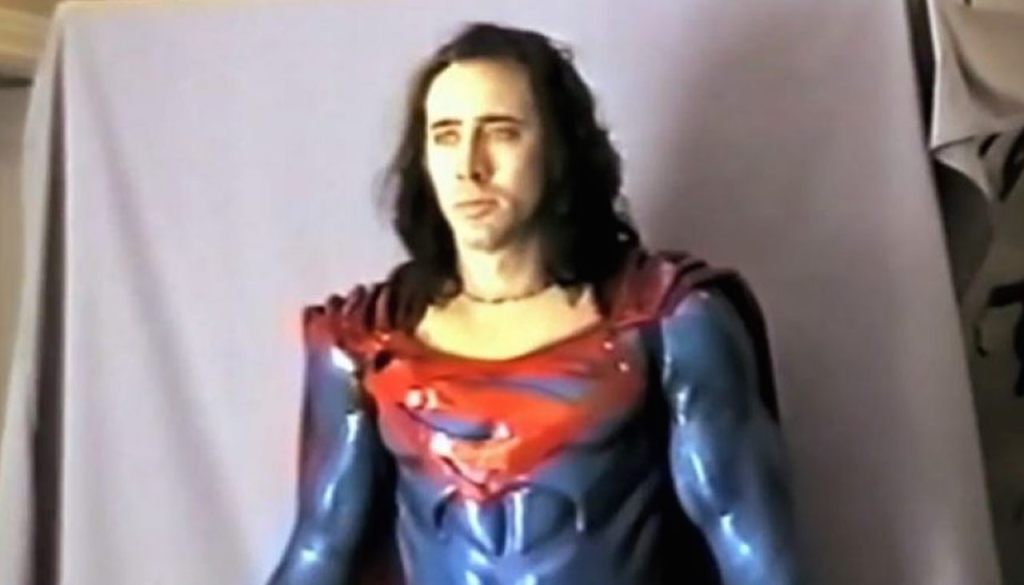
Two of my favorite subjects are terrible movies and movies which were never made. I always assumed we dodged a bullet when Tim Burton’s Superman Lives fell through, but I’m not so sure anymore. After watching the Kickstarted documentary The Death of “Superman Lives”: What Happened? I think Tim Burton’s Superman would have beaten Snyder’s fist-over-fist. At any rate, we can all agree it would have been better than Wild Wild West, which is the mega-flop Warner Bros. pivoted to after killing Burton’s passion project.

I know it’s popular today to hate comics of the 90s (I still like old school Spawn), but DC’s Death of Superman would have made an interesting movie, even if it did embody what was wrong with the era. I read Kevin Smith’s leaked script back in the AOL days: some of Smith’s dialogue was goofy and verbose (and never would have survived a rewrite), but it was an exciting read if you imagined Christopher Reeve in the part. According to the documentary, that’s exactly what Smith was going for when he wrote it.

Since the movie was never made, The Death of “Superman Lives” uncovers a treasure trove of concept art, including some of Burton’s own drawings. The sheer variety of aliens they designed for Brainiac’s ship suggests we missed out on something special. Interestingly, the budget was initially estimated at $300 million. Comparatively, Waterworld cost $175 million and was the most expensive movie up until that point. Naturally, the studio ordered many cuts to the script.

When you see some of the more fantastical designs for Superman’s look, you can be forgiven for wondering what the hell the production was thinking. The documentary makes it clear Burton’s crew wasn’t taking liberties with Superman’s traditional look, but experimenting with suits he’d wear later in the movie, including a regeneration suit following his resurrection. Burton confesses it’s the reason he’s a lot more careful today about letting pre-production material get out: artists need time to experiment behind closed doors.

While I wouldn’t say it’s a great documentary, it does what great documentaries do: it changes my opinion. I now think Tim Burton’s Superman Lives may have been a fine picture.

13 Sins to fortune

Elliot (Mark Webber) is a thirty-two year old loser who doesn’t even have the guts to tell his boss to go to hell when he’s fired over bogus reasons. He’s got a mentally handicapped brother, a pregnant fiancé, and a rancorous father who was driving the car that killed Elliot’s mother. You’ll probably roll your eyes at these obvious setups, believing you know exactly how the movie will employ them. You’ll be at least a little bit wrong. Early on, the movie is a master at misdirection. Later on, it’s a little easier to predict.

Elliot gets a phone call from a stranger. Kill the fly in his car, the stranger says, and a thousand dollars will be sent to his account. Elliot humors the tinny voice and, sure enough, the money is instantly deposited. The second challenge is to swallow the fly, which is worth even more money. I won’t spoil what the rest of the thirteen challenges are, but the cops are already after Elliot by the fourth one.

Even as the challenges ramp up in illegality, Elliot begins to come out of his shell. Whereas he used to be a timid man, he enjoys making waves. After smooth-talking his way out of a run-in with the cops, led by Ron Perlman, we see Elliot smile uncharacteristically. The audience smiles, too. We feel like we’re with him every step of the way, rooting for him as the challenges get progressively weirder, including one that’s ripped right out of Weekend at Bernie’s.

This isn’t to say the execution is flawless. I merely tolerate the flatly shot digital cinematography, but it seems to be the unfortunate new trend for low budget genre flicks as streaming services gain popularity. I can’t imagine any movie that’s shot so blandly ever reaching classic status, but here we are. The new “film” makers are lighting their movies as plainly as possible so they have a neutral image to color correct in post. The result is movies that will never be as bold or likable as the ones that traditionally commit to their looks on the day of shooting. I imagine that as the digital recording formats improve (the problem isn’t the format, per se, it’s the methods), this era will stick out like a sore thumb.

The movie wants to say something about human nature and greed, but the message bounces all over the place; perhaps it wants to say too much for its hour and a half running time. The tone seems to fluctuate throughout, peaking when it’s humorously dark and bottoming out whenever Elliot shows serious humanity. The ending artificially wraps up the escalating complications with a neat little bow. Overall, it’s a decent roller coaster ride that ends anticlimactically. Oh well, it was fun while it lasted.

It followed me home, can I keep it? (It Follows)

A nineteen year old woman has consensual sex with a charming young man in his car. Immediately after, his mood changes and he informs her he just infected her with a sexually-transmitted curse. Before leaving, he gives her some tips: Stay out of buildings that don’t have multiple exits (“It’s slow, but It’s not stupid”) and pass It to someone else as soon as possible because It always goes after the latest person to be infected first.

There is so much bullshit in which the average film would have gladly spun its tires: The “parents don’t understand” angle. The “cops think you’re lying” angle. The “my friends are concerned I’m going crazy” angle. We’ve seen that stuff a million times and It Follows spares us the usual routines.

It knows when to show the monster. It knows when to leave it to hide It. It’s one of the rare films which understands both methods can be effective. The titular It stalks real American streets, pursuing the heroine across eerily familiar scenery. It’s such an honest portrait of what passes as the American dream that you can’t help but believe this is a real thing that is happening. I will refrain from describing It’s appearance and let you find out for yourself, but I will say it’s done without the use of CGI.

I’ve long had a fascination with how poorly teens are portrayed in movies. Whereas many screenwriters are in their early twenties, I’m not sure why they’re so disconnected from youth. Thankfully, the teens in It Follows behave and talk like real teenagers. Not only are they actually played by real teenagers, writer/director David Robert Mitchell knows how to write them, vulnerabilities and all. Remember that name as he has a promising future ahead of him.

Movies like this tend to fall apart by the third act, but the climax was the most satisfying part of the entire movie for me. The teenagers’ plan is exactly the kind of plan teenagers would come up with. And whereas so many other horror movies invent bogus reasons for not bringing in the cops, the threat is such an enigma the characters couldn’t even explain It to the cops. They really are on their own here.

The electronic soundtrack by Disasterpiece is something else I want to highlight. What a bombastic theme. It’ll be stuck in my head for decades.